My 18 month old isn't talking
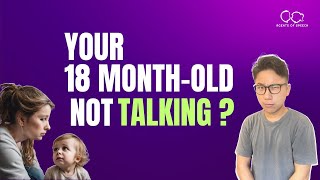
Ming explains why 18 months is too early for a reliable diagnosis of autism, apraxia, or ADHD. A language delay isn't confirmed until around 24 months. Instead of formal therapy now, focus on play, social routines, and strategies like the Hanen program to build engagement.
Chapters
A lot of parents will ask me, what if my 18 month old child isn't talking yet? Is it speech delay, is it autism, is it whatever, right? And this is typically a very difficult question to answer. The reason behind is because there's a lot of risk involved, meaning we don't know what's going to happen in six months. Maybe your child's going to talk, maybe he or she will keep on not talking and not interacting and stuff. We really don't know. And this comes down to mitigating risk and thinking about what would happen in the future. And anyone who knows is typically like just blatantly lying to you. I think they say, oh, this kid should be on the spectrum or whatever. You really don't know at this point in time, right? And a lot of what us speech therapists, we do is to mitigate that risk at a younger age. When we see it, we're going to say, parents, listen up. You got to do these things to help develop the language a little more. And you'll see a lot of these tips. So a lot of times when parents go to pediatricians, the doctors will say, hey, we got to wait and see because it's only 18 months old. So that aside, the wait and see part in, you know, like if you look at speech and language developmental milestones across different countries and cultures, 18 months is usually the latest and it should be the last place. 18 months should be where children start to use single words. They should start to use at least a word or something that reflects something in the real world. So it could be mommy, it could be dad, it could be mama, it could be whatever. As long as the word references something in the real world and your child is using that in the correct way, then that's counted as a word. So there's a lot of arguments about, oh, what's counter a word, what not. Well, as long as the use of a speech sound correlates to a concept in the world that is always consistent and used in the same way over and over again, and if the child uses that same sound or word in different settings for different things, then yeah, that's still a word. But that's the only word that the child knows, right? Anyways, if we see this happen, right. If a child is totally non verbal at 18 months old, what do we do about it? Well, there isn't much you can do per se. You could teach a bunch of things, but your child's attention span is going to be really low. So let's talk about what does your child want from you. Usually at this age, usually it's to want like food, snacks, they want maybe like to drink. They might want some social time with you, they might play with some toys, but you would expect them to play for 10 seconds and move on to the next thing. So at this point in time, speech therapy or any type of therapy is not going to be optimal. Right? And it's not actually recommended either way. It's not. And the reason why is because a lot of the times when we're doing therapy, we need a diagnosis and we need assessments. Assessments are typically very difficult to conduct for 18 month old child. The reason is because as I told you, the language profile of an 18 month old child is very minimal. We only see a few things, right? We can only write a report that you can like, we're only looking at a few language abilities, like are they able to match, are they able to imitate sounds, are they able to say one or two single words or whatever, how well do they comprehend stuff, how well do they play? There isn't much to actually assess on. And if you're talking about, oh, is my child speech delayed or speech and language delay is the correct term or on the spectrum, or do they have adhd, do they have apraxia speech, all these, you can't really have put a finger on the diagnosis because a lot of times it requires a child to be at an older age in order to see what's going on, right? So at this point in time, if you're 18 month old in talking, all we can say is that there might be a language delay and a delay, typically speaking is that if there's a delay more than six months and there are milestones all over the Internet, I'm not going to go over it. Six months is where we think and talk about, okay, if this, if a child is six months delayed, that warrants therapy and warrants intervention, right? So if 18 month old child just came to my clinic, let's say, and I would say, hey, might not be the best time to do anything. I'd rather you don't pay me money because I can't see much. And at 18 months, if he's not speaking yet, that's not really a delay just yet because we need to wait until six months later, which is, I'm not going to try to do public math, right? But it's like 24 months, which is 2 years old, which is a much better age for children to sit on a chair or sit on the floor for extended period of time because of their like muscles, their balance and so on, their attention span for someone like myself to assess. And this is, this holds true for all professionals, right? It could be doctors, whatever. As soon as your child gets to two year old, it gets easier to assess and it gets easier to work with. Okay, so at two years old, right, let's say you can wait for two, six months. What are you going to do in between whilst you're waiting? If you are watching this video it means that you're a little bit scared. And what we can do at these six months is to help your child do better in language development and we become better facilitators. So what does that mean? There are a bunch of techniques that are online that you can check out and one of them is called Hannon program. I think it's really good but at the same time it's not very structured. It's quite difficult to follow if you don't understand the way of how you should interact with your kid. Right. So we did a whole video last week about or two weeks before I forgot when about how you should make a child like you and want to talk you and so on. You can watch that video. You can read more about like the Hannon program on the Internet. Sadly most of the stuff aren't, isn't really free. And then the third thing you can do is to think about what kind of things can you teach other than language? Because Most probably at 18 months I don't think your child is ready to actually talk yet. There are loads of skills that I would what we call prerequisites, pre linguistic skills that involve like matching skills and whatnot. And I don't want to get into it because I don't want you to go into a rabbit hole and think, oh, I got to solve the symptoms. I need to teach matching, I need to teach eye gaze, I need to teach drawn attention, I need to teach blah, blah, blah, whatever. There's a whole bunch of like jargons and stuff that parents will learn and say and become like semi experts and say oh, my child doesn't have this, that whatever when, when I see emails from parents. But that's not the point. The point should be how can you teach your child to play with you? Can you teach your child to have fun with you? Can you teach your child to, to do some actions while singing some songs, whilst playing some toys, whilst creating a routine that is sociable, like tickling, like jumping around, like going up and down if you're strong enough, like swinging them around. Those routines will actually create a better social connection between you and your kid. And therefore it's going to be easier. It's going to be much easier for you to tackle the talking part when he or she is ready. At this point in time, your 18 month old is not ready to talk if they're not talking already. There are some purely twisting skills that I think there's 11. I forgot how many there's. We haven't made up our minds about which are the most important, about whatever. There's a lot of research going on. But at 18 months you shouldn't be thinking too much about doing therapy and how to correct it because all in all, it's not a delay yet because it hasn't been six months and it's really difficult for professionals to assess and stuff. So hopefully I summed that up really well. If you need more help, you can go to ww.agentsofspeech.com course and you can join our parents community there. There's a bunch of free videos and course and courses and lessons. The one that I want you to watch at 18 months is the speech delay micro course. Micro course teaches you a lot about how to interact with a kid, what to care about, what not to care about. And you will see a lot of veteran parents who have been through the whole everything about speech delay and also like autism and whatnot. And you can ask questions there as well. All right, so that's it for this video. Thank you so much for tuning in. I hope to see you in the next one. See ya. Bye. Bye.










