PECS - A Definitive Guide
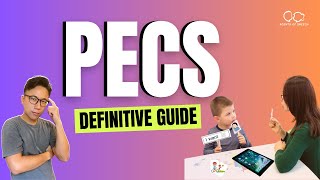
Ming from Agents of Speech explains PECS, a system where kids exchange pictures to communicate. It's designed to reduce tantrums and hand-pulling while teaching matching, imitation, and turn-taking. Common mistakes include verbal prompts, starting discrimination too early, and low-contrast picture choices.
Chapters
Hey, in this video we'll be talking about pecs, which is Picture Exchange Communication System. US Agents of speech are not affiliated to this PEC system at all. This is just a guide for parents to learn how to use it. And obviously some of these things may or may not work with your child. It really is up to the professional discretion. And I'm just here to share what we see is working with the parents that we are coaching. And what we see are some mistakes and downfalls when you're trying to use this. Okay, so pecs, full name Picture Exchange Communication System is quite a good thing to do for if your child is nonverbal or preverbal, so to speak. Okay, so the first thing is I see a lot of parents and teachers and trainers is that when they often ask about pecs, right, Is that they think that it's an alternative way for children to learn to communicate, which is true. But the most important part that they're missing is that PECS is to teach children to initiate communication correctly. So because your child is already getting what they want and getting the needs met some way, which is most probably leading your hand, pulling your hand, pointing, vocalizing, crying, tantrum, so on, so forth. So they already have it. But the thing is, to replace that current mode of communication, you need something new. And therefore PECS is a good way to teach that. And by like exchanging a picture to get what they want, you will get rid of a lot of the hand pulling and the tantrums and so on, because now they have a reliable way of getting what they want and there's a predictable way for them to be more calm, basically. All right, so that's the first point. The second point is that PECS provides context to teach other skills. And we call that pre linguistic skills, basically. And if you search online, if go go into like the Google rabbit hole, you'll see there are like 10 or around 20 pre linguistic skills that people, therapists like myself, we outline. But I don't think we have come up with a certain list about like what they are, which ones are the most important. But I think from just experience, imitation, right? Whether it's action or sounds, that's very important. Turn taking is also quite important. Right? Joint attention is also important. Eye contact and so on are not as important. The list goes on. I don't want to talk about this here. You can research it on your own. It doesn't really matter. The place that matters is that how these skills help your child communicate better. Right? So text provides a context for you to teach these things. Number one is that the one that I left out, sorry. Is actually matching. So matching is between like a 3D to 3D object. They put two things together, right. And there was an argument made by a supervisor before is that oh, everything in the world is about matching, right. Whether it's something that you're doing, like matching a cow toy with another cow that looks the same. And later on can you generalize and categorize them together like a brown cow and a purple cow. They go together because they're both cows. Right. So that's a little more advanced. And later on is like matching concepts is what we do all the time. Right. Making connections between two foreign concepts. Right. Those are also matching by that much higher level. And that's actually what language is. We're matching a word which can be written to a concept. Right. If we remember that. For instance, if you're watching YouTube, the reason why YouTube you can remember is because you is you. And tube means like some sort of video, right? So it's all about semantics and if you can match, right. So PEX gives a very concrete way to map that's the word between a picture to a real life object or concept. Usually it's an object. Okay. So PEX provides that context for your child to learn. Okay, So I need to go through all of this nuances before I talk about all everything. Okay, so bear with me a little bit. So you need a prompter to make things work better. A lot of times I see parents is that when they're doing it on their own is very difficult for them to prompt because you're not as skilled and you're not as like you haven't done this with other children. Right. So for myself, I can actually prompt it at the same time and I'll try my best to be as naturalistic as possible. The reason why we use prompters is because there should be an invisible hand at the back of the kid to not to say control, but to provide prompts physically to tell them to do something. The biggest mistake we see parents and we see this like after you do this actually helps the kid a lot. So why we tell parents to not have any verbal inputs is because if you are always asking the questions before a certain behavior happens, then it might become a part of the routine. Okay, so what does that mean? Let me give you a quick example. This is especially true for autistic children. And there was a teenager that I was working with long time ago when I was, I was just helping out NGO and So the teenager didn't want to go inside of the train. And the reason was because usually when the door closes in Hong Kong, it beeps like around 20, I don't know how many times. But he's. He was counting all these years and he said, I'm not going in that. That cars. That train's got something wrong when it was closing its doors, it's less than 20 times or something. That's what he said. So that becomes a trigger for the behavior to happen. And therefore, we don't want that. For instance, if later on, if we're using packs and we don't ask, what do you want? Or like, what do you do now? Give me the card. If we don't say that and the behavior doesn't get triggered, then what do we do? How do we get rid of that verbal instruction? How do we fade it out? Is nearly impossible. So therefore, when you're starting to prompt, it's much better to just be quiet and just do it and slowly fade out the prompt by, like giving less and less physical touch and more and less intrusive. Okay. And obviously, you know, I'm not telling you that you should be doing this. It really is what we see parents are like. When we coach parents, this is one of the best advice that we can give. Just be quiet and physically prompt instead of saying, give me that. What do you do now? Like, these, these kind of questions are not good for the whole routine. Okay. Because there's no way that you can prompt this away. What are you going to do? Like you say half of the command, like, what do you. That's still very, very unnatural, so to speak. Okay, the next point, which is going to take me some time, is to be clear about the phases of packs, what they are. So I'm sure you can buy the PACS manual somewhere on the Internet. And this is not official class for packs as well. This is what my sharing is. But what I want you to do is, like, if you can get your hands on the manual for pecs, it will help you a lot. And right now I'm just going to show you my screen here. And this is the website that you see in the, in the description below. You can click there and take a look. Okay, so pecs, there are different phases. Okay, so here you can see phase one is all about how to communicate. So I see a lot of problems that when trainers talk to us is that they're doing phase one, but they're not doing phase one. So what, what does phase one mean? It Means how to communicate. Individuals learn to exchange single pictures. Single pictures for items or activities they want. Okay? The problem is two things. Number one is the word single pictures. Okay? The second word is they really want. A lot of times I see parents will try to push an activity or something that the child is like, meh. So that doesn't work. Right. It needs to be highly desirable, the thing. So that's why when we do it with agents of speech, we always go to, like, the most unhealthy snacks possible at the beginning just to get them hooked, so to speak. And obviously, yeah, that's something we have to slowly get rid of. But at the same time, we want that desire to want that thing. Okay? The second thing is single pictures. How many times do I see people doing pecs in the first go with like, two or three pictures? Just blows my mind. All right, you can't do that because you're teaching the context, the routine. Do not try to teach the language first. All right, we're going to talk about this later. If you watch some of the videos on Agents of Speech, our channel, you will see that we always talk about teaching the routine first. You're confusing your kid. If you don't teach the context, you're. If you have no context and you teach a language, language is useless. And that's why the YouTube videos, when you teach, when the kids learn words from YouTube, why they're useless is because there's no context to use those words in real life. There are no hexagons or triangles flying in the air. Right. Or there's ABC that are jiggling around. There's none of that stuff. Right. So that's why in the first phase is always to teach the pictures first. And you see in this picture, if it's too small for you, sorry, let's make it bigger. And you'll see the prompter behind helping the kid without saying anything, hopefully. Okay, so phase two is where things get a little bit more difficult. So if you can read, doesn't matter if you can. I'll just read it to you. Distance and persistence. That's the title of it. Still using single pictures. See? Still using single pictures. Even phase two, individuals learn to generalize this new skill by using it in different places, with different people and across distances. They are also taught to be more persistent communicators. Okay, what does that mean? So let me just take out the whiteboard here, and I'll try my best to tell you what's going on. So for this to happen, this is you Right. This is a table. This is the card. This is phase one, right? That's your kid. That's the adult with the glasses, the prompter at the back. And to take the card and give it to you and get the reward. Right? So that's phase one. So if. And then phase two is when you. You form a triangle. Is that you with the reward? Let's call it reward the card and the kid. The kid still has the prompter behind, obviously. So the distance increases, this increases, the triangle increases. The kid has to walk towards the card, come over hand, shove it into your hand, and get the reward, and you give the reward to him. Right? So this is what we call about, like, increasing the distance. And you have to do two more things. Number one, this. These two need a swap, right? As frequently as you can, and not as frequently as you can, but, you know, like, change it every hour or so, right? And how you change it is just to give the reward to someone else. And you be quiet, and you become the prompter and you. That's why it makes more sense to do this in a therapy center, because then you can have a lot of people being the person who's the communicator, okay? And the prompter. So this is how you generalize. And you do it in different rooms. So you can do it in the kitchen, you can do it in the dining room and the living room and wherever. Okay. Just around the house as much as you can. And then go downstairs, do it outside, whatever. Okay? Anywhere safe and quiet and with little distraction. Okay. The theory is that if your child really wants to reward, it doesn't matter about other distractions, right? So that's phase two for you. All right? And this is where, like, phase three gets more. A little more spicy. And what I mean by that picture description is the phase three. And I see too many parents before they stop, like they were telling me, ming, my pecs is not working. What's going on? And the reason why is because they're doing picture discrimination too early, right? You're not supposed to do it. You need to teach these first to make them more persistent, meaning that they need to shove that card into your hands, and you go, oh, you're talking to me. Let me see. Oh, you want a cookie? Okay, cookie. And then you show the picture and the item, the reward, and you switch, rule it, and you switch and give it to them. And then now they know that routine at the back of their head, and they know how to, like, what. Exactly what you want. And then you can Go on to picture description. So picture description. The biggest thing here are two problems. All right? Number one is that you are trying to do phase three at the same distance. For phase two, when we're teaching something, there are two things that are we're trying to teach. Number one, this is across for all sorts of speech and language behavioral goals. Right. Number one, generalization, which means the distance, different room, different people. All right? We can put different people. People. Right. And the second thing is the complexity. Sorry for my handwriting using my mouse here. Right. Number one is how many cards are there? That's how. What's the complexity of which. Right. Real photo or line drawing. Like. Or even, like, just the abstraction of the card of the picture card. So it could be a real photo, it could be a. It could be a drawing, it could be a line drawing. And the most complex is obviously just words, right? So it's a spectrum of complexity. And the last one is not. A lot of people talk about this is about, like, the contrast. So let's say the kid is very particular about the brand of chips that he or she likes. So if I say I put one Lays and one Pringles, right? That's a different picture, but it's the same category and a very similar reward. Then the contrast is very low. And you never want to use this in the beginning, right? It needs to be super high contrast. Right? And how you get the maximum contrast in the beginning is to use a blank card, right? And you want to decrease the generalization back to the phase one, where it's just you and the kid on a table and plus a prompter at the back, right? So you start off with chips and nothing, right? And I feel like the biggest problem as well. I keep on saying biggest problem. There's loads of problems when people are using packs. And the reason a lot of them, like, once they understand this, they're like, oh, my God, my kids starting to, like, give me the card, the correct card all the time. The reason why is because when the kid picks up the blank card, the prompter or the communicator, so to speak, gives a negative feedback or gives off like. Like a face. Like. Like. Like that. That's not going to help the kid because, like, let me give you an example. So if I go to a restaurant and I say the wrong thing, I will get the wrong thing, right? Let's say I wanted to eat steak, but I said chicken. So what would the waiter do? He. He'd give me a chicken. Would he go like, oh, no, that's wrong. He wouldn't do that because that's not natural. He doesn't even know what I want. So when it's talk about pecs, I don't know what the kid wants. That's why if he gives me a blank card, I'll give him nothing. Oh, oh, you want nothing. Okay, here you go. And I give air. Nothing. Okay. And then this. The other part is that after you give nothing and the kid gets a little angry, that's fine. Reset the whole situation. Don't immediately prompt him to get the chips card because what's going to happen is that he might think he might. It's all about reducing the risk of doing the wrong thing. All right? Is that you reset the situation or else the kid thinks that, oh, I first give the blank card and then I give you chips and I get the chips. So what you get when you go up to like four, four or six cards is that the kid gives you every card until he hits jackpot. You don't want that, so you want to make it harder for him every time. Is that if the child is very rigid, Use the rigid to our favor and make sure that the situation is if there are choices, you give me one, you will get it. All right. If you give me more than one card, I'm going to reset the whole thing and you have to do it again. Right. So that's the most important thing about phase three is that the complexity level of generalization needs to be at phase one. And then you have to make maximum contrast and make it easy for a kid. Okay, that's phase three. So phase three is a discrimination. And let me just read it again. Learn to select from two or more pictures to ask for their favorite thing. These are place in text communication book. A ring binder with self adhesive hook. Right. So too many people start with the book. I don't, I don't like the book. The reason why is because it's clunky. It's whatever. I like to put it on a table first and I want to move on to like 4 and then some kids we can do like 5 and 6. The problem is if the kid wants one, we're not supposed to know that he wants one. Because if he has communicated with us prior that he wanted one, then we don't need to use packs already. You know what I mean? If he already pointed, he wanted that and I wanted him to do extra steps through packs. It's not natural, it's not nice. So therefore what we need to do here, that Is not on the pack manual, But I can tell you by experience, is that if he gives me one, and I'm not sure if that's something he wants, I give him. I present a tray with the items 1 and 4, and maybe we can have like, a few more. That helps him. That. Sorry, that's a five. So to help him understand. To help him, like, just tell him to choose from it to see if he understands the relationship between the picture and the real object. And is that really what he. He's asking for? Sometimes the kid just gives you a random card. But hopefully when you're at 6 and he doesn't, he doesn't give you a random card. If he gives you a random card at like six cards, what do you do? You decrease the level of complexity and you get rid of some of the cards. Right. Maybe you go back to two, you go back to three. Doesn't matter until it's very consistent. That's one to one. All right. We always say in agents of speech, even if it's about gestures, which is basically the same thing as packs, is that we always want one word, one gesture and one action. And packs is one word, one picture, one object. Right. We don't want to mix it up if they don't understand the one to one relationship to. This is very difficult to teach any sort of language here. Okay. And then sentence structure. So I see a bunch of people doing sentence structure far too early. We don't want to do sentence structure. It's not something that's actually helpful. Right. So I never really go up to 4 to 5 and 6. And the reason is because if the kid is truly nonverbal and he requires this communication book to communicate, then. Okay, we can move up to like, phase six if we wanted to. Right. What is something that you want to hear? Is that how we bridge packs towards speech? Right. How do we bridge packs towards speech? How we do it is the same as when we are doing with gestures when we teach parents in coaching. Right. How we use it is when the card comes to you and it gets shoved into your hands, you take the card and say, oh, you want cookie? You take the cookie. Before you exchange, you ask the child to do some sort of imitation. So this imitation, it could be speech. It could be a simple sound. It could be a vowel sound. Ah. Of vocalization. Or it could even be just a simple action imitation, like touch your head or whatever, or touch your nose like this. Like, all those are fine. The reason why is because we want to teach the pre Linguistic skill of imitation, Right? So given that we already have a strong routine with PACs, can we use PACS to our advantage and teach imitation? Right. Rather than going to phase four to six, which is like, oh, now we're going to use pecs to teach language. Now we can focus back to the speech skills. So speech and language are different. If you do PECS all the way to like, I want, whatever, and the therapist will tell you, oh yeah, we're working on speech too, because then you can put out the sentence strip that they choose, like I want to eat apple. And then they take the kid's hand and go, I want to eat apple. Like that, right? So yeah, they're, they're working on speech, but at the same time, if we don't teach like imitation by a concept and every time the kid will just follow us whenever we talk, then it's very difficult to get out of the packs. Right? PAX is good to create a strong routine, but we need to use that to our advantage. Teach imitation first. Once we have imitation, we can move on to play, right? Because if you look at the, the PEX phases, again, it's all about wanting. It's very structured. They can only say I want to, whatever, right? You can make sentences, all right, in phase five and six, right? You can say something like, I see or something I hear or something I, I feel, whatever. These are cool. But at the same time, it's not really tied to a certain play structure. Like there's no play involved. And when you don't have play involved, it's very difficult for your child to actually want to use packs because it's cumbersome, right? So why we use speech instead of like pecs or like AAC to talk when I'm talking to you right now is because it's the most effective way, right? Like, if I could, I would telecommunicate with you. That would be easier than talking, right? Rather than straining my voice and talking too much. So what we need to do is to use that routine to teach imitation and then, so then we can move on to other forms of communication other than requesting, right? And which they also talk about sentence building, which is fine. And also commenting. We want to move on to different things, all right? And PEX is rather limited when it comes to unless your child is really good and understands everything with PECS and can like make very complex sentences, the longer you go, the more cumbersome it becomes and it makes more sense to move on to like a iPad, like a more high tech based AAC we talk about AAC a lot and you can just search it on our YouTube channel or you can listen to anyone about this. Okay, so that's about it for this video. And if you want to start home therapy, you can go to agents of Speech.com checklist to grab a list of tools and toys we recommend you to get when you start. Okay, so obviously this is not an official class about packs. If you have any questions, put them in the comment section below. We'll try our best to get to you and as always, find a professional who can help you. It doesn't need to be me. It doesn't need to be us. From it can be anyone that you trust. And as long as you're taking action and you see that if something is working, double down on it. If it doesn't work, then you know, like, think about why it's not working and try again. Okay, that's it for this video. I'll see you in the next one. Bye. Bye.










