Should You Stop Autistic Children from Stimming
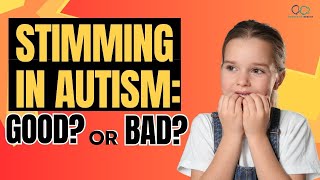
Autistic children stim to regulate their senses, and it usually shouldn't be stopped. But when stimming disrupts learning or makes a child a target for bullying, therapists can teach replacement behaviors like fidgets or music, and help kids learn when and where stimming fits.
Chapters
So should you stop autistic children from stimming? The obvious answer is no. And if you look through a lot of the videos online nowadays, it's how stimming is a right, we should do this, do that. It's them regulating their feelings, their emotions. They're like sensory wise and stuff. This is all correct and stuff. But at the same time, when we are doing therapy, the reason why we're doing therapy is so that we can help children habilitize into this world, right? It's not as if we're trying to. The opposite is true. Where some therapists, most therapists around the world would say, oh, we need to educate the mass about, oh, this is actually what people do. But what I'm trying to say is there are times when we should stop children from stimming. We need to teach them what's a suitable time. Why is it, why is it important to do? And that's just my own personal opinion. I don't want to say it as if, oh, this is how speech therapist think. It is my own opinion. After teaching a lot of parents over the Internet and seeing a lot of children and talking to adult autistic people. And the number one thing is you need to understand that it's a sensory need. We all stim to a certain extent. We all do things to regulate our behaviors. My wife likes to play with her hair. She likes to play with it, she likes to bite her nails. Those are stimming too, right? I like to sink in the shower. I like to shake my leg. In fact, I've talked about this story multiple times when I was in the clinic during my master's degree. And then I got really anxious and nervous talking to parents and, and teaching the child at the very same time. My leg would shake nonstop, right? I couldn't help myself. I was like, I didn't even know. And then my supervisor was like, can you stop being like Elvis, what are you doing? And then I was like, what are you on about? I don't know. And I watched my recording and I saw myself shaking my leg non stop. This also happened when I was an emcee for my friend's wedding. The very first time I was an emcee, my God, my leg shook like crazy. That's also stimming and that's a sensory need, right? That's a way of coping with, with anxiety, coping with a lot of things that is going on in our brain, right? So stimming does need to be regulated. It needs to happen to help us. But does it mean that it's always warranted? That's something that I talked about with a 30 year old autistic woman that I, I was teaching back in the day. So I asked her, do you even know if you're stimming? And she said most probably not. Most of the time she wouldn't know. It was until she was taught to identify whether she was stimming or not that she could know. Oh, now I'm stimming. I shouldn't do it right now because of certain social reasons. And then now before the keyboard warriors, the therapists of this world coming onto this video and say, hey man, you shouldn't be saying how we should stop them from stimming. People should totally just embrace it. There's no reason to stop. There is a reason to stop. Most probably because if the stimming is so intense that removes them from doing their job properly, then most probably, yeah, we should teach the child how to regulate that and how to identify and think about whether we should delay it, replace it or whatever. I'm going to talk about it later on so that they can do the work. So in the case of the autistic woman, she was also in the same industry as I am which is teaching children, especially scn, special educational needs or individual needs nowadays, whatever the name is now that I really cannot keep up. And yeah, so whenever she was stimming when she was thinking about how to teach a child, she wouldn't know and it actually hinder her from communicating properly to parents who wanted to know what the heck was happening, right? So then when that happens, it's functionally disrupting, same as my leg shaking. It was very, very distracting for the parents and people who aren't looking at me. So, so anyways, the how do we do it is to find a replacement behavior, right? So some people will say, oh, taking deep breaths, right? Counting from ten all the way to one. Like countdowns, right? There are many ways to do it. You have to find a suitable replacement the behavior. Because behaviors don't diminish, they do diminish, they go away, they just go into something else. Because the reason behind the whole thing was still hasn't changed. There is still a need to, to regulate sensory. So let me tell you my way of doing it for leg shaking. So first of all I know that I'm about to shake my legs when I get nervous and anxious, right? And then I think okay, now all I gotta do something I do actually quite often is that I wear a jacket whenever I need to do something that puts me out of my comfort zone. Because when I feel like there's something around me, I feel warmer. It actually helps a lot for some reason. I don't know why. I really don't know. And so this is also something that would work for people on the spectrum before. I've heard that a weighted blanket will work sometimes, not every time. Some people say that, like back in the days, those fidget spinners, those probably don't work nearly as much, but then fidgeted with something else actually does. So it might be a pen. It might be for the autistic woman, Some of the things that she used to cope, and it's not a solution, is to use a really heavy backpack to compress and so that she won't tiptoe and start, like, thinking about other things and go into a stimming rabbit hole. That's what she calls it, not me. So you got to have replacement behaviors. And one of the best replacement behaviors I've ever come across is music. So using musical instruments is a good way to redirect all that into. Redirect all the anxiety, that sensory need, coping, and stuff into it. Singing is one of the good ones. Right? Right. So these replacement behaviors, you have to teach and develop, and then you have to go through a whole treatment process of telling the child, okay, when you are feeling this, first of all, you have to be able to identify it, and then you have to understand why you're doing it. And then you have to think about whether you should replace it, maintain it, or delay it, so and so forth. Right. And then you have to do a bunch of role plays so that your child. Autistic children, autistic people know exactly why, how other people feel when this happens. Okay? So the third thing is occupy your child, occupy the mind. Because when the mind is free and empty, stimming happens. Right? So I find this is pretty true as well for myself and also the autistic people that I've seen and met before. So one of the ways that we can do this is through play skills, especially for children under six. We teach a bunch of play skills. And from what I see, at the very least, when a child develops better play skills, being able to play functionally in a sequence, pretend play, stimming tends to go down by a lot because now they have something else to use to cope and to actually entertain themselves with. All right? And then the next thing is to reward suitable behavior. So I know people are going to say again. I mean, I say again, why would you reward autistic people and treat them like animals or whatever. But the thing is, incentives is what drives the society, drives human behavior. So if we can find a place and a time when that person stops or just able to identify that doing something that is not suitable for that certain situation and reward them for it, it's going to help that person a lot. I to have a lot more awareness about what they're doing. Okay. At the end of the day is really about helping that person or child to know, oh, you're doing this right now. Okay, so when do we intervene? When do we even care to do this? Because when I started the video, I said, no, we shouldn't stop children from stimming. We should intervene when a child is doing something that matters, right? Whether it's studying, is playing with us, it's doing like some, some homework or whatever. Whenever the stimming becomes too distracting for the child, we should intervene, we should do something about it. And especially, and this is not my words again, I've learned it from autistic people, is that when he or she stims, it goes deeper and deeper and then when you wake up, they get angry at you because, wow, what are you doing? Why are you, why disturbing me? Stimming. They wouldn't call it stimming, but why are you disturbing me into my trance or whatever like that. That kind. So it's kind of like me playing a video game. I'm like really into it. And then my wife or my mom is yo, come eat dinner. I'm like, what? I don't want to do it. So it's kind of the same in my mind at least. So we need to find those things. If it's really eating into productive time, we need to intervene and you think about to provide a replacement behavior, stop them, reward so, so on, so forth to role plays, tell them about, teach them about how it makes other people feel, why we have to delay or replace these behaviors later on. Okay. The last thing is I want to remind everyone that everyone dims. Okay? But we need to teach and protect our children because at the end of the day, and a lot of therapists will disagree with me here and I don't mind because I don't only read textbooks and listen to people, listen to experts. I also think for myself and I look at my clients and parents that I serve, why we need to protect children is because I was telling you and I shared the interview with me and my 30 year old client from before, she got bullied a lot and that's I'm being very real here. So it's a long fight. Of course we have to educate the mass about this. But my job is interventionist and not an advocate. The advocate will do the advocate job. Interventionist of me. I don't have a huge. I'm not like an actor, a public figure. Those guys can be advocates because they have a huge voice for me. I just want my. My clients, my students to have a good life. Whether you like it or not. The majority of us are neurotypical and it's gonna stick out like a sore thumb sometimes. And we want to reduce that anxiety even more because children who are on the spectrum, they might not even know that they're getting bullied. A lot of times the 30 year old, when she was getting beat up, she was actually laughing because she couldn't really feel pain and she didn't know that was bullying. So that's why the stimming. We have to teach what do people think? It's a theory of mind thing. It's important to get across this message because bullying is real. If you say that, oh, all we got to do to stop bullying is to change what other people think. Dude, I don't have that capability to be honest with you. All I can do is to influence one life at a time and the person. Every time I make a video, it's just me talking to you one on one, basically. And I'm trying to change your mind about stuff. Don't even think about change, changing about other people. People on YouTube, they watch Cat videos and stuff. So it's very hard when you say, oh, you got to be an advocate for what is. It's impossible, my friend. We need to understand everyone's dips. There are social norms. There are things that are deemed appropriate, inappropriate. People will make fun or they won't make fun, and we have to reduce the risk. That's what I'm trying to say. And that's why I say protect, because we cannot always say it's your fault for bullying. Obviously, yes, but doesn't mean we have to give the means. If we know better. We don't give the means for people to bully them. That's all I'm saying. Okay, you can disagree or agree. I don't mind. You can make your own YouTube video about this if you wanted to, and let's see how far it goes. That's all it is that I want to share. If you want to watch more of what I say, you can go here. All right, thanks.










