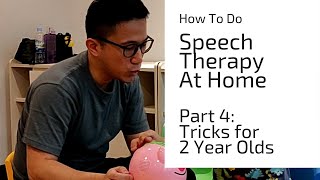
Ming from Agents of Speech shows caregivers how to do speech therapy at home with two-year-olds. Keep sessions to 5-10 minutes daily, use floor play and simple routines like bubbles with countdowns, and focus on interaction and eye contact before worrying about words. Play in ways your child can't do alone so they come back and try to communicate.
Questions this video answers
5–10 minutes every day.
Chapters
Okay, welcome back to part four of this video series called how to do Speech Therapy at Home. Right now, today, diy how do we do speech therapy for two years old? Is the topic we're going to discuss today. First of all, I need to set your expectations when I talk about five to 10 minutes every day. Two year olds have very short attention spans. And as I told you, I want you to have a play mat available so that they can sit on the floor. Cause they're not, they're not strong enough to actually sit on a chair for too long. It's actually tiring for them to sit on a chair. Not like us right now. Right? We're like totally the opposite. You tell me to sit on the floor is pretty tiring to me. You have to understand their attention span is very short. You cannot expect too much of them. So for the first week or first month of this home therapy of you doing daily activities and just playing, like giving them food, but bubbles, whatnot, you're not gonna expect them to talk back yet. You might expect them to do some gestures. What you're teaching right now is not for them to speak, but to actually interact with you and communicate with you. And how do we do that is by teaching a routine. So for example, if we have bubbles, first of all, we wanna take the bubbles, make it really tight, give it to the kid, and kid cannot open. You put your hand out, bring it back to your palm, take it, and then look at them. When your kid looks at you, you can now tell them what to say. You can say open, open, open. Whatever gesture that you're using, you don't need to expect them to reply because the act of looking at you already means that they're anticipating that you're gonna do something. So you tell them what's happening. Open, open. And then you can say something like, take it out. When you're about to blow, you can do what a lot of therapists like to do and I like to do is to go, 1, 2, 3, go. So it sets a routine. You go, 1, 2, 3 or 2, 3, blow or go, whichever verb suits you better, you blow. And then the bubbles are everywhere. You go, pop, pop, pop, pop. You can also say pop as well. When your child's popping the bubbles. Once it's finished, you tighten the bubble again. You wait, and then when they come to you, you say open again. Okay? These tactics are for children who are around two who don't have any meaningful communication yet, or they're not using words consistently. So this whole routine will help them consistently use words in the correct way. So once you've established a routine, you can use it for nearly everything. So you can also do it for. With a ball, you can say, 1, 2, 3, kick, kick it away. And then your child might bring it back to you or might kick it back to you. And then you can add words during. When he does it, like when he picks it up, you can say, pick up. Oh, give it back, like that. And what I like to do is to play with the toys in a way that your child can't. That's why they want to come to you. So for instance, the ball, I love to spin it really quick. I like to do a backspin on the ball so that when I throw it, it rolls back to me. Things that your child cannot do. Remember that your child doesn't owe you anything. If they don't want to play with you, that's your problem. Because you're not resourceful. When you're resourceful, your kid wants to come to you because then you have something that they cannot have and they love that. So if you can bring a different way of playing, especially to 2 year olds, they're going to love it. And you can teach them routines so that you can add words, gestures to it. All right, so if you found this video helpful and you haven't already, go download the checklist from ww.agentsofspeech.com checklist and hopefully in the next video, I'll be talking about some general principles I like to use when I'm teaching children at around three years old. All right, so I'll see you in the next one soon. Bye.