Speech Therapy for Autism Spectrum Disorder
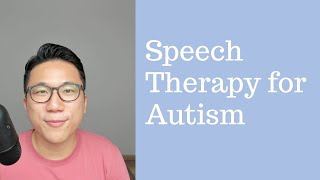
Ming explains how speech therapy for autistic children focuses on building the desire to communicate first, then pre-linguistic skills like eye contact and turn-taking, before working on practical language use like requesting and commenting. Parent coaching matters more than isolated techniques.
Chapters
Hey, guys, this is ming here from agentsofspeech.com today we're going to talk about speech therapy for autism spectrum disorder. Okay. And speech therapy for ASD children. That's in short form. Okay. Children on the spectrum is rather different from, you know, ABA therapy or occupational therapy. We can talk about the differences in another video. Actually, this is a topic that we went through in our live videos. If you want to know when it's on Mondays and just click on the notification bell, get subscribed and you won't miss any bit. Okay? So first of all, what we speech therapists do is that we focus on communication intent. So we do talk a lot about this in agents of speech. Basically what it means is that how often, how much does your child want to talk to you? Okay. Want to initiate some form of communication with you. And that's basically communication intent. And why we focus on that is because we don't really want to teach the form of language just yet. We want to get the root problem, which is, do they even want to talk to us? We want to get them to start wanting to communicate first. Whether it's using gestures, words, you know, pictures with like pecs, picture exchange communication system, or even using an iPad, like a communication device, what we call aac, to communicate with the communication partner, which might be their dads, their moms, or a therapist or whatever. This is very important that we go through communication intent. And most of the time in the beginning, you see the therapist playing and building routines and whatever that's building towards teaching them to have the intention to communicate with us. Okay, that's the first point. Secondly, speech therapy, we focus more on pre linguistic skills for children who haven't yet spoken. What we call at the pre linguistic stage. Right. So pre linguistic skills is basically a set of skills that are required for a child to be ready to talk. Right. And I'll link this video by Laura, who's a great senior speech therapist. I learned a lot from her. I'll just put the video somewhere here or down in the description box. So these prelim skills, ABA or OT or whatever other therapy or early intervention, they might not really address. Okay. And the theory is that in speech therapy that we want to do deal with the roots like we want to make their, their skill set wide and the foundation solid until we teach more stuff. Okay. So you might see in a lot of other therapies or ABA or whatever the therapist starts to teach, like using words, making the words into like a longer sentence. Like for instance, example, they might Teach I want cookie. Right. Whereas in speech therapy you might see a lot more that they're building, as I said before, building communication intent, building a routine, teaching them some pre linguistic skills. And you might ask, what are some examples of pre linguistic skills? Right. So some of them are like eye contact, joint attention, right. Point pointing, turn taking, right. Imitation, you know, using some social gestures and signs, some babbling, some symbolic sound play or something. So all these things are pre linguistic skills that we all use and we teach. Okay. Which sometimes are over overlooked and other types of therapy. Not saying that they're not doing the job. So sometimes they inadvertently are working on those pre linguistic skills, but they just don't talk about it in the way that we do. Okay. When I say we, I'm talking about speech therapist. Okay. And the other thing that we work on a lot is the pragmatic part of language. So let's say that your child is learning to say I want cookie. All right. In a, in a therapeutic session. All right. So we can split that into a few aspects in language. So first of all is the form, like they're using a sentence form of I want underscore, something like underline, fill in the blank, right? That's the form. The content is like the meaning of the word which is like I want cookie, meaning the, the child wants that thing. Okay. And then there is also what we call a language use, which is generally said to be the same as what we call pragmatics. And what that means is what's the function of the language? Right. So there are different functions in the language. So we're trying to build up the different functions in language such as, you know, requesting, which is a huge one. Like if you, if your child wants something, they're hand pulling you. Then their language used, they're pragmatic of that. You know, the hand pulling is actually requesting. Right. There are a lot more of why children communicate with us, not only for requesting, commenting, pointing at something and say, hey mom, look, that's an airplane, right? There's a question, right? Mom, what does that mean? Like what is that? You know, asking questions. Fourth, answering questions. Does your child know how to answer questions? That's also language use. Right? And the list goes on. You can have, you know, negation saying, no, rejecting, right? So all these types of communication reasons of or of some sort is what we call pragmatics or language use. I'm throwing a lot of terms at you, but when you hear it, at least you will understand kind of what the therapist is talking About, Right. So we build a lot of that. The difference between like speech therapy and, you know, other types of therapy is that we take these into account. What's the function of the language that, that they're using right now so that they don't always get stuck and always requesting, always get stuck at saying no or rejecting your. What you tell them to do. Right? So you're building up on that so that they have different reasons to communicate with you, they have more intent to talk to you. And then afterwards you can deal with the different vocabs, structure and sentences and the grammar and so on. Right. And the last thing I want to talk about is that in speech therapy we don't really have a lot of time with the child, right? And we don't have a lot of time to talk to the parent. And that is actually the most important part. And that's why we're doing this right now through video. Okay? You might spend like 45 minutes with a speech therapist and in the end, at the end of the day you might get like two or three minutes or if you're lucky, like five to talk to a therapist and learn some of the techniques and skills that we use in the clinic. So a very big thing that I think I can speak for other speech therapists is that we believe to teach you how to fish instead of giving a fish. Teaching a strategy so that a kid knows how to acquire language is very important. And also teaching you how to teach and facilitate language at home is also strategies that you can use. And strategies are long term, okay? Tactics are short term. So if I teach you like, oh, you got to bribe them, you're going to reward them or whatever. You got to teach them with these toys in this way that those are tactics, you use it once or twice and you get some short term gains, right? You get some attention from your child or whatever. But in the long term, you need to teach a child to learn by themselves, right? Which in the long run it might be teaching them to read, teaching them to cue themselves, teaching them to comments, you know, teaching them how to ask questions for clarification so that they learn more words, so on, so forth, right? It depends on the age, how your child is right now. And also we have to teach parents like yourself to learn how to facilitate, facilitate language, okay? And not just spoon feed the child with all the answers, allow them to think, teach them in an effective way. That's why we focus on strategies instead, instead of how tos. And this is where a lot of parents will say your advice isn't concrete at all. It's all very good and stuff. But how do I use it? Well, it's the long term thing. Okay? So that's why we try to balance between teaching you like a tactic, something that you can do right now at home, and a long term strategy. Okay. Because most of the time it's about how you teach and communicate with a kid. All right. So that's it for this video. If you have any questions, please put it in the comment section below. And if you haven't, you can go to agentsofspeech.com checklist to grab a checklist of all the tools and toys that we recommend parents to use during home therapy. And it's becoming more and more important because this pandemic has been stretching. So please go there and download it if you're interested. And I'll see you in the next video real soon. Bye.










