Teaching Non-Verbal Children How to Talk
Ming from Agents of Speech walks through Talk to Me, a coaching program that teaches parents to help non-verbal children speak. The approach moves through six steps: establish routines, open gesture, social routines, imitation, structured play, and parent-child interaction skills. Free course materials are available at agentsofspeech.com/course, with paid coaching via Telegram feedback.
Chapters
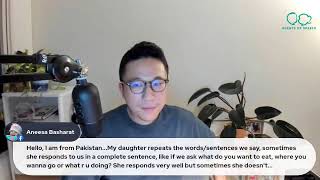
Hey guys. So I'm going live here to talk about how to teach your child to your non verbal child to speak. So right here. Okay, so I'm gonna mute myself. Sorry. Yeah, we are live on YouTube, Facebook and also Instagram. Now let me know if you, you can hear me. If you're watching the recording, you can feel free to skip forward a little bit. But whilst we're live here, let's start talking. So about nonverbal children. For the past two years we've been, we have a coaching program called Talk to Me. So what it is is that it's a group coaching program that teaches parents how to teach their own children at home. Okay. And recently and I'll talk about the nitty gritty stuff because the information itself is free. It's even on our platform. I'm not sure why our platform only has like 5,000 people inside, although that's quite a lot. Right. So if you go to agentsofspeech.com course you can enter email and you will see a link to join our community. All the past courses are free on there, including the one called zero to words which is basically how you teach non verbal children. Okay. So teaching non verbal children by itself is quite, it's not rocket science. So we basically put it into around eight steps and we're trying to make it into, into 12 steps now and we call those steps weeks. So we're trying our best to make sure that most parents will get through one stage in one week. Which has been the case for like 40% of the time. Other than, you know like 20% of parents, they pay and they don't show up for some reason, which is not a good thing in my books. I don't mind taking people's money, not having to work, but at the same time I would much rather that if you join you, you pay attention. Okay. So whilst I'm talking about this, our Talk to Me non verbal coaching program has started to accept applications. So we don't put the link public anymore. You must be a member or like you must be inside of our newsletter, our email newsletter or inside of our parents community to see it. So I would urge you to go to our website and go to free courses. Right. Go to www.agentsofspeech.com course to get access to our free community where you can learn, you know, even if you don't join, that's fine if, if you don't, you know like join our paid programs. Even if like the free stuff, a lot of people are having good Good results with it. And that's because the free stuff used to be paid. And so I'm. Yeah, you know, like, I thought that a lot more people would actually like go in and join and learn stuff at the same time. It's been around how long it's been like four months? No, no, a lot longer than that. It's been half a year now since we changed the model to fully free courses. And we only, we only earn our money with the, the coaching. All right, so now I'm going to start breaking down one by one about like how our program works. And at the same time it's like we have something similar in the free course that's not, it's quite comprehensive, but it's not like if you have any problems, you can only ask in the community and we'll try our best to get back to you. But whereas in the paid course we have a dedicated telegram group where parents send us videos and stuff. So yeah, I'm not going to show the telegram group here. We have hundreds of parents inside. I just don't want to do it here because of like privacy issues. So other than that, before we go on, I see like 60 something people as a, like everyone from all three platforms. I'm happy to have everyone here please comment so that you know, say hi, tell me where you're from so that you know, like other parents will know that everyone here is all over the world. Like there's one of the parents like, oh, I'm from the Netherlands. Okay, that join. Of course you have parents all over the world. We have like Indians, we have Southeast Asians, a lot of Filipinos, Indonesians, Malaysians, we have a bunch of Chinese people like myself. We have loads of Americans, loads of Canadians, loads of Australians. So good to have you here. Without further ado, let's dive in into like the actual steps about how to teach non verbal children how to talk. So the first step is to establish a routine. So I know a lot of therapists out there, me including when we are teaching, like parents, we want to say, yo, we need to follow the child's lead, right? We need to let them take over and let them have fun and stuff. Whilst this is very true, right? This is okay, that's true. It's, it's okay do that. But at the same time it's also a very slow way, right? And especially people from my city from Hong Kong, they would think, dude, is this guy even doing any work? He's just playing with the kid. Right? We want to avoid that for now. And the reason is because if we have a very set, like very structured rules and stuff for parents to follow, it's a lot more concrete and solid about what you can do at home, right? Whereas like a lot of the advice out there is very vanilla, it's very open ended. And they would say like, hey, can you do xy? Like can you like go down to their level, play with them, follow the lead, follow the interest, look at what they're looking at, describe whatever you say, yada yada, yada, yada. Those are fine. Those are good advice as well. But you also need other end which is like structured things. And I know I'm gonna get some people saying like ah Ming, I can't believe, you know, like agents of speech is getting bigger and bigger now and you're still talking about like structured things, like aba, like behavioral therapy, like stuff. And I just want to tell you this is not the case. The structuredness is for you, it's for the parent more than for the kid. Because a lot of times when you're trying to do those like naturalistic approaches, it's actually pretty difficult for you to do it because it takes more experience and so on, right? So the first step, in week one, we teach you how to do, how to establish a routine, how to get something that your child wants from you already and transition that into a routine that you can use to build language, right? So week one, we do that and it's something that anyways for free, which is like using a container, put something inside it and teach your child to give it to them. So my cat's like meowing and look at me for no reason. There is a reason. I just don't know why. Anyways, the second thing is the second week we go on and we do the open gesture, right? The open, open palm, open gesture, these two things we go hand in hand. So open is just like that. So it means that they want to open the container to get the thing inside, right? And we don't need the kid to the child to do it themselves. You do it for them, right? So a lot of the times it's not about quizzing the kid. We don't quiz the kid. We want to make sure that the child is 100% able to do it successfully. And it's because we prompted them, right? And I, I also understand there's a lot of people saying, oh, you shouldn't do hand in hand prompting, you shouldn't whatever. But most of the time when we're teaching children, there's no other way. Like, what are we going to do? We're going to wait forever, right? That's a little bit too, too long for me. Right? So in week two, we teach the open gesture. Week three, we go on and we start to put in some, like, some play stuff which we call social routines. I'll call it social routines. And so what are those? Like, for instance, can you jump together, right? Can you. Can you take over your child? Can you sing some songs together? Our coach, Wilbert, who's also my friend from my master's degree, he came on as a coach and he was telling me how. So we're vamping some of the aspects of the talk to me thing. And that's why we haven't been open since early November. It's been like we're starting the whole thing in January. So it's like two months now that we haven't been open. A lot of parents are asking, when are we open? And stuff. So the reason why is because we're revamping it. So we'll was like, yo, I think we should do more saying because it's quite important that we do more of that. And. And I really, truly agree. So then in week three, we're gonna deep dive on how to sing songs with kids and also how to do social games with kids. So not social games, social routines. So why is this important that we do that? Because then you become the toy and we can get rid of some of the rewards that we've been using. So for this whole thing to work for week one and week two, we need to get stuff that your child really wants from you. And most of the time, unavoidably, we will use snacks. And week three, we want to make it earlier so that we can make the change into that. You are the reward. You are the toy itself, right? You're fun. You can create routines that you guys can have fun together, right? And then when you get that, when you have that, then you don't really always have to rely on the snacks and whatever because your relationship with the kid is getting better and better. So I'm like in our channel and on Agents of Speed, I would talk more about like having a better relationship, right? And it's very woo woo is very whatever. But at the same time, it means you being the provider, you're being able to give them what they want and they should listen. Okay? So I see a lot of people saying, hi. Some from Australia, Philippines, Congo and Africa. That's crazy. From Philippines, Philippines, Jamaica. Wow. Finland. Well, hello, and from Macau. Just came back from Macau, actually, I think like two weeks ago. My dad actually lived in Macau for a bit. Nico. Hey, nice to see you. And yeah, let's keep on going. So, like, after we do the social routines, right, we go into imitation mode. So the whole thing about the whole. The whole program is centered around getting your child to start saying words, right? And everything starts from imitation. If your child doesn't know how to imitate, it's very hard for us to go on. Because what can we teach that doesn't include imitation when we want them to talk? Right? I want you to hear this again. So what can we do when your child doesn't imitate you? Right? If we want them to talk, it must be that you teach that sound and ask them to repeat it somehow. Because there is a time and a place for all the receptive tasks that we do, right? But if your child doesn't repeat after you, it's very hard for us to know what is their true ability, right? So let me give you an example. Let's say that your child has single words, but he never, like, repeats after you. Maybe not inside the language, they actually know two or three word sentences. So if you're. Let's say you're a bilingual person like myself, if you hear a sentence in a foreign language, if you can at least imitate all the words altogether, then at least you already have a grasp of how the grammar is. Like, you remember some of the words, you know how the sounds sound like in a language. So a lot of times what happens is that the kid, the children who already have. Who already have some words randomly, not communicative, not directed at parents, they come into the program, they really quickly they start talking because they finally have a place and a time and also a use for those words. And at the same time, they learn the concept of imitation. So then it's just a matter of time until you get all the. All the words correct, all the words learned. Because it's just going through the words and see if they know each of them, right? So in week four, we start imitation. We start with like, just bodily imitation, bodily action imitations, right? I see some of the people watching right now may have gone through our program already. So, you know, like, I feel it's quite important to go through this stage. So, you know, like, tell other people if you are here, if you've been through the program already. This is our eighth group. So it's been like seven groups of a lot of people doing the same thing all over the world, I've been hearing the word open in different languages in Italian. Oh, someone's from Italy here, you know, like ombre or something. I'm guessing Malaysia. Buka, right? Philippines. I don't know. You guys speak English too? And so the action imitation has no meaning. Why do we do it is so that we teach the concept of imitation. And so a lot of times when you ask a child to imitate or say something after you, they're not going to look at you, they're not going to pay attention. So then you go down the actions and see, like, what else can we do to make sure that maybe the child will do something other than just like walk away. And a lot of times that goes back to action imitation, right? So Zodiana here says, says like that's where I got stuff I get imitation from. I can't get imitation from him. He might repeat a word every now and then. It's mostly nothing. So that's why we do action imitation, right? Because we want a way. Because we can't put our fingers here and make them talk. We can only like, just wait. So that's where you're stuck. That's fair enough. And if we don't can't get speech, we go down one level, which is actions, right? So actions there are like gross motor and fine motor and also like all real motor and stuff. And we go down those one by one. So what we do is like, we start off with like big motions first. Like maybe like we do a lot of touch head for some reason. We do a lot of like touch nose touch shoulder rub, tummy tapping, table sometimes. And the reason for those is that if your child isn't looking or whatever, they can at least see the cross gesture of whatever you're doing and they can still know what the heck you're doing. Right. And secondly, an action is something that you can prompt physically. You can take your hand literally and do that task for him or her. And then they get rewarded, they get reinforced. You praise whenever that happens. Yeah. So why we do something like meaningless? Meaningless is because we're moving across to fine to oral motor. And then you finally get your child to start looking at your mouth. And then all we got to do is to sustain as many repetitions as possible that you, that you link a oral like a mouse shape with a sound over and over again until one day, randomly, the kid uses the sound. And then you go wow and explode and you reward like crazy. You're very happy. And more and more times that they Randomly do this, that are. That is, whatever that is connected together. Then, you know, like, you. You can. Then, you know, like, verbal imitation becomes more and more consistent. And then you can go on to do, like, other sounds of which that's what we're adding in the course now. We're adding, like, consonant plus vowel sounds, which is like ba, boo, whatever, and then slowly increasing it into a word level. And that's where we're going for it. Right. Oh, by the way, this one. Guys, can you guys please, like, just report it or something? Doctor or yellow, whatever. Always spamming. Don't know who the heck he's paying to do this stuff. But if you would, if you don't mind, if you're watching YouTube, just help me report it. Anyways, so after we get the invitations in place and your child becomes like a. Like a parrot. Right? Whatever you say. We have loads of those videos on Telegram. If you join, you can see it, but only for people who are in the program. Eyes for those people. Only because they're willing to share with people who are like, with other parents all over the world who share the same goal. Right. That's why we put it in a group. Yeah. After we do that, we start teaching you how to play with the kid. So it's like totally reversed. So if you get the structure stuff right, we have a working relationship with the kid. It's very easy to transition into, like, playing. It's not just play. It's structured play as well. It's got some sequence. Sequence to it, a sequential play. So why we do that is because now that you're trying to imitate, can we teach the correct context and play skills altogether with words? Right. If we can do that and we expand those, those stuff, those. Those play routines and stuff, have more fun, talk more words, and make sure your child learns, like, verbs, nouns, adjectives throughout the play routine. And that's it. All right? Right. The. The main goal of the whole program is so that when you do something, when your child wants to play in a certain way, I want something from you. You don't talk. You gesture something. You cue by like a little gesture and then they talk, they say the word or whatever. That's what we're shooting for. Right. Just basically, we don't ask them to imitate. We don't do whatever. We just kind of give the look. They say it themselves, and later on, we don't even give the look when they're playing. They're even talking by themselves. That's where we want to head To. And once we hit that, that would be the. The penultimate. Sorry, like the. The last. Just before the last week. So the last week we're going. Gonna go into normal stuff now, which is like the stuff you will see from the Hannon program, the stuff you will see online. And we call it like parent child interaction skills. The parent child interaction skills are more about like, how do you talk to your kid, how do you, you know, like how do you nurture and provide language facilitation and so on. So we're doing it in reverse and at the end of the day when you know how to teach your kid, it's just making it more natural. Then you're done. And then we have a different program which we just launched last. Around two months ago, I guess a month or two months ago, which is going great. So that's all I wanted to share. To join this program, you will have to be a member of the community, which I see. Like, suddenly we have like 20 people asking to join. That's great. As you're watching, you can go to www.agentsofspeech.com course we have all the free courses inside. Even if you don't join our coaching program, that's totally fine. You can learn the same things in the free courses inside our. Our community. Right. So great. So we have people from Indonesia and let's see who else. All right. Okay, so I'm gonna open the floor for some questions and you can let me know like what I can do for you. So Jasmine says repeat the website, please. Okay, cool. Go to. Our company name is called Agents of Speech. So then I'm going to. Now, Right, So it's like this. Agents of speech.com. you can press slash course there. Right. I'll also write it. How come it's in reverse? Anyways, yeah, agents of Speech.com course and go there and put in your email address. Right? And yeah, and you can get those free courses. But if you have any questions about the coaching program, do let me know. We're open until the end of the year. So you have around like two weeks to join. Quota is 50 people, 50 parents only. Right now we're like, we're accepting applications. Quite a few have like already applied. So we're getting all the applications in, looking through all them, and then we'll people who we select about it. All right. Diana says, I know I was asked before, but I'm so sure if it could be a specific time I can get on when I can. Not sure what that means, but both the Free courses and the coaching program stuff. The instructions are like, you watch whenever you want. You do the stuff whenever you want. And then when you need us, help from us for the coaching part, for the paid portion, you can take a video of yourselves doing the task and then upload it onto Telegram, which is a messaging app. Let us know how's it going, and we provide feedback. Am I getting your name right? Pre trudge. I guess. Correct me if I'm wrong. Anyways, after two years, therapy might sound sweet now. He still blabbers at times when asked what he says it properly. Please guide. Okay, so I'm just gonna be very honest with you. I really don't like these kind of questions. Because, like, if you say a simple sentence and then you ask like, he's God or what's just a judge suggestion for me or whatever, that's not something that I can answer because I don't know what you mean by your son can speak and what does labor mean? Right. I do not understand those words. Right. I don't know what you want me to say, how you want me to guide. So my only way of telling you is, you know, like, if you need help, go into the community and, like, go through the courses according to your child's ability. Right. Because I don't know what your child's at. Like, after you tell me, what do you mean by speak? Is it single words? Is it sentences? Is it. What is it? I don't know, Bali, I think. Can you talk. Talk about noise sensitivity? No, I cannot. I'm not an occupational therapist. I don't know about this stuff well enough. So I cannot really help you about that. You know, if it's sensitive, then put on some ear muffins. Right. I have no idea what context about, like, what you want me to talk about. Yeah, that's what I mean. Pre trudge. Sorry about that. That's what I mean. Like, you cannot just tell me. Yeah. After two years. I don't know how old your child is. He might be seven. You can speak in sentences now, right? That's what you said, right? I don't know what kind of sentence you're talking about. Is it I want something or is there a legit sentence? I don't know. I don't know how to help you. So, like, if you want me to help you, you gotta. Yeah. And. And see, that's what I mean. I have to keep on asking you questions until, like, you. You give me more info. So it's very hard for me. All right, so the Best way is to go inside the, the community, learn from other parents, learn from our, our courses, and you can tell me, tell me more. Oh, tell us more over there because it seems like you really don't know like the basics to. And, and, and, and what? The way that you ask the question, it means that you didn't really think through about what you can do with him at home. It's, it's not like you've been doing stuff with him at home already. Okay. At least it feels that way. Correct me if I'm wrong. Okay. Benjamin says, do bilingual and trilingual children talk speak slower? I'm not sure about what you mean by speak slower, but I guess what you mean is like, I'm guessing is that you're saying they, they start talking later than monolingual children and the answer is actually no. It's actually no. So I'm not an expert in bilingualism or trilingualism. I, I am, I am bilingual. English is not my mother tongue. I speak it. But at the same time, like, I also worked with a lot of bilingual children and I would tell you that it's not true. Right? And bilingualism or trilingualism actually does help children acquire language faster, believe it or not. Like it teaches them how the rules work a little more and it gives them more practice and context about how other it makes them smarter as well. Apparently, according to some studies. Don't quote me on this. Right, but I mean, you gotta, you gotta read those stuff yourself. There are experts out there just putting the whole lives into bilingualism. And so far the data shows that it's not true. Right? But the question that most people should be asking is if a child is speech and language delayed, does bilingualism affect that delay or disorder? The answer is also no. So why it feels like bilingual children, they speak less is because bilingual people like myself are. Vocabulary, vocabulary, I can't even say it anyways, is more than a monolingual person because we have the words in two forms and sometimes the words itself, they don't even like, they're not exactly the same. There's like some difference in meaning. Right? So you know a word in English and you know a word, in my case Chinese, and you know, both words, but then they mean around the same, but they're not 100% right. So that's why it's, it's harder for like children who are delayed or disordered to actually learn the exact meaning of like stuff because they, they hear in one language and another. And what you should Be doing, right? Benjamin, that's not true. Because, like, listen, okay, I have two more things to tell you. And Benjamin keeps on saying, speed language because he grows up. Well, that. That's gonna be like, if. If that's the truth, right? Then the whole world will have a lot more people who will be like, speech and language delayed. For instance, I grew up, all my. All my classmates were bilingual. All of them, right? I came to Southeast Asia. All people speak three languages here. Are they. Are they delayed? I don't know. Are they disordered? I don't know. If so, even so, then that would become the new normal anyways, so who cares? That's the. My first point. The second point is if you. If you want to help a child acquire language, when there's a lot of language is going on and the environment, what you do is you try not to mix code, meaning, I don't want to speak a sentence that has both English and Chinese or Thai in your case, and maybe some German. I don't want to be using it all in the same context. I want to say one language in one way, right? In one language, one sentence in one language. And I want to skip to the next sentence. Speak pure English, and I stick to another sentence. I do it pure, pure German. Right? But people are going to say, how about the Southeast Asian people, the Singlish people, right? The Singaporean people, they have, like, Chinese, English, Malayu, whatever going on. Bahasa Malayu going on. All these three going on. Well, the thing is, that's their own language, and it's called Singlish. So then you're left with someone who is, like, English is the norm. Singaporean people mix all these three languages together, right? That's their language, so to speak. Okay. Anyways, Anisa says, great, repeats words and sentences. Sometimes she responds to us in a complete sentence. Okay, right. Sometimes she does, sometimes she doesn't. Then, you know, like, I guess what you need to work on is, like, having a better working relationship with her, making sure that, like, she knows what she's supposed to say. And, like, you don't want her to just repeat to you. You want her to talk to you, right? And that doesn't. Like, if you're always thinking about, how do I get my kid to repeat after me every time you're not really teaching by asking the child to repeat, you're quizzing. So that's. That's it. That's all I have to say to you. All right, so. So I'm getting offline. I'm going offline now. And before I just want to tell you guys one more time, go to agents of Speech.com course to grab the free courses. And we're open for our coaching and for non verbal children who are not using words yet above 2 we are accepting. But you will only see the link to our private video about me. Like me breaking down the details of the course, what we're covering, the payments, you know like how the whole thing works. Only if you are a member of our community. Right. And only if you are on our newsletter. So. Okay, before we go, I'll just answer one more. Anna is from Mexico. Okay. Hello. Hola. I guess my 10 year old now starts super early Spanish verse. And my younger son is 4. He can't talk well at all well yet. Sorry, only words but nothing consistent. Oh, it's not a question. So great. If that that's not a question then I can't answer it. So that's it for tonight. Thank you. I'm just also like checking out how it would work on Instagram and that's it guys. See you guys soon. And hopefully I can see your app, see your request for entering our private parents community now have like 3,5000 people inside. I think it should be way more than that. But anyways, see you guys soon.










