Teaching Non-Verbal Children to Speak
Ming from Agents of Speech runs an 8-week paid program teaching parents how to help non-verbal children speak. Parents learn to elicit imitation, gestures, mouth shapes, and vocalizations through structured weekly steps. Most children need 8 to 16 weeks total depending on how quickly they respond.
Chapters
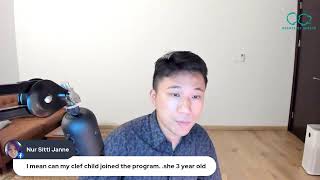
Hello. Sorry, just now there was a problem with the microphone. So I'm creating another live here. Okay, so let's, let's begin. So to teach parents, to teach a child is the thing about agents of speech. Because in agents of speech we're here to teach people, parents, you, to help children to speak. So I'm going to start talking now. Hopefully when you guys come in, you can hear me. If you can hear me, let me know because there was something, there was a problem with a microphone just now. Just let me know if you can hear me. Type yes, if you could. And if you're on it, let me know where you're watching this from. And let's begin. All right, so the first thing I want to talk about is for three months ago, I started a eight week program with a bunch of parents and the results were great. I wouldn't say it's like perfect because a lot of times when teaching non verbal children, which is the hardest step out of every step, every stage, there are a few stages and I wanted to just focus on it. And the reason why is because for the past two, two years I've been working online and I've been giving like online courses and teaching parents over videos like this. And I, I feel like the best results I get for parents is that parents send me videos, I take a look at them and I tell them what to do. Right. So, and I feel like this whole process for the past three months could be systematized. And we, we've, we've had 40, around 40 parents who joined initially. Obviously there were some parents who dropped off. I'm just going to be very straight and honest with you. Right. Some parents who dropped off, it wasn't for them. Right. Some parents got a lot of results from it. Their children are talking now and that's really good. But we also have a bunch of parents who are stuck. And eight weeks is average. Don't get me wrong when I'm talking about teaching non verbal children. Eight weeks is average. We have different complications, like children who have genetic disorders who are on the spectrum which are, to be honest, relatively easier to teach, believe it or not. And then we have children who have speech disorders who have problems producing sounds and we also have hearing impaired children who have different types of implications. I see all of you commenting. Thank you so much for joining. And I just wanted to tell you what I learned from teaching. Okay. And we're opening up again this week. So look, look out for the posts inside of YouTube, Facebook and maybe Instagram. And you will see that I will tell you to comment on a post and tell you PM me a word. Okay. When I do that, my, there's a chat bot because when I do this, about 500 something messages come through and it's really difficult to manually go through it. So therefore there's going to be a chatbot and then the chatbot's going to ask you some questions to see if it's a good fit for you to join the program. And this program is going to be paid. I'm just going to tell you upfront because I've been teaching parents all over the world and many other times I don't do it for money, okay? A lot of times I don't. And the reason why it's, it needs to be paid. It ensures two things is that you have the resources to get the toys that I tell you to get. Secondly is like a commitment that you're doing this with me. And then the third thing is that if you are in the position to commit financially, it means that you will. You're more willing to commit your time because many times parents just run away. And I don't want, I don't like that. I mean it's a hard thing, but I don't want you to run away. I want you to face it. Okay? And you know, like it's sometimes it's not, it's not for parents. It's fine, okay. And you can that, you know, like eight weeks is something that you go at your own pace. And I'm just breaking up the whole process into eight steps. Okay. Before we had a course called From Zero to Words. I've now put it, I've now retired that program. It's still able, able to access to people who have bought it. But why I've retired is because I feel it's not fair for, for parents to go through the whole process without a good guidance because out of all the stages from zero to something is the hardest and the most difficult for, for a lot of people. So let me just go through the eight weeks real quick now. So the first week when I teach you the most simple way to, to get a child to, to sit down and do something with you. And it's very simple. We have it already, which is already outlined in the hand pulling and hand pulling document that I put out. It's called, it's agents of speech.com hand pulling. So let me just write it. I think it's hand pulling, right? Something like that. I'll get the link to you in a Bit and then I'll put the link here. So if you would go there, it's basically this one, but I go through it in a video and I make sure that you see many examples. That's week one. So you just do that first. And then the second week we add one gesture, which is the open gesture. I'm going to tell you here, the only, the biggest value of you doing this with me is that you can you get my, my 2 cents about what you should be doing, what's, what's, doing, what you're doing wrong, and so on. So some parents, they think they know what I'm doing, but then the problem is that when they do it, they get very stressed out and they get very scared and forget everything. And therefore I need to go in and tell them feedback. Oh, here, you should do this. Remember, do that. Don't say this. Don't touch the hand like that. I look at how the child reacts. Sometimes the child's a little sensitive to whatever, and sometimes the parent, the mom is pulling back on the rewards and the toys, and it's not really helpful that way. Okay, so you can go this, go through this all, all you want. It's a lot of the stuff I talk about is for free anyways. Right? So that's, that's the first thing. Okay, so the third week is, is then we're going to add the, you know, like you've seen many times that I always talk about gestures. So in the third week, we're going to add one more gesture which is tapping, tapping you and saying like mama or papa. And then fourth week, so I see some questions. I just want to go through a bunch what intended to talk in this, in this life first. All right, so give me a moment. Okay, so in week week three, we're going to introduce something we call social routines and which is just like playing with a kid and trying to get them to communicate with you in a way that they don't like. They like playing with you. So that's a little bit difficult. Right? And so we're going to tackle that. All right, so, and then after that and week four, now that you've got a bunch of gestures that you're teaching your child, maybe your child's imitating, maybe she's not. But the, the, the whole thing is to week four is that we're pushing the child to imitate the actions a little bit more. All right, so I'm gonna take out my, my trusty handbook here and look at my notes from, from teaching. So in week four, I believe the best thing to do with, with parents is to teach the gesture imitation. I'm reading it off now. And which is like most of all, it's like gross motor. So gross motor is something that's like big motions. Big motions, right. So the gestures that we teach are like open, you know, like different things and then when they, they can start doing it, we want to teach some gross motor imitations, right? And which this is like largely not done with speech therapy. And it looks more like aba, but at the same time it's very important that you do it because in that structured way the structure is for you. So the parent knows, oh, my task now is to get my child to start imitating some cross motor stuff, right? What's the name of the book? Not, it's my notes man, it's my notes. It's from me. And then in week five, as we get those gross motors done, the next step in line is, is to, is to do some mouth shapes. So a lot of parents will say, oh, my kid isn't looking at me. There's no focus whatever. We don't teach eye contact for eye contact sake. Right. The reason children look at us is that they don't get too nervous when they look at me. Like they need to get used to working with me first. Working with you, in fact, that's the first thing. Second of all, there must be a reason why they're looking at you, right? So if they understand, they have to imitate in order to like enjoy, have fun and get rewards. Therefore, when you're doing gross motors and then you move to fine motor, their eyes are going to follow you. They're going to follow and then they're going to start looking. So after gross motor, do some fine motor stuff, which are usually doing some mouth shapes. Like something like these ones. Open spread lips apocalypse. These are more speech therapy things. And you see that I'm doing things all over the place. And the reason is because I don't use a certain method. It's just that anything that will make the parent understand a little bit more and it's a very simple task, I'm going to do it. Right. So in week five, that's what we're trying to go for, just mouse jams, right? And then in week six, we're going to try to add vocalizations which is like for instance, if they open their mouth like this, can we do the ah, right. Or when they spread the lips to go e. Something like that, right? Or when a puck lip, then we Go. Ooh, can, can they, can they make that sound? Okay, so up to week five or week six, you know, the, the fastest person who gone through this, this whole program starting from November, I believe was a girl. And she was done in like two weeks. She already started talking, which was crazy. And now we're still working together because I honor the eight weeks and in fact I even honor all the way up to like, I just want to get. It's my most effort to get someone, a child to start talking. So it doesn't matter how many weeks it's going to take. As long as the parent is like committed, then I'll be committed as well. So where was that? Week six. So week six, we're going to get the vocalizations in check. And so we're going to add place sequences. And that means we're going to start getting the child to play toys. Okay. So the reason why we want to get the child to play toys here when they, after they get the imitation done is that, okay, now they're kind of like a parrot. They start to like copy some sounds or whatever. Then what's the next thing is that we're going to get them to imitate because they already know how to imitate actions, right? So now we can teach them to imitate like actions during a play sequence. And it will make a lot of sense for them to learn how to play play toys instead of watching shows on the TV or whatever. So that's going to be a lot easier for you to just let the child sit and do something else whilst you're like washing the dishes. What, not just put toys on the floor. So you're going to teach some play sequences of which a bunch of them are actually on YouTube already. The ones that I talk about are using a piggy bank, using the car slide, right. And then using vending machine. All these are applicable in this, in this case, right? So that's week six. And usually like for the. That's something I did wrong. For the first batch of group coaching, I've been doing this whole method for like one on one with a lot of parents over the, over the world. But the last time we did it was with the group of parents, right? So something I did wrong. And I think that's why we're putting it in week six is that introduced this in like week four. And it really freaks some of the parents out. I was like, whoa, that's, that's a little too much. So I'm, I'm going to push it down a little Bit. But the reason is because parents are always saying, oh, what can I do more? What can I do? It's not what about. What about what you can do more is that in a very short routine that I tell you to do 15 minutes a day, maybe two times a day, right? It was 15 minutes two times a day. Is that you're teaching a bunch of linguistic skills, right? In one go. And although you might think, oh, this boring is not working, as long as the kid enjoys sitting down and doing repetitive, repetitive stuff with you, it's just a matter of time until you teach them how to talk, right? So that's something you have to bear in mind. Don't go into, like, one of the parents was like, oh, how do I teach? Yes and no. It's Ming. I've been doing this so long with you. We're just doing the routines. When are we going to teach them how to answer? Like, yes or no, When I gonna teach them, like, what's your name? Or whatever. Well, you only get to that place when they start imitating words, right? Or else how are you gonna teach yes or no? Like, what's your name? So one of the parents of which we have, like, before and after video. I'm getting it ready just to show you that she. She's done it already. Now the kid can answer, what's your name? Which is great. And this is like week four for her. You see, like, so we're going to adjust for everyone's, like, capabilities and differences and stuff. I'm not saying someone's better or worse. It's just that kids, they are more. They're most, like, some are more sensitive to therapy. Some parents, they. Their job was already a teacher, so it's easier for them, right? So I don't mean it by that when I say, like, yeah, some people are going to skip forward and I do a lot of customizations. When you send me videos, I send back video feedback and tell you to watch this. Do this instead, right? So in week seven, we start to add steps to the. To the play routines with toys. So maybe before the play routines were, like, using toy food. And all you do, you were doing was to cut and then eat, right? So in play routines, we target verbs and actions. Because when we do things, we do instructions, right? It's always the verb comes out, like, cut the carrot, right? Wash the carrot, whatever the carrot, and then eat the carrot, whatever. So it's always about the verbs, always about the actions, right? It's never about the nouns. When we're doing like toys. So we're adding more steps to a play routine, making it more sophisticated for the child. Right. So that they learn. Okay, so once they have those play routines and they're starting to imitate the sounds, imitating the gestures image, sometimes most of the times they start imitating words already. And what we're doing to consolidate all this in week eight, that last week of the whole program is to get them to stop being a parrot. Now that we train them from not imitating to imitating like a parrot. And then the next thing is that why we focus on gestures is that we can use the gesture to prompt speech. All right. The biggest problem with a lot of kids who are stuck on, like, being a parrot is because when you have a kid who cannot get off, like, using verbal cues to talk, you will always have to use the word say. Right? You say whatever. Say this. Tell me first. What did you say? What do you say? How do you tell mommy? All these things are going to be so, so difficult. So therefore, we use gestures so that they. They copy the gestures multiple times. We cut when we wash, and then when you pair the gesture with the word multiple times, and then you go. And then they say wash themselves. And later on, you don't even need to do the sound. You just go, wash. Okay, good. Okay. And you got it. Wash. And then you point to the apple, and they're going to say apple. And that's how you combine words later on, which is out of the scope of this program. Okay, so week eight is that we're going to get rid of all the verbal imitations and only focus on getting the gesture to the word. Okay. And this is through, like, in play, and I missed some of that. We're going to do some flashcards. And, yeah, the bonus is that we're going to teach some flashcards, and we're going to set up something called a token economy that we can use later on. Okay. And that's it. All right, so let me answer some questions real quick. Wait. Okay. Snakes and Ladders Nicole. Is this, like. Is this Nicole from the membership? If. If it is, then you better just ask me in the membership. Yep. How do I get my child answers? Started talking about making lots of. Any suggestions? Look, Sam, like, the thing is, like, what you talk about is, like, sound play, right? It's sound play. So with this sound play, what you want to do is to get him to start imitating stuff first instead of thinking about sounds already. Does he imitate actions and whatnot? Just like what I said just now? All right. Charlene, I believe we had a conversation before. No. Yeah, my age limit. I don't have a age limit. Charlene. We had a, like, I don't want to promise anything because we have a boy who is like 10 plus inside of the program right now. There, there are, there are prog. There is progress. Right. He start playing toys. He never did. He started to use gestures, which he never did. And, and so we don't have an age limit, but we don't have. I don't want any children who are younger than two to be in the program or it's going to be really difficult. They just, they just, just cannot focus. And we're not going to do that for now. Right? Yeah. So last time I said not qualified, but what I meant was, like, it's not going to best use of your time, I guess. And if you want to try it, then, you know, by all means. Jin. What's up, Jin? Jin's one of the people inside of the program. But anyways, it's the same thing when we, when we lead or teach for cleft child. I don't know what you mean. Is that a question or is that a statement? If it's a statement, then great. This is really exciting. Yeah, I'm excited too, to get it, to get this whole thing down to a T and make sure that anyone can repeat this process. What will cause someone not to qualify for a program? Well, mainly it's like the age of the child cannot be under two. And then. Oh, you say your son is 16? Well, the thing is, for you, your child's problem is more like a. Let me just recall what, what we, what, what we talked about last time. I, I believe it was like a speech case. Right? It was like a speech case. Not really a language case. I, I, I don't, I don't know. We can have a conversation after this and then we, we can talk about that later. Okay. I think last time when I said it wasn't a good fit because I was trying to like, target. Oh, yeah. So sorry, Charlene. Sometimes there are too many parents. I, I, I get forgetful. So I, I apologize for that. And hopefully after I've read what we talked about before, I can have a better response to this. Jillian says, how can I join the group? Coaching. Okay, so guys, this week I will be making some posts on the whole, on, I think some of you guys have already done it before. So I'll make a post and I'll tell you to private message me on my Facebook page a Certain word. And that word is going to trigger a chatbot. That chatbot's going to ask you a few questions to see if you can qualify to be a good fit for the group coaching. And as you go through the questions and then after that, a real person, probably me or my assistant, are going to, going to look at what you wrote and we're going to engage with you and tell you what to do next. Right. So that's what I wanted to talk about today. And look out for that post because it'll be coming out this week. We're looking for more people. So tps, if a child goes usually, how hard is it on language? If. If what? Sorry? Very, very. It got cut off for some reason. Yeah. So if you guys have any questions about the, the, the, the this, the whole eight week program, let me know. And then once we get more people inside, it's what we can do, right? What we can do later on. I'm trying to type something. That's why I'm distracted a little bit. Once we get more parents inside, then we can make more videos and more case studies and hopefully one day this can be such a repeatable process that doesn't need to be like with me. And we can write it down in like black and white letters and words and stuff. Right. So I mean, can my cleft child join the program? She's three. Three years old is okay. Cleft is okay. I'm not sure if she's non verbal or she's nonverbal because of, I don't know if she's nonverbal because of her clef or is it a language problem. But we still have to try. Right. So I'm not, I'm not sure. Maybe when the, when the post comes out, you can, you can talk to me and the chatbot's gonna, there's gonna be a robot answering you for a bit. I'll make it clear. Last time it wasn't clear. And people, is this Ming, is it Whatever. So make sure that that's that one parent, one country deliver brought so three languages in total. Yeah. It doesn't matter. Like watch the recent video TPS about like on YouTube search on our channel Agents of Speech. You can search for like, does language affect language development? Like multiple languages does not affect language development. Right. Is the, is the skill of. Sorry, that is a skill of acquiring language. That is, that has a problem there. All right, so how many hours is the program? The program itself in terms of hours is very, very, very short because I try to make Everything very simple and most probably for each week you will only watch less than an hour. My instructions are very short and I just want you to get to the task and do that thing only. Okay. If there are anything else that I want you to look at, I will give you access to some of the other online courses and you will watch those. If I think that's the case, what I want you to do is to take 15 minutes every day to do the work with your kid. Take a video and send it back to me. The viewer just understand language, doesn't back and forth. Any suggestion for improvement? Yeah, yeah, like teach more play so that you can use that play to teach more words. It sounds like, sounds like your, your child doesn't have enough vocabulary. That's why there's a lot of alien language. Right. Okay, so I gotta go now. Thank you everyone for hanging out with me today. And my cat just came in and look out for the, the post that I will be doing. I will probably doing a few more live videos ad hoc just to talk about it and just to tell everyone to join the new, the new a week program. And some people are asking already what happens after the eight weeks? Well, if you cannot, if a child after eight weeks is still not talking, I'll work, I'll work with you more just to make sure that you do. Because it's my, my hardest effort. Although it's already passed the time that we have put in together. But it's like the average like 8 to 8 to 16 weeks from my experience. So I will try my best to do it. It's my best effort. Okay. As long as you're really committed, I'll do it. But if you're a little like shaky and you're not really committed, then I, I don't know, you will go. You, you will leave yourself anyways, according to my experience. So after that, after the eight weeks or after the 16 weeks when your child start talking, then you can join our membership. Right? So an agent's speech now is very, very simple. Only two things, Only two things we offer. Number one is the, is the eight week program after a week program when they talk and then you can join the membership. Okay, that's all. Good night guys.










