Teaching Speech Delayed Children to Catch up with Flashcards
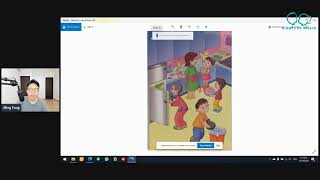
Ming shares flashcard strategies for speech-delayed kids: start by teaching them to sit and pay attention, use real-life pictures instead of cartoon images, and turn flashcards into games with toys and gestures. Keep sessions short and fun, and make the pictures match the child's actual life.
Chapters
Hello. Hello. Hello. Hello. Hi, everyone. So today we're going to go live and talk about something that I've been getting quite a few questions about. And what is that? Is, is that moms are. Yeah, just moms. Basically, 90% of the viewers here are mothers. Hi. And they've been asking me, hey, how do I use flashcards? How do you use, like posters, you know, those, like ABC posters, those flashcards for children. There are a lot in bookstores and online. You can buy it wherever. Actually, you know, any. A lot of clinics use it a lot. Right? So how do you use those flashcards to teach your child? Okay, so let me just read out the question I got. Basically it says that, hey, Ming, how do you teach. How do I teach my child to use flashcards to learn about ABCs, numbers, colors, different types of things, to learn these things? And she says, how can I get rid of the tantrums of his bang of bang his head, right? And the banging head happens whenever she asks the boy to like focus on, focus on these learning tools, so called. And he does it every time when he, whenever he tries to get what he wants. Right? So what does that, what does that mean to everyone here? Okay, so what you need to understand, right, what you need to understand right now is that first of all, those tools, those cards, those posters, those flashcards, they're not fun, okay? They're not fun for children. We used it when we were children. Oh, hi, Nabil, how are you? And flashcards aren't fun at all. You have to remember that it's just not cool for a child to use it. And you know, if you've been watching me like for some time now, then you would know when I asked a child to do something, we must have something that they want. Maybe it's like time with you, maybe it's that they already like hanging out with you. Therefore it's cool to ask them to do anything that you want them to do, right? Or if you're the relationship with your child right now is that whenever you tell them to do something, they run away. Then, you know, introducing some flashcards or some posters aren't going to help at all. Okay, so how do you use it? Well, first of all, you need to understand that whenever you're teaching a child something, if you use flashcards, it does automatically you need to think to yourself, right? Automatically you need to think, okay, how am I going to make it so that they will be able to use it to. Able to use it through this kind of how they're Going to use it everyday life, right? So you have to think about that, right? So flashcards doesn't automatically is very difficult for your child to use it in everyday life. Let me give you an example. So if you're learning, like for an exam, right, you're using flashcards, what are you using the flashcards for? For taking the exam, right? So when are you gonna use flashcards to learn something that you're gonna use in everyday communication? Very little. Okay? I would tell you very little. And that's because there's no, like, one set answer to when you should use a certain word or phrase. So therefore, a flashcard, it kind of sucks as a learning tool, okay? Because it's only one picture. It's only one word. They can memorize it very quickly. And a parent, actually one of my clients right now, she told me, okay, hey, Ming, I've been trying to teach my child how to read. So I got this book for him. Look, it looks like this. And then turns out that the kid memorized the whole thing. He wasn't even reading the words. So you have to be very careful, okay, about using flashcards. All right? And Nabil says here she learned. She learned. My daughter learned pronouns through flashcards. Yeah, well, there are a lot of things you can learn from flashcards, right? But not every kid is ready to use flashcards, especially those who cannot sit. So Nabil has her. Her daughter is very great, is very good at sitting down, right? She's super good. She's. She can sit for two hours. She listens. She doesn't have any tantrums. These kind of children, yes, you can use flashcards. In fact, it's kind of easy to teach with flashcards once your child doesn't have these kind of behaviors. Okay? So what if. What if there are tantrums? Like, they cannot let. You can't get your child to sit down. What should you do? Right? So given that. Given that, you know they can't sit down, then the first thing you should teach is to teach them to sit down, okay? And this itself is a huge, huge topic. It's super important that your child knows how to sit down and listen to you. All right? So what you need to do basically, is to set up a corner where, you know, you. You use every day, all right? Set it there. And so that your child sits there and listens to you whilst sitting on the chair. And then when you teach them to sit down, you give them, like, a reward, okay? Maybe only at that table they get to play with the iPad. Maybe at that table, they can only eat a certain stack or something. Okay? So once your child is able to sit down at the chair on a table, and then what you can do next is to do some easy tasks, right? Super easy tasks to tell them, hey, you can use this, you can use that, right? Whatever. And that's how I got carried away. Yeah. So you can tell your child to do like very easy tasks like touching your head or whatever, saying a word, saying a sound, whatever. It's super easy. Super easy for the child to do. Okay? Nothing crazy. All right? So we're still talking about, like, we're still talking about using flashcards, right? So once your child is able to sit down, listen to you, then you can try some flashcards. All right? You can try some flashcards. And how can you make it fun? Right? One way to make it fun is to let your child pick the card. Okay. Don't just, like, take out the card for them and teach them like a. Like, how would you do in a tutoring center, right, if that model worked? You don't need to sit down with your child, right? They can already absorb from tutor centers from the school. You don't need to do it yourself. Okay? So make it fun. Make them, you know, you can make it out into fan. Get them to pick one card, right? That's one way to make it a little funner. The second way is to maybe after they do certain things, you can flip the card away. That's what I always do. I flip it into a basket with a corner of a table where I can get it afterwards. And the other thing that you can do right now is basically, is basically to put it within another toy. Put the flashcards with another toy. For instance, a thing that I play a lot is a toy called Zingo, which has these cards inside, right? These plastic cards inside. I don't really call it a coin. It's like a token, right? And you can basically, what makes it fun is just basically you can slide it up and down and then you can like that. And then it comes out of the machine. I don't know what's the better word for it. So other than that, you can use just normal flashcards in a way that you would use. For instance, you could add it with another thing, right? So for instance, if you laminated all your flashcards, if they're not like waterproof, you can play with water, right? You can put. You can put magnets and paper clips on the flashcards and then make them hang from a. From a string or something. I've done that before. It's kind of fun. But it's also a huge mess. So Angeline asks. Oh, says watching from Philippines. Yeah, Angeline, by the way, I sent you an email. Please take a look. I'm so sorry. I messed up a little bit. But, you know, please check your email so that it's, you know, we can have a conversation there. And. Let's see. And a Facebook user. Sorry, I don't know who you are, because I'm using this streaming service thing. Anyways, I'm upgrading my setup here. This person says, any tips on teaching children to speak in sentences? Please ming you. Yeah, there's a whole. I made a whole video on YouTube and Facebook about how you can use gestures to make your child speak in sentences. Right? And to tie into today's topic, you can also use flashcards, obviously, but not in the way that people use it, okay? Not in the way that we all just, like, make a. Make a flashcard with sentences and try to make your child read off, which is impossible if your child doesn't know any of the words there. So. So what you can do. What you can do is you make sure that your child knows some of the words. It might be a picture on the flashcard, and use it as visual cues. For instance, if I want them to start to speak in sentences with, like, a subject and a verb. Like, for instance, mommy sit or baby cry or whatever, like Stephen chops, Stephen cuts, even cuts or whatever, these kind of sentence structures, you can have a picture of the person and then a picture of the verb where the verb is not really that great of a thing to display with a flashcard. It really isn't, because it's like, still. But at the same time, you can still use it as long as they know that card means a certain word. Okay? So what I would do is I would put two pictures and I would tell them, okay, whoever is cutting, right, you can say, steven cut, right? Baby sleep like that. You can use flashcards. Another way is what I like the most, because I don't need to prepare anything, is to use gestures. So you need to teach your child some gestures first. All right? And how would you do that? How would you do that? For instance, verbs are the best with gestures, right? So if you want to do sleep, this is sleep, right? You can do sleep or this asleep, doesn't matter. Depends on your culture. And then you can use that gesture to link things up together. So I'm guessing that when you ask this question, it means that, oh, that's actually Kathleen, right? So Kathleen asks, how do I make this. Make it into a sentence? So you can. I'm sure that it's still one word by word, right? One word by one word. And what happens is that when it's one word by one word, when he says that first word, you give the cue of the gesture and also the word together. So let's say that when you're, I don't know, washing something, the kid says wash, right? But they don't talk about what he or she is washing. Then you can tell him, yeah, wash. And you point with a gesture at that thing that you're washing. And then you can say carrots or whatever, like knife, whatever. So you can wash. Knife. Yeah, that's right. Washing the knife. Good. Like that. So you need to make sure that they know either what the picture you're using as a cue or the gesture using as a cue. And then you add it together when they stop with the one word. Okay, I'm guessing that's what you mean. Okay, so I see Anita says, I'm just going to show it here. Doesn't say your name. I don't know why, but probably because it's in a group, right? If my, if my child is still learning one word, do you think if I quiz her, which one is the book, which one is the pencil? Is it a correct way to use flashcards? I would say not really. What how I would use flashcards basically is, let me tell you. Okay, Anita, this is something that you can use right now. And this is what I use how I use flashcards too. And it's great that you asked this question because I was about to talk about it anyways. So basically, when it comes to flashcards, you need to have an ending, right? You need to have an ending. They need to know when you're going to stop using those cards to make their lives terrible, right? So you need to tell them when it's going to stop. And how we do that is we put. Put on the table. Let's say this is a table, right? We're looking down, we're looking down onto the table. This square, okay? And then you need to put a few pictures here, right? Maybe you can start off with four. Okay. And this is super easy because they. All they need to do is to listen and to show that they understand by taking it. So you put four pictures on a table like that. And then you pick, you take out your hand and Anita, what you would say is something like, okay, give me the book or like book depends on your child's level. For you. For your child, you should only use one word. So once you put your hand out, you say book, and you take her hand and then grab the picture or the. What's that called? The flashcard with the book on top. You grab that and you put it on her hand. And then that's right. That's one. Three more. Right. And then you keep on going. Pencil. All right, good. Pen. Good. And then the last one. Obviously, you don't need to talk. There's only one left. So then they're only absorbing. It's super easy for them. It's crazy easy. So you can just tell her, like, the. The name of it. You don't even need a prompt because that's the only one that's left. So she gets it. And then you point at the table and you say, finished. And you give her something to play or like, you tell her they can go now or anything that makes them happy. Okay. Okay. So this is how I would use flashcards at a very low level. And Anita asks is actually she's just using a book, right? She's using a book. Oh, no, the word is the book. I'm sorry. Yeah. So if you're using flashcards, you can use that in the beginning to let them understand this is how I do it as well and how I. What kind of things I do. Right. I'm just. Can I share my screen? Wait a minute. I think I can. So I'm going to let you guys look at what kind of flashcards I use myself that I've been giving my clients and stuff. Yeah. So let me share my screen first. Share. Screen. Yeah. Okay, cool. Share. All right. Now you're looking at me on my screen. So let's go here. So I would basically make a bunch of flashcards about this. So let's say that I'm teaching, like, the where question. Right? The where question. So I'm teaching a where question. But obviously, even if your child understands the word where, he doesn't understand. He doesn't have enough vocabs to actually answer you. Right. Even if you ask something they do understand. Let's say that I tell you. I tell you, right? Where's the place where you develop? Develop photos, right? Like, photos. If you don't have the knowledge that it's called a black room, you would know what it is, but you cannot answer me. You get what I mean? So even if you understand what I'm telling you, you don't have the vocab to Tell me. That's why I have to teach the vocabs first. Which flashcards are one of the best ways to teach? Okay. And I would use the method I was talking about, right? Put the flashcards on the table. I would ask them, okay, Alpha Mart. This is Indo version, by the way. You have to. This is ones that I have made after I've moved to Indo, but in Hong Kong, these are all different, you know, like this would be 7 11, right? Or like, I don't know, Circle K or whatever. But here it's Alpha Mart. And I would have did this. Too slow, sorry. So I would have a few versions of it, right? There's also Indomart. And you see, even for bedroom, I've got two pictures. The worst thing you want your child to do is to stick on one picture and just remember that as that thing. So that's why there's two bedrooms, so that they know at least two pictures. Usually I do, like three or four. But, you know, as long as I'm using the cards, once they understand, I literally switch it as fast as possible to like videos or like toys. It should be fine. Okay. For even cinema. See, there's inside and outside. I cover it as well. I try my best. And then kitchen, there's like a few types of kitchen. See, like there this kind, there's the Chinese kind in the restaurant, and there's one in like upscale home or whatever. And then the living room, there's like different types. There's two malls. You know, there's only one, one McDonald, for some reason, I don't know why. And restaurant, there's like this kind of like, what's that called? A Western one and a Chinese one. And for schools there are like, there's round tables and there's just a floor mat, that kind. So you get the idea, right? You need a. When you're doing flashcards, you need different versions of that thing so that they're learning. Okay. Other than where you can also do who. I do that a lot. And this is just a little bit extra large. There we go. So you see, doctor, I've got three, like, preferably in different genders. I hope this is more Indonesian. You've got drivers here and policemen. Depends on where you live as well. Please choose someone who is where you are from right now. Right? And then for these ones as well, make sure that, you know, at least there's some variation. Okay, so this is what I would teach, right? So I would use it. Let's see, Anita says already that mean it goes Very well. Yeah, use that. It's great. Someone asks, is it possible to buy these flashcards? No, I just use Google. So let me just show you how I do it. Okay, so sorry, let me, let me just open a Google tab. You don't need to buy anything from me or you don't need to buy any of these flashcards if you have the time. The best way really is to go online, search for it, print it and laminate it. Okay. I know it sounds like some crazy stuff, but it's actually not. I'll show you how. Okay, so wait a minute, I need to share my screen. Share. There you go. No, thanks. Okay, so you go on Google and you search for like kitchen, for example, and you go to images, right? And then you just literally you find the one that's most appropriate to you. Let's say you're living in like China, for instance, like Chinese kitchen. And then you would get something like this, which makes more sense with a wok or whatever. So these flashcards, it needs to be dependent on your cultural background. There are some great cards in the usa, in Hong Kong, in, I don't know, places that make this, that kind of stuff. The worst thing I've seen is actually people using cards from the USA or UK or whatever and using it here, which doesn't make sense at all. Kids have blonde hair when everyone has black hair, which kind of defeats the point. So let me give you an example of one of those. Is this. Nope. Where is it here? So for instance, this one, I would use this. This is like basically a flashcard, but a high level. This is what we call picture description level stuff with short sentences. But you would see like all these kids here, they are not Asian. I would not use this if a kid doesn't speak English, you know, so avoid those. The best you can do is to download yourself and you might say, okay, man, dude, I understand. Right, understand. Download these. It's going to be a hassle to print it, right? Actually, no, this is how you do it. Let me show you. So let's say these are the. Oh, by the way, these are the ones that are from Hong Kong, which are culturally like relevant to us. It kind of looks like this at home in Hong Kong. Okay, you see that Chess, Chinese chess people over there. So that would not make sense in your country. So what you would do is to, you go to there. This is some tech, I'm teaching you some tech stuff here. So you highlight it and then you right click. So preferably you have your printer connected to your computer already, you press print, right? And then here, you just, like. If you want to put it in fours, right, just press four by, like four by four here. And then just print it, and then later on, just cut it with a ruler or something. It literally takes, like, three minutes. And after that, laminate it and cut it again. Right? So this is actually quite easy to prepare. Okay, let's say that we go back. Let's show you some vocabs I prepared for a client. So just transportations, right? There's a whole load of them. You select them all. You right click, you press print. And then what you do is, I like four by four, because it's just the right size. So if you press do not fit to pick to picture or fit doesn't matter. Then you have uniform, right? You have a uniform thing. And you can just stack it together, use a ruler, and just cut it with a. With a knife, right? This is super easy. All right. I would not recommend doing something that takes a lot of time because I hate preparing stuff as well. So these are the exact pictures I send to my Indonesian clients. Right. Look, even taxi is that thing. You cannot buy this kind of flashcards. It needs to be real. Okay. Especially for. Especially for children who are. Yeah, obviously, if. Yeah, that's great, Kathleen. That's right. So, you know, she's in Australia. If she can make every. Every flashcard has a kangaroo on it. What I mean is, like, what I just showed you, right? The taxi needs to be the local taxi to make sense. You can't show, like, a New York yellow cab and teach your kid to, you know, to say that as a taxi, because at the end of the day, you're not teaching them to, like, identify a yellow cab to be a taxi. I don't know what color it is in Aussie for the cabs, but it needs to be like that. All right. I'm sure in Aussie, there's a lot of. There's a whole load of flashcards on either Amazon or, you know, just your local. You can ask your local speech therapist, basically. But you always have to start off with real pictures for flashcards, because if you start off with abstract things that you don't understand, it'll be impossible for you to, like, understand anything. All right? It's really impossible because how abstractness works is that it goes like this. All right, let's hear me out. So first off, it starts off with real life, like, just us, right? Real objects, like phones. Right? Like cups. Right? These are, like, real things. And afterwards you go to flashcards and you use, like, something that is a. That's a picture of it. Right? Here's a picture of it. Because it's already 2D, it's a little more abstract. The next step you go is like one of those kind of, like, real, but not really like a drawing, but it's kind of like a sketch, but it's real. Right. And then you get cartoons, like, which has more rounded edges and whatnot. And then you go more and more down towards, like, just line drawings. Those are very abstract. And the last and the most abstract thing you can ever do is to use words. Right? Cause no one understands that kind of stuff until they know how to read and kind of know how to connect the sounds to the words. Okay. So don't use flashcards that has too many words in it. It's actually a distraction. All right. In the beginning, if your child is around, like, two to three, use, like, stuff cards that are, like, real life objects. Got it. So, yeah, I don't mean you don't need to put a kangaroo and everything, but, you know, you got to find something that is real in your life to use it. Okay, so let's see what else I can share with you. Okay, so flashcards are great. I would like. I love flashcards, but you got to use it the right way. All right, let me show you another one. I'll just share my whole screen. Be right back. So these cards are to teach specific grammatical sentences. So this is what I call. This is doing. So for example, here I would teach the boy is drinking water. Or maybe no water. I can just. Just say, the boy's drinking, right? The girl's drinking, the woman's eating, or mommy's eating, whatever. And then baby's eating, baby falling, old man falling, girl jumping. You get the idea. Like, sorry, I missed out the. Is here. Sorry. Baby is falling. You know, old man is falling. It depends on what you want to teach. But you have to have this kind of flexibility in your flashcards. It's the best that you can download stuff and do it your own. Of course, it's great if someone made these kind of stuff for you. And look at all these descriptive pictures that I downloaded. They're all very clean. They don't have much stuff going on in the background. And you know exactly that we're going to describe the thing that we're looking at. So this is what I would do. I would always start off with realizing that flashcards is boring. All right. And realizing that if your child right now Cannot sit down with you and listen to you. Then don't do flashcards, for God's sake. Do some. Make sure that they can sit down, listen to you first. And then after that. And then after that, you can think about doing a lot of doing flashcards, but in a fun way, like letting them choose the cards, fly them around, you know, put them in the shirts. Do really funny stuff with it. What I like to do sometimes, especially now, you can get a lot of, like, alcohol gels, right? So what I would do is, like, I would tell the, like, alcohol hand rub, right? So you can put the alcohol hand rubs on the flashcards if it's laminated, and then tell them to wash it, right? And then once they wash it, they use, like, a paper towel to wipe it. And then they can tell me what's going on, right? Because now it's clean, right? And they wipe it and say, oh, apple. Yes, that's right. Okay, next one. Let's wash the cards. Wash, wash, wash. And then take it out, wipe it. What's this? Oh, a banana. Great. That's a banana. And then you can, like, either throw it away or whatever. Make fun. Make it fun. Okay. Don't. Don't try to. Try to dictate those stuff, all right? It's not SAT time. It's not. You're not teaching them vocabs for an exam. You're teaching with flashcards so that they can use it in real life, which is kind of different. So lakeisha says, let me show it. Doesn't let me see your face because of. I'm using a streaming thing. She says, bought a Mr. Potato Head after. I recommend it works great for body parts. That's great. Yeah, it's good stuff. Yeah. So, yeah, try this kind of flashcards, all right? It's free. You can download from the Internet. It just takes a little of your time. If you have someone that can help you laminate and cut, like an office assistant or something. Hallelujah. Go, go do it. I know a lot of parents who actually have a home office nowadays, and they ask someone to help them out. So it's easy peasy. All right, so you can. You understand that all these cards that I made, right? You can start from, like, one word. You can target two words. You can target a whole sentence. You can target even a story, right? So let me show you some stories I have here if I can. Right? Okay, so let's go back. Stories. Where are you? Oh, here. So you can see stories here. This whole flashcard, obviously you need to buy this kind of stuff, right? Oopsies. Okay. Oh, man. Okay, I need to stop pressing. Okay, there we go. Okay, I still screwed up. One more time. Okay, good. So you see, this whole thing is more of a Hong Kong context, right? You've got like, rice soup for dinner. And you also got this domestic helper who's, I don't know, it's a little politically incorrect, but she's from Southeast Asia. And you know this kid is playing a PSP, right? A PlayStation Portable. So this is highly cultural context, but you can try and find some story cards at your own local, I don't know, bookstore, schools, therapists that are selling these kind of story cards, right? And what you can do here, first of all is to tell them to put it in order. So what you do is I would print it, right? I would print it, right? And then after I print it, I would cut it all into small little cards. Like, just cut them up and then laminate them. Mix it all up and then ask your child to, like, put it in the sequence. Like, oh, no, I messed it all up. Can you help me put it back in order? And if they do put it back in order, it means that they actually comprehend each of the cards. If they don't, then what you want to do now is to actually take each of the cards and ask them to describe what's happening. If they can't describe what's happening, you're probably at the wrong level. Don't do this. Go back and do something easier. Which one is easier, you might ask. Good question. This one I was showing you. These are the ones that are easier. These are real life. These are pictures. I would try this. Ask them to describe what's happening, right? First of all, I would ask a few questions so that. So that I know if they understand anything or not. So I ask, hey, where is this? Right? If they answer, they can't even answer that. Then you need to go back to doing where questions first with flashcards or, like, with toys or whatnot, right? But this isn't what you should teach. If they cannot answer you where this is, right? It's pretty easy. Where is it? Kitchen. And then the next question you might ask is, how do you know, right? How do you know? Well, there's a fridge, right? There's sink people washing dishes. There's a stove over here. There's a hot water dispenser, and these are dirty plates. So you would know, right? And then now you can see if they know all the vocabs in here. All right, first of all, you can ask, hey, what is this? Fridge. Good. What's this? A sink. What's this thing? Oh, dish soap. Dish soap, whatever. What's this? Dispenser. What's that? I don't know what that is in English. I forgot. That's the problem with being bilingual. You just don't remember stuff. What's this? A stove. Okay, and then next you can ask, what's it for? So you can keep on asking, but keep it fun. Okay? For instance, how do you keep it fun? So what. Hey, this stove, you told me, right? That's really good. Well, what is it for? And then if they can't tell you, then you can tell them, oh, it's very hot. You know, when you. When you turn it, it goes like that. See if they remember right? Once you give this. These cues, they might say fire. Or, like, they might say, oh, cooking. And then you'll be like, yeah, that's correct. It's for cooking. Can you pretend? Let's cook something together, right? You make it fun. If you have, like, toys, you can do it together. But usually I just pretend and, like, make a clown of myself. And then you can ask what they're doing here. And then why are the bubbles, right? Because you use soap. These kind of questions like why and how will let you know how much your child actually knows and actually how much they can answer you. So it's a great way to see what is what they are made of. Basically, how. How much language do they know? And here, for instance, this kid is holding a bunch of, like, dishes, right? And then you say, okay, why is this boy giving mom dishes? And then he might say, oh, because, mom, they have to wash it. And then you might ask again, you say, okay, why do they have to wash it? And then you might ask. He might say, oh, because it's dirty. And then you will ask, hey, how do you know it's dirty? Right? How do you know it's dirty? Because there's, like, stuff around here. There's junk, some, like, oil and stuff on there. So then once you keep on asking why, why, why? How you understand how much they understand how much they can get from this picture, all right? If they can't tell you, then you need to teach. You can tell them, oh, look, what's this thing over here? What are these stuff? Oh, it's dirty. Yeah, I know it's dirty. But you know, what is it? And then if they don't know, you can tell them. And. And if you're at home, you can show them after you do the plates. You can say, see, this is dirty. See, there's oil, there's whatever on it. There's ketchup, there's soy sauce, whatever. And then another question you can ask. See this one picture, I can go on for a long time, given that your child can sit down and you're making it fun, okay? You're asking questions and being silly at the same time. Right? And then another question here. Why is. What's the girl doing? Wiping the, whatever, Wiping the plate. Why? Because it's wet, right? Oh, how do you know it's wet? Oh, because here, look. It's shiny, it's blue, there's some water on it. Cool. Good stuff, right? What is grandma doing? Putting watermelon in the fridge. Right. Why is she doing that? Because she wants it cold. Right, Cool. And what if you don't put it in the fridge? See you teaching more and more world knowledge. Okay, so in this whole picture, after you ask this, and then you can go on to describe it, you can ask, hey, look, mom is washing the dishes, right? Then what's the girl doing? So hopefully they will copy your structure, your language structure and say, oh, the girl is wiping the dishes. Great. How about this one? The boy is carrying the dishes. And this one, Daddy is throwing the rubbish. Grandma is putting the watermelon in the fridge. That's slightly longer. Right. So you get what I mean when you use these kind of big cards or posters or whatever you like to call it. It's just a flashcard, actually. You can ask questions and see how much what you're dealing with. Because the difference between you and a therapist is that, yeah, Nabil knows more, knows more worse than I do. Yeah, that's. That's a. That's a colander or something. I don't know what that is. Yeah, so. And she also said for me, the tickling game worked well for teaching body parts as recommended. I mean, yeah, if you don't know what that is. It's just you tickle each part of the body and you tell your child to tell you where you want her. No, no, where she wants you to tickle. Right. Hi, Crystal, how are you? And so that's pretty much the end of this video. Okay. This is what I would usually do with flashcards. It might not be like the answer you're looking for because the best strategy is to find something that works, buy it and just use it. Right. Like a potato head. It's super useful, but at the same time you need to understand that sometimes the cards, they're very rigid. You need to cater to how much your child can understand and how you know that. And what's the difference between you and the therapist, let's say, is that we keep on, like, seeing where the child is, like, trying to assess, trying to know, trying to like, guess how much they can understand and how much they can talk. And then we try to find the correct level so that we can teach. Right, so that we can teach. So, yeah, that's all for now. Remember, if you haven't, you should buy a printer and laminating machine and you might say, hey, I don't need to laminate anything. Well, you should, because after you laminate, you can keep it and you can, you know, you can give it to someone else afterwards. And also you can do a lot of fun things where you can put in water, you now put paper clips in it. It's much stronger. You can like flip it around. You can put it inside like a toaster toy if you have one. You can do a lot of things with it. Right? So remember, do use, do use a laminator. Okay, so that's it for today's live. Thank you so much for tuning in, guys. And if you have any questions, please just PM me or DM me or whatever, just put them in the comments here. I will look at. It will just take me some time. Okay? And then I'll be answering more questions. Next Monday at this time, it's 9.0pm for me in Jakarta. For anyone who is in the USA or whatever, it's actually 10am EST. 10am EST. Okay? So with that said, thank you so much and I will see you next week. Bye. Bye.










