Teaching Speech Delayed Children to Eat Properly | www.agentsofspeech.com
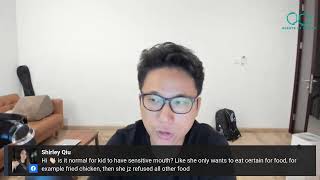
Ming from Agents of Speech shares practical strategies for feeding speech-delayed children: use pause-and-play on screens to reinforce chewing and swallowing, pair foods they like with new ones, and use chewy tubes to build chewing skills before moving to solid foods.
Chapters
All right. Okay, now we're live and just wanted to start a little bit earlier so other people can join real quick. If you are watching this on a recording, just feel free to skip forward a little bit. I just want to talk about, what I want to talk about tonight is actually just how to teach your child, especially speech delayed ones, to to speak. Right? So about all this eating, feeding and these questions, right? A lot of moms especially, they have problems because I've been working with, I've been, I've been working with a lot of children before who don't eat. You know, who eat when they want to. You know, they always need the gadgets when they're, they're eating. They refuse to be fed. You know, like they put their food on their heads. All kinds of stuff happens, right? Some of them, they just throw the food at the moms and it's not cool, right? So I'm just going to give you some like general tips if you need more help. The best way is to join one of our courses that corresponds to your child's language level and then just ask in the Facebook group or just email me or we have a membership for parents who are like yourself and you can upload videos to me and I'll upload, I'll look through them and so on. Right? So all this stuff just go to agents of Speech.com. if you haven't joined a course, the best bet is the micro course. Okay. Micro course is, you know, it's all in one. It tells you nearly everything you need to know in a very short and snappy fashion. But other than that, let's get back to the topic of eating. So you have to understand eating or feeding is something that, you know, like children who are quote unquote spoil, right? You know, like if you go to like some of the, who are those called like developmental experts, right? They're like, oh, don't make sure that they are hungry. You know, make sure, don't spoil them, don't give them gadgets. But you know, like from what I know at the very least is that it's actually very, very, very difficult to control a kid. Especially if they don't understand stuff, you know, they don't understand what you say. So I think it's totally fine if you give them like some screen time to eat with the meal that they're having. But you need to have a mind, a long term mind to like slowly decrease the number of minutes or how long your child is able to have the screen time. Okay? That's really, really important. All right, so how do we do it? Well, first of all, you need to have the screen under your control, okay? If you're using it, that is. I'm going to talk about other stuff later on, right? So if you're using a screen to make your child eat, right, you have to control the screen yourself. You have to pause it. You have to stop it whenever he. He or she is, like, chewing or eating, right? Once they swallow and then they scoop another. Another thing, and then they put it in their mouths, you can press play again. All right, so I'm talking about this, the premise, okay? What I mean by premise is, the assumption I'm talking to, I'm telling you, is that first of all, your child is willing to eat under screen time. If your child isn't willing to eat at all, you can try screen time. You could try that, or you could try having the. A preferred food and not preferred food and pair it together. Use it together. Eat, okay? I've seen it work wonders before. So one of my students before we had, like, sausages and then the rice and the veggies. So we made it clear that one sausage after one sausage, you need to eat the rice and the broccoli, let's say, okay? So it needs to be paired like that. And slowly you decrease the number of sausages. So just like the screen time, you have to start to decrease the number of rewards associated with the behavior and the behavior we're talking about now I'm getting a little bit more like ABA behavioral therapy, because as a speech therapist, I don't do this, but, you know, I just need to do. Especially like in. In Indonesia where I am, right? I'm all in one solution nearly, but not. Not in terms of, like, physical or occupational, right? But. But I've had enough experience to tell you what you can try, right? Because every kid is different, okay? So anyways, you're supposed to pair a reward with what they don't want to do, all right? And never force them to eat. The last thing you want to do is to force them and just spoon and put it in their mouths. That creates a really, really bad experience. Okay? That's number one. Number two, find out what they like to eat, okay? And use it. Find out what they like to watch and use it. Number four. Number three, sorry, you should find. Find out what textures they can handle and what textures they cannot handle, okay? This might be actually the one thing that you don't know. Maybe they cannot handle certain foods, right? That they cannot manage. Eat like chewing, okay? You avoid that and try to chop it up for them. And then also the side. You will train them to eat it with a speech therapist, okay? With a feeding specialist, something like that. Okay? I am not a feeding specialist. There are loads of qualified therapists out there who specialize in this. I. What I specialize in is just, you know, trying different things and see if it works. That. That's my kind of jam. Okay? So that's what you need to do, man. You need to go to your child and see what type of textures or what type of. Of tastes that they can actually try. Okay? So if they cannot take huge chunks of meat, cut it up, okay? Slowly increase the size to see where they. They cannot do or can do. So I see students before, they would only use the top, like here, the front teeth to chew something that's not chewing. I don't know what it is. It's pecking. I don't know. So whenever there's, like, vegetables or meat or whatever, and they try to eat it that way is very, like, inefficient, and it's very hard, right? So that's why you have to establish chewing with the molars. All right? So sometimes. Okay, sometimes not all the cases, right? What we will do is that we use, like, the talk tools, the chewy tubes, and we teach them to bite with the molars. And then after that, we change it into, like a vegetable stick, like carrot stick or something to generalize that into, like, that they can use it for biting food. Okay? And then after that, you use something that is more desirable, like a candy that, you know is like the hard one, the stick, stick, like ones, pretzels, you know, or you can actually try, like, sausages that are soft and can let them chew here, that will help them as well. All right? The last thing you need to check is the sensory. So I was telling you, like, the textures and the. And taste is very, very important. All right, so why is it so important is because some of the times it's like you eating ice cream, but you're sensitive to cold. To cold temperatures, right? Then what happens is, like, you don't like to eat it because it's too sensitive. It makes you feel bad. Okay? So it's the same thing for a lot of foods, textures that children might encounter. So you need to be careful about that. You need to find out which ones are and which ones are not. So if they cannot take slimy stuff, right, don't give it to them. Okay? If they cannot take, like, soup, bait, Soup based stuff, don't give it to them. Right. So that's one thing you have to bear in mind. So try out what textures they can and cannot do. Is it that all the foods they like it like blended and made into a puree, whilst that most probably, if the child likes that most probably is their oral motor they're eating is not that great, you know, managing what we call a food bolus they cannot really do. So that's the mechanical part of it. The behavioral part is just in the beginning as I said, right. Find out like a reward and then use it to make them eat, to scoop and put it in their mouths and chew it and swallow it and then offer them another reward if they want it. Then you know, they have to eat the food first. Right. So that's pretty much it. I wanted to like just quickly share with you guys in a very short video. I am not making a course about this. I am only offering like a consultation or you know, if you guys in conjunction to your child's speech and language development, you need someone to take a look, then what you can do is like join our membership, which is kind of like it's half open right now and you guys can send me like videos of whatever you're doing. Okay. I've even had like parents like asking me how to teach a child to like walk in the mall with them without like pulling onto their. What's that called? Pulling onto your hand like crazy or running off or whatever. So I like doing these stuff. It's fun. But at the same time it's very, very, very important that you deal with your child's speech and language problems first. Okay? So go ahead. If you haven't, go to agentsofspeech.com agentsofspeech.com Someone said that I say it so fast and I'm like saying Asians of speech or something. Obviously I'm Asian, but at the same time, dude, why would that be a brand name? Come on, man. Okay, so that's it for tonight. If you guys have any more questions, which I don't see any coming in tonight, feel free to put it down in the comment section. I will try my best to get back to it. I just got back. Like if you saw last week's video, I was somewhere else. So I finally got back home and starting to catch up with all the emails and all the DMS and stuff. If I don't reply, you or someone else on our team, then just wait for a bit. Okay. Because it's kind of hectic this week, trying to catch up everything. And that's pretty much it, guys. If you guys have any more questions, let me know. If you guys are interested, go to agents of Speech.com, check out the courses there. And we'll be rolling out a new course very soon, I believe. I'm in the midst of planning it and we're working with a bunch of parents who are at that level and what we call verbal reasoning level. I'm probably going to just put it together with storytelling, but it just gives like a very rough guideline. Not very rough, but a very, I would say, pretty comprehensive guideline on how to. How to teach your child to answer questions, play with you, play board games and answer why questions, answer how questions, and also to describe things and tell a story. So that will be coming out probably like next month, right before Christmas. I believe and hope everyone has a good Halloween. Happy Halloween. I didn't do anything for that. Too old for that already. I don't have kids yet, so no, no trick or treating. But you guys let me know how it goes. The last question I want to leave you guys is that do you guys use Tick Tock? That's the thing I want to know, right? Because TikTok is like, you know how like Facebook and Instagram, for instance, this thing, this whole, this whole live, right. It doesn't get pushed to everyone, but TikTok is rather new. So like what we call organic reach is rather. Okay, so if, you know, TikTok allows me to like get to you guys easier, then just let me know. I'll think about a way to do it. So Kuyan has a question. Okay, cool. I was just about to like, just stop it, Kuyan. But anyways, may I know when is a suitable time to intro the unacceptable texture to a kid? So yeah, it goes back to pairing it with, with something that they like. So there are two things you have to remember about unacceptable textures. Is there anything in your life that is unacceptable to you? Right? So remember, when you're giving it to them, start with small quantities, okay? So if even small quantities, they really reject it, even with like a strong reward, then you have to think about what can mimic that texture. Okay. Usually what that is is just like a sponge or toothbrush to just check their, their. What's that called? The oral sensitivity. And I know, Kuyan, you're going for like an assessment soon, so you better get it checked it out there. It's pretty hard for me to comment without seeing your child, you know, like his oral sensitivity. It's difficult. So basically I don't have it here. Get it. It's downstairs. So we use something like a sponge or like a. What's that called? A baby toothbrush. And then all we just do is let's go all around his. His thing, like all around his mouth to see how like, good or bad the sensitive sensitivity is. All right, so let's see. Koyan says refuse the one ton skin. That's a very Asian thing. I just had one ton today, so I love it. It's a shame that he doesn't. You'll vomit it out. I think maybe the one ton skin is too big, right? Is it only the excess skin that he's not eating? Thank God I'm also Chinese, so I know what you're talking about. So is it only the excess skin that he's vomiting out, or does he only take out the. The stuff inside, you know, the stuffings, and then he just vomits the whole skin? I don't think he has that capability with his mouth to be able to do that. So I'm guessing it's the excess skin, right? So I would say. How about you try? Yeah, I think it's. Is it smooth? Maybe it's too big, I would say. Right, so you can cut out some for him. See if he would actually eat it in small quantities, not the whole thing, to see if it's really about like the smooth smoothness or the quantity. I kind of think it's because of the quantity. Because it's after it's so flat. It's very difficult to change too. He needs to like, swallow it right away and it's very difficult. So try it in small quantities first, you know, and then see if you still, like just like just, you know, spits it out. Okay, Try that first. I'm not sure because your guess is that it's smoothness, right? I don't know about that. Probably not. Probably, maybe, maybe not. Who knows before you try it? Okay, so if small quantities work, then what I want you to do is to cut the one ton, that excess skin, slowly increase it until he can handle it. Because I really think it's a management problem. More than that. Because if you think about it, the whole thing is smooth. If you put it in, like, if you put it in his mouth. I don't know why, like Southeast Asian wontons have like so much excess skin, you know, what do you call it in Malaysia? Is it bounce it as well? Same as Indonesia. Like a lot of excess skin. For some reason. I don't get it right in. In Hong Kong, where I'm from, it's like, all stuffed. It's like, there's all stuff inside, like prawn meat and whatever. Right here is just a lot of skin for some particular reason. Anyways, so try that out. Korean. Let us know in the. In the. In the members community. If you need help over there, just let me know. Okay? And I think. Okay, so even cut into. He'll observe it, refuse it for. Okay, yeah. How about you, like, give him something he likes and then wrap around it like a sausage or something, you know, See if he's okay with that, you know, Pair it with that reward, See if he's okay, you know? Yeah, let me know, man. So that's all I want to share. If anyone have any questions, I'm just gonna stay here for. I know I said I was going, but, you know, just. I'll just be here for another, like, two or three minutes and I'll leave it at that. Right? Okay. Yeah. So try it, Goyan. Try it. I'm not sure. Like, give him something that he wants as well, you know? I'm saying, like, is a reward, as we always say. Okay, cool. So I guess, like, not many more questions for now and gonna be hard at work for these, like, few days. Those are stuff to catch up. Oh, Shirley's here. Hey, long time on talk, Shirley. So she says hi. Is it normal for a kid with sensitive mouth? She only wants to eat certain for food. And example, fried chicken, I think, you know, like, a sensitive mouth is for sure. It's not normal to have it. Right? It's. If it was normal, then a lot of people would have it. Like, but most of us have sensitivity to, like, temperature. Right. If she only wants to eat fried chicken, I don't think she has a sensitive mouth. She's just picky, you know? So it's down to you to bargain with her. Like, one piece of, like, one bite of chicken, one bite of whatever else. Okay. You know, I've, you know, if a child can handle fried chicken, it's not sensitive. You get what I mean? So fried chicken is pretty hard to eat, I would think. Okay, I might be wrong. Okay, I might be wrong. But for now, I think. Really? Yeah. Bargain with her and use that as the reward. Make her eat something and then the thing. And then if she screams and shouts or whatever, you know, then, you know, mix it up with the other stuff. Cut it up and mix it with other stuff so she has to eat it. Yeah, I mean, it's like Me, I like chips. You know, no one literally likes hard food if they have like sensitive. They have a sensitive mouth. Actually. No, that's not true. Some of them like the hard stuff, like a crispy stuff, but they don't like the slimy stuff. But at the end of the day, slimy stuff is because they can't handle it. Not really about the sensitivity, I would think. But the crunchy stuff is equally difficult to. To handle actually. So it really depends on. I don't think if it's fried chicken, she can eat it. I just think she, she's just being picky. If she refuses it, then, you know, don't offer as option, you know, and if she only does use that, you know, just use a reward or something. Use it as a reward or use a different reward to make her eat something else and a rewarder. So see if that works. You see, I'm always like, there's only a few techniques I use anyways and it works. So try that. Okay, cool. So that's all for tonight. I am heading off. Have a good one and I'll see you guys next week Monday. Do let me know any updates, guys. If you have ask in the group. Let me know how it goes. And stay safe, guys. Oh wait, there's still one more. I'll just answer it. Yeah, I mean like a lot of people don't like kiwi and dragon fruit. Fruit as well. I would say like. Yeah, maybe it's. Maybe. Is it cold? You know, is it cold? That's my question, right? If it's cold. Maybe it's about that. Maybe you should mash it up, see if it makes a difference. I think mashing it up will make. Will work actually. But let me know if it's not then, you know, try to put it in his molar. The bite and then he will swallow like a cube, you know, make into a cube and then bite it and then see if he will swallow, you know, check. Check that out. I think it's. It's the. It's a good. It's. How to say it is slimy. He's scared to try it and he might have had a bad experience trying it. Okay, that's it, guys. See you. Bye bye. Good night.










