The Best Activities to Teach First Words to Your Speech Delayed Child
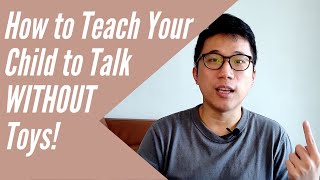
Ming from Agents of Speech shows how play builds first words in speech-delayed kids. Start with tickling, peekaboo, and swinging, then move to toys like bubbles and cars. The key: repeat until your child expects what comes next, then add words.
Chapters
Hey, welcome back to this channel. This is main agentsofspeech.com I'm a speech therapist. Today I want to talk about why playing is such an important thing for a child to do and learn whilst acquiring language. Alright, Alright. So why playing? Why playing, Ming? Why is it important at all? First of all, there are studies that talk about why playing is actually related to cognitive skills. Right? The better your child knows how to play, the better their cognitive skills are. I'm not gonna go there. I'm just gonna tell you that play is actually how your child explores the world. If you think about back then when you were a child, if you can remember, that is you use play to explore and make stories in your head, right? You use play to think about and learn about things. All right? That's why there's Lego. All right? Because you can experiment with something using your play skills, build stuff that are imaginative and expands your thinking and it puts world knowledge into practice. And more importantly, if your child isn't speaking yet, play is a good tool, is a good motivation to help you teach your child some pre linguistic skills. We've talked about pre linguistic skills in a previous video, so you can check it out. But the short version of it is just skills that your child needs before they can actually use speech and language to communicate. There are a few favorite games that I use in the clinic to actually play with children opposed to a lot of different general beliefs about playing. You don't really need toys that much in the beginning, all right? You should be the toy. That's why they should communicate with you, all right? And that's essential part of playing together. So if you do want to check out all the tools and the toys that I recommend, you can go to www.agentsofspeech.com. checklist is just a whole bunch of toys and tools that I recommend to my clients. Okay. When they go home and they don't know what to do. So I've actually talked about this in a live video before. Right now, as of this recording, I don't know if this will continue. I've been going live every Monday, Wednesday and Friday at 9am Jakarta time, which is 10pm EST. So it would be a day before I think, because we're in front. Anyways, click the notification bell and like this video. Subscribe so that YouTube will tell you when I go live. Okay? And please subscribe. First one I love is actually tickling. And I've talked about tickling for a whole 20 minutes on live. But anyways, the short version of it is that when you use tickling, you need to realize that your child might not like it. Okay. Some children are really, really sensitive to sensory input. So you want to try it out to see if your child really laughs and, like, really enjoys it first. So how do you do it? So basically, all these games I talk about, it's about building anticipation, being able to build anticipation. And then we can use that anticipation to teach some language. So let me show you what I mean. So you can go in tickle, and then when your child goes ahahaha, like laugh. Do not tickle for more than one minute. Obviously only do it for like two or three seconds. Once you see your child having fun, let go. See if he wants more. So when he wants more, you can say the word tickle and do it again. Okay? And at this point in time, we're only teaching the routine of accepting tickle. We don't want to teach the language within yet until he can totally anticipate that I'm gonna tickle whenever I say tickle, and then I will start to teach the language. This point, I've used tickle many times, especially for children on the spectrum. And that's because I want to build a relationship between them and build a rapport. I want to be the toy, and I want them to command me to do the stuff that they want to. So tickle is number one. Number two is peekaboo. Peekaboo I love, because my first ever client, actually we had a connection when we tried playing peekaboo. Whenever he saw me, he would say peekaboo. He didn't know my name yet. Later on, we taught him my name, but before that, my name was peekaboo. How we do it is that we don't cover our eyes because we can't see the kid. We don't know what's happening. He might have run away already. So instead, we cover their eyes and we say pika. Boo. Like that. And how the anticipation works is when you go pika, you stop, and then you say boo and you open. So you're linking the boo and the opening together, the pika as a cue, as anticipation. So slowly what you want to do is to increase the gap between pika and boo. And hopefully your child will actually say boo him or himself or try to get rid of your hand, and then you know that he understands the routine of peekaboo. And it's great because it also helps children to learn eye contact because you're so close. Another I love is swinging hands, which I learned at My first job thanks to my supervisor. So all credits to him. So how do you do it? Is basically you take two hands and you go like. Like that. If you're my client, you've seen me do it multiple times. I like to do it in between. I like to use it as a high five. So I swing them and their arms go like this. Right? When you swing them fast, it's actually fun for them. If you feel any resistance in their arms, don't do it because you're gonna hurt them. Basically it's just the same as tickle. You swing and then you stop and you just wait for them. You a signal or their arms will jolt a little bit telling you to move. Another one is upside down. Be careful if you're not strong enough. So what I like to do is just like to put the kid upside down. So you're not going to do this for a four or five year old obviously because they're too heavy now. So do it when they're two or three, when you can still handle them a little bit more. So you go upside down. See, everything we're doing is we're making anticipation. And by the way, all these play stuff and is all these games and activities and little fun stuff is geared towards children who are learning their first words. We can add language and make sentences longer later, but this is now not the point. The play is to establish the relationship between you and the child and for them to understand and anticipation. All right, so the next one is singing with movements. So this can be fun if you really know how to sing. But the trick to all of this is to stop at the right part for them to fill in. And if they don't fill in, don't be discouraged and fill it in yourself. So what I mean is you can go ABCDEFG like that. Like if they don't even talking, just help them fill it in. All right, and the last part I wanna talk about is like just using toys and using toys, you can still put anticipation into it. So the first one is actually like 1, 2, 3, go. Right. If you have a car slide, so what you do is you do a few times and then you say 1, 2, 3, go a few times. And then afterwards you say 1, 2, 3,. Go. Alright, so the thing is, don't be discouraged when they don't know what's gonna happen. You have to do it a few times for them. Even if you need to fill in, they go yourself. One, two, three, go. Like that. When you're using toys, there's a few that I'll tell you right now. If you want to go to agentsofspeech.com checklist for the whole list of toys that I used to. I like to use bubbles, I like to use car slides, I like to use microphones, cars, all that stuff. For the initial phases of therapy when you're using toys, all right, in the beginning, it's not about the toys itself. It really isn't. It's the way that you use it. So every time when you have a new toy, you need to think about how to build anticipation. And then when you have anticipation, do not start playing with your toys at the highest level. And what I mean by that is, for instance, if you have a car slide, don't use all the cars at one time, alright? If you have bubbles, don't take the biggest bubble hoop thing that you can get, okay? If you're using a microphone, don't put it on the highest volume. You know those Chinese karaoke stick microphones, don't put it on the highest or put the echo effect on yet. Do it with the basic level, okay? And if you're using Mr. Potato Head, don't give them all the different parts that comes with it, like the microphone, like the handbag, don't use those yet, all right? And if you are, I'm going on and on with examples. And if you are using some form of like toy foods or whatever, don't introduce them to like a sink, a microwave, a fridge or something like that. Leave it for another day so that you can slowly build it up towards that level. You cannot give them all the good stuff in the beginning. The last part, when you have all these anticipation and you start from a low level and you know how to use those toys and. And then you want to add language to the games so you stop at anticipation. Like you say pika boo. So slowly that the language part is the boo. Right? For tickle, you might add the body part, right? You might say tickle head, tickle ears, tickle mouth, tickle neck, tickle armpit. I don't know. It depends. It depends on where your child likes it. All right? And you have to stop. Tickle, tickle. Where? Oh, tickle head. Oh, no, no, no. Tickle face, tickle. Oh, tickle feet. Good boy. Like that. So you have to give them some choices. Okay? And same with using like car slide bubbles, you can teach them and anticipate. So for example, bubble, you can unscrew and say open bottle like that or something. I don't know what you're using for bubbles all right it might be something else it might not be a bottle it might be like a jar or something. Thing that happens at home is parents tend to give up before the routine established the anticipation is good enough and they don't do it enough themselves for it to become fun for the kid so that they know what's happening. So play to me, all right? To me I'm not quoting anyone or any textbooks or anything. It's a way that a child learns a routine so that once they know a play routine or how to play in general we can add language to it because it's a context it makes sense. All right Please go to agentsofspeech.com checklist to get the full checklist of toys and tools that I tell parents to get at home. Alright so if you have any questions again put them in the comments. All right I'll check them out and I'll answer them very soon. So see ya. Bye.










