The Best Toy to Make Your Toddler Talk to You | Tips from a Speech Therapist
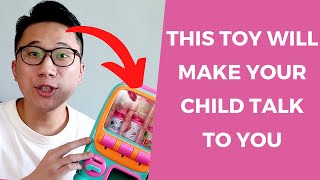
Ming from Agents of Speech shows how a vending machine toy teaches toddlers to talk. Model the full sequence, use gestures, teach words like press and get, and take turns so they build longer sentences. Filming unboxing videos adds extra motivation.
Chapters
Vending machine toys are awesome toys that you can use at home to make your child talk. And I've seen a lot of parents actually use at home. But you might stumble when you get it and try to use it with your child. Because frankly speaking, there are a lot of words that you can teach using this toy. If you haven't thought it through before, it's actually very hard to do it. My name is Ming. I'm a speech therapist from agentsofspeech.com and today I want to talk about how to use this toy. So first of all, for all toys, you should always show your child how to use it from A to Z so that they know what this thing can do. Okay? So first of all, you have to turn it on and show them that there are two options. Number one, there's a coin and there's a card. So show them with the coin first, make sure that they're engaged and say that, oh, look, coin, put. And then it will go. The music will go off. And after that, after you put the coin, you press, get the drink, drink the juice and throw it. Okay, so this is a whole sequence. They have to know the whole sequence from A to Z in order for a lot of things to work. So after that, you can actually let your child to play with it. First. You can give them a coin. This is where you can teach them, like, open hand, open palm, gesture for them to receive the coin instead of snap, snatching it from you. And you need to do it every time so that they know, oh, we're playing together, right? You give it to the child like that. After that, you guide them, you take their hands or you do a lot of pointing or prompting. Tell them to, oh, put in the coin, press, get the drink, drink it, make some sound effects, and then throw it. The first thing I would ever do is to let them choose between the card and the coin. So let's say your child chooses the coin with his fingers. He's just, like, going for it. And then you can say, okay. And then you can do a guessing game. You can ask, hey, which one is it? So it's another choice, but now we can target one more word like open and this one or something or pointing. Okay, so they have to say open to choose one. And say, open, open. You can do the gesture and oh, and I can. We can now target one more question. Is that. Is there anything here? And you can say, no, nothing. They don't need to respond at this moment because they're still learning about it. And when they open this one, you can ask again, is there anything here? Yes, that's right. There's a coin. So after that they can go on with the whole sequence. And you might ask me, hey, Ming, how about the card? Can we do a guessing game with card? Yes, you can. So it's a little harder. So what you do is you put the card in your palm and then you use your thumb to, like, hold it here. And my hands are pretty small, but at very least you can't really see it. Okay, so you can do the same thing, but instead of open, you can say flip. Right? So they can choose which one is it? Oh, this one. Flip. Is there anything? Yes, there's the card. Teach them to use gestures to talk to you. Right? So for instance, you can give it to them and you say, where do you put it? And they have to point here, here. They put it in. And then after that you can ask what. What do you need to do? Press, Press. Good. Press. There's no more here. Press like that. Right. After that, you can also teach them the gesture of get. Right? Get. Oh, get the drink. And then you can teach the drinking gesture. Drink. And then the throw gesture. Throw, like that. And then you can start to use sounds or words. You can target coin, card, press, get, drink, and throw. Just like we were talking about before with the gestures. Now, there are some concepts you can teach with this thing. Okay, for instance, remember the guessing game where we said, is there anything no more? Right. Or there isn't. You can also do it with the drinks here. So once it's empty here, you can keep on trying, but nothing comes out. And you can now teach empty or no more. Right? And every time they want more inside, you can either teach them to gesture more or less, or you can just tell them to say more. Right? As a word. This is also true for the coin slot here where you know the. The change comes out. There's no more here. So you can show them no matter how, how much you press, there's no coins inside. What? There are no more coins inside. Right? So again, they have to ask for more from you. You can target like, yes, no, the concept of empty or is there anything inside? Those kind of concepts you can do with this machine over here. Okay. The next thing is that once they are really familiar with the sequence, you can now take turns so that they know how to share. Okay, so let's say that we. We put the vending machine in the middle, and then we take turns playing it. All right? And we pass the vending machine to someone else after playing. So it might be Ming's turn. Ming finishes, Ming drinks, Mink throws. Cool. Whose turn is it? Oh, Steven. Here we go, Steven. And then Stephen plays with it. And then you prompt them to tell you that it's your turn. All right, so once you have that turn taking going on, you can increase the language used here. You can say, oh, what, what do I do? You need the child to teach you what to do so they can say, meng, push, push. Okay, what I do now? Main get. So if your child is better, her language level is higher. You can make them say three words in the sentence. You can say, man. Get the drink. Okay, here you go. Make. Drink the watermelon juice and then throw it away. Something like that. You can use turn taking you and adding. Add yourself into the game and use some turn taking. Let them instruct you what to do with longer sentences. You can also target another question here is, which one should I buy? Or like which one? If it's simpler, so you can ask, oh, which one should I buy? Orange juice or the other one. Like, you can label it, right? And they have to tell you they can actually instruct you because you're asking for their opinion. So the last thing I want to talk about here is the same with the Mr. Potato Head, because this has such a strong sequence to it. What I would do is actually make pictures out of the coin. The pressing, the getting, drinking, the throwing into different pictures so that they can actually teach someone how to play this toy on a YouTube video or to someone else. Why we film the child to actually do it is because nowadays unboxing videos are so popular and children love it. So once you add that element to it and upload it onto YouTube and they can watch it themselves, they love it. So it's a great, rewarding and also very, very engaging, engaging activity that is internally rewarding for them. I will put some examples of photos that I would take with this particular toy, and you can adapt it for yourself. The link will be in the description box below. And if you're interested, you can go to agentsofspeech.com checklist to get a full list of the things we recommend tools and toys we recommend to parents when they're starting home therapy. Okay, so with that said, thank you so much. I hope this answered some of your questions about what I do. Basically, I hope this video is helpful. Please like the video and tell us about how you use toys at home as well on the comment section below. All right, so I'll see you in the next one. Real soon. Bye.










