Toddler Sings, Recites ABC and Counts Numbers But DOESN’T Talk
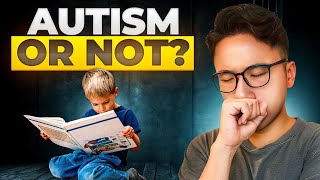
Ming from Agents of Speech explains why toddlers can sing and count but don't talk to others. Singing and reciting are self-entertainment, not communication. She recommends interactive play, teaching gestures, and repeated routines to build actual speech.
Chapters
Hey, this is ming here from agentsofspeech.com, i'm a speech therapist and today I want to talk about why your child can sing, can recite ABC, can count from 1 to 10, maybe even to 100, but still won't talk to you, still won't communicate with words. This video ties into a lot that we've been talking about with hand, guiding, leading, pulling, whatever you like to call it. And also virtual autism. It's all in all the same subject, okay? And if you haven't, you should go to agentsofspeech.com handpulling for 5 minute activity that teaches communication instead of hand pulling. Okay? So first of all is that if you haven't watched those videos, go back and watch it. And second of all, why your child does this is because of the language function. You have to think about why your child is using the words to do these things. To count, to, to say abc, to sing, but won't use it with you. And the reason is because the function of this is all for their own entertainment, right? It's not to communicate with you. So therefore they don't know that the same words or whatever can be used to communicate with you. Most of the time when children are pulling or hand or leading you or guiding you, whatever with their hands is because that's the easiest way, number one. Number two is that that's the only way they know anyways. They don't know that words can be used to communicate. And that really is the crux of the problem. All right, so how do we solve this? It's pretty easy and simple, right? But it's also excruciating process because you cannot tell the child, like you cannot describe in words, right? You cannot say, hey, look, if you don't need to pull my hand, you just need to say this word. It's impossible. So that's why, you know, like when parents talk to me and I talk to them, it's like I can read the parents mind because I've been there like a thousand times. The parent tries to say to the kid, say cookie first. Cookie, cookie, cookie. Like it says like 10 times. And the kid starts to get frustrated and cries. And then after that they're like, oh man, should I give in or not? The speech therapist or the pediatric told me not to give in, so I'm going to make it difficult for him, so on, so forth. But it never works, right? And it becomes like a vicious cycle. Every time he wants something, he guides you to that thing, doesn't Talk, you force him to talk, he still doesn't talk and you end up still giving it to him. And he believes that's the whole way he needs to get something from you. That's why the relationship is rather sour, right? But anyways, the second point I want to talk about is the lack of communication intention. What does that mean? That's just some difficult language. We say that the child doesn't have intent, like from the heart, doesn't really have so much of a intention to talk to us, doesn't understand why there's no fun. He gets a lot more fun from watching videos, listening to songs or just, you know, playing by themselves. So therefore there's no intention to communicate, right. Other than requesting. Okay? So for requesting, which is a lot of, you know, therapists or whatever, whoever, you know, parents, doctors, they call it manding, right? So demanding, like m a n d manned is to ask for something. And a lot of therapy is stuck at manding only, right? And the reason is because the communication intention for manding is high. Because if I want something, I'm going to make you make my voice heard, right? So that's the thing about it. You have to expand different communicative functions, as we were saying, other than for entertainment. Now we have taught manding, when demanding, can we find other functions that will increase their intention to talk to us? Like no matter if it's like playing with us, no matter if it's like a routine that they engage in, right? Or no matter if it's, they want to comment on something to tell us these are down the road, right? Or to tell, tell us what's the correct thing to do. Right. These are all very valid communication functions, like language functions, right? So because there's a lack of communicative communication intention, it creates that they don't use the words communication, right? It's as simple as that. So you see these two reasons, they, they kind of go hand in hand. And you know what goes hand in hand as well is that play, play skills and language goes hand in hand as well. The reason why the child sings, recites, abc, counts numbers is mostly because that they don't have anything else to do, okay? In fact, they probably, if there wasn't videos, there weren't videos for them to watch, it would be immensely boring for them because they don't know anything else that they can do. And they start talking about the stuff they watch in videos. And that's because they don't have enough play skills, right? They don't have a context to Give the language. Language that they've learned only lives in the context of the songs, the ABCs, the numbers, I don't know, the shapes, the colors, whatever that they indulge in. Right. And the songs that they feel are very entertaining for them. Okay? So that's why you have to expand the play. All right? When you expand the play, you give context for more language functions, number one. And it also increases the communication intention. Why? Because when we play with them, we don't just play. We have to sell the toy hard. We have to play with the toy with, like, absolute conviction that, hey, man, this is really fun. You got to listen to me. I. I'll show it to you how it works here. It goes like this. Wa. Boom. Like that. And it creates this bond with the. With the child that, okay, me, the toy plus mom or dad equals a good time. And therefore, then the language starts to come out. They're like, oh, I can say these words with mom. And it's. It makes it even more fun when I talk, right? When you say something a thousand times according to a context, according to something that is happening that both of you guys are looking at at the same time, that creates a bond. No matter if it's like just a relationship, a rapport kind of bond, it also creates the linkage between the actual activity and the word. So if you do it like a thousand times, doesn't matter what level of intellect or language they're at, they're going to get it. They're going to start understanding. All right? So whether if all this. If your child has it or not, is this autism? Right? Is it autism or not? Hey, man, usually I would say I don't know, but chances are on your side in these cases because more and more cases in this world is misdiagnosed, right? This is. I wouldn't say this is a fact. I guess this is an observation on my end, right? Especially where I'm living in Asia, where autism is thrown at unknown. Like when. When. When people don't know how to explain, they're just going to say autism, right? And that's the easy way out. But at the same time, is it autism or not? Well, you know, my answer for people who have watched me for some time, I would say it doesn't matter as long as we do what we can right now. Right? But at the same time, I want to tell you is that, you know, whether it is or not, the chances are on your side, okay? And now that there's more and more studies talk about virtual autism, that's coming up that isn't autism, but has the symptoms of autism, which is a neurological like disorder, basically right as a developmental disability is that it's baked in into the kid. You can't change it, whatever. But if it's virtual means like because of all the screen time and the lack of interactions that we have and the children who are at risk, usually who are already language delayed or disordered, will have these symptoms of being able to sing, recite abc, whatever, count like talk about dinosaurs and farm animals, everything, but won't use it to communicate with you. Okay, all you can do right now is to remove those and include what I said just now. Include more play. Right. Teach them a better language function. Right. For the words that they have, which is to request from you. If they cannot talk in a word for the first time, teach a gesture. We have all that inside over 5 minute activity to teach communication which you can go to agents of Speech.com hand pulling to get it. Okay, so that's the end of this video. Let me know if you have any questions and I'll see you next week. Bye bye.










