Virtual Autism Real or Not? | www.agentsofspeech.com
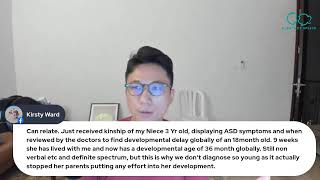
Ming argues "virtual autism" isn't a real diagnosis, since autism-like symptoms existed long before screens. But excessive screen time does cause social and language problems that look similar. He recommends functional assessment and therapy, not premature labels.
Chapters
All right. Hey, guys. Welcome. I mean, welcome myself back into this room. And I just wanted to talk about whether autism. Virtual autism, whether it's real or not. So the reason why is because this video has been. I've been. I posted about virtual autism quite some time ago, and recently the video got picked up by Facebook. And now it's a lot more people seeing it. And I feel like I need to come out and talk about it because a lot of people are taking the video out of context. They see the title, and then they respond to the title, which is not very nice. Right? I mean, if someone makes. Judging a book by its cover is never the best. The best policy, so to speak. And why I got to talk about virtual autism was because someone asked me on a. On a zoom call. I did, long ago, not long ago, like a year and a half ago. And then someone asked, oh, do you think, like, kids will get autism if they watch a lot of screen time? Obviously, my answer was no. Obviously. Why I say obviously two times is because basically autism is a developmental disorder. It has been here before we started using phones. It was before when I started using phones, when I started working, not that long ago, actually around like eight or nine years ago now. Autism still was here without the screens. And so called virtual autism is basically a description of a child who likes to. Who has words, able to recite abc, like say words. Say. Say number. Sorry, say a lot of nouns and so on, but they don't know how to communicate. They don't want to. Right? So this, to be honest with you, I've seen this even when I was, like, just a junior therapist. Right? You don't need videos to be interested in this type of stuff. You know, the previous video I talked about how Coco Melon has. Is basically making a lot of children very addicted and a very successful business. Right? I mean, my wife just showed me, like, Snoop Dogg just got into, you know, Snoop Dogg. Snoop Dogg the rapper also got into, like, the children's video industry. Right. It's inevitable. It will happen anyways, right? You know, entertainment, you know, the. The eyeballs go where the money goes, right. If there's a business model behind it, people will push it. So that's not my point. My point is that children have been reciting ABCs, have been saying numbers, have been saying planet names and animal names before YouTube became a child's, you know, like a thing that a child can actually navigate even if they didn't know how to talk, you know, so back in the day, I had to use not an iPad. We did have iPads, but it wasn't. It wasn't as widely used for. For child therapy. We had desktop computers. We had laptops. We could go on YouTube to show kids certain videos. All right? And yes, I did have smartphones, but we didn't use it that much. Right. Battery life was crap. You know, a lot of stuff wasn't good. It would heat up watching too much videos. So we didn't use it that much, but we saw the same stuff as before. Right. And I feel like, because a lot of parents nowadays, they haven't. They had children. They have children now, but they didn't have children 10 years ago. You know, so therefore, when this happens, two and two put together, there's something called a virtual autism. It is not a real thing. It's not a real term. It's not a real word, so to speak. And what virtual autism is. Oh, Jennifer's here. Hi, Jennifer. So, you know, like, it's. It's really difficult for, you know, for. For. For parents to wrap their heads around not putting some name or something on the child. Like, I don't know why. It's like, everything is fine. The brain is normal. You know, like, the scans come back, okay? Everyone says that it's development. Okay? It's just that language or the socialization has a problem, and you have to be careful here. There are a lot of assumptions that you put into a child, and obviously a lot of parents, whether you're right or you're wrong, all right, that's still the wrong direction to go. I've talked about this in a video that I uploaded last week, is that, hey, you're asking the wrong questions because this is not a new thing. All right? Whether it's called virtual autism now. Right. Or back in. What would we call it on DSM 4, I forgot, basically, something like social pragmatic disorder or something like that. So, you know, like, this is not new. People are putting new names on old things. And because there's. There's phones now, it really makes the problem even bigger. Right? And I'm not saying it's not contributing. It definitely is contributing. All right? There definitely is a problem where children can sing the Coco Melon playlist or recite lines from Thomas the Train and not talk to you and still pull your hand and still get a tantrum if they want something from you. Right? So let's get. Get to the drill, down to the bottom of this. Is there something that is. Can a child be not autistic but still have symptoms of autism. Yes, of course. Of course you can it. Yeah. The answer is absolutely yes. Right. Whereas even if a child was on the spectrum, they wouldn't have all the symptoms of traditional, like, typical autism either. All right? So whether they have autism or not, it doesn't really matter. I've talked about this, and I'm going to redo my video about, like, speech disorder and autism. I was being in that video. I have to apologize. I was trying to, like, cover my. My tracks, so to speak. Right? And this is very important in our industry because we say something very out there. We get outlashed and attacked, right? And it's very, like. It's a very sensitive topic. It's about, like, someone's child. We're helping them decide the futures and so on, right? So if we say something, we have to be careful and be aware of the consequences. And nowadays on the Internet, there's just so many things going on. Like, there's so many people claiming that they know, oh, I'm autistic. I don't even know if I should trust those people. Like, oh, I'm. I'm autistic person. You know, I had a. I'm not discounting their experiences, right? But I'm also a. I was an ABA practitioner, and I've worked with a bunch of adult autistic people. I'm just saying that given what I know, the people that I hang out with, like, work with, right? People who put up their hand and say, please, can we do something about, like, for instance, their speech? So Sarah says, make a video on apraxia. I think there is somewhere. If you search, right? If you. A lot of parents will ask, oh, can you make a video on whatever. If you just search on Facebook or YouTube, you will find it. I must have covered something about apraxia. All right, so instead of asking me, maybe you can search first. Right? That's the. That's rule number one of, of, you know, learning stuff on the Internet. And. Yeah. So going back there, I mean, it's. It's very hard for me as. As a person who works with a lot of autistic people to hear this, that about, like, oh, abs bad. You know, like virtual autism and then adult autism. Oh, I recently got diagnosed myself. Boggles my mind. I don't know how to understand it. I'm trying my best. I can only do my job, which is to teach kids and coach parents. Leaning towards coaching parents more nowadays. And so my main point is maybe the word virtual autism has made you very curious. Maybe it is A real thing. But we shouldn't call it virtual autism because the semantics of the words are very not good. For instance, it's virtually autism. Or is it virtually not autism? Is it autism that's a virtual version, or is it because they're inside of a lot of screen time, therefore it's virtual and therefore it makes it look like autism? So there are loads of stuff that would make a child look like they're autistic. There's loads of. I've talked about misdiagnoses, right? So there's loads of stuff that will happen that create misdiagnoses, especially in less developed countries. And you would be mind boggled that this is also the trend that's going on inside of developed countries as well. That's because I've been able to talk to parents all over the world. I really have to be very thankful about that. Recently I talked to a parent from Ireland and then they're, you know, like, it's just not nice. I'm not gonna talk about the details here, but it's just not nice where people are pushing a child to be diagnosed, to be on the stretcher on the spectrum for external reasons. And I, you know, like, this is not good. All right? And then there are parents who say, oh, I don't like that diagnosis lacked on my kid, right? But there are parents who go out of the way to like, it's like a detective game for them. I'm not saying it's none of my business, right? But you got to keep the main thing, the main thing, which is to teach the kid so that they can get out of that suspicion, right? So get out of suspicion. Learn about how to get rid of those symptoms. And this is the next part. Like virtual autism, this word thrown out. The biggest thing that you see on the Internet is, oh, get your child off screen time, right? It's, it's burning the brain. And it's true, it's true, it's, it's really true that it's, it's burning a lot of child's brain just because it's so addictive, right? You give a child who can't even take care of themselves something that is hyper addictive. What's, what's going to happen, right? So you got to intervene. All right? So May says, okay, and again, apraxia according to speech pathology. Okay. Watching from. Sorry, I'm very bad with names. Thank you. Thank you for the kind words. Yeah, so the, the, you know, apraxia by itself is really like, let's talk about since we're talking about diagnosis, right? Apraxia of speech by itself, it's also very hard to make a, to, to, to have a diagnosis, right? There's a lot of. For instance in our field is everyone would try to avoid giving a diagnosis of apraxia because it's just difficult and not everyone's that comfortable with doing so. So at least for me, I would, I would do it. But what's the point? Because again, if I can find therapy direction that work, that is working for the kid, and number one, is functional, and number two, it helps them with their speech and language baselines, and there's literally no reason why we should go with, we should do more diagnosis. But at the same time, given that I've gone one way with, with therapy, it means that I already have in my mind thinking about whether if it's this diagnosis or not. But the problem is this. The problem is when a therapist tells the parent about diagnosis, it always creates confusion. And therefore, is it a good thing or a bad thing to tell you, the parent, what it is? Because what's going to happen is you're going to go home, you're going to search it up. So it's the same as me, right? If I go to a doctor, they say I'm this, I'm going to go home and search it up. I'm going to get super worried because, oh, no, like this is supposed to happen. That's supposed to. I don't have this. I. I don't have this. What? But you said I have this kind of infection, but this kind of fashion. I'm supposed to have a fever now, not fever later. But, you know, there are individual differences. So at the end of the day, at the end of the day, you have to trust that professional who's providing services to you, all right? And if there's something that you don't want to hear and you don't like hearing it, then by all means find someone else. Find a second opinion. All right? But if you want to go all in, you have to go all in on one person, right? If you like, in Hong Kong, where I'm from, people are so skeptical. They do. They find like five therapists to do assessment and go with the person that they like the most. I'm not saying that. If you don't have the financial means to do so, don't do it. Right? That's just going to burn all your money. Because nowadays assessments are what, $2,000, a thousand five hundred to $2,000 USD, right? Especially in developed Countries. Okay. And I, I'm in Indonesia and I know some of the assessments are that expensive too. All right? So listen, I, I don't mind if you don't listen to me. So a, a therapist will go a certain direction for therapy given what their, their thoughts are. Right? Given what the thoughts are. But at the same time, you shouldn't pinpoint on a certain diagnosis if you already have a game plan and it's working. If you don't have a game plan, it's not working, then by all means change it and don't drill down on whether it's like a virtual autism or whatever. So, yeah, so this is, this is a good point. So a diagnosis is very important when you require and you need services. Right. The place where I worked before was that the place where I worked before required that you have a diagnosis in order to give you therapy, because they cannot justify giving therapy like giving AB therapy to a non autistic person. What I'm talking about today is, is that like, the diagnosis shouldn't be the main point. If you have a reason for it, go get it. But a lot of parents are. I don't want to have a diagnosis. I'm just going to call it virtual autism. I'm going to call it out now and I'm going to have a lot of backlash. But you know, at the same time, what's that going to help you? Right. For any case of autism, speech delay, language delay, whatever you like to call it, cutting down screen time is always a very important thing. Right. Don't use it as a, as a, as an end all. Be all. That's what I mean. All right, so yeah, of course it's extremely expensive. You know, like, it's. What is it now? It's like around what, like nearly like 50 or $60 USD per, per. Per hour. And one, one session is like two and a half hours. So you. Times that you do the math. I'm not going to do public math here. Right. So it's crazy. Yeah. So like, yeah, 7,000amonth, right? It's a lot of money. It really is. It's truly crazy in, in my mind. And I think it's a, it's, it's a right to have therapy. All right? And you know, like, it's really difficult. You know, like you need skilled labor. You need people who have knowledge about child, child education, about psychology, about certain types, especially for, for speech therapy. It's going to be really hard. Right? Okay, so last question. I'm going to read this. I'm gonna head off because I have something to do but Chris Christie says Kirsty. Sorry Kirsty. Received kinship of my niece 3 year old displayed ASC 7 doctor huh. 9 months live with me and I'm on the age of 30. Oh, that's okay. That's a good, that's a good sign. Still non verbal etc and definite spectrum. But why don't I as I stopped your parents and putting anything. Yeah, don't use that, don't use that, don't use that as a. I mean what, what I mean is like don't use the diagnosis as a way to, to put off action. Right. Because the diagnosis will only become more, more accurate as you put more effort into teaching the kid. It's called dynamic assessment if you've heard of it. Right. You, you cannot pinpoint a child's 100% needs and wants and sensory whatever in two hours. I mean there are really good assessors assessment people who can do this but at the same time, money. Second of all, are you that lucky? Third of all, Covid the, the you know, like I just talked to a parent this morning. She only got like assessment and therapy after three years. The kid's now five. Right? Yeah. You need to cut off screen no matter what. Don't call it virtual autism. Don't just call it virtual autism. Like any type of disorder, delay, whatever. Cutting off something that is super addictive is always helpful. Right. Talk about your sugar cravings. Right. It's about like even us nowadays if you like. I don't know what you guys see. Like at least on my feed, a lot of them are talking about oh, be careful of instant gratification. You know, you got to learn how to be long term thinking and at the same time we are feeding children like with, with instant gratification stuff which is screen time, which is crazy. And maybe that's why my child. Maybe that's why it's. It's easier to have, it's easier to how to say. It's easier to find a reason rather than taking action and doing something about it. Because it's also instant gratification to see something and say, ah, that's my kid. Right. Maybe I'm just saying. So that's all I want to talk about today. And I just wanted to tell you that I'm very thankful for you guys watching my videos. It's just that sometimes it's a letdown for, for people to comment without watching your videos and it's really difficult to stay as you know, I'm not a vanilla person right? I don't need to do these lives to be very honest but at the same time I just want to fill in the gaps between when I upload videos, when I talk about stuff when I've sent emails, when I have new courses and coaching with parents. I just want this to be a place where I can talk about stuff like a real human being and tell you that hey man these these comments I do read and I feel like it's not very fair for anyone to have everyone should have their opinion but at the same time if that's gonna affect other other parents how they think they should have some backing about it right? Okay so that's all for tonight thanks or this morning if you're in the USA. And that's all for today thanks so much and beware that I will be posting a lot more and we still need your continuous support and that's it for tonight thanks.










