Virtual Autism - The Dangers of Screen Time for 0 to 4 Years Old
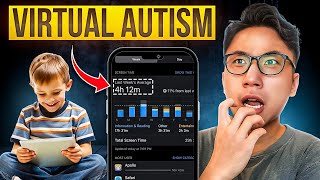
Ming, a speech therapist, explains virtual autism: autism-like symptoms in young children from too much screen time. She cites a threshold of four to five hours daily and says symptoms can improve when screen time drops and parent-child interaction increases.
Chapters
Hey, this is Ming here, speech therapist from agentsofspeech.com today we want to talk about virtual autism. Okay. Why it's actually dangerous to have your child watch something on the phone or tablet for extended period of time. So, you know, we've been getting a lot of inquiries through our DMs emails, talking about, oh, my kid can say one to like five, count from like one to 20 or whatever. They can say the ABCs, no animal names, whatever, a lot of stuff. But they won't communicate well most of the time is because of that they're not getting enough language stimulation or learning how to interact from you. And this constitutes to virtual autism. Now, it might sound scary. Doesn't literally mean your child has autism. It doesn't mean that it's a type of autism. It's not like that. It's a term coined by a Romanian clinical psychologist. I'm not going to try to say her name. It's too hard. So anyway, this is when a child exhibits autism like symptoms due to screen time, which is around four to five hours a day. Okay, so it's autistic, like autism, like, okay, symptoms that are like autism. All right, so how real is this? We don't know. At this moment in time, we're still starting to see the effects of screen time on young children. And this, I think really constitutes towards how we diagnose autism traditionally is that we take the boxes, they have these ones, they're at risk. Right. And having virtual autism or a lot of screen time without the parental engagement that our generation might have a lot more is creating autism like symptoms that actually constitutes towards the diagnosis. The huge spike in recent years that, oh, maybe before it was 1 in 50 something and now it's 1 in 20 something, especially in the USA, you can see a huge spike due to the ability to diagnose and to identify children at a younger age. So you might see a little less of an effect here in Asia. And that's because we don't have as much of an early detection process as the US Does. Okay. So virtual autism doesn't mean that, that your child is autistic. It means that your child is showing autism like symptoms, as I just said. Right. And I've got a recent study. You can go down and click it down below. You can check it out in the description box. And how you get rid of it is basically what all the therapists and the teachers have been talking about. And that is to reduce screen time. And as you reduce screen time and increase quality engagement and interaction with the child that autism like symptoms fades away. Okay. And that means they don't really have autism. It's just that they were addicted to something and they didn't know how to use language. So screen time is addictive. Chances are if you're watching this, you might be on your phone. Okay. And digital well being is a huge thing nowadays, right? We have apps to track it, we have apps to cut it off, we even have stupid phones. Stupid phones, right. To limit our use of smartphones. Okay. So I've seen many times where you know, the child is non verbal but they can still find the YouTube app, still be able to type in like Mickey Mouse to find the stuff that he or she wants to watch, scroll down and press the small icons to find the one that the exact video that they want to watch. Okay. So you see that the whole thing is very rewarding to learn all the processes just to get that. Okay. And we have to remember, first of all, we have to remember that gadgets are good for learning if you use it correctly. Okay. There's loads of good stuff on the Internet, on YouTube and so on. However, it can rewire our brain to crave more. And that's what we call like a dopamine release. And there's loads of videos out there talk about how us adults are now like glued to our phones all the time because of this dopamine. And because we've been hit with that instant gratification all the time, we keep on wanting to check. So if we go to the toilet, we don't have our phone to scroll, we feel anxious. That is what I'm talking about. But the discussion about how the screen and how these like quick fast fixes to what we want, right? We press it and we get ah, you know, we get a like or whatever. How does that affect young children? We don't know yet. Okay. And that's probably, probably, I'm guessing that's my personal opinion that's creating these virtual autism. It's because they're addicted to something. So if you've seen anyone who's addicted to something, you don't let them have it. What are they going to do? They're going to be a jerk to you because you are standing in the way between of what they want they're obsessed with and you're being someone who is trying to limit their, the dose of what they're addicted to. Right. So if you have someone who's a. This is not that common. If you've seen an alcoholic, you've seen anyone who's addicted to work, even if you try to stop them, they get mad, they get pissed off, they're not their own self. And that I think is really detrimental to a kid who hasn't. Their brain isn't fully developed, the personality isn't fully developed, not to talk about the language. So once they're in that state, all the language goes out the window. They're not learning how to interact, so on and so forth. So we need to stop them from being screen junkies, right? We have to think of ways of getting them back into a natural place setting with toys and so on and interaction. And even if you're watching something with your child, you should be accompanying them. And what you can do, as we talked about in a previous video, maybe I will just link it here, is that screen time isn't something that you can totally eliminate at this day and age. Because the problem is we're on the phone all the time. The kids see us and they're like, why can't I have that when you have it? When they go to a restaurant, other kids are watching videos. The siblings are using gadgets to go online and work on zoom, right? Nowadays there's online school. And then they're like, everyone's watching. Why not me? And that's totally correct. Because we cannot. It's selfish to say, okay, I can have it, you cannot. That's just very difficult to explain to a young kid, right? So the main problem with watching videos on the Internet is that they don't know how to use the language that they learned, okay? So that's why you can see children who are saying A, B, C, D, E, F, G. All those like 1, 2, 3, 4, 5, and then all the animal names like shapes and numbers, whatever, but they don't know how to use it. They know how to interact. The problem is that we leave them to watch it without supervision. When we were young, there were movies where it says pg. I don't know if how it works in your part of the world is that when that happens, the parent is suggested to guide them over there. And more and more you see these videos, they're trying to make money off of kids. That's. That's why they're optimizing for watch time. They wanted to watch as much as possible and at the same time show ads that kids will click on. And that means sometimes it's a little obscene, maybe that drives curiosity of the child and that really needs your attention, okay? You cannot just leave them there and watch. If you want to leave them to watch something, play something that is a little more safe, maybe the tv. Okay. By the end of the day, screen time doesn't create autism. Someone, the Romanian psychologist, called it virtual autism because there's parallels to it. It looks nearly the same, kind of like that. I would say that it would be something like someone who smokes, who has a smoker's cough, and then someone who has pneumonia who has a similar cough, that deep cough. Right? So it looks the same, but it's actually created by something external. Right? So how do you deal with it is that you cannot leave them alone with the videos all the time. You have to interact with them, watch with them, and teach them how to. How to use it every day. Okay, that's one. Number two, have quality language time. Okay? Language environment is everything. Have you seen Tarzan before? That guy only spoke to gorillas. That's why he doesn't know how to speak, like, human language. All right? But after he started to, like, interact with the civilization, his language started to come out. Okay? And it's the same as children who are stuck in a virtual world. You have to take them out and play with them and have that quality time. And this is where. Sorry, if I'm saying this and this might come off the wrong way. There are a lot of studies about social economic classes, right. Children who are. Have more time with parents is because the parents have the luxury to spend time with kids. Right? As children who do not do as well in academics and language development is because parents are too busy making ends meet. Right? They don't have the luxury to do so. Right? So that's why it's very, very, very, very important for you to set aside no matter how busy you are. I know it's super hard to have like 5 to 10 minutes every day to just interact with the kid, no matter if it's playing or reading a book or whatever. And other times, if you cannot take it, of course you can use screen time, but use something more safe and something that has a lot more dialogue in it instead of just like nursery rhyme showing shapes and numbers or whatever. Okay? So that's it for this video. Let me know if you have any questions. This is a controversial video about a controversial topic because there's a lot of people who say, oh, yeah, nowadays language delay or whatever, autism is caused by screen time. I don't think so. That's my personal opinion. It's just that it has become something of addiction for young children, and their brains can't cope with it. And we need to give them a healthy dose of social interact interaction. That's what I think. Okay. And before you leave, I want you to go to agents of Speech.com checklist to grab a free list of tools and toys that we recommend you get if you're trying to start home therapy for a little kid. Okay? That's it. Thank you for watching. I'll see you in the next one. Bye.










