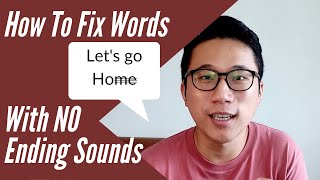
Ming from Agents of Speech explains final consonant deletion, when kids drop ending sounds in words like saying "ca" for "cat." She walks through how to spot it, a teaching progression from isolated sounds to real words, and when to see a speech therapist.
Chapters
Hey, everyone, this is Ming here, speech therapist from agentsofspeech.com in today's video, we want to talk about final consonant deletion, meaning there's a sound missing at the end of a word. Okay, first of all, if you're watching this video, you're searching for how to help your child when there's a certain sound that's missing at the end of a word. So, for example, if they say home and they delete the m sound at the end, it becomes ho or something. Or it might be that there's a lack of a s. Okay? So for instance, if we say hoes like a water hose without the S, it would be ho as well. So it would really affect, really, really, really affect the intelligibility, meaning your ability to understand the words because there's a lack of the last sound. So, so home and hose. If you delete the last sound of both words, they sound pretty much the same. First of all, you have to know. You have to know if you have to identify what sounds are missing. Is it all sounds at the end are missing? Is it just the M or the s or the Fs or the T's or the K's? What's missing? Is it everything? So if it's everything, then first of all, you have to identify if those sounds are available in other places or by itself. And when it's by itself, we call it isolation level. So for instance, for S, the isolation level is S, like that, okay? So if your child is missing all the S's at the end of a word, is it available? Is it actually there when you ask them to do it in isolation level? Okay, so that's the first thing. If they cannot do it, then you have to teach them at isolation level first because that means that sound cannot even be used by itself. So therefore, when you ask them to put it inside a word at the end, it's not going to happen. So let's say that your child can. Okay, so what do you do next? So first of all, you need to see how far they can go. How far can you go with putting the final sound at the back so they can do it by itself? Can you put a vowel in front and see if put the final sound is still there? Let me give you an example. If it's an S sound that's missing, usually what I do is I see if they can put it behind the basic vowels, for instance, a, I, U, and o, right? So if they can put the S behind the A, so it becomes as us. This kind of non words, right? Non words means like it's just silly, made up sounds. Okay. If they can do that, then good. It means that it works at this simple level. And then you can slowly increase the number of things in front of the final sound. So for instance, you might put two vowels like ice or something or ice. Still non words, silly sounds. There might be some words that follow this format, which is good, so you can use those as well. And slowly you want to work towards words. All right. I just want to tell you if there are speech therapists available to you and right now, and you're able to go there, of course, go get an assessment, see what sounds are missing and see what the reason is behind it. Okay. When we're dealing with speech sounds, we need to know exactly why they're not here anymore. All right? It might be because they cannot distinguish between a word that has the final sound and a word that doesn't. Okay. They might in their minds, cannot even comprehend the last sound. All right? So you have to check it out. All right. I'm not going to tell you how to do it here because it's better, it's easier if you see a therapist. Okay. But usually this way would help you at least get them to say the words correctly that you want. Okay. Start from isolation level, go to vowel plus the final consonant and then add more in front until you get to words. So with that said, thank you so much for watching this video. Thank you. If you liked it, please go ahead and click the like button. It will help me with the YouTube algorithm and show it to more parents like yourself. And also, if you haven't and you want to start teaching your child at home with articulation or language or speech or fluency or whatever, I have a checklist for you that you can get. It's a bunch of toys and tools that I recommend to my clients when we're just doing home therapy right now. Okay. So go to www.agentsofspeech.com checklist to grab that because you will need toys in order to teach your child. So with that said, thank you so much for watching this video again and I'll see you in the next one real soon. Bye.