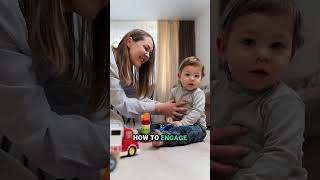
YouTube advice clip by Ming @ Agents of Speech listing essential tools for home speech therapy: (1) a child-sized table and chair to condition a learning context; (2) the adult (therapist or parent) as the primary interactive "toy" who must lead engagement; and (3) a laminator to create durable, printable teaching materials (flashcards, story cards, visual cues). The speaker stresses that devices (iPad/phone) are useful only when paired with active adult interaction.
Chapters
What the best tools are for home therapy. The first one is a table and a chair, children's chair and a children's table. You need to use a kid's table because it's preparing them for school. It's letting them know that when they sit down, they have to listen. You're priming them, you're conditioning them, you're teaching them that this is a place for learning. So if you don't have that in place, it's very difficult. The second thing is yourself. You are the best toy. I am the best toy I have inside of my clinic. If I don't know how to play and don't know how to engage with children, no matter what you give me, it's not going to work. The iPad phone is a great tool, is a great toy, right? But why is it that when we give it to a child and just leave them there with it, there's no interaction at all and there's no learning? And if you give it to, like, a therapist, it becomes a learning tool? It's about you. Third tool. This is substantial. It's a laminator. So you want to print out stuff, no matter if it's flashcards or story cards or, like, visual cues. You can make so much teaching materials, you don't need to buy it. You can go online and then you can print it out and use it.