What to Do When Autistic Children Regress
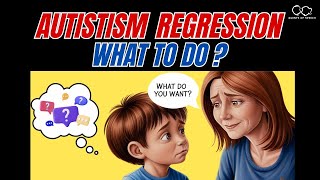
Ming from Agents of Speech explains language regression in autistic children: about 30% experience it, typically starting around 20 months. Regression means losing five or more daily words for at least three months. Causes are unknown, but hearing problems and changing interests may play a role. Parents should rule out medical issues and focus on teaching new communication skills through speech therapy.
Questions this video answers
Loss of a communicative language skill defined as at least five words previously mastered and used on a daily basis for at least three months prior to the loss.
About 30% of children with ASD experience a loss of skill.
Average age about 20 months; range roughly 15 to 30 months.
Chapters
Let's talk about dealing with autism regression, what we currently know and how to deal with it. All right, so I'm going to go through this document with you. Let's talk about what regression is. Usually what happens is that when a child already has a bunch of words, they lose words, they lose skill, they talk in shorter sentences. And there's a lot of these kind of stories where children were progressing really well until 2 to 3 years old, this kind of age range, and then suddenly they start losing their skill. If they say, let's read here. If they said a word once, does that count as having a word? If they used to say a word all the time, but now hardly do, does that count at losing it? One common way researchers found out if a child's language skills regress is to look at the parents answers to specific questions on this kind of interview based autism diagnostic assessment. The thing is, if, even if you do this assessment, you need someone to review it, right? So you can ask your local speech therapist to ask to see if they have this adir this interview, right? And it gives the researchers a yes or no answer. According to if a child has lost skills. This question defines the regression as a loss of a language skill, specifically communicative, that has at least five words which is previously mastered with words used on a daily basis for at least three months prior to the loss. The whole thesis here is that if a child was able to use a word or a phrase out of nowhere, there needs to have a communication use meaning it needs to be functionally good. It's used for something. Okay. If it's random, it's not directed at any thing or event, activity, then it's not really considered a language skill. Okay. And it also needs to be mastered on a daily basis for at least three months for those words or phrases that are here and there. We don't call those mastered. It's more like it's in the. It's the currently still developing the use of those words and phrases. Okay, I know the definition that the researchers use here is a little bit too stringent, I believe, but at the same time it gives you a clear idea about oh, that day. A regression is only about master skill. Right. And it kind of strips away a lot of the nuance when you talk to your speech therapist. All right. Rather than a binary understanding of regression there the researchers. Not a moment. There's a spectrum of onset patterns of, for autistic traits which to be honest with me, this statement is not useful as a speech therapist. It really doesn't help me a lot. And in different papers researchers say there might be a loss of previously acquired skills, a plateau or stagnation, a slow rate of school acquisition inside of autistic development. This is common knowledge. I think anyone who works or has autistic child they will see these kind of stagnant things. Right. Plateaus and stuff. I think to give you. The only thing that is really useful here is to think, okay, there's a phase word or phrase or sentence or language function, language skills acquisition that is a longer timeframe for children who are on the spectrum. And if they lose that, it doesn't mean that they already acquired it. They might have like unsuccessfully acquired it, meaning they didn't successfully acquire that language skill just yet. How common is regression is pretty common even for me. I see it a lot. So 30% of children with ASD experiences a loss of skill. In my books that's around the same as what I experience from day to day from talking to parents and seeing children. So the nuance is that the number is higher for prospective studies. Okay. Which is not very useful here. You don't need to take a look at this either. When does it typically happen? And I was saying for me it would be 2 to 3. Right. The average age when children lose skills is about 20 months. The range of 15 to 30 months. That's a little bit younger than what I perceive on the infield. Most study pull from parent recall. Okay, so there might be. Let's just buy parents saying so. Okay, so there might be some cognitive bias towards the time of passing, but that doesn't matter as long as it's around that area, around that toddler age that will happen. Okay, and what causes the regression? This is a good question. We actually do not know at this point in time. There are loads of hypothesis over the Internet talking about and it does allude it to about it here as well. I personally think that like there are so many things going on and parents will ask me, oh, can I use DHA like fish oil, can I change diet, can I do whatever X, Y, Z vaccines and stuff like heavy metal poisoning. I was talking with a friend, he was like, oh, do you think I should avoid aluminium based vaccines? And to be honest, I really don't know. But correlations is there, right? And we, there's a lot of things that correlated to the current lifestyle that we have. I really don't think it's. I really don't think it's a coincidence that there's so many health problems arising and this Is one of them that are correlated with what we do on a daily basis. The screen, the screens that we use, the media that we consume, the food, the water, whatever. And I know it's not satisfying as it was here, it really doesn't answer anything about, about regression. So let's talk about what we can do instead. So this whole webpage talks more about how to count it or how to whatever. I don't think this is particularly good, like good info for parents. So let's go on to prognosis. So the studies found that preschool children ages 5 to 6, the number of words of a child used before the regression no longer predicted any language outcomes. Right. Now, number of words used before loss predicted expressive and receptive performance on pls. That's one of the tests, right. One year later, controlling for iq, but only if the loss was defined as any communication skill loss. Okay, so that what this means, right? It basically says that the number of words that a child used before the regression doesn't predict anything, doesn't mean anything. So why would it be that way? So going back again, right, if your child has a bunch of words doesn't mean that the words are used for communication purposes. So once those purposes disappear, the words disappear as well. So most of these reasons for the use of these words that are lost was for self entertaining purposes, especially for those children who are on the spectrum. So once those use is gone. So once those interests are gone, those words go as well because there's no use for them. Okay, so this is my interpretation of what's going on here and this is what I see as well. So they also point out some skill gain recovery. This isn't demonstrable from the research. Okay. I was saying recovery means if you have the words that they learned before, it means that you have to recover the reason for communication for those words as well. Which most of the time as children progress, their interests change, what they like change. And therefore if you try to recover those, that's hard. For instance, if you used to like Pokemon cards, a lot of people still like them. It's very hard to regain that interest. And that fire for it. It was something that you like when you were a child, right? To go down here, these are a little bit. Okay, this is a little bit important. So there's all regression patterns don't indicate poor outcomes in school. Meaning if your child does regress, it doesn't mean that your child will actually do worse in school. Okay. And the records looked over 2000 autistic children found that early Patterns of regression was much less predictive for later fluent speech than intellectual disability. Okay. In other words, intellectual disability predicts later language skills more than regression patterns. So if your child has any intellectual disability problems, there's a stronger indicator, meaning there's a higher chance that your child will suffer language skills, like lower language skills later on. But if your child regressed before, it doesn't mean that it doesn't. There's no really a big correlation in between. It's saying like all autistic children without intellectual disability achieve fluid speech by adolescents regardless of early regression. Okay. I don't know where they're pulling this data out from. Probably I really don't know. So they're almost all. So I don't know what kind of population that they're taking out from. I mean, an early language regression had a big impact on the probability of speech in early ages. This is where all the therapy is basically from 2 to 6 years old. If there was a regression earlier on, it would be harder for a child to catch up during those years because it's more of a compound. So if a child was two and then they were already speaking words, they would have more opportunities to play, to talk, to have fun, to learn from school. So then someone who, like a child who doesn't talk much, they will have less of these opportunities and therefore the development will be lower. It's like the rich gets richer, right. The poor get poorer. That kind of situation here, but in a language context. But that impact shrank as children got older. I nearly disappeared by the age of 18. Like you don't need to. Your child doesn't need to win on the. As we call it from an early age. They can catch up. Okay. When I'm looking at this, what I believe is that the population here is just pure autistic children. There's no other like speech disorders and so on. It makes sense. All right. From at least from what I see as well, when autistic children with intellectual disability were included in the model C. Okay. So if there were other things going on, there was a lot more variation. Intelligence explained the fluent speech status considered more than the history of the regression. Okay. By the way, when this is like a statement that is a little bit hard to digest for parents because you might start thinking, how's my child iq? I wouldn't know. Because you can't get a child to do an IQ test, a non verbal IQ test, especially if they're on the spectrum and has some behaviors. Right. So, so how do you go about this and by the way, there's like a 78% of children who are on a spectrum have other things going on for them. Meaning there might be speech disorders, they have sensory needs, they have a whole bunch of other things. Right. So if we're only talking about intellectual disability here, which I don't know the percentage of the whole population, and it's really hard and it would be masked by a lot of behaviors and sensory needs and so on, I think it's. This is taking it a little bit too, too general and this really isn't quite helpful. Early language regression impact later outcomes perhaps to some extent, but intelligence seems to play a bigger role. Again, intelligence might be masked by a lot of the behaviors that children have. This data doesn't account for other factors like therapeutics support. Okay, is regression ever part of normal development? Let's say your child isn't on the spectrum. Will regression happen? The answer is like from what I see is yes. So let's see what they say. Found evidence that some wax and wane in child's development of communication skills can be a part of typical development in some kids. So what does that mean? Is that some children will start. If they stop using something, they will lose some words. Evidence is quite limited, obviously, because we don't put a lot of research into neurotypical children in general for regression. So that that's a problem because if we don't see it as a problem, then we won't research into it. Okay, but I'm here to tell you, regression isn't just only for children who are on the spectrum. Right. There's a lot of factors as well. What if the child has a hearing loss, suddenly they have a middle ear infection, glue year as they call it. Quite typical. And you will see regression immediately, I'm telling you. At least that's what I've encountered. And recently I talked to a parent who just, you know, like she, she's ready to do more coaching with us now and she just realized that her child was undiagnosed with a misdiagnosed with normal hearing. And he has been suffering a lot, a glue year for extended period of time. So this is a huge problem and it answers a lot of questions about his behaviors, his speech errors, his language development. And now we finally know if it sucks. If a child is constantly like hearing sounds as if it was underwater, it will definitely cause regression. Okay, so these are not that important. Okay. So they also talk about what the treatment options are. So let's see what they say and see if I Think the same. So don't support the theory that regression as a symptom of onset pattern develops statistic phenotype with an asd. While the loss of early developmental communication milestones is often the cause of a lot. Okay, A bunch of useless words here. These results suggest that language regression does not have a negative impact on language skills at school entry and does not apparent appear to warrant a different approach to speech language intervention. Okay. Based on these findings, parents should reassure that communication skill loss is a common pattern of early development. Okay. It's not detrimental in the language outcomes beyond a relatively short term period. Okay. So that means they're saying that regression will only impact the short term, which is one year. But one year is if your child is five years old. That's 20% of their life. So I want to downplay it like this, honestly, but the thing is, like, when a child is regressing, we need to think about what those language functions were before. Right. Did they really lose language skills or did they move on to a different interest? Or are there other complications going on? Meaning they have some sensory needs. They have some things that are like glue ear. As I was talking about that. We have the address. Okay. Clinicians are advised to proceed with speech therapy. Okay. Individuals. This just politically correct what they're trying to say here. Okay. Regression goes against how we typically view language development. The nouns can be scary for parents and clinicians alike. Yeah. Okay. So anyways, I. I think I'm gonna do a real quick conclusion here, what I'm saying, and I'll put all the links for these papers down below if you wanna read it yourself. Also put this link. I think this is only for members. Only for a speech therapist like myself, this might be a little bit. This kind of reading would be too difficult for parents. If you'd like this kind of video, do let me know in the comments and I might do more of this. And the conclusion is that regression, we really don't know what the heck is going on. And in fact, there's a lot of stuff about autism that we don't know yet. But the plan of action is always about the plan of action. The plan of action is to see if those things that were regressed were actually items that your child learned already. Okay. So that's number one. Okay. If it wasn't done, it shouldn't be a regression. It should be a change of interest, a change of how their attitude is, their needs and wants and so on. Second of all is that can you teach new skills? Right. If you can teach something new, then probably their. Their acquisition isn't broken, Meaning that the ability to learn isn't that broken. So I was talking to a parent, I think, just today, and he was like, oh, yeah, he lost some words. I'm like, what words did you do? It's just a bunch of ABCs and animal names. And I'm like, so is he still playing with those? And he's not. So obviously he's not going to say those words if he's not playing with those things anymore. But when he came back and we started to do some imitation again, the child still remembered how to do the vowels, how to do the action imitations. The things that the father taught still stuck. That means the acquisition of skills is not broken. Okay? So we need to face the facts and think about, okay, if I can teach him stuff and I can live with some words that he doesn't use will become like a thing of a pass. Then we just need to think about what can we teach? That's the highest leverage. Uni, like a thing that he can use to generally generalize across all things for nonverbal children is always verbal imitation. Okay. And then for children who are using single words, when you think and analyze what kind of sentence structures they have or have not. Okay, so it's always about, can we teach them new skills if we're always thinking about regression, which may happen. And I've seen it many times. I've had a client who had a fever and she couldn't talk anymore. And it was just two or three months again to teach her how to talk. And it was painful. All right, it will happen. Just treat it as if it will happen. But. But that doesn't mean you don't do the work. Right? I think that's all for this video. If you want to ask more questions. This question came from a parent, wanted to know more about regression. We have a whole community of 14,000 parents. Just go to www.agentsofspeech.com course. Why is it? Course is because we also have free online courses and a vibrant community where you can ask questions and just ask anything you want. Okay. And if you enjoy this, I'm sure you will enjoy this video here. All right, see you.










