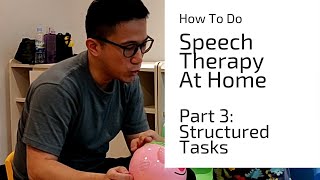
Ming shows how to practice speech therapy at home with two approaches: five to ten minutes of daily structured teaching using gestures and rewards, plus slower, clearer everyday talk throughout the day. Download the checklist at agentsofspeech.com.
Chapters
Okay. Welcome back to part three of this video series of home therapy. Home speech therapy, diy. Okay, we were talking about five to ten minutes every day at home, right? I want to put this in your mind that that's only one part of therapy. That's the structured teaching part that I like to teach parents because it's an easy win. It makes sense. I will always teach structured tasks in the beginning because it's easy for people to follow it if there's a framework, structured task, five to 10 minutes, and what that entails. What we like to teach is requesting in the beginning. What is requesting? When your child is requesting, it means that they want something and you have it and you can give it to them once they do something, once they communicate with you through gestures or speech or sounds. If your child is snatching or whatever right now, and you've seen my videos before, you know I love gestures. So start off with some gestures. If speaking is something unattainable for a child right now, one of the gestures I love is the open palm. A lot of therapists use it as well. It just means that, oh, I want it. Please give it to me so that they're not snatching anymore and they understand that. Okay? So I can actually ask for it without causing a ruckus. If I wait long enough and I do the right things, mom or dad's going to give it to me. So use gestures. And what I like to do is this is where this thing comes in. I put the food inside. Maybe it's not powder inside right now, but it might be food inside. So you want to make sure the food are small pieces so that by the time you open it, you take one out, it's very small, they finish it, they can ask for again. Okay. And you can teach many gestures here. Just go through them very quickly here. This one for open. You can do open, eat, give, drink. All these can be taught to your child during the requesting phase. If your child is already talking, then you can use sounds and words and you want them to be consistent. You need to do it enough times so that your child can do it by themselves. And that's what we call spontaneous. They already can do it. Well, that's one part of the therapy. The other part is actually just language facilitation. What that means is you talk in a manner that actually helps them acquire language. And I've talked about this in other videos. You can check the links here or beside. Watch the other videos about how to talk to your kid. Okay. Not to annoy them or anything. So there's two parts to therapy. Number one is the five to ten minutes every day that that you sit them down and do structured tasks. The first task that we always love to introduce is requesting. Because it's easy for parents to follow and easy for kids to follow, it's an easy win. It starts from talking pretty soon. And then the second part is just everyday talking with your child, but in a good way, in a slow way, in an understandable manner so that they pick up language naturally. All right, so with that said, if you thought it was helpful, please go and download the checklist from www.agentsofspeech.com checklist. And at the same time, in the next video, we'll be talking about how to do speech therapy for two years old at home. If your child is older than that, you might have to wait a little longer. Wait a little longer. We'll talk about 3 year old and 4 to 5 year olds over there. We'll be skipping primary school speech therapy because those children can already sit in front of a monitor and have therapy from a certified therapist through the Internet. So I'll see you in the next one right now.