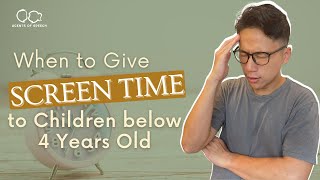
Ming from Agents of Speech recommends keeping screen time minimal for kids under 4, especially before they speak in full sentences. Co-viewing with an adult who can pause and explain works better than solo watching. If you use screens as a reward, keep it to 10-15 second bursts.
Questions this video answers
Children under 4 years old.
Ming @ Agents of Speech.
August 3, 2022.
About 10–15 seconds.
Chapters
Okay, Today we're going to talk about when is it okay to give children screen time. Okay. Specifically those who are under 4 years old. And I've had this conversation with parents all the time. We have a video inside of this YouTube channel talking about like virtual autism. And there's another talk about like screen time. And what I think about it, I really think that, you know, like, screen time is no good. By the same time it can be used as a reward. Like how we teach you inside of some, some of our online courses. And it's kind of confusing for parents because, you know, like, we're all very busy nowadays and screen time really frees us up to do other things. When your child is like glued to the screen. Yes, of course there are times that you can and you should use screen time. And we'll talk about this in this video. Okay? So first of all, my name is Ming from agents of speech.com and the second thing is that you should aim as little alone screen time as possible. As little as possible, especially if a child is still not talking. Okay. And that includes children who talk, but they don't use the words in a way that is socially acceptable. Like if they keep on just repeating the same word, the same songs over and over again. Yes, they're talking, but they're not talking to you. Right? So as little alone screen time as possible. Why? Because screen time is a one way, one directional communication where they're absorbing, they're like a consumer of media and all those words. Right. Whereas when you're teaching them to talk and whatever, they're actually a contributor to like the communication. Right. So what do you get from children who have a lot of screen time is when they start using words in an appropriate way, they still won't use words to, to, to get their needs and wants met. And that's something you have to be careful because if you let them alone and watch it, you cannot control what they absorb. But at least if you're watching with them, you can pause it, you can describe it, you can laugh with them, you can say it and point it out together and have some fun at the very least. Okay, that's my first point. Second of all, gadgets can be good. We talk a lot about this inside of our micro course. Right? It's, it's a little confusing for some parents sometimes. And why I say it's good is because it's good for rewarding, okay? And a reward is very important. Don't like, don't get me wrong, right? We did talk about In a previous video inside of our. Of this channel, again, is that we do use behavioral approach to, to help children, and it's, it's effective. So when we're, when you're rewarding a kid, it's important to find the thing that motivates the kid the most. And most of the time, 8 out of 10, not 9 out of 10. Okay, 8 out of 10 children, they like screen time. So why not just use it as a reward for playing with you, for communicating with you, for finishing the food? Like some behaviors that are difficult to manage use screen time as a reward. All right, Just do it. Okay, so let's talk about when is it okay then? Okay, when is it okay then? I get a lot of parents telling me that they would say, I don't get it. Ming. I grew up with the tv. I watched Power Rangers. I watched Sesame Street. It's not like I got speech delay. So first of all, it's not a one to one thing. And you know, a few months ago, we also got into an argument with a parent and she's like, what evidence is there saying that there's a screen time is bad for the kid? Right. Can you show me some research if you have a master's of speech therapy? So then I told her that, you know, there's no cause and effect. Cause and effect is, doesn't, doesn't exist in the research world. And that, you know, like, it's correlational, right? So now we're seeing a lot more correlation between like amount of screen time and expressive language delay. Right? So given that, you have to be careful because it's a risk factor. All right? And we're talking about how this kind of technology are getting into the hands of toddlers. We're talking about kids who are like one years old, right? So when they're developing, they have something suddenly like hitting their dopamine, dopamine reward system inside the brain like crazy. Like, even for us, right? We can't even get our, our phones. I'm holding my phone. Like I, my phone can't be like 5 meters away from me or else I get like an anxiety attack, right? Think about what would do to the brain of a one year old. They're not going to let go of that phone, you know what I'm saying? So when is it? Okay? All right. What I'm trying to say is you need to reduce the risk to the lowest. That's why I'm saying, right before your child can speak and communicate with you effectively, try to limit screen time. As much as possible. Especially those that are like alone screen times. If you're with your child, you can watch it with them. I. That's what I believe. And that's what, when I tell parents this, the ones that I'm coaching, it does work. Okay. I'm just saying what works for us, I don't know about, like in a macro scale, I don't know what, what's going on in the world. Okay. But at least the parents who I tell this has been helping and we can see results from that. So it's okay to let your child start to learn from videos once they attain a certain language ability level. So if they're speaking in like, longer sentences, right. They can describe some stories then. Yeah. Maybe when they watch Sesame street, they can actually learn some words, some language forms, some sort of ways of talking and expressive ways of communicating those stuff. They can actually learn from the videos. Whereas if you have a child who is like, not very verbal, what they're looking at is just for entertainment purposes. There's like, they're not ready to absorb that. You know what I'm saying? So therefore, when is it okay? Well, it's never really okay, but you know, like for me, at the very least, for parents who say that, oh, I grew up with a tv, well, we did understand the tv, right? At the very least, when we were starting to watch it, we didn't watch from one year old. Right. We started to watch it like three or four after school and so on, and it became easier. Like we actually knew what was going on on the TV show. So you have to keep that in mind. Right? Whatever. Like if it's a toddler holding a, holding a phone and it's alone, that's already not very good for extended period of time. And for rewards, I always tell parents that at most is 10 to 15 seconds. Take it away from them, do another thing, play with a toy, and then reward them when, when you, when you see fit. And toddlers, children, when they're alone, they should be playing with toys. They shouldn't. They, they should be exploring outside, they should be running around. They shouldn't be watching on a phone screen. Right. Their hands should be free. And I feel like in this day and age, even for us adults, we have no right to tell off, tell the kids off because were always on the phone. You're on the phone watching this most probably, right? Last time I checked on this, on this channel, 90% of people watching my channel is on the phone. So have to remember that. All right, so that's it for this video. I hope I have cleared up the stuff about screen time and so that you know exactly what to do. And then if you have any more questions, please let me know in the comment sections. And if you haven't, please go to agents of Speech.com checklist for full list of tools and toys that I recommend you getting when you start home therapy. All right, thanks.