Why Children Can Sing But Not Talk
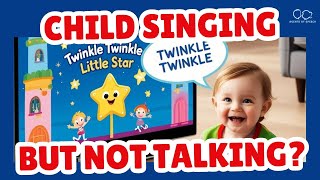
Ming from Agents of Speech explains why some children sing song lyrics instead of speaking functionally. Songs stick because of their melody and repetition, while talking requires harder skills like play and back-and-forth interaction. Start with action imitation, build play routines, and connect singing to social activities rather than screens.
Questions this video answers
www.agentsofspeech.com/course — the free "zero to words" course.
Chapters
If your child keeps singing words instead of using them, then this video is for you. In this video I'll tell you exactly why and how to get your child start talking more to you instead of singing all the time. Okay? The number one reason is because funny songs are memorable. And if you look at all the songs that are on the Internet, a lot of them on YouTube, the highest view count videos are songs, right? And there must be some foreign language songs that you know how to sing but you don't exactly know the meaning behind, right? That's why it's memorable is because we remember the tunes. There are many things, there are more things to remember about. There's the music that's going on, the up and downs, the sound effects and the lyrics in itself are funny. That's why I probably know a few foreign language songs that I can sing the verse or the chorus, but I really don't know what what the heck they're saying. And the reason number two is that the songs are winning over mother Reese. And mother Reese is something that we call how mothers talk to babies. And it's usually very child friendly, very Disney, very up and down, very wowee. All those like bubbly stuff that mothers do to children, they don't call it father reads because guys are less bubbly, so to speak. When all the songs are singing win over mother Reese, what you get is that children start imitating those songs instead of the what the mothers say. And I have a very specific example where this mother in Indonesia told me that there was a child doesn't talk functionally, but she would say blackpink in the area like that in the public. And it got her a lot of attention too because everyone at that point in time, like two or three years ago, knew what that phrase came from. So then everyone was turning their heads, they thought it was really funny that a 2 or 3 year old would say that. And then the attention actually reinforced that and made it even harder to stop her from saying that. So when these kind of catchphrases, these lyrics, these melodies, tunes are winning over us, teachers, parents and therapists. It's very hard to get them to repeat after what we say. Okay, number three is functional language is not developed just yet. So when you don't have functional language, what happens is that children tend to use language for different purposes. So namely, and I'll talk about this as well, is language function of singing is to self entertain, right? So when they use language for self entertainment purposes, when they want something, they don't know that language is supposed to be used to get what they want. They need help, they comment on things, share ideas. Is literally just the same. All right. And they get their needs met through pulling a person's hand towards something they need or gesturing or getting into a tantrum sometimes. And it's obvious to tell you why this is a huge problem is because the rise of gadgets. Everyone's pocket has a phone now. And all the children who come through the clinic door when I first started working they were all we just don't have gadgets. Right. Back then everyone had a smartphone. So then children start to reach into my right hand pocket wearing my Android phone. And then they even know how to unlock it despite not knowing what to say. And sometimes some children know how to type. A particular child who was on the spectrum, he couldn't really talk that well, but he could write Mickey Mouse. He could Mickey Mouse on the keyboard to find what he wanted. And even if we we put the YouTube app inside of somewhere, they can still find it. The rise of gadgets really has shifted the language function towards something else. We need to be careful about how we use it, obviously. And screen time, this topic has been coming over and over again. Use screen time as a means of reward, as a means of watching something and enjoy something together with their child instead of allowing them to look at themselves. So then they would pair that singing and dancing with you as well. Okay. And the number six reason is the lack of play skills. So it's very difficult to have language if your play skills aren't up to par. The reasons being play is actually an indicator of cognitive ability. Why is that? It's because play mimics the simulation of the real world. It's always like your miniature trains. It's to replace that we cannot really drive a real train. Right. We have cook sets is because it's too dangerous for children to cook as fun to imitate in the kitchen or dad base access. Right. So a lack of play skills means there's a lot less use of language outside of getting their needs met. Right. So you will see a lot of children who have need based language as moms like to call it on the Internet and that, you know, in therapy they've learned how to mand in aba terms due to request for things. So the other functions don't come like playing, commenting, sharing ideas, asking questions, answering questions, asking for clarification how something works. Especially toys. They don't come into play just because they don't have the play skills. So it's very simple. If I Tell you about some computer games or computers like phones and football, basketball, all these things. 90% of you guys are women. It's very hard for me to get to you because you. You don't understand the thing enough to enjoy it, right? You don't understand the rules enough to enjoy it. And it's the same if you talk about makeup with me. You talk about skin care, you talk about health products, you talk about Pilates or whatever. I don't understand. I don't even know what's going on. So it's very hard for me to enjoy it because I don't have prior knowledge to it. And it's the same as play. So you must understand play as a context as you must have some play skills to enjoy. And once you have the rules all understood, and then you can put language towards it, Right? The other day I was thinking, what was a purple shampoo? I didn't even know what the heck it was. It's very hard for me to have a conversation with someone, my wife and her friend, talking about purple shampoos because I don't know what it does. I literally have no idea. So then it's the same as play. The only language we share with children is through play, especially in the early years. We cannot logically cop. We can them through something that we were thinking about. They wouldn't care for how our day went. It needs to be through play, especially for toddlers. All right, so number seven, we're going to go into how to teach children to talk instead of sing. Now, the thing is, we must start with imitation. It means that it doesn't matter if it's word or it's actions or whatever. We have to get children imitating us instead of songs, right? Instead of blackpink, instead of coco melon or whatever. Your child likes to watch. So there is a wisdom and there are. There is a truth to why children like to watch Miss Rachel. Because it's the epitome. It's the top of the example, the best example of what Mother Reese should be like. And if you just want to get better at getting children to imitate, after you watch Ms. Rachel and try to mimic her. All right. I know it's going to be very tiring, by the way. And you will have a new respect for your friends who work as childcare workers, kindergarten teachers, therapists, so on and so forth. Because it's really tiring to talk in that way. Okay? To have facial expressions, to put pauses, to use your brain and think about what other words you can Fit into that particular scenario to make funny noises and sound and repeat and do, like, sound play or whatever. All these things take a lot of practice, but there is a shortcut to it, okay? And that is to use rewards. Okay? So a lot of therapists and parents will say, oh, we don't want to bribe the child to speak. We don't want to dangle a carrot in front for children to say something. But what a lot of people don't tell you is that rewards, just like a lot of things, can be faded out, meaning once you do something long enough, you start to understand the play, the toys or whatever, the invitation. They start to like it and they want to keep on doing it. Just as. And I might be wrong here, some people actually like going to work. The salary might be the thing that made them want to go to work just because they need to make their ends meet. But the act of going to work and working creates a sense of belonging, a sense of meaning. And the same as children, because they love routines. They love things that are repetitive. Just imagine how many times they listen to the same song. All right. When I was a kid, I don't know how many times I listened to Lion King just because I there was the only cassette I had at home. Children just love routines. They love doing the same thing over and over. And you have to incentivize them. And once you do, you need to start with imitation. It starts with actions and then to words. Look, we've got loads of free resources to teach you exactly how to do this. You just go to need to go to www.agentsofspeech.com course. There's a course with zero to words. It's free. Go watch it. All right, number eight, we need to switch that. The songs, the videos, whatever. Isn't the only source of entertainment for your child. Okay, we need to start teaching toys play routines. And we will pair this with the rewards that we were talking about before. Teach play as if it were a task. Don't just give a child a toy and think, oh, he doesn't like it. You have to sell the toy. You have to treat yourself like a salesman. And if you cannot do it, like with Rachel, the fast forward way is to get a reward and say, you want this? Okay, play with me first. Play, finish. You get it? So then after many times a routine, the child actually likes playing the toy, and the reward is just a plus. Okay? The last thing, and it's very important, is to use what the child interests are already, which is singing. So what you want to do is to pair the singing with social routines and play routines. So what we do. And there was a. There was exactly the case of a girl from Philippines. She sang all the time, but she wouldn't use words. She wouldn't interact. So then we used this as a social routine. We got her those Asian microphone karaoke microphones that are standalone with bacteria that we cranked up the echo. And then what happens was when she sang, it gave a crazy echo, right? So the mom and the daughter just took turns singing it took turns singing it on cranked up echo. And that was their social routine. And then the imitation came about it, the play routine came about it, Right? All the relationship between the mother and the daughter got developed because of this love for singing, right? So you can do this for yourself as well. You all you gotta do is to pair that singing with other social routines. It could be on a swing that your child likes. It could be swinging his arms like this up and down while singing. It could be like running around singing and doing different dances. Like I was talking to a dad from the States. He was doing all the dancing and singing, and then he couldn't get the child to engage in the whole singing look. When you're pairing things, make sure that you give pauses more and enough pauses so that you give your child opportunity to want to talk to you. Okay? If you don't have enough pauses, what's going to happen is that it's going to get taken for granted and you become a monkey show. So pause, wait. Once they want something, teach them how to get it right. Through imitation of action or whatever, do a thing and then continue. Keep on doing it over and over again until the routine becomes solidified. Okay. It's easy for me to say, but hopefully we have for this video. I'll give you a demonstration right now. Yay, Mommy. Let's do one more time.
Happy birthday. Happy birthday to.
Yay.
Happy birthday to you. Happy birthday. Happy birthday to you.
And that's all for today's video. If you liked it, please go to agents of Speech.com course and you can watch as much as you want about. About how to teach a child how to talk. All right? And if you're still on the Road on YouTube, you can watch this video right here.










