Why Do Children Line Up Toys ?
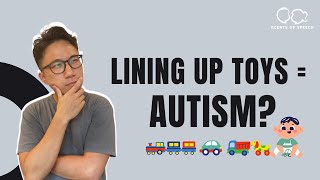
Ming (speech therapist, Agents of Speech) explains why lining up toys is commonly feared as an autism red flag but notes typical children also line up toys. He outlines three features that raise concern (repeatable, predictable, ritualistic), emphasizes assessing the function (e.g., imaginative play like mimicking Noah's Ark vs. ritual), and highlights that excessive lining-up often reflects limited play skills. He recommends starting with simple, routine toys (ball drop, car slide, vending-like toys, bubbles) and gradually teaching sequential and pretend play; notes some repetitive behaviors stem from sensory needs and may require occupational therapy; advises parents to learn from therapists and use AgentsOfSpeech resources.
Chapters
Hey, this is ming here from agentsofspeech.com I'm a speech therapist, and today we're talking about lining up toys and why you're scared of it. Probably a lot of parents are scared of this. The reason is because it's a red flag for autism. It's written on a lot of websites out there. If you search for it, you will know, okay? And that's probably how you landed on this video anyways. That's why I clicked on it. And the reason for why it's a red flag, it's a symptom, is because it's repeatable and it's predictable and it's ritualistic, okay? These three facts, it's the same as if a child likes to look at spinning wheels or top or whatever, anything that spins when they're concentrating on it. They like it because there's a pattern is mesmerizing, okay? And they only like it that way and that way only. And same as the children who like to memorize ABCs, shapes, colors, numbers, and put it in order the way that they like to. And that's because that's something ritualistic that they can keep on repeating over and over again, okay? And if you put a child who is on a spectrum by themselves and they play with this stuff lining up, they can go hours and end, okay? But there's an actual fact that typical developing children also line up toys. So your question would be. I'm. I'm guessing you would say, then how do I know if it's normal or not? Okay, I'm. When I'm saying normal, I'm going to make some people unhappy. I'm only saying normal because most parents will ask, is this normal or not? There's no normal or not normal. I mean, like, there's typical. So typical training children do line up toys. I line up toys when I was young, if I do still remember it. Okay, so how do you know? Well, there. There must be an interest in a child to want to play toys in different, various ways, okay? If your child is only playing a toy in a way where he's only lining it up or he's only doing, like, in a certain way, then yes, your child might be, in fact, at risk of autism. Okay? And it doesn't matter. It's not the symptom that you should be scared about. It's the underlying reason that you should be, like, looking into. Why is the child lining up? Is he having imagination? Like one of my clients, you would line up all the animals, but was He. On the spectrum? Yes. But why was he doing it? It's not because of his re. Repetitive and ritualistic whatever. It's because he loves Bible stories and he was trying to mimic Noah's Ark. Right. And you have to understand each child is different, so you cannot go ahead and say, oh, he's lining up toys. He's got autism. I see this a lot in. In teachers and parents, they always say, he's lining up this stuff. What, What. Why is it. We might not know in the first try, but we have to keep on observing about why they do it. So you have to know why your child is lining up. And on the contrary, if your child is lining them up and also playing with the toys in different ways and the ways that they were designed to be, or they're being imaginative or whatever, then that's fine. That's okay. You can, like, relax a little bit because that's what only one of the ways that they play and they don't repeat it over and over again. Okay. The only thing about lining up toys is that if it takes up a large chunk amount of their daytime. And this comes down to the second point I want to talk about, and it's the lack of play skills. So children who use a lot of time doing repetitive stuff, whether they are on the spectrum or not, it doesn't matter. Right. And that's because there's a lack of play skills. We talk about this a lot in Agents of Speech. If you go into our channel, you'll see the. There's a lot of me talking about play. And I know a general consensus about play, especially in Asia, where I'm from, is that, hey, man, what. What are you doing in therapy? You keep on playing, you're not teaching, you're not. They're not talking, whatever. Well, you need to have a context to start developing language. You can't just suddenly learn the words without knowing the meaning. And it's the play that gives the meaning. That's why play development is a strong indicator for both language and cognitive development. Right. You see all those children who can pretend and so on. Like girls, for example. Historically speaking, developmentally speaking, their language just excels far away from boys and from. From toddler to, like, school age. Why? Because when they play, they have a lot of imagination, a lot of dialogue. They're always practicing that kind of stuff. Whereas us guys, when we're young, we're just like, chasing around with guns, whatever. And we don't have a lot of language in our play. So you can see Girls who develop faster, you know, like, we don't know which was which, right? Chicken or egg? Is it because they're more mature, therefore they play better, therefore their language is better, and therefore the cognition is better? I don't know. But at the same time, it's all correlated. Okay? I cannot say cause, effect. There's no such thing in the world of therapy, in the world of, like, whatever. You cannot say that there's a causal relationship. There's only correlation, if you get what I mean. Okay? So most of the time, if a child doesn't is playing something in a repetitive manner and they don't have other ways or imagination to do so, to do otherwise, it's because they don't have the skills to do so. And you need to be the person to teach it. Whether you're a parent, a teacher, or a therapist, you gotta be the person to teach those skills to him or her. Okay, so start off with toys that also have a repetitive nature to it. But it's a lot more like. It's the. It's the way that you're supposed to play with it. So maybe a car slide. We have videos on that in our YouTube channel. Just go in and search car slide or whatever. Okay. And you see that there are some easy toys that you can tackle. You can use first, like a ball drop. You know, those balls that you put and it goes like that. Or like a car sl. You go. You put, and it goes zigzag, zigzag, like that. You can also get a bunch of, you know, a vending machine, even, like anything that has a routine to it. And you can keep on doing even bubbles or whatever. So let them play with it, and let them like that routine and let them keep on doing it once they mastered it. And then you can move on to the more harder sequential play or like, imaginative pretend play where, you know, I'm the. I'm the supermarket here and you're the customer or whatever that comes after. A lot of times parents would say, oh, I bought the new cashier kit. I bought the new, like, cook set or whatever. But my kid doesn't care for it. Well, maybe because his play skills are down here and you're trying to introduce something up here, right? So slowly build up to it. Try to teach easier toys. Get away from all the lining up and all the throwing. Okay? When a child lines up stuff and throws toys, it means that their play skills are lacking. And you might say, oh, it's easy for you to say. It's a. Yeah, Go check out the videos first and learn. And second of all, you know, if you're going to speech therapy or any type of therapy, try to sit in and learn from the therapist. Okay? I know a lot of parents will say, ah, my speech therapist doesn't do this. Whatever, whatever. They're not always playing. Well, there's a reason for it, and you should try your best to learn from them since you're paying or you're spending time there already. Right. So try to learn the way and see if you can mimic what the therapist is doing. All right? I know it's very. It's a very easy path to go down and say, oh, the therapist is like this. The therapy is not working, whatever. But at the same time, are you, like, taking full advantage of the therapy right now? That's why I always say. And that's why a lot of these aren't popular things that you want to hear as a parent. So I'm sorry about that. Okay? So the last thing I want to talk about is repetitive behavior. And we did talk about that already. Right. But what do I mean by that? That's something that we are all scared about. Repetitive behavior. That's, you know, like, I also heard of. I've never seen this child. It's my supervisor's case, and we call it case, but call it here. Students in agents of speech. Right. She had a repetitive behavior of tiptoeing so much that her bones, the structure kind of changed. And it could never lie flat anymore. She. His. His feet just can't do it. His heels cannot. Her heels couldn't get to the floor anymore. So we. We are all dreading this kind of repetitive behavior. All right? But a lot of parents will think, okay, if something is not good, I'll stop it. And I'll try my best to, like, control. Right. You have to look into the reason why this is happening. All right? And the reason for all that tiptoeing for that particular student was sensory input. Okay. That's something that. I don't know what to do. I have to refer to an occupational therapist. Right? So you have to know why. Why is this? Because we all have repetitive behaviors. It soothes us, it makes us happy, it makes us comfortable. It's within our comfort zone. We feel safe in that situation. That's why smoking is a habit. Right? For me, my drinking beer is a habit. Why? Because it provides that same feeling. I know I. I'm grounded. I feel okay. Yeah. So you need to know the function of that behavior and then try to Understand your child and change it from there. Because if you stop a person from doing something, they will revert to a different behavior for the same reason. Okay, what I mean is I'm trying to take some crazy examples and I'll talk about a child later on. So if you stop someone from smoking, what they're going to do? They're going to smoke something else, like a vape, right? If you can't smoke a cigarette, smoke a vape. If they can't vape, then they'll probably smoke something else or do something else. I don't know. I'm not sure because I do neither. So for a child, it might be that you. For instance, we stop a child from head banging. Right. And after that, because we didn't understand the. When I was a younger therapist, I didn't understand the meaning why he was headbanging. He soon went on to bite people. Okay. And that's something you have to be careful about and think about. If I stop this kid, it might be temporarily a relief to everyone's, you know, well being. But at the same time, why is he doing that? So most of the time, for repetitive behaviors that are not violent is the lack of play skills. And you have to do it no matter what you are. Like, I know you're. You're watching a lot of videos, you're learning a lot as a parent. That's great. That's really good. At the same time, you have to take action. You have to start teaching your child how to play and keep it as easy as possible. Let them listen to you and so on. We don't really talk about our courses here that much on, on the videos here for free. And that's because, you know, I don't want to make you feel like you have to take the courses in order to learn. It's not like that. You have to take one advice and do it. Okay. That's what I want. Okay. So anyways, that's all I want to talk about here. If you want to learn more, if you want to start home therapy, I would suggest you to go to agents of Speech.com checklist to grab a free checklist of all the tools and toys that I recommend you get when you start. Okay, so that's it for today. I'll see you in the next week. Okay, Bye. Bye.










