Why It Doesn't Matter if Your Child has Autism
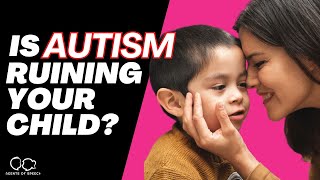
Ming from Agents of Speech argues that an autism diagnosis shouldn't be what parents focus on. Early therapy works on communication and relationship-building regardless of the label. Parents should start therapy early and keep a loving, expectant relationship with their child instead of treating it like a debt the child owes them.
Chapters
Hey, this is ming here from agentsofspeech.com I'm a speech therapist. We coach parents how to do home therapy online. Okay? Today we're going to talk about why it doesn't matter at all whether your child has autism or not. Obviously this title is going to trigger some people. If so, that's more than welcome to click away. But we're not here to talk about whether we can prevent it, whether we can do whatever. It's when things are such already. And what can you do about it? The first thing is that you cannot change autism, right? It's developmental. I had a person who said, oh, what does it do to the brain structure? If I know that I can change it, right? We know what happens to Alzheimer's, right? But we can't change the brain structure to deal with it. Like, you can start a conversation here, but then I don't see anyone who can change autism, okay? And if there is, then hallelujah, great, we don't need to deal with it anymore. And there were this magic pill that, like, we can all take to get rid of autism. That's good. It's good for society because we don't need to use that time to teach basic language or whatever other functions that the child is lacking. And we can teach other things and we can expedite the process. A developmental thing means it's something that we cannot deal with. Just like this cat I have here, he's deaf. This guy's deaf. So whenever, like I call him, he's not going to be able to hear me. And he shouts and screams way too loud sometimes. You might hear him on the video too, right? So I can't change it even if I know that whatever structure is going on in his nose or his ear to be exact, right? I don't know how to fix it. There's no way it's developmental. He's born like this, right? So I can just accept it, right? The second thing is the therapy is always similar in the beginning. If your child is non verbal or that he has words and not using it properly or whatever, it's always about the same things, right? Therapy is always about teaching communication, intention, right? Teaching the child to want to talk to you, want to play with you, et cetera. Whether your child has autism is on the spectrum or not suspected, whatever, the therapy is similar no matter how you deal with it. At ages from one and a half to all the way to three, it's always around the same. So your best bet is to start therapy right away. So that you can actually do the things. I'm sorry, by the way, my nose is a little bit congested. I might sound a little bit sick, but overall I'm okay. Just in case you care. The third thing is it shouldn't change your relationship with your child, right? So even if I've seen loads of parents who come to me and I'm not a parent, you can take this with a huge grain of Himalayan salt, right? You can think about it in any way that you want. And if this advice or whatever that I'm talking about rubs you in the wrong way, then be my guest, go listen to someone else. As long as you're taking action, right? I see a lot of parents coming into the whole. The whole ordeal of doing speech therapy, ABA therapy, occupation, whatever, early intervention. It's as if the child owes them something, right? And I can't say that you're going to be like that. I'm just saying, like, a lot of parents are like that when they come and they don't know what to do, right? You probably don't know what to do if you're watching this and you go to a therapist or a psychologist, a doctor, whoever gives you a diagnosis, slaps a label on your child and you feel like this is the end, right? There's no way that my child can do X, Y or Z in their life. And that may or may not be true. We never know that. But it should change the relationship between you and your child. You're still a kid. You're still looking forward in life, thinking that he or she will be talking soon and share thoughts, emotions with you, right? So if even there is autism or whatever, that relationship between you and your child should not change at all. It doesn't change the way that you should talk to your child, shouldn't change the way that you see your child. And I know that this is obvious and many parents don't even know it. They feel like they're on a mission to solve an issue. And autism in itself can be very detrimental to one's life if not managed. And that individual doesn't know how to cope with it. The people around them aren't understanding. But there's a huge but is that all this can be mitigated as long as you have a great relationship with the child, Right? I've seen so many parents with autistic children, the ones that go on social media and talk about it, they have great relationship with their autistic children. They have really good emotional bonds, like they know how to Talk to each other. So whatever that is developmental, like whatever it is going to be, it might be the A word, it could be some other a word like apraxia of speech. I don't know what, whatever labels that someone can slap on a child is, that shouldn't change much, right? And if you're watching this, you have a smartphone, you have Internet, then you have the means to do something about it, okay? And it doesn't need to come from me. I don't know how many times I have to say this. Like sometimes in the comments I say, oh, this guy. It doesn't affect me at all. I'm just saying if you're watching this and you think that, oh, I make some sense, right? Then great, go do something about it. Instead of thinking about what kind of problem your child has or you're trying to solve an issue that is your sole mission in your life or whatever, right? It's not. It's have a better relationship with your child and then you will know how to navigate this whole situation with him or her. Okay? The last thing I want to say is it's a tough fight no matter what. Okay? Nowadays, everyone's challenges are different. So even if your child is typically developing, right, it's gonna be a hard fight. Like nowadays school is hard to get in. Like preschool has interview, kindergarten has an interview. If you're living in Asia, you'll probably have to speak like three languages to get into a good kindergarten. The school fees are expensive. If you don't pay like expensive school fees, you'll be in like a local government funded school, which may or may not be ideal given this current situation of the whole world. So everyone's challenges are different. I have friends who work in kindergarten. She was like a deputy principal. It's just so hard to get children ready for primary school, for the primary or elementary schools that parents want their children to get in because like schools are getting fewer, right? We're, we're all having less children. Unless you're in a developing country, unless you're watching from India, Indonesia, Philippines, Africa, these places have an explosion of children. And whereas developed countries, it's less and less and less. Just in Hong Kong, where I'm from, last year like 10 kindergartens went out of business. And what does that mean? It's going to be a hard fight no matter what. And if you're a child, like adding autism into the equation obviously is another blow to the whole environment. And so what I'm trying to say to you is that it really doesn't matter because. Because it's going to be tough anyways. So buckle up and let's do our best, right? Because as a speech therapist, not every. Like, only 30% in my own case, right? Only 30% of children who come my way are on the spectrum. The other 70% are typical developing, and there are some hiccups in their language development. But I want to tell you, no matter what child that comes through my door or comes to any therapist store, they're going to have a tough fight, right? And sometimes even children who are smart, who are on, like, genius programs or whatever, they have it difficult, too. And that's because they're also different from everyone else. Like, at the end of the day, we just need to play the cards that we have in our hands and try our best to navigate the situation. I know this is not going to help you when I say this to you, but trust me, believe me when I tell you I've seen, like, thousands of parents and children. It doesn't get any easier, right? A lot of parents, when they come, something that they say to me is like, oh, I'm already a lot better than whoever I know a child from, like, my family friend who is X, Y and Z, who's much worse than I am. And that's just the whole human condition, right? We can compare down or we compare up. Either way, we might be better off. Or less better off is still tough. All right? So let's try our best. And if you're watching this video till here, listening to me ramble, that means that you're willing to actually do all this stuff and listen to strangers on the Internet. A Chinese man talking to a webcam, whereas you could have listened to a white lady look into a professional camera with, like, effects inside of a clinic, right? So thanks for watching and if you need more help, please go to www.agents of speech/course. We have really vibrant community of parents of 11,000 people right now and join because we have free courses that teach you from all the way from zero words all the way up to, like, sentences and above. So that's it for today. Thank you so much for listening me through my stuck nose and I hope to talk to you next week. Bye bye.










