Your Child Doesn't Come Over When You Call Him/Her?
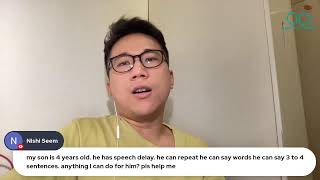
Ming explains why children, especially autistic or language-delayed ones, ignore when you call them and what actually works: stop escalating your voice, use gentle physical prompts paired with rewards, and build play routines that make listening worthwhile.
Chapters
Hey, this is ming here from agentsofspeech.com today, let's talk about when your child doesn't, doesn't come over when you call his or her name. So this is quite an often question. I just got it inside of our course as a comment. We had a lesson inside of a marker course about, oh, how do we get your child to respond to names? Right. So the question the parent was asking was, oh, okay, what, what if I call his or her name when things get dangerous and they still ignore me, what should I do? Right. So this is quite something that you need to drill into of your mind. Okay. A lot of times when a child is not responding in terms of, in terms of verbally, what you have to do is to start being a little more physical with them. And I don't mean to be like, I, I, I'm not telling you to be violent, you know, like scolding. A lot of times where, you know, Asians like us, what we do is like we start scolding, hey, and, and, and, and then we, we try to escalate our tone. So what you're trying to like when, when, when you do do that, right? What happens is that the child's instinct, the fight, flight or flight, Right. It happens a lot. Like, remember when you're back in school and the teacher raises their voice a little bit, you kind of go like, you get shocked, right. So when you actually raise your voice, you are trying to trigger their kind of like animal brain. That's how I think about it. I might be wrong, but this is how I feel about it. And that might not be a good thing. Why? Because every time that you want your child to respond to you, you need to have that amount of energy. And every time that your child learns that, hey, after you shout or like make a loud sound at me, it doesn't really change the fact that it's not something so important that they have to come back to you. It might work the first or second time and then it might like third or fourth time, it becomes harder and harder to get them back. So what happens is that the bar just gets higher and higher. And what happens is the mother usually, usually tells me, oh, I don't get it. It's getting harder and harder to get their attention. I need to shout harder. I need to, you know, I need to do all things. I need to clap, I need to go up the door and go like that. It's very difficult. So how about just don't go to that energy level. Like don't go there and be a little more physical. What do I mean? So basically I'm. I'm telling a story of the boy who cried wolf, right? So when you are trying to do those loud noises, trying to get their attention, what happens is that they slowly learn. Dude, you are all shout and no bite, right? So what you do instead is you hold them. You hold them. So there are loads of videos on YouTube, sometimes on, like, Facebook and nowadays on TikTok, about how parents of autistic children control or. Or more like not control, calm the kids down, right? And what happens is that the. The. The. The. What happens is that you will see that the dad will, like, hug them like this and give them pressure and. And. And close. And when they. When they're getting, like, a little mad, this kind of pressure actually calms them down. This is kind of true. I've. I've asked this to occupational therapists. I am not an expert of this. So I'm. I'm learning from them as well, and it works. So what we can take from this is that every time you say the name of the kid, 100% of the time, you want to. You. You want to. You want to make sure that it's around, if not matching to 100% of the time, that whenever you say the name or tell them to stop, you hold them down. You hold them down, all right? So what happens is this after you hold them down and tell them, hey, stop, right? Stop, all right? Or you say, come here, and then you grab them instead of just letting them roam and just keep on. Come here, come here, come here. So what happens is that, like, if you say six times or seven times, and then they will come over, then maybe the child will learn that, hey, I need to say it six or seven times, and then. And then suddenly, all of a sudden, I will have to respond. So it sucks if a child knows and learns and, like, really strong routines. And this happens a lot in autistic children, right? They have a strong routine, they learn something, and then they think that, oh, the rule is that I need to. Mom needs to shout like seven times louder and louder. And then I will respond, right? You never want that. So what you want to do is, like 100% of the time and that you say something, you act upon it. So you say, come here. You go grab them softly, firmly, and then take them here, right? You say, stop. You go up and stop them, right? So more and more they will know. Oh, man. Whenever mom or dad says something and I don't do it, they're going to come over and do it. So why don't I just do it myself? Right? This is something you have to teach them that is non verbal. So you will see this in a lot of ways, right? If you see me teach a kid. Wait a minute guys, I'm going to answer your questions real quick. So if you see me niche kids, when I say something, my words mean something to the kids. They will stop what they're doing. They will listen to me, they will look at me, right? And this is like very true. It's kind of like, you know, those dog whispers, whatever whispers people on, on, on the, on, on YouTube and stuff. I don't say I'm a kid whisperer or whatever, but it's around that level, right? So what you want to want to happen is that the kid knows that if you say something, it means it and then they will do it. All right, so let's see about the questions now. So Min Ki says, my child now asks for food and water. All credit. Okay. No worries about the technique. What. But what's next about your microhaus is very beneficial. Ah, great. Thanks for that, Minky. So after your child learns how to like ask for food and water, what else? What, what, what's next you have to do is that you have to start doing more of that with different items. So most of all, what we do is like we start to teach them some simple play routines. And maybe I haven't talked about this. At the very last video of the micro course, I do talk about it, right? I think I do need more examples of that. But what you essentially do is like you need to expand your child's, your child's interests. So what interest does your child have? Right? Can you teach your child to start playing some toys? Yeah. So those are things that you have to think about. All right. So some of them are already on YouTube, like the car slide or whatever. Any toy that you can play over and over and over again within a routine. I do mention it inside of the, of the troubleshooting video that I think is the last video of the micro course. I do talk about that. And now all of a sudden you have more things to teach rather than eat and drink, right? You have like slide, you have like push, you have like open. That we do a lot, right? We have like high five. You know, we have a lot of stuff like push, blow, even like bubbles or a balloon. Like you can teach a lot of these verbs. All right, so the next thing you have to do is expand your Child's. Expand your child's interests. And then the next thing, what you have to do is to teach the verse for. For each of the steps of those routines that you can do over and over and over again. All right? Okay, cool. So Megan, Megan says my son is moderately deaf. Sorry to hear that. Due to blue ear in both ears. So blue ear should be reversible as far as I know. Let me just, let me just see what the. What Blue ear. Oh, okay. Well, basically blue ear is just middle ear infection, right. With. With fluids, a layman turn. I. Sorry. I had to check it out because I only know it in the. In the academic way. He's going to get tubes in this week, but I worry he will not be able to catch up and speak in time of school starts here. So Megan, the thing is, yes, it's true that your child will not be able to catch up probably, and it also depends on his current language level. Right. So if he's already speaking in. In full on sentences, it's just that his sounds are missing like a lot of glue ear kids. Then yeah, even if it's that mild, he's not going to be able to start to catch up by the time you start school. That's impossible. You have to remember that. Right. Because he has had a lot of the, the times he's had all those like speech developmental like that time taken away. Right. And, and during that time it's like a lot of stuff is muffled, you can't hear properly, so on and so forth. Right. So it's good that you know the reason behind his language delay because most of the time we don't know. So being deaf, it means not deaf, like moderately. We don't really call it deaf, we call it hearing impaired. Okay. So having, having hearing impaired actually makes it pretty difficult for, for children to acquire language. So what you have to do now is to write. Like you have to start getting speech therapy as soon as possible. Right. And whilst. Because he's still getting tubes. Right. What I want you to do is to start teaching him with as much signing and gesturing as possible. Right. Keep it as natural as probably do a lot more gesturing along with the words so that he gets the meaning of the words asap. Because once he clears it up, everything's going to sound very different from what he guessed before. Like it's very muffled. Right. So Megan, don't worry. It's true that it's true and I don't want to cut any corners. Yes, he probably will not be able to catch up on the time, he's not school. But at the same time, there's so much you can do. All right. Don't worry. It's just a lot of hearing impaired children who are, who have like a middle ear infection. Like liquids inside of the middle ear. They will catch up, but it's just a matter of time. Right? Okay, so where was I? I was talking about saying something and meaning it. Right? So that's very, very important. Oh, well, I just have another question. Right? So Bessa Lula, I'll call it. Bessa is receiving ABA therapy and also speech. How can I help at home? It doesn't say mama or daddy yet. There's ball bear and calls a dog cow. What? Okay, all right. So I guess you have to first think about why does he only say those words? Is it for self entertainment purposes? Better. And the other thing is if you want to help him at home and he just turned two, the best way you can, you can help him is to expand his, his interest, like I just said. So what games, what toys can you play with him? Don't. Do not. I stress this really, really a lot. Right? Do not to not go into a rabbit hole and thinking that, oh, I must, I must teach my son to talk. Right? I must get my son to start speaking. That rarely gets you anywhere because it just not good, right? Because the kid's like, ah, you want me to talk? I don't get it. Never do that. Never, never make them say something. Never make them do anything because you want to think about how to add value to their life. Okay? Just like how I'm trying to add value to you through these like free online lives, right? So how do you add value to them is like by teaching him something to play a toy and making it fun. Because when you make it fun for the kid, they're more inclined to listen to you. And they're like, for them it's like, oh, I never thought you could play this way. I never thought this would be fun. Thank you very much. I will, I will play with you. Right? So that's something you have to, you have to think about, my friend. All right, so let me give you some examples. Like for two years old, what I would do is like, I would play a lot of bubbles. Since he says ball, I would play ball with him. And ball, you can do a lot of stuff, right? You can throw it, you can roll it, you can kick it, you can use a bat and hit it. Right? Right. You can also dribble it, you can put it in water. If it's not like a softball, like. Like a. Like a spongy ball, you can put it in water, right? There's a lot of stuff you can do, like, use your imagination, make it fun for him, add value to his life. Make his. Make his play time a lot more fun than it should be. Once it becomes more fun, then it's much easier to get him to talk because then you have a relationship with them. With him, in fact. And it's very easy. All right. For now, Bessa, if you can, I think you should go to agents of speech.com and check out more resources. And there's a course like. Like Minky said that there's a. There's a micro course I can check out, and it's more. Puts all the advice together. All right. Okay. So why is it important that when you say something and then you must instantly react? Because at the end of the day, you're the person who wants the response from a kid. So that's a very selfish thing. You know what I'm saying? So your child is not inclined. Not inclined at all to reply. You not inclined to respond. And I always say this in, like, the courses and also in these lives, I talk about, like, oh, having a. Have. Having a reward at the back of it, but at the same time, what. The other. The other thing is also true. And that's what we call shaping, right? And what shaping is. I'll make another video about this. Basically, what shaping is is that it's more like teaching an animal, right? And I don't mean this in a bad way, all right? A lot of people say, oh, man, you're so ableist or whatever. Like, I don't even know what that means. I'm not American. I don't want to get canceled, so I'll stop now. But what I mean is, in order to shape someone's behavior, every time that you cross the line, I will push you back, right? So you will learn slowly. Because what you're doing is basically, every time you cross this line, I push you over. Every time you cross the line, I push you back. You will learn that you can't cross the line, and that's shaping, right? You're shaping someone's behavior, doing so, right? So every time they cross the line, I push it back. So it's the same. I say something, I will physically make you listen. And then slowly, they will know that they must listen to me whether or not. Whether or not they like it or not, right? And then the other side is true. Every time you listen to me, I would reward you. So how you make it 100 correct is you say something and then you physically prompt them to do it. And then you reward. Easy. So it's like let's say my cats, right. I want them to follow me. So I call them. I use the reward. Wiggle, wiggle. Come forward. Follow, follow, follow me. Very easy. And I'm pushing her. Her. But her bottom just so that she follows. And there's zero percent that she's going to fail. And after she follows me, I think, good girl. I give her the tree. Same as the kid in the beginning. Because verbal instructions don't mean anything to those children. Okay. Your name is Lax. Clippers. Nice. You're welcome. You're welcome. Clippers fan there, I guess Reina Arena. Sorry, I'm getting your name wrong. My daughter will be three this coming October, but is unable to make a sentence. Yep. So right now is August. Damn. I'm really. You see, my background is different. If you've been watching, I'm back and at home in Hong Kong. But anyways, I didn't know it was October. In two months time. So your child would be around 2 and 10 months. Right. So at that time. Yes, you're right. Reiner. Reena is that if your child is three and cannot speak in a sentence yet at least. The least that your child should be able to do is to start using two word phrases. Right at this time. It's like two to three word phrases are still acceptable. It really is. So that's something you have to take care of and maybe if you can. I know that there's a huge backlog of speech therapy cases all around the world that cannot be fulfilled. And it's a drag that will probably go on for quite some time. Right? It really will be. So I would strongly recommend you to get to get a speech therapy as soon as possible. Right. So my question to you, Rena or Raina, Sorry, please tell me which one it is. Is that how long of a sentence of a phrase can your child do? It doesn't necessarily have to be a sentence, right. Pooja says my son doesn't initiate a conversation on his own. He has speech and can repeat but has no functional conversation. And in this case, Pooja is what you need to do is to create situations such as within a play context that usually what a teacher is like. You need to have a lot of play involved. Right. Then that becomes the context for a conversation. You cannot expect a child who is delayed to speak in a way that they can start just saying, oh, how are you doing? Whatever, oh, what are you doing today? Because a lot of times functional conversation, you want to. It's like you want to hear something, but you don't know how to make him say something. And if he wanted to and if you wanted to share, he would have shared it with you. So if he cannot share with you, that means he doesn't know how to. Right. It's above his pay grade, above his language level. So what do you do? Create a common topic, a common interest that is right here, right now. Because children who cannot hold a conversation are those who cannot do their. And then. Meaning they cannot do past tense. They cannot talk about things from before. They cannot talk about what happened that didn't happen right here. Right. They may remember, oh, in the zoo or at school, this happened. So it's very difficult. That's something you have to remember. All right. So what you have to do is to create those situations. And you can do it in many ways, which I'll make a video about that. And we're making a course about that. But currently that's going to be on hold for a bit because there's a lot of personal things going on in my life. But what I would say is like, find a toy that your child really likes. All right. And then. Or find a game, find an activity. Find a board game. Find something that your child really enjoys. Even a game on the phone would do, to be honest. And it depends on how old your child is, Pooja, you know, so I really hope that helps. It's not enough information for me to chew on, but I guess that's the best I could do for now. Yeah. So that's pretty much it for this live. I just wanted to talk about if your child doesn't respond to you, which I've talked about multiple times. Right. I really think that what you got to do from now on. Right. What you got to do from now on is to. I'm just changing the logo. What. What do you guys like? I think this looks pretty cool. This looks pretty cool. Anyways, I. I'm just thinking about how to make it easier for you to learn. Right. How to make it easier for you. So, okay, this is a good question Pooja asked, will will Gemini be helpful for him? To be honest, I really don't know how that works. You know, I'm always thinking about how to. How to make sure that something. It becomes easier for the parent to teach the kid at home and like app like Gemini or like speech Bulbs or whatever. I'm mentioning the names. I'm not getting paid. I don't, I don't even know if they have like a. Whatever. Do they have like a kickback to me if I would ever do something like that to get some money? Probably not, but what I'm. I'm just telling you I'm not affiliated in any way. I don't know if this works or not. Okay. Is it based on research? Most probably yes. Will it be helpful to them? To some extent, maybe especially like building vocabulary. But my. Myself, I haven't used it at all for my own clinic from own practices. I don't know how to use it either. So I will. I cannot answer this to you, but what I can say to you is that's a done for you service, right? Opening an app, things happen and then you know, kid gets better. But what you need to know is like there's never a done for you thing. Never done for. For you. There's only done with you for, for speech therapy or done. Yeah. Only done with you at the very least, at most. Sorry. So you, you have to think about that, right? So four years old. Okay, got it Already in speech therapy. Got it. Any course. Well, does he speak more than like, can he speak in a sentence? Right? You mean he can, he can repeat, but is there like a full on sentence that he repeat or does he use a sentence himself? Can he do that? That's something I need to know. But right now the courses are quite limited. I'm just trying to gather as much information as I can to help you guys because at this time, right, all the courses that I make, you see videos of me teaching you something and then you see a parent doing it. You never see me doing it. The answer is not because I've never done it, all right? The answer is because I cannot show a lot of kid faces and I have no right to video record my clients when they come over. That's a huge problem for me. So I can only show those parents all over the world that have, I have consent showing, whereas the local ones, it's much harder to get consent because no one wants to know that they're going to meet. You know, it's not something that they should be proud of. Right. They would be. Want to want to be proud of. Right? So right now there should be no course that you could, that could help you. Maybe the, the best one might be like word combiners. But if your child can combine words themselves, like make a full sentence himself, then you don't need it. You just need to wait for the new course called Verbal Reasoning course, which will. Should be out at the very. Like, at the very least at the. At the last quarter of this. Of this year. Okay. It's already August. My God. Right. But, you know, there's a lot of stuff going on. I have to delay some stuff that I really want to do. Okay. Nishi says my son is four years old. He has speech delay. He can't repeat in K for up to. Okay, he can repeat. He can say words. Well, the thing is, like, are. Are those sentences? Are those sentences like other sentences? Frozen sentences? Right? Is it like, I want this, give me that. Let's go to underscore something. Something, right? Those are memorized, right? Those are, you know, those are memorized. So can he flexibly use, for instance, like, Ming is wearing a yellow shirt, a mustard shirt, whatever. It's pretty ugly. My wife always says it's not nice, but Ming is wearing glasses. Can you say that? Can you say, mommy can? Whatever. Right? If that's the case, then you need to work on. You need to work on creating. Okay, let's see what you say. Yeah. Then. Then you need to. You need to work on creating a play sequence. And you can just search on YouTube, on YouTube, on our channel. And then search for, like, play sequence. And you'll see a bunch that I've made that's for free on YouTube. And you need to create games that. And play sequences that you can play with your kid, basically, so that. Oh, this is a different person anyways. Yeah, it's the same. It's the same thing. It's the same thing. If it's irregular, then you must teach a play sequence so that you can at least hear those words during those, like, 10 minutes that you're playing with him. Right. And other. Other times you're just trying to slowly maintain that communication and extend from there. So, yeah, he said, give me this and so on. Right? Okay. So those aren't really truly three to four word sentences. Those are more like one to two word sentences because they just add like, I want whatever, give me whatever. Right? So I don't need to learn, like, give me. He doesn't even really know probably the real meaning. He doesn't even know that give and me are different words. Maybe give me is one word to him. So what you have to do is to start teaching him a lot more verbs that he can use. How he can work at home is that we have a course called Work on Binders is for kids who have only one word and like single words. And you want to get him all the way to like speaking a full on sentence. Right. So maybe that would be helpful. That might, might be not. But at the same time, that's what you have to be thinking about. Teaching more verbs, teaching more how to teach them to say at least in the sentence of svo, subject, verb, object, where they can use like the subject and the verb and the object interchangeably with different people, different verbs and objects. Right. Let's see whether it's 19 years, 19 months. Monsters, a lot of Coco Melon. Oh, has a lot. Has been two weeks since she stopped watching it. Okay, that's cool, Nary. That's great. That's good. That's good info right there. How long does it take for such. Well, I don't know, man. I haven't seen your kid. I can't tell. That's first of all. And again, this is why I tell a lot of like you can never on speech therapist can never tell you this kind of stuff. How long is a piece of string? It depends, right? I mean, if you go to a doctor, how long I'm gonna get? I'm gonna recover something. It depends on you. It depends on a lot of stuff, right? All you can do right now is to think about how you can best help your kid. And that, my friend, is inside of her control. Like so go for it and think about how to go through our videos and think about how to play with your child in a way that will stimulate their language growth. That's the best idea. That's the best thing I can tell you. No one knows, man. Like this, like, how long does it take? No one knows. If someone knows other. They're like, they're. I don't know, they're worshiping Satan or something. They have a crystal ball. They have a. Whatever. I. I don't know. They're full of. They're full of it. And you should not listen to them. If someone comes up to you and say, hey man, they'll catch up in two years. Bull crap. You never know. If. If they do, then, then hallelujah, you know, like that's great, but you never know. Oh, Nary says still following up. Okay, well that's great, Nary. Thanks for sharing that. Yeah. Always cut screen time. Only use screen time for, for rewards. That's what I use. I do. That's a lot of parents that follow me too. And it works. All right. Okay, so that's pretty much it for tonight. I'm getting a little tired. So I'll see you guys in a week. I know I missed around, like, three weeks of life, but. But a lot of stuff has been going on. I hope you understand. And I'll see you very soon. Bye. Bye.










