Attraction Agent LIVE Day 2! Ft. Tyler Newman
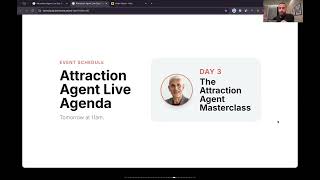
Tyler Doyle, co-founder of Imara brokerage, teaches Dubai real-estate agents how to build personal brands through short and long-form video content. He shows how one afternoon of filming can generate 160,000 AED in commission and walks through the TOFU-MOFU-BOFU content funnel to move leads from awareness to closed deals.
Chapters
Good evening, everybody. Good evening, good evening, good evening. Good to see some people here joining already. Um, I, I'm just going to give it a few moments, a few minutes to let everybody join, and then we're going to get straight into the presentation, give you guys a bit of an intro into who I am. But just so I'm sure you guys can hear me okay, if you can just drop a yes in the chat, just gives me the heads up. There we go, cool. I'm seeing some names coming in. Abdullah, Emma, Dylan, good to see you here. Hasnain, perfect. Sam, cool, appreciate you guys. All right, I'm gonna share my screen in Just a second, and we are ready to go. All right, bear with me just a second while my screen loads up. Aidan Doyle's videos playing. Yeah, so I'm here, Arabian Ranchers 3. There we go. All right, made for followers, which is some more videos. Right, day 2. You should all be able to see my screen in just a second. Cool, right? We can see the chat, Stefan. Yes, I can see the chat coming in, guys. If you can see my screen, you can see day 2. Just let me know in the chat, drop me a yes. We got more people joining. Every minute. So 5 minutes past, we're going to be getting into it. Quick question then for you guys listening in that are here now. Who here is— who here feels like they want to build their personal brands? They know they need to be doing it. They just maybe feel like they lack a strategy. If that's you, again, drop a yes or a me or a thumbs up. Okay, sounds like that's a lot of you. Second question I have for the room is, what is the biggest takeaway you guys had from Aidan Doyle's session yesterday? So if there's any kind of breakthroughs you had yesterday, any gems, any golden nuggets, be keen to understand what they are. We're just going to give it one more minute, guys, and then we'll get into it. Do a bit of an intro into myself as well. I've lost the chat box. Let me pull that back up. There we go. Oh, biggest takeaways from yesterday. Someone said motivation, personal branding, become attractive to the marketplace. Yes, becoming the attraction. Agent. Delayed gratification, playing the long game. And on the delayed gratification thing, I mean, especially with content and social media, I think a big mistake people make is, well, they need to extend the time horizon of which they measure success. Some people say, oh, you know, I've been creating content for like 4 weeks now, not much has happened. It's like, okay, go and do it for 12 months. And then come to me. Cool. Content being a 24/7 asset is another takeaway from yesterday. Stefan said being present everywhere is way better than cold calling people. Being a recognizable face in the area is key. Patrick said a clear strategy. Cool, guys, let's get into it. So in terms of what we're going to cover today, the first thing we're going to go through is kind of a proven content strategy. I'm a strategy guy. The more you guys get to know me, that's what you'll understand about me. And so really, I understand that one of the reasons people don't execute or they procrastinate is there's still confusion around exactly what they need to do. And so the more clear we can be with a strategy where you can just follow the plan, follow the process, that gives you the confidence to execute. One of the quotes I love is that confusion is the enemy of execution. And so the more clarity we can give you around what you need to do, the more likely you are to execute. I also want to talk about the power of long-form content today, and then also some advanced tactics, ads, and webinars, which we'll touch on towards the end. Just a reminder before we get into it, tomorrow is the big day, the grand finale at 11 AM. Because Tom, Tom Panos, Australia's number one real estate coach, I would argue one of the world's best real estate coaches, is joining us live all the way from Australia. So they're 7 hours ahead. Tom is unbelievable. So I'll touch on my background in a second, but Tom is one of the people that I first started learning from at the very beginning of my real estate career. I would listen to his podcast, Million Dollar Agent with Tom. With, uh, Troy Malcolm and, um, a couple other guest speakers they would have on. I would listen to it every day driving to and from work, while at work, and I would just absorb as much as I could from Tom. The reason I'm so excited to get him on tomorrow, given this kind of uncertain environment we're in in Dubai, is Tom is a master at scripts and dialogues, amongst many things. He works with the best real estate brokers in Australia and the world. My personal opinion is actually Australia does produce some of the best real estate brokers in the world. If there are any Australian brokers in the chat, feel free to shout yourselves out. And Tom's trained them, Tom coaches them, he's created a load of content with them. But when it comes to scripts and dialogues and being able to actually have proper conversations with your clients and educate your clients properly and have strong objection handling, in uncertain markets and arguably tougher markets, this skill set, this knowledge is what's gonna separate you. And so make sure you show up tomorrow, 11 AM sharp. Tom is going to bring some energy. Make sure you've got a notepad and pen. Even today, what I'm going to go through tonight, notepad and pen. Just the act of writing down notes, even if you never look at the notes again, The act of writing down the notes increases the retention into your memory, right? Let's get into it. In fact, before we do that, I want to give you guys a bit of an intro about myself. Um, again, show of hands in the chat, drop a yes if you've maybe seen my face, my content before, been following me for some time. I actually recognize a lot of you in the room probably aren't too familiar with me, but just curious to see who here maybe is familiar. Okay, there's some of you. So in case we haven't met yet, pleasure to meet you. Really want to say appreciate and very grateful for your time and attention this evening, for coming here and giving me your most valuable resource, which is your time, which is your energy. In terms of myself, so my name is Tyler Doyle. I'm one of the co-founders of Imara, which puts me as a business partner alongside Aidan Doyle. And then also Ben, whose content you might have seen. My background, or my journey in the real estate, started from the moment I was born. Very lucky that my father is a bit of a veteran of the industry back in the UK. He has an estate agency business in the Midlands, and from my earliest memories that I can remember, my time spent after school days, at the weekends, during the summer holidays would be in the one of the offices that he had around brokers. And it's kind of the world that I grew up in. So I was very much immersed from day one. When I was 18, decided not to go to university, started working as a commission-only broker at the very bottom of the market. The first property I ever sold was a one-bedroom studio for £80,000, about 400,000 dirham, of which of the fee, I think the fee was like 1.5%. I then got 15% of that fee. So I basically made about £300 commission, which is 1,500 dirham on my first deal. I then slowly worked my way up to the more upper end of the market and then eventually started working in London. 5 years ago, launched my own brokerage in the UK where we specialized in selling luxury property across the UK. And a number of stars have aligned where now I'm out here in Dubai, in the place to be, building something special, um, which is Amara. So that's more about me. You can find me on Instagram, on YouTube, if you just search my full name. And look forward to connecting with more of you. Just going to close the webinar chat so it's not taking up too much of my screen. And guys, we'll do— fire in as many questions as you have as we go. If it makes sense for me to answer the questions there and then, I'll dive into it. If not, can answer some at the very end. But tomorrow, 11:00 AM, make sure you are here. Even if you've got important meetings, important appointments, reschedule them, cancel them. You want to be here live for Tom. So before we get into content strategy, I just kind of want to set the foundations more so from a mindset perspective, almost. It's a bit of a mindset shift. It's also a bit of a business strategic shift. And you would have heard Aidan Doyle talk about this when we announced Imara and some of his content. If you've seen my stuff, I've spoken about this a lot for a long period of time. And this is something I learned from a close friend of mine about 3 years ago, who is one of the biggest personal brands online. And blown up online. And he actually said to me, he said, there are content creators, there are individuals, there are, there are businesses that use social media as, as a channel, as a marketing channel to, you know, generate some leads. And then the ones that win and the ones that are even are going to dominate over the long term are the ones that actually consider themselves to be a media company first with a primary focus on creating media and generating trust and attention, and then having a business or product or service on the back end to monetize that trust and attention. And so some examples I always like to share to drive that point home. If you look at the Kardashians, who I think should just be studied because what they've built is incredible, They are a media company first. They have built a media empire and they are just masters at it. And then on the backend, behind the scenes, all of the trust and attention they built through the media, they channel that towards these businesses that they spin up and they've built countless billion-dollar businesses off the back of that. MrBeast, of course, if you wanna, MrBeast, one of the biggest or the biggest content creator of all time. He is a media company. First. He has a primary focus on generating trust and attention at scale with then businesses on the back end to monetize that trust and attention. So he's got the chocolate brand Feastables. You have Logan Paul and KSI. They again, media companies first. Their primary focus is generating trust and attention and then to monetize that trust and attention, they built Prime Hydration on the back end to monetize that. And so how does that relate to you as a broker? So like I said at the start of this slide, it's a bit of a mindset shift, it's a bit of a business strategy shift to thinking, actually, my primary focus as a broker or as a salesperson ultimately is I want to be generating more leads. We all heard in— hopefully you've heard in the training that you've had— you've got to keep the pipeline full. Everything is just an issue downstream from lead generation. The more leads you have, the better. And so to generate more leads and to dominate and become an attraction agent and be able to do all the things that Aidan Doyle discussed with us yesterday, if our primary focus is just generating trust and attention at scale through media, which is just a powerful form of leverage, then once you generate that trust and attention, you monetize it by, of course, taking those leads that you generate, selling property, generating commission. And now I say it's a primary focus, that doesn't actually mean it's going to take up all of your time. It doesn't mean it has to be what you spend 100% of your time doing, because actually what Aidan Doyle would have discussed yesterday, what I can talk about today, is actually content creation only needs to be about 2 afternoons a, a month if you have the right strategy. And so Guys, does that make sense so far? The identity shift, the mindset shift, the business strategy shift of actually having a primary focus on generating trust and attention, almost prioritizing creating media, creating attention. And then of course, on the back end of that, you monetize that trust and attention. If that makes sense, drop a yes in the chat. I wanna make sure you guys are following me. Cool, cool. Lots of yeses coming in. Nice. So building on one of the main points that Aidan Doyle spoke about yesterday is that media is the greatest form of leverage. So what do I mean by that? Well, in business you need leverage. If you don't have leverage, which, let's put it this way, if you don't have media that's working for you, and right now you go into the office at 9:00 AM each morning, you're in the office, you're cold calling, you're doing whatever, and then at 6:00 PM, 7:00 PM, you stop working. Then the work that you're doing, your output is totally defined to what you are physically doing in those 8, 9, 10 hours that you're at work. And then as soon as you go home, the work stops, the output stops. Now sure, you might be answering WhatsApps, taking phone calls. This job, of course, we're all working pretty much 24/7. But why I say media is the greatest form of leverage is it's a way you can essentially scale yourself. So what do I mean by that? Well, I refer to content as digital assets, and this was a kind of another mindset shift that, that same friend 3 years ago taught me. He said, don't think of this as videos or photos, these are assets that you are creating. And if anyone's ever read Rich Dad Poor Dad, you know that income follows assets, and it's the same thing. The income follows the asset. So we're creating Assets. It's something that's working for us. And when you create these assets, let's talk about maybe in the context of videos, maybe Instagram Reels, maybe TikToks, maybe YouTube videos, which we're going to talk about today. These assets are working for us 24/7. So even if you leave the office at 7 PM and you go to sleep at 11 PM, while you're sleeping these assets are working for you 24/7 all around the world. You create a piece of content once, you talk to a camera once, like I'm talking to the camera now and I'm speaking to you guys. I can record this webinar, I can upload it to YouTube, and then I'm only having to say this once. I'm only having to carve out 60 to 90 minutes of my time. But what that means is now for the next 6 months, 9 months, 12 months and beyond, this can be watched an infinite amount of times anywhere in the world, which is building attention and trust with people that hopefully I want to be doing business with. And so it allows you to scale yourself, duplicate yourself, and I'm going to show you some examples of that here. So Aidan Doyle had a screenshot on one of his slides yesterday of a video he did in Arabian Ranches 3, which I believe had around 16,000 views. And so that video was produced, um, well over 6 months ago. That same YouTube video in the last 28 days now still got close to 900 views. So that is an asset that Aidan Doyle produced 6 months ago talking about Arabian ranches. And 6 months later, like he did the work 6 months ago, 6 months later, there's still close to 1,000 people that are going onto YouTube, searching Arabian Ranches, sitting and watching it for 10 minutes. And then of course, if they're interested in buying through Aidan, they can message Aidan, which again, you saw yesterday, the, the DMs, the screenshots of the leads that he's captured. So you create once and it can be viewed an infinite amount of times anywhere in the world. That is leverage. Does that make sense? Is that starting to click for you guys? Just drop a yes in the chat if that makes sense and starting to click. Cool. So even when you stop working, your content doesn't. Here's another example. This is something Aidan Doyle actually shared with me this afternoon. This was a TikTok video. That was posted September 9th. So September 9th, 3 months ago— no, 6 months ago, sorry. This was 6 months ago, a TikTok in how about how long it takes to go from Arabian Ranches 3 to Dubai Hills at rush hour. In the last 28 days alone, the last month, while Aidan Doyle— like, he made this video in he made one afternoon 6 months ago. While he's been working, not working, sleeping, awake, here, there, everywhere, this video is still working for him in the background. It's got 3,287 views in the last 28 days. Again, you create the content once, it's working for you 24/7, all around the world, even when you're not working. And we could just show you countless examples of this. And so Building on those two points that I've just made, first point being that you almost want to identify as a, a media company first, a primary focus on generating trust and attention at scale through creating media. And then secondly, understanding how this content and media is leveraged. Hopefully now you're just starting to think, okay, as part of my business planning, this is one of the highest income-producing tasks. That I can be doing. Now, I mentioned this in the first 5 minutes as we were warming up, and you guys were sharing some of your takeaways from yesterday. Someone mentioned the importance of delayed gratification, and I said you need to extend the time horizon of which you measure the success of content. And so it's very unlikely— now, it's possible, but it's unlikely— you're going to post a video in the morning, and then in the evening you have people calling you wanting to buy property from you. It's a compound effect. You have to do it day after day after day and it compounds. And so I haven't shared this in one of the slides, but hopefully a lot of you guys are familiar with the importance of compound effects. I think Warren Buffett famously said it's one of the wonders of the world because with media and content and compound effects, it's a gradually then suddenly thing. What happens is you just start and the first 30 days you're creating this content, You know, it's— some of it might be working, some of it might not be working. It feels a bit of a grind. You're still trying to figure it out. You maybe don't like how you sound on camera. You don't like how you— but you just keep improving. And so every video you post is better than the last. But then also you get more followers, and the more you post, the more people follow, the more they engage with your content. And then the more success you have as a broker because of the media you're creating, the more interesting, exciting things and more case study success stories you can shout about. And then that grows your content and your following even more. And so if you look at anyone that's had any success with their personal brands and building their businesses, whether it's Aidan Doyle Doyle Doyle or anyone else you look up to in the industry, and you were to look back over the last 3, 4, 5 to 10 years of their career, it isn't going to be linear growth. It's going to have been slowly, slowly, slowly. Gradually, and then an inflection point where it takes off. So the side point I just wanted to make there is just you really have to think long term with this. You have to trust the process. You just have to compound the results day after day. Anyway, coming back to the points on the slide, when it comes to really shifting your focus and understanding that there's a high ROI to actually creating this leverage, What you want to be doing is planning the rest of your day, planning your appointments around your content creation. Just like you probably do that with cold calling as well. We're all taught the importance of outbound work at the early stages of your career. It's that first 1, 2, 3, 4 hours of the day is you're doing the outbound, you're doing the cold calling and the appointments in the afternoon. The same content has to be blocked out in the calendar. 'Cause if you don't and you try and plan your content around all your other appointments, well then what happens? Parkinson's law kicks in. We just get busy and the other appointments we have fill up all of the space in our calendar and then we don't have time for content creation. Anyone that tells me they don't have time or they haven't found the time to create content, and even I'm guilty of this and my media team, they clap back at me. When I try and tell them this. But if I say that it's— I'm too busy, or anyone tells me they're too busy to create content, it just shows it hasn't quite clicked yet, and they forget the value, the long-term value of doing this. So point being from this slide is plan your appointments around your content creation. Have it diarized, just one morning a week or two mornings a month, whatever it is, to just start. And if you guys— I'm sure you follow like Hormozy, for example, Alex Hormozy. He says it's— for him, it's a minimum of 2 days a week fully blocked out for creating content. Cool. Now, for those of you that haven't yet started building your personal brand, creating content, and now even some of you that are, um, I've identified through for years and years and years coaching people on this process, I've identified there are 3 key reasons why brokers aren't building their personal brand, or why anyone isn't really utilizing social media. The first one is they don't yet see the return on investment. Hasn't yet clicked to them how valuable it can be for their business, and so they just spend their time doing other things. The second one is there's a fear of judgment. Now, a lot of people like to sugarcoat this with different names, different stories, whatever. They don't like to call it fear of judgment. They say, oh, I'm a, I'm a perfectionist and I just want to get it right. That, if you boil it down, is just a fear of judgment. And so if you're really, really honest with yourself, whatever story you're coming up with, whatever you're sugarcoating it, whatever label you're calling it, it's ultimately just a fear of judgment. There's a fear around what other people are going to think or say, which is causing you to procrastinate and hold back from actually creating content, putting yourself out there. The third one is you don't yet have a clear strategy. And so I've said already today, confusion is the enemy of execution. From my experience with coaching and training brokers and salespeople, if there's any element of confusion around how to do it, you just procrastinate. And so I want to make it as clear as possible. So my question for you guys listening: what of those 3 do you think are the reasons that you're maybe holding back or not yet fulfilling your full potential? It could be one of them, it could be all of them. Just type it into the chat: 1, 2, and/or 3. Okay, cool. Sam said a lot of people do content, it seems aimless, I need a strategy. That is exactly right. So a small percentage of the however many tens of thousands of brokers in Dubai, a small percentage of them are actually creating content. Of that, a fractional fraction of a percentage actually have a strategy. Most people are just posting and praying and hoping it works. And I will tell you this, I've been very fortunate to have been in proximity and have very close friends, and I've been in some very powerful rooms with individuals that have some of the biggest personal brands out there. And something I learned a long, long time ago is these individuals that have mastered the art of creating content, building their personal brand, have built businesses and generated tens of millions or hundreds of millions of dollars in income and net worth for themselves off the back of their media empires, they are extremely intentional and extremely strategic with how they show up online. And that, for me, it sounds so simple but was such a kind of breakthrough moment when I realized everything is planned. There is no There is no just post and pray. It's extremely strategic. It's extremely intentional. Now, for point number 1, you don't yet see the ROI. Aidan Doyle had a slide yesterday which broke down how much content he's created, how much commission it's generated for him, and then how much each of those videos he's ever produced and posted has generated. And it worked out to be around, I believe, 8,000 dirham in commission. And in one afternoon you can film 20 videos if you have the right setup, the right team working for you, which means in one afternoon that's potentially 160,000 dirham. Now obviously it could be a lot more than this. I think YouTube actually is a massively underutilized platform, which we're going to talk about today. And so coming back to point 1, hopefully at this point on the second day of Attraction Agent Live, you understand there's a return on investment of doing this. Now number 2, the fear of judgment. Which I can see from the chat is some of you guys. I don't want to spend too much time on this, but it's a bit of a coaching process. And so maybe, maybe something I'll share will resonate with you guys that relate to this. But for those that say there's a fear of judgment, if you're really honest with yourselves, what I typically find is, is actually you don't— you're not afraid of what everyone's going to think. You're not afraid of what everyone's gonna say. You're actually— the fear is what a few very specific people might say. And again, if I'm in a room of people and I'm coaching through this process and we have the uncomfortable conversation, it's, it's sometimes very close friends, sometimes it's family, siblings, parents, sometimes it can even be work colleagues. And so if this is you, the first thing you need to do is actually get very, very clear and honest with yourself of whose judgment you actually fearing. And then there's a couple things you then need to do. One is you want to get very, very clear on what is the life and business that you're trying to build off the back of creating content, building your brand, and obviously understanding. And hopefully— so I'm gonna really bang the drum on personal branding today if it wasn't clear after Aidan Doyle yesterday. This is the way to go if you want to win, if you want to dominate, because if you want to dominate the market share of transactions, you need to market— dominate the market share of attention. So get clear on the life that you're trying to build and understand and see how building your brand is going to be a clear route to that. And then you need to essentially ask yourself and meditate on the fact that, am I really going to let the opinions of this very select few people hold me hostage over building this life that I want to build? What is more valuable to me? The desire to be liked and by, by these and avoid any rejection or building this life that I want? And so if you are, if you're honest with yourself and you really meditate on it, you think, actually, I just need to do it. And what you'll find is when you do it, the positive reinforcement that you get off the back of doing it will far exceed any, any downside. And actually, all of these fears and anxieties you have, like any fear and anxiety you have, they're all just bullshit. They never actually happen anyway. And you find that people don't say anything. And 1 year, 2 years, 3 years down the line, they're asking you for advice because at first they might say a thing or two and then trust me, they're gonna be calling you saying, well done, show me how you did it. So that's fear of judgment. The only other thing I'd say with fear of judgment is sometimes judgment is a mirror. And so again, if you're really honest with yourself, you probably fear the judgment because actually of how you judge others. Um, I don't want to go down that rabbit hole too much, but judgment is sometimes just a mirror. Third thing is no clear strategy, which is what we're going to talk about today. So I know some of you listening have probably— might have spent some time with me in trainings or come to one of the workshops that Aidan Doyle and I have hosted. But question for you guys listening: who understands what these words on a screen means. I want to take any guess. I got tofu, mofu, bofu. Just yes or no, or, or feel free, put it in the chat with a guess. Okay, it's a bit of a mix, 50/50. Cool. Okay, so building on the point I made a moment ago about how the biggest and best personal brands— and even not the biggest, but those that have effective content strategies— what I'm going to share with you here about the content fold forms the basis of the foundations of that. And so I'm sure we're all familiar with what a sales funnel is a sales funnel, of course. And the reason it's shaped like a funnel is because it's very wide at the top and then very narrow at the bottom. Because at the top is where you have a lot of leads coming in. Now, not all of those leads qualified, so some get disqualified. Some of those leads are qualified, and then of course it's less leads, so it gets, um, more narrow. And then of those leads that are qualified only some end up buying. And so you might have 100 leads, 50 qualified, 5 end up buying. So you can start to envision how it gets, um, smaller as you go. So with content, it's a similar thing. Now, TOFU stands for top of funnel, MOFU stands for middle of funnel, and BOFU stands for bottom of funnel. And so the best way for me to demonstrate this with you guys is with something that I've prepared before, which is this Miro board, which clearly explains what these content types are and examples of them. So when you're creating content, you can make sure you're essentially ticking these 3 boxes. So let's start at the top. So top of funnel content, and again, I'm going to show you some examples of what this looks like. Is content that generates new awareness and new attention. What I mean by that is you're just getting new eyeballs, you're growing your audience, you're creating content that gets pushed out to a wider audience of people. Now, you want to think about content in terms of what is the potential audience size, or what is the size of potentially interested people for each piece of content you create. So an example of this in the Dubai real estate world, let's use Aidan Doyle as an example. He is the Arabian Ranches guy, right? And so if he creates a video talking about the different villa layouts in Arabian Ranches, the potential audience size, the audience of people that is interested in that content, because it's so niche, it's a much smaller audience. Than him saying, doing a video, what's the best coffee in Dubai? The potential interested audience size for that is significantly bigger. And so top of funnel again is content that serves broader interests. Other examples of this you might have seen is these videos of brokers that do these videos where it's like 'Are they a millionaire or billionaire if they wear a Rolex?' And the broker's like, 'Millionaire.' And then it's like Patek Philippe, they're like, 'Billionaire.' It's a bit of a meme in the Dubai real estate world, but that is top-of-funnel content. Because sometimes it's a pretty girl, she sat in the back of her Rolls-Royce, she's just saying, 'Millionaire, billionaire,' or 'Millionaire, not millionaire.' Drives me a bit nuts. But the reason it's top-of-funnel content is because someone doesn't need to be even interested in Dubai real estate to find that piece of content entertaining. But what happens is with this top of funnel content, and I will jump to showing you some examples of like Aidan Doyle Doyle's content in a second, is people will see this content, they'll see you for the first time, and they're going to make an immediate kind of brand association. They're going to see your name and your face, and they might see something to do with real estate And if they're interested, they're going to click onto your profile and they're going to decide if they want to follow you for more. So let's look at some examples of that. So the best kind of content format for top of funnel content is short-form content. So some examples are The— in fact, I don't have the examples here, but one of the examples we spoke about yesterday is Aidan Doyle, the— how long does it take to drive, or how quickly can we drive from Arabian Ranches to Dubai Mall? So again, not huge top of funnel because it's still— it's, it's fun, it's entertaining, it's talking about Dubai, it's talking about Arabian Ranches. But it's not super, super niche. Other videos, Aidan Doyle doing kind of the cold calling over the shoulder. Again, you don't need to be interested in Arabian ranches to watch a video of him doing a cold call with a client and that kind of thing. So in terms of short-form content and how we can use it to grow your audience, TikTok, YouTube Shorts, Instagram Reels, you just want to think, what are some broader content ideas? And so now that you're starting to learn this language as well, the more that ChatGPT or Claude or whatever AI you use, you can ask it questions like, what are some good top-of-funnel content ideas for me to produce for the— what I'm trying to achieve here for the particular community that I'm specializing in or for my Dubai real estate journey? And so it could just be if you are from I don't know, let's say you're from Sweden, and I know we've got— I think maybe Frederik is listening in. He's produced some videos recently on how does Sweden compare to Dubai real estate, or telling a funny story about a viewing that he did as a broker many years ago. This is stuff where— in fact, Mario asked the question here, I was just about to answer— does it have to be about real estate? No, it doesn't even have to be about real estate. It could be about almost anything. Now, although it could be about anything, the primary thing— there's two primary objectives you're trying to aim, optimize for here. One is to kind of get new eyeballs and new attention. You're not trying to build trust, you're not trying to convert anyone. It's just to get someone to see your name and see your face for the first time. And then the secondary objective is for them to make an initial brand association. So what I mean by that is what are they associating with who you are? And ideally that is Dubai, or that is real estate, because then you might have 5,000 people, 10,000 people see this content. They make that primary brand association. Oh, who, who's this person that's entertaining this content? Oh, they're in Dubai and they're involved in real estate. Of that 10,000, those 10,000 views, there's gonna be a percentage of those people that are like, I'm interested in Dubai real estate. Let me go on their profile and maybe I'll follow for more. So you're just getting that initial attention, that initial follow. Um, I'm just going to skip ahead to middle of funnel content and then I come back to some of the other points on the screen. The middle of funnel content is content where we're primarily focused on nurturing and building trust with the audience that we've now built. So top of funnel content, think of it like this. Think about Aidan Doyle does a video, um, what is the best coffee in Dubai? And maybe the video is along the lines of like, I'm a real estate broker in Dubai and I'm fueled by coffee, and so I want to find out what is the best coffee in Dubai. Now somebody doesn't need to be interested in Arabian ranches to find that content interesting, but they watch it because maybe they're interested in Dubai, they're interested in coffee, whatever. And so it gets pushed out to a broad, a wider audience. It's just gonna get more views because the audience size for it is bigger. Of the 10,000 people that see that video, they're gonna say, oh, who's this young guy that is a real estate broker in Dubai? I'm considering investing in Dubai. Let me follow him. So then they, they're in Aidan Doyle's ecosystem, and then Aidan Doyle starts producing more middle of funnel content as well. And so this is content where we focus on building trust because you need to build trust in order to do business with someone. Transactions are built on trust. So to really build trust, it's done through the amount of time that someone spends watching you and then also through the value that you share. So this is content that really is a bit more niche, but you're really showcasing your knowledge You're really showcasing your expertise. You're really positioning yourself as an expert and having people see that you know what you're doing. So again, middle of funnel, you're building trust, and then bottom of funnel is when you've got their attention, you've built their trust, and then the bottom of funnel content is when there's some kind of conversion. We're trying to get a signal of interest. You're trying to convert that trust and attention essentially into a lead. So an example of the middle of funnel content, someone follows Aidan Doyle for doing a video about best coffee in Dubai. Then they start seeing him talk about, hey, here's the, here's what the data suggests as to why Arabian Ranches is one of the best places to invest your money, for example. And multiple videos like that, some YouTube videos, because YouTube videos, one of the benefits we'll talk about is people spend more time with you, therefore more trust is built. And then he does that for, for days, weeks, months, building the trust with his audience, and then puts up an Instagram story saying, hey, I've opened up my calendar to speak to 5 people this week, or 3 people this week, that are looking to invest into Dubai. If you're open to a conversation, or at least a little bit curious to see how I can help, drop me a message or reply to this story. And this is one of the areas that a lot of people actually forget. And as you begin to really understand this content funnel, you begin to observe in other people's content that you see whether it's more top of funnel piece of content, middle of funnel piece of content, or a bottom of funnel piece of content. And so in terms of mistakes that a lot of brokers make with their content. I mentioned these, the brokers that produce the millionaire, not millionaire content, or what does it say about them whether they drive a Lamborghini or a Rolls-Royce. That is top of funnel content. What happens is with that top of funnel content, you get views and you get attention and they go a little bit more viral, but that content doesn't build trust really. It entertains people. You're not really building trust. You're not demonstrating any real specialist knowledge or expertise. And then also it's not converting them. It's unlikely someone's going to see that video, message you and say, hey, I just saw this piece of content, I've got $1 million or 5 million dirham that I want to invest into Dubai. You have to get them into your audience, you build trust with them, and then you have content that converts them. So just opening up my screen. Here, short-form content is great for the top-of-funnel stuff. Long-form content is great for middle of funnel, but also short-form content as well. And we'll talk about YouTube in a second. And then call to actions can be, um, on Instagram. It could also be retargeting ads that we're going to talk about in a second. In just a few minutes. And then also on YouTube, on YouTube videos, you can have a link in the description. So I know a lot of people actually in the Dubai real estate game that don't do too much on Instagram but build millions of dirhams a year through creating YouTube content, one YouTube video a week. And they have a link on the first line of their description saying, hey, if this video was useful, click this link, book a call with me, and we'll chat. Cool, guys, does that make sense? What questions do you have about this? Feel free to throw them in the chat. If it makes sense, just drop a yes. Want to make sure you guys are still here. Cool, lots of yeses. Now a bit of a test for you guys. This video here, The Worst Mistakes to Make in Real Estate in Dubai. Would you say this is top of funnel, middle of funnel, or bottom of funnel? So we've got mix of answers, middle of funnel and top of funnel. It is kind of somewhere between the two. It's, it is a mix of the two. Most answers are middle of funnel. It's building trust. It's top of funnel in the sense that someone could— this could be the first piece of content they see from Aidan Doyle. But it's also middle of funnel that they could have found Aidan Doyle through another piece of content that he created. And they watch this, they sit and spend 16 minutes with him and they're building that trust. What other ones have we got here? Dubai's 5-bed villa for 12 million. So a lot of these are very middle of funnel, um, pieces of content. Cool. So some tips on short-form content. First thing I'd encourage you to do is utilize different characters. So I mentioned some great examples of individuals or essentially media companies at the start of this presentation today. I mentioned the Kardashians, I mentioned MrBeast, I mentioned KSI and Logan Paul and what they've done with Prime Hydration. I could list countless. And actually, when you study their content, you realize they always have multiple characters in their content. So the Kardashians, It's not just Kim or Kylie or the others, uh, Kendall. It's when they have multiple characters, there's that chemistry, that dynamic that's built. MrBeast always has multiple characters. He always has his best friends in the videos. KSI, if you watch his videos, he's always got his friends around him. Logan Paul as well. And like I said, the list goes on and on and on. When you have different characters in your content, It just makes it a little more interesting. You're creating this dynamic, this chemistry between you. And so first thing you wanna do is actually think about who in my close network can I just collaborate with, bring into my content and just make it a little bit more interesting. Also, when you collaborate with someone, the benefit is you are getting in front of their audience, they're getting in front of your audience as well. So you're expanding the surface area through which you can be discovered. Um, our content team, um, if we were to work together, can talk about this a little bit. But for those of you that really want to elevate your brand and really be kind of position yourself as a high-end broker specializing in the high-end market, aesthetics is actually really important. And so you've got the Hormozy style with like some of the captions and cheesy sound effects, etc. But then you kind of want to avoid some of this because you really want to make sure the aesthetics look a bit more premium if that is a brand association that you want to make. Especially if you see some of the more recent videos we've been putting out for Aidan Doyle, we've raised the profile a little bit. Um, B-roll, you want to have that consistent with the brand. So one thing that I talk about a lot which we won't have time for today, but it's the importance between— was distinguishing the difference between a content creator and a personal brand. The short definition of that is a personal brand, it's three-dimensional. You're really bringing people into your world a little bit more. They're understanding more about who you are in terms of your origin story. What do they know about you and the hero's journey that you've been on? What do they believe to be your highest values in your life? What is, what is it you do? What are you associated with? And so if, and the reason that's important is because the depth of relationship that you build with your audience is primarily one of the main reasons. It's primarily based on how much they relate to you or aspire to be like you. And so if someone is, I don't know, ex-military, they're a family man, their highest— some of the highest values are they are disciplined with the gym and they're also a marathon runner, and they come across your content and they can see that you are— this is an extreme example, but you are ex-military, you're also a marathon runner, and you also highly prioritize family. They're just going to want to do business with you over anybody else. And so we all have— we're all unique. And when you wouldn't think so when you look at a lot of the content that's put out by the Dubai real estate world, because it all kind of looks the same. But the more you can really put the spotlight on your values, certain character traits, different characters in your life, your story, your hobbies, etc., the more three-dimensional you become. And then of course, the more people can really resonate with your content, align themselves with the content, get more bought in to who you are. And so that's why with like Aidan Doyle's content that we kind of really spend a lot of time curating, we tell stories, we talk about his story, talk about the marathon recently a few years ago, so people get a better idea and get more bought in. Second one is hero piece of content, which Aidan Doyle talked about yesterday. So just to really reiterate that, think of a hero piece of content as a video that introduces you to the world. And this is where we actually make more of an effort to do the things that I've just described, really putting the spotlight on who you are. What we really want to do more than just introduce you and say, oh, I'm a real estate broker in Dubai, we really want to establish your credibility. We really want to build your authority. We want to put the spotlight on your origin story, on your values, on your character traits, and really craft and engineer your brand. The reason this piece of content is so important is because most people actually have— they can watch 100 videos about you but still actually have no idea who you are unless you actually have a video really telling them who you are beneath the surface. And so whenever someone comes across your content for the first time or they come across your profile for the first time, there is a question that sits in the subconscious mind or the unconscious mind of the viewer, which is, why should I trust this person? Why should I listen to this person? And so we really want to answer that question for the viewer, because you could put out a video which is, what are the best coffee shops in Dubai Hills, or this is the best investment opportunity in Dubai. If that's the first piece of content they see from you They think, okay, that's good content, but why should I listen to this person? Why should I trust this person? They go onto your profile, they see pinned to the top of your socials this hero content, this intro video, and within 2 minutes they listen to the script, they see the B-roll content, the question is answered. Ah, this is why I should listen to this person. And I can assure you, no matter how long or how little you've been in real estate, whatever, Everyone has their own credibility, their own authority that we can build, that we can establish through things you've done in other areas of life. Cool. Keep it candid. I think this is actually a direction that's getting really popular now with content as a format, is instead of just sitting in front of a camera and reading off a script, Just having, um, just filming as you go, on the go, over the shoulder, it's just performing so much better. Cool. Short-form content. Long-form content is YouTube, we're going to talk about in a second. And call to actions, we've spoken about as well. Cool. Back to, back to this, guys. How's the energy so far? Drop a yes in the chat if we're feeling good. Any questions you have, fire them in as well. Want to make sure you guys are still with me. Hopefully it's been valuable so far. This is going to be a mix of both giving you clarity and a bit of like an idea into strategy, but also I recognize this is going to be almost a little bit overwhelming. And this is why really sometimes it takes 1 or 2 days, like a 1 or 2 day workshop or mastermind, 8 hours a day, myself and Aidan Doyle Doyle Doyle, to really, really pull back the curtain on this stuff. All right, I appreciate the positive feedback so far. So let's talk about YouTube. Who here thinks they spend more than 30 minutes a day watching YouTube? Just put a me in the chat if that's you. Okay, lots of me's, lots of hands being raised. So this became apparent to me when— I'll tell you guys a story. So it was about 5, 6 months ago that— I mean, I've, up until 6 months ago, I'd split my time between the UK, London where I'd lived, and also Dubai. But 6 months ago, I handed back the keys to my place in London, and I was— wanted to sort of villa for me to live in, in Dubai. Somebody recommended Talal al Ghaff, went, looked at Talal al Ghaff, viewed a few properties. I thought, okay, this is a really nice community. The villas I liked. And so for me, in terms of my buying behavior, and I'd like to think I'm not the only one that does this, I went back that night and I thought, okay, this is obviously a, a big financial decision. If I'm going to be spending X amount of money on rent for a year, I want to make sure I'm making the most informed decision possible. Let me just go on YouTube and search whatever I can about Tel Aviv, and I can just binge watch that so I can make sure that I make an informed decision. I searched on YouTube and I just couldn't find much. It's like, this is crazy to me. Now I know if I'm going to go buy a car and I'm going to spend a lot of money on a car, I'm going to be watching a lot of reviews about that car. If I'm going to be buying a watch or a new piece of technology, I'm going to be watching reviews on that technology. Um, I know the women listening in, if it's makeup, you're going to be watching different influencers talk about certain makeup products before you make a decision to buy that makeup. Who agrees that part of their buying process is they spend time actually searching on both YouTube but also sometimes TikTok as well. TikTok's a bit of a search engine these days, watching this content before they— but cool, all right, a lot of people saying yes, 100% true for them. Real estate is the same. Real estate is absolutely the same. When this really became obvious to me is when we looked at Aidan Doyle's analytics and we saw that of the thousands of views he was getting— I think one particular YouTube video is about 15,000 views— the majority of the people that found that content, which he explained yesterday, came across those YouTube videos or that YouTube video because they searched Arabian Ranches 3. So I just want you to put yourself in the mind or in the psychology or in the shoes of someone that opens their laptop or goes on their YouTube app on the Apple TV or goes on YouTube on their phone and searches Arabian Ranchers 3. They're probably not searching it because they just want to watch, have a family movie time and with some popcorn. They're searching for that because there's a real intent behind their buying behavior. They're like, okay, we're interested in Arabian Ranches 3, and maybe another broker introduced them to Arabian Ranches 3, but they went on YouTube that night, searched for it, came across Aidan Doyle's video, messaged him on Instagram and said, oh, Aidan Doyle, what have you got on Arabian Ranches 3? End up buying through Aidan Doyle because the trust was built there. So when it comes to YouTube, It is one of the most underutilized tools in the Dubai real estate game right now, in my opinion. You can spend money on videographers and editors, and we have our own content team that can do it for our brokers. But honestly, to just start, you can either do it with an iPhone, or you guys can see my camera. This is a DJI Osmo Pocket. You might have seen one before. It's super simple camera. You can just get some microphones, which I don't have in front of me actually. I do actually, there it is. Simple microphone that connects to it and just go and walk around the community and talk to the camera as if you were educating one of your clients. Because we spent, we can spend 10 minutes on a phone call or 15 minutes or 30 minutes on a phone call or on a Zoom call educating our client, telling them about a community. But that you're speaking one-to-one, there's less leverage than actually spending the same 15 minutes just talking to the camera. And the video can literally be you saying, and you can start the video saying, I was just speaking to a client and I was telling them how Dubai Hills is XYZ, and I wanted to jump on here and elaborate on exactly what I told my client. And then you post that video, you don't even need to edit it, just make sure you get the title, the thumbnail right. And your results will start to compound. And so another key point that Aidan Doyle made yesterday is that when you're starting out on this content creation journey, forget in the short term about what inbound leads it can generate for you, but instead think about how it can support your outbound. And so that video, that YouTube video that you could produce where you say, I was just on the phone with my client telling them about XYZ in Dubai Hills. That can become a 15-minute asset that you can then send to future clients. Let's say you're cold calling, you have a good conversation with someone, you call the right person at the right time. You can then message them on WhatsApp saying, hey, um, really enjoyed the chat, thanks for your time. By the way, here's a video I made answering the question, or answering more on the point that we just spoke about, or here's a video I just made breaking down the 4 different unit types in the community. Makes sense? Is it clicking to you guys now? Power of YouTube. Cool. So you can see here on this slide, there are 3, 3 main reasons YouTube is so powerful beyond it just being, you know, massively underutilized and a blue ocean of opportunity. The first thing is that trust is built over watch time. I've mentioned this already today. Transactions are built on trust, and trust is built by how much time someone spends with you and how much you can demonstrate your expertise and knowledge. An example that I really like to share to talk about how we build trust through content is if you think about whenever any prolific public figure has passed away, not to kind of change the tone of the conversation, But if we think about when Kobe Bryant passed away, or if we think about when Robin Williams, the comedian or actor, passed away 10, maybe 15 years ago now, or when— for the Brits in the room— when the Queen passed away, a lot of time you remember where you were when you found out and it happened. There was an emotional response. Some people were crying because of it. Even though they'd never met or interacted with this person in real life or had any form of communication with them. But an emotional relationship had been built with that figure because of the time that you spent watching their content. I remember where I was when Robin Williams passed away. I was on a family holiday in the US. But you've seen all of his movies, I think Jumanji and Doubtfire, etc. At least you've spent hours with them. And so the emotional relationship is built. The same goes with your content. If someone binge watches you talking about Dubai Hills on YouTube for 2 hours, they're gonna build a relationship with you. There's gonna be some depth there. So YouTube, the benefit of YouTube, longer form content, the average watch time is much higher, whereas an Instagram Reel, the average view duration might be 60 seconds, 30 seconds. 15 seconds sometimes. There's only so much relationship you can build or depth you can build with someone in 15 seconds or 60 seconds. It's a great way to stay top of mind and keep getting their attention, but to really get someone to buy into you, to think this is someone that I want to do business with and not even consider working with anyone else, that is going to be done through YouTube. YouTube is also the second largest search engine in the world. For those who didn't know, YouTube is owned by Google, and so has the second, um, the second most amount of searches. Now somebody just asked in the, uh, chat, does watch time and intent correlate? So I'm not quite sure I understand the question there, but I want to talk about intent. Intent in marketing and sales is how keen, essentially, is someone wanting to buy. And so think about hot buyer. Hot buyer is someone with high intent. So we spoke about the example already, Arabian Ranches, Aidan Doyle's video. Majority of this, the traffic, thousands of people found that video because they searched Arabian Ranches 3. They might have searched it into Google, but Google would have then recommended the YouTube video, um, like it tends to do. Um, so again, think of your own buying behavior. How often do you Google something, you see YouTube video that answers a question, you watch the YouTube video? And so not all views are equal in that sense. Now, with Instagram and TikTok, you can get tens of thousands of views, hundreds of thousands of views, whereas a YouTube video might get 500 views. But I would argue I would rather have 500 high-intense people who are wanting to buy, who are actively searching for what I'm selling, than 20,000 views of me saying millionaire, not millionaire, about whether someone drives a Lamborghini or a Ferrari. So not all views are equal. Um, final question we've had come through on the chat: what kind of clients would be usually using YouTube, first-time buyers or seasoned investors? All of them. The amount of times I hear people say, I'm not sure my clients are on YouTube or on Instagram. If you go on their phone, you will see an Instagram app and a YouTube app or a TikTok app. 99% of the time they're on YouTube. But of course, you just want to, you want to meet your audience where they're at. If, if you want to be attracting first-time buyers, then you can produce content that are first-time buyers. If you want to attract seasoned investors, you think, well, what kind of content do seasoned investors want to see? Now, this is an exercise or something I like to show individuals. Question for the room, for those that have created content, what's the most amount of views you've had on a piece of content? Drop it in the chat. What's the most amount of views you've had on a piece of content? So I'm going to read some of these out. 1,700, 4,000, 35K, 18K, 1.5, 2,700. Shout out Frederick, 680. Ennis, 9,000. Fabio, 100,000. Ibrahim, 500. Cool. So because these are just numbers on a screen, we're a little bit desensitized and often forget how many people we're actually reaching. And so I want to show these visuals to kind of drive home and help you remind, like, remind yourself that even if you're getting 100 people watching a video, it's still a lot of people. So this photo here is what 50 people looks like. Now, one of the, the most popular fear, I believe, is public speaking. I think more people fear public speaking than actually an actual death. And so for those of you that haven't done public speaking before, haven't stood on stage, I want you to actually try and imagine how you would feel if you were at the front of the room speaking to this many people. So this is 50 people. This is what 100 people looks like. And coming back to the point of leverage as well, how long would it take you if you're cold calling all day to speak to 100 people. If you have a piece of content and maybe an Instagram reel that goes out and the average watch time is 60 seconds, how long do you need to be cold calling for to have 60-second conversation with 100 people? So that's what 100 people looks like. It's what 150 people looks like. This is what 250 people looks like. This is what 500 people looks like. Again, imagine yourself walking out on stage doing a presentation to a room this size. You think 500 people. Jack asked, how do you deal with the fear of emotions you get before public speaking? I think just rehearsing it and just doing it. I used to, I mean, when I was a kid, I was frightened of public speaking. And then you just, the more you do it, the more comfortable you get, like anything. This is what 1,000 people looks like. 3,000 people. So again, 3,000 views on a piece of content, that's what 3,000 people looks like. People say, oh, I know my video didn't do well, I got 3,000 views. Imagine going out speaking on stage to that. 10,000 people, 20,000 people. 30,000 people, 50,000. You guys are getting the pitch now. 75,000. And this is apparently 100,000 people. Or in the UK, in London, we have Wembley Stadium, which is, I believe, 90,000 people at full capacity. And so Frederick, for example, who got 680,000 views on a video, he sold out Wembley Stadium for 7 or 8 nights. In a row, essentially, which I don't even think Ed Sheeran was able to do. So you can impact, you can have some impact. You don't need tens of thousands of views, you just need small thousand, couple thousand of the right people, and you're making some impact. Cool, guys, we're going to wrap up in a few minutes. But I just want to touch on some advanced tactics. The reason I don't spend too much time on the advanced tactics is because for a lot of people, what I've just spoken about already is advanced. So this is stuff that if you want help with the things I'm about to explain, reach out to us so we can absolutely help. But I want to explain to you what retargeting adverts are. So when you're posting content, let's say you're posting 20 pieces of short-form content per month. You're building trust and attention. You can also do this on YouTube as well. You're building a warm audience. So let's say you get— and you can see this on your Instagram Insights, it will tell you your total number of impressions and how many accounts that you've reached. They're two different numbers. And so you might have reached or had 2,000 accounts reached, so that's 2,000 people that have seen your content. But the number of impressions might be 20,000. So it means for every one person, they've seen 10 pieces of your content. And the more they see your content, the more time they spend with you, the warmer they get, right? What you can do with Facebook, what you can do with Instagram, what you can do with YouTube is you can create some ads. And so again, these are videos of you basically saying something along the lines of, hey, saw you were checking out my content. I'm in Dubai Hills right now. I want to tell you, or I'm wanting to— I've opened up my calendar to speak to 3 people each week to help them figure out what are the best opportunities available for them in Dubai Hills right now. Or I've put together a market report if you'd like it on Dubai Hills. Click this, click this ad or drop a DM. You can set up different call to actions on the ad, whether it's an automatic DM, whether it's a link that they click, depending on what you're optimizing for. What you can tell Facebook and Instagram to do is, hey, just serve this ad to anyone that's— to only people that have viewed my content. Because when you put ads like that out to a cold audience, people that have never seen your face before, again, you haven't built enough trust with them where the cost per lead is gonna be a little bit too high. But if you have a warm audience, you can start retargeting them, serving them ads with a direct call to action. And so the cost per lead is much, much, much lower. You can be spending a couple of dollars for a new lead, which is obviously, these leads are worth a lot more than that. The This is one of the biggest mistakes I see brokers make, is they're posting this content, they're building trust and attention, and they're not spending enough time actually converting that trust and attention into leads through stories, through retargeting ads, etc. Now, within Imara, the brokerage we've got set up, we're offering this as a service to handle it for our brokers and set it up and manage it on their behalf. The second thing is webinars. Now, webinars— we all know what a webinar is because we're sat on one right now. Webinars are a great way to essentially consolidate all of this interest into one 60-minute, 90-minute presentation where you can share live your expertise, your knowledge, to many people all at one time. And so where you have a Zoom call that you might do one-on-one with a client. And there's a lot of value to a Zoom call, but it's an hour of your time, you're only speaking to one person. When you host a webinar, you can have 5 people, you can have 50 people, you can have 500, 5,000 people on the webinar. You have the opportunity to, again, that same 60 minutes that it takes, impact and share your knowledge with a lot more people. Webinars work really well because it's less commitment from the viewer than booking in a one-to-one call. There's going to be a lot of people that in your audience that maybe if you sell off-plan— and webinars are more geared towards off-plan brokers as a marketing tool— there's going to be a lot of investors that are following you that probably aren't interested yet in booking a one-to-one call. That feels like too much commitment for them. They don't want to take out too much of your time. They also don't want the pressure of being on a one-on-one call. They probably didn't feel ready yet. But if they see there's a webinar, they think, you know what, I'll listen in, I'll have a look. And maybe like some of you guys showing up to this webinar today, if Aidan Doyle was to say, guys, if you want to jump on a one-on-one call, you might think, ah, I don't know, but you know what, let me listen in on the webinar. It's less commitment. And so they can listen in. And then of course, on that 60 minutes, 90 minutes, you can introduce yourself and build your credibility. You can answer that subconscious question they have in their mind as to why should I listen to this person? And then you can just deliver a load of value. And hopefully, if you guys feel like I've delivered a lot of value today, it builds trust and like, okay, I wanna learn more from this person. I wanna spend, consume more content, spend more time consuming content from this person. And then, of course, at the end of the webinar, you can then have some kind of call to action, get people to book in a call with you directly into your calendar. And then they're going to be more primed to buy. And so we've actually tested and done a couple webinars now for some off-plan brokers, even with ads as well. They run ads on Facebook, on Instagram, get people to sign up for the webinar, talk about the Dubai real estate market, talk about certain off-plan opportunities. But if you're an off-plan broker, I believe you should be doing a webinar as a minimum once per month. You can host it on Zoom like this one is. You say, guys, I'm going to be going through the best projects for the next 30 days where my smartest investors are going to be parking their money, and also the projects you need to be avoiding. If you'd like to attend the webinar, drop me a message, I'll send you the link. Even if you have 3 people show up, that's still powerful. Cool. So what I'm going to share, um, just quickly in the chat is a link for a private briefing that Aidan Doyle and I are hosting on Monday. So for those that haven't yet seen the announcements or aren't too familiar, Aidan Doyle and myself, and then also our partner Ben Doyle, have launched a brokerage called Imara. Now, Imara, we're doing lots of different things. One of the three pillars of our business is to be very media-first brokerage and take a media-first approach for our brokers, essentially give them the tools, the platform, the training they need to do all of the things that we've discussed today, that we've discussed yesterday. Now, for brokers that are joining us, as it stands right now, we are actually offering a bit of a done-for-you service where for the first 60 days we just want to implement all of this for you, essentially want to do it for you. Don't want to pitch too much on this webinar because that's not what you guys signed up for. But even if you're a little bit curious to find out more and to explore how the opportunity to work with Amara can help you become an attraction agent, help you build your brand, do it properly, do it right, click the link I've just put into the chat. Gonna register for the webinar. You're gonna need to use an email address to register that is linked to an existing Zoom account you've set up. And that will be Monday the 16th of March at 7 PM. With Aidan Doyle, with myself, with Ben as well. And you can just learn more, a little, a little bit more about what we're doing, our vision, our 3 pillars for the business, our values, and make a decision as to whether or not it's an opportunity you want to explore further. Before I wrap up for the day, the other final thing is 11 o'clock tomorrow we've got Tom Panos, one of the best real estate coaches in the world, We hosted him live on Zoom, an event in December. Feedback was amazing, so can't wait to introduce you guys to Tom. If there are one or two other questions, feel free to throw them in the chat and we'll get into that. But guys, I just wanted to say thank you again for your time and attention this evening. It, um, is never taken for granted, and look forward to seeing you guys at 11 AM tomorrow. Let's get into one or two questions. As a new agent, what should I be posting for the first 30 days? For the first 30 days, the short answer is just post. Just like, it's not going to be perfect, it's going to be a bit scrappy, but the first piece of content you create on day 1 and the 30th piece of content you create on day 30, there's going to be such— so much growth and so much improvement that happens. And it's more actually, it's more for you to just get better. Just do the reps, not for actually building your brand too much. Just do 30 reps to get much better. And what you'll see is when you look back at the data, you look back at the 30 days worth of content, you'll see what works, what didn't work. And you can start to think, well, why did that work? Was it a better hook? Was it what I was speaking about, etc., etc.? Cool. Is there value to WhatsApp status posts? Yep, WhatsApp is great. It's a good point actually, should talk more about that. Good idea, Sam. Alexander, do you think running two accounts on separate languages is a good option? So There's, there's two. So the question is, should I set up a second account to— for a different language? The— there is an argument that you should, but also the AI on Instagram now, um, translates it for you. So like someone can watch my content in Chinese, which is right, which is crazy. But I would just focus on one for now. What is the ratio between top of funnel, middle of funnel, bottom of funnel? Top funnel, like one every 5 pieces of content. Bottom of funnel, um, if it's retargeting ads, you can have them running 24/7. But then just stories on Instagram are great ways to capture that attention. Lukman asked, is it the right time to start in this current situation? Um, the reality is there's no such thing as a perfect time to start, and if you're waiting for the perfect conditions, you'd just be waiting forever. So I don't believe in waiting for the right time. I don't believe in perfect conditions. How many videos should be posted daily? Um, there is no wrong answer to that as well. There are some people— if you guys have seen Giuliano Massarelli, he's posting like 8 times a day. He's an insurance broker over in the US. It's going crazy viral right now. He's just posting like crazy. So there's no, there's no wrong answer, but it's actually the algorithm is recording rewarding frequency a lot more. Guys, we're going to wrap up questions there. Make sure you get a good sleep and you are ready to rock high energy, good attention and focus for tomorrow, 11:00 AM. See you guys there. Thanks so much for your time and attention. Have a good evening.