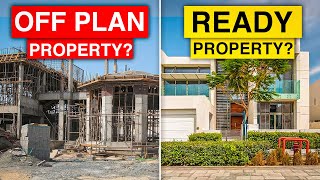
The Worst Mistakes To Make In Real Estate Dubai

Aidan Doyle, who has sold over 200 million AED in Dubai property, breaks down six mistakes investors make: chasing apartments instead of villas, trusting payment plans over developer reputation, overleveraging, and flipping too fast. The market has 210k units coming, 80% apartments, creating scarcity in villas where clients have seen 140% gains.
Chapters
You've seen the hype, record-breaking launches, golden visas, 100% ROI stories. But let me tell you, most investors still get it wrong. Why? Because they chase what looks good, not what actually works in Dubai. I'm Aidan Doyle, and I've been in the real estate game for over 3 years here in Dubai. I've sold over 200 million dirhams worth of property, and before that, I was investing in the UK and also selling property there. In the last year alone, I've helped dozens of investors secure deals where they've already made over 70% capital appreciation, all from identifying the right opportunity and the right entry points, and most importantly, the right exit point. If capital appreciation is your goal, then this video is going to save you a lot of time and a lot of money. I'm breaking down the top 5 mistakes that people make when investing in Dubai real estate— mistakes that cost people millions in opportunity cost, lack of exit options, or even losing their entire investment. If you're interested in investing in Dubai real estate, well This is your anti-failure playbook. Let's start with the most common mistake: buying too low. Now, what does that mean? In my opinion, buying below 2 million dirhams, it's just not worth it in Dubai if your goal is capital appreciation. It's very different if you want to live in the property or maybe you just want to rent it out. But if you're an investor looking for long-term capital appreciation, then buying under 2 million, you're just not in the right market for it. I get it. It feels safe. And you'll think, 'Let me just test the market and see where we can go from here. Start with something small.' But Dubai doesn't work on a budget. This isn't a crypto where you can enter at a low level and make exponential returns. Low-ticket units almost never appreciate. They stagnate, they're oversupplied, and they attract price-sensitive renters and not the genuine buyers that you want. If you want real ROI, capital gains, and future exit potential, then you need to buy quality even though the price is higher. Here's what most people forget: Dubai is a magnet of wealth. The people moving here, they're not coming to downgrade their life, they're coming to upgrade. And part of that is upgrading their home into the luxury sector of the market. Hence why we saw such massive gains over the last 2 to 3 years in the luxury sector of the market. It's not about features, it's about targeting the right buyer avatar— people with Money. If you want an easy exit, then you need to buy what your future buyer is gonna aspire to own, not what they're trying to move out of. It just doesn't make sense. That's the real estate game in Dubai. Mistake 2: Thinking that apartments are the default choice. Well, here's a reality check. Dubai actually has an oversupply of apartments and an undersupply of villas and townhouses, and that imbalance drives appreciation. It's just low supply and high demand. Simple economics. There are around 210,000 units coming to market over the next 18 months, around 90,000 in the latter half of 2025 and around 120,000 in 2026. These are scheduled handover dates, of which 80% are apartments and only 20% are townhouse and villas. So you tell me, where would you rather invest? The fact of the matter is, families are moving in, and they definitely don't want a high-rise apartment. They want space, a backyard, community, lifestyle. And that's why villa communities like Arabian Ranches 3 are outperforming apartments in every single way. Appreciation, rental yields, not only current demand but future demand as well. Mistake number 3. Chasing the payment plan and not the developer reputation. Here's a mistake that even experienced investors still make: choosing the more attractive payment plan instead of the better developer. Look, some developers will offer crazy flexibility—1% monthly, even 50% post-handover—but this is not always the best metric to consider when investing in Dubai real estate. There was a time when there was top developers with top reputation offering crazy incentives for people to buy property. And they were offering very attractive payment plans. Even some of my clients today, they still own Emaar assets with 50% post-handover, 30% post-handover. It's just something that you wouldn't see in today's market. But remember, there's always a reason to link back to. Even somebody as strong as Emaar was struggling to sell property back in 2020, 2021, around COVID time when the market took a crash. Now the thing is, When any developer becomes flexible on payment plan, starts offering more incentives to buyers like DLD waivers or offering brokers more commission to sell the property, something's wrong. And to be honest, it's a metric you should keep an eye on to forecast future market projections, especially like when the big brands such as Emaar start to incentivize their buyers and their brokers even more. In today's market, payment plans have never been more aggressive, especially from Emaar. They are linked to construction, and when construction speeds up, also payments speed up, which means the developer collects more cash and the buyer has to spend more money ahead of schedule. Now, this is also a risk for an investor, which we will discuss in a further point. But in terms of payment plans in today's market, they're still selling out, which just shows how strong and certain the market is. The fact that a developer can sell out a product, sell out a launch even with the most aggressive payment plan, because people are choosing the brand and the reputation over the payment plan. Here's how I break it down. Flexible payment plans equals short-term affordability, which makes sense for some, whereas reputable developers with aggressive payment plans equals long-term resale demand. Well, the real question is, can you combine them both? Sometimes. and it all comes back to the current market that you're buying in. The people who purchased an MR product in 2021 were taking a massive risk, but they had so much trust in the market and so much trust in the brand that they knew that if they were to take a reputable developer with a crazy incentive payment plan, then it's going to work out for them in the future, which it did. Paid off massively. And some of my investors who purchased units back then are upwards of 140% return on equity because they've only invested 60% of their payments, even today when they have their keys. So yes, it is possible, but timing is important also. Does that mean that you can't get that today? No, it doesn't. It just means that you can't get it from Emaar. What it would mean is that you would have to speak to an educated broker who doesn't just care about the commission but actually cares about you and your financial model. Because you could go for the most attractive payment plan, yes, but do you really want to be stung with lack of quality and handover headaches? Or are you gonna go for the reputable developer with the more aggressive payment plan? But where's the happy medium? Because there is some golden gems that people are missing out on where you can get a little bit of both. But that's finding the right opportunity at the right time and having the right broker by your side who's looking out for your best interest. You can find the sweet spot, and not every attractive payment plan means a bad developer. It just means that there's a reason behind it. Maybe they're new to the market, maybe they need to build their reputation. They just need something to compete with the big dogs like Emaar. And if they can't compete on a branding and marketing level, then they need to compete on the payment plan. Being able to find the fine line between the both and finding that happy medium, because the reality is nobody cares about your payment plan no matter how good it is if the quality is poor, the location's not right, the reputation's bad, the handover's chaotic, the customer care is terrible. There is so many reasons why that developer may be lacking in other areas, and just one benefit is not enough to sway people. So you need to be strategic about your decision. If you want to find out more about where these hidden gems might be, feel free to drop me a message in my WhatsApp, which is in the first link in the description below, and I'm happy to have a chat. Now, mistake number 4 is dangerous: buying with the mindset of flipping in 6 to 12 months. Now, this might have worked in 2021 to 2022 when it was post-COVID and the market shot right back up exponentially. But that window is closed. Developers saw it, investors saw it, and everyone flooded in. And now the market has caught up. In today's market, it's not about the quick flip. It's a strategic, wave-driven market where smart investors are holding 2, 3, 4 years and even more. Dubai government has a very strategic plan for 2030, and so should you. You need to target communities with long-term infrastructure. And exit during the handover when the true end-user demand will peak. If you're still chasing the fast flips, you're not really investing in real estate. You're probably looking for a crypto pump and dump, and your money's probably best spent there. However, that being said, in some cases, just some, I've personally helped investors flip within a 6 to 12 month window, but it's a very niche strategy that we use, and one size One size doesn't fit all. It's finding them rare opportunities in the off-plan resale market that come along every blue moon, and if you're not quick to it and you don't snap the deals up, then you miss out. And that's why the investors who are aggressive in this market always win. Buying direct from a developer and expecting to flip in 6 to 12 months is completely unrealistic. For one, the developer won't let you resell unless you've paid at least a certain amount of the payment plan off, which usually takes about a year anyway to get to that level, or sometimes 2 years. But secondly, you're gonna make your appreciation on the latter half of the investment. Hence why I work very closely with investors who pick up units that are 6 to 12 months away from handover, and we plan to take it on the off-plan resale market, in which they have to front a lot more cash upfront, usually 70 or 80% of the payments, just to make the final installments and ride that wave to maximize their appreciation within a short window. However, it's not always possible, and these opportunities don't always come along. And even when they do, we're very strategic about it because markets change. And unless that investor can actually afford to be in that investment for longer than we actually plan, then it just doesn't make sense. Because my reputation is more important when it comes to reselling that unit and they actually make a decent premium than having to quickfire sell. And make a minimal or even a loss. It just doesn't make sense. I'm not gonna go into too much detail here because it's a story for another day, but if you want to know a little bit more about this niche sort of investment, then just drop me a message. You already know how. Mistake number 5, the last one and the one that causes up to 80% of the losses here in the market: overleveraging yourself and thinking that you'll exit before the payments come due. Let's say you buy something at 10 million dirham, but you might only have 5 million in liquid cash, and you think that, oh, I'll just flip it when I've paid 50% of the payment plan and cash out before the rest is due. Which makes sense in hindsight, but in reality, does it make sense? Well, look, here's the problem. What if demand decreases? What if the payment plan is linked to construction and the construction is ahead of schedule, which will result in a shift in your payment timeframe? And it's something that's very common in today's today's market, you'll find that many payment plans are directly linked to the construction status of the property. As developers say, we don't build, you don't pay, which all sounds well and good, but what happens when they do build and they build twice as fast? You also need to have much deeper pockets to make them payments twice as fast. What if your buyer backs out right before you're due to make a payment? What if you thought that, ah, this is great, I got my buyer lined up, but then all of a sudden The developer says you cannot get your NOC to resell because you haven't hit a certain percentage of the payment plan in order to get the NOC. Because again, this is something people aren't considering. Most developers will have a set threshold for you to have paid off before they give the NOC for you to resell the property. And without that, you can't do anything. So you either lean on the buyer to make the payment or you get stuck with the unit. Back in the old days in Dubai, people used to be able to buy property, turn around to the next person in the queue and sell it. Straight away. That's no longer a thing. You could literally pay 10%, 5% of the property and flip it right away for a premium. Well, developers are clamping down on this, and so is the government. So you need to check with every developer before you make that purchase. What's affordable? When can I resell it? What are the developer's rules towards the NOC? Now you're stuck with the asset and its payment plan as well, which is pretty aggressive, and most developers won't restructure your payment plan just for the sake of you falling behind. They'll hit you with hard late payment fees, which will stack up heavily, and eventually they'll repossess the unit and resell it to a new buyer at current market rate, and you walk away with zero. You've lost all of your initial investment, just like a bank would if you were to default on a mortgage. They'd repossess it and resell it at auction. The developers don't care. You need to make sure that you're financially set up in order to keep up with these payments. You'll be forced to fire sell just to cover your payments. Dubai rewards strategic investors. The market doesn't really reward gambling. When you're building an investment strategy, make sure you're being realistic because overleveraging just isn't realistic at all in this market. Here's the thing, some brokers may tell you otherwise. Now, this is not one of the 5 mistakes, but it's definitely a bonus point that you need to keep your eye out for because some brokers in this market Unfortunately, all they care about is the money, the commission that they put in their pocket. They know that if you were to spread your investment across 3 assets, they get paid 3 times the commission, but you get left with 3 assets on a Construction Link payment plan, which you have to make advance payments. You can't afford them, and then you have to fire sell. And what happens when you call that broker back saying, I need you to sell the unit, and you are making a loss or breaking even? The broker doesn't answer because they don't care, because they're already moved on dealing with somebody else. So the point being, mistake number 6, which we didn't intend to do, but mistake number 6, and probably the most important one as well. Be careful who you deal with. Make sure that you vet the broker, that they know what they're talking about, and they have a track record of client success stories. As for me, I'm here for the long term. Most brokers are looking at the today and the now. And not considering where their relationship is going to be with that investor over the next 3, 4, 5 years and so on. Long story short, just make sure that they align with your purpose because Dubai real estate is about relationships. The right ones will make you wealthy. The wrong ones will bankrupt you. Let's recap the top 5 biggest mistakes, or even 6, I should say. Number 1: buying too low. Budget units don't appreciate. Number 2: chasing apartments when in reality villas and townhouses always win. Number 3: falling for the payment plan rather than the developer brand and what actually matters more. Point number 4: expecting fast flips. This market rewards patience. Point number 5: overleveraging yourself. Remember, you need to have a buffer, not just ambition. And finally, point number 6: choose your broker correctly. If you're serious about investing in Dubai and want to access the right properties with appreciation potential, well, click the first link in the description below and message me directly. I'll walk you through what is smart, what is safe, and what's working in this market. That's all for today. That's my anti-failure playbook for 2025. Invest smart, and I'll see you in the next video.