5 Dog Training Lessons That Will Change Your Life
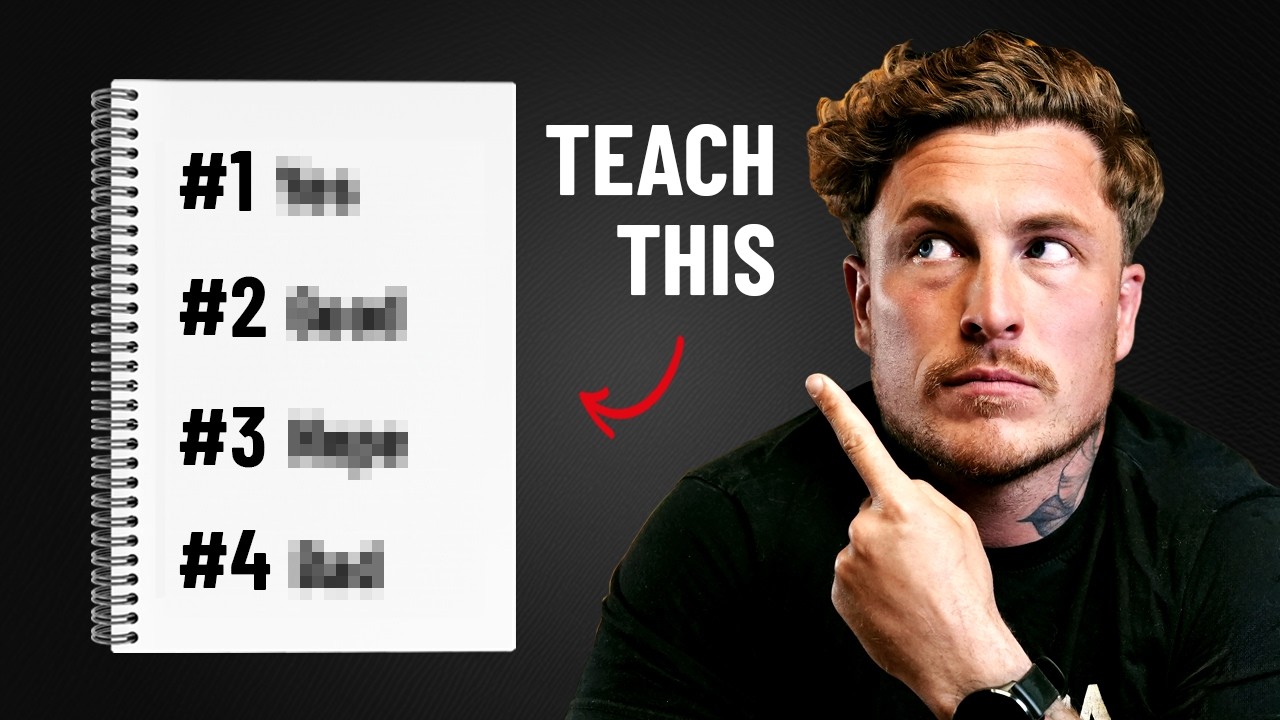
Max O'Neill teaches five dog training principles: the Premack Principle (using natural behaviors as rewards), the 85% rule (training should succeed 85% of the time), charging a marker word, intermittent rewards like a slot machine, and having dogs earn their kibble through work. These shift training from corrections to motivation and strengthen your bond.
Chapters
Today I want to talk about something that I think a lot of dog owners are struggling with. You're obviously putting in the hours, you're trying to be super consistent, but you're not seeing any results that you want from your dog training. And I get it can be exceptionally frustrating. You might even be thinking, maybe my dog is just too stubborn, or maybe I'm not a good enough dog owner. Well, what if I told you you're not a bad dog owner? And what if your dog isn't stubborn? You The problem is you're just missing a few key foundational concepts that could completely change the way you train your dog. And in this video, I'm gonna break down 5 very powerful concepts that I learned for over 10 years of training dogs that you can start applying today. It's gonna make a hell of a difference. And when I started applying these to my own training with my own dogs, as well as all the dogs I've been fortunate enough to work with over the last few years, total game changer. And I'm extremely confident to say that if you master them too, you'll see a massive improvement in your dog's behavior. And ultimately your relationship with them. So grab a notebook. Let's get into it. First up, we have what we call the Premack Principle. It sounds a little bit technical, but it's actually like one of the most simple but powerful concepts you could apply to your dog training. The Premack Principle is all about using what your dog wants in that very moment as a reward for doing something that you want them to do. So think about it. What does your dog love to do on a walk? Sniff everything, right? Or maybe they love to greet other dogs. Maybe chase squirrels. These are all very high-value activities for your dog. So instead of fighting against these instincts, we can actually use them to our advantage. And here's how it works. Let's say you're on a walk and your dog is pulling to something really interesting, maybe like a smell or something like that. Instead of just letting them pull you over there, you can first ask for a simple behavior, maybe a sit or a mini recall, or maybe just a couple of steps on a loose leash. And as soon as they do that, you release them with a release cue like okay or break and let them go enjoy what they want. And what you've just done is actually use the environment itself as the reward. You've taught your dog that if they listen to you, they get access to the things they want. And this is so much more powerful than relying on treats because it teaches your dog that you are actually the gateway to all things good in life.
Hello, Luigi. Guys, I appreciate that there are literally millions of other channels fighting for your attention at the moment, but this might be the only channel that actually give all the ad revenue from YouTube— they pay us to a dog charity. So if you want to help little rescue dogs like Luigi here— yeah, it's a guilt trip— uh, hit that subscribe button. Over 50% of you that regularly watch this channel, I've checked in the analytics, you haven't subscribed yet. So I know everyone says this, but it does genuinely mean a lot to, to us and dogs we help out if you just hit that little bell button. Enjoy the rest of the video.
Next, we're going to talk about what we call the 85% rule. This is a concept that applies to all learning, not just dog training. The 85% rule states that for optimal learning to happen, you should be succeeding around 85% of the time. So if you're succeeding at 100% of the time, the task is too easy and you're not being challenged enough. You'll get bored and you won't learn much. On the other hand, if you're only succeeding like 50% of the time, the task is too hard. You'll get frustrated and you'll want to give up. It's the same for our dogs. When we're training a new behaviour, we need to find that sweet spot where it's challenging enough to be interesting for them— difficult— but it's not so hard that they get discouraged or super stressed out. So how do you apply this in your training sessions? Pay attention to your dog's success rate. If they're getting it right every single time, it's probably time to make things a little harder. Maybe you can close down the distance, or maybe add a more difficult distraction into the mix. If they're failing more often than they're succeeding, then you do need to take a step back and make it easier. Break the behaviour down the concept down, it's a smaller step. So go back to a less distracting environment. By keeping your training at that 85% success zone, you'll keep your dog engaged, more confident, and ultimately you'll make way more progress in the long run. Okay, so concept number 3 is all about super clear communication. And one of the best ways to communicate clearly with your dog is by using what we call a marker word. A marker word, in short, is a unique word or sound like Most people use yes or a clicker, and we use that to mark the exact moment our dog gets something right. It's like taking a snapshot of the behavior you want to reward. But for the marker word to be effective in the first place, we have to what we call charge that marker so it has a positive meaning. It teaches our dog that what you just did was great and you can stop doing what you're doing and come back to me to get your reward. And this is where the Newton's Cradle method comes in. I'm not going to talk about in the video today or show you, but if you do click the link in the description and download our Behaviour Bible, there's a step-by-step tutorial on how to do this. Essentially all you do is say the word and then immediately within a half second or so, you toss some food in one direction. And then once the dog takes that food, you say the word again and you toss it in the other direction. You repeat that process. We add some jackpot in to keep things spicy for our dog. I'm gonna get onto that in a second. And what you're doing here is you're utilising classical conditioning to work in your favour. Your dog will start to associate that word with the amazing feeling of attaining the food. And then the, eventually the word itself will become rewarding. Once the marker is charged, you can use it to pinpoint exact behaviours. So if your dog offers a sit or disengages from another dog or even looks at you in the presence of what was formerly their trigger, we can mark that and make it more likely to happen again. It's an exceptionally powerful tool for building like a common language with our dog. Now, once your dog has learned a behaviour and it's performing it reliably, you can move on to what we call an intermittent reward system. This is another incredibly powerful concept that will keep your dog motivated engaged almost everywhere. Think about it like a slot machine. People will sit there for hours pulling the lever because they never know when they're going to get a big payout. That's the unpredictability, and that's what makes it so addictive. We can use the same principle in our dog training. If you reward your dog every single time they do something like a sit, they'll learn that sit is worth one piece of food. But if you start to vary the rewards, sometimes they get one treat, sometimes they get what we call a jackpot. So multiple pieces of food, and sometimes they may be allowed to go and sniff instead using the Premack principle. Now the behaviour becomes much more exciting. They never know what they're going to get out of it, so they're much more likely to keep offering that same behaviour. So for example, for a behaviour your dog knows very well, you might reward the first 2 repetitions with your marker and, and some food. On the 3rd repetition, you might use the Premack principle and reward with something from the environment. On the 4th repetition, we might ask for a different behaviour entirely to not reward that behaviour. And on the 5th, we might jackpot the behaviour. This keeps your dog on their toes and prevents them from getting bored or complacent in performing that behaviour. And finally, none of this is gonna work until you follow the next principle. We've come to what the original video calls the most important concept of all, building a strong worker ethic in your dog. And the way you do this very simply is having them work for their essential food. So many of us, previous version of myself included, are used to just pouring our dog's kibble into a bowl and letting them eat it for free and then using high-value treats out and about to train them. And for me, this is a huge missed opportunity. That food is a powerful resource and we can use it to build our dog's motivation, focus, and desire to work with us. So instead of free feeding, start making your dog earn their meals. You can start simply by using a slow feeder or a puzzle toy. This makes them engage their brain and work a little bit more to attain what we call their essential food. This will build motivation from the ground up, not looking for external sources of motivation like squeezy cheese and all that. To be honest, the only reason that works anyway is because it's novel. And once the novelty wears off, your dog's not going to care about that food later on down the line. And as they get better at working for their food, we can start incrementally making the job more difficult. We can start using their daily kibble as rewards during training sessions. This does a few amazing amazing things. First, it turns their everyday food into a high-value reward. Second, it builds a massive amount of food drive, which is going to in turn make your training sessions so much more productive. And third, it teaches your dog that working with you is fun and rewarding experience. Because when your dog has a strong work ethic, everything else in your training becomes way easier. They'll be more focused, more motivated. We can use more reinforcement, therefore less corrections. So there you have it, 5 concepts that can completely transform your dog training. So if you're here and you're working through issues with your dog, or perhaps your dog is reactive, obedience and training is one thing, but what is as important, maybe even more important, is lifestyle. And if you want to learn how to optimize your dog's lifestyle to get the best results in your training, then you want to click this video right here, where I'll talk you through some very common mistakes that people are making with their dog without even knowing it.
More from Max

How to Charge the 'YES' Marker For Your Dog Training (Terminal Reward Marker Conditioning.








