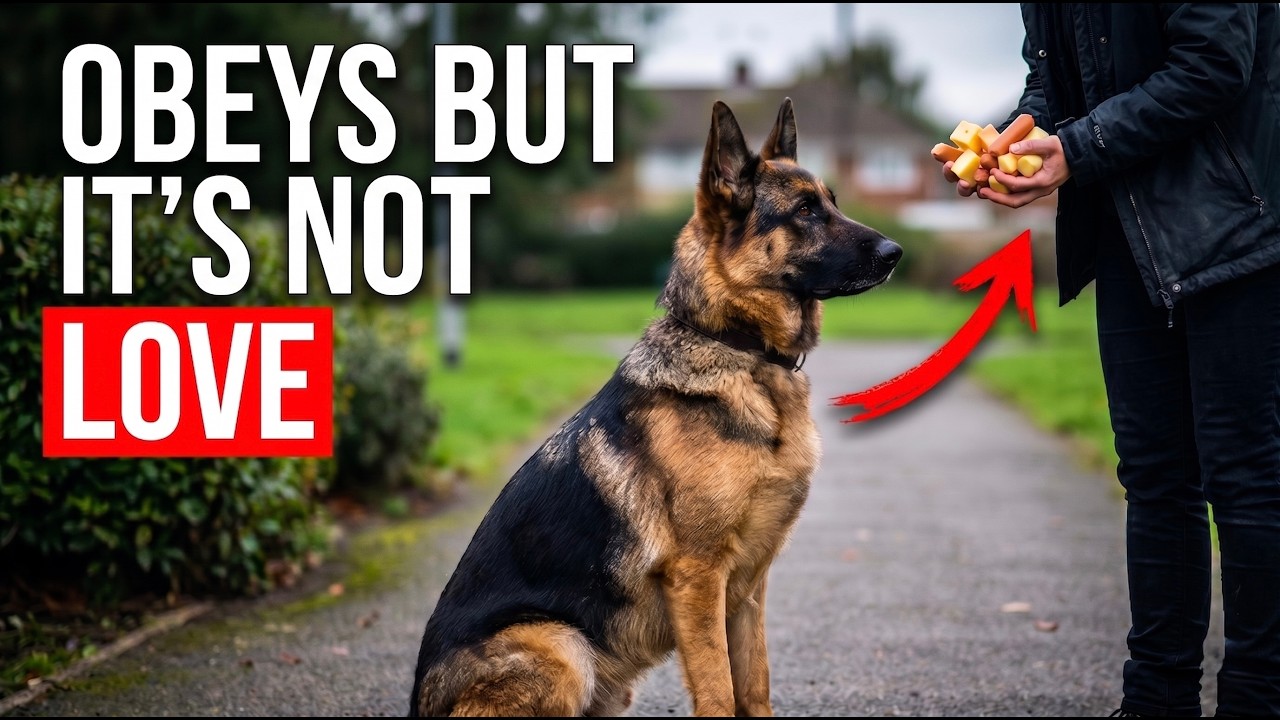
The REAL Reason Your Reactive Dog Won't Calm Down (Play Mistake)

Max O'Neill explains why reactive dogs stay wound up and how structured play fixes it. Dogs need high-arousal outlets to manage reactivity, anxiety, and impulse control. Teaching start, out, and end cues gives handlers control while the dog learns to engage with them, not just triggers.
Chapters
If your dog struggles with reactivity, overarousal, chasing, frustration, anxiety, or they just seem to have energy that never really goes anywhere useful, this video is going to give you a different way to think about play. Play is not something you just do with puppies, and it's not just throwing a ball until your dog is tired. When it's built properly, play can be one of the most useful tools you have for fulfillment, handler engagement, impulse control, confidence, and resilience. It can help a dog learn how to manage themselves in high arousal without tipping over threshold. In this video, I'm going to talk about why dogs need appropriate outlets, how play can be used around reactivity, why the rules of the game matter, and why a lot of dogs who do not play often just haven't been taught the right way yet. So if your dog chases cars, fixates on movement, redirects, struggles to switch off, loses their head around triggers, or only listens when they are already calm, this will help you understand why play is not just a bonus. For a lot of dogs, it's one of the foundations.
Today is all about play. I have strong feelings about it in terms of I think people play with puppies and then pack it in because they think, oh, it's an adult dog, doesn't need to play anymore. Or whether it just falls by the wayside because it's time-consuming, I don't know. But with dogs, they've got innate drives that are not meant to be in our society, right? So essentially, if you don't play with your dog, if you don't give them high arousal outlets, you're gonna hide into some problems. So play's super, super important. It can also be used for other things as well, which you're going to discuss. But for me, the main thing is like, right, okay, that Malinois in the field wants to chase something. If we don't give him the opportunity to, he's gonna find something to chase himself. So the one I got just before Christmas, he was a stray. I don't really know anything about his background. We took him for a walk one day in the dark and a car drove past us at 40 miles an hour. He shot off after it on the flexi lead, hit the end of it, spun round, started kicking off. I'm like, oh, okay, fine. But at that point he wouldn't play. So for like 5, 6, 7 days, he would just look at a toy and be like, well, what the fuck's that for? So I can only assume that he's found his own entertainment doing other stuff, like chasing cars, definitely prey, 'cause he loved a squirrel. Sheep. But essentially, we were the ones that decide those things are inappropriate, not him. He doesn't know that chasing the car is a stupid idea. He doesn't know that he shouldn't chase a squirrel because innately he should chase a squirrel. So in order for us to help them accommodate our— or for our society to accommodate them as well as possible, we've got to give them appropriate outlets. How it can change behaviour: one, what we've just discussed in terms of like the outlets for the dog and the sense of fulfillment. If you play with your dog, if you get them off lead, they'll use those two big players, then your dog's gonna be much more decompressed. They're going to be less problematic by proxy, just because they've had that outlet. You can purposefully use it as a tool. We did that with Bones, right? So then when on boot camp, he followed a slightly different structure to some, to maybe some other dogs. We started with play, and the main reason we did that is because he was so good at going from 0 to 100, we had no relevance when he was at high arousal. So one of the key things with play is you can start to build relevance of the handler when the dog's at this kind of revs, but in a nice safe setting. The other thing that play does is can build resilience. So we often kind of like, um, encourage kids to play sport, right? Because it teaches them things about life, teaches them about wins and losses, teaches them an element of like physical and mental discomfort. We can do the same thing with dogs. If everything goes their way, you can end up with a dog that's essentially bratty, which is problematic depending on what type of dog you got. You've probably all bumped into a few cockapoos like that, I imagine. Dogs don't have good and bad behaviour. We decide that it's good and bad. And I think when you think about that, you can look at them much more empathetically. It doesn't mean you can excuse them from everything, because once you've taught them some clarity of like, right, okay, you're not allowed to react to dogs or people, then fine, there can be rules they can learn. But at the time when they first start doing it, before we've created any clarity that they can't do it or shouldn't do it, then you can have empathy for them, if that makes sense. Play can help pretty much everything. Jacob and I sometimes discuss, if you had a dog for one day, what would be the main things that you would cover? And if you had a dog that would play, it would be probably play to a high standard and and teaching the dog no. With those two things, you can get pretty much anywhere with your dog, so long as they're both good. So in terms of reactivity, you can use it as a reinforcer for good behavior. So you can use it where, okay, the dog likes to play, as long as we have got play drive. Okay, you've made a good decision. Here's the thing that you love the most. So you can use it as a direct reinforcer. You can use it as playing alongside triggers. There's pluses and minuses to this. So if your dog's like play obsessed, then it's almost like having blinkers on. Let's say for example, if I got Flea really good at play, I could maybe play with him alongside traffic, but if he was ball obsessed, I don't know how much then he's taking notice of the traffic, right? So that's where the rules within your play become important, because I could say, "Out, enough, next to the traffic," and then he's gonna notice it, he makes a good decision, and I can restart the game. So once you've got the rules instilled, you can then use it as a more productive tool. Is there still an element of it's useful to be able to play play alongside triggers anyway. Overarousal. So teaching dogs that, okay, there's a, there's a, there's a window when your reps can do that, and having an appropriate window for that. If I got a puppy tomorrow, the main thing I concentrate on is play. If I teach them how to play, they're going to play with their mouth. That means if they use their mouth inappropriately, there can be a consequence for doing it. I can't give a dog a consequence for doing it if they don't know when they should be doing it. Does that make sense? Same with an adult dog. Okay, you can bite the crap out of whatever it is, buddy. You can bite this jute sausage, whatever you want to do, but you can't do that outside of that window, and there's a consequence for it if you do. Anxiety and hesitation. So play is a natural anxiolytic. What that means is it combats anxiety directly. You can't be jovial and scared at the same time. Or maybe you can, maybe like a roller coaster you could be. Depends whether the dog finds a buzz out of it. But you can't— in an emotional model, they're opposing things, so there's like a push-pull system. So if we can get the dog that's maybe a little bit nervous, maybe a bit unsure about something, playing we can often break the ice with the stuff that we're trying to fix, if that makes sense. Sometimes if we get on a boot camp a dog that doesn't eat, we do a little bit of running around. It's called emotional contagion. So what it does is lift the dog up and make them into a more jovial state. It's not as strong as play, but then often that breaks the ice and the dog starts eating. Frustration tolerance is a good one. Got a few redirectors, or have had redirection. So essentially that comes from the frustration that the dog can't carry out an action. Usually that's obviously a lead thing, and when we get redirecting dogs, it normally comes from frustration rather than kind of fear and anxiety. It's normally like, I want to be able to do that, I can't, what's stopping me? Usually it's a grab of the lead first. Okay, that doesn't work, maybe I grab what's attached to the lead because that might work better. So in that sense, you can start building into play a bit of impulse control. Obviously throwing the toy, not letting the dog go and get it, releasing them to go and get it, and then you start building in a little bit of impulse control, which then helps combat frustration. Handler engagement. So different dogs will have different rules with different people, right? So one of the reasons why our boot camps work so well, because we don't rob the owner of the, um, the opportunity to train the dog. Does that make sense? If we do the work and give the dog back, the stickability or the longevity of that training isn't as good as you going through the same experience and going through a little bit of stress and duress with your dog. So when we use play as a tool, we play in a fairly, a fairly strict way, very often with a lead on, sometimes even two leads. We want a start cue So if we think back to our puppies and we think back to maybe a dog that tries it on and maybe mouths people a little bit, if we've got a good start cue, we can hold the dog accountable to that. Okay, I've not given you your start cue, play— the play window is not available, so I can hold you accountable to that. Once you've got it and you can say, and my— for mine, with my dogs, is ready, you should see them light up a little bit in anticipation of doing the thing. So the start cue is obviously the starting point, it's really, really important. Your out command— one, it's good to be able to get the dog to relinquish things that are high value. So if if you've got a dog that resource guards, play is one of the ways that you can start to combat that. But if you can get the dog to release something of high value and then potentially do a different behavior, like a differential reinforcement of like a down or a sit or a wait or whatever, then you can retrieve the thing. But essentially, you're out is just a timeout, like in American football. The dog then is not allowed to play though. So this is what we did a lot with Bodhi, right? Because he was— his play was really good, his drive to play was really good, but he wasn't too accountable in terms of when he's out and he was still kind of a bit chompy. So these guys kept him accountable to that, which created relevance of them when his revs were up there. Okay, you can't do that until I say yep. End cue, exactly the same. The play's finished. If the dog tries to carry on, it's like the final whistle of the game going. You don't let people carry on playing football. There's a penalty if they try to. Your other use of your end cue is if we've got behaviors that we don't want to directly punish because at some point they're an option, you can use your end cue but then hold the dog accountable to your end cue. So as an example, like the— probably the most common one is when a dog barks at the door. A A lot of people want the dog to bark at the door. I want my dogs to bark at the door. So when they do it, I'm not going to directly punish it. I'm going to say, okay, enough, got you, Amazon guy's here. If they then carry on after that, so long as I know they know what the enough cue means, I can then say, hey, you haven't listened to enough. There's all sorts of other behaviors you could use with that. So when you're trying to do resocialization, so Axel today, if they had a really good enough cue, when he gets all dancy and sprightly, enough, okay, you haven't, okay, there's a consequence from it. So a lot of all this stuff is tied together. So some of the resocialization stuff we do with like a leave it or enough is best taught through play. So it's kind of pivotal. Once you've got your dog fairly neutral, you get to the back end of it when you're trying to resocialize them. This is where all this kind of stuff comes in a little bit better.
Obedience—
a lot of people kill play initially with obedience. They'll start asking the dog to sit down, do whatever, and it ruins the motivation of the dog. When the dog's really play motivated though, it actually increases the motivation. So you put the dog in a down, the dog's got loads of anticipation, you let them out of the down, and they'll actually make play better, not worse. But there's a kind of a sweet spot when you want to start introducing that. For me, if you want to use play as a direct way of addressing reactivity or problems, you're aiming for about 5 minutes of decent play, and that, that's it. If your dog will play for way longer than that, brilliant. But if you've got a good start cue, you can have an out, so you can have a pause in the game, and then you've got a good finish cue, all you need is 5 minutes of decent involvement. Not all dogs want to play, so obviously Ash's dog maybe doesn't want to play out and about because there's other things doing. Two things: one, at some point you might have to change the window of play. So if you go home and he has the opportunity to play, it's the same with food, right? So if you go home and you say, okay, we didn't eat outside, you can eat the kitchen. You didn't play outside, so you can play in the kitchen. Why would you ever change? So at some point you might have to turn the screw and be like, okay, there is no opportunity to play in the kitchen anymore, we only play in the back garden. And at some point that dog should play. Different ways of igniting play. So I reckon in the whole— all of the dogs we trained here, there's probably about 1% of dogs that show like genuine disinterest to play. Those are usually like your livestock guardian breeds. Your dogs are literally genetically designed to be lazy laying fields and then just bash wolves when they, um, when they come, right? So that most dogs, it's not that they won't play, it's that we're not tapping into it correctly. So although we want to use possession games as a, the main tool for play, it might be that the dog prefers chase and catch games, in which case you can teach the dog, okay, well, you've got to take this off me, you've got to do a little bit of tug to get the throw. You can start with treat chasing if you really have to. I still think it's got a little limited transfer to play itself. But essentially what we want is loads and loads of movement. And then going back to an original point, emotional contagion. What we see when people come to boot camps and try and play with their dog is very self-conscious people. So they're kind of like this and they're like, yeah, come on, this is fun, isn't it? And the dog's just like, no. So yeah, of course they're not going to play. If you don't look like you're buying into it, the dog's not going to buy into it. If you've got your toy and you want to— you want your dog to play and you're shoving the toy in the dog's face, How do you think that feels to the dog? It makes them definitely not want it. So another use of play is what we call the triangle, where you get the third-party person to play with your dogs. Like, if you imagine, like, Bold, if you wanted to introduce him to a new person, you could play the triangle. So you could throw his toy, he brings it back to you, you throw it, he brings it back to you, you throw it, you give it to the other person, they throw it. It's very non-conflicting because you don't have to— they don't have to put their hand in his face or anything like that, but It's a really powerful tool in terms of breaking the social ice. One of the best ways of getting a dog to play is piggy in the middle because it does two things. One, it makes the dog work for the toy. Two, it means that you don't put the dog in the, the toy in the dog's face. And then there's loads of movement and the dog, like, usually quite quickly. That's probably one of the easiest ways to get a dog to play is play piggy in the middle. But the reason why it works is because you're withholding the toy. It's the opposite of shoving the toy in the dog's face. You're withholding it, you're making it taboo, you can't get it. What you can't get, you want more. So frustration comes into it a little bit. Frustration builds motivation, and then the dog will really want the toy. And then at some point, if Alicia and I are playing piggy in the middle with the dog that won't play and it's showing some interest, you might accidentally drop it, and then the dog gets the toy, and then you can play from there. But there's different ways to ignite it. If you've got multiple dogs and you've got one that won't play, one that will play, you can back tie the dog that won't play play with the dog that will, and then the frustration of seeing you play with the other dog can obviously, like, play as well. So there's various different ways you can do it. The way you make— can create resilience is you purposely use fear during the play, which sounds a bit odd and a little bit backwards, but essentially, let's say for example Alicia's playing with the dog over there and I'm her recruit, I might make like a bang or a novel noise or whatever, and the dog lets go of the toy and Alicia runs off with the toy and he's like, oh shit, I've dropped the toy. Next time I do that, oh no, it wasn't that bad, and I kept all of it this time. So you can get the dog to go through levels of stress. There's two versions of that. So if you've got a confident dog and you do that, they might just be like, oh, what was that? It was nothing, fine. And they, they break off from the play just because it's novel. The other version of it is like the dog that's like, oh, that sounded scary. And we want to get them through things. The only way to get a dog more resilient is by them overcoming stuff. So we can purposefully use We'll call it fear or fear-inducing kind of novel noises and whatever. And let's say, for example, we're in there, we knock a chair over, the dog's like a bit scared of that. Maybe we don't knock the chair over again, but we just play the game next to the chair, like, oh, that was the scary thing that fell over. They get over that first, and then you can make it a little bit more difficult from there. It's a really, really powerful, really, really important— I still play with my 13-year-old dog and her teeth are falling out, but she loves it.
So hopefully that gives you a clearer idea why play matters so much. It's not just about tiring the dog out, it's about giving the right outlet Teaching them to stay connected with you when they're excited, creating rules around arousal, and helping them practice confidence, frustration tolerance, recovery, and impulse control in a safer way. Chugging the ball endlessly can make some dogs more frantic. Structured play gives that same energy somewhere useful to go. And if your dog does not currently play or only plays in certain environments, don't write them off too quickly. A lot of dogs have not been taught the game in a way that makes sense to them just yet. If you want help with foundations like play, recall, and food motivation, start with the free Behaviour Bible course. And if your dog is reactive, anxious, lunging, barking, fixating, or their behaviour around triggers is starting to control your and their lives, apply to work with us using the link in the description.
More from Max

How to Charge the 'YES' Marker For Your Dog Training (Terminal Reward Marker Conditioning.