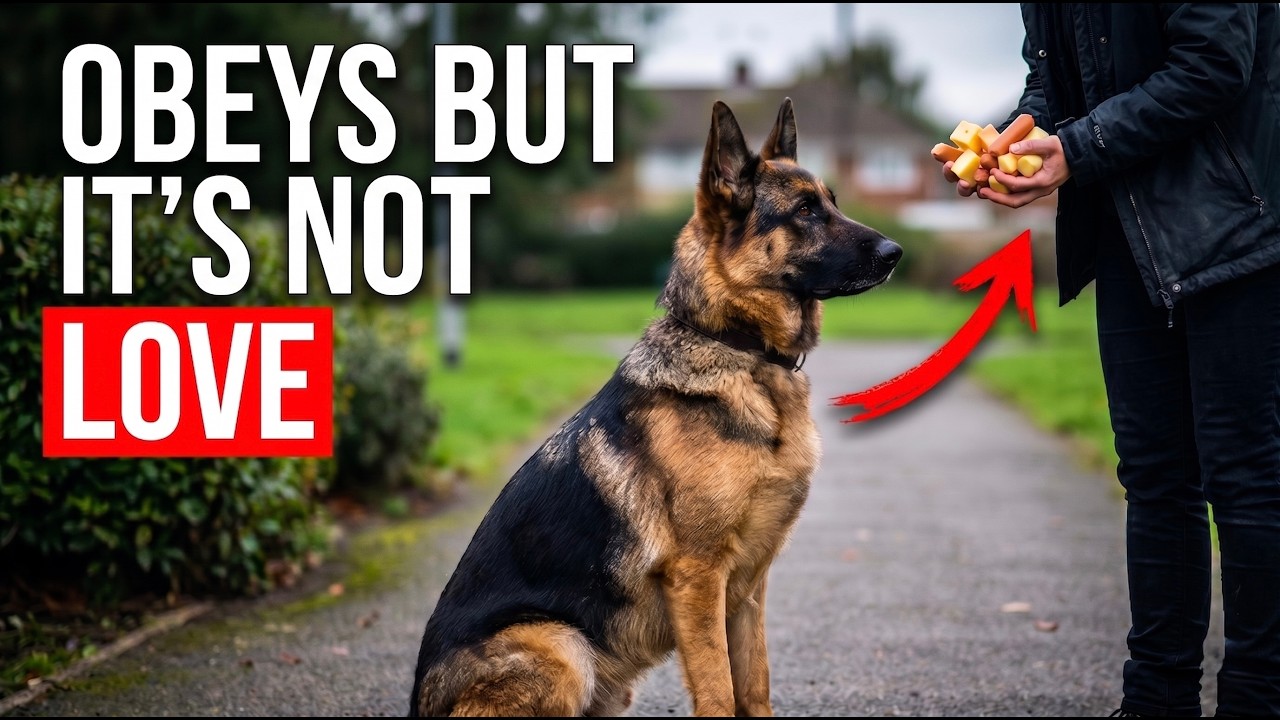
Max O'Neill identifies five habits owners use that make reactive dogs worse: waiting until the dog barks instead of catching early tension, constant avoidance that shrinks the dog's world, talking during triggers, exhausting the dog physically instead of mentally, and changing rules day to day. Consistency and purposeful freedom, not just exercise, build real calm.
Chapters
Most reactive dogs are not made worse by owners who don't care. They're often made worse by owners who care so much that they get stuck in habits that feel helpful in the moment but keep the same problem alive. So in this video, I want to talk about 5 well-meaning habits that can make reactive dogs worse. This is not to make anyone feel guilty. If you recognize yourself in this, it probably means you've been trying really hard, but trying hard is not the same as having the right plan. The first habit is letting your dog load. A lot of people wait until the dog barks before they think there's a problem., but for many reactive dogs, the reaction starts long before the noise. It starts when they notice the trigger and lock on. They see another dog and stare. Their body stiffens, their mouth closes, their ears prick up, they stop hearing you, they stop taking food. Everything is now about that trigger, and because they're not barking yet, the owner lets it continue. They think they're just looking, but the dog might not just be looking, they may be loading. If your dog gets to stare at every trigger until they explode, they're practicing the first half of reaction every single time. The second habit is constant avoidance. And don't get me wrong, avoidance is sometimes necessary if the situation is unsafe, if the dog is already over threshold, if you have no room, then creating distance is sensible. Yeah, but if avoidance becomes the entire plan, the dog never learns anything different. The owner sees a dog, crosses the road, turns around, hides behind a car, cuts the walk short, or avoids that place forever. And I understand why. Nobody wants a reaction. Nobody wants to charged. Nobody wants their dog to feel stressed, but if the dog's world keeps getting smaller, the problem isn't really being solved. The dog is just living in a smaller and smaller version of life, and the owner becomes more anxious as well because the fear is always, what if we can't avoid it next time? The third habit is overexplaining to the dog. This is when the owner talks constantly in the difficult moment. It's okay, leave it, come on, look at me, no, no, good boy, look this way, look at me, don't worry, stop, don't worry, it's okay. The owner's trying to help, but dog's already struggling, too much talking can become background noise. It can also make the moment feel bigger because the owner's voice changes and the dog feels that something is happening. A reactive dog usually needs clarity more than a running commentary. They need fewer mixed signals. They need the owner to know what they want before the dog is already at full volume. The fourth habit is trying to tire the dog out instead of fulfilling them, and this is super common. The owner thinks, if I can just get them tired enough, maybe they'll be a bit calmer. So the dog gets longer walks more chuck-it sticks, more running, more stimulation, more busy environments. And sometimes the dog is tired afterwards, but tired isn't always better. A dog can be physically tired and still mentally frantic. They can be exhausted and still reactive. They can sleep for an hour and then be just as explosive later. Fulfillment is very different from exhaustion. Fulfillment might include play, it might include safe off-lead freedom where the dog is able to sniff, run, stretch their legs, and move like intended to. At South Coast Canine Academy, we think about safe or flee freedom really early because dogs need a proper life, not just more tension on the end of a lead. But freedom has to be built properly. It needs recall, boundaries, guidance, and a dog who understands how to move with you and not just away from you. The fifth habit is changing the rules every day. One day the dog's allowed to say hello to every dog, the next day you're in a rush, they can't say hello at all. One day they get fed for just looking at the dog, the next day they get told off for looking at the dog. One day the owner avoids absolutely everything, and the next day they try and push through a busy place because they feel guilty or they've got somewhere to be. This is really confusing for the dog. Reactive dogs need consistency. They need to know what matters, what doesn't, what's expected, and what to do next. If the plan changes depending on the owner's mood, the location, the dog, the weather, or how embarrassed the owner feels, the dog never really gets a clear picture. When dogs are confused, many of them default to the behavior that they know For a reactive dog, that might be pulling, staring, barking, lunging, freezing, or trying to control every environment. So if you recognize yourself in these habits, what should you do? First of all, don't beat yourself up. Most of these habits come from love. You avoid because you want to protect your dog. You reassure because you want them to feel safe. You get that Chuck It Stick out because you want to give them exercise. You let them stare because you don't want to overreact. But good intentions don't always create good patterns. Second, start paying attention to what dog practices, not just what they do when they explode. What do they practice right before that? Do they practice scanning the environment? Do they practice pulling? Are they ignoring you? Do they practice coming back to you? Do they practice moving calmly? Do they practice safe off-lead freedom? That daily practice really matters. Third, get help if your dog's behavior is already controlling your life. If you can't walk on normal routes, if you can't have visitors over to your house, if you can't pass other dogs, you feel like can't relax outside, or if you're constantly planning your day around avoiding every single trigger, this isn't just a small habit anymore. If you want help with foundations like play, recall, food motivation, or just understanding your dog a bit better, then join the Behavior Bible. It's a free course and the link's in the description. And if your dog is reactive, anxious, fixating, lunging, or their behavior around triggers is starting to control your life, then apply for our 5-day boot camp. The link is also in the description. Because your dog doesn't need to care less. They need all the care pointed in the right direction.