I Asked The Best Dog Trainer I Know How To Train a Reactive Dog - His Answer Blew My Mind.
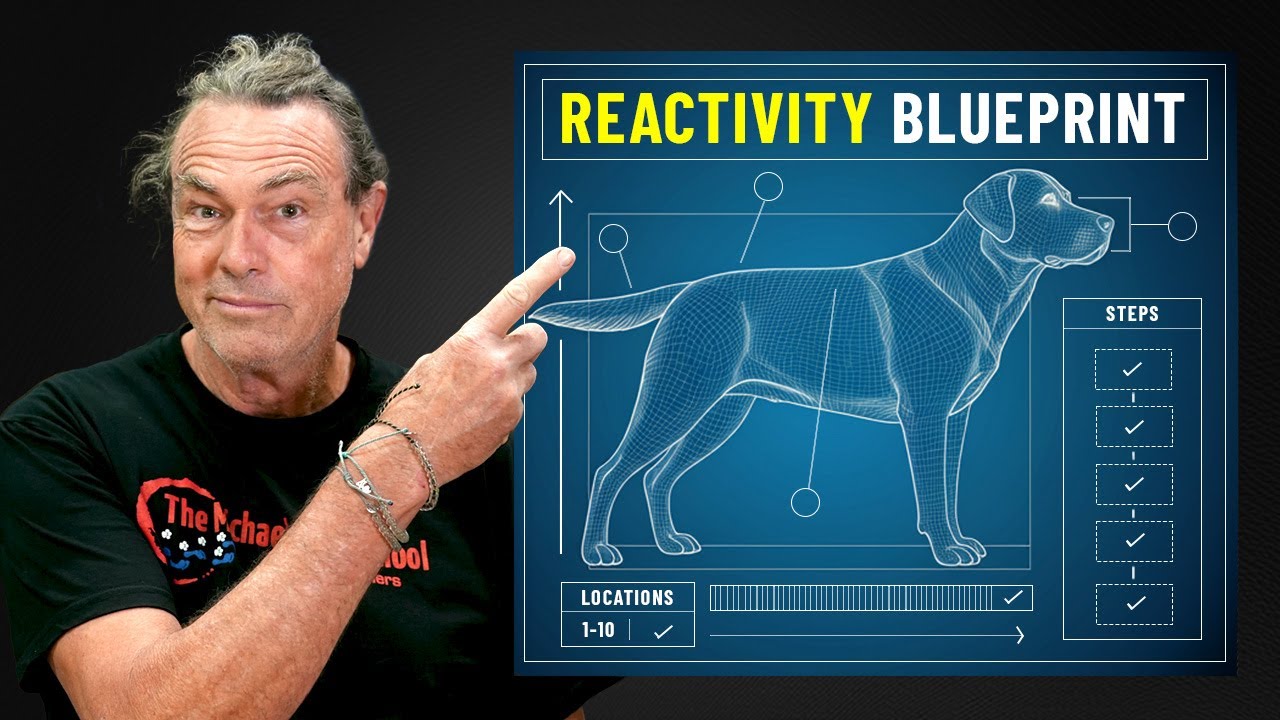
In this interview‑style masterclass, host Max O'Neill (Speaker A) and renowned dog trainer Michael Ellis discuss a systematic, step‑by‑step protocol for turning a reactive dog into a neutral, well‑behaved companion. The conversation begins by framing the current "epidemic" of dog reactivity and moves into a diagnostic framework that distinguishes external (operant) reinforcement from internal (self‑reinforcement) drives, and identifies specific triggers (other dogs, people, environmental stressors). Ellis outlines a multi‑phase management plan: (1) avoid triggers while installing communication tools; (2) teach a handler‑focused redirection cue (“let’s go”) using both verbal and physical prompts; (3) introduce leash‑yielding and other equipment (prong or e‑collar) in a low‑distraction setting; (4) practice the cue with non‑triggering distractions, gradually increasing difficulty; (5) conduct controlled trigger exposures with a neutral “stooge” dog or person, monitoring threshold distance and body‑language cues; (6) transition to uncontrolled real‑world triggers, using conditioned punishment markers to keep interventions brief and precise. Throughout, Ellis stresses the importance of the handler’s calm demeanor, the need to build massive reinforcement for the alternative behavior, and the distinction between habit formation and acquisition phases. He also advocates preventative strategies for puppies— play, high‑energy outlets, early redirection training—to avoid the development of reactivity. The dialogue is peppered with practical anecdotes, warnings about misusing tools, and a realistic view that some dogs may never be fully “cured” but can be managed to a point where the handler’s input is minimal.
Chapters
If you've got a reactive dog, or maybe you're a dog trainer that works with reactive dogs, then this episode isn't just helpful, it's essential. Today I'm joined by dog training legend Michael Ellis for a rapid-fire masterclass that gives you a foolproof plan from reactivity to neutrality. We'll answer the starting block exercises that 99% of people ignore exactly what to do the moment your dog does explode, and the step-by-step progression from 100 feet out to your dog being able to tolerate other dogs in their space from just a few feet away. Like I said, if you have a reactive dog, it would be criminal to miss this. Pen and paper at the ready. Let's get into it. Hey everyone, just a very quick one from me. If you didn't know, the reason I was at Michael Ellis's school is I was delivering a business development and marketing seminar for dog trainers and canine professionals. Now, I've summarized that seminar and put it into a webinar which we are giving out completely for free. And if you want access to that webinar and learn how to double, triple the size of your business in just a couple of months, then click the link in the description and yeah, we'll send it right over. Thank you so much. Enjoy the rest of the video. Michael Ellis, the number one problem people are going to come to us for as dog trainers is dealing with dog reactivity. We've got an epidemic at the moment, so I'd really love to understand your process of how we deal with reactive dogs. So over to you. I'm going to let you take away. And yeah, super interested to see what you've got to say.
Thank you. Yeah, it's something I've been giving a lot of thought to because you're spot on. It's a, it's an epidemic. And we've talked in the past about why I think that is, you know, changes in how we live with dogs, the type of dogs we're keeping. Urban lifestyles, people having dogs in places they didn't, people are taking young dogs, puppies, etc., out into the world kind of before they're ready in an attempt to socialize them. So there's a lot of factors that I think are kind of contributing to what we see now. Also, I think the fact that we're— people are keeping more dogs than ever before and incorporating them in their lives in a different way. So when I think about reactivity, I break it down into a variety of little subtopics. So the first one for me is diagnosis, right? So anytime I'm kind of diagnosing any behavioral issue, I'm going to ask two questions. The first is, what is the trigger for the behavior? So what specifically is it that triggers the unwanted behavior? With reactivity, is it other dogs? Is it people? Is it environmental stresses? Pick— I wanna know as best I can what I need to avoid in the early stages of my training, right? So one of the things with reactivity is usually by the time a dog trainer's seeing it, there's been a relatively strong reinforcement history. It's been going on for a little bit. Rarely does somebody come to seek help the very first time their dog reacts. So unfortunately, frequently these behaviors have been going on for a while. And have been reinforced in some fashion over the course of that. So what are the triggers? Because I'm going to need to avoid those triggers for a period of time while I install certain tools that I intend to use as I go forward. So what's the trigger or triggers? The second question I'm always asking is what's reinforcing to the dog, right? And there are a variety of things that can be reinforcing. We typically talk about— I like to talk about what I call operant behaviors, behaviors that get reinforced by the environment or get what I call external reinforcement, right? So for instance, if somebody's dog saw another dog and barked at that, at that dog, and the handler in some fashion said, oh, it's okay, buddy, it's all right, then they could potentially be giving that dog positive reinforcement for that reaction. So in that case, the react— the reinforcement is coming from the environment, in that case the handler. Another common form of reinforcement in reactivity work is a dog is afraid or anxious. So if a dog is stressed, right, by an approaching dog or person or whatever it's going to be, and as they come forward towards the dog, the dog finally decides it needs to do something about this. It blows up, it erupts at the other dog, and then at that point, frequently the approaching dog stops or retreats or moves away, or the handler moves the dog away. Right? In those cases. So that's also external reinforcement or operant reinforcement through the environment. In that case, I would call it, uh, negative reinforcement. So if you look at the discomfort, the social discomfort of an approaching dog, the dog does something, that goes away, that reinforces it. So those are what I call external reinforcements. Those are the kind of easier ones to deal with to some degree. There's a second form of reinforcement that we see in certain types of dogs that I call internal reinforcement, right? Or self-reinforcement. And that work is typically dogs that get a charge out of it, right? And so we see a lot of this in, in protection heritage breeds, working-type dogs, and things like that. These dogs have been bred, even if they're a little anxious or a little stressed, to kind of enjoy aggressive responses on some level, right? And if I have a good German Shepherd, that German Shepherd is bred to respond to to stress aggressively. Like, a protection heritage breed can't function in their job if they run away from everything that makes them uncomfortable. So what do they do? They aggress towards it. And so those dogs have been selected, and they get— there's a whole neurochemical process of internally reinforcing that. So the act of blowing up feels good. So it might solve some external need, like drive away the thing that's making you uncomfortable, might make my handler support me in some fashion, or, it also might feel good to the dog on the internal side. So in the early stages of diagnosing this, I'm not exactly sure what it is. Part of this is me talking to the handler about like, how long has this been going on, right? What's the dog's body language like? All those things that help me tell if the dog's getting something else from it. A lot of people, when they're dealing with reactivity, they, they say, okay, this dog's nervous. And so because they're nervous, the nerve, the nervousness was the initial impetus for the reactivity, doesn't mean they're still nervous as it moves down the road. And this is really common. Lots of dogs, yes, the start of the reactivity was some anxiety, but now they have a new hobby. They've done it enough times, and the internal reinforcement and external reinforcement, frequently in combination, has now made this behavior feel good to them, and they're seeking it out. And now they're no longer anxious, and they're frequently blowing up at the, things. That's the first step. I want to determine, hey, what's this dog getting out of this? And if the dog is purely externally reinforced, meaning they don't get a charge out of it and it's just the environment, then that tends to be relatively easy for us to handle. You just start to take away the reinforcement from the environment a little bit at a time, and it'll gradually go away like any behavior that stops being reinforced, right? The internal reinforcement is the trickier one, and most of the difficult cases get some form of internal reinforcement. And it's tricky because every time the dog reacts, it gets reinforced again, right? Internally. And if you get them on a pretty good program and most of the time they're not reacting, the behavior is starting to ramp down, etc. But each time they react again, it's like being on a variable reinforcement schedule or intermittent reinforcement schedule. So it comes back stronger each time. So managing the dog becomes the next step. So we diagnosed what it is. We do it. We know what the trigger is. We know it's reinforcing for the dog. We set up a management— let's switch pens here, shall we?
All good.
We set up a management regime.
And is that why sometimes dogs look like they're hooked? Oh, and they— and people will say and come to us and they'll say, yeah, he's super nervous, he's super reactive, super anxious, but he's looking for it. He's looking for the trigger. He's— He's scoping out the environment and it looks like he's an addict. And we hear that word quite a lot and that would make sense.
Yeah, and it's, you nailed it on the head. I use a lot of the same terminology that we would use around addiction around these types of behavioral issues. It's super common. That's exactly what you've got. You've got a dog that started to like that chart. And we could talk about this endlessly because a lot of dogs, especially companion dogs, aren't, that are kind of working-type temperaments, let's say, like, even if people don't intend to work them, they're getting working-type, hunting-type breeds, etc., and living with them. And those dogs don't have outlets for their energy too. So in a lot of cases, if these dogs aren't getting other compensatory activities, then they do this a few times and they're like, oh, this is great, this is the most exciting thing in my whole life. Yeah, right. And so then they like it even more because it's contrasted against nothing else like that in their, in their day-to-day living. So when we hit the next step, is management means just like if we talk about addiction, it's preventing relapses. And so what— there's going to be certain physical tools that we need to install. I need to be able to communicate with my dog, and I'll talk about those in a second. But in the interim, I need to stop the— interrupt the rehearsal. I can't have my dog continuing to go out. And so my management regime is going to be geared towards avoiding the triggers so my dog doesn't get to continue to practice it. While I take the time necessary to prepare them to reconfront the triggers, right? And so a management scheme is like, how much you walking the dog? Where are you walking the dog? Like, you may have to avoid certain things. So, I don't know in England if it's the case, but certainly here in the States, lots of people walk their dogs around their neighborhoods every day. Like, that's their enrichment for their dog. The dog doesn't get anything else, but they come home from work and they take their dog for a walk around the neighborhood. You may have to stop doing that for a period of time. There are also Pavlovian or classical conditioning components to this, right? So if I walk a dog in an environment where they've reacted before, there are frequently triggers built into that environment. I'm sure everyone's seen this. Like you're walking a dog down the street and you pass a fence and another dog charges them from behind a fence and they blow up. That happens once, twice, whatever. And next thing you know, you're a block away from that place. Walking and your dog's already hackling up and showing signs of arousal well ahead of that. And that's just a Pavlovian procedure, right? And so I may have to avoid not only the triggers but certain types of environments temporarily while I invest the time necessary. So management regime, really important. My goal here is, okay, now I know what you're getting out of this. Let's prevent you from rehearsing it while we do the next step. The next step is going to be build the behaviors Behaviors and introduce tools. So for me, the main behavior in dealing with reactivity is to be able to ask the dog to give its attention to the handler. And so we call this redirection, but you, you can call it whatever you like, right?
Disengagement.
Disengagement, right? So handler-focused stuff. I need to be able to call my dog into attention on me.
Yeah.
And it doesn't have to be— I don't like to chain it to a specific, like, stationary behavior, not like a sit or a down. And I don't formalize it. It's just like, hey, turn with me and give your, your attention to me and sustain that attention on me, right? Which we build in our young dogs with our engagement work and all that kind of thing, right? And they need two kinds of focus there. We need to be able to ask the dog to turn and give attention to me while we're moving, what I call moving focus. And then we need stationary focus as well at some point, meaning I can turn, I can be walking, and the dog will be giving me attention while I walk, right? And so I need to practice these redirection drills or whatever in isolation. And that's one of the biggest problems. Most of the time, the only time that people ask for this is when they're confronted with a trigger.
Do you think they then inadvertently create a cue that whilst they cue this, it's the presence of the trigger and then poisons their—
100%. Absolutely. That can be the case. The other thing is I look at it like any other obedience behavior. You wouldn't say like, hey, I'm only going to practice focused healing around distractions when I'm teaching it, right? You'd never do that with any other behavior. You wouldn't practice downstays under heavy distraction in the very beginning. Right? You build the behavior first and then you transfer it to the more difficult environments. And the more rehearsal you have and the more reinforcement history you have on that behavior away from those situations, the more likely it is to hold up in those situations.
Right.
And so in order to do this, I need to be able to have a verbal prompt for it. I need to be able to tell the dog, I say, let's go. But it doesn't matter what you say.
Yep.
Let's go just means turn. Come with me. Give me your attention and hold your attention on me. And then I have a verbal, and then I have to have physical prompts for it. Pretty typically, the physical prompt is going to be the leash, right? And so if I'm going to use a leash and a training collar, usually, but it's going to depend on the dog sensitivity levels and all of that sort of thing, that means I need to introduce the leash and teach the dog about the leash.
And are we still in step 3 here?
Yeah. Okay, so these are kind of happening. So the The first step of this, we, you could call this a fourth step, but the first step of this is gonna be me just doing this with reinforcement. And what I wind up doing is it starts out with the dog looking at me. We're in a distraction-free environment. I have a reward. It can be food or a toy if your dog knows how to play. Most people are using food, right? Because they usually don't have their play developed to that level. But if you have a dog that really likes to play, you can do it with toys as well, right?
Gotcha.
So the dog's here, the dog's looking at me. I say, let's go. I turn. And move away from the dog. And as the dog comes up next to me, I feed them, I reward them, and I give them multiple rewards in a row. And then I stop, and if they hold focus, I mark and I begin to move and reward again. So what I'm teaching that dog is to— most companion dogs don't understand how to look at their handlers while they're moving. And I don't mean like focused heeling. I just mean you're walking and kind of looking at me for something so you can actually move. That means giving some rewards while we're in the act of motion and then also stopping and making sure the dog stays focused. And if they do, marking that, moving and rewarding again. And so I do that initially with the dog looking at me. I'm here. Let's go. Turn. Reward. Reward. Reward. Reward. Let's go. Turn. I do that over and over again. Then the next step is I have my dog on a leash in a flat collar or whatever, and I just walk in a distraction-free environment. And when they're not looking at me, I say, let's go, and I spin and turn and they follow me because there's no distractions. And my foundation work on the cue, they hear that cue, they whip their head around.
Boom.
And I reward, reward. So now the dog will turn. If I'm walking with my dog, I say, let's go. They spin around to look at me, and I usually turn and let them fold in next to me and reward them beside me. You could also back up, but it's— you're in the real world, you're more likely to trip doing that.
Gotcha.
Separately, I introduced the leash, and so it could be happening simultaneously in other sessions. And this is what we do, we call leash yielding, where we basically teach the dog to move with the leash. Right? And so we break that down. Little low-level negative reinforcement work followed by rewards. And we have, lots of you may have seen kind of our basic leash yielding videos, right? So now the dog understands a leash and they'll respond to it. They don't fight against it and resist it. And so now I'm going to put the leash into this as well. So now the dog knows the let's go cue. So now I walk with them and there's no distractions. We're just walking. Dog's out in front of me. I go tap, tap with the leash. And then say, let's go. So new cue, leash tap, in front of old cue. So when I introduce this and layer it over my redirection, it's always new cue, which is the leash.
Yeah.
Followed by old cue.
So we've got our redirect on cue. We've, we've, we've worked on that with reward, sterile environment. And now we need to add in a little bit of pressure. And we're going to go new cue, leash, tap, tap, old cue.
Yep.
What's the problem with people going ahead and looking online, buying a tool, they go and buy a prong collar, slap it on the dog, and go and try and work the dog in the face of the triggers without doing the preparation work we're talking about now? What's, what's good, what could go wrong there?
Yeah, so the bit, the biggest one is what we call superstitious associations, right? If the dog is unfamiliar with the tool I'm using, and they're unfamiliar with what I'm asking them to do, then they feel this leash pop. And if you pop them too hard and it's uncomfortable, it causes stress. They have to find a place to associate that. They have to find someplace in their worldview to place that meaning, and they can attribute it to something in the environment. And pretty typically with reactivity, it's happening when the dog's focused on something in the environment. So here my dog doesn't know what the leash is or e-collar or any of those things. It's looking at something. I tell it to redirect, it has no idea what that means. And then bang, I hit him with a collar. They go, ah, and they think that thing was responsible. And now they're more worried about whatever that was. And you actually make the pathology worse. You make the dog super stressed. You may stop the reacting, but now you make them very uncomfortable in the environment.
And that might exacerbate the behavior because of when the other dog comes along, they're like, I need to get that thing away from me even more so now because—
You're exactly right.
It's stressing me and it also causes me discomfort.
You're exactly right. And what winds up happening is you intensify the— they may, if you do it hard enough, they may avoid the thing for a period of time, like they're trying to get away from it. But if they can't, they tend to way overreact, right? Because they're under huge amounts of stress. That thing is now doubly dangerous. I thought that thing was a bad thing, and now it for certain is a bad thing. And so really important that we teach the dog about the tool and the cue away from any triggers. And we practice that as much as possible. And recognize when we're first doing this, this first leash taps, they're light. They're, they're not meant to be aversive. They're meant to be sort of a form of guidance.
Help.
Yeah. Later on we may turn up the volume on them as we go forward as necessary to force the dog to redirect if necessary, if they're not. But we'd prefer not to if we can in these early stages. So now the dog's responding really well to that, and you'll know because you'll be walking in a distraction-free environment and you tap, tap, and they're spinning before you I can say, let's go. Got it. Right. And so now I have two ways of prompting the dog to turn. I can say, let's go, and if you turn, great. If I say let's go and you don't turn, tap, tap, tap.
Gotcha.
To get you to turn.
Right.
And so now we're going to start to, uh, introduce this. The next step is introducing this. I don't know why I did that. Circle that one. No, anyway, so the next step is to introduce non-triggering distractions.
Gotcha.
So instead of when I'm first going to teach the dog to redirect away from something, I'm doing it with something that's interesting to them, but it's not the trigger for their reactivity. We— it's the exact same thing we do with our call away drills for the recall, right? So I can have somebody the dog likes stand in front of me and go, hey, buddy. And when the dog's like, oh, I'm going to go say hi to my friend. I just— the dog shows an interest and I say, let's go. And if they don't turn, I tap the leash, they turn, and I give them a reward. So I put something out there that would draw towards them. Or I may go so far as to do the same thing we do with our callaway drills, which is have an assistant with food and they start luring the dog away from me.
Yeah.
And I say, let's go. And they close their hand up and I can tap the dog and the dog turns to come back to me. Right. So basically the same thing we would do with one of our recall drills. And we practice that. So what am I teaching my dog here? Now my dog's focused on something that's interesting to them and I'm asking them to turn away from it.
Gotcha. So something that's, when we're first introducing draws, something that has a positive emotional association with the dog.
Yes. Yeah.
Gotcha.
So that way I'm not worried about if I pop the dog, I'm not worried about them making their underlying reactivity worse. They're like, this person's fine. It's like, I like this. I'm comfortable here. And they're not stressed, so I'm unlikely to have them blow up. Sometimes if we pop a dog when they're faced with a trigger, we can trigger them. So we can talk a little bit about that in a second. So introduce, redirect with non-triggering distractions. Pardon my penmanship. So So now I practice that, and the more we rehearse this stuff, the better, right? Next step is we're ready to reconfront the triggers, right? And we have to pay attention a little bit to the role of the handler in this. This, this whole process is for the dog. It's also for the handler, right? A lot of times the handler are contributing factor in reactivity, not necessarily because they they, they did anything specifically wrong. But after— if you have a non-dog trainer and their dog's blown up at things a few times, they're on edge. And so there's two things that might be happening there. One, they might be tense, and so they see another dog and they tense up and they contribute to that. They trigger their dog by that. They tighten the leash or do things like that that can set a dog off. They also may be a part of the picture. I mentioned Pavlovian pictures, like a dog recognizes a location and they get hypervigilant. Well, going for walks with a handler where the dog's erupted at things multiple times, the handler's a piece of that picture as well. This is why a lot of times a dog trainer comes in and takes the dog for a walk and the dog doesn't react. And people say, oh, that's because the dog trainer is a good leader or whatever.
Or the owner thinks that they're protecting them.
Yeah, sometimes that's the case. But more often than not, it's just, hey, you're not a part of that dog's reinforcement history and you move kind of purposely through the world. The dog's like, oh, okay, this is, this is a different ball of wax. So I have to get the handler to relax and begin to behave normally. And this is a way for them to practice all of that stuff in a safe way. If I wait until we go out for a walk to have them handle the dog, it's going to be super messy. So the handler gains confidence, skill, mechanical abilities through this whole process that will allow us to reconfront the triggers. So now we go out and we set up training situations in which we have controlled triggers. Whenever possible. I'm not going to go out in the world and just wait for sh— Yeah. So exactly. So if I have, if my, if it's people, I enlist one of my friends. If it's another dog, then I get a trainer friend with a dog that, that's not going to be reactive themselves. It's a neutral dog that I can use and we can control the distance.
Gotcha.
So confront.
And that Stu's dog, he's not going to go away and create the reinforcement that we maybe created over here, right?
Exactly right. That's a biggie, right? So your, your controlled trigger here, your stooge dog, right? At that spot, you get to control how close they are, right? In that spot. You also get to control how they're going to react. We're handling them. They're not going to move away. They're going to behave totally normally. So if anything happens and the dog goes over threshold and reacts, then they're not going to contribute to that.
Gotcha.
They're not going to further contribute. So we set this up and what we want to have is the dog, we kind of recognize through our practice with the dog and our observation during this stuff, how close we can get to things. This is what we call threshold distance, where the dog can be aware of the trigger, but still under threshold enough. And they'll start to show you body language cues that are gonna tell you they're thinking about reacting, right? They freeze, they stare at the thing, they start to stiffen up, all the body language stuff. We could talk a long time about body language, but part of this process is also learning to read your dog's body language that's telling you when they're thinking about reacting, right? And you learn how short their fuse is. Like, some dogs have a long, slow burn, kind of gradually ramp up. Other dogs have a very short fuse. I've kind of learned all that through this early stuff. And so my goal here is to redirect the dog into the alternative behavior when they're aware of the trigger, but before they react. So they don't get to react. They see it there. I say, let's go. Turn them if necessary with the leash. If they turn verbally, great. Big rewards. And I'm just going to stay in the basic area. I turn so that I can use a little bit of movement. When you redirect the dog, it's important that you move, right? Asking a dog to turn away from something and just standing there still—
Gotcha.
—is not easy. That has a lot of value for the dogs due to this past history. And so it's really important that I give them something energetically to do. Sitting still and not paying attention to something that stresses you is much harder than moving. Yeah. So I always add movement into my rewards when I redirect. And so I practice that repeatedly. They notice the trigger, redirect, and reward, reward, reward. I do a loop around and I may come back around. And once they show me, if I can turn their back on the trigger and I can reward them while moving, I can stop and they stay here focused on me. I'm in a good headspace and it means I can stay in the area for a while and continue to reinforce them around the trigger. This is our classic counterconditioning stuff, right? And what I want to avoid is— and if every time I stop they keep wanting to re-engage with the trigger, that means more movement. Keep them engaged with you. We do that. So I do that over and over again, and what I should begin to see is that as I approach the trigger, the dog sees the trigger and then offers attention to me.
So he anticipates we might be going that way. Yeah, exactly right. Because anticipation can be friend or foe, right? Absolutely. There's a lot of anticipation prior to now being sent towards the dog and we want to maybe try and flip the script a little.
Exactly right. And that tells you you're headed in the right space. This dog is comfortable in it. One, I've done enough rehearsal so that the dog says, hey, when you see another dog, instead of blowing up, give me attention. And they're offering it unprompted. That means the lesson is sinking in. It also tells me something about their headspace. They're in a better headspace. They're comfortable enough to, on their own, without turning away, give their attention to you and ignore that thing that's in front of them. And that allows us to hang out there for a while and just reinforce them. And so, and once this works going well, I can close that distance a bit at a time in my practice. What happens if something goes wrong, right? So if the dog goes over threshold and reacts, right? So this is important how we handle this, right? The handler has to keep their cool in this process, right? And so I'm gonna say, let's say I miss the boat, the dog blows up. As soon as they blow up, I mark it. It's really important you use your conditioned punisher. No, wrong, whatever you've built in. And that's been built in as a part of our obedience training. Gotcha.
So we've gone and done that over here with the tools we've built, right?
Yeah. Okay. And this is important because, one, I need to let the dog know that they're wrong for doing that. Two, by signaling punishment, what we call signaling punishment, marking punishment, then I— it's less likely that if I have to correct the dog after that, if I have to apply physical discomfort to the dog, that they associate it with the trigger. Gotcha. Because I just signaled. They know it's coming from me. They know it's not coming from the environment. We avoid superstitious associations. The other thing is signaled punishment allows you to downregulate the intensity of the physical punishment. Yep. So if I just correct you without saying anything, it would have to be at a certain level of intensity to interrupt the behavior. Yep. If I signal it, just like if I signal a reward, the dog's already starting to feel rewarded. If I signal a punishment, the dog's already starting to feel punishment so that I can tone down the level of the physical input and have it have the same effect. To mitigate superstition. To mitigate superstition. And then also I just don't have to correct them as physically hard. Gotcha. Because the— a lighter tap on the leash has the same effect if I've signaled it. This is a really important thing that people miss out on. The idea that punishment markers allow us to use less intense physical punishments because you sort of primed the dog to take the information on. So they're already like, oh man, I know what that means. So the tap on the leash could be half as hard is an unsignaled punishment. So I say, "No, pop, pop, let's go." They have to turn to give me their attention, and I start reinforcing them. And then I want to hang in that. When you turn away, make sure, one, you don't get too emotional here. You don't scream, yell, none of that stuff. It's you're calm, cool, and collected, right? You're the calm one in this situation. So, "Nope, let's go, pop, pop, pop, pop." Wait until they turn. When they turn, I'm giving them reinforcements. Do not run away. Okay. So when I say turn, I mean turn and do a couple of steps of movement. So you can add movement there. You can put a little bit of distance. You can pull the dog onto you, but it's not like you're taking off running because that reinforces it as well, right? I'm going to try to stay in the area. So I've told you no, I've given you a light punishment. And the level of punishment that I'm using, physical punishment, is just the amount necessary to get the dog to commit to the alternative behavior. Okay. I'm not attempting to punish reactivity out of you, right? You're not going to. This is a— this behavior has a reinforcement history. I'm not going to punish you hard enough so you never want to do that again, because if I do, I'll get a bunch of fallout. Yeah, the dog will be super stressed about the environment, other dogs. I'll make everything worse. So the punishment needs to be hard enough so that they know, hey, that's unacceptable, and hard enough to make them do the alternative behavior. But my goal here is not to correct it out of them forever, right? And so then I stay in the area as long as I can. I work on it. And once the dog ramps down and starts to ignore the trigger and we're back to things, then we can move away if necessary or move the trigger away. And so that whole thing step by step: condition punisher, prompt your redirect, use the leash as necessary, or e-collar if you use any electronic collar. We would have taught the e-collar back in this spot too, if you're doing that. And then do that work, reinforce the dog, stay there as long as you can, Let the dog have a good experience around the trigger after that, then move out. Gotcha. And then the final step is confronting uncontrolled triggers. Gotcha. Right? So same as here, just uncontrolled. Right? And so at that point you go back into the environment, right? And, and begin to— stuff's going to happen there. And in the beginning stages, I'm preemptively redirecting. So in the early stages here, I just don't give the dog a chance. I let them be aware of it, and as they get better, I allow them to linger on the trigger a little longer, and their body language is telling me if they're okay. And there'll become a point where I don't have to redirect. I just stand there and the dog looks at things for a second and goes, I'm cool, and relaxes. So they're cool. I can just stay there and hang out, right? And then we just closer, closer, closer, and off we go.
So their development dictates how long you're gonna let them fester over those thoughts? Yes, absolutely.
Through this whole process, you'll begin to kind of recognize when your dog is comfortable, when they're stressed, when they're thinking about reacting and not. And so in the beginning stages, I'm just redirecting, I'm building an alternative, and I want them to have as many rewards as possible. But once they show me, once I know how to read them, then they look at a trigger, they stare for a second or whatever, and I'm watching their body language. And then they soften. They just relax a little. Their mouth pops open. Their tongue lolls out. Whatever. They look over there. Cool. Gotcha. That's a dog that's— dogs don't go from to blah instantaneously, right? Yeah. There's a ramp up to that. So they're now telling me, okay, let's hang here for a little bit, right? And then I'm just more careful with the uncontrolled triggers. So if I have to make a judgment, here comes somebody, that person looks like an idiot that has no control of their dog, right? And they're coming down the street like this. I might redirect and just get the hell out of there. Yep. Just out of necessity, because this can unwind on me. But if somebody's on the opposite side of the street minding their own business, cruising along, then hey, I'll take advantage of this.
Take the risk.
Take the risk that we can work our way through this. Gotcha. And the big thing here with this, when it goes wrong stage, that's going to happen to everybody, right? And it's a part of the process. We want to limit it, Yeah. Right? Because we don't want additional rehearsals of that kind of thing.
I guess because letting one occasionally slip in, we're going to that variable reward again. So we can't just let it happen and—
And that's why it's important that we punish it too. Yeah. Just the idea is the intensity of the punishments matters. You got to signal it. Yep. And the punishment should be hard enough to interrupt the behavior and drive them into the alternative. But don't think we're just correcting it away. The old-fashioned way we dealt with this is set the dog up to be triggered and then try to correct the snot out of them to say like, hey, we're gonna make you not wanna do this ever again, right? That has a tendency to come with lots of fallout, right? Gotcha. And so what we're doing is trying to minimize the fallout. But because they have a reinforcement history with this behavior, right, at this stage, you have to let 'em know it's inappropriate. And people will say, hey, if you have an anxious dog, you can't correct an anxious dog. You'll make them more anxious. That's not the case. That you— yes, there's some truth in that. Like, if my dog's scared and I correct the snot out of them, I can make them more scared. It's not going to help that. But a lot of the dogs that started with— we talked about this earlier— that started with anxiety aren't necessarily still anxious, or the level of anxiety is low enough that I can then say, hey, don't do that, and I can apply some discomfort to you for doing that without actually making that worse. And that idea that the force-free community to some degree has put out there, that if a dog has any kind of anxiety, you can't use aversive control on them at all, is a problem. Like, that's not— not only is it not true, right, but it does a disservice to a lot of these dogs that keeps them in this position. Gotcha. Where they're only getting half the information. Yeah. They're only getting rewarded for doing the right thing, but the other part of the information, they're never told that they're wrong for that behavior.. And it's important that we, we convey that to the dog at that point.
And I think it comes back to one of your initial arguments you made over here in the, the reaction itself for a lot of dogs is incredibly reinforcing. And people underestimate that. And so when they say, okay, I'm going to promote a lot of behaviors over here and create a lot of opportunity and the reactivity will go away because of the dog doesn't want to react. Well, the rebuttal against that would be that actually there's you know, a massive genetic component if the dog is having that internal itch satiated, especially like you said, working with our, our working breeds. Just a question over here with the uncontrolled. What steps should we take in terms of where we first go? Presumably we don't want to go straight to our around-the-block walk. There's a lot of history there. There's a lot of tight passes and so on and so forth. Are we looking for a bit of space when we start introducing— always—
space is our friend. Right? So I kind of shop out locations where I think, okay, I might encounter something here, right? And I might encounter something that's triggering for the dog, but I have safe exit routes. It's not a super confined space like you said. I have a place to move. If things go bad, I have an exit strategy. I kind of always assess my environment ahead of time. So I kind of clock where all the triggers might be and where they might be coming from. So I'm not surprised in the process too. And so, yes, we'll choose the difficulty of the environment. And distance is, is the big thing in the beginning. Like, I don't want something— I spent a lot of time in New York City training dogs, and, you know, it's difficult. Like, you're in an elevator and you come down and the elevator door opens and there's 6 dogs standing outside the elevator. Those are the kinds of situations that are— or you walk around a corner and there's somebody right in your face coming around the corner. In the early stages of this, that's eventually what we want to be able to confront, right? At the end of the day, those are the situations that you might have to deal with. And so those, that's the kind of icing on the cake, the final stages. The early stages of the uncontrolled are somewhat controlled, meaning I've scouted out the situation and made sure I have appropriate escape routes.
And so looking at this, you see it often with reactive dog owners that they're often just starting at step 6, right? 100%. Going at step 6, they're trying to tell the dog no, get a punisher in place, Of course, neglect in all of this is gonna, the requirement for punishment is gonna be greater and/or create the superstitions. And so that only emphasizes how important this preparation stuff. It's the analogy I often give is if you give me 5 hours to chop down a tree, I'm gonna spend 4 hours sharpening the axe, right? And I think that's what people often miss. Another point you made over here was the expression, the opportunity for expression the dog gets with our working breeds, right? And so does that mean we should be looking at things to do with our dogs concurrently with all of this? 100%. To give them opportunity to have healthy opportunities to express those drives. Like, what sort of things could we do with, with our dogs to making sure that we're saying, hey, we want to see less of this, but you can do this?
What should we look at? So for me, the number one is play, right? So developing a play relationship with a dog is huge. Retrieve games, tug games, all those sorts of things. And developing that skill to give the dog an outlet for these impulses, to help control energetics, to give them a place to put these kinds of energies. Also, when I teach a dog to play, I have to put rules on my play. Like there's bringing the toy back, there's letting go of the toy, there's impulse control rules that are all kind of built into that. So my dog kind of learns to engage with me and listen to me when they're aroused, which means I also have a better chance of controlling them when they're aroused in the world as well. And so play to me is a cornerstone of that. So teaching a dog to play. The other types of things are any kind of high arousal activity that the dog gets some satisfaction from, like dock diving, agility, like search work, scent work, anything where the dog gets an outlet for their energies and a task to focus on. In that, because those can be segues to introduce difficulty into a dog's environment. So if my dog really likes detection work or nose work, for instance, then I can get my dog on task and then I can introduce stressors to their environment while they have a task to focus on, something that they've got value in. So not only does it help with the dog's energetics, but also it's a way potentially to work on reactivity and things like that as well. The other thing that I'd mention in all of this is this stage, of course, is important. The people just don't practice enough away from the situation ahead of time and outside of that, meaning I would like to have reinforced my redirect, my let's go cue or whatever, way more than the dogs reacted, way more times the dogs reacted, meaning I need more mass on that behavior more energy on that behavior than the behavior I'm trying to stop.
Just making loads of deposits into that bank account.
Yes, because the other one frequently, depending on the history, when we are diagnosing, the dog may have been doing it for a year. Like somebody comes to you, like I mentioned before, they frequently don't consult a dog trainer when they have a first problem. They wait till it's untenable. Yeah. And so now you've got a dog that's been blowing up for a year or a year and a half at stuff, and now the people just can't take it anymore and they come. It's going to— you're going to have more work to do here because the reinforcement history there is so intense. They practice that for so long. You need something to compete with that. Gotcha. The other piece of the puzzle is in all training, there's a behavior acquisition phase and then there's a kind of habitual phase. Gotcha. Right. And with reactivity, it's no different. We have the best success in conquering this when we confront it during the acquisition phase, when the dog's first starting to do it. But early— Yeah. Because that's when they're weighing outcomes. Like, so there's two tracks in operant conditioning. There's the, the behavior acquisition track and the habitual track. And here in the behavior acquisition track, it's true of all behaviors we're teaching dogs. The dogs are very attuned to the outcomes. You're trying something new. You're trying to figure out how it works. You do this, that works. You try this, it doesn't work. And you adjust, and you're paying very much attention to outcomes. But then once behaviors become habitual, you don't pay attention to outcomes so much anymore. Gotcha. Right? Because you know how to do it. You've got experience. Your brain's elsewhere. A different part of your brain's actually involved. It's— human beings are the same way. And so if somebody has habitual reaction, their dog's been doing this for a long time, it's gonna take a while to build mass on the alternative so that it outweighs that habit. And And rewards and punishments don't have the same effect on habitual behavior that they do on behavior during acquisition. Gotcha. Yeah. Right? So if the very first time my dog reacted, I went, "Hey, knock it off," right? I might get away with— I might cause problems with that. That's not necessarily a safe thing to do, but I also might stop it. And because the dog was just trying it out and the behavior was in the acquisition phase, we're golden. It just goes away. But if somebody's dog has been doing it for a long time, just rewards and punishments in and of themselves aren't going to immediately erase it. You're gonna have a project on your hands. And so recognize there's some time connected to this based on how long the dog's been rehearsing the behavior.
I guess in theme with that, we want the redirects, we want them to be as close to habitual as possible when we start advancing the criteria of what, of the draws that we're putting in front of the dog, right? So the dog isn't like thinking, trying to make this cost-benefit analysis. We've got a lot of history of reinforcement here and they're not trying to think about things in the presence of the draw. They hear the let's go and they're like, I know exactly what that means to bring them clarity.
That's exactly right. It's like we were talking about with the recall the other day, right? We were saying, hey, I don't want my dog weighing his options a lot. I don't want him thinking like, is this worth my effort? I want him just to hear that thing and do his thing. And that comes with practice. And I would love the same thing. We start teaching our puppies to redirect when they're little. Not with any expectation that they're going to be reactive necessarily, but we're building it in from that point. So if down the road we say, oh, look, this puppy would benefit from— they have a propensity, they're low enough threshold, they have a propensity to be reactive. Guess what? We've already built a whole bunch of mass on the alternative. So coping with it is like that. No problem. Yeah. Right. And I like— I and you do the same. Malinois. I've spent a lot of time with Malinois. Which are highly arousable, easy to stimulate, low threshold dogs in general. They notice stuff in the world, right? And so you learn very early on, like, hey, get ahead of this kind of thing. Even if you don't see a potential problem, if I lay the groundwork ahead of it, then when stuff— something crops up, you're ready to deal with it. If you wait until you have a problem, it's always harder to go back. Same thing we talk about in all dog training. Better off to lay the foundation ahead of it. And then if you don't need it, cool, you don't need it. No harm, no foul. Your dog just got a lot of rewards for paying attention to you, turning.
So great. And just final kind of step here, what are we looking for in this dog to finally kind of almost take our foot off the gas? And I appreciate there might be input via reinforcement and the occasional punisher with this dog, but Can a reactive dog be fixed to the point that, you know, the handler doesn't continually have to be giving input to the dog?
Some can and some can't. Okay. And so we learn through this process, like, how much is this dog going to need to be handled? And you kind of define what's a bridge too far for them, right? So as you go through the process, say, okay, I know the dog's good in this environment, this environment, this environment. I can be this close to strange dogs or strange people, my dog will be cool, but my dog's not gonna be cool meeting a brand new dog on the street. Gotcha. Like, and making physical contact. And you just draw the line where that is, and you recognize, oh, if there's this type of environment, then I have to handle the dog. But if there are these types of environments, I don't. And that's where you get, and I would say, depending, if the earlier we got it in the process, the more likely we are to cure it. And the less difficult cases, the dogs that have been doing it for less time or get less internal reinforcement from it, or genetically sounder dogs, all those things are more likely to be cured. Yeah. And then there'll be a huge population of dogs that'll get significantly better but never be completely cured. You just know what situations to avoid and where you have to handle them. And then it's just kind of coaching the owners on where that is so that they can continue to maintain it for them. Because it will go away too. Like any addiction, if it's been established, if you take your eye off the ball and let them start reacting again, it'll come back with a vengeance. And so it's important once it's in there, there's a propensity that it's always possible again, right? It's a little like aggression. If a dog's bitten someone, there's always a possibility they'll do it again. They've shown You know, and they may not if we do all our work right, but there's always that possibility. And so I say that with reactive dogs too. Yes, the dog appears to be great in almost every environment, but recognize that that's still in there somewhere. You didn't erase previous learning. It'll be there, and it may crop up again if you push them too hard or take your eye off the ball.
I guess we've outlined this today as a reactive approach to cure dog reactivity, but at the same time, looking at it, and from what you've said, it's also could be many of the, or all of this could be used as a preventative measures for a dog that is not yet reactive, and maybe things we want to be instilling in puppies from a very young age, right?
That is exactly right. That's a great observation because this is how we socialize puppies. So part of my redirection, kind of building value in that, is so that as I socialize my puppy, I prevent them from lingering too long on fixating on things in the environment that might push them over threshold. And so I get a lot of early positive experiences with my dog around things that might be, if left to their own devices, become triggering. So my puppy starts to see some, a lot of bicyclists down going down the sidewalk and getting a little stimulated. My puppy notices that. I'm redirecting them row, warning, row. I'm like, I'm staying ahead of that game as a part of my early socialization experience for them. And you get counterconditioning effects, you get confidence-building effects, you get the ability to hold your dog's attention around distractions, you get improved engagement. All that kind of stuff comes into it. Um, so you're exactly right.
And I guess proactive means to— for the dog to express themselves constructively, right? 100%. Playing with puppies and things like that. And I think I think one of the overarching kind of problems with all of this and why it's created and why it's so difficult to treat is because people truly believe that walking the dog around the block is a form of fulfillment. And I think it's been culturally embedded into certainly us, and I'm sure this sounds like the same over here. Oh yeah. But when in actual fact, there's so many great things you could do with your dog that gives them constructive forms of outlet that will just avoid all of this in the first place. Oh, absolutely.
I don't walk my puppies around in the neighborhood. My older dogs, I'll go hiking with them and stuff like that. Or like, yes, I could take my 2-year-old or 3-year-old dog and walk them down the street and walk them around if I felt like doing it, right? But usually, if you keep Malinois, they need more activity than that to satisfy their needs. But I could go on an enrichment walk and let them walk once you're over a certain point. But I'm very careful about the puppies. I take my my puppies places, take them out, provide them with a certain kind of experience, and then get out of there. I don't wander around the neighborhood where I have no idea what I'm going to encounter. Yeah. And with puppies, you don't have any alternatives for them. You have no communication system in place. You have no motivation for interacting with you yet, right? All this— they're experiencing a lot of things for the first time. I like saying when I'm taking a puppy out, I'm constructing their worldview or helping them construct their worldview. And so if I allow them to interact with the environment because I don't have any value yet, they may take on a lesson that I don't want them to take on. And I— so I avoid that kind of stuff extensively. And then for people that do, that live in urban areas and stuff and want to walk their dogs eventually, when the dog gets a little older and they have some skills built and the dog's good on the leash and they've learned to pay attention to you and things, then go out and start with short walks and build.. And then you can avoid a lot of those problems by that point in time. The dog's worldview's already constructed. But a lot of this happens in early, in puppyhood and early adolescence when people are putting the dogs in situations and they don't have the tools in place to handle it.
Gotcha. Michael, amazing. That was super cool to get those insights on how we're treating dog reactivity. And yeah, we'll let you carry on with your day. Thank you. Can't thank you enough. As always. Yeah. And if you wanna see everything Michael and I spoke about today in real terms with a real reactive dog, then click this video right here and I'll show you how this sort of stuff works in practice.
More from Max

How to Charge the 'YES' Marker For Your Dog Training (Terminal Reward Marker Conditioning.








