I STOPPED Teaching Obedience To Reactive Dogs (Do THIS Instead)
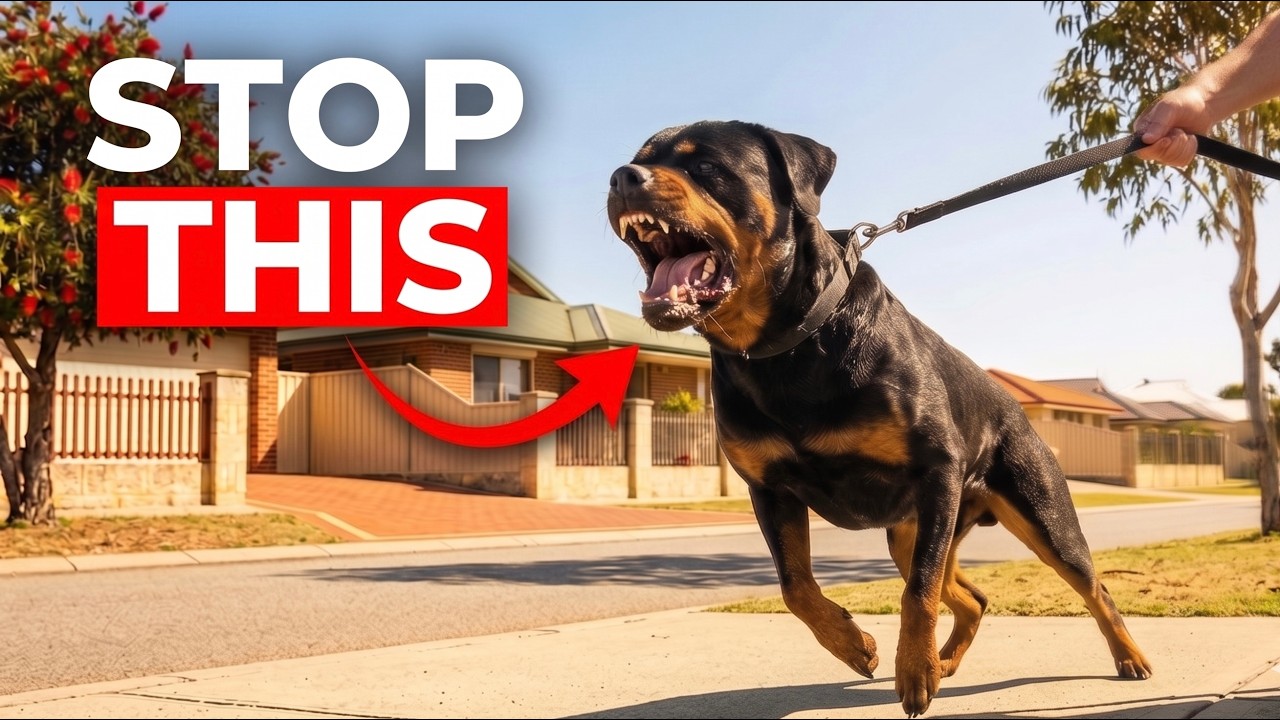
Adam teaches reactive dog owners to skip obedience training and build a foundation instead: sleep and vet care first, then long-line exercise, high-arousal play like tug games, and clear markers for right and wrong behavior. Obedience comes last, if at all.
Chapters
So today we're gonna go over some things that you're gonna need to prioritise when training your reactive dog. Okay, there's gonna be lots of misinformation on the internet about what you should and shouldn't do. Give your dog treats, punish them here. But I'm gonna try and make it nice and simple for you in what we do here and why we do it in generally this specific order as well to make it as easy for you as possible and to get the best result for you and your dog. Alright, so excuse my very bad drawing. I'm gonna try and make this as simple as possible. So we're just gonna go off a pyramid. Hopefully I can get enough bits into the pyramid. Bit of a wonky, ah, pretty straight, yep. Nice, all right, we'll go with this. Okay, so the first one we're gonna focus on is generally how healthy is our dog, how much sleep are they getting, and also how's their diet? I should probably write this down. Hello, Starkey. So we've broken this up into 3 sections. We have sleep, health, and diet. So these are all quite obvious, but starting off with sleep, just as me as a human being, if I don't get enough sleep, I become very grumpy. Humans in general, we need, you know, 7 to 8 hours of sleep a day to make sure that we're fully recovered. If I go to the gym and I'm an active person, I need to make sure that I'm rested and recovered for the next day so that I can perform at my best. I wanna make sure that our dogs are getting this as well. And if you have a working dog or a higher drive dog, they're gonna find this very hard to do because they lack the ability to actually sit down and do nothing. This is where crate training, having your dog in a pen to force them to rest, might be a massive help for yourself. The second part here is something that we always recommend to people, and that's before you start a training program, just going to the vets and making sure that your dog is actually healthy. They're not suffering with any pain, allergies. I see this all the time. Dogs coming to me who are very sore, bad hips, skin and eye allergies that once again just make them grumpy. Just like if I'm tired, if I'm also sore, um, and I'm not feeling the best, this is really gonna affect my mood and how feeding. And this is gonna be the exact same in our dogs. And we're just gonna tie this all in together with our diet. If I'm eating Macca's every day, I'm getting 4 hours of sleep and I've got a bad back, how do you reckon I'm gonna be as a person? I'm probably gonna be a bit of a dickhead. I'm not gonna be very nice. I'm gonna be grumpy. I'm gonna be short and I'm not gonna be very nice to interact with. So translate this over to your dog. Have a look at them and think, how is my dog? Is my dog getting enough sleep? Are they getting the right amount of rest per day? Are they restless at night? Are they walking around everywhere? Then we might want to force them to rest through crate or pen training. How's your dog's health? Even if your dog's not old, just make sure you take them down to the vet before you start a training program to make sure that they're not in pain. With certain breeds, we might want to have a look at their hips. My German Shepherd Floyd is very renowned for this. He's not even very old, but his hips are already starting to deteriorate a little bit, just down to his breeding. And lastly, diet. Like I said just then— hello, Starkey— if I, if I was eating Maccas every single day, it's really going to affect the way that I feel. So make sure that we take these 3 things in into consideration when we're training our reactive dog. Step number 2. Okay, so we've broken it up into 2 sections here. We're gonna talk about exercise first. So you'll hear me say this all the time, and that's because every single one of my clients that come to me, we pretty much all have the same thing when it comes to exercising our dog. It's become like a societal norm that what we do is we grab our leash, we put it on our dog, and we just go for a walk around the block. We go say hello, to Susan and Janet when we're walking our dogs and we have a little bit of an interaction. We might go out for 20 minutes, then we just head home. But is this really enough for your dog? Do you feel like your dog actually enjoys what they're doing on a day-to-day basis? Let's think about what a dog truly desires to do. They want to run, they want to hunt, chase, they want to bite things. And if we have— let's just use an example of our German Shepherds, our Malinois, our Rottweilers. If we restrain even just these kinds of dogs, or let's be honest, any dog to a 6-foot leash, then they're going to be quite under-fulfilled and we're probably not meeting their daily exercise needs. So with this, obviously you want to try and meet their needs, but I know what you're going to say, Adam, I don't trust my dog off the leash, so how can I give them the correct exercise? And I know that's completely fair. So with this, instead of going for a walk around the block, let's stick our dog on a 10-meter, 20-meter long line or retractable leash, whatever it is, and let's go and actually give them the fulfilment and the exercise that they need. Put them on a long line, throw a ball for 'em, or just let them just be a dog. Go and sniff around for 20 to 30 minutes rather than restricting them to a 6-foot leash and expecting that's gonna be enough. 'Cause the lack of exercise, and what we're gonna talk about next being play, is probably where a lot of your behaviour issues are stemming from. Next, we're gonna talk about play. And I know what you're gonna say, Adam, I already play with my dog. But I'm not talking about just throwing a ball for them or roughhousing with them. I'm talking about real structured play. So if you cannot play already, we have many tutorials on this. So I'm not gonna go into too much detail. But what I am gonna say is that if you have a reactive dog, when they see another dog, a person, a trigger, what do they do? They go all the way. That's cool. That's yellow. Didn't expect that. They go all the way up here. Okay. At a very high level of arousal. It's very hard to communicate with our dogs at this level of arousal. How can we try to replicate that away from triggers? We can try to get our dog absolutely obsessed with a game. And we do this the majority of the time through playing a game of tug. So we try to bring our dog as close to this point as possible. And then once we're there, learning to communicate with our dog at that level, asking for simple things from them, a drop, a down, a sit, whatever it might be, so that when we are faced with a trigger, that communicating with our dog is going to be much, much easier. Additionally, it's not only to be able to just communicate with our dogs at a high level of arousal, but it's just to fulfill them and make them feel good. If I just sit at home all day and, um, don't do what I truly want to do, and for me that's going to the gym and training, I don't feel right inside. I have that unscratchable itch that I just can't get rid of. And with your dog, the unscratchable itch for most, most dogs is going to be play. Okay, so I, I can't just replace this with something else which is more, um, time efficient for me. If someone just stripped away the gym for me and said, Adam, you can't go to the gym, but you can go play chess. Eventually I might enjoy chess a little bit, but it's never really gonna scratch that same itch as going to the gym. So when we are thinking about genetically fulfilling our dogs, try and find what they truly want to do and allowing them to do that. Because by not only having our health, our diet, our sleep in place, when we combine our exercise and genetic fulfilment together, we're already way ahead of the mark when it comes to fixing our dog's reactivity. And the rest is just gonna be very, very easy. Okay, so next we're gonna talk about the most important, or if not one of the most important things when it comes to training our reactive dog. And that is simply clear communication. We need to be able to tell our dog when they've done the right thing, And we also need to be able to tell our dog when they've done the wrong thing. And this is going to come through a clear communication system of, hey, what you're doing right now is really, really good, but also what you're doing is not very good. I don't want you to do that again. A lot of people are not bad at the yes, they get that really well. They might lack a little bit of motivation in some areas, but the majority of people are trying to effectively reward their dog, um, as much as possible. But maybe just not getting it exactly right. Where a lot of people go wrong is being able to tell their dog what they're doing is not good. I always say, if shouting at a dog fixed behaviours, then I wouldn't have a job. I'd be unemployed. Most of the time, if your dog's doing the wrong thing and you shout at them and you say, "Hey, cut it out," they're gonna tuck their tail between their legs, they're gonna run down the hallway, but more than likely, they're gonna come back 10 minutes later and they're gonna do the same thing again. And that's just because the way that we communicate with our dog is just not effective with that individual dog. So this is where it's very important to condition two markers. Okay, I hope that's readable. It is to me. So we are gonna branch off from here. We, we need a terminal marker, a terminal reward marker to be able to say to our dog, hey, this is really good. Stop what you're doing. Come here and get a reward. And also, once you've had this reward, you can go back to doing whatever you want to do. Most people lack this. They try to communicate their dog in a way that they think makes sense by throwing treats on the floor or aimlessly saying words that don't make sense to our dogs because obviously they don't speak English. So we need to condition this in a very low-stakes environment away from triggers. This could be your living room, your back garden, wherever it is, wherever your dog's nice and calm and engaged with you. This is where we are initially going to teach our terminal marker. Once again, this is more of a demonstration about what we should be doing and not a demonstration of how to do it. So if you don't know how to do these things, download the Behave Your Bible and we can teach you in there. So we've got our terminal marker. We have a way to say to our dog, what you're doing really is really good. Come here and get a reward. But on the flip side of that, and this could be quite controversial, but probably more important than that, we need a way to tell our dog that what you're doing is shit. Don't do that. Once again, this needs to be taught in a very, very low-stakes environment. We don't want to, like a lot of people do, we don't want to expose our dog to a trigger and then just give them an unpleasant sensation. This could have a lot of fallout. Okay, so we want to take our dogs into a low-stakes environment and teach them away from triggers that certain behaviour is not acceptable. So when we do get out into the real world, they're going to have a much better success rate when they see their trigger. And just remember, without these two things, you have no right to be exposing your dog to their trigger. Without clear communication and being able to tell your dog what they're doing right and what they're doing wrong, you're going to fail very, very fast. And you're also probably going to backtrack when it comes down to your dog's reactivity. Okay, so, so far we've gone over sleep. We've gone over health, we've gone over your diet, not your diet, the diet of your dog. We've gone over exercise, talking about how the way that you exercise your dog at the moment probably isn't the best way to do it. That's probably because you are taking your dog on a leash walk. How to properly play with our dog, making sure that this isn't just throwing a Chuck It stick for your dog down at the park, or maybe some roughhousing out the back. This is proper structured play., and then we've talked about our yes and our no. So clear communication, but building that in a low-stakes environment away from the trigger. So with this alone, ignoring the last thing that we're going to talk about, this is enough to change your dog's life. This can fix your reactive dog if you do this properly. This is what we do here every single day. We make sure the dog is healthy. We make sure that we teach them how to play, that they've got the right exercise, and then we teach them clear communication. Hey, that's really good. Hey, that's not too good. And this alone is absolutely life-changing with some people. So what we're gonna add at the top is really just think of it like the icing on the cake. I'll be honest with you, it's not important to me whatsoever. It's nice to have what I'm about to put up, but I could go my whole life without it. And that is obedience. We'll put OB. A common saying that you'll see here is obedience strengthens obedience. Obedience has no place in a behaviour modification program. If I teach— this is going to be a really good drawing, by the way. Oh yeah. If I teach my dog to walk on a really nice loose leash, not this guy, that's not a very loose leash, but let's say I had him on a nice loose leash somewhere around here. And I said to my dog, I want you to walk here. You cannot leave this position. Then they're probably gonna be really good at that position. But what happens when I let them go? What happens when I say, you don't have to be here anymore, you can leave? Does teaching them to heel by our side actually fix the behavioural issues that they have? If they're reactive to people, as soon as I let them out of that position, they are going to go straight back to doing what they like to do, and that is being reactive. So before we head onto teaching obedience, we wanna make sure that we give our dogs complete freedom when it comes to making choices.. So that this is just icing on the cake. I love a sit, I love a down, I love a heel. I love all the fancy things when it comes to dog training, but that's just a little bit extra for me. So once you've gone through teaching your reactive dog what they should and shouldn't do, giving them the right exercise, the right play, and making sure they are healthy, that's when we can go, we can start teaching them some really nice obedience. So I know all this can look very daunting and confusing, but it's all quite simple really, especially when you have the right help. So we actually run boot camps. I'm not actually from here in Yorkshire. I'm from Perth, Western Australia. But here's a little secret for you. I'm going to expose it. We're opening the Perth K9 Academy. So if you're in Perth and you want your reactive dog fixed once and for all, click the link below and you can join our 5-day boot camp to finally fix your dog's issues once and for all.
More from Max

How to Charge the 'YES' Marker For Your Dog Training (Terminal Reward Marker Conditioning.








