The dog training spectrum
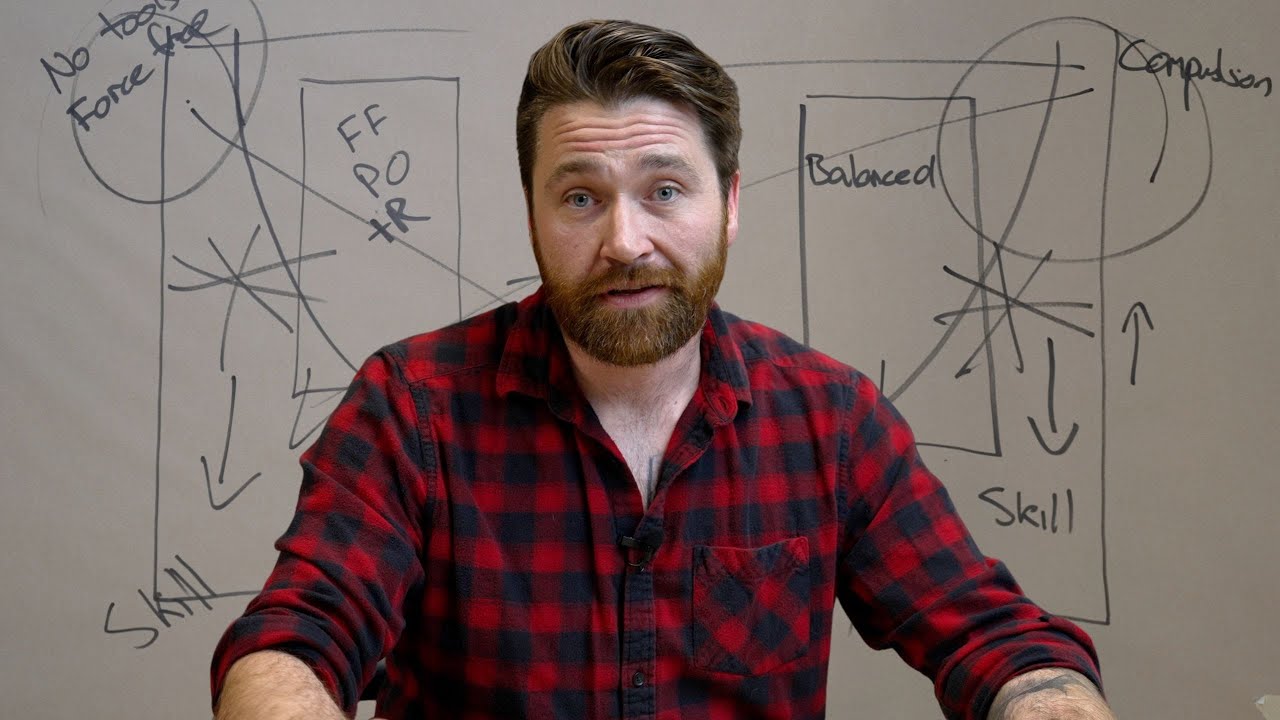
Pat Stewart argues the dog training industry's binary split between "balanced" and "force-free" is fake. Most skilled trainers occupy the middle, understanding operant conditioning and using tools ethically when needed. The extremes lack competence; the center shares respect and evidence-based practice.
Chapters
So in this video, I'm going to try and explain to you something that I think is really important for the future of dog training, and here it is. Hello, my name is Pat Stewart. I am a dog trainer. I'm kind of a coach to other dog trainers. I work across a large spectrum of the industry. I train, you know, police and military dogs, I train pet dogs, I train people to train pet dogs, and, you know, everything in between. I wanted to make a quick video about the state of the industry because I'm kind of scared. And there's a video here or there, wherever it comes up, that I made a little while ago about the imminent ban of prong collars. And that got a fair bit of traction and it prompted me to think this way. Even though, you know, I think that that prong collar ban has, by the time you're watching this, has probably gone through and is in place. I still want to have a discussion about the state of the industry, where it's going, and what I would like to see going forward and kind of ask for your help to, you to make that happen. So I think that what we have in the dog training industry is this idea that there's two camps and it looks like this, right? Is that we have, we think often that there's one group of people over here and they're, you know, the camp that I would be associated with that are like the balanced trainers. And then there's another group and they're sort of often referred to as, you know, the force-free, or positive only, and sometimes lately, you know, the plus R community. So the problem with these labels is that only people who deal in absolutes feel comfortable in having these labels placed upon them. And I want to sort of, you know, approach with you a new way of thinking about that. And rather than having two camps, I think that what we really have is a graph and a spectrum, and everybody, every trainer falls individually within that spectrum. So I like to think of it like this. I think that realistically, what we have is a graph where, you know, on this axis here, we have like— this is essentially on the top here is compulsion. And over here, we're more like no tools and more towards truly being the like force-free as much as people can. And I think what actually ends up happening is that the distribution of dog trainers kind of looks like this. I think that's a more realistic approach. And then somewhere in here is a line where people are willing to use tools on this side and no tools on this side. And it's been my observation that the more sort of obsessively force-free people are and their like true hatred of tools and anybody that uses them, there is a decrease, right? A downwards correlation in skill. But I noticed that also over this side where the more compulsive people are and the more unwilling to use food in training or toys or, you know, appetitive type methods and incorporate more positive reinforcement into their training. I also see like a downtake in skill. What I see is that most of the arguing, most of the problems that we face within our industry actually come from the people at the margins. And I think that the people in those margins are very small. The number of people is actually very small, but they're often very, very noisy. I think what I observe is that the closer we come into the center, the more overlap there is in the way that people train, understanding, you know, that there are 4 quadrants, right? And the use of those 4 quadrants in some way or another that makes people comfortable, whether they use tools or not, and what they're willing to do to a dog to achieve success. Where I think that the real magic happens in dog training is this group of people in the middle here. These people here are the actual dog trainers. The people over here who are old school, more compulsive, don't want to change and aren't interested in it, are not probably watching this and are not interested in anything that I have to say. Similarly, people over here who don't really understand how behaviour works, but probably have really big feelings and want it to be a particular way, are also probably not willing to hear anything I say, even if they do get convinced to watch this. So, if you consider yourself one of these people in the middle, who really understands dog training, who really understands operant conditioning, ethology, you know, really is able to be successful with a dog. This is— I'm talking to you. And I think for the most part, we agree on way more than we disagree on. But I think that we are being represented by these groups here on our margins that is not helpful to us. And these people don't represent us here in the middle. And they don't serve our interests. This group here in the middle that I do want to talk about, I think that this is the people I enjoy to hang out with. And it doesn't matter to me, especially whether you fall on this side of the no tools line or this side of the tools line. I think that this is the type of dog training that I like to do. And I think that anybody that's really very successful in dog training, this is where they all lie. I think that there is just a willingness or a, you know, a skill set that enables it. There's many things that increase the variables of where people fall within this spectrum of really understanding dog training and being capable dog trainer. And I think that this line of whether you willing to use tools, it's not— that's why I've put it at this weird angle like this is because that's not as obvious as you might think. There are some people who are like, no, I never use tools, but I'm highly skilled. I know how they work. So we put those people sort of over here. There's people who are like highly skilled, understand, and are always willing to use tools given the circumstance and that, you know, it's the appropriate thing to do. That doesn't mean they always do, but they're willing to given the opportunities, and they use every tool that's available if it's the right thing to do. And those are people that fall here. And I'd say I'm probably one of those. I put myself into this category somewhere here. But there are people I know who use e-collars but not prong collars because they feel more competent doing it. There are people I know that go the other way. There are people that use prong collars and not e-collars. There's people who refer to themselves as strictly +R trainers that use slip leads for guiding pressure, especially those who compete in the sort of the bite sports that realize that actually that guiding help, that pressure, is, you know, a better thing to do for the dog because it helps the dog understand, gives clarity to what they actually want. So I think there's many people who would say, no, I don't use tools, but they do use some tools. And that's why this line falls like this, because in some instances they're here and in some instances they're here. What I notice, though, is that the closer people are to the margins, the more trouble they cause. And what I observe is that people over here are very often the ones calling for the ban of tools, right? But their skill set is very low, and so too is their education and understanding. People over here who use tools in a way that they, you know, I'm not comfortable with, and many people are not, their skill set is often very low, and so too is their understanding. But when we have these big arguments about dog training and how it should be done, it's these people arguing with these people, and it happens in our space here in the middle, which drives me crazy. So I think what I'm sort of calling for is that we don't need any kind of label. And I know that many people are doing this. I'm not the Lone Ranger. I'm not putting myself— I'm not saying that like I'm inventing something new. Absolutely not. But what I'm asking for is that we try and create a tighter, more cohesive group in the middle that understands how these things, how dog training works, and understands that there are people who are really good, really, really good dog trainers that fall here. And there are people who are equally excellent dog trainers that fall here. And that it's okay to be a dog trainer that falls here, that sometimes uses tools, sometimes don't. And I know that the argument will come that these people here sometimes use tools, sometimes don't. I mean willingness to use it. So I think that's it. It's— this has been bugging me for a really long time because I think I get really upset at the idea that I'm being represented by these people, which I'm not. And I know that many of the people who, you know, call themselves +R trainers and are really, really good, effective dog trainers are represented by these people over here who I know don't fairly represent them. So what I really want to see is more cohesion in the middle here, more working together, more coming to understand each other's point of view, and less concern around the idea of jumping this line in any instance that you want. I think that as long as you're being ethical, you're training with kindness, and you understand what you're doing, you can fall anywhere in here and be really effective, and you can bounce around and be really effective. I think that's it. That's my big whinge. I feel better having made this. Hopefully I have the guts to actually put it out.
More from Max

How to Charge the 'YES' Marker For Your Dog Training (Terminal Reward Marker Conditioning.








