The Ultimate Guide to Building a Dog's Emotional Backbone
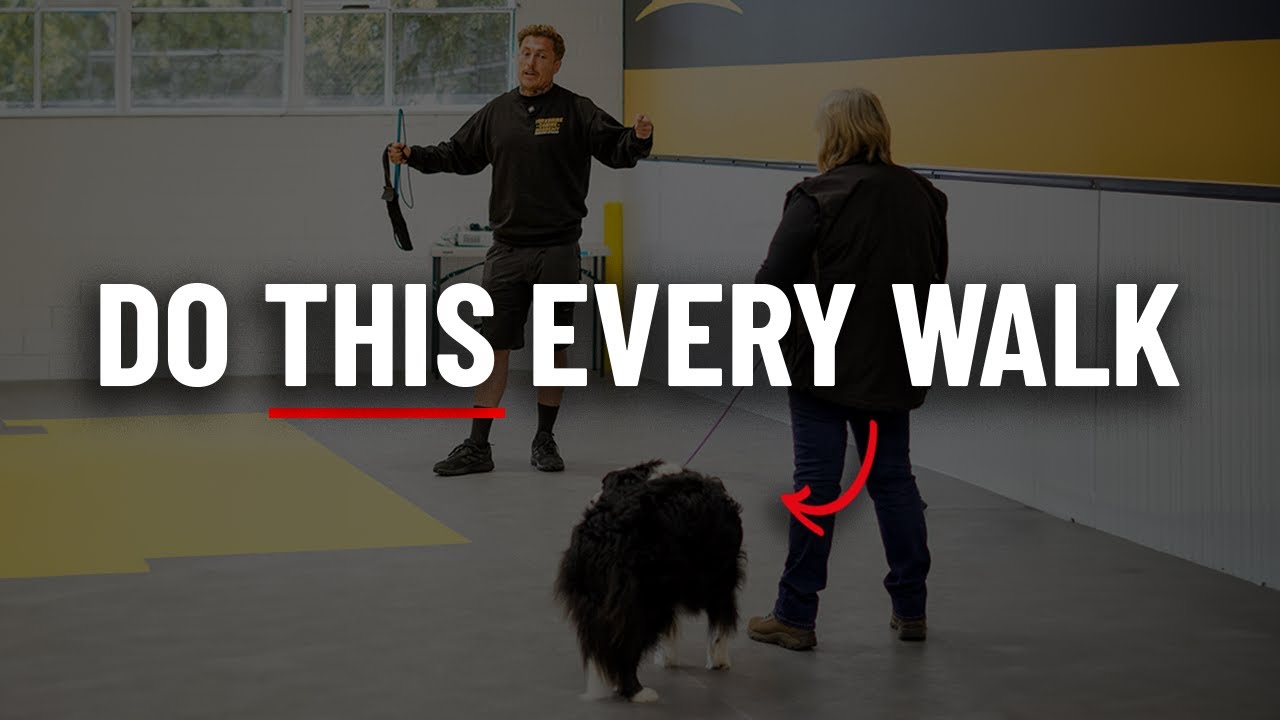
Max O'Neill works with Molly, a 5-year-old dog who's hyper indoors and fearful outside. Instead of obedience training, he builds her confidence through structured games with clear win/lose dynamics, using tug toys and a flirt pole while gradually adding environmental pressure like sounds and people.
Chapters
Lemme know if this sounds familiar.
Inside your house, your dog is a complete fucking maniac, bouncing off the walls, barking at everything, just a— like a chaotic ball of energy. You can't even make coffee in peace. But the second you step outside, that maniac turns into a little tiny mouse. Suddenly, they're terrified of everything. Cars, noises, their own shadow, their own farts. They pull on the leash like a freight train one second, and they're hiding behind your legs the next. It's the classic Jekyll and Hyde dog, and it's one of the most frustrating problems to live with. But what if I told you the solution isn't what you think? It's not about more obedience. It's not about tiring them out. It's about changing their entire state of mind. And in this video, I'm going to show you the one tool that can turn a fearful, anxious dog into a confident partner no matter where you are. And I promise you, it's not what you expect.
Who's this?
This is Molly.
Yep.
She's 5 years old. She has a lot of nervous problems. You could be walking along, as minute something scares her, she pulls like a freight train.
All right.
So I'm not sure how to rein that back in because once she's hit that mode, you can't do anything with her.
You can't get through to her.
Yep.
Gotcha. Okay, talk to me about a day in the life of Molly. What does she get up to?
Well, because I'm home most of the time, she's with me most of the time.
Yep.
She comes to classes with me when I take classes. She spends the day running around with her brother. She's very environmentally sensitive.
Okay.
Not for want of trying to take her to a million places.
Gotcha.
I'm just not sure how to make it easier for her.
What have you tried?
I've even taken her to like roundabouts.
Yeah.
We've sat on the roundabout because cars are often a thing for her. And I've taken her dinner with me in a glove because she's raw fed.
Yep.
And I'll sit there and I'll feed her. So we did that for a whole week. Yeah, um, in various locations.
Yeah, she, she, she got better.
Okay.
I, I thought she'd be more freaked out in this environment.
She's a little bit stressed, right?
But she's not too bad.
Okay.
Considering—
will she take food now?
Yes.
Want to give her some? There you are. And yes is a marker word?
Yeah.
Cool. Will she play with you now?
Probably not.
Probably not?
No.
All right.
Okay.
And because she's so stressed?
Yeah.
How How do you play with her?
We've got a tug toy, we've got a flirt pole, all of which she's really good with at home.
What's the point she'll stop wanting to play?
Anywhere that she's not familiar.
Okay, gotcha. What's she like in the house?
In the house, a bit crazy. Yeah. She doesn't settle real well. Obviously we do have crate time.
Yeah.
Especially if it gets a bit over the top.
Yeah.
Just to calm down. She's got a real thing about me being in the kitchen. Go on. I could get up in the morning and make coffee and she's going, apeshit at the entrance.
Anything else in the house or in and around the home that you think—
She doesn't like power tools.
Power tools? What does she do, freak out or go for them?
She'll go outside barking and racing around the yard, up and down the fence, etc.
Gotcha. So she's in and around the home where something might stress her out, she's a bit more active in her response to it.
Yep.
But then outside of the home, she's a little bit more—
Yep.
Of a flight response.
Yep.
Do you want to pick up one of those toys and see if you can get anything, any interest out of her?
What's this?
What's this? What's this?
She always goes for the string.
That's all right.
Good job, good job. Good job, good job. Get it, get it, get it.
That's probably more than I would have expected.
Yeah, if we've got a dog that's very environmentally unnerved, one thing we can look at— and again, there's a, there's a little bit to unpack here, which we'll get into— one thing we can look at is making sure, or trying to get, that dog to start playing in environments that they are somewhat stressed by. A dog can eat and be stressed, so food's good. And again, a lot of our training is food-based. But a dog won't be fearful and play at the same time. They can dip back and forth, but once they're in the game, in that jovial state of mind, they're not going to be fearful. And so for Molly, what I'd be looking to do is start figuring out how we can cultivate a more jovial side of her in places that stress her out. Your roundabout method, that's fine with food, but we can sometimes Depending on how the dog feels about food, we can sometimes cheat and think we're making progress whilst feeding her. Again, she can eat and be stressed, but if we play with her there, she can't be both at the same time.
Yeah.
One thing I would want you to be really conscious of: if the dog is getting their fix in and around their home and exploring certain drives, whether it's fence fighting, car chasing, zooming around by barking at Mum while she's making a coffee, it's going to be some— in some instances difficult to get that dog to really want to play because if they're getting their fix via those unwanted behaviors. And so sometimes we need to press the dog a little bit, deprive the dog of that outlet in order to create that bottleneck effect that we spoke about earlier, but into the game. And so what I'd really want you to be conscious of when you go away today is like, how much fun is she having in and around the house doing naughty things?
A lot.
A lot.
So if play is a good solution to our problems, then we need to think about how can we get this dog to play. In her head, she might be like, I don't need to play with you because if I'm, I'm getting that fix, that fulfillment from all those little things, zooming around the house, fucking around with her brother, again barking at the husband or the coffee machine, bloody bloody blah. So when we present the game, she's like, I I'm all good. And so while play is great, sometimes we have to go through a period of boring out the dog in order for the dog to want to play with us. We'll probably end up talking about play a lot today because it's one of those high-leverage moves. But one of the limiters on getting dogs to play is how much fun they're having out of dickhead behavior. And so sometimes we have to say like, stop being a dickhead for a week, for 2 weeks, for 3 weeks, to say like, hey, do you want to do this now? How about we play now? And the dog's like, oh yeah, do you know what? I haven't really had much fun in the last couple of weeks because you've not allowed me to do all the, the wacky shit I normally do. Oh, I'll tell you what, let me, let me, let me try this. Let's see how it goes. And the dog goes, oh, you know what, this is actually pretty good. And then once we develop a game that she stays in, we can start using that game as a tool. That's not going to be something we're going to be able to use with her today, but we can start trying to think about how we develop a game with her, how we can start making things more fun. But your starting point is most certainly going to be blocking access to all the, the, the unwanted stuff you're seeing around the house for no other reason than trying to push her into something more constructive. The downside of that is once you do start suppressing the dog through management, which is what I'm going to recommend, we might start seeing the dog explore other options, right, to get that fix, which might be just other unwanted behaviors. So that's where our management has to be kind of on point. And so this is where we're going to start looking at tethering the dog around the house, treating her like a puppy when the dog isn't supervised. And a dog like Molly that's got a lot of rehearsal of that sort of behaviour might get a little bit pissed off. And then we say to the dog, hey, if you're pissed off, here's one way you can release that frustration, that pent-up frustration. But then you've got to be conscious what other opportunities she might have, because it might be a case of a dog like her, we say, hey, stop doing all of that. In order to create that pent-up dog. And she goes, hmm, I might, I might explore car chasing today, right? So we just got to be super careful when we employ the— some somewhat deprivation. It sounds like a pretty aggressive word, but it is what it is. Once we start teaching the dog, you're not allowed to do that shit anymore, it might be a case of then unearthing a different type of beast, right? Let's try this.
What's this?
If you have a reactive dog and you feel like you've tried absolutely everything, then I've just put together a free training that hopefully will be able to help you and maybe the confusion you're experiencing right now surfing the internet looking for magic wand, looking for the golden goose, looking for the solution, the be-all and end-all solution. I think I've got it. The reason I think I've got it is because if it's been tried and tested over thousands of dogs over the last couple of years, and I've just put it together in a free training for you guys. So if you click the link in the description, you'll be able to hop on, watch the video, and if you've got any questions, you let me know.
I'll see you in there.
Get it, get it, get it, get it, get it, get it, get it, get it. Cool. Get it.
Nice. Good. Now move. All parties to move.
Good job.
Cool.
Yeah. Good job.
There you go. Keep moving, keep moving, keep moving. Get a little bit like lunging like a horse now. I'm trying to cheer her up a little bit.
That's nice. Yeah, good girl.
Cool. Keep moving her, keep moving her, keep moving her. Nice. Good girl, Molly.
Good job, good job, good girl, good girl, good girl. Well done. Oh, you missed it. You lost it.
So we can start teaching this dog, this is how you have fun.
Good job.
I don't want to see you having fun doing all that stupid shit. And I'm going to stop you from doing that by having a line on you in the house. So when you try and do it, I can say, "No, we don't do that anymore." Yeah, yeah. But we do and can do this. And then once that game is developed with a hell of a lot of desire, we can start adding in pressure to that game. And the pressure we're going to start adding into the game with Molly is environmental pressure. Things that spook her. And so it could be the case that Molly is scared of something like this, right?
Good job.
So I start playing the game with her. In order to develop it, we are gonna have a winner and a loser in the game, and that's gonna change. And again, we'll talk about that as we go. And then once we understand the rules of the game, the rules of engagement of the game, we can then start adding in things that might get the dog to lose the game. You know, even if I've got a dog that's really touch sensitive, for example, there's a dog in our club doesn't like her feet being touched. And in the sport of PSA, when the dog comes up onto the bicep, chances are the decoy's gonna accidentally touch their feet. This dog, to get her over her fear of her feet being touched, we would play tug, and I'd put my hands over her eyes. That would spook her a little bit to the point that she'd let go of the toy, and then I would punish the dog by keeping the toy away from her and having to work her ass off for the toy. With that, she then goes, "Oh shit, I need to hold on to the toy even when I feel somewhat compromised." And the level of pressure we add into the game, we need to be quite conscious about. And she was like, "Oh no, this is you trying to win the game." And so she would clamp on harder. I'd take my hand off and I'd let her keep the toy and she wins the game. And then we graduated to putting her onto the tug. I would just tap her feet and she'd go, "Whoa, nope, that freaked me out." And I'd go, "Haha," and I'd run away from the dog. And then she'd have to work really hard to get the toy back. And when she did, I'd tap the foot again. She goes, "Ah no, I'm one step ahead here. You're trying to win the toy off me." And then she overcomes that pressure. I release, she keeps the toy, and now we're up to the point where she can go on to the thing. I can pick up both her feet, I can put them around me, I can put around— put the feet around my legs, I can like play with the nails, and she's gonna be absolutely fine because she's in her head, she's like, no, this is you trying to trick me in winning the game, right? And we can do the same thing with a dog like her. Of course, we have to develop the game first. Once it's nice and developed though, let's say this spooks her out a little bit, I Play over here. I put her on the tug and I come here and I do this. And she goes, "Fuck!" And runs off, 'cause she's scared of that. And I go, "Haha, I win the game." And I run away and I punish the dog by keeping the toy away from her, her having to work. I put her back on and we go near the thing again. So long as I didn't add too much pressure in the first time, the dog will be like, "Oh, this is where I lost the game last time." And I say, "Hey, look, you did it. You overcame it." I let the dog win the game. I let her parade, I let her keep the toy, and very quickly, you know, I'd be laying that on the floor, getting the dog to work over it, so on and so forth. And the dog's in their head is going to be like, nah, I'm not letting you use this to win the game. And very quickly, this is going to become redundant as a pressure. So really good strategy, especially for fearful dogs. I could free shape her to it, I could get her to walk over, I could compel her to walk over it. But again, if we're talking leverage, getting the dog to play and feel a sense of loss, if we built the game correctly, which hopefully we can get a couple of nice examples of doing, can be a really strong move in terms of getting them over environmentals and creating somewhat of a backbone in the dog. The first step for you is probably gonna be shutting down opportunity to express those drives.
Yep.
To say to her, hey look, we're only having fun one way and it's gonna be this way. Once she's then really invested in the game and she understands the rules of the game and the rules of engagement during the game, we can start adding in environmental pressures. And it could even be people, you know. So if I've got a dog that's like a bit unnerved by people, I could bring the game towards the person. If she stays in the game, you get to keep it then. And we can parade the dog, let them have their win. Or the dog's going to come go, oh no, I don't like that guy, and she's going to come off the toy. I'm going to be like, haha, look, I won. And I kind of negatively punish the dog, if you will. And then we get back into the game. I bring the dog back up. I bring them again to the point that they lost last time, and then I come away, let them keep, and we can start working the dog over, uh, past their threshold that way. But again, we're going to have to create a sense of want and desire in her first.
So you would stop the other stuff by what, more crate time or more?
Just having a leash on the dog.
Yep.
So there's a couple of ways we can stop behaviour, right? I can put the dog into obedience so I can say, you can't run around the garden while you're on place. I could manage the dog and I could just have the dog on leash and physically block them from doing it. Or I could punish the dog and say, that behavior is no longer allowed. And when they try and fence fight, I can apply a punishment protocol which we can look at today. And the dog goes, okay, that activity is no longer fun, I'm gonna not do that anymore. And then A couple of days later when the dog is a little bit twitchy, like, "Oh God, I wish I had something to do," I can present the game and go like, "Hey, this is the thing we can do together." And then I can start using it as a tool. But we can't use play as a tool until the game is developed. And so typically what I'll do is I build the game somewhere sterile. For Molly, this isn't sterile for her, obviously. So I build the game in the house where there's penalties and there's rules. Once that game is developed and she understands then we start adding in layers of pressure of her environmentals. I start testing the dog, like, what's going to make you tick? What's going to spook you? What's going to freak you out? So homework initially for you is going to be blocking the shit, presenting the game, playing the game up until the point that she doesn't get bored of it. Ideally, we want the game finished while the dog is still invested in the game. Yeah, but they're not at the point of satiation. When it comes to playing and creating desire and drive to stay in the flirt pole game or whatever. We want to stop it while the dog's still invested, and the game finishes, and the dog goes, fuck, I wish there was more of that. There's definitely a lot there in that dog. She's just— her efforts are probably spread thin across a bunch of activities and hobbies, right? Yeah, that makes sense.
Yep.
Let's give the flirt pole another little go for me.
Molly, Molly, get up, get up, get up, get up.
Oh, come on. Come on, you could do better than that.
Get up there. Nice. Get up, get up. Yeah, nice job. Get up.
Nice. Good job. Yeah, now you need to move quicker here.
Yeah, get up, get up. Oh yeah, good girl, good girl, good girl. Come on, good girl. Yeah, good job, good job, good.
Work your way down that, uh, toy and get hold of the handle and, and Get it. Yeah, nice.
Good job.
And when she gives you one of those thrashes again, I want you to, if you can, let it slip out of your hand. So when that happens, when she relinquishes the toy too easy, that's when we need to punish the dog by getting it away from her and having her work hard again for it. So when she has the toy and she wins the game, I need you to like really gear up and get a move on with her. Right. And tell her how great she is. And then a couple of things we can add in when, when we're contesting over the toy. There's two ways we can test her. We can play tug and she can win the game by taking the toy off us, or we can try and test the dog's grip by when she has the toy, trying to just flick it out of her mouth. If she holds on to it, she gets to keep it and we go into parading again. And she gets to keep it. What I see a lot of people do when they're playing with their dog, the dog wins the game and they go straight back into contesting for the toy. What I don't see enough of is letting the dog sit in the victory and parade in it and, you know, showing everyone what they've just won. So when I'm training my sport dog, sometimes I'll, I'll get the decoys out, I'll sit him, I'll send him into a guard, and we'll do a 20-minute session but 19 minutes of that session is him parading the toy around. So I'll send guard, super clean, I will yes him, I'll give him marker, he'll come out, I'll let him win the toy. All right, you get to spend 19 minutes showing everyone what you've just won. Yeah, right. But I see a lot of people— that's obviously an exaggerated example— but I see a lot of people, the dog wins and they're immediately trying to get straight back in there, right? So let's go again. I think she'll, I think she'll Ready?
Are you ready? Are you ready? Get up, get up, get up! Come on, yeah, come on, get up, come on, get up! Good job, good job, good job! Come on, that's it!
Yeah, get a move on!
Good, come on! Good job, good job, good, good! Oh, you missed, you missed out!
So yeah, that's prime example of where a penalty might come in. Hey. And then get the toy away from her again. But what does everyone do when the dog comes out of the game? They take the toy and they try and put it in the dog's mouth. What's this? Don't you want this? Look, we're playing, right? But if we develop the correct game, the dog should go, oh shit, I shouldn't have got distracted. And I come back over here. And it might be tempting when we get a dog that doesn't play to start changing up the game, changing up toys, trying different toys. Okay, now we'll try fetch and so on and so forth. What that's gonna do is act as a little bit of a reset button. And should we change in the rules?
Yes.
Cool. That's all good. That's all good. You pop the toy away for now. So we're going to play with her when she works, when she catches it, great. Let her keep it. Try not to constantly be testing her grip out when she's playing. Like let her sit in the victory. Hey, look, you won.
You did great.
And then once she's had her time with it and she's had a sense of, oh, this is mine now. You can then go in and test and be like, hmm, maybe it's not. That make sense?
Yep.
Cool.
But make sure you stop all the silly stuff first. We'll get her back out shortly, but, um, cool. Yeah. Pop her away to begin with.
Right.
You're watching that video.
It sounds like a great idea and, and practically you feel like it's gonna work. However, there's one giant caveat here. Your dog doesn't like toys, doesn't wanna play with you.
Well, what, what's the solution for that?
Well, very simply, if you click this video right here, I'll walk you through the step-by-step solution with Erin, a dog that didn't give two shits about playing and then just in a couple of days went from this to this.
So if you want to check that one out, here's the video.
I'll see you there.
More from Max

How to Charge the 'YES' Marker For Your Dog Training (Terminal Reward Marker Conditioning.








