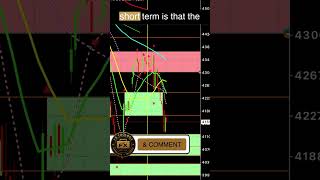
Discord Live FVG & OB 7th October 2024

A live Discord/YouTube session (7 Oct 2024) led by Alan Solarsh with contributors Guy, Tala, Justin and community members discussing order blocks and fair value gaps (FVGs) as institutional footprints on price charts. They explain: order blocks as areas where institutional orders accumulate, FVGs as large candles/inefficiencies left behind when institutions push price, use of COT data and moving averages (notably EMA/200MA) for context, and practical application via the ATMA/MT4 indicator and an EA. The hosts also cover dollar-cost averaging (DCA), lot-sizing, hedging/equity-protector settings, and caveats around timeframe, manipulation, and risk management.
Chapters
Okay, well, I figured this out. Why don't you give your lesson on order blocks and.
Fair value gaps? Do you want to do that?
Yeah, it's more, it's more a sort of Q A. And.
You know, I obviously the.
You've put in the whole order block fair value gap setting on MT4 so people can see where the British order blocks on the bearish order blocks are and fair value gaps. And we've had some pretty cool talks on the actual discord.
You know, we have asked questions and everything like that about, you know, why order blocks, what are fair value gaps, you know, why fair value gaps left behind. And I think it was Twilight was.
Pretty much spot on and pretty active in that there's a few guys that are active. So who wants to speak and who wants to tell me what their understanding of order blocks are and fair value gaps? Toda, maybe you'd like to share with us. What do you think? You want to put your hand up and have a chat?
Excellent. Are you Torah you? Are you Torah you?
Well.
Beyond mute, just so you know.
So Tala, at the bottom of Discord, there's a mute button.
Just click it to unmute yourself.
Okay. Can you guys hear me?
Yeah, we can.
Okay, thanks.
How's it, Alan?
Yeah, I think the.
My understanding is that the order blocks are.
The areas where the institutions.
Have their orders going.
And those are the levels where you can expect.
The market to take support.
And move in the other direction. And the fair value gap is created once those, those orders is placed and the market actually extends to beyond where it's supposed to be.
Yes, I like that. That's pretty much spot on.
So let me expand on that.
Let me build the picture for you. So what Alan's teaching us from the get go is to trade like an institution, you know, able to.
Is to be able to mirror the institutional tactics. So for those of you who followed our conversation on macroeconomics, it's quite a critical.
It's critical to understand why. Because institutions are there to make money. Their mandates are there are very much the same as the EA in that they.
Are responsible to invest, they are responsible to make money. They need to. Their mandate is very much a long term mandate, which is why they dca, which is why they don't work with stop losses, which is why COTS gives us an inside picture of their world. And you know, their mandates are, are years. Yes, they can sit in the trade for years, you know. And so Alan's basically started off his journey through his mentor, understanding how to Read candles. But also looking at moving averages, because at each moving average is where the institutions play their game. And what we've added to that is your moving averages. And then you've also got your order blocks. And like Toilet said, that's where the banks have their orders. Now we know that Forex is a one to one market. So where there's a winner, there's a loser, okay? And we know that at the end of the day, in order for somebody to make money, all right, they've got to take somebody out. Now, a lot of the times it's the retail market that they want to take out. But institutions generate liquidity with institutions because they've got the money at the end.
Of the day, but they use the.
Order blocks, okay, as a starting point to be able to try and create that liquidity. And those order blocks, once the orders are placed and they start buying their orders at a specific point, and we're talking about a bullish order block here where they start buying gold at a specific point, the investment and the volume of cash is so huge that it leaves a gap in the price. Now if I take a step back, what I've always said to Alan and to you guys from the beginning is that any market likes to be efficient in its pricing. In other words, it doesn't like to leave gaps open, it wants to be efficient, it wants to close all the gaps. So when there are inefficiencies, which are fair value gaps because of the investment volume is so large that it leaves that efficient inefficiency behind, it leaves that fair value gap behind. In time, price will come back and close those fair value gaps behind. Now if we knew, okay, when that time would be, we'd all be billionaires. But that order block and that fair value there is a key, like COT is a key, like a moving average is a key. And we know that when price starts breaking down and starts breaking structure lower and the second candle opens below an atma, that there's a good possibility and a good probability. And we talk probabilities because we'd have to talk probabilities, we have to talk percentages because we just don't know. So there's a good probability that when a second candle closes behind underneath the eight ema, that there's a good chance that if we break a MA as a confirmation that we're going to go and close that fair value gap, that we might revisit that order block and so on and so forth because it wants to be efficient, it wants to close Those gaps. Now, when it moves lower and it closes that gap and it hits that order block, there's two scenarios. Are there enough institutional orders left over? One, okay. To stop the price from moving lower and, and act as a support. And number two is, are the institutions going to look at that level where that order block is for fresh investment once again to push the price back up to a new high? If there aren't any orders and if the institutions don't want to reinvest, that price will break that order block, close the fair value gap, break the order block and move lower. All right? And it will then close the next fair value gap, revisit the next order block and then the same two questions are asked. Are there enough orders there for it to move back up and are the institution going to reinvest at that particular order block, which is in fact a support level? And I'm talking about bullish order blocks because bearish order blocks are exactly the same principle. But obviously the institutions are looking to sell. Okay. So now let's take that in conjunction with the, the MAS and cot. Okay. Now we've learned that COT is a longer term picture in line with the mandates of the institutions. Now when you sitting with 370,000 contracts long, okay. And you're sitting with freaking what, what is it like? I'll pull it up a tenth of that as short. Okay. You know price is going to go up. Okay. So now we know that currently we're in bullish phase in gold. We know that there's a war going on. We know that the feds are cutting interest rates and so on and so forth. And we know that price is going to go to a new all time high, but we don't know when it's going to go. So right now we look, okay, to the EMS key number one, we look to the fair value gaps and the order blocks is key number two. And that's how we trade and that's why it's so critical. Like Justin, you asked the question earlier on, okay. Where we feel the different levels are. Well, for me, I've just answered that question.
Key one is your and key order block.
Now I can show you over and over and over again if you go back on in price where price revisits order blocks.
Yeah.
There's a lot of different. I studied in.
I agree.
There wasn't. I don't know, go back.
Talk.
Key.
Yeah.
You still an echo?
No.
Because I still see your discord. I don't see your.
I did just know.
I was sharing Another screen.
Wanted to share the. The COT data. Okay, there we go.
Cool.
Okay, there we go.
Now there's still me.
Let's just push them so you time and time again where price has left.
Because of the investment.
To push price direction.
Okay.
The more inefficient. Okay. And as come.
That's. That's terrible. We can't. We can't hear you properly and touch the order. We can't hear you. There's. It's like.
Is it bad?
It's gobbled.
I don't know what.
Because it was.
Try.
Try MT4.
Exactly.
You want me to go back to MT4.
I don't think I got anything to do with that.
Just log back off and log back on again.
Yeah.
Okay. So just to give you my two cents. It's just an indication. It's an indicator that there is a possibility of there being a support and resistance line. So if you go to like I've built this indicator for you guys that if you do purchase it it comes the. The subscription on the Learn to read a forex chart. This is the. Not a sales punch. I'm just telling you that the. The. You can add the order blocks to your chart so you can now see what's happening. You can also get IND can send you a notification to your phone when the price is nearing that order block so that you can know whether you want to place a manual trade or. Or not. So I mean if the price bounces off this order block over here and you get a nice big green C candle maybe the right. Maybe it's time to place a bar. Also just to expand on what guy was saying with regards to the COT data. It's the commitment of traders. Let me close this. So the commitment of traders which is basically what the institutions are doing. And as you can see here, the institutions have got 370,000 standard lots. Each lot is worth a hundred thousand dollars. Okay so it's 370,000 standard lots that are long and they've only got 70,000 standard lots short. And last week they added that they removed some of their long positions. They took profit. So I wouldn't say that they are reversing and they're now going to be going short. I believe that they are just closing out some of their longs. They taking profits to lower the price so as to place new dollar cost averaging trades on on the way down as the price is coming down. And then when it gets to possibly another order block, they'll start adding their long. Some more big longs. And they'll go long again. So if you've got questions, unmute yourself and let's talk about this so that you guys can understand it. Because once you start understanding this, okay, you take your trading to the next level and you can then start manipulating the Rule 2 robots to place trades more efficiently for you and strategically so that you can gamify this and have some nice trades at the bottom on an order block so that when it does reverse, those trades go blue and you've got a nice big profit to, to cash out on when we get to an order an all time high or when the price reverses from its long into a little reversal short again. So please put your hands up. I know it's complicated and it's going to take you a little bit of time to absorb this and digest this and understand this. So it took me a little bit of time to understand it and I would, I'm sure it would take you also a little bit of time to understand this.
Okay, so ask your question, Justin.
I think it was really around the reliability of order blocks because often, you know, they, they act as magnets to attract price, but they are also used for market manipulation to, to.
Institutions may actually cancel the order blocks as well before those are fulfilled.
They can't cancel an order block. An order block is there and then if the price goes through the order block, okay, and it melts through the order block, then, then the order block is cancelled. If the price bounces on the order block and goes north, then that order block is an order block.
Can you hear me now?
It's not acting as a trade and saying there's an order for X amount sitting at this level.
We just know. Okay, so let me, let me draw it out for you. Okay, Let me draw it out for you so that you can understand what exactly he's talking about. Okay, I'll just try and find an order block here so that you can.
See and these are good questions.
Very good. So let me, here's a nice, here's a nice.
Part B of the questioner. To add it on is to, is to go to, you know, again an ask or feature added on the next version to start saying, you know, how do we start allocating a percentage of our equity or, or wallets to say I want to speculate with X amount of dollars and have that provisioned in your wallet and say allocate this to, to order block buyers or DCA buyers and get the EA to start picking up on some of that at specific order blocks at Specific allocators, we can't tell you that.
But that's what the EA indicator, the ATMA indicator is there for. It's there to show you where the, where the, where the order blocks are so that you can then make a decision based on your risk appetite. If you want to then place a trade there and manual trade or force the robot to place a trade.
What with whatever lot size you prefer. And, and, and nobody can, can tell you that this is the right time to place a trade. Number one, you know, we're not, we're not financial, we're not financial advisors. I'm not geek in, but I'm not and I can't give that advice. So here is, here is like an order block. Correct key.
Just makes it bigger.
Okay, I'll do it again.
Yeah, so you'll see that there's an order block that left that fair value gap behind.
Correct.
Okay. So that particular level there below the red box, okay, is an investment level, okay, where the institution came in.
It's a demand.
Demand zone, you can call it that. All right? That has pushed price up so heavily that it's made price inefficient. Left to fair value gap behind. That's all it is. It's the same thing. Efficiency in price and fair value gap is one thing.
So here's your order block over here. This is where the institutions have their demand zone.
This is the fair value gap candle over here, which, that big red candle, the big green candle which basically pushes the price north. And when the price comes back to this area and pierces through here, this order block disappears. It's no longer an order block. It now goes to the next level, the next order block, the next support level below it.
As soon as, it, as soon as price tapped into that order block, okay, two things happen. Either they stuck up all the orders that are sitting there and push it lower, or there's enough orders there or fresh investment there to bounce off that and create a new order block and a new fair value gap.
They could, that they could.
Original block falls away.
They could also be because everybody, the institutions. Now what I've learned is, is that there are only three to five hedge funds that can actually move the market properly and that know what they're doing. The rest of the hedge funds follow these big guys. Now the three to five hedge funds, we don't know who they are. But what we, what I can say is that because those three to five players know that they can move the market, they may also on that order block, place Sell orders. So instead of it being a demand zone, it can become a supply zone.
Because it pushed it through.
Correct. And the only way that it pushed it through is because of those three to five hedge funds that understood where they, where their orders were and where everybody else was going to put their orders. They manipulate the market, they trick the market, they bring the price down. They basically liquidate those orders, they close out their longs, they, they, their shorts are activated and the price continues to go south to the next demand zone.
And, and think about it logically, about what we've been learning together is let's look at fundamentals. Maybe there were mega orders there, but suddenly there's a war or suddenly something fundamental changes other us, like rate cuts. They're going to pull their orders there. They're not going to leave it there for a new investment. You know, who knows? If we knew that, we'd be billionaires. The fact is that they leave a trace behind.
Okay, of what they did to push price in the direction that they want to move it in. The question we have to ask ourselves, understanding that price is efficient when it revisits that level and closes that fair value gap.
Are the orders yes or no?
You broke up. Repeat your question.
When we know. Gosh, my freaking earphones are giving me.
Hang on, I'm trying to move this. The history. Yeah, we can hear you saying was.
Because we know that the market moves efficiently when they revisit a level, they've closed the fair value and they revisit that order block.
Okay.
We have to ask ourselves the two questions. Are there enough orders there or have they removed level? If there are enough orders, there's going to be a fresh bath liquidity investment. That old order block is going to disappear and they're going to create a new order block, okay, to push across in the direction that they want to move it again and leave behind a new order block, a new fair value gap. And the sphere value gap is an indication of the investment based on that order.
So Guy, just to qualify that in terms of time frame, do you typically. Does it depend on what time frames you're trading in or do you typically look at a four hour or a daily order block to be the most prevalent in terms of guidance? What, what time frame do you judge an order block by?
Excellent question. Now I'm not gonna complicate your life.
We trade in a.
So we focus on four.
Okay?
You gotta fix your, you gotta fix your sound, brother.
I don't know what to do.
I honestly don't know.
Did you reboot my whole machine?
Yeah. No.
I'll be back. I'll be back.
Okay, just reboot and close down all your apps and then only open Discord.
Okay, so Justin, just repeat your question. I was busy fixing my screen.
Sorry, Ellen, I was just asking, in terms of evaluating an order block, its robustness in order to take a trade.
Decision.
Do you typically look at a four hour time frame or a daily or does it basically depend on the time frames that you're trading and then making trade decisions? And so is it based on your trading windows or how do the institutions typically manage that? Or look at it.
So some people have got a high risk appetite and they'll place their trade. So there's different ways that you can do this. Okay, so here, here, let's go back to the atma. So here is an order block. Okay, so what you can do is you can place a dollar cost average buy trade here. Nobody can tell you for 100% certainty that the price is going to go north or the price is going to go south. There are millions of strategies out there. I've just found that my strategy holds the best water. I've never, I've gone through thousands of strategies and nothing has beaten my strategy. And again, I'm open to listening to other people's strategies, but if you are going to talk to me, please make sure that you've got statistics to back it up to show me that your strategy is beating my strategy. I'm always open to learning. Okay, so the dollar cost averaging principle is something that has been developed by all the hedge funds. And what they're saying is, is they're saying place. It doesn't matter where the price is, just place your trade.
If it, if the price goes against you, it's okay. So I'm going to give you.
An example of how the, of how the robot trades. I'm going to share my screen. I know it's a bit long winded what I'm, what I'm doing, but it's important that you get this and you can understand this. Add window. Okay. Add window. Okay, cool. So let's say the price is 2700. Okay. And this is trade one then. Okay. And this is a buy trade. Okay. So these are all bar trades. Okay. You're hoping that the price goes north, the price doesn't go north. And let's say it goes down to 26.50 and there's an order block at 2650. We hoping that it's going to go north. Okay. But It's a good opportunity to place a buy trade because cot data is long. Do you agree with that concept?
Yeah, I'm falling.
Okay guys, put your hands up. I will then add you.
Then add you. Okay. If you want to ask questions. Okay, the price that, that order block is broken and the price goes to 2600 and we place another dollar cost average trade. Okay? So that's trade number three. The price goes through that order block and we get to 2550 and maybe 2550 is the, is the correct order block. Now this is where lot size and wallet management is, is key and an integral part of your trading. This is where most people blow their accounts. They'll blow their accounts at Trade 3 because they are over rambunctious and they over leverage their accounts. They don't understand that they're not in control and that it can go against you. This is why you need to use small lot sizes and not be greedy and be good and cool with the fact that you're going to make X percentage on your account, whether it 1, 2, 3%. Okay. On that trade, these 10% and 20%.
Profits that people are making, they are not showing you the full picture. They are not showing you the, the amount of accounts that they blow. They are only showing you, it's clickbait. They are only showing you when they make the profit. But they, and their accounts are tiny. $100, $200 max. Okay. And then they maybe make a thousand or two thousand dollars on their trade but the risk is, is so large. Okay. And it's a, it's a stupid way to trade. So you need to use small lot sizes here, okay. And then the price goes up. So this trade goes into profit. So let's say these three trades going to profit, these three trades that are in profit supersede the loss. In other words, the profit here is bigger. So let's say the profit here is $50, $40, $30. I'll do it differently. $20, $10, $5.
Minus $15.
So net in the bottom here, you'll see here it's 20. So your net profit on your four trades, you're in profit for $20. That is what dollar cost averaging is. So you can theoretically close out all your trades, bank a twenty dollar profit and you're good.
So to get back to the question of when do you place your trade? Let's circle back now. So my strategy is, you know my strategy. I work on the second candle above the atma. That is my confirmation.
Although I trust the order Blocks. I've seen it melt through. I prefer not to manual trade at the moment. I'm just too busy. But when I was manual trading, I would place a small DC8 trade on the.
Order block, okay. And one at the bottom as well. So let me just switch off here the fair value gaps, okay? So that you can see where the order block is. Exactly. So the fair value gap is the big green candle, okay? That soup that engulfs all the candles next to it, including the wicks. So you can see that the institutions are placed. That order has been placed. It triggers and there's a massive green candle there. That's what a fair value gap is. The order block is to show you where the previous order block was in history. So if we go back, let me go back, It'll. We'll show you where this order block was. So this is where the order block was placed. And here is the fair value gap candle. This big green candle over here. Let me switch it off so that you can see it. This is the fair value gap candle over here. Okay? So I'll put the fair value gap and on and the, and the order block so you can see exactly what's happening. Okay? So now you can understand what's going on. It may not be an order block. There is a percentage, there is a good percentage chance that it is an order block. But I like to have the confirmation of the second candle above the atma and like over here. I can't trade. So put your hands up if you know why. I can't trade on this Lower, this lower 25, 14, 25 up to this area here. Why can't I trade? Put your hands up. See, this is why you need my course. So you guys can see a, an order block. But you may be placing your trade in the incorrect position. You get caught, you place a big trade you. And then you, you run into trouble. Why do I not place my trade at this level? At this level?
I think because I think it's at the 200.
So the 200 moving average for me is a no trade zone. There's nothing more to communicate about. Those are my money rules. Those are my trading rule. My money rules are my lot sizes. My trading rules are my.
What does my golf coach say? He says these are the, they're the rules. He says the non negotiables is what he calls it. It's a non negotiable.
Because the institutions can usually reverse it on those levels. It's a very volatile place. On the, on the, on the the chart. The institutions control that area. And I'd rather not be caught trading against the institutions. I'd rather wait for a breakout above this area here or above the the get a fair value gap. Second candle opens above the atma. Then I'll place my trade. Then I'm comfortable. Or if there is I'll just let me go back here and show you. I. Okay, so where would I place my trade? I would let me put a line down. That is where I would place my trade above the high.
Of this channel. So there is a channel here.
There's the channel. It's a little bit lower.
There's the channel.
So when the price goes above this week I'll place my trade. But it's got to be the second candle above the atma. So here. This is candle one. This is candle two. But it's a doe so I ignore it. This is candle three. I would be in the trade over. Over here. I'm quite far above the ATM. I think I'm 80 pips above. Let me just check.
Miles away.
I'm 250 pips away from the 200 moving average. So I'd be placing my trade there. And then you put up and look what happened exactly according to my trading rules. Okay. So I find that the. The. The. You can place your. Or you can place your trade here at the top. You can place your trade here at the bottom. But you need to be careful with your lot sizes. Are you guys excited about this concept? It's such a clever strategy. Okay. Ghee's got his fundamentals and his technicals that he's added to the.
That he trades by. I've got mine. We've brought it together and we both using each other's trading system to enhance our trading technique.
There's actually.
Say that again.
By the way.
Everybody echoes except you.
Everyone echoes except me. Hello. Hello. Hello. Is that better? Okay. So Mono wants to say something.
I'm gonna speak and say one thing.
Your ma.
Are your levels order blocks online levels the principles exactly the same.
Yeah.
Your 200 is a no tra because you don't know whether banks are going to re at that or they're going to the trend and push it lower below the 200. How is that different to having an.
Okay.
How's that different too Having an Autobot. No, it's exactly the same.
Exactly the same.
Now the diff.
The confidence. I mean many people ask confluences in the group is.
It's not an accident when you've got.
A block at the Same level as an ma.
True.
And we've seen that, right?
You know.
Yeah. Ask questions.
So Justin unfortunately got kicked off. Now, do any of you have questions relating to the increasing and decreasing of lot sizes? I know Percy did. So Percy, I'm going to invite you to speak. So there is no stupid questions here, guys. We. Some people are at a different level to other people. Some people are more advanced than other people. And this is not a place to laugh and it's not a place to make fun of. It's a place to. Maybe Percy will ask clever questions that you as an experienced trader will say. I never thought of that. So Percy, over to you, sir.
A question I had with regards to lot sizes.
There is.
I wanted to find out what is the difference.
When you place manual lot.
And when you're using the automate.
Okay, so the manual, the automatic, the automatic, the automatic. Okay. Chooses the lot size based on your equity. Okay. Not your balance on this number over here.
And it, it will then decide your lot size for you. Okay. When you choose manual, you can then choose whatever lot size you want.
Okay.
So when it's on the mm, it's for automatic.
Yeah, see?
Okay, cool.
Okay. So do you guys have any other questions relating to the lot sizes?
Alan?
I didn't have one.
Lot size.
Just.
Sorry, just another quick one to fair value gap and order block. If I. If there's time.
Yep. Sorry.
Just by way of example, if you went onto the Ethereum USD 4 hour trading pair on, on the ATMA as an example.
Okay. Let me call it currently. Just hold on. What's the, what's, what's the. What is it? ETH USD.
So all fair value gaps and order blocks are all north of the current price.
So there's an order block activated on H4 which is. Let me. So the, the nice thing about this is, is that you can click on this and it'll automatically change your, your chart to ethusd. Yeah, there, that one. So there's your order block right over there. At 8:56 you're on daily.
Just move to four hour. Then you might be on the same view that I'm trying to. Yeah, so, so that, that picture there effectively is telling you price is only to move north because you, I mean, is that what you're reading?
These are not, these are not demand zones. These are supply zones.
For the last four hour attack the supply zone. And.
We now just sitting in the trading range waiting for the market to make a move and make a decision.
So basically a, a supply zone means that when the price goes into this area, there is a high probability of the institution selling it further south. Yeah, unless the price.
Yeah.
No, I'm just reading the. The second. The candle there, as I said, looks like it's already retracing. So it looks like it's tagged that supply zone and potentially looking to. To head further south.
Well, it hasn't gone through it.
No, it's literally touched it.
Yeah, it just touched it.
So it was probably both Cat. Both the Ask and the bird didn't go through it to activate it. So it's still a. It's still a supply. A supply zone. So even. Even if it goes through into here, the supply zone is still going to be there. It's only when the price goes through the supply zone above it does the supply zone deactivate.
Let me just. There's your supply zone. That was your fair value gap.
For me, I. I look at that slightly differently. All it has to is touch that ob and then.
Yeah, it was the. It was the fair value gap, but it wasn't the supply.
Yeah, yeah, yeah, yeah.
Sorry.
So as it touches the fair value gap, what happens is, is that the fair value gap starts to shrink with the size of the candle until it reaches here, and then the fair value gap will disappear when the price touches the order block. When it goes. Just touches or goes through the order block, the order block disappears. It's not an order block anymore.
What does that mean? That means that they've closed the correct.
Price that's moved efficiently.
And then if it goes into that red bearish order problem which created the move, now, are there institutional orders there to continue to sell, and are there reinvestments to push that price further down? If they are, this action will change by creating a new ob. Okay, and why is it. What identifies it as a new OB is because it's less.
Can't hear you, buddy.
Yeah, interesting thing for me.
Yeah, we can't hear you.
It's just showing everything's heading north. So it's just quite unusual.
Well, it's not showing. It's not. There was. There's. There's very small candles here, which shows to me that there is going to be a.
You're also trading on the 200 moving average. There's no ways I'm placing trades here. Okay. Yeah, you've got a big. A big candle. I may have entered over here, but then there was a Doji that formed over there. I would have closed my trade.
So I wouldn't be in this. I wouldn't be in this. There, there again here. There was a price sparked up here, but the candle didn't close. I don't. I'd rather wait for the candle to close before I enter. I'm not just going to enter because the price wicked above the channel. I want to know that this candle is going to close. A big green candle, then enter. So again, I wouldn't have entered here, but I'm not entering here because we're on the 200 moving average. I don't. I don't force my trades. I don't need to trade. Okay. I'd rather the trades come to me, not. Not me. Go to the trades.
The trading conditions. The trade. The trade. The. The trading conditions must be perfect. Okay? I need to. I need to be playing percentage Golfia where it just. It's all lined up for me. I've ticked my boxes, okay? I can trade 200 moving average by.
Next. I'm waiting.
So what Alan is saying to you is waiting.
For the institution to show their hand.
Correct. Let them make their move.
And how do they show them.
Order blocks?
Create the next one.
Correct. So right now there's no order blocks. There's only. There's only supply. Supply zones. There's distribution zones.
No, exactly. It's been an interesting one. I've been following. That's what I wanted to ask.
Thank you. Cool. I noticed it. Okay, so is there anything anybody else wants to ask about the new Rule 2 EA? Okay, so listen, I know my videos and my stuff is slightly outdated. I understand. I'm really hectic. I will get to updating the videos sometime in the near future, but you guys need to just be patient. I'm like trying to fix an airplane going 2000ks an hour in the air.
Hi, can you hear me?
Yeah.
Yes.
Morning.
Hi. Sorry. Just a concern on, on the new settings, especially on the H settings. You know, it's just a concern for the community in it said at 20. 20%. And I know everyone does its own thing, it's just that it's on the preset. It's 20 and it's chart specific. So if we have four charge.
And at 20 each, we look at a drawdown of about 80% for all charge to hedge. And then we've got an equity protector sitting at 60%.
So can we maybe just look at that? I've reduced mine. I've made my hedge a lot lower to avoid that risk.
Yeah, so I hear you loud and clear. I think it's a relevant point and you guys need to make Your own decisions on when you want your hedge to kick in.
Yeah, Alan, sorry. My concern is that the equity protector might kick in before your age. That's my big concern there.
No, it won't because it's chart specific.
It's not the equity protector as well?
No, the equity protector is global. The chart, the hedge is chart specific.
Yeah, so. So you got chart specific at 20. So, so my concern is, you know, if you add all four charts together. 20, 20, 2020, your global.
Oh, I understand what you're saying. Okay.
Get close to 80%.
I, I haven't seen, I haven't seen more than 8% of mine. I don't know what you guys are experiencing, what kind of drawdown you guys are experiencing on your, on your MT4s.
No, not at the moment. I'm just concerned if the price go against us. I mean, at the moment it's fine. It's just if something goes wrong.
Yeah, I agree with you. So what did you set your, your hedge to? Your hedge on your charts?
5% each to give me a global of about 20.
Are you gonna get a hedge so quickly?
Yeah, I agree.
One little snooze and you're gonna get hitched.
Yeah.
Yeah. My lot sizes are small at the moment, so I'm still fine. But yeah, if I go bigger then, then I agree with you.
It's a tough one. I mean, nobody knows really.
I think you just got to gauge it and feel it out and see what trading system suits you, what risk suits you. But I do agree with you that you are correct that if all four charts do get to a 20%, you're in an 80% drawdown.
It's like, it's just an indicator. Like I can't really set that hedge up for you guys and say this is what you must use.
So.
Yeah, I need to think about it. But thank you for voicing that to everybody.
Anybody got anything else to add or any comments? How you guys doing with the robot? Are you all making money?
Alan, I just wanted to ask a question. I know you probably deal with it in the atmosphere, ATMA Group, whatever, but last week on Friday, FBS had something on gold and they had a fair value gap at like around 2, 200. From what he's saying, does that mean the market will retrace in the next year or two down back that gap or does it not always.
What he's saying is, is that the market likes to move efficiently. So where there is a fair value gap. Okay, and big green candles or big red candles okay. Where an order block or fair value gap has been created. What he's saying is that there's a high probability that the market will return to that level to close that gap. Okay. And then like work efficiently. It needs to like work. All those gaps need to be closed. Like with a, with a gap up or a gap down, we know that the price is going to come up and close that gap or come down and close that gap. It's just an observation. It doesn't mean that it's definitely going to come down to that level and close it. I'm sure that there are fair value gaps at 1600 and fair value gaps at 1200 that have not been closed. Come closer to your microphone.
Come closer to your microphone.
It's basically exactly what Alan said. It's an observation where, because the market likes to move efficiently but you know, in a market.
You can't isolate it by saying oh, it will move efficiently, we know it will. But when we got to look at more than that, we got to look at the bigger picture. We got to look at fundamentals, we got to look at the fact that pots long, we're going to look at the fact that they're cutting interest rates, we're going to look at the fact that there's a wall, you know, and stuff like that. And the trend is bullish across all the major time frames, you know, and so on and so forth. And then one day this thing reverses and they start hiking rates again and this happens, that happens. And the price starts reversing, it starts tanking, it starts closing down these fair value gaps. How far down is it going to go?
Freaking.
If I knew that I wouldn't be talking to ux. So like Alan says, it's an observation. It's good to know, it's good to highlight, you know, there's fair value gaps at freaking $600 made freaking 10 years ago.
Yeah, you with me?
But it's a good observation. If you look on a four hour chart, for example, there are very specific order blocks in the near term, not so far away with fair value gaps. And there's mas hanging around there as well. That's what we should be looking at because that's more relevant to current price action.
So you got to put it carry. If I can say into context if that makes sense.
Yeah, I know the reason I'm asking is like I've got a three thousand dollar sell lot stuck down but I don't really want to get rid of it because I don't have to Right now. But I see a lot of people saying, rather get rid of it and start a clean slate. But I sort of use it to cover my drawdown as the bias.
Let me do it. Let me do an exercise for you. Okay, so calculator site.
Okay, so let's, let's do. You had a thousand dollars. Okay. And now you've only, or let's say you had $2,000, now you've only got a thousand dollars.
And out of your thousand dollars, you're making 20% per month. Can I, can I call it 20%? You want me to make it lower?
Yeah, that's fun.
Okay, cool. We do it over a year. Okay. And we calculate it so you've made $7,916. But you haven't really because every month you're going to use a portion of that and you're going to close out your sell trade. So if you're going to use 50% of that, so you, you means that you're going to make 10% a month. Do you agree with that part? So you're only theoretically going to make 10% per month because 10% of it you're going to use to close out your positions. Right? So if we do 10% per month and you're not going to make 7,900% over the year, you're only going to make $2,100.
So the numbers are saying to you, close out the short, take the smack.
That's how I came up with it. It wasn't to something or to say, oh, it's just like, stop it, reboot your accounts. Like, can't take it anymore. You asking so many questions about how do we do the stripping, blah, blah, blah. Mathematically it makes sense to do it this way.
Do you understand where I get the math from? Yeah.
The reason I was asking was from that order blog.
Yeah. Now I understand that I got, I got sidetracked. But for the. There's other guys on here that have got sales. So let's say that.
I've forgotten what I was going to say. So what are you saying about the order block? Oh, right. So let's say the price goes up. Let's say the price goes up now. Okay. Continues to go north to 2800. Now you're not dealing with a $3,000 sell trade anymore. Now you're dealing with a $5,000 trade.
So your, so your, your problem has exponentially grown. Instead of cutting it out now it's like festering, getting gangrene, getting mold. And now you have to drag this heavy load along with you and the price may never go back to 2500. It's like. Let me ask you this question. Do you think the price is ever going to go back to 1600? Like imagine having a sell trade at 1600 because that is basically where we are right now. We're expecting the price to go to 27, 28, $3,000. And if that happens, your $3,000 sell trade is not going to be $3,000 anymore. It's going to be $5,000. That's why I've said you are hedged. I understand that but you still have to then close out your bars and your cells equally to reduce those that hedge. So you're in exactly the same position. You're only going to be using, making 10 profit per month. How you handle it up to you. I'm just giving you the math to show you what the difference is between if you closed it out now or and you close it out later.
No, it's interesting. That's why I'm asked. Okay, but I was wondering about that 2,200fair value gap so that we may.
Never, we may never get there. We may never get back to that value. Maybe, maybe something happens by that time. Maybe Kamala comes into power and there's zero faith in her and the price of gold spikes to $3,500. Maybe she's decides to go nuclear, the price goes to $5,000. Maybe Trump comes in and he's also like, like hutful and he goes to war with Russia, China gets involved, North Korea gets involved, World War Three starts. Then we definitely going to $30,000 an ounce.
So.
We can't say. I'll just try and minimize this. So there's 2200, 2300. There isn't one. At 22.
Trades and mute yourself please. So there's one over here, 2376. There isn't one at, at that, at that level that you're saying what, what.
FPS had a fair value gap on the monthly.
A monthly.
Let me go Back to my other.
8036.
Okay, there it is.
Okay, there it is over there. 2287, 2205. It's $600 away. That's 6, 600 pips. There has to be a war, proper war for that to happen. I don't see any indicators that can point in the direction of a twenty two hundred dollar gold price. Like they're insolvent.
I agree with you. I'm just asking.
Okay, so let like this is why this is why I closed out my trades rather well. I didn't. I mean, I got caught in a.
The EA did it for me, which I'm very happy about. And Warren also closed out his trades. A couple of you guys have closed out your trades and it's been the best decision they've ever made. Not telling you what to do, just giving you. You've read the. You've read the comments, obviously.
I just don't think that the price is going to go back to 2200 with the way that it's looking in America and globally.
I think. And it's just. I think the consensus is worldwide. I think if you listen to all the gurus out there, whether it's Gareth Solway or whoever, Kathy Wood.
Kaki.
Any of them, I think they're all saying it's cataclysmic. Anyway. Have you guys got any other. Anything else to add? Any other questions, or can we call it a night? All right, guys, I hope that you enjoyed this evening. If you did, please leave your comments on the EA Strategies group. That would be great. And. Or rather on the testimonials group. EA testimonials group. So that other people can check what you thought about it. It's the only way I can improve. It's the only way, again, I can improve our content. If you feel that it needs improvement or where we can fix our presentation so that you can have a better understanding, please post it so that we can. We can consider it and.
Be better presenters for you. Thanks, everybody. Take care. We'll see you soon.
More from Alan




Double bottom forming - Gold ready for $4000 #trading #technicalanalysis #xauusd