Discord Live March 31 2025 | Order Blocks
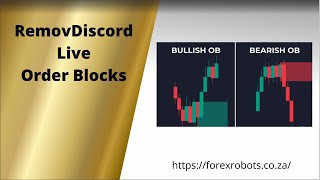
A recorded live Discord/YouTube session (hosted by Alan Solarsh) discussing 'order blocks' in price action trading. Participants compare slightly different definitions and identification rules (doji vs. bearish/bullish candle + fair value gap), discuss mitigation via liquidity sweeps and wicks, and debate practical trade placement (entries, stops, timeframe considerations) and the role of institutional orders vs. retail orders.
Chapters
You want to teach us how to do order blocks?
I can.
For me.
Remember, we discussed that order blocks are a bit different my way than yours.
Yeah. So we're going to discuss both, and I'll tell you what my reasoning is, and we'll see where we differ. It's not an argument, it's just a discussion. You know, there's hundreds of different ways of drawing things, and it'll be interesting to see your methodology. I think everybody will enjoy both.
And you guys are more than welcome to interrupt. I'm just going to start a brand new clean page. That's going to be the best way.
All right?
Otherwise, it's going to just cause chaos. So just bear with me while I do that. Let me share my screen.
How do I do that? Okay, let me see what I can do here. Okay, cool. Let me change this to a daily chart. Okay, so let me just zoom in here. So where I see a doji. Okay. And then an engulfing candle, that is my order block.
So I draw it from the bottom of the wick to the top of the wick of the doji, and that's when I know that there has been an order block there. So, yeah, then there's the fair value gap added over here. So from here to here is the fair value gap.
Otherwise, you need to go to price action. Then there's no water block.
Say that again.
Otherwise it's mitigated if there's no spare value gap.
So you're saying that if the price retraces back into the. Into the order block, if it doesn't leave a fair.
You can't have afforded.
No, there's got to be a. There's got to be the fair value gap.
So, in essence, what that means is the investment at that order block, institutional investment, has come in, created an in price action, leaving the fair value behind, which means that there's been an influx of investment at a particular point, creating an order block, leaving a favorite.
Okay, so let's do another example here. So, effectively, people would say that this over here is an order block. So here's the doji. I'll do it in the candle so that you can see it. So there's the doji over there. Yeah, I'll take a picture. Sorry about the block here. Okay, so here's a doji, and then you can see that there's fresh investment here, and then there's an uptick. Okay. Even here, people could say that this is where the order block is, as there is an engulfing candle. Over there. The same as what people can say here's a dogee and then there is an uptick over here. I would say that this is not an order block. This area here is not an order block. So this is not an order block in this area. I don't think I've got a pen. Pen over here. This is not an order block. What's happened here, in my opinion, okay, is let's say the institutions had 100,000, just simplistically, a million dollars or a billion dollars. Okay. Worth of. Of orders for the buyer. The chances of them filling their billion dollar order in one hit.
It's not going to happen. So what the institutions do is that they split it. It's like when you, you've heard of a partial order. So what will happen is, is that they auto get partial, part of their order gets filled here, then the price goes up and then it'll come down into this area here where the rest of their orders will be fulfilled. So I don't believe that that is an order block. It's just where the institutions place their orders originally and the rest of their orders are being fulfilled.
I agree with you.
Good.
Not an order block because simply there's not. It can't be classified as an audit block because there's no fair value gap.
But there is over here.
No, but that's way later.
There's an order, there's a. There's an order, there's a. There's a candle here. And then you've got the engulfing candle. Yeah, this green candle.
Okay, so that could be an order block time frame. Or it could be, because.
Yeah, so that's where we agree, we agree to disagree. That's where we differ. Okay. It depends on what's really happening.
Can I come in quickly?
Who's speaking?
It's Rob.
How's it, Rob?
Hi, guys.
Tell me the definition of an order block. Can we understand? Because I'm still happy.
Okay, so cool. So an order block, an order block.
Is basically to the chart.
Okay, so an order block, basically is where the institutions have placed their orders and the price comes down to that area. Or they just place a buy order or a sell order and the price goes ballistic.
So for me, usually an order block happens when there is basically dojis. So there's indecision in the market. And then what happens is, is that for the market to move again, the institutions have to come and do something. We can't move the market. It's the institutions that move the market. So they'll come in, they'll place fresh investment, and the market will move key. You want to comment?
In essence.
So basically, you're talking about if I. Sorry, gentlemen, if I read here, it says order blocks or areas on a price chart where large volumes of orders have been placed, potentially influencing future price movements and serving as key zones for potential trading opportunities.
So high volume, look for areas where high trading volume suggests large trades. So would that be where Bollinger plans would be?
No.
Identified.
We don't use Bollinger bands. A Bollinger band is nothing. It's. I think it's a ridiculous tool.
We don't use any indicator. We use price action. And price action is.
Look, I work on price action myself. You see, guys, I'm just. Remember, I'm not on your level. I'm trying to understand the logic of a. Of an order block illustratively placed on the charts. I can. In other words, the order block must be a template for me.
What's that?
Template of an order block. So when you put it on the chart, you can read properly.
Let me. Let me draw it for you. Doji. Then we have like another doji. There's indecision in the market, right? So let's say there was red, okay? And now you've got dojis. You've got a sideways movement. So now the market is going sideways. Now what happens is, is that there is a big green candle. This. This gap between the top of.
The top of that candle to where this candle ends is called the fair value gap.
Okay.
This area here between the yellow line and this green candle, that is where the institutions place their orders. They place their orders there? Maybe.
Yeah.
There was a wick that came. Well, they had to. They had to place their orders here, and then the price moved.
So in essence, rewarded block is an area where institution came in place their orders invested in the market to move pride in the direction that they want. Now, if you've been on this group long enough and you follow the macro analysis, I've said in the past that the market likes to move efficiently, okay? Which means. But when there's an inefficient move in the market, my balance drawing there, where there's a fresh investment and there's a fair value gap, that's called inefficiency. It's high life, fresh investment leaving a gap in price. Hence the fair value gap, showing fresh investment by the institutions could move price in the direction that they want in time. When what market will do it will become efficient by moving back Closing the fair value, tapping into the order block and moving back in.
And that's why basically we're talking about a pullback. That pullback is there, then it's time to engage.
So when they invest, it's inefficient, moving up, leaving the fair value gap. And market like to be. So they're going to close the inefficiency, that gap, that fair value gap, by moving it back and then tapping into the old block and moving. Because not only was the investment there, but there's orders there waiting. So that price moves back, orders get triggered, and it goes back into the direct. The question is, and if we knew this would all be okay, is we don't know when they're going to bring it back into the order block to move it again. And a lot of the times, if price takes too long, maybe they've moved. It may. Maybe the orders aren't there, and it closes below that order block and mitigates that order block and it goes lower.
Okay, so let's talk about that. So I think Rob is asking, where do we place our trade? How do we place our trade so as not to get caught out? So there's a couple of ways, Rob, that we could do this. Okay, so what normally happens is, is that at that order block, the price goes up, right? And then sometimes it'll stall. Okay, maybe there won't be a doji here. Maybe there'll just be a big red candle and it'll come all the way down here. Okay, now what some people do is they don't actually place their trades here. They wait for this retracement to come back into the water.
That's what I'm saying.
Okay, Yes, I know what you're saying. I heard. Okay, so they'll come back down here. And this is where Guy and I agree to disagree. What Guy's saying is that. And. And I think I'll change. I'll change my verbiage, and maybe this will fit in line with how ghee. Trades. Okay, so let's say I'll finish off and I'll get back to you what. What you're saying, Rob. So now there is a. A wick. So there's the wick, and it's solid. And let's just move that up. That's the wick. And then the price goes back up here into the order block. I would say that this is an emotional candle, and more than likely you're going to get a green candle. Now, a lot of people, what they do is they Place their order inside this order block, and then they'll place a stop loss just below the order block. So this is the sl. They'll put orders in this area here. Orders as in US Retailers, not the banks. Okay. Because we want to trade with the banks. If the price comes down into the sl, you'll get. You'll get stopped out. Just. It is what it is. All right, so now Guy would say that when the price comes into the order block, as it touches the order block, that order block is broken. Now, in this instance, I disagree with it. I believe that because the candle retraced back up and a new candle opened within the order block, that order block needs to stay. Let me do another scenario and I'll explain it to you differently, and then maybe Guy will agree with me. Okay, so now what we got here is we've got normal candles, roughly the same size. The market is moving efficiently. This red candle here is an inefficient candle. Exactly what Guy is saying. Price went up, created this inefficiency, and then the price came down, closing this fair value gap. This is also an inefficient candle. It's too big. It's not normal. So let's say, for example, the candles come down here and they go into the order block. I would say then, yes, the order block now is disappeared. It's canceled. Normally, the order block would be drawn to the end of the chart when. When the order block happens and the order block is broken. So this. This happens like this. Right now, the price comes down into this order block. We leave the order block on the chart, but we need to draw it of where it was or where it ended. And it ended at this candle. So we leave the order block there just for reference, to understand what is happening on the chart. Can we agree on that point?
Yeah.
Do you agree with me, what I've said?
Okay, so do you agree with me that if this comes down, this big candle and goes back up and doesn't close below the order block, can we agree to. Then would you leave the order block?
No.
Okay. Okay, so I would I leave the order block.
Sorry, it's been a liquidity sweep. It's a mitigation of that. No order block.
Okay, I disagree with it. But that's fine. Everybody, each to their own, because the price has not closed below the. Below the order block. This is a. This is an emotional candle. This is a candle that is. The wick has gone.
The whip tells you that they push price through that order block and sold. And sold. And sold take all the stop losses in order to move it back up again.
Yes, but that means that there, that there are orders there. I agree with you. I agree with you. 100.
What you've said what moved the price back up. All the orders have been triggered.
The, the orders. I think that it's not fresh investment. I think it's the orders that were left behind that weren't triggered to make up their full order of whatever a billion dollars.
I agree. And so it's moved past back up. So why is this.
Move price back up? The orders were done and triggered to move price back up. There's no other block there.
Why?
Because.
Because if the order, if the price goes back up, it goes into this order block and the price immediately moves up. That means that orders are there and they've re triggered the price to go north.
So the order's been used up to move the price up.
Doesn't mean that they've closed their orders. There's still longs there. And that's where caught data and that's where cut data is so important because we look at cot data and we say what is happening actually at, in at with the cut data. Are they long? Yes, they are long. If they were going short and they were and, and we could clearly see that they were adding shorts in a big number, then I would say to you, yes, I agree with you, let's remove the order block. But the fact that of the matter is that the candle retraced back into the order block. Or maybe it didn't. Maybe it actually retraced a little bit above the order block like that. It didn't close below or in the order block and a new candle opens and the price goes north.
Can you hear me still?
Okay, can I. Yeah.
Before you say anything, let me just speak to Guy. Let's get some consensus here so that we can agree to disagree.
There's two things that it's either orders that are in that area or fresh investment.
I think it's both.
Logic.
I think it's both.
It could be fresh investment. If it's fresh investment, then that new green candle moving back up there, I will leave a new order block. That's fresh.
Yeah, you see, this is where I disagree with the thinking there because I believe that an order block is only created when there is a doji.
You look back on price and then there are order blocks where there's a. There's a bearish candle before a bullish candle with a fair value gap. That's not a doji.
Okay. It's interesting what you're saying.
So, but that's my, that's what I've been taught.
Yeah, I, I understand that gentlemen.
I, I agree with you both.
I.
How I was taught is that what you've just drawn there is when it crosses this, let's say the 50 EMA or most EMAs is always a pullback. And now when there's a pullback and some traders call it a phase two, whether it's up or down, but in this case I saw this as basically a reversal coming down, it's got a pullback. And your, your block, order block is basically a template you put there just to confirm that the direction is going in that, in a bullish direction. And you're waiting for further indicators. It's just an added tool just to support your decision on the trend. Understand what, understand what you're both saying and what I'm saying is the same thing. It's just a different language. You're talking about a value gap. I talk back, pull back. It's the same thing.
Let's get some more engagement here on this conversation. If you got a question, put your hand up and I'll add you to the stage. Don't be shy guys. This is how we all learn. I wish you could share your screen as well.
I would show you perfect order block if you, if you go to, let's say go. Go to Gold dollar on Trading View wherever. Trading View.
Okay.
And go to two cities, 31st of March.
Just want to open up a new.
Who else wants to say something out. There's no right and wrong here.
We're all learning what time frame.
Okay look, for example, sorry, 30 minutes. Share your trading screen with the order block.
You've got orders in there wherever it comes from, whether it's fresh investment or from wherever it's in there. And they need to be. To be closed. And once that wick, once that candle goes through and the, the price goes through that all the way through and the wick goes all the way through and the price back up, those orders are closed. They don't just sit there and not get closed. That. So that's why I agree with Yugi, with Alan. I mean I'm not quite sure what Alan's angle is here, but once it's gone through and it bounces back up, doors are closed. Whatever was in there doesn't matter where it came from.
That's just my, that's my logic.
I understand what you're saying now. I don't agree. Why Would they close their orders? If they close their orders, the price will drop, not go up.
No, I don't agree with you. I'll draw it out for you. Let me show it to you.
But before you do that, just. We'll talk.
Okay? So you're saying if they close their orders here, these longs, this is the fresh investment here, they've either closed some of these longs to push the price down. If they close all of the longs, then the price will fall even further.
At that order block, there are orders. And when price comes back into that area, it triggers those orders to buy it back up again, which is why the price moves out of that order block back up again.
So then the order block will continue to the right.
The order block is mitigated because all the orders were used to push.
Oh, I understand what you're saying. So, okay, now I understand what you're saying. So let me, Let me regurgitate this. So what you're saying to me is, is that the price comes down here, the orders trigger, therefore the order block is closed.
It's because. And. And if. If the price didn't move back up again, no orders, it goes through that.
Okay, I understand. Okay, I understand what you're saying. Let me ask you a question. How do you know that there are no more orders here? So you've closed the order block here. The price has gone up because these orders have been activated. So you're closing the order block. How do you know that there's no order blocks here? Maybe they've got a 2 million. Maybe they've got a 2 million dollar order block here and they only used 2 billion. And maybe they only used a billion.
But you don't. If you billionaires there as a sign that that initial point moved the price up, two things happen. Either they pull the orders out and price goes through that area, or they hit that area, all the orders get triggered or fresh investment comes in and it moves the price back up again.
I'll draw it differently for you and then we can agree on. On another topic.
That's my logic.
Okay, I understand your logic. I don't disagree. I just want to draw something else. Something else for you. And why I. Why I don't remove my order bullish.
Order block because there's orders there.
Okay, so let's say so hypothetically. The price goes down, this order block is closed. Then we get another doji. Another doji and then a big green candle new order block has been developed down here. Can we agree on that price Comes back up here. Green. Carries on going green. When the price comes down to, let's say, this area. Another doji. Another doji in line with this. With this order block here. And then we get a green bar. We. We could say that there is an order block here. Can we say. Can we agree with that?
There's fresh investment.
Okay, now I understand what you're saying. You're saying to me that the order block is fresh investment.
Fresh investment which creates an order block.
This is where we differ in opinion because you're surmising. It's an opinion. It's subjective. This. That at this level here, when the price comes down into this area, that all the orders have been closed off. And I don't agree with that. I'm saying that we don't know what orders are there.
No, I'm not saying that. I'm saying when price comes back into that order block, either the orders are gone and price moves through that level and goes lower, or there are orders there that pushes the price back up because they're sitting there, but all the orders are there waiting for price to come back in to trigger their buy orders to move it back up again.
Or.
So if the. So this is where. This is where I'm confused in the thinking. If the price. Okay, goes up at this level, then why would you cancel this order block? It's.
That area was used to move it back up again. So all the orders that were there.
You don't know that.
All got hit and triggered.
You don't know that all the orders were used there. This is a place of accumulation.
Are you saying that it could come back 100%?
That's why I'm leaving my order block there.
It's a likelihood, and the probability of that happening is a lot less.
But, yeah, okay, I. I agree with you that. That, that it may not happen, but I leave it open because it hasn't really been closed. There could still be orders there. We don't know. And I'll only know that if the price comes back, comes down into this area and triggers again at this area, then I know for sure. Okay, that is definitely an order block there.
Look at Nick. Nick's saying if the wick goes right to the order block, that order block's gone. And I agree with 100.
Okay. I don't agree with it, but I don't. I agree that it's a liquidity sweep, and I think that it's an emotional candle. All right? And what the banks have done is they've just created Liquidity and to move the price back north. That means the orders are there and they.
But if they move the price, if that wick comes through, it mitigates the order block to move it back up. And when they move it back up, a new fresh order block has been created which creates the new efficiency.
I don't think it's a new order block. I think it's a continuation of the old order block. But let's play it out in the next couple of weeks or months and. And as the weeks and months progress, I'll show you my thinking and let's go back to this and recommunicate about it.
Very interesting conversation.
Very.
We can, we can only benefit from us. Go to your trading. Go to 30 minutes for me.
If I could just interrupt on this one. Of course, with a liquidity sweep. If a bank is looking for money, it goes into a liquidity sweep. If it doesn't get the liquidity there, it will go down further to get more liquidity. Is that you understand once it has the liquidity, it's going to put a new buying order in, take it back up again.
Correct. And create a new order block. That's my thing.
Therefore, we should not only be looking at order blocks, but we should be looking at liquidity suites.
Correct? Correct.
The other question is what time frame.
Are you looking at Always for us because we always work off the floor because the 2 EMA strategy is off the 4. So I know we're in a 30 minute. Just ignore that. What I want to show you here on the. Honestly, on this graph, if you zoom in for me, that's not an order block. The order block is.
The order block is here for you. That's where the order block is. One of them.
Go to that last bullish move up and go to the bearish candle before the. At 2 30s on the 31st of May, 230 in the morning. That's not a doji. That's a clear order block. Look at the. Look at the bearish candle down before the bullish move up. That's. That's fresh investment. That's an order block. I'm talking forget.
So let me. Let me rephrase it. Not. Not necessarily. And I've said this on the group as well, not necessarily a doge, but a 50% candle where the body is 50%. The length between both wicks price action.
Tells me that they pushed it down, manipulated it down. You put in a fresh investment in orders for move back up again. Therefore that bearish candle there's an order block.
It's interesting what you're saying.
I don't know how we built the order block indicator on exactly that.
Yeah, I understand that. I get how we built it, but.
But you're learning and you're changing.
Yeah, I'm learning and I'm changing, which is what this whole game is about.
Because you agree with me that that's an order block.
I think it's interesting. I In. I don't know if it's an order block, but there's definitely investment there.
Well, if there's investment debt created and inefficiency through the fair value gap, I.
Don'T necessarily say that that's. It's an order block, but there's definitely a fair value gap there. But I don't agree that it's an order block. We can only know that basically when. If the market comes down to that place, to that price, your cur left again. Okay.
That. That, that doe there, that bearish doe before the fair value gap, is that order block.
I would say yes, it would be.
An order block for me too. Simply because it's a bearish candle for a bullish push up.
Correct. So there's definitely fresh investment here because of the DOI Even here. So you saying it's here?
Yeah.
That's where you're saying it's the whole thing.
Whole candle.
Yeah. Okay, let me just.
What's taller saying. I think both of you can be correct. No, we know if all the orders were filled, but whether it's new or old orders creates a new order block. And else is pretty much.
You're saying here that the order block is there. Okay. Which I. I agree. I agree that that's.
But.
But now look to the left of that.
Yeah, there.
There's an order block process tapped in and moved out of that.
Correct. So look, I don't trade on the. I'm not looking at these, at these time frames I'm looking at.
But look at, look at. If you look at your foot, if you zoom in there, can you see how that wick has wicked right through the previous order block.
Where. Where are you looking?
You see that order block you've drawn up this one? Yeah. There's auto block to the left of that.
Yes, I see that. So this here.
Okay. Yes. That's an order block.
Yeah. So that's why I'm saying that. That's why I'm saying that the order block didn't originate here. The order block originated here.
I agree.
Okay. So in other words, this order block did not Disappear. When this candle's wick went into the order block, this just was.
It's gone.
No, it's not.
To me that old. That first order block on the left has been mitigated.
I understand what you're saying. I agree with what you're saying. I just don't agree that the order block must be deleted. I agree that it has been mitigated. But it doesn't mean that there are no other orders there. We'll only know if there no orders there. If the price comes down, then this order block is definitely mitigated. But the fact that the price carried on going north, there are orders there. There are institutional orders. It's a continuation of the trend. The rest of the orders have been executed. It's an interesting discussion.
Fascinating.
And this is. This is trading, guys. I mean everybody's got. What did you say?
I said you bloody bit have question.
Think both of you can be correct. Nobody know if all the orders were full. That's what I'm saying. But with whether it is new or old orders, G create a new order block and L says correct old order or new orders. Does it really make a difference? I think it does make a difference because it for me it says to me that and I. And that's why I'm posting on the Allen chart analysis that the chances of the price hitting the order block and going north are like 85%.
Yeah.
If there's orders.
If there's orders there. If there no orders there, then we'll go back to this and we'll say, well, no, then the order block has been stops over here. And now we need to wait for institutions to do something.
Okay. Like Nick says.
Yeah. So it's interesting.
I agree with Ellen. We just not how much orders, guys. It's just different ways of seeing the charts and different ways of reading it. So he's been taught one way, I've been taught another way. This is just an interesting lea discussion.
Just. Can I just add something quickly? Thinking about price of a horse, okay, it's five to one. Okay. And the price is dropping and you get or going up. And then you think, right, I'm going to take that price. I'm going to take that price. Eventually you can't. No one's going to give you that price. Which is why I think that he is right that once. Once you go through that point, everyone's. Everyone's satisfied. And so that water section where everyone was wanting that price is now gone. So much as the wick has gone through it and all the orders have been fulfilled. I know you're saying, Alan, that they can't. Or maybe there's 2 billion and only 1 billion has been taken. But if that wick has gone through right the way through the order block and. And out the other side, there are no. There are no more orders there to be taken.
That's exactly my thinking.
The way I.
Because the wick tells you if there were enough orders there, that wick would never penetrate through because the orders would stop it. The fact that it went right through that all block says that it's taken everything out. Otherwise, if there were a billion orders there, that wick would not be able to get through that point because the orders would stop it.
Okay, logically, I agree with you.
Well, I can't add more to that because that's my logic.
Okay, logically, it makes total sense. I need to think about it. So I do agree with what you're saying there.
Again, because there was a new order block platform. Remember I showed you that on trading for you. Because there was a new investment with more orders and a new order block was formed. That's why price goes back down into the new order block. Because the old one's been meeting. That's there. There's a new order block on the right. Because the one on the left one.
You'Re saying here at this week, that's.
What price goes back there. Because that's the new order block created the new investment.
I don't agree. Because it hasn't gone through the order block. If the pro. I, I would agree with you. I sort of like leaning to understanding what you. What you're saying that if the price goes down here to a liquidity sweep, the wick goes. Continues all the way down here. Then you're saying to me that the.
Who knows one that specific price, Nicholas, you know, the institutions move it where they want, how they want. If we knew that.
So you. You're saying. You know, I understand what you're saying. I do agree with you. So you're saying that the order block is. Is removed here. It carries on going up because they've got fresh investment on this side. Yeah, I hear what. I hear what you're saying.
Price doesn't lie.
It's an interesting discussion. I need to do further research. I'll get back to you guys. But I. I understand what you're saying.
Yeah, you talk about the closing of the candle, but the closing candle is just the timing. It doesn't really matter. I mean, animals open every four hours or whatever the time frame is. And just because it bounces through and goes back up and it's within the four hours, it's not a relevant factor as far as I'm concerned. It that push process down there, everything, it doesn't matter. Okay. If the candle was to close 15 minutes or an hour earlier, that would be just the way the timing is it. So I don't think that you can say that because the candle didn't close time.
And that's why I disagree with your coaching for exactly that point. That's why. Because it has to be based on candles and what the candles are showing. That's why. Nick's but anyway, guys, we spent a lot of time on order blocks.
Can we move on? Have you guys got anything else to ask with regards to order blocks?
Until next? It is interesting because.
More from Alan


Double bottom forming - Gold ready for $4000 #trading #technicalanalysis #xauusd