Hedging March 2026
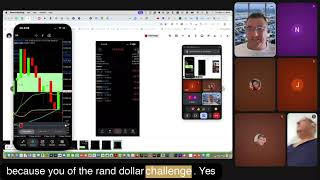
Alan Solarsh demonstrates how to configure hedging settings in his automated EA, including moving-average triggers, stop-loss placement, and drawdown thresholds. He shows real examples on a 4-hour chart and emphasizes risk management: trade with 50% of funds, keep spare capital separate, and stay disciplined rather than emotional when closing hedges.
Chapters
Alright, so we're going to discuss hedging and the benefits of hedging. So the benefit of the hedge is to freeze your account so that you can stop your drawdown from increasing. Now you can either hedge 100% or you can hedge at whatever percentage that you want. So how do you hedge your account? You need to add up all your buy and then place a sell trade corresponding to your buy trades. Now, my robot on one of my accounts hedged when the second candle opened below the 8 EMA. So if this is H4, there's my sell trade. So here's the sell trade. Not quite sure why my— what is this? That's the 50 and that's the 8. So this candle opened. Let's just take a picture.
Alan, you're not sharing your screen.
Okay, cool. So there's the hedge over there. This trade over here, you can see over the bottom here, that's the sell trade, and it was opened at 5175. So 5175 is where that trade is. It's this trade here. That's my hedge. So there's the hedge there. Okay, so this candle here, you can see that the candle closed above the ATMA. This line here is the ATMA. It's red and white. You can see this candle closed above the ATMA. So this candle opened above the ATMA. So it's an optical illusion. It's not candle 1. You can see that it's above there. Okay, the ATMA. This is candle 1 that opened below the ATMA. This is candle 2 that opened below the ATMA. Now my robot on my scalping chart, if I open it and I open up the inputs, my settings on my hedge in section 10, the to Section 10. It's hedge all Rule 2 trades at chart or global. Mine is set to chart, so it'll only hedge the trades from that chart, not my blue banner trades. I don't want to hedge my blue banner trades. Okay, you can choose what you want to do. There are dropdowns. You need to go through the hedge videos to understand what the different hedge settings are. I'm not going through that. This conversation is about your options. Why to hedge? What are the advantages of hedging? How to set your hedge? How to set your stop loss? How to get out of the hedge? Okay, so it's set to moving average. When the second candle opens below the 8 exponential moving average on a 4-hour chart, the robot is going to hedge my chart lots. And then when it hedges, I've got here remove take profits, remove EA from this chart, remove EA from all other charts. That's why there was no EA on my chart, because the EA automatically removes it, protects your account from opening more trades so that your account is frozen. Now if you hedge global, then your entire account is hedged. I only wanted to hedge these trades here. So you can see that the hedge is in profit. So I want— so there's a challenge here. So I said to my son, you can hedge when the price spikes below the 100 moving average on a 4-hour chart. So when it goes below this fractal, you can hedge, or you can choose to hedge now. Or you can fund your account. Those are your 3 options. Fund now and wait, hopefully have support on your moving averages, option 2. Option 3, hedge immediately or wait for the break below the fractal and then hedge. So Jayden decided to hedge immediately. He hedged his entire account globally. It's got a 9% drawdown. So now when do you close this hedge? That's the magic question. So I don't want to be left blind. So what I'm going to do is I'm going to set up my robot to hedge again at drawdown, chart drawdown. So not when the second candle opens because it's already done that. So I'm going to go down to Section 10 to hedge all Rule 2 trades, chart lots, and I'm going to drop this down now and I'm going to change it to chart drawdown. Firstly, I want to pause the EA so that I can see what my global drawdown is. So it says here global drawdown, I'm positive 12%. Chart drawdown, I'm minus 0.33%. It's a very low drawdown. So what do I do with this hedge? When is the right time to close it? So the right time to close it is obviously when the second candle opens above the ATMA, but I want to safeguard myself. I don't want the hedge to go negative. So what I'm going to do is I'm going to set stop loss. Can't set a take profit. You have to set a stop loss. Why? A take profit needs to be below the price. So it comes down to a take profit and then closes out the trade. A stop loss will stop here. So I've opened it at 5175. I'm going to take profit at 5177.70. So I'm going to modify or delete that order, and I'm going to put a stop loss in at 5177.70. 5177.70. Modify stop loss. Modify position. Right, so there's the stop loss. So the trade will now close in positive. Now I need to go and readjust my hedge settings because when the trade closes If I hadn't changed Section 10 to hedge when the second candle opens below the ATM hedging at drawdown, as I close out the trade, when the new candle opens below the ATM on the 4-hour chart, the hedge will immediately trigger, or it may trigger immediately. I haven't experimented to see if it's going to open immediately if the trade closes with the stop loss. I can't test every setting and every scenario. There are billions of permutations, so it's impossible for me to test every setting. So I need to, like, be clever here and say, what can I control? So I can control the drawdown. Currently, the drawdown is 0.33% on the chart. So I can say, okay, cool, so then let's leave it at 5%. So if, for example, let's do a scenario. If the price comes up here, closes the trade at the stop loss, and then the price doesn't hold at the 50 moving average, it doesn't find support there, and it finds resistance, and the price starts to drop, when the drawdown on the chart gets to 5%, the robot will then open a new hedge. It's not going to open it there. The price would probably have to come below here to get to 5%. It's quite a resistance. So I set this up on purpose so that I could explain this to you in real time so that you can see a real-life example and you can start then making decisions on how you can start managing your account instead of going deeper and deeper into drawdown. You can manage your risk. So how do you manage the risk? I'm not— why did I hedge only chart and not global? I don't need to hedge my global because my global— these blue banner trades are in profit and they have stop losses. So if anything happens, if the price tanks, those trades are just going to close out in loss at a specific drawdown, the 5%. This is going to hedge, so I'm going to be safeguarded anyway. So how do I get out of the hedge? This is the question. So the two ways: one, you set a stop loss. That's the first way. So you set the stop loss manually and then you reset up your charts with the robot according to your parameters, either at drawdown or— there's many other settings below this. You need to go through those videos. I'm not going through them because that's not what I'm talking about here. The question is, how do we get out of this? Let's say you don't want to hedge. Let's say you don't want to close the hedge up because your drawdown is too big. You hedged for a reason. So you hedged, let's say, because the price got out of control. Now, Jaden, he's hedged on the 100 moving average. He's hedged. Yeah, I'll show you. Let's show you Jaden's chart. Jaden. So Jaden hedged at 5138.
Yes, that's correct. That's right.
All right. The price is 5145. Okay. So you hedged at 5138. So let's draw a line where Jaden hedged 5138. We're going to draw a line so that you can see where Jayden's hedge is. Properties 5138.21. Not sure you knew you could do this, but you can. So let me charge my phone. So that's where Jayden's hedge is. So he's negative, so he can't put a stop loss in. Well, he can, but he'll just like— his hedge will close out in a loss. So how do we manage his hedge? Now the price is above the— it's above the entry point, so his hedge is in a loss. Okay, Jayden, take a screenshot of your loss so that we can put it onto the screen so everybody can see. Everybody's experienced this. This is why some of you don't want to hedge, because what happens when the hedge goes negative and the price spikes up and you've got a hedge right at the bottom? So you have two options. Well, firstly, you need to hedge at the correct time. You can't be hedging at the incorrect time. You need to be hedging when you've got margin percentage so that you can mitigate the hedge. And how do you do that? It's very easy, very simple. So it's $4.23, the hedge, and he's only made like $1.57. So if he closes the hedge in negative, he's going to lose like $3, whatever, whatever it is, over $3. Not a great scenario. So all the work that he's done is lost. So we don't want to do that. So now we need to be clever here. How do we mitigate this? How do we make profits and get out of the situation? So firstly, You need to do this early when you've got margin percentage. This is why I say to you guys, don't trade with all your money. You need to have spare capital at the broker in another account that if you get hedged and you run into shit, you can transfer that money, that extra cash flow to your main account, your trading account, and then you can start mitigating your risk and getting out of the shit. I've always said this to you guys. Some of you are new, you've never heard this, so I'll say it again. Eduardo, listen carefully now because this is what we were talking about when we had our first meeting. You do not trade with your full money. You trade with 50% or less. The rest of the money sits in a separate account at the broker as spare capital. Now some of you may say to me, well, that's dumb, that's like lost opportunity. No, it's not. It's called insurance. And You need to be trading with risk mitigation here. So how I mentally manipulate my mind of getting over the problem of lost opportunity, I say to myself, well, it's in dollars. Is the rand going to depreciate against the dollar? Who thinks the rand is going to depreciate against the dollar? Put your thumb up. So then your money is sitting in dollars earning that whatever. With CPI and the Rand depreciating, we're looking at about 18% depreciation of the Rand year on year. So your money is already making 18% per year, better than any investment. Do we agree with that? Or do we disagree? Yes, yes. So get over it in your head. Okay, you've not lost opportunity. You've protected your capital. Your capital is growing, or it's keeping up with inflation, maybe a little bit more than inflation. Yes. So have we overcome this This fear now of leaving your money in another account. Yes. Thank you. Okay. Sorry, I asked something. And that we can have money in a separate account. So now we're waiting.
Dad, sorry, someone was trying to ask a question.
Okay. You can unmute yourself. Thank you, John. Alan Solarsh, what must the percentage be versus the savings account or the savings account or the 50% of your money? You trade with 50% of your money or less. So in your case, with your money that you have, you transfer everything to the broker because of the rand-dollar challenge. Yes or no? Yes. So you transfer everything, you open a separate account on GTC, and you transfer that money. You do an inter-account transfer from your one account to your other account, and you're just going to trade on either $100 or $1,000. Okay. So I'm not a financial advisor. And I can't tell you what you say. More than 50%. Okay. You guys need to start understanding the process and then coming up with your own plan. Your own plan can only come from experience and fucking this up. I talk from experience. You've got to get over your fears. You've got to get through the loss of this trade now being whatever it is. Okay. These are emotional barriers. That you need to get over. And the only way to do that is by trading and getting used to it. So are we all on the same page? Can I continue? Yes. Yes. So how do you get out of the shit? How do you get out of this negative trade that some of you have? Very simple. You have 3 choices. Fund your account. Choice 1. Okay. Bring your margin percentage up. You do that by having your 50% money in your separate account. You transfer it to your new account. That means you've got double the amount of margin. If you're able to do that, if you weren't able to do that because you didn't understand what I was talking about or you had greed, guys, I'm not here to sugarcoat shit. We need to be honest with each other. And if you had greed, you need to admit it, that that's why you did it. And say to yourself, I was greedy. I need to learn from this experience. I've now learned my lesson. I will never do that again. But you can't lie to yourself. You can't bullshit yourself. You've got to be honest. Okay, so you transfer the money, you've got double the amount of margin. You can't do that because agreed. Unlucky, you're stuck. Your margin is less than 5,000%. You can risk it and you can remove the hedge. When do you remove the hedge? If it's in profit, you remove the hedge, or you can take the loss. The loss is profits. I wouldn't do that. What I would do is if you're hedged 100%, I would Number 1, I look at my blue banner trade. Okay, it's a 0.1. That's my blue banner trade. So to get out of this, you have a choice. When the second candle opens above the 8 EMA, this is going to be $6 to $8, maybe $10. Do you agree that when the second candle opens above the 8 EMA, we— the direction has changed and we know? Yes or no? Yes. Okay, so then follow the strategy. Place another blue banner trade. Okay, so now you'll have a blue banner trade either equivalent to the 0.14 or 0.1. The 0.1 plus 0.1 is 0.21, 0.22, 0.23, 0.24. You are now 0.1 lots net positive versus net sells. Okay, so when it sparks up your 0.1 or 0.14 buy trade below this is going to go blue. When it goes blue, you leave it. You have the choice now. You can use it as a blue banner trade, but you've still got this challenge here that's going more red and red. So what I did was when this went blue, I closed out everything. I rebooted. It's part of the process. I made money. I closed my hedge. I closed all my negative trades and my balance went up and I reset my account. No trades open. If you can't place a big blue banner trade because your margin percentage is low, no problem. When the second candle opens above the ATMA, start your robot on whatever lot size that you want. Use those profits to then chip away at this hedge. You start closing it out in smallest lot sizes, 0.01, 0.02, okay? And you start chipping away until it's gone. Those are your 3 options that you have. So now I'm going to open the floor to questions so that you can start understanding, and I can maybe help you with your psychology, give you more different options of what I would do. So did Jayden make a mistake by hedging too early? No, he may feel like that because he's probably saying, oh, fuck, I shouldn't have opened the trade, I should have waited. Okay, I should have waited until the price went down there below the fractal like Dad said. Okay. And then like, maybe I should have hedged there. My drawdown was only 9%, 10% of the account. It's not huge. I could have put in more money, like another $100. My drawdown would have been 5%. Like, it's $100, so you can make those decisions. But when you got $100,000 in your account or $10,000 in your account,, you can't really put another $10,000 in. So 10% may be scary, especially if you're prop firm trading or you are come from different psychology where you, your total risk is like 1% of the account. Like, I don't work like that. My trading strategy is very different to everybody else's and it works. I'm profitable. So I'm going to open it up to the floor, even Jayden, and you can ask some questions and I can help you. Make some decisions. What are your questions?
Listen, right now I don't really have a question. I'm very relaxed at this moment in time. I'm not too stressed. Drawdown is not a bad thing. It's an opportunity. Um, and I've just got to trust the strategy.
That's all.
You know, when the second candle opens above the ATMA on the 4-hour chart, I'll place another blue banner trade.
And it's—
you just got to be patient, unfortunately. And that's just the name of the game. We've seen that the strategy works. I trust the strategy. I haven't lost a trade. I haven't lost a closed-out trade. That wasn't part of the strategy, you know. So you'll— if you go to, like, if I show you my history, there'll be 2 trades there that I closed out accidentally on like 0.18 and 0.31, which were both mistakes. But other than that, I've had 100% success rate with the strategy. I mean, I'm very relaxed at this moment in time. I'm not concerned, I'm not worried. It is what it is. I've just got to play the game now.
Are you on your phone or you're on the PC? No, I'm on my phone. Okay, so share your screen and open up your MetaTrader 4. So the advantage of the hedge is as follows. Can you see the numbers here are moving? Look, the numbers here are moving. Yeah. Your number at the top here is frozen.
Yes, because it's hedged.
Because it's hedged. So what have you done? You have paused your account from losing money. Yes, correct. No, correct. Conversation is to help everybody here to get over your fears understand the hedge so that you can start trading and using the strategy more effectively. So go to your chart, 4-hour. Okay, so now this is where you have to tame your emotions. You can see that we've got a big green engulfing candle, okay, coming back to the ATMA. Some of you are gonna say, okay, I need to close out the hedge, the hedge is red. I'm not talking $4, I'm talking $1,000.
$10,000.
And it's just getting redder and redder. Okay, and your emotions are interfering with your decision making. This is where you need to actually do nothing. You need to step away from your machine and not trade for at least 3 to 4 days. Get your head right, because you cannot trade effectively if you're trading emotionally. So some are gonna say, I need to close out this hedge. And then all of a sudden, news comes out at 3 o'clock, job loss claims. And the price spikes south and goes to the 200, and you've removed your hedge, and then you blow your account, or you hedge at the 200, and now you've got to hedge way down here, and you've created a worse problem for yourself because now your margin percentage has gotten worse. Who's done that? Me. Okay, thanks for your honesty, Nicholas. Okay, so you can't be emotionally trading here, okay, and like doing stuff. Now if you have time, flip to the 1-minute chart. If you have time on your hands, you can do what Jayden's doing. You can trade on the 1-minute chart.
Can I still scalp?
Of course. Okay, cool. Okay, of course you can. So I'd be very careful to scalp. I would only open 1 or 2 trades, nothing more than that, because you've already got a drawdown of 10%.
Yeah, I don't want to fuck up the margin level more either.
Exactly. If it spikes to the 200, Okay, you don't want to have another 5 trades, which is now 20% drawdown, and you fucked up your account. Correct. Okay, cool. So you need to be very careful. Yeah, because the second candle is below the ATM. We don't know what's happening. No, I won't tell you. I can say COT is long. They're reducing their longs.
Yeah, you're 100% correct.
So they're reducing their longs. Are they adding shorts? Not really. So they're still net long. Okay. Oil is spiked up this morning.
Do you want me to go to the oil chart?
Yeah, go to the oil chart, second from the top, 4-hour. Okay, look at it. It's spiked up. Okay. Because they've closed the Straits of Hormuz. Okay. So there's going to be a catastrophe coming. Okay. For economies worldwide. So they're saying oil could go to $200. Can you imagine? Okay. Flights in South Africa have already like, they've got a 70% increase in the fuel price. So now all the airlines are charging a surcharge. Okay. So like, we don't know what's happening. I can't tell you. So we have to be very careful at the moment. What I can tell you is this— gold 4-hour chart, please. The second candle is below the ATMA. We are south. This is where you need to read the chart and not go to your trade— go to your trade screen and not go to your trade screen.
Listen, I'm not really concerned. The account is frozen, so I can't lose money here. So right now there's nothing.
All of you are banned from your trade screen. Okay, you are banned because this is going to create emotion. Stop emotionally trading and start thinking. Start using your brain here. Go to your chart and you can see we're stuck. Let's read the charts. This is how I get over my emotions. I read the chart. This is sanity. Go to your numbers. Go to my numbers trade screen. This is vanity if you're in blue. Insanity if you're in red. Here is vanity, cash flow is sanity, and profit is reality. Okay, so this is insanity, okay, total insanity. You cannot be looking at this, you're just going to emotionally fuck yourself up. So forget about it, go to the chart, 4-hour, right? So let's analyze. We found support on the 32 and the 100 moving average. Groovy, calm, breathe. Price has gone above the 21-day moving average. Price is stuck at the ATMA. We are south. I now understand the chart. What is my move? Wait for the second candle to open above the ATMA, and then I can decide to trade. Either I'm going to place a new blue banner trade, which is— I'm doing that, okay? I'm going to do that. Hopefully the price comes to the 200. I'm hoping that the price goes to the 200. It will be very— if it closes out, if your trade closes out and the stop loss is hit, Okay. Remember that I have— I did not save it. Okay. So hedge at 5%. I'm gonna hedge at 3%. Yeah. Click on commons, click on commons, click on okay. A trade opened because I've got the start sequence immediately set to true. That's why trade opened there. Okay. So now that's fine. No problem. I can close it out in a 5 cents loss. I can leave it. If you want to close it. So what if it goes south? It'll go south. If it goes to the 200, it'll maybe be $4. In a loss. There's $4,000 in this account. It's like there's lots of equity, lots of margin percentage. Yeah. So this trade will close out in like a $1 or whatever, or close out in $0.50, $0.50 profit, make a bit of profit. That'll be the end of that trade. Do you guys have questions? It's very important that you guys ask questions. Fritz, my bro, let's have an honest convo. Do you understand the hedge? Do you understand the value of the hedge? There to protect you. Okay, so, okay, so let's reverse it. Let's reverse it. Let's say the price drops to the 200. Let's say the price drops to 4837. Okay, doesn't hit the take profit and drops to 4837. This hedge trade will be probably 0.36. It'll probably be about $100 profit. Okay, when the second candle opens above the ATM, I'll close that trade. So what happens when I close the trade? This is what you need to understand. When you close your hedge trade, your balance goes up, your equity goes up, but your drawdown also goes up. As a percentage, your drawdown spikes massively. So if you were 50%, your drawdown may go to 80%. You need to like really like know this. So before you close out the hedge, maybe the right thing to do, if it's in positive, okay, is use the plus, the profit from your hedge to close out some of your red trades here, okay, just to balance. Because as you close out the hedge, your equity is going to decrease. It's not going to increase, it's going to decrease. Your drawdown is going to increase. Your balance will increase a bit, but it's more your margin percentage that goes down and your drawdown goes So it's all very— that's why I say it's like this screen here. It's vanity. This is what everybody doesn't seem to understand. When you close out your hedge, you're expecting, oh cool, it's groovy now, let's close out the hedge. And then they blow their account because they 95% drawdown and then boom, they don't have cash flow and it's gone. Do you understand that fact? Do you understand that? So there is an advantage and there's a disadvantage. So when you close out your trade, make sure that you close it out at the correct time. You can't be closing out the hedge and say, oh, it's blue, it's going more blue, oh, it's dropping. Let me close out the hedge and I'll re-hedge. All you've done is increase your drawdown because when you open the hedge again, you pay money, you pay the broker. It's called a spread. So if you're opening a 20 lot, you're going to pay 20 times the spread of 0.52 to the broker. So every time you open it, your margin percentage drops, your drawdown increases., and your equity decreases. So you're getting more and more into shit. Eventually, you just hedge at the bottom because you've run out of margin, you've run out of percentage, okay, and you've run out of cash flow. And now you've got a hedge right at the bottom. Who's— before I do anything, who's done that?
Me.
Okay, so this is why you need to be thinking about the hedge and strategizing and not focusing on this screen here. You need to focus on this screen only. Do you— do you understand? Do you have any questions? I can't believe you have no questions.
I've got a question, Dad. Why would you— correct me if I'm wrong— your initial blue banner trade was 5216 because the— because it froze. But we both set the buy stop at 5211 for the initial blue banner. So why would you place a blue banner trade when the second candle opens above? Like, let's say now it opens up at 5182. $2. That is only $29 away from your initial blue banner trade.
Because you've got a hedge, you want to mitigate your hedge, you want to get out of it. You don't have to open up a full—
but what if that— what if it goes further south?
Then, then you'll hedge. You'll just hedge the 0.14. This is why you have to have margin percentage and cash available to, to be able to do that. If you don't have cash, you can't do it. I'm with you. Okay.
All money. Yeah, sorry, um, but that— say now that point 1 goes further south, but you will only hedge when the second candle opens up below the ATM and not before it?
No, because you're emotionally trading and you've done it incorrectly. Your lot sizes— you see, the only reason you would hedge with the second candle being above the ATMA is because you had poor wallet management and You place the blue banner trade, second blue banner trade, price drops, your drawdown increases because your wallet management was poor, and then you have to re-hedge that new trade. If you had done this, if you do this responsibly, okay, and your wallet management is correct, then you're able to place a new trade. And if it goes south, a new hedge.
So I've got 4 trades that I did on the 1-minute chart. And they are at the moment red. It's 0.04 for the 4. So, and I want to hedge that 4 trades. I only hedge it when the second candle goes above the 8 EMA. Am I correct? Because I've still got a lot of margin.
Let me understand this. You've got 4 hedges which are sell trades?
No, no, I've got 4 open trades, just normal 0.1 trades, iTrades, and If I want to hedge those 4 buy trades that is currently red, so I'm going to put in a 0.4.
Not a buy trade.
No, it's a sell trade.
It's red at the moment. Sell trades that are red.
No, 4 buy trades that are red.
I understand what he's saying. He's got 4 buy trades that are red. He's saying when he hedges, he needs to put the same lot size.
Hedging, it's the wrong terminology. Your new hedge trade, is it a buy or a sell?
No, it's gonna— yeah, it's gonna be— yeah, I understand, it's gonna be a sell.
It should be actually a sell. But when the second candle opens above the ATM, are you gonna place a sell trade?
No, I'm just gonna leave— I'm gonna leave the 4 trades then open because it is buy trade, so it— if it goes up, it's gonna reduce in price, correct? Yes. Okay, now I understand. But now say that was sell trades, say it was 4 sell trades, that is red at the moment, and I want to hedge those sell trades. So when the second candle opens above the ATM, I will put in the 0.04 buy trade then, am I correct?
To hedge those 4, depending on your margin percentage, if you want to mitigate those sell trades, then you would need to increase your lot size of your new buy trade.
Yeah, okay, now I understand.
You can do it by 25%, so you can do a 6 lot.
Okay, it all matters on your margin percentage, basically, then.
Correct. Okay, correct. This is why you need to— you see, this is where everybody gets it wrong. They see profits and then they say, oh, you know, I'm making half a percent per day. If I increase my risk, my MM, which increases the lot sizes either automatically or manually with my robot, I increase it. Okay, instead of making half a percent per day, I can make 1% per day. But they don't understand what the negative is when they do that. Okay, listen carefully, Eduardo, you're new here. We talk from experience here. They don't understand what the risk is when you do that, when you increase your lot sizes that when the price goes negative against you, okay, you can't hedge, you can't get out of your hedge, and it'll take you a year to get out of your hedge. Who's been in that situation? Me too. They didn't— froze for 2 years, eventually blew his account. He's young, he didn't understand, was scared, didn't want to speak to me about it. It just like swept it under the carpet. Many people, Nicholas as well. Okay, so you need to be clever. Can't be trading and increasing your lot sizes if you don't understand what the risk is. There is— this robot work can work for you or it can work against you. Choice is yours. Okay, choice is yours. You just got to play responsibly, yeah, or this business will eat you alive. Okay, so anybody else got any questions? Eduardo, your hand is up. It's a new question. Looks like to me the higher that you can place the edge the better. Am I correct or am I right or wrong? There's different ways to place the hedge. You can do it when the second candle opens below the ATMA, which is when the trend is reversed. You can do it on a drawdown, uh, but if the second candle is above the ATMA and you place a hedge, then like you're trading against the trend.
It's very situational.
Very.
It's very situational. So like if you've got long positions that are like in 10% drawdown, depending on the size of of your account, then if there's 2 candles below the ATMA, you need to place a hedge.
Correct. So, you know, as we get more experienced and as we see things and we become better traders, we say, okay, well, maybe we don't want to do that. Maybe we want to say, okay, only open the hedge when the new candle opens below the order block. I don't think there's a setting in there. I may have put it in. I can't remember. There's so many new settings in the robot, I can't even remember what I've had. Okay. So maybe that's an option. All right. So there's like lots of different ways, but you need to first understand how to read a chart to be able to do that. You can't make these decisions without understanding how to read a chart. This is why, okay, you need to understand that this is not set and forget. I haven't sold this as set and forget. I've always told you this is an automated— can be 100% automated. But you still need to get involved. It's like a property. You can't buy a property, rent it out, and then if you're the manager of the property, not manage the property, you'll lose the property to the government. If you don't pay your rates and taxes and your water, the government will take your house away from you. If you don't look after the property inside and outside, you'll lose your tenant. If you don't want to manage it, then you need to give it to a managing agent. If you don't manage the managing agents, same thing will happen. You'll start losing money. Your tenant will duck. You'll have to get new tenants. You'll have tenant churn. So this is not, you need to like, you need to get involved. You need to put on your big boy panties and say, okay, well, like, this is so exciting. This is so exciting. What an exciting industry. What exciting times to be alive, to be able to trade, to be able to take— like, not take care of, but manage your own finances. Not have to rely on a financial advisor, not have to rely on an institution. You can manage this. You can write your own check. This is amazing. You just need to learn, make a decision to learn. So anybody else got any questions?
This is going to be a very basic one. And I was— the reason why I did not want to hedge in the past was because I wasn't sure where to put the stop loss. And whether that could be automated. Because if we can automate the stop loss—
you can, there is a setting in the robot—
some way probably trigger the stop loss and then set the next hedge to be, let's say, another 1 or 1.5, 2% below the previous hedge to kick in automatically. And you can have multiple levels, for example. So that was my only really concern why I didn't want to hedge, because Going into the hedge was fairly simple. I understood that, but coming out, that was my crisis.
I think, Dad, I think it could be the same as like a blue banner trade, right? So like you place the blue banner trade, you wait for a $60 spike, and then you place the stop loss. And when it reverses, it will hit the stop loss.
Yes or no? So the new robot, okay, that's what this is. Okay. It's in section 8 where it automatically does it. Okay. Remove stop loss, true/false. Remove— so if you've got stop losses, it can remove your stop losses. And so the other one was add stop losses. Secure profits means when you set this to true, it adds the stop loss. When does it add the stop loss? That's $2, okay, above the trade. Secure profits in $2. But when does it do that? That's what the problem was, okay. There was another setting that we added below here that said, like, after the trade was in like a, like a $50 profit or a percentage profit or something, then it would add the, it would add the SL. So we're working on it. It's like progress. We wait for the news to come out later today and then we'll know where we're at. So, Jayden, don't trade second candles.
No, no, I'm waiting for, I'm pretty much waiting for the news at this point. Yeah. So I'm just being very capital conservative.
Exactly.
Because we're talking about risk management and wallet management. So we, the, I mean, we are in a little bit of a fuck show at the moment with the war, the news as well, COP data, um, the Fed. So it's a very, it's a challenging time to trade, but we've just got to wait and be patient.
Yeah.
So I'm just going to wait until, when is it, at half past 2? I'll just wait and then we'll reassess. If it goes south, great. If it goes north, also great.
Doesn't matter. Exactly. It doesn't matter. All right, Alex, thanks for joining.
Appreciate it.
And thanks, Alan.
I'll see you on the next one.
Thanks, guys. Okay. Cheers, Alan. Thank you. Bye.
More from Alan

Double bottom forming - Gold ready for $4000 #trading #technicalanalysis #xauusd