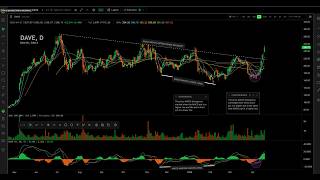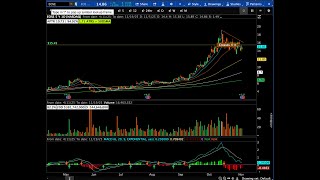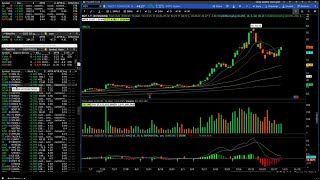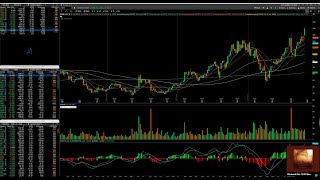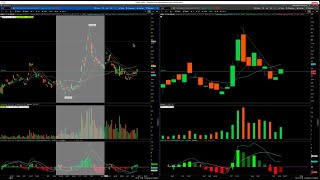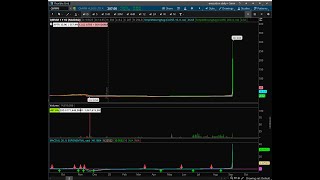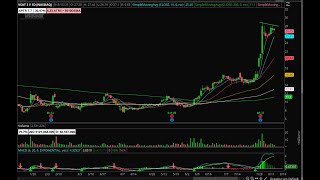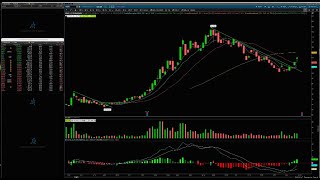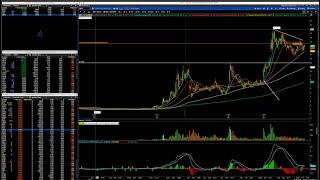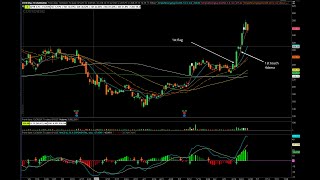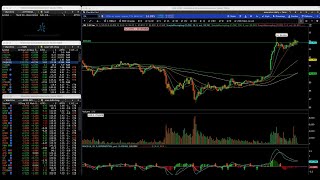
The host analyzes dozens of stocks using daily-chart patterns, volume spikes, and tight-day criteria. He walks through flag setups and momentum trades in names like Baidu and Alibaba, explains why he trades only the daily timeframe to avoid noise, and shares his entry methods and stop-placement rules.
Chapters
All right. All right. Once the song's done, we will, we'll get going. Let's go. This is a modern classic. It. People wish it's really just Emma Watson studying charts in the Hogwarts library. How did you know. Emma thotson? All right, we're ending this song. Okay. So I didn't put too much thought into the chart talk. I figured that we could open the floor and just kind of ask as many questions as you guys want to ask. I have a few hours, I do have a movie date to watch Dune Part 2. Me, I've seen it like six times. Another modern day classic. But I'm going to be for forcing my, my new wife to watch it. No phones, no sleeping, undivided attention. I think it's important for her to understand this movie. So for you, for those who haven't really like seen any of the chart talks or been on stream with me, this is typically the layout. So I have my actionable list which is empty. It's always empty until I do my scan and then I have my needs more sideways list which needs some pruning and maintenance and then I just have like a typical scan. But this is basically my layout. Like this is basically the trading layout as well. Except I'll have an active trader window up in a five minute chart. But it's pretty much all you need for this style of trading. And it's taken a long time to get to this. You know, in the beginning just like everybody else had a zillion screens up and zillion different indicators and flashing gizmos and biggie wiggets and zippity doo dahs and all sorts of stuff that really wasn't a premeditated define component of, of my system. Everything that you see here is there's some experimental stuff that you'll see from time to time. But for the most part everything is just premeditated and standardized at this point. I am curious about silver here. I personally think, I mean at this rate like this thing could go to 1,120, you could top here it can go to 125. You know, looking at gold, Just not in like blow off top territory yet. In my opinion it's just kind of grinding higher with you know, the tariff announcement, the potential tariff announcement which I, I don't even think that's news anymore. But just you know, the way that, the way that the Q's are gapping down and the way the dollar is kind of dumping and you know, this doesn't look like a super extended Chart by any means. It's just kind of cruising. Like not even 4 ATR is above the 50 day SMA, so. So, yeah, but I want to open the floor to everybody. And I know we had some questions that were logged in the chat earlier. I'm gonna have to figure out where Those are. Hey, Dr. Luca, are you there? You know, I'll just pull them. All right, cool. All right, well, I'll answer all those questions last, but I mean, the floor is open, guys, like, you can really just ask me anything you want. So let's see here. Okay, so do you do shorts or as well see, you talk about long Momo stocks, but never heard if you short. Yeah, I do short. I don't short a lot. It's. It's really just kind of like the big parabolic blow off top sort of moves I'll take advantage of if I'm paying close enough attention, but I'm not shorting very often. I have been paying close attention to the metals, you know, on several occasions I've tried to get situated in them and it just, you know, hasn't. Hasn't really worked out. I've actually had a couple of good trades, but I mean, overall though, haven't gotten the really big crack yet. I think that we just need to go parabolic still. But. But yeah, I. I will selectively short a couple of big shorts recently. Well, not even recently, but the biggest shorts for me in 2025 were open on its initial drive and then RGTI when it. When Jensen killed it overnight. I did short gold actually right here. After longing it so I longed it here and then I. I shorted it up here. But no, I really don't short very often. I don't run like a long short book. Okay, so does your SA change during these sessions? Are you primarily watching your setups results for this or nasdaq? So does your situational awareness change during the session? No, not really. I mean, I'm trying to think of how to actually answer that question because I don't quite understand it. But I think what you're saying is, are there things that can happen intraday that kind of just break all your setups? I mean, yeah, for sure. I mean, you know, I judge the health of the market by the length and quality of my watch list. It's taken a long time to get to that point and build that level of awareness, but that's where I am. So like, that's kind of why I've been throwing a fit recently, just based on what I'VE seen in the market. And you know, how I've seen setups or charts progress relative to the indexes. You know, my. My watch list, my actual watch lists have been pretty abysmal and pretty, pretty weak. Okay. Does your performance go down on longs when the market gets choppier, like we've been last few weeks? So you guys will be asking me a lot of questions that seem easy to answer, but some of them will be hard, and I'm going to do my best. So my answer to this question is, how do you. I would actually ask. I would. I hate doing this, but I would respond to your question with a question. How do you determine what performance means? And I can tell you what I. How I determine what. What performance is. There's two different types of performance metrics. One is, how is your system doing as a whole? Just systematically, regardless of your ability to execute it well, if your system is performing well, then trying to think of a good way to not get totally off track and go down a long rabbit hole and just answer your question. But does your performance go down on longs when the market gets choppier? No, because I have mechanisms in place that prevent, if anything, the performance stays consistent. So, like, basically, it's like this. You don't have. If there's no trash on the lawn, you're not picking up trash and throwing it in the dumpster. Like, if there's no leaves to rake, you're not out there just raking your grass, right? Like, if there's no. If the lawn doesn't need to be mowed, you're not going to go mow it. So, like, how do you evaluate the performance of doing nothing? So, I mean, to me, ultimately, evaluating performance is how well do you adhere to us to a premeditated system, essentially. And so if your system is built on premeditated triggers, then there's really not a lot to do. So, I mean, I guess you're doing well. But yeah, it really depends on how you personally define performance. If you could only trade one setup for the rest of your life, what would it be and why? First flag setups. So after stock breaks out of a big range. Actually here, after your stock breaks out of a big range, you build like this continuation flag, and that's. That would be the. The setup that I would trade forever. Okay. Is that atr percent in green on your upper screen a standard toss indicator? No, it's not. I can share it. I mean, it's been shared a bunch of times. It's in it's in the thinkorswim, like Toss channel. But no, it's not. APTR is built into Toss itself, like as a watch list column. But yeah, that. That label isn't. Yes, there are lots of updates on DTR Pro. That's kind of a bit of a. Bit of a doozy to get into right now. But yeah, it's chugging along really well. We have direction now. I brought on a couple of employees from other companies that I own, two programmers who are kind of working on just getting the foundation set up so that we can really scale the thing. But right now we're working on. On watch lists generation and alert system generation based on the setups in the DTRP playbook. So phase one will essentially be a long list of setups that will have their own channels that you'll be able to study in a vacuum, essentially. And then you'll be able to subscribe to a data feed where automatic watch lists will be generated on a daily basis along with alert system. So it's gonna be real simple in the beginning and it's. That's what people wanted. That's what the majority of people, you know, kind of voted for in the various polls that I ran. But yeah, I mean, personally, I don't think that's the right way to go. But you know, people want. People want it. So. So that's the way. That's the way we're gonna go. I think that people should really run through the. The system, the DTRP knowledge base first because there's just so much nuance there and like, prerequisite understanding that I think that you should have before just diving into setups. It's kind of like, here's a hammer. I'll show you how to use a hammer. But you know nothing about a job site, you know nothing about construction, you know nothing about blueprints, you know nothing about working with other crews. You know nothing about anything. But here's a hammer. Have fun. Like, to me it sounds like a recipe for disaster, but people want it, apparently so. And it's easiest for us to get out there, but, you know, whatever. It's going to be probably a bit of a wrecking ball in the beginning, but, you know, got to get your feet wet. All right, let me see where I just left off. Are you going to have a limited amount of spots for the USIC 2020K? Well, first of all, I just wanted to judge interest and see who was actually interested. Surprisingly, there's quite a few people who are interested in doing the million Dollar division, which is cool. Now obviously money is, you know, you got to put money where your mouth is. You know, it'll be interesting to see who signs up, but there's enough people there for me to kind of push it forward. I absolutely want to do it. I want to do the 20k and the million. The problem right now is for me it's just a lot of personal stuff. Plus, plus dtrp. I got to get DTRP up. I really don't want to join a trading competition that I can't give my undivided attention to. But I have a very strong feeling I will be joining it this year regardless of the time, like regardless of when. And you know, I, I definitely want to see if we can get a group together and you know, if I can kind of play coach and discuss strategy and, and help out because I know exactly how I would run it, what my strategy would be. I have like a, I have like a highly reckless strategy and then I have like a solid DTRP based strategy that I think is, is scalable, that a lot of people can follow and, and do well. But then I have like a go for gold, try to break all the record sort of strategy. I don't know. We'll see. We'll see. If I, if I join late, I probably will just like take the reckless route because it would just be absolutely savage to win like you know, joining like Q3 or, or Q4. I think it would be hilarious. I mean it doesn't really mean much. You know, basically it would just be full porting into the best examples, the best, best setups that are available. Which, you know, I don't know. To me it's like, I mean that's doable. Great. Yeah, you could string it together and I'd probably break records if I could string a few together. But it's not like, it's like what's the point? You know, what's the point? I'd rather see people win. Following a, a system that's, that's long term scalable, that would be awesome. You know, with the DTR tag. All right. Something that just stood out is the difference on the macd. Okay, can you go over that? What does it tell you the difference between the MACD with gold and silver? So these are futures contracts. I mean, I mean nothing really. I mean there's a, there's a really big like bear divergence in, in gold futures contracts. But I still think it needs to blow off top or, or something. Maybe not. Maybe it just needs. Maybe it just Rolls over, who knows? But what are you trading? Oh, I guess my, I had a, a silver short sale trigger. It must have hit. How did Jack Kellogg turn 5k into 4.4 million? I don't know if he did exactly that, but I know he took a very small amount to a Roth and, and just ran it. I mean, it was a really good market condition. Jack is a wizard too, by the way. I mean, Jack is incredibly talented day trader and just overall market participant. So if anybody can do it, he can. And I'm pretty sure he kind of validated it all as well. I mean, he kind of posted it all along the way, probably by taking lots of risk, big size, because, you know, it's not like 5k to Jack is not really a lot of money. Right. So he's going to, you know, all in 5k. He'll turn that to 10. Still not a lot of money. He'll keep repeating that until he hits a million. I don't care who you are, if you say a million is not a lot of money, you're just, something's wrong with you. But still, relative to his accomplishments, it's still not a lot. So you could full port that again and. Right. And so once it gets to a certain level relative to your overall net worth, it's like, what sort of impact does a chunk of money have on your net worth? That's when it becomes relevant. Right. And so if you literally have no, like if there, if you don't get the pit in your stomach or if you don't have any emotional, I guess, hardship with full porting or whatever, it probably means that the amount of money that you're using is very small relative to your net worth. So that's how he did it. I mean, so he didn't have any of the emotional, you know, pit in his stomach essentially, like where you just feel sick. You got too much size. We've all been there, we know about it. So he didn't have that. And he's a beast trader, so. And he had a good market, you know, I mean, that's a great simplification. But what it is in a nutshell. Okay, how long ago did you start? I don't know. I think maybe a couple years ago. All right. With regard to charting, do you believe compression and aspect ratio play a role? Absolutely, I do. Absolutely. You do not. Like, you don't want your charts too steep because then they're all going to look wide and loose and you don't want your charts too compressed because then they're all going to look like tight setups. I do speak a lot about this. I've spoken a lot about this in the past and I do go into great depth in the DTRP knowledge base on how to properly set up your trading system. But I mean all you really have to do is use auto arrange and just make sure that your chart, it's like it's your chart. So if you were to break my screen up into four parts, you have macd, one part volume, one part and then you have the chart would be two parts. You just want to make sure that it stays two parts and then you want to make sure that your price action axis is like default. If I go like this and then I zoom in like it compresses it down and it makes it look super tight, right? But then if I go like, like let's see like this, it makes it look super steep, right? And without getting too much into it, just try to keep a 2 to 1 or a 1 to 1. Anywhere between 2 to 1. One one is fine. This is actually a little bit, a little bit wider than 2 to 1. But yeah, anyways, So I mean I essentially. So okay, that's actually a good question. Reject. I'm more curious what and how did you trade to take the SE from 25k to formula? I think I posted, I mean I posted pretty much every trade in Discord like real time live as I was taking it. And I also think I posted like a trade recap in the Braggs channel so you can literally watch the progression of the account grow. But it was essentially the same thing. Like I, I remember the very first trade was tsll. I full ported 25k into tsll. It went up 100. I now had 50k and then I just kept doing that. Like if you hold your hand out and you literally count on your fingers 25k times 2 50k. Okay that's 1, 100k, 2 200k, 3 400k, 4 800k. But 1.6 million, 6, 3.27. See where I'm getting at? So literally seven double ups got me there essentially. Right? So you can take a very small account and snowball it there, but you just have to have a perfect environment. You have to have impeccable risk control. You have to have a ton of luck. It's not a scalable method for making money in the markets. It's a look at me speed run, let's have fun sort of thing. Right? Let's see how, how hard we can push our skill Set, which is the complete, like it's completely stupid and it's, it's literally pointless because you know, for me and my personal missions, mission, you know, I want to make, you know, literally I want to try to make billions of dollars in the market over my career, which is literally just starting. I can't do that. Like, I can't do that. I'm not gonna do that. It. Nobody has done that to get them, you know, there. Except for the one guy who ended up killing himself that everybody cares about. Seems to love. Seems like a total loser to me. But yeah, you know, long story short, it's not advisable. You shouldn't even look into it. What you should look into is how to build an account systematically and safely, you know, to meet your goals over the course of a couple of decades, to bring you and your family's financial freedom over the course of a couple decades. You don't need to do things quickly at all. In fact, it's just counterintuitive. It's like those little paper finger traps. And I've used this analogy a bunch of times, but it's those little paper finger traps that I used to get from like Hunan down on Coventry when I was a kid where they would give, you know, to the kids on the way out of the Chinese restaurant and like you put your finger in and they get stuck. And the harder you pull, the harder you try, it just gets tighter and tighter. Right. And like that's just not the way. That's not the way for usic. I also don't really think it's the way. And part of the reason is, okay, let's just assume for a second I pull a SAE one again and I pull a 17,000% gain and shatter all records. Okay, what is that going to do? That's going to cause people to crawl up my ass and ask me how I did it. And then I'm going to say I full ported over and over and over and over and I was just a beast at it and I just got lucky. Okay, great for. But what, what's the point there? Like that doesn't really meet any goals that I have. Personally. I want to help traders build a system that they can use for the rest of their lives to attain financial freedom. That is not it. That is not it. So, yes, it's almost cheating in a way. Like, it's almost cheating. It's almost as if USIC should not allow something like that. Yes. You know, someone with enough balls, like the million dollar division, like I Could do that all day long, all day long. I could just full port over and over and over. If I get lucky, I'll just bust all records, right? But like that's just not the way. It's stupid. It's just stupid. All right, let's see. How do you apply progressive exposure in your process and what is your biggest position size? I do not believe in progressive exposure. I believe in opportunity set. If your opportunity set prevents you or provides you with. Okay, it's kind of like this. Imagine a tree that's fruiting. Okay, let's say it's a pear tree. When those pears are ripe, do you just pluck one at a time? No, you don't. You pluck as many as you possibly can, as many as the tree will afford you. If you apply that analogy to everything, once the fruit is right or once the conditions are present to act, you act. That's it. Like in my opinion, you don't like govern yourself. Like people that govern themselves through progressive exposure don't have well enough design system or well enough understanding of the market itself. So the answer your question, no, I do not believe in progressive exposure. I do not use it. Now that's from a trader perspective. I think that it is a very valuable tool for large funds and institutions who are, who have non stop liquidity issues and have to allocate capital to the markets over a long period of time, then yes, progressive exposure makes a ton of sense. But if your account is less than a billion, I don't think that matters. Or honestly probably a lot more than a billion. I don't think it matters. Do I ever stagger stop losses? Absolutely. I do, I do. I've done that forever, especially in the day trading. When I, when I was day trading, I would break my stops up into you know, 1 and 1. So like a 50, 50 stop, you know, 1, 1 chunk in the profit, 1 chunk just above my stop loss, like where I should be stopping out. Or I'll do a third, a third, a third or a quarter, quarter, quarter, you know, just because I didn't want to get like, you know, like knifed out of the whole position. And that's, that's actually been something that I've applied to, to swing trading. I'll break my stops up across various moving averages. So in some of the longer positions that I'm in right now, like Hood for example, I sold some at the close below the 10, below the 20, below the 50. Yeah, Jack. No, that would take forever. But I would love to do it. I have posted my portfolio pretty consistently over the last few weeks. That's like. All right, we're just gonna, we're just gonna shut down, shut down the, the Q A and, and focus on, on that. I can tell you where I bought open off the top of my head. I bought half of the stuff. April Lowe's, roughly April O's May. I bought some, some thin stuff in the past couple of weeks. Nothing too exciting. Nothing too exciting. All. Right. All right, let me take a look at some of these other questions then I'm just going to post them over here just so I don't have to go back and forth. All right, there's a bunch of questions. I'll go through these. Okay, so alpha market timing with your system. What kind of performance do you think you can achieve on a 1 to 5 million dollar account size if you cap your max drawdown to 10%. So again like capping max drawdown doesn't really mean anything to me. It's either the, the opportunities are present or they are not. I mean that's it. Like the, like to actually like attain a max realized drawdown of 10%, you would have to get four full stopped on positions. Like 10 in a row. Right? Like 10 in a row at 1%. Which I don't know if that's ever happened to me. I mean I have been stopped out more than 10 in a row, but never at 1%. Like all of them 1%. I just don't really, really know now I've had definitely 10 plus. I mean much more than that, unrealized drawdowns and obviously. Look, look, let me rewind earlier. Earlier. Absolutely. I would have max drawdowns 10 way greater than 10%. Like I would have some crazy swings back in the day, especially day. But that's what, that's what took me to, to swing trading. Okay. If you can talk about positions, max position size, risk per trade, max leverage used and dollar volume, I mean all of this stuff I've covered a ton like more times than I'd like to probably admit. So I'm not really going to go into, into much of that. You can use the search bar. It's, it's the discord. It's, it's literally highlighted everywhere. You just got to look a little bit. Okay, cool. And you're aware, aware of that? I, I've covered a lot of this stuff. Okay, let's say you've already taken 50% trim on day five on all your stocks and your stock is still above the 10 EMA two weeks later, you see lots of A plus setups for the next day, but no free buying power. How do you decide what to trim in your current holding to make room for the new positions? So I mean, for that to actually happen, you would have to have over 20 positions open and trailing. Me personally, I've never had that happen. I've never had over 20 positions open, all trailing ever. So if that's something that, you know, if that's something that has happened to you, that's incredible. But that's, that's never happened. And math got asked this. Yeah, because he's basically saying if you've already sold 50% of all the positions that you have open and you still have no more buying power overnight. Buying power, which, you know, most brokerages give you 2x. Yeah, I mean like if you took standard 10% positions, that means that you'd have 20 of them open. And that's, I mean that's kind of, it's kind of a lot now. Okay, let's say that that actually is true. You could, and, and you do have a very abundant opportunity set that you're missing out on. You could prune the lowest APTR names or the longest in the, in the tooth names. But to me, like, you've made it like at that point, like, there's nothing to do. Like if you're trailing 20 names, like, holy, like kick back and like do nothing. Literally do nothing. Just let them go. Like that's the beauty of swing trading. People like, they just want to do too much. I would, I would do nothing. I would just let him go. Will advancement of AI and financial markets affect swing trading? You know, this is a, this is a deep one. I've thought a lot about it. Without going too much in detail. I, I, absolutely, yes, absolutely. I, I am, I have a very strong opinion on that. And the answer is yes. Is there anything wrong with not taking trims in the first three to five days for a small account? I'm finally gaining traction with my swings and want to let them run. Are stocks with wide spreads. All right, so there's a couple questions here. I don't think there's anything wrong with it at all. As long as it aligns with your goals and your vision and your system. And it's premeditated and you're just not like thinking about doing this on the fly. I think that's fine. Like if you have a reason for it and you've thought through it and you've kind of validated it just through, you know, archivally studying the market, that's fine. Is it optimal? I don't know. You know, you'd have to kind of, you know, really do a deep dive and figure out whether or not it's optimal. But I think it's fine. Sure. You know, if that's something that you want to do. I think that in the highest opportunity set, sort of climates, environments, I think that it does make a lot of sense to trim and trail sooner so that you can roll that capital into the next thing that's breaking out. But yeah, I mean, I think that this particular market, that doesn't make a lot of sense and that's just from my perspective. But all right, I'm finally gaining traction with my swings and want to let them run. Okay. Are stocks with wide spreads and vestable? Yeah, I mean, stocks with wide spreads makes, make some of the biggest moves. Look at sndk, you know, SMCI had a huge spread. I mean, I like them. I like high aptr, high spread. Yeah, yeah. That's my type. Okay. Is it plausible for a beginner trader with a lot of good risk management and other great qualities to be profitable their first year swing trading? That would be the equivalent of somebody learning to ride a bike and never fall off. It's possible, and that may be too extreme of an analogy, but I think that it's, it's highly unlikely and I don't think that you should be worried about being profitable at all. I've, you know, it's. What draws people to trading in general is to make money. Obviously that's in the forefront of their mind. But it's like the Siamese finger trap where you're not going to unlock your fingers from the Siamese finger trap by pulling harder, by trying to make money. In my opinion, I think that if people approached swing trading off the rip systematically, they would do much better. Where I think that the metric that you should compare yourself to year one shouldn't be how much money you made, it should be how much has your system evolved and those KPIs, those key performance indicators. So I know everybody wants to place, you know, money P L as the number one KPI, but in my mind that's, that is just, it's, it's not going to help you. It's not, it's not the best way. And I, I think that there's plenty of examples of people who made a lot of money in the markets and I think that all of them have some untold sort of quality that they do innately. They do naturally. That they may not be able to express very well. And this is something that I'm able to do much differently because I can kind of approach, I think I approach trading through a different lens. But if you just approached it through committing yourself to a system up front and focusing on the system, the, the outcome will just kind of take care of itself. And so you have. What you should really be doing is evaluating yourself and how well you can adhere to a system. And you may not even understand what a system is or how to build a system or whatever. But if you just start from first principles. If your goal is to make as much money in the stock market as possible relative to your personal constraints, okay, that's great. Okay, so then what's the first step? Okay, well, it's to make the most money relative to my personal constraints. Okay, so how do we make the most money in the stock market? Well, we look at stocks that make really big moves fast. Okay, that makes sense because you're not going to make the most money in the stock market if you trade stocks that make like medium sized moves or small moves slow. So like, if you just start thinking through a question chain, you will arrive at all the same conclusions that I have. So you literally just run Q and A. And the beauty of it is you can just use AI now. Hey, AI of choice. This is my goal to make as much money in the stock market as possible relative to my constraints. Ask me as many questions as possible, one at a time. And let's work through this decision tree. Let's work through this. And you'd be just amazed how far it'll take you. But eventually even AI AI of course is going to say, well, we need to systematize it, we need to remove emotion, we need to do, do all of these things that I've been preaching. But it's so important to do that up front, in my opinion. So can you make money year one? Yeah, but who cares? It's really. Can you build a little edge that's capable of making money that you can exploit over a couple of years? Can you build a fishing lure that can catch fish consistently? And can you understand when the weather is in your favor to go fishing? Yes or not. Like those are the metrics and those aren't what people teach you. Nobody talks like the way that I speak. Like period, full stop. Like, I haven't heard anybody anywhere, any of the, the trader educators speak like this. And that's probably why, you know, most people are not successful because nobody actually like thinks like this or approaches Trading like this still, no matter how much I preach about it, nobody does it. Literally no one. Which is hilarious, but whatever. Okay. How would you approach trading if you were working full time and had wife and kids? I mean, I don't know. Like, I would have a conversation with my wife and I would say, we have a certain lifestyle, we want to maintain it. I want to do that through trading. Okay. And then you just kind of have a conversation with. With her and you kind of have a negotiation and you define boundaries. You know, what I like to do is, and I used to do this with my employees a lot, but it was a time allocation wheel where it was great to give it to employees who kind of sucked and, like, weren't really using their time very well. But it's a very simple thing. It's a pie. It's a pie chart. It's a circle. And then I would say on a weekly basis, split up this circle amongst all the activities that you do on a daily, weekly basis. And, you know, make the pieces representative of the size of time that you do. And, you know, it's funny because, like, the shitty employees would like, kind of throw a fit or like, they kind of, like, fib it a bit. The best employees could do it right on the spot. And it's basically like, you know, they're just working, they're just keeping their heads on. But you can do that with your. Yourself and like, you know, obviously, like your kids, right? Like, you want to spend as much time as you possibly can with them. Okay, well, relative to their. Relative to constraints, if you were to spend 100% time with your kids and didn't work at all, you're probably gonna end up homeless. And then you're just gonna be like, you know, this homeless family, which obviously can't happen. If you spent all your time on work and your kids, well, your wife is probably going to divorce you because you're not giving her any attention. So it's up to you to decide how you allocate your time. And the beauty of swing trading is if you actually build a systematic sort of approach to it, maybe around, you know, a single setup. But, like, what we're doing now is we're defining the constraints. Like we're, we're working on, you know, fakie double flip. Who asked the question we're working on? You know, his mission statement, Everybody has the same. Same mission, everybody has the same goals and trading, it's to make as much money as possible relative to your constraints. So everybody wants to make as much Money possible. But what are your constraints? You have to identify your constraints. And swing trading gives you a ton of flexibility, yet it allows you to scale your account, no joke, to hundreds of millions, not billions of dollars. I mean it like, like Stanley Druckenmiller is essentially a position trader, right? And he manages billions of dollars. Oh crap. Moose. What up, young Moose? A trader in here recently shared 90% of the time. As a swing trader. You will be in a drawdown against your equity all time highs. The poll you created towards the end of this week reflected that statistic. Well, what would you say the average drawdown should be for a smaller account during these periods? All right, so check it out. Plot the 5, 10 and 20 day SMAs on your equity curve. If your equity curve is under the 20, stop trading, your system's broke. Figure it out. All right, when you were day trading, what strategies were you using and did it help you when you transitioned? Yes, absolutely. People clown on mad as but I learned the washout long from him. You know, cam the man, you know, a guy who took a million bucks to like 30 million live day trading. I learned so many entry techniques, I paid attention to the tape. I, you know, can read level two. It made me very nimble. I think what it also did was it exposed me to stock market micro structures and price patterns at a much higher frequency. So all setups happen, all the same setups that you see on a weekly time frame happen on a, on a 30 second time frame, right? Like you get 30 second cup and handles, you get 30 second washout longs you get right, like it, it, it all happens, right? They all happen on the same time frames or on, on different time frames. All the same patterns repeat themselves. So if you were a day trader say trading a five minute chart, you're going to be exposed to many more bull flags in that instance than you would then you, than you would if you were just a day trader. But do I think that you need to be a day trader or have a day trader background to do well swing trading? Absolutely not. Absolutely not. I think day traders, they, they get really good at technical analysis, but they have some serious baggage and unwiring that needs to happen so that they can perform well as swing traders. Yeah, but like for day trading I would do, I would do like, you know, big washout buys like dip buys and scalps. I would just buy like undercut and rally of V wap so like it would be like a big momentum name that undercut vwap sets up like a flag Like a first flag sort of thing. And I would buy that. And I would trail moving averages as well on a five minute chart. I would trail a five minute, the 510 moving average. Yeah, I would. Short stuff too, not so much. But you know, when I could, I used to use trade 0 to short. Do you think it's profitable to be pro. Do you think it's possible to be profitable at your caliber, trading with stop entry orders present the night before on the best setups, or we need to be present during the Open? I mean, I think that ultimately most of these setups can be automated. I haven't done it yet myself. I haven't automated them to the point where they're making money around the clock. I think that setting stop entry orders can work. I don't really have a ton of experience with it. It seems hard, but I mean, at the end of the day it's all like I. The nuance. There's not enough nuance to not be able to quantify it. So I think that pretty much all actions taken as a, as a swing trader can be quantified. The news component's a little harder, but I don't know, I, I think it's definitely a lot harder than, you know, sitting at the screens and manually executing, that's for sure. And I don't really have any experience with, with doing pure stop entry orders. Yeah. Last week you asked the members about their P and L year to date. Do you have any general results of that query? I do, and I have my opinions about it. I mean, I've expressed it a lot, I think, within the group, I mean, long story short, pretty much anybody that I know who is a true seasoned professional trader who's made, you know, seven figures, eight figures even, you know, on a couple of acquaintance relationships, over a hundred million dollars like no one's has, everybody's been relatively flat over the last few months. So, you know, I love seeing, you know, full portfolios and people crushing it, but it definitely brings me some pause. And, you know, I don't want to say people are getting lucky without like expressly saying that. And I think we all need to be slightly lucky to do well in the long run. I guess we don't really have to backpedal on that one a bit. Yeah, I love seeing people do well, so I want to see people do well. But yeah, I don't know. Seems like some people are absolutely crushing it. All right. If you were to want to move from a purely mechanical, systematic approach to a more discretionary yet systematic. Would you call DTRP that approach? How would you do that? DTRP is like trying to think. DTRP is like a LEGO set manual, essentially. Now, like, if you follow the LEGO set manual, you're basically guaranteed results. So I wouldn't go that far. I wouldn't say that's going to guarantee results if you follow the instructions. But I have done a very good job quantifying most of these setups so that they can be followed on a check like on a checklist basis. It's like mega training wheels. So like, if you are really just dead set on learning the undercut and rallies, you could pay very close attention to the undercut and rally module. Review all of the annotated charts, just go over them every day, every night, every day, over and over and over, and pay attention to all the chart notes. And really, you know, you print out the checklist, they're sitting on your desk, you have a stack of them. And then when it comes time to scanning, the data feeds will print the watch list that best represent the undercut and rally candidates. And then you will go through all of them manually using the checklist and training your yourself to, to view them real time. And then you'll add them to your watch list, the ones that you think meet all the checklist criteria. And then the next morning after you set your alerts, there will be another channel that will be just under Con rally alerts basically where AS alerts or as price is moving through certain levels and that are automated, you'll be getting pinged on them real time. But you'll also be seeing your, hopefully your alerts firing as well. So you're, you're, you're able to kind of work, work side by side with a really refined granular like set of training wheels. And so you can do that with the undercount rallies or you can do that with the first flags or the first touches. You can do that with the parabolic, parabolic shorts if you want to do parabolic short. That's kind of what we're working on right now. So it's all of the setups from the DTRP playbook. We are working on loosely automating them and providing guardrails around the criteria so people can just focus on a single setup type within the context of the market, the environment that it works in, and just learn it. It's like learning if you want to, if you want to be a pitcher and you want to learn how to throw a chain jump, you got to throw a ton of chain Jumps. Okay. You got to really work hard on that. If you want to learn how to do a, you know, a double fakie flip, you got to learn. You got to do a lot of double fakie flips, right. And you just have to zone in on it. I remember when I learned how to do a kickflip. I was probably like 9 years old. First time I learned how to do a kickflip, I would sit there for hours in my garage. Hours and hours and hours and hours just doing kickflips over and over and over and over and over and over and over and over. And then I'd be like, hey, dad, come check it out. I did a kickflip. I could do like 10 in a row. At that point, he'd come out, look at me. Couldn't land one. Couldn't land a single one. But then I just keep doing it over and over and over. And now to this day, I can do a kickflip with my eyes closed. I could be £350. I could probably still do a kickflip. Right. And so that's kind of how DTRP is set up. Version one, you will be able to laser focus into a setup of your choice that you want to learn. Yeah, I hope that sounds exciting. Okay. If you were to want to move from. Okay, we already did that one. When you get a great long setup. Okay, so Z, prabhra, zebra, bruh. When you get a long setup that you want to enter breaks out and instantly goes up like 3% or more without you, do you still usually enter when do you consider it too late to enter? Percent doesn't really. Like in this particular instance, percent wouldn't be what I would use to measure that. I would use percent true range. Because then that makes the extension metric relative to the stock gives stock level context. But typically you don't want to chase over one aptr. So if it's up, if it's up one ATR on a day, you don't really want to chase after that. Just wait. There's no point. You missed it. And if you miss a bunch of them, if you're always missing them, well, then you need to, like, you need to evaluate how you handle that objectively. And it may be some sort of realization where you're setting your alert, you know, a few ticks lower so that you're not missing it. You may have to practice execution. I knew one guy who I worked with closely, and he'd miss everything. I don't know why. And like, it's because he would set his alert. I finally figured out why he would set his alert and then like when the alert went off, he needed to already be executing, but he would set his alert and then that meant for him to then calculate how many shares he needed to buy and like by the time he calculated how many shared like actually like granularly, he was like a programmer dude, super smart guy, but at the same time like, holy fuck. He, he like the thing went by and he'd buy it and then he'd like get chopped out. And like that's why I like putting, I like annotating charts with position size. So like the night before you literally would annotate your line with the exact number of shares you would buy so that, that you can do it lightning quick. Like you do like, you do like that's an optimization, okay? Like that's something that through your reviews you should realize that, you know, if you're chasing stocks that are long in the tooth in the morning, like you're not able to like, you know, execute them quickly. Well, you know, you're finding good stocks that are breaking out, but it's your level of execution. So maybe, maybe you need to put some, some time and thought in how to execute more efficiently. What is my favorite sma? I can tell you which one I don't like the most. I hate the hundred. It's stupid. I should just take off my chart. Price does not give a shit about the 100 day SMA. I love the 5 day SMN because in super Momo stocks like Price just surfs the five. I mean look at Silver here. Even on this little five minute chart, like look at it just like the bulk of the move happened on the five, you know, it's beautiful. Maybe let's look what's, what's, what's a stock that's just gone straight up recently. Let's look at podcast. Look at that. Since it's broken out, what's it doing? It's just surfing the five. It's up 60%. Surfing the five. Yeah, I like the five. Christian K. Maggy doesn't even use a five. So there you. I'm not, I'm not a direct clone. If you think AI will negatively affect the future of swing trading, what degree do you think it'll affect it? Such as less edge but still able to be profitable overall, extremely hard. I mean, I don't know, I'm not like a fortune teller, but I, I can tell you this much. If it is possible that it could greatly disrupt it, I'M not going to put all my eggs in one basket. Right. I have thought of a few ways that like it can, I think day trading and shorter time frames are going to get, they're going to get more impacted quicker. You know, longer time frames will be, you know, I think safer. But yeah, I don't know. I, I just, I'm not a fan of people putting all their eggs in one basket. And really any scenario, especially if you're young, like if you're super young right now and all you're doing is trading, I do not think that's. Like, I would never like if my son came to me and said, dad, all I want to do is trade. I don't want to go to college, I don't want to do this, I don't want to do that. I would be like, I would tell them, I would sit them down, I would tell them all my stories where I tried to rabbit hole into something and basically full port my attention at a young age. It's, I just, unless, you know you're going to go like the NBA, unless, you know, like, like unless everybody knows you're going to be in the NBA, like I don't think it's a good, good idea to full port your skill set. So. And like it does work out for some people, it really does. But I don't really think it's a great idea. And that's the beauty of swing trading as well. You don't have to, you really don't have to. Like, I mean at the end of the day, there's a few good opportunities in a hot market, there's a few stellar opportunities per month. Yes, you have to be present, you know, to capitalize on those. But I think through solid routine you really don't have to be tied down to the screens. Like, you just don't have to be. People that are, either they're just desperately trying to figure it out or they're just actually day traders in disguise. Like to me it makes no sense to be a day trading swing trader. Like, it just doesn't. All right, what are your thoughts in relation to time, time of day in trading, Say open versus midday versus close. I mean the best time to trade is during the open. That's when the most volume is. I mean if you think about it, most, most institutions are placing capital from within the United States. If you think about their just hours that they work, you know, people are getting to the office, you know, at 8, 8, 9, whatever market opens, like that's when decisions are being Made. Right. Like that's when, that's when the bulk of commerce happens. You know, in the, in the early morning. There's definitely breakouts that can happen at the end of day. Right. Like that happens. That's why you have alert set, trigger set. But if I were to just pick one single time of day, it's, I would take pre market to noon. Well, I just took like two, but like I would basically take prenup if I had to take before noon or afternoon. I want before noon. All day. All day. From your experience, what would you say is the biggest downfall of a non profitable trader? Jesus. Nothing. I mean it's, it's easy for me to say. I mean lack of plan. No plan. That's what I see the most. No plan. I also see a really common mistake of people putting way too much capital into their accounts way too early on. Yeah, I don't, I don't really, I don't really get down with that. I don't think that's a good idea either. But I think the biggest mistake is just no plan. It typically leads then to like people putting all their money in and then just kind of blowing it up. Floyd bach, I think. Okay. Okay. Do you ever set buy stops to enter positions? Not really. Send video of kickflip. I'll cat. You said cat. Okay. Okay. In terms of chart progression from first flag to ema dip buys, I'm having difficulty identifying potential candidates. What would you say that, that every first flag is a candidate for a dip buy? Yeah, I mean kind of like. Yeah, I mean, you know, you don't really have a flag form unless there is like a dip buy. So if we look at PL here, the first touch of the five day SMA was here, right? Right. Oh no, actually the first touch was here. Yeah, whatever. We'll just put it here. I actually bought the, the very first touch and I got stopped out. But yeah, then it kind of like formed this like flaggy thing. Right. So I don't think you can have a flag without, without a first touch. Like. So the main, the main difference between a bull flag and a high type flag is the length of the flag, right? So like a high tight flag may be less than 10 bars, so between 5 and 10 bars while a bull flag is like 20 to 40 bars. So what happens with a high tight flag? Well, what happens with the bull flag that doesn't happen with the high tight flag? It's a bull flag in the vast majority of instances has a first touch of the 20 day SMN. While high tight flags don't. High tight flags Never touch the 20 day SMA ever. The 10 is as low as they go. So you know, I think that first touches are super awesome low risk spots to. Especially if you like, you know, if you're prone to getting stuffed by breakouts, which I think a lot of people are. First touches are like the first dip is, is awesome. It's super low risk. Momentum's already there. You're already outside of the range. So you're like, you're already checking off many of those check boxes that are really important to high momentum trades, high momentum continuation setups. So yes, they are hard to kind of see live. You have to have an automatic. You have to have a scanner that looks for them in particular and then you have to have an intraday scanner that alerts you when price is getting close to the five day estimate. That's how that's like the magic, that's the secret sauce. Because it is hard to see them real time. But you know, DTRP kind of handles. That's another question. Okay. Would you say that. Okay, we did, did that. Okay. All right. I struggle with market conditions change. For example, when a strong uptrend starts to chop or reverse. How do you recognize these transitions and how do you adjust your system when the market environments shift? So I mean the beauty of it, George, is when the market starts looking like that setups like on an individual stock basis, they stop like forming. You don't see them as much. Like your watch list gets way thinner. This is why we scan every night. As you scan every night, going through a, you know, like a scan like this, you'll start just seeing the nuances of all the charts within the scan. You'll start to know their personality, you'll start to pay attention to them. And you know, in sideways markets, like where the Qs are, for example, you'll notice that a lot of companies, a lot of stocks kind of look like this. This is not a great environment to trade in. You know, when we had that first big break in October and then we had the second break of the October lows and undercut, like I just knew we were going to go into a base. And you'll get this from studying stage analysis and chart progression. But yeah, like trading in like these sideways markets is, is extremely difficult. I mean we have the Russell breaking out the highs, Which is good all in all. But I can kind of all, all but guarantee it that if, you know, Apple, Microsoft, you know, Meta, Amazon, like continue to kind of act crappy like, you know, I don't know. I just don't see the. The Russell just completely outperforming. Personally. It's never happened, actually. So. Yeah. I mean, how do you. How do you, like, recognize them? For me, personally, it's. I have a list of setups that are in my playbook. If those setups have not materialized, they don't make my watch list. If they don't make my watch list, I'm not executing trades. It's really that simple. Okay. All right. If you guys could break your questions up into, like, shorter questions, that'd be helpful or, like, kind of break the paragraphs up. All right, so for a new trader, six months, what setups do you think would be best to folks? For me, I think that it's always first flags. First flags force you to trade momentum stocks that are breaking out of a range. You know, Qualimagi made the vast majority of his money trading stocks that were not within a range, that were very high momentum. So the first flag out of a larger range, kind of it forces you to. To trade. To trade in. In that environment, you're already out of the range. That's proven high momentum. You're taking a little tight continuation set up like that. That, to me, if I could just trade one setup, that would be it. Or parabolic shorts. But I wouldn't. Probably wouldn't advise that for. For newcomers. Okay, is any advice on increasing your financial thermostat regarding position size? I've had success over the past two years, but sizing up has been, you know, I mean, that just kind of comes down to, like, what are your goals in life? What are your goals as a trader? Like, if you have, like if you just sit down and do the math in a spreadsheet over the course of a decade at 10% position size executed well in a relatively good market, you will make insane amounts of money. I don't. There's this, like, this infatuation with sizing up. There's this infatuation with dynamic position sizing, but it's like nobody's ever actually just sat there and used a fucking spreadsheet. Like, like you can model this out pretty easily. Like, you can factor in win rate, you can factor in all sorts of stuff and still over time, you know, a 10 to 20% position size never going above. You can make, like, depending on where you start, like, you can make. You can make any amount of money that you want, so long as that you're very consistent in your execution. So personally, I'm Not a big fan of like sizing up. I do understand why certain styles of trading you may need to size up because the opportunities don't come so often. Like you know, with like a Steven Ducks, for example, you know, him trading these like picture perfect sort of parabolic shorts. So he sizes up in those instances and trades far less frequently. But I think for like, you know, the style of trading that Call Maggie does, you don't need to size up. Like you. He doesn't size up like he, he does. It's like 10, you know, 10 to 20% positions. And so like, you know, having a conversation what makes, you know, 10 or different than a 20 percenter, sure, you can have that, but I don't think it's necessary. I don't think that people should think that way. I think that people should literally just trade 10 position and like, let's have another conversation after five years of trading and let's see where you end up. Because if you just do that, like you're going to stay alive. Like there's like, it's so. I, I don't know anybody who's ever blown up like that's traded 10 positions and limited their losses to 1% on a PER position basis. I don't think it's, I, I, like, I don't even think it's ever happened. Like, if somebody has, tell me because I think you have to literally have like, like you would have to have a hundred. I don't even know. It's like you, if your average stop loss is actually 0.5%, you would have to have like 200 losses in a row. Like, it's just not possible. This is not possible. So, you know, position sizing, I think that it should just be fixed. I think that to earn dynamic Steven Duck's level position sizing, you have to have a ton of experience in the market. You have to be proven successful in any market climate. I think that you have to be a very dynamic style, like a very discretionary trader. And that's just not something that I think is a great way. Now look, it's a great way to make money if you're Steven Ducks and you're very talented. But that's not like most of us. Like he's an alien, right? Like he's just on a different level of thought. Thought and just ability. Right. Like, I don't think emulating him is, is, is a really great way to go or anybody who does dynamic position sizing for that matter. I think it's just like this. Are the are the conditions there to execute a setup that has been historical, historically proven to lead to big gains. If so, allocate a fixed amount of capital to it. Do that over and over and over and over and over and over and over. And then like, you know, do that for like five years. And then let's talk about, you know, maybe some dynamic position sizing or let's look at five years of your trading data and, and see, you know, where some instances that we can level up. Like guys like, like this is not like a get rich quick scheme. Is not like a get rich quick thing. You can unlock crazy amounts of wealth in the market and things can compound really quickly. But it's not going to happen year one, probably not gonna happen year two. But I think like, you know, if year one to five are just dedicated to really getting a system down and defining an edge that works, then maybe you know, the next kind of, you know, level of improvement maybe like when you're going and doing, you know, a serious review and you know, analyzing your mission statement and your goals and like, you know, how maybe your goals have shifted and, and whatnot, you'll, you'll come to the conclusion that yes, maybe there are instances where I can size up but like I wouldn't even want that to enter your vocabulary in the beginning. Is high relative volume at the open on breakout day mandatory for you to take the setup? I mean, no, but typically if your setups are around key levels, like important daily levels, high volume, it just happens they end up dropping the PDT rule. Do you think that will affect the market? Yeah, a lot more money will flow in, I think. I don't know. I feel like it also get more volatile but who knows why are there rarely bear flags? I don't know if that's true. Well, all probably because the market just goes up 90% of the time on. Jack asked another question. What he said how many stocks are risking break even on verse trading profits like Labu. Oh Lab, Labu Hood, Sofi, our profits. Tesla open willing to sell at break even. Yes, yes. At this point I will not let open go all the way back down to break even. I have a 540 average. So I probably would cut it like at 550. If I'm sitting at a stock for a long time. I really, I can't, I can't go red on it. I have to, I have to kind of cut it above break even. But I'm, I'm where I am right now. I and like in my career with my goals, I want to hold stocks for a long time. And that's not, that's likely not a appropriate path for most people watching this right now. But where I am, I'm trying to hold stocks for a long time. So I'll stop out, break even often or just above break even. But yeah, like lab you, I'm up 160 or something. I'm not letting that come back down to break even. Like if it closes below the 50, I'm, I'm done with it at this point. Hood, I'm not. I mean I'm, I'm up so much on hood. I'm up 140% or something. You know, it's. For me it's more has like, has my belief in Vlad and his vision and the pipeline has it like deteriorated. And the answer for me is no. So I want to own Hood for years if I can. Same thing with Sofi. Same thing with Tesla. Like for Tesla. Like I, yeah, it probably, I have a 309 average, so I seriously doubt it's coming back to my average. But if it did, that probably means that like, you know, I don't know, something, something's pretty broken. You can always stop out and you can always buy back. But I, I know that the big money for me is sitting in Open or Tesla for the next five years. Like that's where the big money is going to be. Where, you know, Tesla could appreciate 5, 10x. Who knows if that's possible? But who knows, right? Like Open I think has a much better chance of rapidly appreciating than Tesla actually in the short term. But yeah, I'll let them come back down to break even, you know, unless if I'm up hundreds of percent on something though, and like my, my, my view of the company or the mission has materially changed, then I'll probably reconsider it. I don't know if that answers the question. Well, but. On that pl first touch play, where would your stop be? The stop's always that low a deck on first touch. It's buying call options instead of shares frowned upon. I mean, no, I mean I, I just can't help you with it. 10 position size with 1% risk. No, it's 1% of your account. 1% of your account. That's extremely wide risk. Like, that's extremely wide for the stock. Like, that's, I'm saying, like to get stopped out on a 1% position. Like if you're like that, you, the stock would have to go down 10%. Like that means that you're just buying it from a really crappy place. Like, if you're buying tight charts, like your average stop out should be 0.5% of your account. Okay. What do you think of log charts? I don't know. I think they're, I think they're useful. I don't particularly use them because I'm not used to them, but they make a lot of sense. They, they help a lot with what I call chart parallax. It's like a, an astronomy kind of riff, but essentially it's like you have like two stars that you look at and like you can't tell the distance. Like one may seem closer or farther away, so you have to do parallax math. But it's like with, with a stock, it's kind of the same way because as the price of an instrument increases, previous bars appear smaller than they are. And so a log chart smooths that out. So like, what's, what's something that's just gone like vertical? Gold. Gold has gone vertical. Am I on it? All right, let's look at the log chart. Come on. Where is it? I don't know. Anyways, yeah, you can kind of. I, I've written about log charts quite extensively. Actually. I made a pretty in depth post on my Twitter account about log charts if you want to go look that up. Luna. How do you view short bear Lucas? I know he's not great for new traders. I think that he is an incredibly brilliant person. It's, it's insane what he's been able to do from, from, you know, such a young age to where he's come from now. He, I put him in the alien category. You know, I think he's very hard to emulate. I don't understand half of the stuff he writes on Twitter. It's not because it doesn't make sense. It's because I just don't understand it. He's so smart, you know, I, I think that, you know, like people that are just starting trading, like, if you just think about it from first principles. What is trading? It's. Trading is tech. It's. It's comprised of technical analysis. Well, what is technical analysis? Technical analysis is price action and volume, right? So like, if you were to just kind of break it down, you know, from first principles, you'll see that like, okay, trading is based in technical analysis and price action, therefore, patterns, therefore repeatable, quantifiable things. Right? And so like, if you're learning from somebody who isn't really talking about, like, if you're, if you're trying to learn trading from someone who isn't trading, it's probably not a good idea. Like I don't think that if you want to learn how to be a French chef, you're probably not gonna go work at like the Mexican restaurant. Can you explain White magic? So it's just an extension from the five day sma. It's basically all it is. There's a little bit more, you know, nuance to it. But basically when stocks get x percent extended from the 5 day SMA and they gap, that's when, that's when stocks kind of tend to, tend to sell off. Do some good questions though guys. Gotta be gone. How long have we been, been doing this for about an hour. I still need to scan too actually. So a lot more questions are rolling in. I'm just going to rip through my list. Thoughts on a 24 hour market. I mean I don't know, I don't think that like we already have 245 and there isn't a ton of liquidity overnight in any of the names. Like you know, I don't even have like tape. I don't have, I don't have like the time and sales. I don't have level two and, and Charles Schwab in the 24 hour or 24 five markets. If they behave like the futures markets, you know, that might be a little more exciting. But I don't know, I just don't. I think that, I think that most of the trading happens, you know, at market open just because of the way that the world runs and the way that like the collective circadian rhythm works. So I mean worst case scenario, it dilutes, it spreads out liquidity over the day if that makes sense. That would kind of suck. And then if you have the weekends, you know, spread it like, like will will the same amount of money flow on a per tick basis. I would think that it would be. No. And if that isn't the case then things could be choppier and like spready or potentially like thinner, I don't know. And then like, you know, that would probably, probably contribute to some of my earlier comments, you know, just about like lower time frames being harder to navigate. Now that's a, that's a. Oops. Wow. The hell happened here? Choppy though, like a choppy trend. I don't really like like this trend. All right, Yeah, I'll post it to YouTube. I've been recording it. No, I don't really ever consider those market internals flip Floyd, I'm still short silver. Just a tiny bit. Man, this thing has chopped me out. I had such a good average. This kill candle is just ridiculous. We just have earnings coming up too. So I'm not in like a super, super hurry, you know, a lot of stocks are up a lot, just not. Not. I'm not really ever in a rush anymore. Will gold go down if silver crack? I don't know. Usually. Usually like gold kind of has a lot more like more of an impact on silver. I mean, it's still holding previous high day. It's wicking off of it. Fine. And that was a really big move up from open. There's a 5% move up. We're still above the 5 day SMA. Gold isn't extended. The narrative is still there for metals to go higher. Yeah, I don't know. I. I mean, if it cracks, great. But if I had to automate a setup, which one would it be? Which one would be the easiest? I mean, the parabolic short is the easiest one, I think. All right, what is wrong with this view? Let's go 2D2 here. There we go. That's a good question. L. Major, if I'm correct, you like to short a dtss. Is there any reason why you don't go long from supporters similar? Well, I do. I do. So the first like April lows really woke me up. But like EOSC for example, is exactly that. So I have a 1240 average in USC, but I basically took it like right here roughly. And so if I were to flip EOSC on its head, It's essentially a dtss. All right, that's the same, same idea. So I do. They're hard to see real time. So another one would be TE that just happened. TE wasn't as clean, but it's still, it's kind of the same idea. One that's setting up right now is csiq. So like I call these just like classic undercutting rallies. So like, if I were to flip csiq, it's like a dtss, right? So I do. I just don't see them very often. They're hard for me to see. But I did, I did nail eosc. Do you believe in the Golden Cross and the Death Cross? I. I don't even know what they are. I think it's like the. When the 50 crosses the 200 or something. I mean, yeah, I mean, moving average crosses are. They have a lot of merit, you know, in terms of showing momentum change. Would you consider options if the setup is great? But stock is slow. I think there's a lot of merit to that as well. But yeah, I don't know, I mean you, if the stock's slow, you can always just take two times the size. Right. I don't really see a reason to trade options unless it's a hedge. Like unless you have buying power issues. It's a way to get more buying, effectively more buying power. I haven't like studied options a whole lot because I just haven't really needed to. But you know, I know people who do really well with them. But you know, the best, the best traders, the people have made the most money in the markets that I've paid attention to, don't really, don't really use them very much. All right, so that's a five year window. That's why. Two year, one day. All right, cool. You know, just flipping through this list, I don't really see much actionable. You know, usually when on like days where like things are, are looking great, like there's just off the bat, me and my scans, there's, there's just a ton that's, that's actionable. Right off the R. Cabo is forming a first flag back through the 200. Man, this would have been a great short. But yeah, it's basically first flag. So it's this big downtrend, it's broken. You had a massive. Let me flip it to the weekly so you can see the divergence is a very clear bull divergence. So downtrend price, strong uptrend in the macd. So that's great. Like that's, those are all great signs of momentum shift. And then you have like this little tight flag and a tight candle forming. Maybe Cabba's coming around. You have this nice gap level to look, look at and work with. You have this high volume close level right here. Holding that cabbage. Doesn't look bad. It's in a, it's in like a vacuum though. I'll put it up here to pay attention to. Wonder how the other, other restaurants are looking, looking sg SG is kind of doing the same thing. Man. This thing got absolutely obliterated. Oh my goodness. Wow. Down 90. Oh, it kills me. I should have known. Like America. Like, like, like a viral salad bowl company in America. Get the out of here. Like, come on. Like if you're not selling burgers and fries and pizza or like tacos, get out of here. You're gonna sell off 90% percent. It was just such an, in hindsight, such an obvious short. Let's see how Shaq. Shaq's doing. Yeah, we got a little bounce. Support at all time lows I guess I would need. Can you major. Can you give me a couple examples and we can look at some charts. Personally, I like trading stocks that are going up like, like this is a choppy sob. It's a freight company xpo. But like, at least it's like, like when the chart starts in the bottom left hand corner of the screen like this and then is ending in the upper right hand corner of the screen like that's what I like. That's kind of what I like. The opposite. I don't really like. This is spontaneous. So when. When does he. I think assuming me give webinars. It's just spontaneous. It's been a minute. My schedule's so crazy. I'm running around doing all sorts of stuff all the time. So it's hard for me to just commit to like a time time schedule in dtrp. I will be doing them often. So just a little FYI, I'm winding down a couple of my businesses right now and it's very, very busy. It's a very busy time. We just got married. We have a ton of travel planned. But once, like, probably like in like Q3, Q4 of this year, I'm going to be strapped to the desk like hyper, hyper focused on trading and you know, DTRP and building out this whole system. So I will more than likely be live streaming on a daily basis. This, I'll be live streaming my executions. I'll be live streaming like everything. More than likely, like that's kind of what I'm envisioning. And not just like live streaming trading, but also live streaming business building. So like if an like calls me on my phone trying to negotiate something, I'm gonna pipe that in. I'm gonna be like, hey guys, just to let you know, you're on speakerphone. I'm not gonna tell them how many people may be watching, but I'm gonna be putting business relations on blast real time. I think it'll be hilarious. I can't wait to get back and negotiate with Benzinga. I finally got them to talk to me and you know what? They were great. They were great. But yeah, anyways, yeah, that's kind of what I envision, kind of live streaming, you know, my life, if I'm here at the desk, might as well. I think people will be able to really learn from, you know, the entrepreneurial perspectives. But like seeing me crank systematically on a daily basis, you'll realize how little I'M actually paying attention to markets because you just don't need to. You just don't need to. But you'll see, like, like me, I'm. I. I'm like the type that really, like, can't sit still. So, like, if there's nothing doing the markets, I'm still applying the same amount of, like, focus to something else. And so I think that sharing all of that live would be dope. Like, I think it'd be really cool for people, people to be able to follow along and, and see all the other crazy that I'm up to. All like the apps I'm building and, you know, just all sorts of stuff on a daily basis. I think it'd be fine. I personally, I would like it, you know, and I'll record it all and whatnot. All right, so you want me to check out evtv? I'm gonna. I'm gonna pull up Trading View, mess around with Trading View. Where is it? All right. Evtv. So EVTV is a nice, like, kind of shoryukin first laggy sort of setup. Volume has declined tremendously though. I don't like that. When I see these setups, like the sh. I want to see volume sustain. So it's a nice flag though. I mean, it's a nice little thing setting up. Keep your eye on it. I don't really know about it. Like enviro tech. I don't know. Like, when I would trade small caps a lot, I would be very, very focused on theme and narrative as well. And then small cap land, especially in. In trading, like the way I trade now. I mean, if you look at my portfolio, I would probably say no. You know, for me, it's not themes first. It's chart theme first. Chart theme. Like, you don't need to understand business theme. If you just understand chart theme, it's. It's redundancy chart theme or business theme. Helps. It definitely helps. Kind of like piece together the awareness. But like, it's definitely a redundancy. Redundancy. Like, you don't need to know. Like, you never need to know that. Oops. So, like rgti. Let's do this. Whoops. Q, u, b t. Like, if I were to bring up all of these, all the quantum stocks, you didn't need to know what their theme was to know they're in the same theme. Because all the charts are identical. They all have quantum in the name. I mean, like, kind of helps, but like, all the charts are like literally identical. But I do think it helps. I don't think that you need to be theme first. I think you can be chart theme first. You can be theme first. It's just kind of really whatever your, your flavor is. I think it, in the, in the long run I think it makes more sense to actually be business theme first if you're aspirations are eventually to become an investor. You know, I, I think that it helps, you know, knowing that a group of stocks are all moving up and kind of having at least somewhat of a little bit understanding as to reasons why truly help especially with conviction and confidence in a position. Do I think it's necessary? No, I don't think it's necessary. But if I, and in DTRP we cover this extensively and I spend a lot of time on it because I do think it's important. Yeah, I use weekly charts all the time. All the time. I use weekly charts. Oh, there's a bunch of questions I missed. Are you getting Bloomberg Terminal News service to dtrp? No, I'm not. Unless, unless there's a piece of data that we need that we can't get elsewhere. Essentially what we're doing is all of the data necessary to make decisions within the DTRP ecosystem. We will be piping into the ecosystem, nothing more. Okay, what income generating activity would you recommend outside of trading? I mean, I don't know, any job basically like anything, literally anything. I mean if you're young, like I think that you should try to learn as many skills as possible. I think that you should hedge and kind of think ahead and like, okay, what is like most AI susceptible but like anything. Like the one thing I see with traders, like young kids who are like just like trying to learn how to trade. Like they don't know how to talk to people they like will never get a girlfriend. Like they don't know how to like do a deal. They don't know how to like sell a car. They don't know how to like do anything. Like they're literally like like these blobs that like can make money like trading charts. But like other than that, like, like they don't, they can't do like. So I don't know like get out there and like learn how to like learn how to like swap a toilet out. Like learn how to like swelled, you know, learn how to like do things that are useful. And like what happens is you start exposing yourself to just different like schools of thought, different ecosystems. You get contacts and there's like different doors that open and all sorts of other opportunities that could arise. Like if you want to make really, really, really big money. It's not trading. The biggest money is in entrepreneurial pursuits. Like period, end of story, full stop. Like the richest people in the world are entrepreneurs and guess what? They're not sitting in their houses clicking buttons and charts all day. Like I think it's just attractive because definitely is casino. Like you can make a ton of money. There are a lot of great success stories. But in my mind it's like trading should be, Trading should be a, for most people should be a secondary thing that adds to your financial like foundation and only once it greatly surpasses which it can because trading is one of the most compoundable revenue generating streams for normal people that are accessible by normal people. But only once the profits from trading have like 4x all of your other revenue sources consistently should you ever even consider doing trading or investing full time. And so if that's true, the opposite says if it's not true then you shouldn't be allocating 100 of your time to trading. Like it just doesn't make sense. So that's, that's how I think about it. And I probably have a very different thought, you know, about it. I think that most, most people that trade and do it well are totally full time in love with it and most of them didn't come from a place of being an entrepreneur first. But I just see personally a ton of like life deficit from that, that line of work, you know, exclusively now. The funniest thing is I absolutely love it. I probably will be going down that route, but I'm also going to be building businesses along the way. Like there's no way I'm just going to be a trader. Like, like there's not even enough time in the day. Like what am I? I'm just going to sit here and twiddle my thumbs all day. Like if I was only trading, if that's all I was doing on a daily basis, I would be so bored. I would be so bored I would literally just sit there and stare at the screen because there's nothing to do. Like what do you do? What literally what do you do? Like most of the time, the vast majority of the time, there's absolutely nothing to do. What do you do? I, like, I just can't sit. Like that just sounds crazy to me. Me, that's just me. I don't know. How do weekly charts work? So they work just like all other charts except the levels are more meaningful and weekly charts are great charts to use and I think they're great charts for you Know traders of all skill to study and become intimately familiar with. You know things happen slower on a weekly chart. But as you step up through time scales, the impact of momentum steps up. So it's kind of like a boot to an ant, right? Like, like a boot to an ant is, is you know a big scary like life ending thing. So like a daily trend like line or daily resistance level has way more impact than a one minute chart resistance level. That's like the boot to the end, right? And so like the higher time frame a chart is breaking out on, the more power it has essentially. So if you can catch a breakout where or a big move where prices breaking out on the monthly, the weekly, the daily, all simultaneously. That's what you want. That's great. See if I can do this. One month. So here is rgti. Here is a beautiful monthly flag. Okay? Now if we look at one week, look at that. It's a beautiful bear, It's a beautiful bull flag. So if we define bull flag as being about 40 bars wide, it's 35 bars wide. So it's a beautiful bull. So on the monthly you have like a high tight flag. So let's look at the monthly again. You have nine bars high tight flag. Right. Earlier on we defined a high tight flag roughly as being 910 bar less than 10 bars wide and never closing below the 10. Okay, here my teal line is my 10. So then if we look at the weekly. Oh well look at that. It undercuts the 20. It's 4035 bars wide roughly. Okay, great. Now let's look at the daily. Well now it's a base. Now it's a base. It's 168 bars wide on the daily. Right. So you always want to be aware of the highest time frame resistance level. In my opinion, you always want to be aware of that. All right. Okay, cool. Well, I mean I think I've answered most of the questions. If there's more questions I'm down to answer it but okay. Do you subscribe to a news service for trading small caps is required? I don't think it's required at all. Like if, if like I just use think or swim it helps. I think like Benzinga maybe may be helpful but I don't, I don't think it's necessary. Are there any charts you guys want to talk about or anything else? I do have to watch Dune episode 2. How do you develop your situational awareness to know when to be in cash and when to take risks? So I've covered this several times tonight. It's about your opportunity set. And if this isn't resonating, then maybe we should really do a deep dive into, like, what I mean by opportunity set, what I mean by a system. But, like, if. If it is snowing outside, do you go to the beach? No, you don't. And so, like, some people may, but, like, most people don't go to the beach. It's not very enjoyable. If you have a set of conditions that must be true, and they are not. You don't you. It's the same thing as going to a beach. Like. Like, okay, set of conditions to go to the beach. Okay, it Must be above 80 degrees. Sunny, not rainy. Water temperature above whatever. Okay, great. You got three criteria. Four criteria. Fourth is, do I have somebody to go with? I don't know, Something. Whatever. Okay? If all those are true, we're going to the beach and having a good time. So, like, if your market filter is crap, okay, that's probably, like, a good sign. If there's no setups, if there's no charts that meet your granular setup definitions, then that's another great sign. So, like, those two things are what keep you safe. Like, knowing that it's snowing outside keeps you safe from going to the beach during the winter. So I already ate dinner. We had Korean barbecue. I had a big chunk of wagyu and beef tongue. It was. It was good. It was okay. Okay. All right. All right. Cool, guys. Well, this was fun. I'm probably gonna hang it up now unless anybody has any other questions or they want to talk about any charts or anything in particular. So that's probably the shortest chart talk we've ever done. Dead. Do I like Pony? I liked it a while ago. Let's see Pony. It's just building a big base. Not really. What are we looking at? Is this the daily chart? I don't really like it, Matt. It needs to, like, perk up and, like, build, like, a flag or something, you know? It has no momentum. Like, I don't really see any momentum. Very little. Let's see if we can actually find, like, a setup that I like. Let's rip through the charts really quick. Let's see if we can find something. I. I mean, I did like, kava Kava. Doesn't look bad on. I've. I've been watching on. I just cannot get over this chart history. Like, it is just the worst. Like, God help me, this is awful. That's why I've just been avoiding on. Like, on has Never, ever treated anybody nicely. It's just been an absolute chaos stock forever. Even though it, like, it looked pretty good in here. Like, it was like a nice little first flag, you know? Like, that was nice. And it was after a big linear move up, like, you know, it moved up. I mean, it's not that big. Moved up. 20 did this little 15 thingamajig. I. I don't know. I'm just not very interested. I know semis look good right now. I'm just. I'm just not interested. I'm kind of the point where I just want to trade the best, the cleanest charts. Like, that's. That's it. I just. I'm totally focused on just the cleanest biggest opportunities. Let's take a look at my baby Open a babe. So, like, this is not even tradable for anybody. Like, this isn't tradable for anybody in the group right now at all. What. Why. Why is this not tradable? Can somebody tell me why Open is not tradable at this exact moment? It's really simple. We just. We just basically just set it. There is no setup. I mean, I don't know. Setup is subjective, but it's. It's even more obvious than that. No momentum. Yes. Boom. You got it. There's no momentum. There's no momentum. Like, what do we. Like, it's just going down. There's no momentum. There's momentum down. It looks like. Like, you know, momentum is starting to pick up, but it needs to pop up, build a little flag, and then you buy it. That's. That's. That's what we. All right, can we find a chart that looks. That looks good? A single chart in this list? Just one that I can actually trade. I mean, Cava is one. It literally is. It doesn't really have any theme. You know, these. These. This stock reminds me of, like, aeo. Aeo, American Eagle, vsco, reminds me of anf. They're kind of fad stocks. You know, Kava, Sweet Greens. Who else would be in this group? I wonder what CLH looks like. CLH kind of looks like that a little bit. Man, talk about DTSs. Wow. That was perfect. Yeah, but Cabo I mean, Kava is. Kava looks good, but if it's the only one, if it's literally the only stock, I mean, it's extended right now. It's literally 6. 6 ATRs above the 50, but it's, like, the only one. Let's see what else we have in the list. Okay. We see something gfi Is just gold. Let's look at it as gold. A gold. So you got like gold. Gold looks good. I guess I'm just kind of sick of it. Copper. So like metals, they look okay but like there's nothing that to me is screaming like I gotta own it. Like baba, baba, baba. Could be setting up a first flag. But it needs some days still like you could have bought it on the first touch. It never reclaimed it. But like if it builds a little, you know, I try to add this on so I need to. I already have it on an easier sideways list. Like it builds these little like micro flag things. These, these little high type flag, high type pivots. So here in this instance when it broke the downtrend, it made a decent move up. It went 20% up and then it put a couple days sideways and then it ran here it broke the downtrend, did the same thing. A couple of days up, couple days sideways, little pivot, then it ran. I just need a tight day. I can't trade charts that do not have a tight previous day. I just. Yes, Leu. Maybe you're right. Arp. We'll look at Leu in a sec. If it doesn't have a tight previous day, I just really. I'm just not about it. I never have been. That's always been a very important criteria for me. Unless it's. Unless it's a first touch dip buy. I'm cool with that. Like leu looks good. It's not a tight day by any means, but I mean it looks good. Hell, see like this would be a situation where it has, it has a lot of like narrative behind it. It is a first flag. I wish it put in a tighter like I, I hope tomorrow like it probably will gap down with the market, to be honest. So I hope it like, I hope it does something like this. I don't know, something like. Something like that where it puts in like. Like a couple tighter days. That'd be awesome. If it rips. I mean, I don't know. I may take like tiny size. I should have an alert. I guess I don't. I need to set one so like three. Yeah, I definitely am keeping my eye close on. This is like a first flag. Yeah. Yeah, I'm definitely doing that. I just realized that it's so much work. I'm doing it for DTRP now. Go figure. Baidu looks. Oh okay. Here's one I can get down with. Yeah, I like Baidu. Alright. Here's a really great, great example. I think. First lag Breach and fail. Left side peak. Really tight day where it's pressing the left side peak like perfectly. I don't like the, the hourly. It's not very well formed yet. But it looks good right through the five day. You have such tight risk. You have the 10 right there. You have a cross down in the MACD. It's slightly extended, but that can just turn right back up. I'm not really concerned about that. What I do really like is not only did we have a price downtrend break, so price downtrend break. We also had a volume downtrend break and then a MACD downtrend break. Maybe it needs. And you're also about to get an up, down, up. Baidu looks good. So like over this level, like 150, something like that. So the five days close at 150. So I would do the five day would be my level here. So this is a first lag. So that's two names now in. In the Chinese stocks. Baba. Well, Baba's not really ready yet. It's close. But it's two names that like look good though. Baidu definitely looks. Looks good. And look at this like this big level here too. Yeah, Busting through this big old monthly level. Really getting out of this lower base. Yeah, Baidu. Baidu looks good. And Baidu can make big moves fast. Like real fast. And it's got a ton of liquidity trades. A half a billion bucks a day. I like Baidu. What are your thoughts on using daily charts to enter an exit? I think that you can literally trade off the daily chart. I don't think that you need to use any other time frame. In fact, it may help. Like I've never actually done it full time. Like, like actually done it for a period of time. But I'd be so curious to take like a kind of like a lab test new trader and we build a system around just trading the daily. I think that it would eliminate so much noise and it would get them off the screens quicker too. I think it would just get them off the screens quicker. You enter your position, you set your stop and you're done. Like there's nothing more to do. Like you don't need to like sit there and just watch the thing go up. Like are the conditions true to execute? If they are execute, set your stop and then you're done looking at it. You're done. You set your stop and your alerts and then you're done. What's the point? What's the point of looking at it anymore? I Think a lot of people just get, like, zapped in. They, like, focus on their. Like, they watch their scans intraday. Like. No, that's crazy. That's just so much noise. You're just sitting there, just getting. What are you doing? All this. You're just doping out. Doping out, man. I wonder how all the psco. Oh, that was brutal what happened there. I didn't even see that. Yeah, that's not. Not a good look. It'll probably. Yeah, I don't actually. This. With this. With NQ gapping down, not a good look. Now you have the 50 curling down. You have the 10, the 5. Like, this is kind of risk off, in my opinion. This is kind of risk off, man. Like, for me to get aggressive, I need to see. I don't give it. I mean, like, I know that Russell is, like, important right now, but, like, all in all, like, I. I need to see the cues, get their together because that's where all the money in the world is. Oh, yeah. It's gonna flow into the Russell. I mean, it might. I think. What is the Russell? What is the. The market cap of the Russell compared to the nasdaq? I think it's like, literally like a sliver. I need to see price come back up and, like, if I can go through this line, that's what I need to see. Yeah, I'm not. I'm not very interested in this market right now. Your core looks okay, except, I mean, this candle the day before looks like. I mean, it's still close above the five. I mean, it doesn't look. It doesn't look terrible at all. It's building a. A nice flag. But, I mean, if you look at the trend on this, like, look how shitty this trend is. Look how choppy this trend is. Like, this is just a nightmare to hold through. All right. It's just so bad. It's so bad. Like, lite same thing. Like, this is just such a garbage trend. I mean, yes, it made a big move. It made a. Made a great move, sure, but, like, the agony to get there. Like, I mean, you know, you take good. You take responsible position, position size, and it should kind of absorb a lot of that. But still, though, you know, if you're trying to grow and count a little more aggressively, you can't take a 15 or 20 position in this thing. This is a nightmare. Like, you have, like, literally there's kill candles going up, like, 1, 2, 3, 4. Like, they're all over the place. Like, Aoi. The same thing. Like, this is just garbage Chart. Like hearing. Hearing people talk about Aoi and. And in the group, like, it's hot or something. Like, this is trash. This is hot trash. God, it. I feel like I'm gonna have a seizure just looking at this piece of shit. Like, let's look at a chart. That actually looks good. Oh, Pl. Look how tight. And like, look how friendly this trend is. Like, that looks good. And you know how. We kind of know. Well, look at the previous trend. Look how nice and tight this previous Trend was. Beautiful. 125% in 29 days. Look how tight the candles are. There's no. There's no chaos. There's no chaos. It looks great. Let's look at light. Nah, nah, we're not. We're not interested. Not interested. Pl. Now that's really nice. You know, it treated us very respectfully in the past. I'm. Big volume. Look at this big volume. As, er. Candle again. Two in a row. Bam. Look at that run. Beautiful. Like asts. This is trash. Like, it's not tradable. Sorry. This isn't tradable. This. This is not tradable. It reminds me of like smr. Like, man, this was just brutal trading this thing. Actually, SMR looks better than ASTs in my opinion. But ASTs had a few nice runs. Like, this was a really nice move. But ASTS is up so much. The only entry on ASTS that I liked was here. This unr of the left side peak. This Pwnr. And then it put this little tight flag in. I thought this was a decent entry, but then it just. The bet on you. And then I don't know how you enter it from. From there on. I guess maybe you could have took this flag through all. I don't even know. Like. Like, if you have to guess. If I have to think too hard about it, I'm not. Yeah. Torture device. You got it. Like, if I have to think too hard about it, I'm not interested. It should just be blatantly obvious. Yeah. Te another like just trash of a trend. It just looks so bad. But on the front side here, I mean, still wasn't that great. It probably didn't have a lot of chart history. I think it was kind of a nothing stock here. And then there was some ep. Like the volume really kicked up this day. And then it sustained like. I want to see the volume sustain. That was a really good tell, I think for the undercut rally. Te did not give a very obvious setup at all here. Like, I. I didn't take it, but I Learned from it. And I watched EOSS and like once you saw the volume really, really kick up here and then the profile sustained and not just sustained, but ramped the whole time and then volume sustained on the sell off. And I saw what TE did and I saw other stocks kind of doing this April lows sort of undercut and rally. You know, I gave it a whack and it worked. Let's see. Ktos. Yeah, I mean beautiful trend. I mean my God. And this was a perfect, perfect classic UNR with that big gap on volume. I mean this was clearly the day to buy. So if I was approaching it from, from this day. So let's just clear my lines. If I'm scanning and I'm seeing this at night, my eye immediately goes to this bottom wick. Immediately I draw the line there. I see that it's 850 roughly. And then I see the previous day's close or previous day high was about 80. So you know, I kind of like would split the baby or leave it about 850. Just leave it 850 very tight. All the moving averages caught up. A move through this line would be a classic UNR trigger. You have this really nice, excuse me, downtrend line. Like it was a beautiful setup. And then as it gapped through, I mean it was just, it was just perfect. It's just been straight up ever since. And look, look what moving average. It's respecting the five day estimate. This is a beautiful, beautiful move, Dale. Absolutely. What an awesome, what an awesome chart. Mercy cleanest trend of the year. I never even looked at this thing. I mean, no, it's, it's not. It's actually really nice. It kind of has a really shitty price history. But no, it's, it's a really nice chart. It's a really nice move. I like KTOS better personally. But no, I mean this is, I mean that's awesome. It has a clearly defined downtrend range. If you're watching this and had some conviction in it, it was a good spot to buy it. It's not a setup that I would buy because I don't really have a UNR level. Like it's what, like there's no setup in my playbook that this is like. It's, it's a wedge, I guess somewhat of a wedge, but yeah. So without looking at the intraday chart, how would I enter ktos? So I would have set an alert here. It would have gapped over it. You know actually maybe we can bring it up on trading view. You can actually look at the the intraday action. So all right, let's just walk through this. All right, so we set. We already said that we were going to set our alert at. What was that? That was 80. 80 50. I don't like the way the dash is looking. That's better. Okay, so all right, so we set our line there. It gapped over it. Okay, so we got an alert. Let's see what the actual intraday or like the price action look like. It obviously gapped in pre, market or afters. So that is 1-5-26. Was that January 5th? Yeah. Gender. Okay, January six. It looks like it had a washout long, just judging by that wick but it didn't really come back in contact with. I mean, yeah, so it opened and washed out against that left side kind of top range. I mean you just buy an orb here. Yeah. You'd just bought an opening range and just use stop low there. It's all all you would have done. So for me entering longs, there's two ways that you can do it with an opening range, breakout or a washout long. That's the only way for short. It's the exact opposite. So you have a opening range low. So it's the exact opposite of open range high breakout or you have a inverse of a washout long, a breach and fail. So those are the only ways that you that I enter positions. Yeah. Kate. Yeah. Ktos was awesome. And it's in theme. Wonder how ons looks right now. Looks like it's going to come back down and retest this. See, xpev's kind of shaping up. What other if there's any other Chinese companies that look good, this is a big old base. Wait. Oh, it's tme, Tiger Futu, Bluetooth's kind of holding up. Yeah, see like that's. I mean Baidu and Baba are kind of all you need I guess. Let's look at pdd PD P Didy, You look like. My God looks so bad. That's hilarious. That is hilarious. See? Yeah, I don't know. I don't know what God damn. Aeva had that kind of EP day the other day. First touch of the 10. I would man my I'm choppy. I'm sorry guys. I don't know why it's so choppy. I would want to see like a first flag now would want to see about 20, 20 to 40 bars of sideways. Ideally it could set up a little high tide flag maybe, maybe it'll kind of look like. What the hell was It? Oh, we're just looking at it. The uranium company uec. Wait, no. UEC already went. Why am I blanking on the chart that we just looked at? Yeah, leu. Boom. Yeah, it kind of looks like LEU a little bit. LEU is much tighter but AVA is kind of setting up that way potentially. We do know that AVA gives awesome trends. Like we know like it like it's chart history is undisputed. Okay, so that's like a really great thing to check off. It's holding up about 50 of the range. It just put in a donkey highest volume ever candle which is a great sign. Like it, it's price action right now is just that of a range. Like if you look at how the price is kind of behaving in this zone, it's just choppy, just kind of building a range going sideways. It's kind of doing the same thing here. But it's post this big candle. I would definitely keep it on watch. What I like about it now is if you look at the volume, like okay here, look at how low the volume is. Okay. Then we have a big EP day where there's this earnings news, whatever, somebody really liked earnings. And then volume just goes through the roof relatively, it's still actually really thin, but relatively volume goes through the roof and it sustains, okay, sustains on the way up, on the way down. But guess what? It's still sustaining. And not only is it sustaining, it's actually breached. So like volume has since this er or like highest volume every day it's, it's sustained, it's much higher. So I would keep an eye on it. It's, it's still pretty thin. But you know what we could see is something like you know, an EOS E where it just kind of just keeps ramping and sustaining. And so that daily average volume just, just keeps increasing. Because I mean you know back here EOSC was trading what's that, like 2.5 million shares a day. It's trading like 10 million dollar volume a day. Now it's trading like 200 million dollar volume. Like it's amazing how, how quickly things can change. Like we definitely saw that in the shitco miners turn shitcoin shitcode data centers where volume like down in these zones, like if I draw it across like it was trading at a dollar, here is trading at a dollar. And it did 16 million shares that day. So it did $16 million in dollar volume. Now it's doing 110 million a day. Like that was not even that long. Ago. Like it's almost, you know, 8x or whatever. The math works out to 7x just in sheer daily dollar volume increase, which is huge. I mean that's, that's huge. And that's, that's what I want to see. I mean that, that isn't a sign of momentum. BBAI is just another big ass range. It's just a big sloppy range. It looks better than AA OI though. But yeah, it's just a big sloppy sloppy ass range. I mean, I don't know. Like you could buy it through this line if you want. You could buy it through seven if you really wanted it and had conviction. Like if I really wanted to own BBAI and get. And like I had a lot of conviction in it, I would take a stab through this line for example. But if I was just trading it, just to trade it, I wouldn't even entertain it right now. It's just a big sloppy range, but it has potential. It's holding up. Yeah, it's definitely, definitely holding up. Yeah. But through this like 7. 7 spot level, roughly decent. This is a decent spot if you want to own it, I guess. S A N M. I mean there's really nothing to do here. You have earnings in a couple of days. It's just choppy and chaotic. Like this right here. This big move up and then just smash down and then big move up and smash, smash down. Big move up, smash down. Yeah, it looks like SEI looks much better in my opinion. But SEI still is kind of wide and loose. Yeah, I mean SEI is okay. It's. It's. It's nothing to write home about. But can you take a look at oss? So there's oss? Yeah, I don't really see anything here. Rdw. Rdw. Strong. It looks good. Yeah, it looks good. It's kind of breaking out of this. Trying to break out of this big, big downtrend line. It's actually pushing it right now. It actually kind of rejected it over 12, something like that. I'm just not really interested in buying stocks right now based on what I'm seeing in the queues. Like I definitely won't be buying anything on Tuesday unless something materially changes overnight. What was the Price Action access expansion percentage again? I don't. What does that mean? Price action expansion expansion percentage for up and down. I'm not sure what that means. Nitric. Man, I can't believe. Billing.com. yeah, done. That is so crazy. There's probably a lot more downside on some of these names. A lot more. Yeah. Maybe he's asking about adr. All right, let's go through my needs more sideways list and then I'll be done. PL is actually setting up a really nice flag. I could even take it through 24. It. Warby. It's a pretty cool collaboration with Meta, but I don't know, I just have such a hard time when charts just look like absolute. I just like. I just can't. Let's see C, G, O, N. Let's check that out. The doc. Yeah. It's a nice flag building. I mean, this is what I mean, this is great, honestly. So you had this big downtrend break. Okay. Then you have this bull flag set up. It just broke out of the bull flag on really, really big volume. And now we're putting in a high tight flag. You have a really clean level to risk off of which already over it. But yeah, it's a nice one. I would probably want to see another tight day or something. Maybe a couple of tight days. That would. That would bring the ATR extension down. Allow the 10 to catch up. Probably allow the 10 to catch up. But it's a nice high type flag forming. Definitely ac. Did I. Yeah. And if this. This meets your liquidity profile. Yeah, it's not bad a lot. It's got momentum for sure. Is that TII I've even heard of half these stickers. This one's super duper thin. It's got a lot of momentum. There's just. It's just there's so much air between Price and the five day. I would need some sort of, like some sort of consolidation there. See? SOS this looks good. I don't know what they do. Are they like a biotech? I mean, this is a nice. A really nice formation starting. It needs more sideways in my mind, but it looks good. All right. I'm gonna cut it off at 10:45, so we got three minutes. If anybody has a burning question, you know, something that they. That they got to get off their chest, let me know. I'm just gonna flip through a couple of charts until then and I'll cut the stream up. Eva fly fly would have been a good one. Kind of lemonade. Pos BTU I own See I. As you can tell, all the alerts I have, I really like Qs. I don't know where to. It keeps running away. Every time I set an alert and Price is close to it, it just runs away from it. So I'm just gonna leave my alerts where it is, where they are right now, but I do like, like Qs eat I own, unfortunately. So other ones that I really have a keen eye on are. I don't really care what anybody on earth says. SMDK is going to make an awesome short. I don't know when it's going to happen, but it's going to. And it's going to be a big ass short. And I'm going to teabag all of the S and decay longs when it happens. Silver is also going to be an awesome, awesome short when it happens. And I will do the same thing to all the silver maxis, all the newly minted silver bag holders, but it is just chugga luggin. All right, guys. Well, thanks for hanging out with me. It was fun. We will be doing this much more regularly on a much more regular basis as my life gets situated. We're moving. So we're gonna be moving back up north, which I'm excited about. We're going to Japan for a month, actually. I think we're hopefully more than a month. We're Japan. We got weddings, got all these ski trips planned. So I'm gonna be living in the mountains. I'm moving, Removing a business, moving one of the businesses. And then. Yeah. There's just so much going on. But you know where to find me if you need me. Have a great weekend. Well, shit. I mean, today's Sunday. We're not gonna be trading tomorrow. Markets are closed. But I will holler at y' all tomorrow. Have a good one, guys. Bye. Bye.