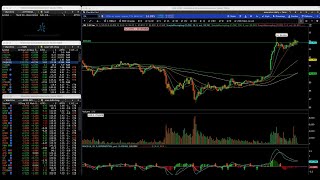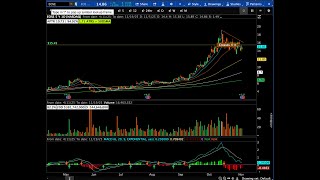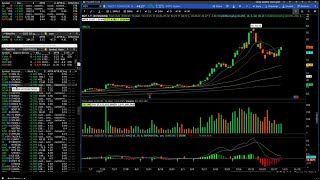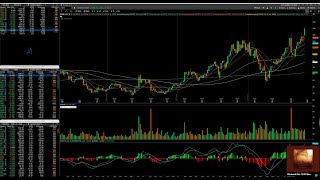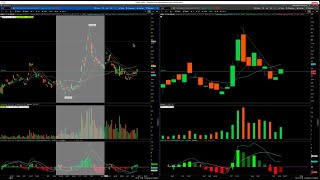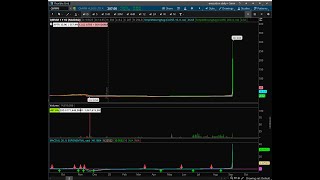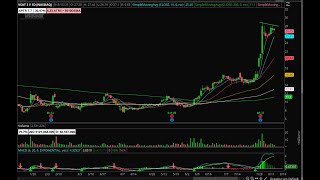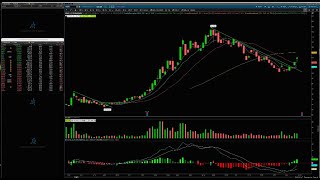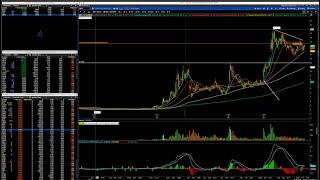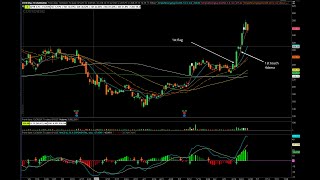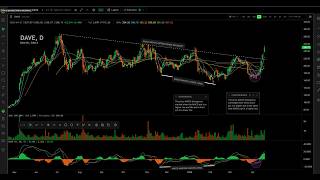
Alec Riffle walks through his Divergence Pivot trading framework using MACD/RSI divergence, high-tight pivots, and flag formations across stocks like CCJ, SMR, PLUG, and ARM. He discusses volume spikes, institutional influence, and shares his DTRP scanning tool and risk-management approach with community members asking about specific charts and setups.
Chapters
Something to play with, go and find yourself a toy. Baby, my time is too expensive, and I'm not a little boy. If you are serious, don't play with my heart, it makes me furious. But if you want me to love you, then baby, I will. Girl, you know how we kick it here, tell it like it is. Don't be ashamed, let your conscience be your guide. Can you hear me? Can you hear me? Mic check, mic check. Crystal clear. Oh ho!
Oh ho!
It's been a minute back at the desk. Feels great, although I do miss— I do miss the mountains, because where I live there definitely are not any mountains. Yep, I'm recording, but it's always helpful if somebody else records. Uh, I know if, uh, Dr. Luca is in attendance, he'll he'll naturally record. Um, if Flash is in attendance, he'll probably record. So backup recording is always appreciated because somehow I probably got like 20% hit rate of screwing the recordings up. So there hasn't been a lot to talk about really, you know, over the last few months. Um, you know, shorting has really been the main, main MO. Uh, it's really just where the opportunities have been for me. The long side— the long side has been really frustrating, uh, all year and really haven't gotten any traction on it whatsoever. Watched two of my, my long-term holdings come all the way back on me, essentially. Open in Tesla Um, I do have a nice open average now though, so I'm not, I'm not too upset. But the Tesla one's gonna irk me a bit. It was a definitely like a kind of a knee-jerk reaction, me selling it. It was stupid, but we can get into that. Uh, so yeah, happy to be back. The markets are fucking ripping. Uh, it's amazing. Uh, I'm gonna try to do this stream in uh, DTRP, and I just want to look at some charts. Uh, I'm so excited, and what I'm, you know, kind of just happiest about is this setup called— at least I dubbed it, uh, the Divergence Pivot. I can kind of give you the origin story of it. I think it really comes down to Meta was probably the, the straw that, that broke the camel's back for me. Um, and it was several years ago, back in 2023. Yeah, it was down here. So this was actually earnings gap-up day. Actually, was it Meta? It might have been like Nvidia. CVNA may have been the first one that I saw. Yeah, CVNA is a decent example. I was basically— I basically missed all of like the bottom in 2023. I, I was under the impression that you're not supposed to try to catch bottoms, you're not trying to catch tops, and I still fundamentally agree with that. But if there was a way to reliably do so Uh, I think people would do so, right? And I'm really not one to just kind of take things that people say to me for face value. Uh, even if they're a super, super like true subject, um, subject matter expert, I'll, I'll, I'll take it— I'll take things that they tell me from an expert perspective more seriously Uh, it has more weight. Like, you know, I can almost throw it into my life model book, but I still try to validate everything, especially, uh, especially things where important decisions are, are made upon. Um, and so like, if the consensus out there is like, don't try to touch, don't try to catch turns, there's more money lost in the first 20% and the last whatever 20% of the move than blah blah blah, well, you know, Everybody knows those sayings. I don't even know who said it, but if you basically talk to anybody, it's like it's a faux pas to try to catch a top, and it's a faux pas to try to catch a bottom. And I mean, I do fundamentally agree with it. Uh, so if, if that notion is true— don't catch a bottom, don't catch a top— then where, where, where can we start, right? And I think, you know, for me it's, it's when momentum shifts in the intended direction or direction of the trader. So if the momentum— so the trader wants to short something, uh, it'd be like, when does that momentum kind of, kind of move in that direction? And then if you want to long, when does that happen, right? And how, like, what, what signals can we combine to have strong predictive value? Or give like, you know, strong collective signal where there's a pretty high, uh, high hit rate, uh, if, if they come together and you have proper entry tactics. But then it's also, uh, what, what signal combinations are not obscure, right? Like, just because you have like, oh, you know, a really, a really reliable signal, uh, but it just doesn't really happen very often. So like at the 2023 lows when many of these stocks were bottoming, uh, if, if like only a couple of them, uh, if only a couple of them gave that sort of signal, like it, it's really not that like exciting because you can't fill a portfolio with them. Um, so what I was looking for was I was looking for some sort of technical uh, signal with price and volume, uh, that appeared in many charts that were bottoming and then went on to make big moves. So to me, like, you know, the biggest moves pretty much always start below the 200. The biggest, um, runs, the, the biggest sell-offs obviously bottom below the 200. So if, if the biggest sell-offs bottom below the 200, then obviously the run has to start below the 200. Uh, so in my opinion, if you can catch the— how do you catch the momentum shift at the lowest, uh, spot possible, essentially? And I just started— I think that at the time too, I was learning about, uh, just MACD. Maybe Ariel introduced me to, uh, to Gil Morales around that time. I'd have to go and check the notes in the server. But I just had MACD up on my chart, so I'm just always watching things. And I, I knew a little bit about RSI divergence. I, um, it's basically the same concept. Uh, I played with that like way in the beginning, like, like when I was day trading, I was learning about that. So my mind's— or my eye has always been kind of trained on it. Um, but yeah, I just started building a really big database of these things. And like, for me, like here, like I see it in open so, so clearly. So like, let's teleport to this setup. Maybe if I go like to here, will that help? Okay, cool. So like, for me, what's crystal crystal clear— I'm going to clean this up a little bit, uh, clear drawings.
Custom. I don't know, get this out of the way. Okay, okay.
So for me, like, my eye looks at what is the trend of the price, what is the trend of the momentum indicator. Momentum indicator is MACD. I see the MACD just trending up and I see price, uh, making lower lows. It's like super, super obvious to me. And I think that if you guys look for it, it'll be super obvious as well, uh, because it's just kind of like— I mean, actually it started way back here, looks like. Um, you're not gonna see this setup for a very long time again. It's the it's in my definition of chart progression, it's the number one— it's the first setup that you see, uh, after, after a major sell-off, after a major correction. Uh, so in this particular instance, you have, uh, downtrending price and then you have uptrending, uh, MACD, right? So essentially what it tells you is that momentum's shifting while price is still selling off. Or making lower lows.
So I'm going to do this now.
Um, price lower lows. MACD higher lows. Higher lows. All right, cool. So where does the divergence actually start? The divergence starts, uh, actually, yeah, it would be here. The divergence starts when one or the other places a— or puts in a higher low or a higher high. Uh, so like, for example, if, if the MACD is putting in a higher, a higher low here, but price is putting in a lower low, that's the beginning of the divergence. So to symbolize that, I'll just like circle this red circle. Okay, cool. So that's the beginning of the divergence. And then when MACD and price start mirroring one another, so if they both put in a higher low at the same time, that's when the divergence ends. So that's called convergence. At least I think that's what I call it. Uh, so let's do that. Put you over here. So this is like basically the convergence area because you can see MACD is starting to put in a higher low, so is price. So let's like see if I can change your color to green. That sounds good. Green. All right, so there you got convergence. Okay, great. Now the divergence is over, which tells us that we have a legitimate momentum shift. Okay, also there is this crystal clear, very well-defined upper trend line. Anybody that says upper range boundaries are stupid, only horizontal lines matter, They haven't studied charts enough. It's a complete fallacy. Uh, they're absolutely, uh, a great indicator of a trend shift. Um, they exist in statistics. Uh, Qualimagi draws them on like all of his charts. He uses them reliably for entry points. So horizontal and diagonal, uh, lines are perfectly okay. Horizontal lines are easier to draw to definitive level, uh, but diagonal lines, uh, are, are really great for identifying upper range boundaries, right? Like, where is price predictable, predictably, uh, going to reject or be supported from a pattern perspective? So like this right here, we would call the multi— whatever, multi the multi-month, month upper range boundary. I think I spelled that right. Sorry. All right, okay, cool. So like, step 1, we have a divergence, we've identified it. Step 2, we have convergence. Step 3, we break out. So that's a big move up. So let's see what this big move up is from the low. So that's 114% in 15 days, 3 weeks. Sounds great to me. Now it's putting in a high tight flag. Okay, now it's actionable. Basically it's starting to put in this flag. Looks great. So let's see, how does it develop?
Whoops.
So if you would have entered here on this breakout, slow flat top breakout, I'm gonna get out of this. All right, so like there you had a decent little, little shot, little squirt. Uh, let's see what the gain would have been if you would have trailed the 10. So if you entered here, trail the 10, it would have been a 33% gain. You would have sold 50% on day 3 to 5. 73% gain. So you would have had a pretty decent gain for your, for your position. So now let's see what happens with the MACD. We would expect it to put to, uh, to continue confluence. So we had confluence here on this date, uh, January 26, 2023. So we would expect for these to start bottoming at the same time. We don't want to see another divergence. Sure enough, they mirror each other. Continue to mirror each other, and that tells me that like this is a double bottom. You have another, uh, another legitimate entry here. So the way that I play the divergence pivot is I'm looking for continuation setups outside of the upper range boundary. Like here we have this flag, uh, or I'll just take some expansion out of the multi-month upper range boundary itself. Um, so like here was another one, like this was another upper range boundary. The, the divergence has been broken, uh, we've converged. So if MACD is still trending up, we can assume that price is going to— you would have had an alert set on this line, you could have bought this expansion candle. Um, and so like that may not be like a setup in people's playbooks that you can find online, like it's definitely not in Qualimagi's. But if you think about what, what is the actual purpose of a setup in, in swing trading, uh, it'll really— it should really, really open your eyes. I mean, for me, the purpose of a setup is just to get us into a low-risk entry spot where price is, is likely to, uh, uh, to move away from our average quickly. So like, if we're wrong, how much do we lose? A tiny, tiny amount. Like, so if we were like, all right, look, this is on our watch list, we got a divergent pivot here, we're looking at this day, so let's teleport to this day, right? So I would have— I'm just going to remove all these lines. Uh, clear. Actually, I don't really want to save it, so I'm going to say it.
All right, that's fine. Okay, cool.
So at least it's saved somewhere. And then let's clear the drawings. All right, clear all drawings. Oops. All right, so divergence has ended. We know that, um, the spot where it ends is a really good, uh, support level. So it ended right here. Lo and behold, wow, it's finding support. So like, that's, that's essentially like your risk. So you have a super, super tight day, uh, you have this downtrend line. Like, for me, this probably wouldn't have made my actionable list because it's not like— it's far away from the upper boundary, all that. But on my Needs More Sideways list, it would have an alert set. So just because it's not on my trigger list doesn't mean that it's not actionable. My trigger list is essentially my best estimate, uh, of what names from my Needs More Sideways list have like the best shot of triggering the next day. And oftentimes like there's no triggers from my actual trigger list, but names on my News More Sideways lists are popping off. So this would be one of those examples. Uh, so I got my alert set, boom, and then we just buy right through the line. And now all of a sudden you have— you're out of this upper range boundary, which is another multi-monther. After the confluence, you have this high tight pivot right here, that's another entry. You have now a bull flag, so you have a 20-day wide bull flag going. Like you essentially had 3 chances in this whole span to get your money in. This was number 1, this one's obviously the best. Number 2 was here, you had your first touch of your 10-day. So like, for me, all these other setups and variants in the DTRP playbook, they all came from me missing moves. And I'm like, I don't want to miss moves. So like, how do I not miss them? Well, Well, I find reliable, repeatable patterns that give me low-risk entries where if I'm wrong, I lose a little bit. If I'm right, I catch a lot, I catch a big move, right? So like in this particular setup, in this particular range from May 5th, 2023 to June, essentially you had one, one entry. So you had one here, okay? You had another one here, which would have been the first touch of the 10-day, um, which is, is, which is a setup taught. You had another one here, which is the high tight pivot, uh, variant of the high tight flag. And then now, next thing you know, you're in— so there's your high. We'll measure it, measure it over, see how many bars wide it is.
I don't know.
So you got 24 bars wide on this high tight flag. It looks like just like the AEVA flag, doesn't it? Okay, so now you're in eligible bear or a bull flag territory. First flag, your MACD is positive. You just got the up, down, up. So literally in this sequence you had 1, 2, 3, and now you're looking at 4 legitimate entries. So let's see how this one develops.
Holy crap, right?
Wow.
So from the worst entry in this particular example So you would enter there. From your worst entry at highs, you're up a couple hundred percent, uh, from the— like what I would consider to be— or I'm sorry, that's from the best entry. From the worst entry, uh, like here, you'd be up— you're at your max, you're still up. Oops, wrong tool. I don't even know how to use this program yet. Be honest.
Okay, come on.
You got 100% at highs. So even from the worst entry, 4, 4 later, you had a decent spot. And there was a couple other high-tie pivots that you could have taken there's just— they just— the more you have them, like, the more they occur in a short period of time, the, you know, kind of the less— like, the smaller the move. So like, here was another high-tide pivot, uh, here's another high-tide pivot. So like, I, I personally think— just as an aside, I personally think high-tide pivot, uh, is superior than the classically defined high-tide flag, uh, not the weekly classic defined high tide flag by William O'Neill, but the same pattern, that same pattern that he talks about, I think these pivots are, are much more prolific. They work better. Uh, all right, let's see, there's some questions. Um, hey, uh, Zippity, if you can't hear me, I think, I think you just gotta like, um, exit and rejoin. Okay, cool. Uh, all right, Underdog, you would be curious to know, for every one of these open that work from that flag, how many similar examples look like kind of like that but don't go on to, uh, generate above average returns? I mean, that's, that's a really great, uh, like, that's a really great question. And in DTRP, you'll be able to, uh, go into your scans. And so for, for anybody who subscribes to my playbook, uh, I only have a few of them in here right now, but basically all of the setups within my playbook there will be a scan for— so like Parabolic Short, for example, right? You'll be able to go back like decades and every single day. So like, let's look at, for example, I don't know, let's just pick one of these random days. So on 2020, uh, March 19th, okay, there were these names on the list. So let's look at UVXY. Um, so historical should work. Okay, so DWT, whatever this one was. So it will historically teleport you back in time, and then you can, uh, you can manually go forward and see— holy shit, what a crack! Damn, that was awesome. Well, there you go firsthand, uh, that that, that the scan works pretty good. Um, you'll be able to go back and see how well they worked or not. And, and as this program develops, uh, there'll be all sorts of AI assistant analysis tools, and there'll be a whole scripting language as well. So, uh, you'll have pretty much total flexibility over it. Uh, obviously my personal scans will be pretty much black box, uh, for you know, DTRP subscribers. Um, but, but yeah, like, there you go.
POW.
I wonder if it had a parabolic bounce. A little, not really. I wonder how much that was. I mean, it was still like decent. Honestly, it was 80%. Let's see how one of these other ones worked out. BNTX. Bam! Holy shit, that worked really well. Cool. Um, but yeah, so like, for example, uh, how well did the continuation setups work, uh, after divergence pivots? Uh, so that will be built as a scan, and then with all of the daily data that we have, like, we'll have, you know, many decades worth. You'll be able to scroll back in time and, uh, and kind of, and go through that for any of the setups. And then also in the knowledge base side of the equation, uh, there'll be a ton of like hand-picked examples Let's see. So like Parabolic Short, I know I did a few of those already. Um, and by no means is this all the way like fleshed out. Uh, it's going to look considerably different by the time anybody gets it. But like here we could teleport to this, this setup, and then you can kind of go through it. So this would be like the Parabolic Short, like hand selected. Um, hand-selected chart examples. And you'll have— you'll be able to like, uh, I don't think it's wired up right now, but you'll be able to do like DTRP, like AI.
Let's see how that works.
So like you'll be able to see the news back then and it'll generate like a summary to tell you what was the runner or why it was running and all that. Um, and it'll be like the model I guess the prompts will be, uh, essentially hand-curated by me. So it's really just going to pick out the most important drivers for the move, um, and then all of the other kind of dynamic criteria for making the decision relative to the setup that it's tagged with. So it'll be a really, really useful like study tool because it has just a ton of my personal, uh, narration on top of it all. But yeah, anyways, uh, you know, back to the divergence pivot concept. It— this is just— it's an example of studying the charts. I mean, really just, just focusing on the charts. Like, it's like a first principle sort of thing where, you know, I sat there and I just asked myself Okay, Alec, what is your— what is your objective in the markets? Okay, make money. Okay, great. Uh, is that it? Well, no, make as much money as I possibly can. Okay, that also sounds well, but what about your constraints? Okay, make as much money as I possibly can relative to my constraints. Okay, fine. How do you make the most money in the stock market? Well, you gotta buy lower and sell higher, right? So like logically, it's like, okay, you want to find the stocks that just make the biggest moves and not over like decades, but like, you know, oh, I want to make a ton of money like relatively fast. So I'm still young. I don't want to, you know, buy Apple, you know, in the early '90s and just be getting rich now, right? So it's like, okay, well, you need to find stocks that make big moves fast. Okay. Perfect. So let's start studying those. And, you know, along my studies, you start seeing just similar patterns over and over and over. They just continue to repeat themselves, uh, and that's, that's how I discovered all these variants. And I personally find it very important for me in my process to define the variants. Like, most people would just call a high-tight pivot a high-tight flag, right? Right? Like, but for me it's different. Uh, this one right here is a high tight pivot, uh, on this, this day. So there's a, a big move up after a divergence pivot. It puts in this other range, like this, this range outside of the first, like, downtrend break. Big move up, and like, this is the pullback. It gets tight. And that to me is a legitimate setup. There's a ton of them firing in the market right now. You would have bought over highs and then you're really well positioned. Like, that was a great trade even though it was really quick. You still had a decent gain. I mean, there was 130, 140% in just, you know, 2 weeks. This, this stock is just the stock that just kept giving though, because then it went on to build a really, really nice what I call just kind of classic flag. It's over 40— I think it's over 40 bars wide. If it's within 40 bars, uh, 20 to 40 bars wide, it's like, um, um, just— I call it a bull flag. So it's 28 bars wide, so that's just a classic bull flag. But man, like, big move up, got tight. It's like, this stuff doesn't really have to be complicated so long as you have founding principles and founding reasons as to why you do things. What are you looking for? I don't care if the chart, if the price shape is defined by somebody else. I don't care if it's not defined. It doesn't matter to me. The criteria is, is my entry— if I'm wrong, am I going to lose a little bit of money? If I'm right, do I have the potential to make a lot of money? Okay. And if those are like the guiding principles, we can— and then also, is the pattern repeatable and is it prolific? Like, can it be prolific? It's not just some like random obscure pattern that yes, it was tight, yes, price is tight, yes, my risk is low, uh, yes, it went up a lot and I could have made a lot of money. But if that instance is just like a rare anomaly, then it's really not worth adding to a playbook. Um, for example, when I shorted, uh, I don't have— we don't have futures data yet here. Uh, when I shorted, um, the Qs after via NASDAQ after these 4 gap-up days. This only happened 5 times in the history of, um, QQQs. Only 5 times. I mean, it's not a lot of data, but in every instance, a week later we were red. So that's what helped me get conviction to short it here. And I short it with just like a breach and fail. But when I add that to my playbook, um, no, it wouldn't be in my main staple playbook. But it is an anomaly. It is an outlier. Since QQQ's, uh, started trading in 2009, there's been 5 events that this has happened. So in 17 years, there's been 5 events. So that's roughly, you know, 1 event every, you know, 3 years, whatever. So maybe in the next 3 years we see it again. And if I see it again, I know that now there have been 6 or 5, 6 instances, or however many instances plus 1, where a week later, every single time it was red, I can take the trade with some statistical backing. So if I were to add that to the playbook, it would kind of go into like an obscure folder where this doesn't happen very often. Uh, I would build a scan for it that notifies me when it happens Uh, which, because it's not something that you're particularly looking for. But is it, is it a setup that you can trade that have repeatable results? Checkbox, yes. Is it a setup that if I'm wrong, my risk is very low? Yes. The answer is yes. If I'm right, my reward is potentially very high? The answer is yes. The only checkbox that it's missing is, is it prolific? Does it happen often? Um, the answer is no there. But I wouldn't automatically rule something out. We do have historical precedence for this setup. It's happened a few times. But this is just an example of finding repeatable patterns with low-risk entry, potential high-reward setups in the, in the, in my universe. High liquidity, high momentum stocks. So like, I, like, I completely disconnected from the I guess, Kualamagi, like, crowd. Like, you know, there's like the Kualamagi Discord or whatever. Like, if I posted in there, they'd probably like, they just start dogging me out. Like, like, oh shit, I don't want to get into it too much. But I think, I think the big thing here is, um, and you know, I've learned the most from, uh, about technical analysis from Christian Kualamagi. He gave me the, the basis to build all of these other ideas on top of. So I combined his, like, technical basis with just my just philosophical first principle kind of thinking. And I'm like, man, I see so many other low-risk entry spots and high-momentum stocks that he doesn't trade, that he doesn't even think about. And, you know, I can just hear his voice right now. He's like, you gotta study this stuff, guys. Like, big move up, gets tight, draw this line. Like, he would draw the craziest trend lines. And if, like, like, for the real OGs who really watched, like, his streams— like, I've seen every single stream. There was 2 years where I start, like, from basically the time I learned about him to the time he stopped streaming, where every day I watched his stream live. He would do shit all day, basically every day, uh, that, like, broke his rules and all that. And, and, and it's because he's not perfect, but he's also developing new techniques, new methods to get money allocated in the market in a low-risk way. Like, I, I can almost guarantee that the Kuala Maggi we like today is, is drastically different than, uh, or I'm sorry, the Kuala Maggi we knew back then, or at least we believed we knew, is, is, is probably completely different than, than who he is now. I bet he's doing all sorts of new stuff with new thought processes new, like, longer hold durations, all sorts of things, um, that, that he never did before he's doing now. Um, and it's just because he continually improves. Like, I don't know if he understands, like, the actual technical concept of continual improvement from, you know, like, Lean Six Sigma and, like, you know, like, that whole world, uh, but it doesn't matter if you do it naturally. It, it's helpful if you, if you understand, like, the methods to do it well, Um, but I— he just kind of did it naturally. So yeah, I mean, that's kind of what I'm doing too. And there's new stuff that I see that I'm piloting all the time. Like, here's an example. If you go into the Discord and you look at bottom pin reversals, okay, bottom pin reversals— let me find an example. Like, it's something that I see often, relatively often, It's something where if I'm wrong, the risk is, is relatively low, and if I'm right, the risk is— or the reward's pretty high. I just couldn't find enough, um, I can't find the damn thing. I couldn't find, um, enough repeatability in it and profitability in it, uh, to add it to my playbook as a, um as like a permanent, like, entry— or I'm sorry, like a, like a new, um, entry tactic. So I'm trying to do like 4 things at once. I just realized the market closed. How do I— okay, bottom pin reversal. Anyways, you guys can look on your own. I mean, I can't find it here in 2 seconds. There's so many damn channels in the Discord, so kind of annoying. Okay, why does the— my like mini viewer keeps going over the page or the Discord so I can't see anything? Let's just find like one example. You know, I think UNH was one. Yeah, what's up? There you go. So like, I'm looking at it like this. So that to me is a bottom pin reversal where you just have a nasty, nasty, nasty sell-off, and then on the daily you have like this gap down, and then like there's the bottom pin. It looks like a pin, right? On stupid high volume, right? So like this, if I was to be trading bottom pin reversals, this would have ended up on my, on my watch list. I would have tagged it as the setup. Uh, I would have placed my entry level, which would just been over highs, set my alert, and then the next day, uh, I would have bought over the line. Uh, let's see if we can actually look at intraday data. That'd be cool. I think you can. Okay, sick. Doesn't look like the drawing came over though. What is this today? Nope, that's it. Cool. So yeah, all right, so there it was just selling off, and then overnight— what day did it bottom? I think it bottomed. Oh, all right, well, that needs to get fixed. But anyways, that's the idea. So like, this one worked out decently well. You had like a 3-day bounce. But my, my objective is not to really catch a 3-day bounce. My objective is to catch like a major, major reversal, uh, and it just didn't really work out, work out that well. What did work out though What did work out extremely well was, lo and behold, look at this at the bottom, a bull divergence that re— uh, resolved. Funny, funny, funny, funny how that works. Then you have like this big old downtrend line. Oh wow, there it is, repeatable, breaks out. What does it do? It puts in a super tight flag. Then you had an expansion candle. Um, I actually bought it here at 243-ish, somewhere in here. I think it was like this day or this day. I bought the UNR of this level. So you have like all those like technical, um, confluence lines. But yeah, no, I just wanted to shed some light on like my setup discovery process, the founding principles behind it, because so many people were, you know, kind of distraught about how, you know, I was able to get, you know, exposure when everything's just going straight up, uh, especially from, you know, like the Pretty Cool Maggie crowd. Um, if there's any stocks you guys want me to talk about, holler. Let me pull up the chat again so I can see if I, I missed anything. Uh, okay, uh, Dan, when you have multiple entries like that for one stock, like you talked about with Open, would you just keep adding size to the winner every time? I mean, so like for me personally, we can go back to Open real quick. Uh, I treat every new setup as its own thing. Uh, where was that? That was way back when, 2023, right?
So I think it was like right here.
Okay, so I treat every setup as, as its own thing, uh, as its own, as its own unique position. I'm sorry, as its own independent position. Like, when I say add, it's when I would be buying. So like, for an add, for example, say my first buy on open was like through that line, right? And I, I bought it like on the opening range, okay? My adds would be maybe an intraday dip, or like the, the second day, um, through previous day's high. So like, my adds are in between fresh setups. That's what I would consider an add. Uh, if I were to buy this Hightight Pivot, I would try to treat it as its own individual position. Easier said than done, it's hard to manage that, but I think like technically that makes the most sense, uh, especially if, you know, you're also thinking about maximizing, uh, you know, tax, uh, tax benefit or your tax bill, reducing your tax bill as much as possible. Like, if you're paying attention to FIFO, uh, or I'm sorry, LIFO, uh, last in first out, uh, then, then that also makes sense because like you may get stopped out of say shares that you bought on like this expansion candle, like say price came like further down or something, but you didn't get stopped out on your initial entry, and then price ramps back up and you could hold it for a year Uh, I think that's, that's, it's advantageous to kind of partition like that. And, um, I think, I mean, most people's brokerages should have lots, and you, so you can kind of pay attention to the lots and, and sell that way. Uh, but I, you could like legitimately keep adding though, like, so it's like open position 1, okay, open position 2. Open position 3, uh, but you start, start kind of encountering other risks there, I think, as well. Um, you know, if you were to buy, like, say you would have gotten, like, all of these entries, just these 3 entries or something like that, you know, your first entry you would have had a $1.50 average, and then let's say you bought equal parts at $2, you would add a $1.75 average, and then say you bought a third, you would have diluted a little bit more. So, like, let's just say you had, like, a like a 190 average on 30% of your portfolio, you're, you're doing pretty good. I mean, my issue though is I do not like single stock, like super high concentration, um, because like what if the CEO got hit by a bus? What if a major fraud allegation came out? So you have key man risk, you have single entity risk, you have compliance risk. So I don't like, you know, like maximum concentration in any name. You have to have ultimate conviction would be like 25%, maybe, maybe 30%. But like you just have to know that you're exposing yourself to quite a bit more risk. Like the reality of those things happening are very low. They're tail events, but you're exposing yourself to tail event impact. If, if your positions are, you know, distributed, like, like 20 positions— say you're, say you're double leveraged, fully leveraged, and you have 20 positions open and you're distributed across like every sector— I don't, I don't know what the word— like, what's the worst thing that could possibly happen if you, if you trail? Like, I don't know. Like, if you have that many positions open, you're up so much already on the year. Or on the period, even if there was a 10% gap down and you're double leveraged, your account drew down 20%. Okay, you close out everything, you're in a 20% drawdown. But like, to get to that point, you're probably— your account's probably up several hundred percent on the year as it is. So, um, all right, uh, I'm wondering this too. Okay, I think, I think I answered your question. Um, Is there any explanation in the server for high-tight pivots? Here's one right here. There actually is not a dedicated high-tight pivot channel in, in DTR. DTRP will have it, uh, but I never actually made one for DTR. But this is a high-tight pivot. Essentially what it is, is it's the first pullback after a big range break, uh, where price kind of slants down It puts in a tight— it's like an extended shoryuken in a way. Um, it's kind of like Judah's— I think he calls it like the 2V, 2DVL setup, but it's like you can have 3 or 4 of them under 10 bars from high. I consider, uh, like a high tight pivot, high tight flag. But that's one right there. There was a bunch of them, um, on scans today. Um, so like, this is kind of a high-type pivot right here, this AES. I mean, it didn't really have like a big flagpole, but it's still up from lows considerably. So did it make the big move up? Yeah, it's up 28%. I don't really like looking at percentage moves up. I like looking at APT moves up because it puts it in context. The APT of this stock today, uh, it's 4. Last week, 5.76. So like, if its average APT is 6, uh, this big move up is like 4 APTs. It's or whatever you want to call it, uh, average. I'm used to saying APTR, it's a mouthful, but ATR% is another way to say it. But yeah, it had a big move up, it's a couple bars wide, and it's putting in like this tight little slant. That to me is, is, it's, it's closer to a high tight pivot. It's flatter, or a high tight flag. It's flatter, but it's still kind of, kind of a pivot. There is, let's see, uh, Powell was a true high-tight flag for me. And look, it broke out today. So it just has like a bare— like barely a little slant to it. Big move up, just a few bars of sideways, super, super tight. That's why they call it that. And then you can draw a range cleanly, um, and just— it just pushed out, pushed out of the range above the left side peak. Uh, okay. Can we ask questions here about the video you are doing now on MainStage? The question would be, is this video— yes, it's being recorded. I'll put it on YouTube. Uh, will there be stats for each setup? Yeah, I eventually— I, I like the way that I approach repeatability is I just pull out a spreadsheet, um, and I start, uh, I start just kind of sketching things out.
Let me see if I can By example.
Yeah, here we go. Okay, so, so like here's like setup glossary. So these are all like terms that I would use to build. So these are all basically like microstructures and, um, uh, indicators that combine to create the setup. I guess I never really talked about that either. Let's see. Okay, setup index maybe. Okay, so let's just look at long side. Okay, so like here's the setup index. So these are all setups that I have entered into this spreadsheet. That need to be defined. So I know I did— I think I did like double top short sale. That's a good example. Of course it's on the other side, it's not long, it's short. So DTSS double— okay, I got a few of those defined. So set up DTSS. So here, uh, these would be the microstructure definitions. Uh, like measurements essentially used in combination to define the setup. So for DTSS, uh, for example, uh, I would log the, the big move up start date, so like basically where it bottomed and then where it ended, and then how many percent the big move up was, how many bars long the big move up was, because big move up is a criteria for double top short like, uh, then I would have like left peak start, and then you have your sell-off, the length of the sell-off, the drawdown of the sell-off, and then your right start. So building your punch bowl, your right percent, and then the total bowl length. And then was there a breach and fail for the double top short sale? Yes, in all these instances. So we can go back and look at one of them. Let's look at Um, let's look at CELH on January 1st, uh, or I'm sorry, uh, January 18th, 2024. 2024-01-18. That didn't work.
2024-01-18.
Okay. CELH. Come on. Okay, well, it obviously wasn't that day. Okay, here's one. Okay, okay, so— oh wait, you guys probably just couldn't see any of that spreadsheet, could you? Ah crap. Could you see the spreadsheet? All right, redo, redo. Um, okay, how about now? All right, sweet. I'm just going to re-explain that. So this is like the matrix that I use to build setup definitions, uh, and setups are all comprised of microstructures, uh, so like big move up is a microstructure. I don't know how, how, like, I don't know anybody else's methods for building their own playbook, but this is mine. And, uh, it kind of starts with identifying the pattern as I've been discussing, like, as a whole, but then breaking that pattern down into its unique microstructures that must be present for it to be, uh, the setup. So like, there is no double top short sale without a big move up. Just, it just doesn't happen. Uh, so big move up is a required microstructure. We are all over the place today, but that's fine. Big move up, usually how it goes. Um, so that's like, that's a microstructure. So if we're looking at CELH, here's the big move up. Okay, so did it make a large move up? Well, the answer is yes, it sure did. It went up over the course of 137 days, 200%. Okay, so it's a big move up. Um, it looks like I measured it at 102, or I measured 102%. So let's see where the hell that actually— oh, I see, I, I started the measurement probably from like this breakout of this first flag. Okay, that makes sense. So that's Microstructure 1. So at the top like for a double top to happen, you, you basically need a bowl to form, something like that, and then it needs to rip back up, create this cup, and then you short the breach and fail. All right, like that's, that's what it is. Um, so if we go back to the spreadsheet, the next microstructure is the sell-off. Okay, so this would be the sell-off, and then you got the right one. Okay, and then you got the bull length, whatever. But I defined the setup in its entirety so that now all of a sudden we can, uh, build a scanner around it, and then we just have repeatable, reliable criteria that we can, uh, that we can actually build the setup, uh, requirements. For one, uh, does it— how does it end up on your, on your actionable trigger list? Like, does it meet all those criteria? Um, and then two, like, how do we execute it, right? Like, so there's those two sets of criteria. Uh, and so I just, like, as I see patterns, uh, and I have ideas just because I keep seeing things occur that I may have never seen before, I start a sheet like this and I just start building out the instances. And you do this long enough over many years, you'll start building out your playbook. So, you know, this playbook has— I mean, this isn't really all fleshed out, but my playbook overall has like 25 repeatable you know, high probability, meaning, you know, greater than, uh, 25% of the time they work out, uh, high probability setups, uh, for making big moves and making money in the market. Uh, and there's a whole, you know, at least that amount of like the anomalies, the weird setups that don't happen very often, like the Q's gapping up 4 times. That's another one.
Um, cool.
All right, let's see if there's any other questions. What app is this? This is the app I'm building for, for you, Wolf KH. We're building this for DTR members. Does SGML look like a shoryuken? Let's see. No, it doesn't, but it looks great. So you have this big range break. It's interesting though, you know, like this one, this one did not have a bull divergence, which is interesting. I don't really see that very often. So the MACD is in line the whole time. Nonetheless though, you still had a large defined range. It broke out, it put in this little high tight pivot, high tight flag thingy, pushed higher. Like, um, is it— it's, it's the same idea of a shoryuken. I mean, it's a low risk setup. I don't know how like I don't know how well or how like, like reliable the move is after here, but it does have a lot going for it. This could be, uh, who asked this? Uh, Not Dritti. Okay, uh, I'm gonna call you ND. Uh, like, okay, so like you see this, does it have the criteria for you to potentially start like studying it to see if you can add it to your playbook? Well, does it have the ability to make big moves up? Yes, it did that. Does it have a lot of liquidity? Yes. Did it do it fast? Yes. Would, would the entry tomorrow have like a really tight, um, risk? Yeah. Is the entry level defined? Yeah, just over previous day high. Um, does it have some sort of like, you know, I guess historical support? Yeah, there's a setup called the Shoryuken that works and it's kind of similar to this. Okay, well, now you would start— you would add this thing to your playbook, you would save it, you'd add it, and you just start tracking them. You'll be able to go and add notes, you'll be able to record videos, whatever you want to do. You'll be able to, you know, pin it to your, to your own knowledge base that you're building. Um, I don't know, uh, you can— you could even build a scan that looks for this, uh, historically, and then we can look at it over the last 3 decades and see how well it works. I have a feeling it might work pretty well, um, because the stock has a lot of momentum. It's very linear. It's breaking out of a big base, might push higher. I don't know the probability of it, but like, my mind for Shoryukins always goes to like the quintessential I don't know if this data is split adjusted or what, what's going on. Aha, okay, like this is a shoryuken. Another example, I think, is this one. Yeah, this thing's just crazy. This is another, like, pure, pure shoryuken where it just put a big stick up and then it has a real tight day. Another good example. One of my favorites because I traded it pretty well, is this one. So it, it looks a little different than the others, but still the same concept where it breaks out of a big range on big stupid volume, puts in a tight day, bottom wick closing in the like upper half of the range. And then you just buy over previous day highs. Um, I'm curious if the— now if I have any added here.
Continuation, sure. You good?
No, I don't have any. Sorry. Oh yeah, this is an ad hoc chart talk. I'm hoping you guys are asking questions about the market. Uh, I mean, I'll just keep rambling and just, you know, brain dumping stuff that I think about as we go, but, um, there is a ton happening in this market right now. Uh, it's actually kind of crazy. I've never seen anything like it. Just so many names firing. It's like we corrected through time and we didn't really sell off too much. I mean, God, what is Micron's PE, like 8 or something? So low. But yeah, it's up a kajillion percent. It's like, like stuff like that just, it's just like an anomaly. It's just so weird. It's hard to wrap your head around. Oh, this is a good— I mean, this is a high-tie flag. It's such an easy one to see too because you have like basically two entries. In my mind, you have this cheat entry. So we closed red, so if we open like below it and then we push back through the line on Monday, you could buy it. You don't have like a fresh MACD cross or anything, we got a ton of momentum. The second entry would be through all-time highs and coincidentally today's high. What do I think about Hood? Uh, I think like fundamentally I think that Vlad is hard to beat. Uh, I don't think that there's anybody really positioned to beat him. Um, I think that with the PDT rules changing, there's going to be even more money flowing in, more fresh meat for him to blow up, for him to advertise zero-day options to. From a technical perspective, well, definitely in chart theme. So let's look at it here. This day before it started breaking out. Bear divergence or bull divergence, higher MACD, lower price, okay, clear line, relatively clear, okay, so it's on the radar. Breaks out, could have bought that day. You missed it if that setup's not in your playbook. A continuation flag of some sort should be where it builds out. It could do a high-tie pivot, it could build a, you know, a 40-day long bull flag, whatever. Um, and, and pardon the, uh, the, the moving average is not rendering properly. Um, building out like a flag. So I think it's great. This is a great momentum shift. I mean, we have the bull divergence, uh, increased volume— doesn't really matter a lot, but definitely an uptick on volume since the breakout. It's coinciding with the Q's. It's after a big long sell-off. Let's see what the weekly looks like. So weekly was even better because you had a weekly PWNR where it breached the left side peak, and then you just got a weekly MACD cross. So if you're looking at the weekly first, it would have made this thing a lot easier to buy, in my opinion. Yeah, it would have made this thing a lot easier to buy, uh, because you already— you would— if you would have charted on the weekly, you would have seen that it's already found support on that left side peak. It undercut it, it reclaimed it, it tried to put it like— this big like fu candle would have sucked. Because like the, uh, the downtrend range was, was even better here. And like, man, that's, that's just, that's just shitty because all the same fact pattern kind of survives. You still have the, the bull divergence that's, that's resolving. You still have the left side peak undercut and rally. Like, you have this really clear line. What day of the week was this? April 8th. Probably like, it's probably gonna be a Monday. I'm just gonna guess, uh, April 8th was a Wednesday, so middle of the week. I mean, nothing crazy. And it also, I mean, it opened and it ripped, like, so you would have bought this thing feeling great, and then it closed like shit. I don't know why, but the same setup was intact. I mean, it's the same idea, so it happened again. You should have been able to buy this thing again, uh And then definitely on this second day, as it breached the high of that big failure day, like this day would have been fine to buy through the 50, uh, knowing that you just, you know, are the left side peak, knowing that, you know, all sorts of stocks are running, um, knowing that the Qs are coming off the lows. So I, I like Hood a lot. Uh, I missed it. Um, this would have been hard to see, but if you were stalking it and you had this kind of setup in your playbook Uh, you know, yeah, you could have been good. I wonder if it actually had the MACD weekly cross then. I really like seeing the MACD weekly cross close because for those of you who use MACD like 620 for entries on the 5-minute chart or like 1530 or whatever, uh, like I've done this so many times and I'm sure a bunch of you guys are guilty of it, uh, where it's like you get the cross, you buy, but then it uncrosses before the candle closes. And then like, did it ever actually cross? The answer is no. We got to wait for it to close. So it closed now, that's for sure. And so there's no setup at all. You do have a first touch potential, so it could just dump into the 5-day. You could buy that. You could wait for it to build a little flag or a pivot. You could wait for that bull flag to form and then whatever moving average this is to kind of press the top. Either way, that's a momentum shift. Whether it's a bear market rally and we just fizzle and just reverse or not press higher, you know, that's yet to be determined. I seriously doubt that this is just kind of a fluke. Um, so it's definitely one to put on your needs more sideways list. Uh, but the biggest problem for me is, you know, it's relatively low ADR. Is there, um, what's the leveraged version of Hood? I just want to say like Hood X. There's gotta be a leverage for— oh, Robin, R-O-B-N, right? Okay, this one's a lot better. This one is 8.7 APTR and still has $100 million in dollar volume. This is the one that you guys want to be trading for the most part, or you can take a 2-size position and, and hood to speed it up a bit. Or if you don't want 8 or what is that, 8.75 APT, I expect. If that's too much for you, um, you don't have to buy 2x Robinhood. You could make your own. You could buy 1.5x, and that will bring down the speed a little bit. Speed is, uh, adjust— you have ultimate control over the speed, um, and the way that you adjust it through position size. Uh, when you're creating data on your various setups, are you able to actually define them in a way where it can be backtested against every time it has actually happened? Yeah, I mean, that's the idea. There's some instances where it's hard, like, but yeah, I mean, that's it. So like in that double top short sale, um, we have like the range of things that have to happen. So it has like the move, like for it to hit— so if we're making a double top short sale scanner, well, it would have to have that big move up, um, within those thresholds. It would have to have the pullback within the thresholds. It would have to have the right side of the bowl thresholds, right? So if it has those things and it's within those thresholds, generally we're going to be catching those shapes. To fully quantify it like to the point where you can also execute automatically. Oh, I mean, I'm sure you could get there eventually, but for all intents and purposes of DTR, we're not doing that. So like the definitions, uh, how I teach in the DTR Knowledge Base, like I teach you guys how to build your own setups, how to like understand all of the microstructures, how to build an example library of microstructures. Like you just don't— like, in the, in the system, it's not like, oh, you just save setups. Well, you can actually save components, and then those components can get combined to create the setup. So if Big Move Up is a shared asset, uh, it's a shared resource amongst many setups, it's like reusable. Um, so you'll have like all your microstructures defined. You may find new microstructures that, um, you know, are, are important to your, to your playbook. Um, and that also goes for like intraday entries. You know, you could find some, some sort of unique, uh, price action development that, you know, in combined with like, combined with something else, leads to, leads to good stuff. And then you can record it and create your own little component and assemble setups. It's like a little kitchen, it's like a lab. Would you consider CRML as a DP or an EP? So not to trip you out, but we also have a DPEP. A DPEP is a divergence pivot episodic pivot, which should probably be called like a DEP, divergence episodic pivot, where you have the divergence, uh, between price and MACD, but then also you get an episodic pivot that pushes you out. So like some big news event. So like, uh, what's a good example of that? I feel like ANF was one way back when. Yeah, yeah. Uh, okay, yeah, this was it. Basically it was earnings. Oh, AEVA is one. That one's easy because I had this one memorized. So it's not marked on the chart, but AEVA had earnings here. I forget what day exactly. It actually didn't have— wait, no, never mind, it's not a good example because it didn't actually have a price, price divergence. There's a zillion of them in the, in the Discord. EPDP, there we go. Lily, I think Lily's one. Uh, AFRM. Aha, yeah, AFRM was a really good example.
Whoops, see if we can find it right here.
It didn't really go on to like do anything sweet, and I'm pretty sure it's just earnings, but it had the price divergence, MACD divergence. And then what actually took it out of the range was, was earnings or some news. I'm pretty sure it was earnings in this instance. Like, I wonder if like FLY was a big one. No, not FLY. What was the other one that's been running all crazy that I missed? Was it FSLY? Whoops. Yeah, FSLY.
Okay.
I wonder if it had a divergence. Not really. Nope, this is just a good old-fashioned— well, actually, no, no, no, looks like it did. Never mind, it's just like a good old-fashioned EP. But yeah, like oftentimes you have these big divergences. Like I think even open at the bottom was earnings, or CVNA had earnings. Let's see if there's any other examples right here. Uh, Apple. So Apple, what date was this?
Seriously?
Uh, 5/2/2024.
5/2/2024. Aha, okay.
So this is a— this would be like an EPDP. So you have like your big upper range boundary, and it hap— and it started below the 200. Uh, you have your uptrending MACD sweep, and then this was an actual earnings day, so earnings pushed it out, and then that's all she wrote. Kept going, kind of. Man, that's hard to hold, huh? BZAI, a good EP. I mean, I'm not familiar with the news. For me personally, I only understand earnings EPs, like buying news catalysts and stuff like that. Um, you know, it's like too subjective for me. This is definitely though a very large, uh, divergence, and it looks like we converged here. You then had a big breakout, okay, and it builds like this. I don't even know, that's like not really a setup I'd ever trade. Um, I don't know what happened today. Let's Let's see if I don't even know if our news is wired. Okay, so I guess earnings, right? So earnings reports, 59% margin. I guess they loved it. Really high volume. It looks like one to me. Looks like highest volume ever. I wish it would have like gapped and pushed over the line, um, over the, over the moving average. But I mean, yeah, it looks like one. Uh, PL, June 5th, 2025. Yeah, I think, I mean, it had a bunch of them, uh, from what I remember. And this actually is like a kind of like a, it's not really DP, it's just a big old, like, this is like beyond like a bull flag. It's kind of like a base. It's like a short base. That had earnings or whatever it was. I know this thing's gapped up like every time on earnings. There's another one, there's another one. So like, I would consider like the first, like the first one being an EP, because for me, an EP, an episodic pivot, is a news-driven event that changes the trajectory of the stock uh, radically for the long term. So like the trajectory of the stock has been up like since this first one. So this was like the EP, so this was like the initial like episodic pivot, like the whole thing, like the stock's trajectory has changed. Like as opposed to going like downtrending and sideways for a whole year or even longer, uh, we're up and then now we're just continue to go up. Um, the rest are kind of just like earnings reactions. I don't know, uh, like ANF was like— this was like a real EP. It had several earnings in this cycle, but like the real EP was this one right here. That was the EP. Everything else is just earnings continuation momentum. Like this one right here, like that's not EP. At least to me. Um, like SMCI, it had one and this was earnings. Actually, I think it wasn't even earnings, it was like pre-earnings or something weird. And yeah, it was for sure an EP until all like the fraud allegations came out, I guess. But the real— the first one was way down here. Like, at— this was $75 pre-split. Let's see if we adjust. Nice. All right, sick. Okay, so yeah, I trade prop and we focus on really keeping drawdowns tight, mostly intraday trading and a couple of day swings to reduce risk exposure. Curious what your tolerable drawdowns are, provided you're looking for bigger directional moves. Um, I mean, my max, like, account drawdown at any position from entry is going to be 1%. That's the hard stop. But when you trade, you know, 10% positions or less, uh, and you're only trading like tight stocks, um, it's really, really, really hard to draw down 10% like from a single position. Like, if you just do the math, that means the stock needs to go down 10% from your average, like from your entry point, just to draw down 1% of your account. So like, that's like, that's like, that's really hard to do. So if you're just trading, you know, really tight, like, like risk levels, like where your entries are very close to your stop-out, you know, it's, it's a struggle to even get you know, a half, half a percent, um, drawdown if you're trading 10% positions. I know a lot of like the intraday traders, they're using much larger size than 10%. So in my opinion, it's, it's like you even have worse drawdowns, um, as day trading or as a day trader. There's also most of the time day trading, there's no pre- like defined like, um, like pre-planned trigger levels. Uh, it's kind of like go with the flow, kind of like you feel it as you go, sort of super discretionary, kind of like feeling the tape and stuff. I was there, I did it for like a year. Uh, it's where I got started, but I just quickly realized it's not scalable. Um, and I didn't want to sit there all day. But yeah, I hope I answer your question. I, I It's, it's really just you're focusing on like solid entries. Like, what stocks went up a lot today? Oh wow, MSTR. What do you know? What do you know? So like, the entry today on MSTR, it already gapped out of the range. Okay, so it gapped out of the range. We knew Bitcoin was going. Let's look at the 5-minute. Just look at our risk. So you could have bought it right here over the opening range, um, 5-minute bar. You set your stop at the low of day. If you had a 10% position and you got stopped out, you would have drawn down 0.25% on your account. So I mean, somebody can do the math for me, but how many times in a row would that have to happen to— I mean, to draw down 10% of your account in setups like this, uh, with 10% positions, it would have to happen like, I think like 40 times in a row. Mkay. Yeah, no worries. Uh, can you please explain your rules of when to raise stop loss to break even after new entry? Um, you know, it's always been one that I've kind of like, I've thought through a lot, and I honestly owe my system a better definition, better kind of rule for it. I think that I don't, I don't— it's hard. Um, like, when do you raise your stop so that like your breakout is breakeven? Or I'm sorry, that your, uh, that your stop loss is breakeven. So say like, say we bought MSTR today. And say we just bought it like perfectly, like we bought it right at 156, and then tomorrow it just comes right back on us. Actually, no, let's, let's go to that. We have a better example. We have Hood because that's a real life one. Okay, so say we bought this day. So this was, uh, April 8th. So we bought it perfectly. And the whole, the whole damn thing round trips me. Um, let me look at the 5-minute really quick.
Brutal. This is right.
Okay, April 8th, April 8th, April 8th. I don't know if that's right. You know, I— it's a hard one for me, really. And I don't really have— I mean, to be totally honest, I don't really have a, like, a set rule. I want to hold positions. I like, if it's day 2 And like, my, my stop loss is the same as day 1 for the most part. I mean, if the stock goes up 20% on the day, I'm taking some off day 1. Like, I'll take some off, uh, just a little bit. But now where I'm at, more often than not, I'm just like, I just leave my stop where it is, like, on day 1. And because I'm not in it for— I'm not in it to like like just a little position. Like if, if the thing goes up for 2 days and it goes up 20% in 2 days, uh, and my stop is like day 1 low of day, I mean, it may, it may stay there. Um, it's probably to my detriment. I could probably come up with a better rule for that, like where, you know, if my position is up 20% in 2 days, sell. You know, you, you are allowed to sell 30%. It's just a little too much for me to manage, so I just kind of leave my stops where they are for the most part. Like, like my day one stop is kind of where, where things are. And yeah, I round trip stuff, but also that's kind of how I, you know, catch, I guess, like multi-month runners too, because I'm not, I'm not worried about it. I'm not worried about it because if I would have got stopped out day one I'm drawing down a quarter percent, whatever, and, and the setup's broken. It's broken. Like, if it's not broke, it goes back onto my trigger list. I'll try again. Uh, but I'm not really like— like, I want my positions to run. Like, I trade momentum leaders, so I want 100% gains, 200% gains. I want big gains. Uh, so like, if I give back 20%, 30%, like, I don't care. Like, it doesn't— like, that's not, that's not what's moving my needle anyways. I'm not going to get hung up. That just means that it was just fake. It's just a failed setup, failed breakout. And no, thank you for asking that question because it's a good one that I've really never defined. And I don't know if it's like— it's kind of lazy because it's hard to— it's a hard question to answer. But I think like overall the guiding principles are I want to catch big moves I want to trail the 20, the 50. I want to see if I can hold a piece for a year. Like, if I'm worried about moving my stop up day 2 or something like that, like, it's like, I don't know, like, where are you gonna move it up to? Just above your, your average? Like, so you don't go red on it? I mean, that— I think that's okay. Like, say your average was— like, say you bought it perfect, you have like a 72 on Hood. And like, okay, uh, like you see what it's doing, it's just reversing super freaking hard. Okay, move— like, like you can't let this whole thing round trip. Move your average or move your stop loss at least to the point where you don't go red. Like, because there's no point to take that additional like 0.25%, 0.5% max loss on it. There's no point to do that. So I think it's okay to like after, after a decent move away from your average, like just move it to break even. It's not that big of a deal because what if your max stop is 1% anyways? That's, that's just 1% lower and it's like you don't need to add insult to injury at that point. Um, I built a scan for flags but a lot of the textbook flags in Pick Uh, okay. Are biotechs— can biotech flag be traded profitably? I mean, a flag is just a— it's just a price action pattern. Yeah, sure, they could be traded profitably. The issue, uh, it's not that— it's not the pattern itself, it's the, um, the increased risk profile of biotechs. They're all unprofitable, they all need money. So you have secondary offering, um, a significant increased risk of secondary offering. They all have like pending data that all the analysts are watching. Like, if you're not aware of that pipeline and, and some news releases, um, that's bad. You could gap down 70%. Uh, I'll never forget my dad. He owned this stock, Acadia Pharmaceutical. He owned this thing forever. And like one day, let's see what happened. I want to say there's like some crazy gap down, whatever. It just happens in these biotechs. So like the better way to trade a biotech is like with Labu. So if you wanted a flag, you had one here. It's sloppy, uh, overall, but like here it gave you a high tight pivot. Like this is my more so preferred way to trade biotechs. I do own mRNA, just a tiny bit of Moderna right now. I bought it on this day. About at the end of the day here, I'm like high 52s, I think. Uh, but I'm taking a risk on it. I have no idea what their pipeline is. I have no idea, truly. Uh, I really wouldn't want to allocate a lot to any individual biotech. I'm not an expert in it. I think it's just a whole different realm where there's a whole different risk profile. Uh, because this is like, the majority of these companies are like, they're all pre-profit, they're all research companies. So The way that their measure— their performance is measured is, um, you know, in trials and like stuff like that. That it's— I don't know anything about. But yes, to answer your question, you can trade flags. You can trade it, you know, uh, anywhere that there's an ask and a bid and a spread where you can create candlesticks that are, uh, ultimately, um, uh, like the transactions are ultimately consummated with, with human intent and human desire, like, all these patterns work. So it could be soybeans, it could be, uh, you know, a pharmaceutical company, it could be Tesla, it doesn't matter, they all work. Uh, there's just other things outside of price that could impact, uh, well, I guess price can impact price, I guess, but there's other, there's just other news catalysts that can like significantly affect price that, that you could not be— that you may not be aware of. Um, and that can like, you know, gap down. You, you— it goes both ways, you know. On a biotech, you can gap down 75%, you can gap up 800%. We've seen it, we've seen it happen. Uh, just to clarify, when you identify a setup chart-wise, technical-wise, you then compare its microstructure to the data set you have recorded of that setup. Um, let me think of a good analogy. Okay, so Okay, to make a chair, for the most part, like a classic chair, like the chair that you sit in, let's say a wooden— let's just say a wooden stool. A wooden stool is comprised of the stool legs, the braces, and the seat, right? So that's like 4, like, microstructures of the stool itself. Where I come from, I call it a bill of materials. So to make a product like that I may sell, that we may manufacture in-house, that product is comprised of ingredients. Guacamole, for example, right? You know, guacamole is avocado, lime, cilantro, cebollas, salt, all right? Um, so like those are the components that make up the, the recipe or the stool. And then the same applies for, for a setup. Uh, so like, you know, pretty much all of my setups, uh, have some sort of very large big move in one direction or the other. So like a big move up because I'm a momentum trader. If by default I'm a momentum trader, there has to be some qualifier for what momentum is. And to me, it's very simple. It's just a big move up, like a big fast move up. Uh, that's, that's momentum, right? So like, that would be an example of like a microstructure component of a setup for me, um, would be the big move up. The pullback is too. The undercut, finding support. All those things. Those are all microstructures, all components. So like another, uh, setup that's in my playbook on the short side is, um, the 3-day bounce. So AEVA, it needed the big move up, which it got, huge. Okay, and then for the 3-day bounce short, it needed to have a very nasty down day after a big move up. Okay, it got it. And then it needs to have a 3-day bounce. Okay, got it. So if all of those things happen, it goes on to my actionable trigger list because it made, made the watch list. All of the setup criteria is there. And then the entry criteria for this particular setup is very, very simple. It's just breach and fail of that day. So you have a very low-risk spot. Uh, you would wait for the breach and fail of the high, and then boom, you got a really nice Um, nice trade. Now the hold horizon for this trade is not very long, uh, so you cover quickly, and that's kind of, uh, that's a part of the profit-taking rule set of this setup. But sometimes you have another, um, stab at it where you get that big move up 3 days, it rejects the exact same setup, and then you really sell off even further. But this 3-day bounce is a microstructure. This big nasty red day, this singular candle, uh, is, is microstructure. And those components— the big move up, the big nasty day, the 3-day bounce— those combined, if they are present, make this stock eligible from a daily, uh, chart perspective to go on my actionable list, because tomorrow my trigger list— because then the next day all I would need would be for it to follow the trigger rule set.
And I entered.
Yes, exactly, exactly. Yeah, yeah, you're just making a recipe for your trading success relative to your goals. It's all you're— that's all a setup is, right? It's like we all have one thing— we have a couple things in common. But we're making trading decisions primarily on price structure, right? And so like, we all have the same goal. We want like, when we buy something, we want price to like move away from it really quickly and make a big move up and we make money, right? And then the opposite is true for shorting. So like, we all have that same fundamental goal, uh, so like, if that's the case, then a lot of the, the microstructures like like they're just— they're more than that. They're founding principles. Like, in my opinion, you cannot be a momentum trader if your setups don't have a big move up. Like, like, it's like if big move up is not going through your head with, with everything that you do, like from a, from a long bias trader, like you're not a momentum trader. I don't even know what you are. You're just lost because you didn't even take the time to think about just the founding founding principle, like the founding thing that like defines you. Uh, and I, I bet you that if, you know, if we were to interview the majority of, uh, self-proclaimed momentum traders, that's probably not like— like if I were to ask them like, well, what's the first thing you look for? Like, they probably wouldn't say momentum, oddly enough. Um, what's up, Blaze? Uh, new trader here. What, uh, what are like your top 2, 3 favorite setups? Uh, My number one favorite is this one right here. It's just a classic continuation bull flag.
My favorite.
I have another sick one. I think it's— God, this thing gave a stupid amount of setups. Um, yep, that's the classic bull flag. Uh, oh yeah, this one had So NAGG. So this one had a crazy divergence pivot. This one's very, very, very similar to Open. So then it made that big initial move up, pullback, and then it put in like a 20-day— this is a short one— 20-day consolidation, and then it just expanded through the 200. I want to say it was a 200, maybe that was 100. I like, I like the, uh, I mean, right now if you had to ask me, I like the divergence pivot. I mean, that's, that's my favorite because literally like every long setup I'm in, it is that. And I've been waiting years and years and years for it to actually happen again, and it happened. Um, my second favorite, I really, uh, I really like, um, I really like the high-tight pivot because it, it happens so much. It just happens. It happens so much. It's like that high-tight flag variant. Like, here's one. So it's really easy to see too, and then you just buy over this high. So if we would have bought at $62— this thing was crazy, this stock. There was another one that was like a little like shoryuken. For whoever made that comment earlier, there's an example of what you were looking at that you asked if it was a shoryuken or not. Kind of is. Um, shoryukens usually start at the beginning of the move though. It would be like the second, third, fourth candle, uh, outside of the range break. This one's really moved up. This is like a continuation, but continue you can continue. There you go. Uh, but there's, there's one for your, um, your tracking book. Yeah, uh, this one is crazy, man. Holy crap. Even if you would have— yeah, if you would have traded it like all to the— all the way down to the close below the 10, it would basically gave it all back. But on day 3, so if you would have bought it this day, day 3, you had a tight day. If you would have sold it on day 5, you would have a really nice gain. Out of this high tight pivot, 100%. Um, but they're happening all over right now. Let's look at some stocks that are like going right now. I mean, kind of like— it's too short for me, the CIFR. CIFR, uh, Cipher. CIFR, it could be expanding the range too. I mean, it broke out of this well-defined range a really awesome divergence pivot out of a big base. I mean, this is just beautiful. I, I unfortunately, I didn't take any. Um, I took IRIN instead. You could have took it through this left side peak. I guess I'm just gonna wait for a flag. Here's a good divergence pivot, or I'm sorry, um, high tide pivot. Decent. Like, you're looking at this in your scans and you're like, this one looks better though, it's cleaner. So like, there's a big move up, or a big move up, pullback, it's tight, put in like a little higher low day, you know. You know that if price goes below this, you basically broke that neckline and like it's breaking down. So you just put an alert, buy it through the highs. Here's another one. So this one happens a lot. That's why I like it. Like, the, uh, like, high tight flags don't happen that much, like, and they're not super reliable. These, these pivots, um, these high tight pivots are like shorter flags, basically. They, they work better in my opinion, and there's a lot of them right now. Like, here's one today, so broke out of the range, puts in this little down slant. Just place your line, you buy over that day. LCRX is a high tight flag forming. It's nice. Like, Riot is setting up, uh, for sure. I bought it today. It's probably not good. I'm probably gonna get chopped up in it, but I have texture conviction in this thing. I just do not see how— like, they have to pivot. They have to, they have to go the data center route. This was a good one, actually. This was a better one where it made the big move up. It's just choppy as hell, like, in this giant— like, you're in this giant range. Like, back then, like, back in this period, it really just didn't have a lot going for it. Uh, like, it's still like a Bitcoin company. Like, here like now. It's not a Bitcoin company yet. It's, it's, it's going through the relabeling process of being a data center, and they have a ton of compute power. Uh, oh yeah, APLD, that's a good one. Nope, you got it. Yep, APLD was a good one. Uh, actually, you know what, what am I even doing? I have a— this one's like a little like high tight flag almost forming. It's, it's like, um, it almost goes— oh, what was his name when he asked me if that was a shoryuken or not? Uh, this would be another, like, a little uke. This would be like another one that I would kind of add to that, that bucket to track. Like, even if you look right here on this day, like, there it is again, right? So like, look, real time, we're discovering a new setup. And look, it's pressing like this downtrend line. It's pressing the gap level. But yeah, it's like that little tight day. I do— I, I just can't trade stocks that don't have these tight days. Oh, here it is. Here's a nice little, little pivot. Look at that. There's a nice one. Big move up, comes down, puts in this little tight day. You could even bought it if you're looking at this day, just bought it over this day's highs. You set your low at the bottom of, of that day. Um, so this would have been for APLD. September 29th, 2025. You would have bought it right over highs, and then look at this thing. Look where you're going. Look at that. I mean, it's not like the longest duration trade. These continuation patterns aren't like, you know, aren't meant to be like the craziest like gainers, but sometimes they can be. So I have a good one.
Oops.
MSTR. Way down. I like, I can show you where I bought it cuz that's what it was like when I— oh shit. See, like this is not split adjusting well. Maybe I gotta— but here's a better one. This was in 2023. Nope, 2024. Began in 2024. This is like, all right guys, this is like, um, model book 5-star. I typed it. I should probably add it.
Let me do that.
Select the setup name. Let's just go HTTP. Okay, whatever. This is a high tide. This is like perfect because it's not like a high tide flag. Like, when I think a high tide flag, it's like a flat top. It's like a mini flat top. Um, like, this is a high tide flag. Like, that's a high tide flag, but This one way down here, this is a high-tie pivot because you made the big move up, it kind of pulls back in this like slant. And these are like, these are the best when they have a left side peak, like this key rejection level that you can use, because then that's like such a, such an easy entry. Buy through that. You could have also cheated and bought through the high of the previous day because it was super tight. But man, let's see what this move would have gave us. See, people are afraid to buy that, those types of like, I don't know, setups. They're just afraid. They're like, they— I was talking to a buddy the other day and I like told him that, you know, like the best stocks to buy, I mean, in most instances are like when they're pushing all-time highs. And he like was in disbelief, like he just doesn't Doesn't believe me, still doesn't believe me. So like in, in 14 days you got 160%. And I think RGTI had a really good one. They're all over. Yeah, look at this. Here we go. Wow, that one was freaking perfect, perfect. Huge move up gives you that slant, found the support on the 10. So like right now we're defining like the setup itself, uh, big move up, how many day pullback, 1, 2, 3, 4, 5, 6, 7. Found support on the 10. Okay, so that's like literally our criteria. Big move up. Let's see how many APTR it was. Oh, I need to add APTR calculation to this little panel. So 100, 100% in 10 days. The average percent range was 7% a day, so that's like 6% a day. So I mean, I'll just like round down. It's not 20, it's like 15. That's like 15 APTR move, average percent true range move. Okay, so it's 15, so that's a big-ass move up. It then pulls back. We could even measure the percent that it pulls back. So I don't know, I'm just going to guesstimate and say it pulled 25% of the move back. How many bars wide? 1, 2, 3, 4, 5, 6 bars wide. Okay, found support on the 10. Those are our 4 microstructures. It gets added to our watch list. Bam. So like, because like really it's, it's what are we looking for? We're looking for tight spots where price moves away fast. Okay, this is an exact example. If I like, you know, never knew trading before, like never, never knew about any of these charts or whatever, I'd be like, okay, I found an example where price moved away from a tight spot quickly, right? So then I just start tracking these. How many more can we find? I don't know. Let's see, uh, I have another one over here, so I just start finding them. So I'll add this one. High tight pivot.
Save setup.
All right, cool. Cool. All right, I know, I just, I just know as a matter of fact there's more this way. Like, this is like a variant. But it's, it's, it's one. I, I, it's definitely a variant, but you can't— you guys get my drift. Uh, nice. What is this? Okay, these are examples of P-dup. All right, sick. See, dude, you're already doing it. That's awesome. Um, yeah. And so what are your, like, what are the microstructures of the, of the P, W, and R, like, that you've defined? Like, here's one right here. This is like a compact one. Wow. So it made a big move up, it formed a left shoulder, it undercut the left shoulder, it's getting tight under the left shoulder. You buy back through the left shoulder line. I mean, that's basically it. Um, let's look at one of them. Aust on May 27th, 2025.
Oops.
Aust, May 27th, 2025.
Uh.
You know, I probably wouldn't call it that, but this is definitely like one of those kind of high tight pivots where it made a big move up, came down in the slant, got tight, and then it went. This is like a high tight flag. It's a classic high tight flag. See, I never really find the high tight flags to work very well, to be honest. Wait, where'd I go? I lost it. They just like, I don't know, they just don't, they just don't work very well. The high-tight pivots work great, but the high-tight flags, they just, I don't know what it is. Like, here's, this is the high-tight pivot form. Big move up, slant, find support on the 5-day. You buy it over the, the key is the really tight day and like finding support on, on one of the moving averages. But high tight— so to answer the question that got me down on this rabbit hole, you know, my— I, I guess my favorite is what, what is the most prolific? And like, it's got to be this high tight pivot. I mean, I— there's, there's so many examples of them working really well. And also it's like next on deck, like we're going to start seeing all these charts form them Um, like right here, Wolf. Wolf had one today. Yep, and it was a retest of that left side peak, which is great. So I made a big move up, formed the slant. That was an awesome, um, first touch of the 10-day. So if you're watching this one and you caught that washout, man, that would have been a really, really sick entry. That's the first touch, which— yeah, so then the next day you could have bought it, uh, if you missed the first touch, uh, you could have bought it over previous day's high and you'd be sitting pretty decent today. Oh, thanks, DV8 Girl. Uh, Deviate Girl. Um, I appreciate that very much. This is just what I'm allowed to show. Uh, this is not really anything near what you guys are going to actually have to play with, uh, actually use. Um, there's a lot, there's a lot to come. So if you like it now, you're really, really gonna like it, uh, like it when we're done, which will never be done. It's the beauty. Let's look at Fly BKSY HTTP.
Fly.
Okay, Fly did perfect. Absolutely perfect. This— oh yeah, duh. I think I, I think I tweeted it, didn't I tweet it? I think I did somewhere. I feel like that was like the one I was watching because I bought it. I just forgot about it. I've been on a rampage recently. I think it's just because I've been in the car and I got like Starlink, so I'm just like going extra ham on, on Twitter. Damn, it's today, April 16th. Is it just from yesterday? I need to chill out. No wonder I think Vaughn has been like upset because I've probably just been tweeting the whole time. Yeah, there it is. Fly. Yeah, perfect. Look at that, look at that sucker. Big move up, tight day. This is that big like rejection. See, like a lot of people bought this candle, this big rejection FU candle. But what is it? It's too short to be a high tight flag. It doesn't really have a slant to be, um, high tight pivot. You know what it was, man? It was a perfect— so this is the second example that we see of the first touch of the 10-day, and lo and behold left side peak. So maybe that could be an improvement that we make to the 10-day SMA first touch setup, where it's not just any first touch. Because like, technically, okay, technically, like, this was a breakout, I guess. You know, you're pushing out of this little range and like, well, I guess that wouldn't be— it didn't really touch the 10. This was the first touch of the 5 technically, but it also, it like breached and failed the left side peak. So like Maybe that is a place of improvement. It also had this upper gap level. Yeah, but maybe that's a place of improvement. So like what you could do is you could start setting up, uh, you know, a new setup to track that would be a variant of the first touch. So it'd be like first touch LSP, where now you're tracking instances where there's— there has to be a first touch and a left side peak simultaneously. And then maybe, um, maybe with the retest, you could call it a retest first touch, I don't know, whatever you want to call it, uh, you can track it, um, and, uh, and, and see where it goes. What's really cool is that, uh, we're also building, and we've been spending a lot of time on it, uh, machine learning. So that, say you were to build, uh, like, like pattern recognition and automatically generated scans like scanners. So say you were to come up with your own, like, like, uh, like this setup, for example, right? And say you compiled a few hundred screenshots of it, you could have, uh, the system automatically generate you scans based off of it, like a scanner based off of, um, the images itself. And, uh, it's really cool technology. I don't think it's been, been done yet. And, um, because it's actually pretty hard to do, but it's something that we're developing and we want to— we'll, we'll want to release it with, with one of the next versions to come. That's like V2 probably. Uh, WOLF is great. I own it actually. Uh, WOLF has actually chopped your shit and had an offering I think yesterday, but it, it still definitely had that, that, uh, that pivot today. So like you don't have to nail buying it in the range like in risking, like just getting stuffed. Like, that's why I love the high-tide pivot, because if we are momentum traders, the high-tide pivot requires you to, to be a momentum trader. Because like so many people try to catch the big base break and they're buying before real momentum has happened, so they're not they're not momentum traders, they're like pre-momentum traders. Yeah, Patrick, it's tough. It is tough. Uh, um, yeah, I, I think doing it with imagery alone is difficult. Um, but if you wait for like momentum and you actually break out of the range and you buy a retest, first touch of the 10, Freaking perfect. You've already confirmed momentum. You're basically buying the lowest risk spot possible, like where if price went any lower, the breakout of the big range is invalidated. So your risk is literally freaking nothing. Um, like, you should be buying as close to the point where the setup breaks as possible. That's why I love the first touch too. The problem with the first touches, it's hard to see in advance. So let's just say that we were— what the— let's just say we had, um, we had this on our, on our— hey, where was that guy? The Shoryuken, the mini Yukin guy. Here's another one. Okay, so just the fact that we've seen 5 of them now since your comment this is definitely something that you should be tracking, um, because it happens a lot. Tight days, tight inside days after big moves, it happens a lot. Whether or not it leads to, you know, a positive like EV, that's, that's to be, um, that's to be determined. But already off the rip, it has the most important component of being a momentum trader. It has momentum. It's broken out of the range. So like, what we're doing together right now is we're thinking through the price action microstructures that lead to low-risk entries and potential big reward. That's what we're doing. And it's actually kind of cool because your comments are helping us, helping me find them. Yeah, dude, Mini Yuki, that's, that's fire. That's sick. I love it. We need to get like a, like a miniature, like, like, like Ryu, like a little short fake Ryu. It'd be so funny if somebody could whip that up and like, rest in peace Sora, but one of the other ones. God, that'd be hilarious. A mini Yukon. It's funny too, as price expands, previous, um, previously perceived wide ranges contract. And I know that's kind of like a lot to think about, but like, if you look at this section over here Look how tight it looks, right? This kind of goes into like my chart parallax there, and you guys could learn more about it if you use the search bar because I explained it a decent amount. I went to this public high school that had a planetarium in it. Great idea, bad idea because the kids just slept under the star machine, but we learned like star parallax math and always just stuck in my head because I thought it was really cool. But it's kind of the same thing with, um, with price charts and like why, why people use log as opposed to arithmetic scale. But if you go back in time, the bars get bigger, and especially as price moves quickly and, um, there's large percent gains, it can make like seemingly like previous, uh, ranges that may seem like really wide and loose and sloppy Well, like, in— like, if you look way back in time, they get tight. Like, the only real, like, wide and loose area is where we are now, and it's because price is just so much larger. Percentage, um, stays the same. But like, if we were to go back in time down here— actually, this is really tight. I mean, this is a great setup, but Anyways, I'm not gonna go down that rabbit hole right now with you guys. Uh, yes, yes, yes, exactly. AOI is— oh God, fuck, I hate this stock. Fuck me, I hate this stock. I hate it because this is just bullshit. Oh, there's a high-tide flag that worked. There you go. See, my eye is always scanning back, always. And I'm always looking for instances of like validation of setups in my playbook or examples or whatever. But this one is like a really nice high-tie flag. But this day, this day, it was like a high-tie pivot more so, 'cause it has that slant. Then it kind of turned into a high-tie flag. And then she gone. Actually the best one ever, you ready? SON. This one's the best, best one ever. It was one of my first big wins. Like, like big, big ones. Uh, actually, God, it looks like shit now. See, this is what's so cool about like this little simple feature in the DTRP platform where you can teleport. Because if like most of the time in all of our brokerages, we, we don't have the ability to remove like forward bias, you know what I mean? Like, like, um, like if you want to go back in time and like look at something, you got to like kind of do this. Like, all right, I want to look at this. And me personally, I cannot stand it when price hugs the right— or, uh, when the candlestick hugs the right axis. I need some margin. I just can't— like, it just fucks with me. There's some traders who have never added like that scale setting, like bars to the right. Like, in, in this platform, we have, uh, scales like bars to the right. Like, we have a right offset. We can change our bar spacing. Like, there's kind of a crazy amount of, um, customization, and this is just a little bit of it. Uh, but like, I need— like, you need to see, in my mind, some distance. And the reason is it's hard to imagine where it's gonna go. Uh, so if you have this blank space, the next thing that your eye sees is not just a distracting price scale and these chart settings, or like your scan or whatever. There's actually a void avoid where you can imagine where price is going. And for me, I think that that is very, very important. I think that, um, uh, it's something that's never really discussed, but I encourage anybody who does not have a right— like, by default, DTRP will come with PeopleWishes chart settings. So you're gonna get all of my moving averages, you're gonna get my scales, you're gonna get everything, right? It'll be, um, loaded as just a theme. So it'll just be one of these themes. Like, I have, uh, there's this guy in the room, his name's Speculator. Shout out Speculator. He has his own theme here. Like, this is him, right? But like, this is like his, his thing. So like, if you want to like, you know, adopt his, there you go, you got it, right? Uh, but P-Dub will have his as well. Uh, so like, and it's, and it's not just like right scale, it's also like there's, there's, there's some nuances truly where— why are we stuck in— I hate those monkey bar things. Uh, there's nuances where I see some people, they have too much percent margin from the top of the chart viewport to the highest candle, and what it does is it artificially compresses So everything looks like a freaking VCP, right? Like everything looks tight. And if everything looks tight, what are you going to do? You're going to overtrade. Yeah, like pretty. And that's right, Pradeep's a day trader as far as I'm concerned. I mean, he does his momentum bursts and whatnot, but like, you know, he sold his SMCI position, uh, um, and like, look, he's a legend. I think he's hilarious and all, and I think there's a lot that you can learn from him. But he traded his SMCI position, I want to say like day 2 or 3 or something like that, or the majority of it on day 1. Yes, this was a 40% day, um, insane, but I mean, it was breaking out of a 6-month base, you know, like, like, throw me a bone here. Like, a lot— like, like, now if, if I could look, you know, like the memes, like Inception, where like Matthew McConaughey is like yelling at himself and it's like Like, I saw this one, like, like this, this, like, girls, like, buying Pokémon cards. Like, she could have bought, like, these gold stars for, like, $1,000 5 years ago. They're worth, like, $150 grand. She's like, no, buy them. Like, don't pay off your car loan. It's kind of like that. Like, if I saw myself sell my position day 2 here and, like, looking back at myself, like, I would, like, God, I would beat the shit out of myself because you're not in it for little gains. We want big gains, not little ones, not little baby gains, okay? It's not how you move accounts. It's not how you build like, like wealth. Like, like, look, the people that make the most money are the boomers who bought Apple 20 years ago, and they bought Microsoft, they bought Nvidia, and they put like $10,000 in Apple 10 years ago, and what's it worth now? Like $4 million or something stupid like that. Like, they make more money than any trade. Like, Like, they make more money, period. Okay, but we're not gonna do that because we're degenerates. We like the action. We want to make money quicker. So if that's the case, um, we still need to— like, like, if the big money is in holding, we, we need to hold. Like, are we gonna hold for like, you know, a decade and watch 75% drawdowns happen? Probably not. You know, we might eventually get into that because our position size is too much. Um, but we're traders, we're active traders, we still need to hold. So then how do we know when to sell? It's pretty simple. You trail moving averages. I mean, that's when you sell. So like, you just go as long as the moving averages allow you to go, you know. You sell 50% on day 5, whatever, then you go. All right, this was a good high tight flag, kind of. Yeah, right, right here. So if you would have saw this and it's holding up like this, it wicks off the 5. Um, there's going to be like this whole community aspect to DTRP as well, which is really cool. I'm excited about— it's not going to be in the first version, but, um, essentially there'll be like chats on every stock. There'll be chats about setups, um, like specifically if you're in the DTRP knowledge base, if you're just like a member of that community, you'll be able to have conversations. Like there'll be chats around like, uh, let's see, price action chaos, like this is just dummy text, but there'll be like chat around concepts. So like people who are just learning about like big move up and stuff like that you guys can talk around it. Like, there'll be a place for that, and you'll be able to tag them all and reference them all like, um, like Discord. But what's really cool, I think, is you'll be able to develop your own setups, your own playbook, and then you can publish it live for other people, uh, if you want to share it with them. And even cooler, you could put up for sale too. So if you want to like paywall like your idea, um, your playbook, your philosophy, your thoughts, you can. I don't know if it's going to work. I don't know if it's going to like— anybody will use it, but it just seems like a cool idea to me. Yeah, that looked great though. This was great. I'll never forget I was buying this thing right here. My first buy was this big washout under the 20-day SMA. And then I bought again. This is a high tight. I mean, this is like one of those pivot things we were talking about. It's not the cleanest one, but it's there. I bought off this wick, like this, um, literally I'm a part of this wick. Alec Riffle. And then this was the real expansion candle where it broke like that downslant and then through Ultimates. Goat Boomers. Yeah, love me some, some Goat Boomers. Uh, you guys want to talk about anything else? Any charts? Any— anything? I'm actually surprised the platform's working as well as it is. Like, we haven't ran into any, like, serious issues.
I have a question.
What? What's the launch date? When's the launch? I mean, you know, I think that we should just like release it. I think like the main, the main things that have to happen before release it are the alert system needs to be finalized. Uh, the alert, like, like I have big issues with every single brokerage, every TradingView, all the charting platforms, how they handle an alert book. It just annoys me to no end that they just didn't really think, um, think through like all of the, like the really useful aspects of like an alert book. Um, but I want to make this little window, this little alert window really, really robust, uh, with just all sorts of customization. One of the big problem, guys, is actually getting the data that, like, like, if, if a, if a 5-minute candle in TradingView says there was 1,000 shares and a 5-minute candle in Charles Schwab says there was 1,000 shares traded of volume, to get our 5-minute candle real time to say the same it's, it's very expensive data. Like, it is very expensive. I don't know if, like, you guys— like, to have an alert book, you have to have real-time trades, because if we have price alerts, it has to happen real time. And so to pay for the, the full, like, market coverage, it's not crazy. I mean, it's not too, too crazy. I'm gonna do it regardless. But, um, just, just getting all of that fleshed out with the data providers has been a royal pain in the ass. It's just been a pain in the ass dealing with them because they're all like, believe it or not, they're all pretty, you know, like, I don't know, I don't want to talk too much crap. It's probably just me and me being me, but they all seem kind of unorganized. They're not— we're gonna go directly to, um, uh, NYSE and NASDAQ, I'm pretty sure. Finding a really good news aggregator, the big thing is you guys can just get Polygon data, and if you're not redistributing it, you get real-time, um, you know, uh, like level 2 data. Uh, but when you start redistributing, that's when it gets really expensive. That's when it gets really, really expensive. Uh, yeah, I don't know if Godel has real-time price quotes. They probably do, and that's probably why the subscription costs so much. Uh, yeah, yeah, I mean, this thing runs great. I wish it was— I wish it was during market hours. I mean, it runs really great. Uh, I mean, it's pretty fast. Um, but you know, I mean, obviously, like, with building any software for public use, like, there's just going to be a— it's going to be non-stop fixing things. And also nonstop just shipping new features. Like, I have a zillion ideas. And I think though, you know, it's a balance for me though. It's like investing, like how much of my time do I invest and why? Like, obviously I love doing this, but you know, if nobody else loves this platform and nobody else like makes it their home, Uh, it's kind of like, what's the point? So we need to build the first version to the point, like, to a level where we can like see if it's actually useful. And so like that first version is gonna have the, you know, you'll be able to build your playbooks, uh, you'll be able to have all the scans, all the historical like DTRP setups, um, all the historical scanners. You'll be able to do price, um, alerts, uh, think of it as if you were around everything that I described that DTRP was going to be like in the Discord, like all the channels and the alerts and all that. Like, that's basically what this is going to be, and it'll have the knowledge base as well. So you'll be able to pay for the knowledge base as a one-time, and then, um, it'll just be— I don't even know, it won't even be that much per month to to have the charting platform and to be able to build your own playbooks. So building your own playbook and doing all the teleporting and, you know, doing all your own tagging. Like when you build— like when you tag here, like say you create a setup, undercut and rally, what's going to happen is you'll have a dropdown here where you can label the tickers for any given, like, your watch list. You can label them with the setup itself. Um, like, there's just so many things that we're gonna do. Yes, absolutely. Yeah, you definitely are going to be able to export your data. Like, it's criminal not to allow that. So it's just a moral and ethical thing. People own their data. Uh, and also, um, you know, like, one thing that I would be afraid of would be, like, personally using this platform would be, what if I discover like a really great edge and like, you know, the owners of the platform could use it and exploit it, right? Like literally I'm giving them the edge. And so these are discussions that I have to have, and I want to make it like impossible for us to see that information, um, unless it's disclosed. Something like that. Like, got to figure that out so that people are comfortable, like, actually developing within this lab. And like, you know how, like, if you develop something with, like, um, company equipment— like, say, like, you took a company laptop home and, like, you had a breakthrough, a computer science breakthrough— like, technically that's not yours. Technically that's not yours. So, like, I think for savvy people, they'll be like, all right, using this tool and my— and I develop some, I find something like Eureka, like, you know, that may have like a low, like, liquidity profile, maybe a very competitive edge. Um, I mean, I don't think that's going to happen with people using this platform. It's not like some high-frequency quant thing where, you know, like, if there's competition within that criteria set, like, it could be detrimental. Um, like what we saw with small-cap like low liquidity, um, short, short sellers. Like, that's why it kind of, kind of got broke, because it got, it got crowded. I don't think that's an issue, but it's just kind of getting over, like, people's mindset of, like, ownership. Like, people think that, uh, like, the, the Journal, the Journal platform will, will steal their ideas. Like, oh, I'm uploading my, my profit, it's showing that I'm very profitable, I'm tagging the profitability with a defined setup. It's like, you know, like, I think just we're all human and we have like this kind of protection, like, like this, this, I guess this like innate, I don't know, like this innate desire to like protect what's ours. So it's kind of like a mental thing that's hard to get over, I guess. But, um, like, I'm not worried about sharing any of these setups because they have so much liquidity in them. Doesn't matter. Like, well, none of them are showing because they're not uploaded, but, um, like Divergence Pivot, like, great. I hope everybody learns it. I hope everybody presses buy at the same time because then that expansion candle is going to be really big. Like, that's the way I look at it. And I hope you don't get the last fill. That would suck. Uh, Patrick, if you offer real-time data, you also have to handle all the compliance requirements for every user, checking that they are non-professional. Well, um, yeah, so we have to get licenses, uh, and I think through that, um, through that, like, through the license and the terms there, stuff like that will probably, probably come out. Like right now the platform has 1-minute, uh, 1-minute bars, uh, aggregate aggregates. So it doesn't build 1-minute bars real time, but it'll print them, you know, at a delay every, every minute. And that may be enough, but that's definitely not enough to do price alerts. That's, that's the tricky part. And, and if we want to do— the real tricky part is the volume alerts. So like, if you wanted to do an alert that, um, involved relative volume, uh, then like you need, you need to account for all the volume across all the exchanges. Yeah, I do. I'm going to do the USIC for sure. I just don't know when. I mean, I could start at any time. But I just have— I just have my hands full right now. I'm thinking maybe like Q3, Q4 I might be able to slide in because most of the big projects that I'm working on outside of trading will be all wound down by then. Um, yeah, it's recorded, it's recorded. Uh, curious how newer swing traders will navigate. Will you be providing a good workflow for noobs? Yeah. Yeah, DVA girl. Yeah, there'll be like a wizard, um, like a start here thing. Um, and yeah, I mean, the idea is like when you, when you write a standard operating procedure in a business, one of like the, the real, like the real tests, um, stress tests are can you hand the standard operating procedure to someone who has no domain knowledge if they have no domain knowledge and they're able to perform the procedure just by reading, like they have the prerequisite skill of just being able to read and reason, um, at an average level, and then they, and they can complete the procedure sat like, um, to spec, that, that's a good standard operating procedure. It works. Um, that's my philosophy. So with like the vision for the DTRP knowledge base is to essentially be able to take someone who has basically no domain knowledge. They'll be— they'll need to know what like a candlestick is, they'll need to have a charting platform, they'll need to know like very basics, but outside of that, um, like no domain knowledge. And so it should be able to— you should be able to walk through Uh, walk you through all those things. Let's see if I can figure out how to give you a preview. You know, I can't, I can't right now actually. But yeah, um, then there'll also be— you'll be able, like, when you build your setups, you'll be able to attach setup or like checklists to them as well. So like if you have your watch list, there'll be a column, uh, the column will be like what is the tag right? What is the setup? Okay. And then you, you would tag it and then you'll be able to click like a right arrow. It'll expand a checklist for that setup. Does that name meet all of your criteria for it to go onto your watchlist? All of those things will be stored, um, within your, like, within your profile essentially. Uh, I want this to tie out to eventually be like this accountability engine I mean, there's a zillion ideas, there's a zillion things, but if the first version doesn't drum up enough interest, uh, then there's no point pursuing them, right? But if there's interest and like people are actually using this and, you know, it's helping them develop their system and becoming profitable and making money in the markets, like, it'll, it'll show really, really quickly, uh, And I want to get it to the point where I believe if it's used properly, that will happen. Uh, and then that'll be kind of like my, my stress test. If I believe that it should improve, greatly improve, the overall success of pattern-based, um, swing traders, like, uh, and I put it out there and it just doesn't have the interest or whatever, I don't know how much pursuing it'll be, or how beneficial it will be to pursue it. What will probably end up happening is I'll probably just take it private and then develop it for my own use, 100% internal, if that were the case. But yeah, I mean, there's so many cool ideas, there's so many cool things that that can happen. One, one thing that I'm working on is, um, an advanced theme tracker, like an early theme detection suite where there's like this, um, dynamic, ever-evolving kind of, uh, like neural net of keywords that may be predictive of themes. So like SNDK, if you were to go to any of the brokerages, the theme that it puts it in are semiconductors. Uh, same thing with MU and, uh, I think WDC, um, etc. Like the memory group, like they were— none of them were labeled as memory until the move was well underway. So The system that we're building will aim to tag that group of stocks' memory way, way early. Like, way early. And it's through like these dynamic gates that are always running, and it's doing keyword matching in the background essentially. And they will pop up as like smart theme suggestions So I think that that could be a very, very powerful edge for our users where if they are theme traders combined with, you know, like technical patterns. If you have like a, like a sub-theme score that is high and it's early combined with a technical pattern, that it could be indicative of like, you know, a bubble type of move. And I think that like with like Quantum, for example, um, that one could have been seen really early, uh, if there was just the right sort of screening, the right gates and keyword matching. And now with AI too, uh, I think, I think that building like an advanced sub-theme and like, um, like a, a bucketing system, essentially a sorting system, like an automatic tagging and self-improvement system. I think that that would be very, very beneficial for detecting themes early because most people with like SNDK, most people who are long it right now, at least that I know, did not long it down here. And like, this is like, like the same reason it was going higher here is the same reason it was going higher now, uh, memory. But all the brokerages, all the platforms, nobody was talking about memory. Nobody was, was saying that. But if you had the mechanisms in place to scrub like the similar stocks for keywords and track those and create like a strength scale that either breaks themes or strengthens them, subthemes, I think that'd be a really, really, really cool tool and it'd be kind of like a proprietary thing for DTRP. But there's just a ton of things like that that we can introduce. Basically whatever we need. Yeah, optics would be another one. Exactly. Like nobody saw optics coming. Like, I don't know, like what does optics say? Like somebody look at their charting platform. What does optics say the theme is? Like on the charting platform. Probably says, I don't know what, like hardware, I don't even know, infrastructure, something weird. Electro— electrical products. There you go, you heard it here first, folks. Like electrical products. Okay, yeah, so like that's not adequate when really it's AOI optics Um, it's looking at those themes and then looking at the leaders within the themes and then doing keyword matching. That's, that's a, that's pretty cool, uh, way to discover themes, I think, way in advance. Yeah, literally everything. Um, All right, you guys want to talk about anything else? What time is it? It's 5:50. I don't know, I mean, I really just wanted to get on and explain the divergence pivot, which I think we did, and then kind of just explain setup discovery. You just look at charts a lot, and the more you look at them the more you'll just see patterns. People like, this one looks like that, that one looks like this. Like, here's a setup that a lot of you guys probably don't think about, um, and I don't think about that much, but it should, it should be one that I start building, um, building a catalog on. But this is like, uh, this is an undercut rally. It's a sneaky one. My old buddy Louie would trade this one really well. I can't believe you guys don't want to talk about anything else. It is a Friday. Is it nice out? I've been outside all day. He's somewhere in Tijuana. I don't know where. Somewhere. Um, what did I do today? I just bought Riot, I think. Yeah, man, I'm pumped on this one though. I think this one's gonna really, really turn into something. It's hated too, man. Everybody hates it. It's one of those ones though for me that's like so obvious. It's just like a structure— it's just like a structural shortage. Like, it just has— like, they need data. It's like, it's perfect. The world needs data centers. Riot needs a new job. Riot has the ability to be a data center. I don't know, unless I'm missing some, it seems pretty easy. What are my current holdings? Um, you know, I was aggregating those today.
Let's see.
One sec. Those are current holdings. I don't know if I added Riot. I sold RIG. RIG's done.
Um, this one's dead.
I sold DAO. I don't know if I added Riot.
Yeah, I did.
I, uh, covered CVNA, completely round-tripped it. This one's on, so no shorts open. Um, I think, uh, traders Like, short— I think short-sighted traders, uh, haven't spent enough time building compounding tables. Because like, no matter what money you start with, if you compound at like, you know, 50% a year, which based on our liquidity profiles, um, I don't really see— like, I think in the worst markets you should be able to if your playbook's diverse enough. Like 50% easy. Like, I think 100% is like minimum until your account hits, you know, I don't know, 50 million or something. Um, so I think that's it really. So like, short-sighted would be like they oversize, right? Like they put too much of their account into a position, they don't allow the position to breathe, um, they don't think process first like you have to be process first. Didn't Rory just say something like, like that's been like quoted everywhere? Uh, Rory was like, um, you know, he's obsessed with the process really, right? Like it's just all about the process and then the reward is really like the cherry on top, but it's all about the journey. And I think that, you know, traders are just too focused on the reward when like there's nothing more satisfying than coming up with like, like doing your research, discovering something, putting together a plan, executing the plan, and then making money. Like, there's nothing more satisfying than that. Like, there's nothing in trading. Like, that's why I'm so stoked on like this divergence pivot MACD cross thing, because it's happening everywhere. Like, right here, even on this chart. Like, I see it everywhere. All the stocks are making moves. It's happening. I've never heard, and I'd like take pride in it because I've never heard anybody else talk about it, right? Like I've never heard anybody else actually talk about it. And, um, and like for me, I have like a lot of pride in it because it's like ownership. I've discovered it on my own. I spent years developing it. Like you guys are in the, in the group, you just got to click the, the Divergence Pivot channel and you can see all the screenshots and my thought process. And like, it's, it's working now. It's working. And like, like that— I've done a ton of short-sighted crap. Like, basically anytime you break a rule is short-sighted. Anytime you take a trade that's just like, you know, in the moment, essentially, it's, it's short-sighted. Because pretty much any trade outside of your playbook, like, yeah, some of them may work here and there. You may like have a big trade, a big win, or whatever. But like, I can guarantee you that if you commit to building a playbook, a real one, and adhering to it, that's where all your profit's going to come from. And it's building a foundation. You just can't be like— and unfortunately, I, you know, being short-sighted, it— that maybe is saying something, saying something else at the same time. It could be like, okay, impatient. Short-sighted is equivalent to impatient. Um, short-sighted is, I guess, a characteristic of somebody who doesn't value planning or having a plan. I can tell you right now that there is not a single highly successful company out there that does not have a strict procedure book and continual improvement program. There is not a single one. All of these companies that you're trading, every one of them have highly sophisticated operational structures, right? And they're billion-dollar companies. They're billion-dollar companies, right? They have serious continual improvement measures. They have to, or else they're going to go out of business. Like, they have to do it to compete. So it's like, how do we expect to perform well in this environment without anything remotely close to that? Like, like, Like, without even just the simplest system, the simplest ruleset. Like how, like imagine if you're running a business and you have a procedure. Imagine you're running a guacamole stand and you have a procedure to make the best guacamole that's ever been made, but you hire somebody who is just not making it right. They're putting in 50% onions and just blowing people out, right? Like 50, like a 50/50 ratio of onions and guacamole. They're not executing the procedure right. Well, that's like most traders. A lot of traders are actually relatively decent at making the recipe, but for whatever reason, they just can't follow it themselves, right? Like, it's not like the strategy— like, if I, if I, if I said, like, you know, I bet you 50% in this that are remaining in the chat— we got 64 people here— I would say, like, if, if every single one of you, if the only thing you could ever trade is, like, a high tight pivot and we defined it only a few would actually trade only that setup. And when it's not happening, like, like, do nothing. Like, only a few people would actually do that. Uh, so like, I mean, if you, if you have a business that sells guacamole, right, and no one is coming to your store like that day or whatever, like sales are down or whatever, I mean like say during the high season you sell a shit ton of guacamole, right? Like you make, you make all your money in 3 months for the year. Like, and then the low season, it's just, it doesn't even make sense to open your guacamole stand because your traffic is just so low. So like, what do people do in seasonal businesses? They close down. So like, if you just viewed trading like a seasonal business where, uh, Like, it's just like the ROI, or like the opportunity cost, to try to sell guacamole in the middle of the winter out of damn blizzard. Like, like, you're not gonna sell a lot of it. So it's like, why? Why don't you just go like take, take the summer off, or the winter off? It's the same thing with trading, you know. It's the same thing. So like, you know, me, I love trading, so I have legitimate documented setups for literally every stage. Like, the DTRP Playbook has actionable swing trading setups for every single market environment. Now, not every market environment will, will, um, impact your equity curve the same, but the system will allow you to stay engaged in a low-risk way. And, you know, uh, still make some money. But obviously the best time to make money, period, is being along in a high momentum environment like right now. Uh, you know, the emotional side of things is I think that traders, um, wire themselves like wrong off the bat. And I think that it's, it's, it's the reason why it's a trap. Most people come to trading because they think they can make money quickly. Like whether they admit it or not, right? Like if you were to talk to any of those boomer investors who like turned 10 grand of Apple stock into like $3 million and like, you know, they invested $250K over their life and they're worth like $20 million, you know, over the course of a couple of decades, like they don't think about trading. They don't think about, like they don't even know what price action is. They just think it's a good idea. They put some money into it and they're just going to hold the damn thing. Like, you know, um, and so like, like most people who, who invest like that, they don't blow up. Like, you don't hear about people blowing up like, like those boomers. Like, you don't— like, my mom has never blown up and her account is up thousands of percentage. All she did was just put, put money into the companies like that are popular, right? Like, but how many traders do we know that have blown up? A ton. And so like, what are the reasons behind it, you know? And it's— there's a lot of flashing lights, there's a lot of money flying around, there's a lot of, um, you know, kind of bad example out there. Uh, so the emotional component is, is kind of difficult to overcome without proper guidance or understanding. And I think that's where the system really comes into play. Who gives a shit about how much money you make? It doesn't matter at all. Like, for me, it's how well did you follow— like, did you develop a rule set for yourself that has edge? Did you follow it? How well did you follow it? If you followed it 100%, the money is just going to take care of itself. You're gonna have a ton of money. So like, the emotional aspect of things should come from like not following your checklist. Like, and, but I think that, um, you know, like if you want your guacamole to taste good, you're going to follow the checklist. It's just the disconnect. When you make guacamole at home, you can immediately eat it, you can get the satisfaction. Uh, so I think having a different sort of dopamine release loop, a different sort of satisfaction loop, uh, other than P&L is probably important. Important. And, you know, for me, there's nothing more satisfying than building a system, handing it off, and seeing it work. Because one, it's a thing of beauty. I love, like, you know, feng shui. I love seeing things line up. I love a properly formatted document. I love giving somebody a useful tool, seeing them being able to use it and use it well and efficiently. Uh, I love scaling. I love making things more efficient. Like, that to me is my reward. The money coming after is great, but I don't spend money anyways. Like, I don't spend it anyway. Even if there's like a billion dollars sitting in my lap, what am I going to have? I'm going to have a few more houses or something. Now I'm going to be doing the same shit I'm doing, literally. Like, like, am I going to be sitting on like a boat? Like, I probably would doing the same shit. Okay, fine. If I had a billion dollars, I'd just be sitting on a big boat still doing this, just talking to you. So I guess my environment would be slightly different. So like, if I think most people are probably like that, and maybe I got it out of my system at a young age, but truly though, I— and maybe that's part of my edge, I just don't have a real like huge desire. All I want to do is just see something grow big. I don't really care about anything else. I want to impact a lot of people. I love building things. Like, I— okay, great, I'll make guacamole for myself, it'll taste awesome. But there's nothing better than making great guacamole that everybody loves. There's nothing better than that. Like, like, I will get far more joy out of bringing my guacamole to the party and seeing that bowl empty and everybody love it than me eating it myself. Like, I won't even try it at the party.
Right?
Uh, and like, I don't know, it's kind of a weird thought, thought process, but it applies to trading too. Uh, like there's nothing more satisfying than posting an idea on X, having a whole bunch of people shit talk you because they don't know what the fuck they're talking about, and then see it actually play out in your favor. And not just once, not twice, not 3 times, but like, you know, a hit rate of 75%. Like, that to me is satisfying. And it's not luck, it's it's because I sat here and did all this, right? And then sharing it with you guys, I think, is really cool too. Um, because for me, it's like, why can I do it and others not? And I think though, it probably just comes down to short-sightedness. That's it. Like LeBron James, when he was 4 years old, without the proper, uh, training and guidance, he would have never become the LeBron James that he is now. Genetically, he had it in him, but like, like athletes, like, they, they just, like, they think, like, people think that they're just gifted, they're just given it. No, no, they actually just worked harder than everybody else. Yes, they had the genetics, that's a prerequisite, but still, they worked harder than anybody else. Um, after getting profitable, breaking my rules, and giving back 2 months of gains, I started to realize my job is not to make money but to simply execute the system. Yeah. I mean, you're missing one big component. Uh, it's, it's also like, like once you get over the first hurdle of just being able to follow your rules, then you can actually continually improve. Like, that is the big mental breakthrough. So like, if I were to just take a single trader and try to turn them into a very successful trader I would require them to only trade a very narrow set of entry tactics. And there may be long periods where those are just not there, and it's, it's, it's not about making money then. Like, in the beginning, it's not about making money. This is the big issue for new traders, is because they think they're— they want to do whatever minimum prerequisite possible to get to the point where they can make money. But that's not it. It should be, you should do whatever possible to develop a set of checkboxes that you can follow without deviation, like 80% of the time, 90% of the time, that has edge. That's it. That's what it really is. So like, if I were to take, like, say, say I had like, I don't know, my little cousins, like Alec, I just want to be a stock trader. I'm like, you sure? Yeah. All right, man, come over. I'm going to put you through boot camp. He'll sit right next to me and I'll be like, this is what you're going to do every single day. You're going to print out this checklist for 252 days straight. Like, if you've never seen Jiro Dreams of Sushi and you don't, uh, if you've never seen it, watch it. It was very impactful on me. But like, it's about this old guy who like sold sushi in a subway station in Japan but when he would bring on new employees, they had to learn how to like toast seaweed. And literally they learned— it took them a year. Like, the program to learn how to toast seaweed properly is a year. And it's not like they may have been able to like toast the seaweed, um, you know, on the first try, but it's not about that. It's about being able to toast the seaweed identically every single time, day in and in, day out, without deviation. So like the first year of my boot camp with my little cousin would be, you're going to trade in this narrow market environment. We're going to give you a setup that is prolific, high-tight pivot, okay? And you're going to execute when the criteria are true, and you're going to do nothing when they are not. You're just going to study when they're not, okay? Um, and after we do that for a year then we can add more setups to the playbook or some other criteria. But that would be like chapter 1, right? That'd be chapter 1. We would start with no money, nothing, uh, the smallest amount possible. I don't, I don't believe in people starting with real money to have skin in the game and like feel like what it's like to sweat, because that to me is inherently flawed. Our decisions should be made without emotion. So if, if, if we were to require people to feel what it's like to sweat and activate that monkey brain because of size and fear of loss, they are inherently dealing with emotion. When, if it's just executing checkboxes and you remove all of the money components, then it doesn't matter how big your account is. You don't— like, like, you won't be scared at $10,000, you won't be scared at $10 million, you won't be scared at $100 million, because it's all the same thing. It's— there is no difference. There's no difference. Um, if you know how to tread water, there's no difference between treading water in a 100-foot deep pool or a 3-foot deep pool. There's no difference. Still gotta tread water. So, um, and I love ranting like this because it, it just always— it just re-solidifies my, like, my mental framework for myself, and it allows me to explain it better to people next time, you know. So Mark Minervini said when he trained his traders, only one setup is allowed until being profitable consistently, period. That's great. I mean, that makes sense. It does make sense. Uh, I don't know what his reasons are. I'm sure they're along the same, um, you know, kind of like the same, uh, lines as mine. Uh, like, I don't know, I look at like Mark Minervini is a mixed bag for me. Um, I view him as more of a businessman than like a trader. I mean, he pumps micro caps. He does like micro cap alerts, which is fucking, fucking crazy to me. So like, if— imagine if Ariel, or like, uh, like Uncharted Territory, you know, those guys, if they started doing nano cap alerts, like, how would— like, what would we think about? Like, like, I could never see them doing that ever. But like, for one of the great, like, Mark Marviti doing that, it makes You know, it kind of like, it's like, damn, Santa Claus isn't real. But I mean, one of the founding principles for me, like one of the big breakthroughs in thought was actually a Mark Minervini quote that really got me thinking about selling. Like one of the big questions is, do you sell half? Do you sell a third? Do you sell 70%? And he was like, you sell 50% so that you're like equally disappointed. Because if you sell too much, you're disappointed. If you sell too little, you're disappointed, right? So just sell 50% and it's just like, like the lowest level of disappointment. Let's see if the scan is up for next week.
What's the date?
17. Nice. All right, it's up. Oh, I'm gonna build a watch list then.
Watch list.
Okay, so this watch list will be 2026. Um, was it 04? 20? No shit, 420. I forgot we got a lot going on. Uh, so daily focus list. All right, cool. All right, let's see what we got, if anything. I mean, I— this divergence pivot is everywhere. I just cannot like unsee it. It's everywhere.
Whoops.
Yeah, it's freaking everywhere. Um, there's a kind of a shoryuken. It maintains some volume today. I don't know what they do, whatnot, but I mean, it's pretty, pretty low risk, I guess. You would just buy it over for this high. It's a big red candle. My God, I don't really like it too much, but I mean, look, it's all about getting like as close to free looks as possible. And high momentum, uh, like high potential momentum opportunities. What I mean by free look is if you're wrong, it doesn't really cost you anything. This one looks great, it's just not— it's just not set up. Like, today would have been, I guess, a decent day to buy it. It needs some consolidation. Holy cannolis, I don't even know what to think about this. Like, this is cool, like it looks decent here, but if you look at like the history of this stock, it's made one like decent move and it was only 5 days. Now 50% in 5 days is nothing to sneeze at, but nowhere else in its like recent history has it made— this one's not bad, this was after an So it's probably earnings. It looks like AEA, it's probably earnings, and it ran 119% over 63 bars. Nothing, Miss Stainage. But it is breaking out of a range. I don't know, today was a day to buy it, I type in it. You wanted it, I would have probably passed on it. Kind of hate to say it, but like, like shorting stuff right now, you might be able to get away with like a scalp, you know, a few days maybe if you're lucky. I would definitely not be shorting the initial momentum leg. Without something crazy.
Here's—
this is a, like, a decent flag. It just doesn't really make nice, like, very great moves except down here. And this was not bad, but that was earnings. The candles were nice and tight. A decent trend. I just think that there's like definitely way higher momentum right now.
I don't know.
I mean, you never know, you never know. I don't think that like— it's, it's not— I mean, it's tight, like through the line you could buy it, but not something that I would add to my watch list. Here's another one of the divergence pivots. It does have a really tight day. This looks like one of the mini Yukons almost. This one is one that I'm going to be watching. This is actually a model book example of divergence pivot. It's great. Kind of hard to enter, like a low of range, but you would wait for a flag— like a low of range entry, you would wait for a flag outside of it. But it looks great. BULL is one that we should watch. You know why? Because HOOD is running, and it's running with like the PDT news. So these guys will benefit too. The kids love BULL. So this would be one that I would, uh, I would wait to watch like for, um, like a first flag sort of setup. I personally, I wouldn't buy it now. I mean, mainly because I have so many positions open. How many do I have open?
I don't remember. Mm.
We have 19 open.
I mean, that doesn't really matter.
It's it's what percent invested you, you are. And we're up there. Like, SOUN, the same idea. It's literally the same setup as BULL. Um, like, APLD looks good. Could we buy it tomorrow? I guess. I mean, it has a history of making pretty decent moves. Out of like weird spots. This one has been though historically pretty damn choppy, actually. Kind of short, short moves. I mean, this is just a big sloppy, sloppy range. But if you were to just isolate, say, the last couple of months— let's look at the last 6 months. Like you would have downtrend break, and then now it's building a first flag, which probably is the better way to think about it. It's just too short. I mean, you could buy it. I don't know, like, look, if your risk is basically like— if you can control your risk and you want to take a, like, a free look out of a tight position, I'm not gonna, like, be mad at you. I'll, uh, like, or anybody, or myself really. I would probably say, like, is this a predefined setup in your playbook? And the answer would be no. It's close because, like, the high-tide flag needs a couple more days. The first flag needs several more. It's not really a pivot, but it's like a tight little cluster. I bet you it looks really good on the hourly. It doesn't even look that good. It just looks short. Just looks short. Just needs time. Um, it would be like, I don't know, it definitely wouldn't be ideal to trade that one, I don't think, uh, unless, unless you know that that pattern is something that's, that works really well. I, I, from my memory, I don't see it often. So this is a, um, this is an actual like continuation flag, and I've seen this I've seen the miners, uh, shape up pretty well. So there it broke the downtrend, big move up, it's starting to flag. So that's 1, 2, 3, 4, 5, 6, 7, 8. This is like a high-tie flag basically. I mean, this is, this is tradable. Like, one of the cool things about waiting for the, the first flag, like the 20 to 40 bar Uh, white flag is like when you have the downtrend break, like you're looking at the MACD, you get the first cross up and then you'll have the cross down and then you take the second cross up. So it's the up-down-up. If you search in the search bar on Discord, just like up-down-up, you'll see me talk about it a lot. But that's like the, the sequence of the MACD progression after a decent downtrend break in price. Um, yeah, so like it might be tempting to like take an expansion here, but it may just get stuffed when really you need like, like something like that. Like Aeva is like the example of all examples. Um, let's see, so like here it has the big cross up and then the cross down. So if you would have bought any of these days through this left side peak without the daily cross back up, you got stuffed like every time. Um, and then that happened, but eventually kept going sideways, and then you get the cross up, and that's when you take it. So even though like sometimes it looks good, like here it looked great, like this would have been a good, good entry, the cross still hasn't happened. The real move was a couple days later, like with the cross. So the cross happened and it closed on May 5th. So there you get your green light. So you have your big move up, you have your 40 bars of sideways, you have your tight day, you have your cross. It's perfect, right? Like, it's literally perfect. But if you would have tried it like earlier without the cross, like, you may have thought that like, like, this was okay. Um, like, I don't know how you buy it because there's no tight day. So if you're looking at— if you had this on day for AEA on your watches, that's fine because you have the definition. You have your high tight pivot, right? You're going to buy over previous day high, but it just never triggered. It almost did, but it just didn't trigger. So it kept you safe because your rule said buy it over previous day high. You couldn't have bought this day because your rule said you needed a tight previous day. So you're looking here— nope, you don't have a there's no tight day. So for all the people that would have bought it here, they'd have been like, yeah, awesome. Then they got a second day, but then they get brutally like stopped out, like destroyed, because the range isn't, isn't being, isn't, isn't complete. There was no like extra cross up. You literally bought it at the beginning of a, of a, um, a slowing in, uh, upward momentum cycle, like a cross down cycle. So the— like, after a long downtrend, the up-down-up is great. So, so many of these names like breaking out, like CIFR, right? Okay, well, it just got the up, okay, but it hasn't gotten the down yet. In real high momentum, you don't need the up-down-up, like where it's already trending. It's, it's like, it's, it's broken. It's like really trending. You don't really need it. You're just buying a tight spot off a moving average and it just keeps going up. But when we just broke out of a big range, we're not even out of the range. Well, yeah, I guess we are. We're out of the range now, I guess, if this is how we define the range. And it could just keep going and going and going and going. You could wait for a tight day like down here. So you wait for like this first kind of day. Which would be a high tight pivot. Uh, could wait for that. It's out of the range, but I don't know, to me it wasn't, it wasn't really actionable like today. But then again, it's the same thing I said about Riot. I think the reason that I bought Riot though, more so, it's literally the same setup, like it's identical, right? So if I say like technically, even though it kind of even looks a little better than me, but it's literally the same thing. Reason I bought Riot is because I had the epiphany that if they want to survive, they have to, they have to switch the data center. So I don't really even care. I don't even need to look at the price action. I'm just going to keep buying this thing because I just, I just think it's going to go up. Um, so DV8 Girl, do you trade using progressive exposure? Um, no, I don't. Well, not like subjectively. Like, I'm not like if I have a trigger list, let's see if we can add something. If I have like a full actionable like trigger list, um, actually, you know what I think we can do? This is a perfect example. When was everything breaking out? Like everything just started getting all crazy. Uh, let's see, I can just look at Safer real quick. So okay, everything started getting all crazy When was this? What day was this? 4/7. Okay, so let's look at the 4/7 watchlist. Okay, so here's the 4/7 watchlist. We're going to go into historical mode. That'll teleport every chart back in time that's from this watchlist so you can look at it in the context of the date of the watchlist. So progressive exposure, for me, the purpose of— for a trader, I don't think it's very useful because if we are momentum traders and we operate, we execute based on a set of criteria, a red light, green light set of criteria, why rate limit yourself arbitrarily? So if, if, if you have 10 setups firing and that meet all your criteria all at the same time, why would you not execute all 10? I mean, if that's happening a lot, like, if that, if that in and of itself is happening that means that there is serious market momentum, serious market tailwind for you to be able to build an actionable trigger list comprised of basically the same setup, like 20 divergence pivots or 20 high-tight pivots. And, you know, 20 stocks just broke out of big bases and are showing huge momentum. And, you know, we just came out of a correction. Like, why would you not execute all of them if they trigger? Simultaneously? Well, the real, like, limiter there is just the human's ability to do so, to literally flip through 20 charts and just buy them, right? Luckily, they all don't execute at the same time. Some, some are at the open, some are midday, some are end of day. But my mind says, why would you— if, if you have enough triggers, legitimate triggers in a day to go from zero exposure to full, I see no reason not, not to. Because if your, if your maximum stop loss is 1%, but if you're trading tight charts, your average stop loss is going to be 0.5%. And if you get 20 positions in and you, and you're literally fully invested and you get stopped out of every single one of them in the same day at a 0.5% average drawdown, I mean, just do the math. That's a 10% account drawdown, like, like, in the craziest anomaly ever. Like, the reality of that ever happening is zero, basically. It's never happened to me. There's never been a time where I had 20 stocks trigger on the same day and I got fully invested and got stopped out of all of them. It's just like, like, come on. So the real question for me is, why do you even— like, what is the purpose of progressive exposure? I think people need to— I think people who do progressive exposure just don't have a defined system, just don't have a defined criteria set. Big move up, pull back, get tight on the 10-day SMA, buy over the previous day's high, high-tie pivot, bada bing bada boom. Like, I just don't think people have that simple-ass, like, like, checklist. Like they don't have a recipe for guacamole. Like if you have a guacamole stand and you have 500 people line up at your guacamole stand, like out of nowhere, you're going to be like, oh, sorry, you know what? We're not going to serve you because we're progressively serving right now. Yeah, you all showed up at the same time. We're just not going to take your money. We're progressively serving guacamole today. Like, come on. Like, that doesn't make any sense. Like, if you have 500 people show up, I'm like, damn, how do I get another food truck? How do I get another guacamole stand? Like, I want 5 of these things. I need 5 windows. I need 5 hosts going, right? Like, if I got— seriously, legit, legit, legit— if I have 20 high-tight pivots that I can't execute at the same time, I need to hire somebody that sits next to me that executes them literally with my money sitting next Like, I, I, because I, I just can't sell enough. I mean, like, that sounds like a great problem to have. Um, were you adhering to that checklist the wild time the market was going down, like before oil topped? Um, I mean, yeah, considering like all of my profits were, were from like parabolic shorts, I would say so. Uh, but yeah, like, if the— like, if the set— if the pattern isn't there, okay, if the analogy would be like, if I'm making to-order guacamole and there's no customer there, I'm not just going to make guacamole because there's no customer to buy. I'm just gonna be wasting ingredients, wasting money. Um, so like, if the stock didn't make a big move up, pull back, get tight, and it just meets, meets like the predefined stuff in my playbook, like this one right here, boom, big move up, pull back, gets tight, you almost have the MACD cross. Like, it's for me, all these things are, these are what like keep me out of trouble. What keeps you out of trouble. So like, if these things are not happening, you're not trading. It's that simple for the most part. Like, okay, uh, sometimes like really good analogies are what like can break the mental ice, and that's why I try to use them so, so often. Uh, and they're like, they can be eye-openers. Um, yeah, because I think people allocate, like, they buy, they buy stocks a lot of times with just literally no— like, for me, it's very simple in my mind. It's like, like, the rules are like, do— like, like, you have to do— like, if the conditions are there to do something, like, right here is a PWNR. It's perfect. The conditions are to do something, you do something. If they're not, you don't. If you don't know what the conditions are to do something, do nothing until you do. The last thing you should be doing is just allocating capital haphazardly. Like, if all the people that you see are, like, making money in the markets are, like, you know, preaching system and repeatability, and like you don't have it, why would you ever even buy a stock? Like, why would you— like, if your friend came up to you and said, hey, I have a business idea, are you going to just invest in their business idea? No, no, you're not at all. You're probably gonna like challenge every single thing they say about their business idea.
Well, what about this?
What about that? You're probably gonna scrutinize the fucking shit out of them. But yet you're willing to buy like Cum Rocket.
This is crazy.
Um, for the, for the 5, 5-minute, uh, 5 SMA first touch, do you buy based on a 24 or daily? The daily chart on Thinkorswim and on, um, DTRP, it's just not wired in yet. You'll be able to plot the intraday SMAs. Like, in— yeah, intraday. So like Circle today, it wasn't like a good one, but it, it tested the 5-day. I don't know where it ended up, but yeah. Okay, look, so like Circle, uh, I'll put it in the chat. Circle was kind of like a 5-day SMA. There's a ton of first touches. Let's say. Find a better one than that. If anybody has a good first touch example today, holler.
Look at it.
Um, first touch is really hard if you don't have automation. Um, so Like the way that I— oh, this is historical. The way that I would set up First Touch, um, would be I would have a scan looking at my main momentum list real time during the session, and if price on any of those names were to get close to the 5-day SMA, it would alert me so then I could start watching them because it's kind of hard to, to plan. Also, Cypher— nope, that's not one. Gotta be a good first touch around here somewhere. I know we saw a bunch of them in our exploration today. Come on. Uh, nope. I mean, we can just kind of teleport back and see one if I see one. Okay, there we go. All righty, so this is Riot. So like, if you're looking at this the night before, um, it probably won't like dawn on you that a first touch of the 10-day SMA is, is possible. So, but it would be on your momentum leader list because it's made a really big move up, uh So what you need is you need a secondary scan that is looking continually at your momentum leader list. And so when price were to come down and get within X percent of the 10-day SMA, uh, it would alert you. It would say like, you know, Priet approaching 10-day SMA, first touch, or whatever. And then you can make the decision of whether or not it's actually a first touch. What I wait for is an under— like an undercut and rally intraday of, of the, the moving average. And then you just buy the, the 620 back through it, like with Circle. Uh, so if you look at that Circle screenshot, the first 620 back through it looks like it was at $13.30 today, and you'd be up a little bit on it. You'd be up a few points on it right now. Uh, but they can— they're really low risk and they can lead to, you know, some really awesome Awesome moves. Here is the first touch of the 5. First touch of the 5 for AMKR was good. See if this works. But yeah, seeing, seeing first touches, uh, you don't know which which stocks are going to do it or not. Like here, okay, so AMKR came down. It was only a 5-minute candle and it was, it was a little bit after open. But yeah, it just wick right off of it and you could have bought the $6.20, uh, into close. You had been up, let's see how much on the position. So if you would have bought the $6.20 right here, I don't know, over to here, you'd be up like a percent and a half. Okay, that's enough, enough buffer on a new position. Um, and then a day later, 2 days later, so you basically had like a real, real, um, low-risk look at— and shit, you would have almost a, almost a 20% gain. That'd be awesome. And then you would have been selling, uh, half on day 3 today. Like, that's why I like the first touch. They're just hard to see. And they're hard to like track real time. But in Thinkorswim, it's pretty easy to set up a scan that looks at your momentum leader list. Uh, DTRP will do this live though, so you'll be able to subscribe to alerts for a lot of these. And like, if you want the first touch alerts, you'll be able to subscribe to it, and then when they happen, um, you'll get notified. Yeah, it's really hard for you guys who trade, uh, you know, way outside of US hours. Um, it is difficult. I think though, you know, the best way to do it is if you can't wake up and execute is you got to use buy stops. In a way, they're In a way, they're kind of like an advantage, but then also you're at a disadvantage because if you get like, like if it triggers once in the day and then fails and then triggers again, well, you missed it. You only have one shot. Like other nuances that you can't really pick up with your eye, you miss, sucks. So it's definitely not as easy, that's for sure. Uh, David, do you prefer the longer flags which form over weeks or the ones that only take a few days to form? Uh, so I have two, like, two continuation flags in my, in my playbook. Uh, one is the, uh, like, high tight flag, high high-tie pivot, which are, um, like 10 bars long, 5 to 10 bars long. Uh, and then I have like a continuation, like bull flag, uh, which is 20 to 40 bars long. Uh, I— the one I like the most is the one that is happening like, like, like the chart theme that's the strongest at any given time. I don't really, I don't really care too much. I think I like the high-tight pivots. They're easy for me to see and they pay quick. Uh, I like those, but there's also— I mean, like, you know, catching a badass, uh, bull— the first bull flag out of a range is sweet too.
I don't know.
Um, I would have to say the high-tight pivot because, I mean, dude, we just see so many of them. There's just so many of them happening. They're so hot right now. So I haven't actually been able to add one name to my list. RXRX, huh, that's interesting. That's a big base it broke out of. It kind of looks like AMPX right now, kind of. Wait, R— oh wait, it's not RXRX, it's RRX. What's cool, and like a lot of like several other charting platforms, like I can just type in AMZN really quick, but then I can also type in like if I don't know the ticker symbol, Amazon. But then you'll be able to— Amazon, yeah. Then you'll also be able to type in like retail, uh, and you'll be able to like search by like keywords and themes and stuff like that. Eventually when we get the advanced tagging system, you'll be able to like go like memory and then it'll like list all the memory names, which is kind of sweet. So yeah, I don't know. I prefer whichever ones are working best at the moment. This Dave looks great. Uh, so strong. Okay, what do you think of GEV? Man, GEV frustrated the hell out of me because I bought it. I bought GEV right here on whatever day this was. So I'm looking at it, this was my view, all right? I bought it over a high back through the moving average, like through $600 or whatever that was. Okay, it starts progressing really nice. Bam, big gap up, and then like kill candle from hell. Like you think actually this was like gonna be a nice little like pivot, you know, because it retested the left side peak, it retested highs, it got tight. Like you think that's just gonna keep on going, but bam, where'd it go? Uh, uh, it just devastated me and And ever since, I just don't even care. It's not the right mindset, honestly, because it sets back up. But it does kind of fall into my philosophy of like not treating traders kindly. Like, I like stocks that like break out of patterns that are in my playbook and like go like properly. Um, like this sucks to me, and it's, it's not even that high like ADR. Like, it's it's pretty slow. It's 4— it's 4 APTR. Like, this shouldn't even be on your list. Like, I don't even think it's— it's not on like the momentum leader list for the— for DTRP, like, as a default. No way. But I mean, I guess kind of like from a technical pattern perspective, it's, uh, it's kind of a high-tide pivot, I guess. Yeah, it's still— it still has— I mean, it has the shape. I see what you see, but I just don't like the stock overall. This was a good one. Here's a high-tie pivot. Now this big, like, fu bar kind of sucks, but still, it's there. This one's one too. Like, much— this one was even cleaner. You can just see how clean it is. Like, I can just— you can just see, like, it's very easy to just connect the dots. Like, that's like super clean, it's super tight. That right off the 5-day, it supported it 2 days in a row. Boom, gaps up. Even the washout, probably washed out in the morning, tapped it again. Nice. BKSY, I feel like this one ran really hard last year. Yeah, it did. Now this Man, is that choppy. That is crazy chop though. That is insane chop. Now this was one of the— like, here is an example of a really awesome first bull flag. So divergence pivot, it resolves, big move up. It goes how many days? So from here over, 29 days, perfect. So this falls right into the, the first bull flag. You have a really like clear trend line. This is kind of like a cheat because it's like low in the range, but you did have this high volume close level that you could have bought through. I wonder if it gave another tight day before going crazy. No, not really. Kind of hard to get into. Here's a high-tide pivot right here, and then I don't know how— if it went much higher. Not that much higher, but this was a really cool bull flag. Actually, one of the best is BITF, but can I even pull BITF anymore?
What the—
I don't even think BITF—
is it—
did BITF like— did they BIF it? Okay, I don't know what happened to BitF, but they're gone. Did they go private or something? Does anybody know what happened to BitF? Oh, BE. Yeah, yeah, BE. Definitely, definitely, definitely. This is a high-tie pivot for me. Updated to KEL. Okay, that's good to know. I had no idea. I'm gonna have to actually look at that. Uh, yes, no, BE. Uh, I prefer like one more tight day, like if it But man, this thing is just really wanted right now. So like, no matter what, you can buy it through the high volume close, $219, in my opinion. And then you set yourself like a 1% max loss below it. But if we had one tight day— like, this one's definitely setting up for a high tight pivot, definitely. I wonder if I have it on here.
I don't. Oh yeah, I do actually.
I already have it on my high-tie pivot list. SNDK is the same high-tie pivot. Every time I think it can't go higher, it does. So it's just like, if you can find a free look, just buy it, trail it. That one, AIS— I forgot I already made this list. A-Lab. A-Lab is very similar to, uh, Cypher with regard to like just breaking the downtrend. This is like the first little continuation setup. Still though, for all of these, just in my studies, I'd rather see like the 20 to 40 bar sort of flag. Not necessary, but like this is real moment, especially for the ones that, uh that aren't hitting all-time highs, because the ones that are hitting all-time highs can just keep trending. But ones like, uh, where was it, maybe CRDL. Yeah, like this one, love a little bit more sideways, but it's, it's, it's building that high type of it. I want to look at KEL. K-E-L. Oh, that sucks.
Wait a second, hold on.
So wait, this just happened? I feel like I haven't been able to see their chart for a long time. Maybe it's just we're not aggregating them properly. I wonder, you know, I have actually— that's what I'll do.
I—
we have the old BitUp data, I'm sure. Yeah, yeah, that's it. It looks great though. Damn, it looks really good. Does it still have volume? Yeah, it's trading decent volume. I'll post a, post a picture in the chat. Yeah, I mean, look at that though. I mean, it's a huge divergence pivot, just resolved, broke out of the downtrend, and now it's forming this tight flag. That one's good, y'all. I would add that one to your, to your list. It's in the right theme. It's actually got a weird edge too because I think they're like hydro. But I would, uh, I would, I would definitely add this one to actionable. Uh, KEL. Okay, how would I get into FLY? FLY. Uh, yeah, so you would have bought it 2 days ago. 1, 2, 3, 4, 5, 6. 6 bars tight. You would have bought it over this day's high. So this is, this is the view. This is what it would look like. 2 higher lows off the 10, wick, wick. You could have also bought the first touch of the 10-day right here so that you had a first touch entry. But if you would have missed that, you would have got your tight day, and then you would have simply just bought over the high of the tight day. Let me see what it actually looked like intraday though, see if there's any tricky weirdness. Sometimes, sometimes there can be some tricky weirdness. Let's see how the, the price action like opened up. It's going to take me through You know, it's not loading those bars quick enough. I need to definitely get that fixed. So let's zoom out, go back to the 1-day.
Let's look at this day.
5-minute.
Okay.
I mean, there's a couple of ways to buy it. You could have bought, um, the washout long off of the, the neckline. Um, but I mean, I would have just bought the traditional 5-minute orb. I mean, that's kind of what I recommend. So you would have bought the third 5-minute candle, which would have been right here as it went through the line. You had your 620 MACD cross, so that's good. So you have that. You're over previous day's high, you're over the opening range high, you're over pre-market. So you're over pre-market, you're over opening range high, you're opening over, uh, your, your over previous day's high, and you also have the MACD cross. You have basically all 4, um, criteria. Then you just set your stop low at that. So a 10% position, your drawdown would have been 5%. So then divide that by 10 0.5, so you would have a max drawdown of 0.5%. That's it. Perfect. Yeah, I mean, it probably wouldn't have been that comfortable to open here— I mean, buy it here, you know, because it kind of chopped around a bit. It, it looked better here. Like, I like it when they set up like this, uh, but below the, the key breakout level. What if I could teleport intraday? No, I need to get that set up too so you can teleport intraday. Anything else you guys want to talk about? I know we talked about a bunch of, a bunch of random stuff today. Uh, you know, just from that real quick scan, there's probably not like too, too, too much actionable Um, for Monday, we need to— we need a couple of days. Like, we need stocks to start looking like this: 1, 2, 3, 4, 5, 6— like 6, like 5 to 10 day little flags, good. And then aside from that, I think we need 20 to— 20 to 40 day bull flags, see what holds up, what doesn't. Um, why did you buy IRI instead of IRON? Uh, because I bought it in other accounts.
It's like It's not my main.
I should have bought it in the main. Yeah, but actually, you know, this thing's not bad. It's set up, it looks good, it's tight, it's tight. Like, that tight candle is enough pressing the range. Like, is it a high tight pivot? No. Is it a high tight flag? No. Could have bought this, um, 5-day SMA first touch, but I don't know. I mean, it's, it's not, it's not about like being absolutely perfect, uh, it's about following your playbook as much as possible. Like, if I didn't— if this, if this thing, you know, were to put like a 10% candle out of this range, or like if it were to gap out of the range on news, like an EP or something, that's totally tradable. But as is, like, it doesn't fit really any of my setups well enough. Like, even though it'd probably be fine, um, you know, I'd rather just— like, I just know that like my career is not going to benefit from doing that. So, uh, last one was Ethereum and HTTP. Let's see.
I think it's Ether.
I don't know how to look up crypto yet on this. I know we have the data. Oh, where is it? Is it here? Okay. Um, I mean, no, because The first criteria for a high-tide pivot is, uh, it needs to have a big move up, like a big momentum leg up. It hasn't even— is this today? I think our, I think our data for the crypto is delayed a day, it looks like. So it's the 16th. Um, let me look at the chart.
Where's TradingView? Somewhere under—
I mean I don't know, kind of. It's like a little flag thing, but for me it just doesn't really have— like, yes, it's uptrending, but it's just in the range. Like, it could just be expanding the range. It broke out of the range today. Uh, I'll drop the chart in chat. Um, no, it's a, it's a day behind. It's not right. Oh yeah, maybe you're right. Maybe I can just use like EQ. It's just kind of gappy looking. I mean, I, I wouldn't— it's not a high-tide pivot because for my definition, a high-tide pivot, it needs to have a big momentum leg up, like fly, like where it's like you know, this— the slope, like the degree of the move is far, like in excess of 50 degrees. Like it's straight out, like it's a big momentum, big breakout, big volume. It's the first continuation setup out of a range. When you look at, uh, like ETH, it really hasn't had that. It's still like— it hasn't had that big break, breakout. So my answer would be no. Yeah, no problem. All right guys, I'm gonna get out of here. Uh, thanks for hanging out. What up, Dainty Dips? Just waking up, bro. Dainty, can see you there. Is that you? Reveal yourself. Ha!
Yo, what's up, bro?
What up, dog? What's happening?
Not much, just got done eating dinner.
What'd you have for dinner?
I made shrimp linguine Alfredo.
Damn, I'm starving. Sounds great.
I, I kind of tuned in right here at the last minute.
Oh well, I don't even remember what I was talking about, kind of at the tail end of things.
I've seen you, I said you had like the crypto names pulled up.
Oh yeah, yeah, I think somebody asked me if like this was a setup or not, uh, like from my playbook and The answer is no. Yeah, no, basically. How's your LUNA doing? Looks like it's doing good.
Well, when you're up over 108%, I really don't really need to monitor it anymore, so.
Yeah, I don't blame you, man. This thing has just been chaotic, but whatever.
I mean, hopefully this makes a nice linear move from here on out and just keeps trending upwards.
I hope so. I— it got real like— this was, this was kind of like unusual in here. Um, like, like back here it was like tight, like it wasn't all like super crazy, but like in here, man, it got like real choppy. Like it was like a fake out every single day and then— yeah, and then just rips.
Yeah, it questioned me a few times, bro.
Do you have anything else in your, um, uh, SAE?
I have in my, uh, girlies account, I have, uh, I bought F-Jet if you want to look at that. F-Jet for like the smaller accounts.
What the hell is this thing?
What's— okay, so it's another like aerospace name?
Yeah, I mean it's another, uh, like a kind of like a SpaceX name in a way, but they use, uh, fighter jets to go up into space.
Fighter jets to go into space?
We'll see. Yeah, there's some specially designed fighter jets that go up into the atmosphere, up into the— like near the International Space Station.
That's crazy. They go so high because it's just cheaper to fly up there. Yeah, that's crazy. I mean, honestly, like, uh, the pattern doesn't look—
what do you think about GME?
Oh, I don't know. Let's see. I haven't looked at it for a long time. Oh, I mean, it's building like a big base, looks like. Well, uh, see what the weekly looks like. I mean, this is like a— yeah, it's just like a big super tight crazy consolidation. I mean, it's, it's doing something, I guess, going sideways. It'll need, I think, like some news or something. What do you think? Like a—
well, there's supposed to be some news coming out with their, um, digital storefront here in the next couple weeks or month or whatever.
So I know that nobody's going to the stores anymore.
No, I don't even know why they have so many stores still open, to be honest.
Because they gotta, they gotta, uh, satisfy the leases.
Yeah, that's true, but they've been closing a lot of stores. Which is probably another reason why they got like— how much money do they have right now? Like $9 billion, like, in just free capital to use.
Really?
Yeah.
Well, they have like one employee a store, right? And they pay them like $12 an hour.
Ah, no idea, bro.
But did you buy them?
Yeah, I've been trying to position myself in GME. I just bought some yesterday. I'm— it's a position trade. I don't really do a lot of the short-term swing trades on the momentum side anymore, so I'm just positioning myself in GME. If I get stopped out, I do just respect the SMAs and get stopped out, come back later.
Yeah, I mean, you— I mean, it's really tight, so you got like this pretty, you know, like a basically free look. I think, uh, this one for the SAE is pretty good game. They just had like pretty good earnings, and they have like— it's crazy, they're doing like a share buyback, like makes no sense, but it's holding up and the volume's kind of holding up. Uh, it's interesting, they have like this, uh, I don't know, they like sell this software for like creative— it's actually fucking stupid, but, um, I don't know, they, they seem like very passionate about what they're doing and the stock's going up. Might be one to keep watching.
Well, when stocks refuse to keep going down, that's when you start like paying attention to them, or am I wrong?
Remember, remember this one? Buddy.
Oh yeah, VSAT.
Where did you buy it?
How about G— what about GSAT? I'm probably thinking more like GSAT, not VSAT.
Oh hey, everybody wanted what a high-tide pivot looks like. This is like a perfect one, like literally a perfect one. It breaks out of the range, boom. I bought it right here the next, very next day, and I sold it, I don't know, probably like here. Some, some stupid, just for it to just absolutely go fucking rip higher. Goddamn, not just rip higher, like, dude, it's up, like, man, if I would have just trailed, like, if I, if I had my patience now, things up, I don't know, more than I can count, hundreds of percent.
GSAT, man, I remember, yeah, all the, all the satellite names and all the space names, they should be ripping off a lot higher for the next couple years, in my opinion. Oh, that's just me.
Our baby.
Oh yeah, Lumen.
I'll never forget you, wherever the hell you had the dollar—
the $1.10 spot.
Fucking stupid. Yeah, literally. Yeah, I mean, it's funny though, Alec, but this is like what we've been talking about for most of the session because people like, you know, are kind of like puzzled about like this divergence pivot, whatever. It's a really good one. It's momentum shift, volume. You know a lot about these companies, like more than I do, because I think you like legit like learning about them. But like, yeah, that means you bought it probably this day, I would say. I can't really see your screen. This was like July.
I know I bought it around like $1.10. I remember that. Yeah. Yeah, but I mean, and that was, that was like right at the, right before the peak of like the AI hype, remember?
Dude, dude, I bought it here like on this day or something like that. I bought it off like this dip and then they had earnings. This was their earnings candle. Fucking crazy move, man.
But well, I mean, there's one thing you've always taught everybody, you know, when you have a trade that starts working working for you to stay in it, right?
Easier said than done, but you're good at that, um, hence why you have Diamond King. I do not have Diamond King, so I'm just— I'm an aspiring Diamond. I'm a Diamond Prince. How about that? I think though, like, they'll just—
they just come to you. I don't really have to really—
it seems like they just come to you and Danny. They don't really come to me. Like, I'm working for them, like, literally.
Like Uh, I think that the harder you work for them, the harder they come, dude. And then you like get in your own head.
It doesn't work. Uh, I own Lumen though.
Uh, okay.
Yeah, where did we buy it? We bought it 3 days ago, I want to say. Let me see.
Uh, yeah, Lumen looks nice.
A $7.68. So I bought it on this day.
Are you looking at any of the like, uh, crypto companies, like the data center crypto companies, like BTBT, any of those names?
No, not BTBT.
BT, but, um, right, just an example.
Riot is the one I want. I already own it.
You already own Riot?
Yeah.
Yeah, that's a nice chart.
It's, uh, it's just a no-brainer for me. It's, it's so simple. It's like mining Bitcoin is not a business anymore, can't make money doing it. They have so much infrastructure, they can make billions of dollars just by flipping the switch and becoming a data center. It's just that simple. They have to. So like, if they have to do it, they're going to. And based on the chart, like, if there was no plans, if, if they were just saying, we're gonna be a Bitcoin miner forever, boys, like, the chart wouldn't look like this, right?
Like, no, no, price action speaks volume.
So what, mining Bitcoin all of a sudden is going to be profitable? No, it's, it's because they're going to be a data center and they have the best looking, right? Out of all of them. Wait, CLS, like, oh, that's an amazing chart.
But CLS, there's a bunch of like, like these bottomed out like Bitcoin names that might be pivoting to that too, like Hive.
Oh yeah, I— why haven't they done it already? Like, there's like— do they just not have infrastructure? I did, I did the analysis.
I don't know if they really had the capital though. They're gonna have to do a lot of offerings or something or whatever, or get a big investment from someone who needs it. Yeah, or they get some like crazy, uh, PR from like a big, you know, like a blue chip stock, like, you know, IBM or Microsoft or Google or something like that.
Dude, look at the volume today in Hive.
Yeah, I know something's coming down the pipeline. I don't know if they had a PR today. I just was scanning through the stocks right now, right before I joined your chat.
AMC Robotics. And Hive announced collaboration to advance AI-driven robotics. Okay, okay, whatever that means. Sounds good, um, man. But Hive really had some amazing setups on this, this leg. Some really, really good price action. Very linear.
What the fuck?
Um, like this setup right here. Whoops, whoops, freaking out.
I'm just seeing a lot of these like old, like older, uh, Bitcoin names like Hive and then, uh, like BitX, BITX. There's all these basement charts that have—
wait, BitX is just— yeah, BitX is just Bitcoin leveraged ETF.
Yeah, yeah.
Hive, I don't know what they do. Uh, things looks like they got hives, but it's not like I— Riot legitimately has a ton of power. Can somebody look up how much Riot got an AMD data center lease in January? Okay, so boom, that's like, all right, so that's already happening. Great. So they're gonna get more deals, they're gonna get more deals. I tagged, uh, Leopold on Twitter. He hasn't responded to me yet.
Hopefully you have a, like, a text chat.
No, I just added him.
Oh, I didn't know if you had like a, like a text chat within the, like, voice chat that you have going on.
I wish. I'd love to pick that dude's brain.
Um, kind of keeping an eye on Uranium again.
Yeah, yeah, yeah, yeah. CCJ, uh, looks good. Uh, let's See, like, just kind of like wedging up, but that's fine. You know, this actually reminds me of HIM's price action, which I own. But like HIM's price action from— where was the last big run? Right here. Wait a second, what happened? Okay, yeah, so like, doesn't that look just like CCJ right now? Tell me it's not identical. It's crazy how like I can remember this shit.
Well, yeah, well, it just—
I think I just stare at them long enough. Ariel can do the same.
Yeah, you, you stare, you stare them in long enough and you see the same patterns. Yeah, they kind of just pop out at you.
Yep. And then you, you, you, 1, 2, 3, 4.
Well, how about the U's? Yeah, or DNN.
DNN. Okay.
And what about the, um, This one looks good. SMR. And, uh, I don't think SMR looks that great yet. I haven't looked at it.
So this, this, this, um, is working on like a first flag. So like if it could go— if it could do something like this, that'd be great. Uh, SMR.
No, it's just kind of—
I don't know, it's, it's— I mean, it just— was that highest volume?
It's trying to pivot.
Yeah, yeah, exactly.
I don't, I don't think so.
Close.
Is that— what are you looking on, the daily or the 3-year?
This is, uh, let's look at all time. Uh, that's the last 2 days have been highest volume ever.
Oh, okay. Yeah, and look how that might be a pivot.
Look out. Yeah, dude, that looks like it to me. Looks like it to me. So this would be one that you could watch for like a first flag sort of setup, right?
Um, yeah, I've had a lot of the uranium names and I got some of these bottomed out like Bitcoin names that you speaking of earlier. So other than that, I don't really have anything much.
Uh, OCLO. See, OCLO's already— it's pushed further. NNE, is that another one? It's kind of doing the same. They're all, all doing the same thing. So that means that some institution is shaping this bucket. Shape my bucket.
Yeah, yeah, I have to do some more scanning tonight. Like I said, I just got on here and I saw you were, you were live streaming.
Yeah, it was kind of random. I was just sitting here, got some time to kill, so I figured I'd just start talking about shit. This one looks great. This was like an EP, Darling, from last year. It like had this one and the other one. I forget the other one was. It was Dave and Sizzle. Sizzler. S-I-Z-L. S-E-Z-L. Sizzle. Yeah, says the Sessler. Yeah, this was, hmm, split adjustment.
Interesting. Why? Motherfucker.
Okay, that's got to get fixed. These are all the things that we hope to flesh out in beta. But yeah, this was a power trend, man. It reminded me of a UPST. 200% without closing below the 10-day. Sign me up.
You have the strongest names ever. Yeah, the ones that don't close over the— or close over the 10-day moving average and respect it.
Yeah, this, this one did it. This was like my first— like when I was first learning about EPs, this was the first So this was earnings for UPS, and it was hated. A hated stock because like they just didn't make any money, but it just kept going and going and going. Wasn't that long of a run. I mean, that was the top and it died, but it made a really good percent gain without closing below the 10. The first close with the 10 was like here. It was only 129%. That's like, it's like baby numbers compared to nowadays. NUKZ, I've never heard of that one. NUCS, it looks super duper—
the nuclear name.
Yeah, you're at ETF. Yeah, this one looks good, good base, and it has like, um, pretty linear price action. Like, this is a nice base.
Yeah, I think all the uranium names come back out here in the next— well, probably by, uh early summer, if I could bet.
Yeah, they kind of like— to me, I don't know what this—
kind of have to, kind of have to have the nuclear names to run higher before any of these data centers go higher, you know?
Have to have the nuclear names run higher before the data centers, uh, why?
Yeah, you gotta have capacity on the electric grid.
Oh, okay, okay. Yeah, all right, yep, that makes sense. Like Powell here, this is kind of what EUR looks like. But it looks like it, like, at this point. So like, I feel like it needs like just one more of like the undulations, another cup. This was a big miss. I really regret not buying this one through 200 because it just made such a nice move. Feels short-lived now that I look at it, but it's kind of how they always do. Yeah, I mean, I don't know, everything's just straight up, so not a lot, not a lot to do. I think next week should be hopefully like a consolidation week, sideways week. Uh, but then again though, I mean, if I look at this watch list and I look at all of these like high tight sort of setups that are forming, they could just go. Like, I can't— like, there's nothing I could do about CLS. It needs to go sideways. CoreWeave already owned, but it's— it looks good outside of this range. Seeing CoreWeave advance tells me that data centers are happening, like they're— like it's right, it's not slowing down.
Because don't they— they have like some sort of like agreement with Nvidia.
They got all sorts of shit, all sorts of shit going on.
Um, what about PLUG? What does that look like?
Uh, I think pretty decent. It looks like it needs to like go sideways for kind of just consolidate for a while. Yeah, like, like end of year maybe. This was, this was a great move.
You and I, I don't know, some of these little like smaller, cheaper names, they can just explode like, yeah, you know, overnight just depending on the PR, right? That's why you have to kind of keep them on your watch list.
Yeah. Yeah, yeah, at the very least set alerts. It's on my, uh, like need more sideways list because I think this name, right, is going to have another like 2,000% run. It's the only—
I mean, if I could honestly— I don't know how many people are in here talking but, or listening, but, um, I think PLUG has the chance of being like a $50 name in the next 10 years.
I mean, I, I don't even understand what they do, but you saying that add some conviction. What I know is they have some stuff that's potentially disrupting, and they're the only stock that I know of that's made like multiple 2,000% moves. I think it's made 3 of them or something like that.
Yeah, yeah, like right, right, like during like the first like EV hype. Yeah, right before COVID Yeah, and then, um, during COVID when the, uh, the meme shit was going on, I believe. Yeah, and then, yeah, you know, the last one that we, we traded, right, was that 1,000%? It wasn't 1,000%, but I know the first 2 times were close to 1,000. Yeah, but yeah, yeah, everybody's—
yeah, like this was 1, 2, and I think like that was 3 or something. But this looks like—
yeah, there's a little— there's a few, but I think if there's people in here to They do a lot of like, uh, energy capacity and hydrogen. And then there's some other names like Fcell, I think.
Oh yeah, what was the other name?
I can't remember that ran with that. There was a bunch of like low float names that ran with PLUG back in the day when they— when PLUG did like 1,000%, uh, Fcell. And then there were some Chinese names which were dog shit. I don't even know if they're even still trading right now.
Um, hmm, I kind of remember.
I'll have to go in my notes and look. They might still be on the market, but it's nothing I would trade today. PLUG is the only one that I would trade.
What do you think about this? To me, it feels like CVNA, Carvana. It just feels like it's totally bottomed out. It honestly looks better.
Oh yeah, it already had that going lower.
It had the divergence pivot. It's already had that first setup. Actually, we covered this already with Open today because Open did the same thing. Yeah, look where they are.
Hmm, well, that's usually the case of like, uh, a market that's getting ready to make new highs is you have names that bottom out and then they go higher, even the dogshit names. Even the small cap market, when you see the small cap market flying, that's usually a sign.
Danny, what— and then what does Plug do?
Do what?
Can you tell me what Plug does? Like, what do they make? They make— what do they do?
They do like energy capacity and hydrogen.
Hydrogen. So like, what does that mean? Like, what is— what do they do with hydrogen?
I have to go back and look, but I think they're more like in the battery storage, uh, aspect of hydrogen power. Okay, so more like energy capacity.
What's— I see people mention this one all the time, DXYZ. What is— what's the deal with this?
I don't know. I don't know.
It looks like—
I don't know every name on the market, bro.
No, somebody mentioned it. No, somebody mentioned it in chat. That's why, uh, absolutely.
Um, I mean, yeah, just because of the chart.
Yeah, I mean, it might have something. I feel like they own— like they have an ownership stake in like Anthropic or something.
I don't know.
Own SpaceX. Okay, so you get access to SpaceX. Well, it doesn't seem like people care too much about it. This thing has gotten its ass kicked.
But maybe that, uh, there's the other stock that you all were talking about, uh, Hyperliquid or whatever.
PUR. PUR? Is it just hype?
No, like E-U-R-R.
E-U-R-R. I don't have anything in the data here for it.
Interesting.
Let's do, uh, Hyperliquid.
I know you all were talking about that during like the oil thing.
I think, uh, I think this one will, will go.
Wait, this one.
I think this one's for— oops.
Oh, that's interesting.
Worth looking at. Bull?
No, P-U-R-R. Purr. Purr. Yeah, P-U-R-R. Oh, I see.
Okay. Does it have any volume?
It's not like anything like, you know, maybe for SAE accounts, but 40 million, that bad.
I mean, yeah, I mean, this is like a big— yeah, it's like a flag setup.
Looks, looks good.
I look for other IPOs. I like Q, um, I like SOL, I think. SOLS, there we go. Wait, no, SOLS. Yeah, this one looks great.
Yeah.
What about like HPE and Dell? I think as far as like data center name.
Yeah, yeah. Uh, well, I think also like, um, new AI-enabled hardware. So like, this is what ARM wishes it was doing. Like, it has like this sloppy flag but had a real tight deck. I, I just passed on it. Um, I think I actually missed it. I've been looking at it. It's slow. But I mean, whatever.
I fucked that name up a long time ago, like last year.
Dell Arm. I don't know, I just don't, I don't really, really like this too much. The weekly looks fine, I guess, if you go like this. There you go, that looks good. Look at that one. Yeah, monthly, monthly looks, looks, looks all right. Yeah, monthly honestly looks the best, but like, where do you buy it? Buy it here?
I mean, it depends on what way this month closes out though on that candle.
So yeah, I mean, you're just getting the monthly MACD cross, which honestly is important. Uh, like, it reminds me of, um, Uber. And so like, everybody last year was just like raving over Uber's setup. Honestly, ARM looks better. But let's see, Uber. Everybody was like— or was it like here? Maybe it's like, look at this base on Uber, and then just did nothing. Like, it went up actually. I mean, I can't lie, but I don't know. Uber's just been shit. You know what's been shit forever too? Uh, Airbnb. Airbnb's been shit forever. Air, B, and B. Wow, actually I am surprised. Like, I— they have such a lock. I feel like, I feel like they should be doing better.
Surprised nobody's mentioned, uh, BlackBerry, BB. That's a crazy chart.
Yeah, it's a emerging from the depths. What are they like? How are they even— what are they— what else do they sell?
They do a lot of— they, they're pivoting from, um, software to AI now, so I think that's being priced in.
So BlackBerry, like, they were making like commercial software for something?
No, they— that's what they used to do, but now they're pivoting to AI, like AI security.
No idea.
Yeah, I was reading about it a little bit last night. It's like, well, that explains the price action over the 200 moving average then. Yeah, there's no setup there for me now. I mean, that's just— if you buy now, it's just a chase in my opinion.
So yeah, there's, there's really not a lot to do here.
Uh, you need to Yeah, it's just kind of amazing to see that kind of price action on a name that's been around forever, kind of like Nokia and like Ericsson.
Yeah, it kind of reminds me of this sort of—
whoops.
Yeah, but if you look at like the weekly, the 3-year weekly on like BlackBerry, it's not that It's not that bad.
Yeah, I mean, it's like, it looks, you know, it looks like a whole bunch of other stocks. Like, like, it looks like—
whoops.
It's like, it looks like this, you know, or it looks like, um, oops. All right, I think I'm just typing too fast. I need to adjust something. Um, goes like this, sort of.
What is that you're using? It's like simulating like the, uh, the, the other action, like where you have it paused and then it starts you know, moving again.
I'm just holding my arrow key and revealing more bars. Yeah, because I think it's important for people to be able to look at stocks how they would— like, look at charts how they would see them when they're scanning. Because, right, you know, if you want to see like this day, the best you can do on like most platforms is this. And like, that gives you no room for like imagination, right? Like, you need— in my opinion, you need, you need all this extra space to kind of imagine where the price is going to go. I don't think you're one of them, but like, there's many people out there who, uh, who have their charts configured like this, like where there is, um Essentially, like, the bar is like pressed up against the price scale.
Like this, like this.
Nope, getting there. Okay, so I think if I go daily— man, this was an amazing setup though. Holy shit. But yeah, like, I, I Personally, I cannot trade or like look at charts when, when there is no margin. There needs to be a buffer for me to imagine where it's going to go. But some people have it just slammed up against—
just have everything compressed.
Yeah, well, like, like, okay, so here's the offset. So zero, did it work? Let's see, reset. Didn't work. There's something wrong with the crud there too. Uh, yeah, anyways, I mean, like, Louis would trade like that. I think Ariel— I don't think he has any gap on his, um, which is just so— like, to me it's like disorienting. Yeah, like this. Yeah, like that, you know. Uh, I can't see it yet. All right, dude, well, I'm gonna get out of here. Uh, we'll have to do this again sometime.
Yeah, next time you do this, um, let me know.
I'll drive, I'll drive. I mean, I'm gonna be streaming every day here, like, and I don't know when, but as soon as I'm done with wrapping up these projects, we'll be, we'll be, uh, like streaming pretty much every market session. So, uh, that sounds good.
I just happened to just see you, catch you right here at the end. You're, you're about to log off, and then I guess you saw me on here.
Here. So yeah, you know, I didn't—
I mean to hold you up.
I always got time for friends. All right, bro. All right, man, talk to you later. Yeah, we're about to eat. All right, bye. See you guys.
All right.