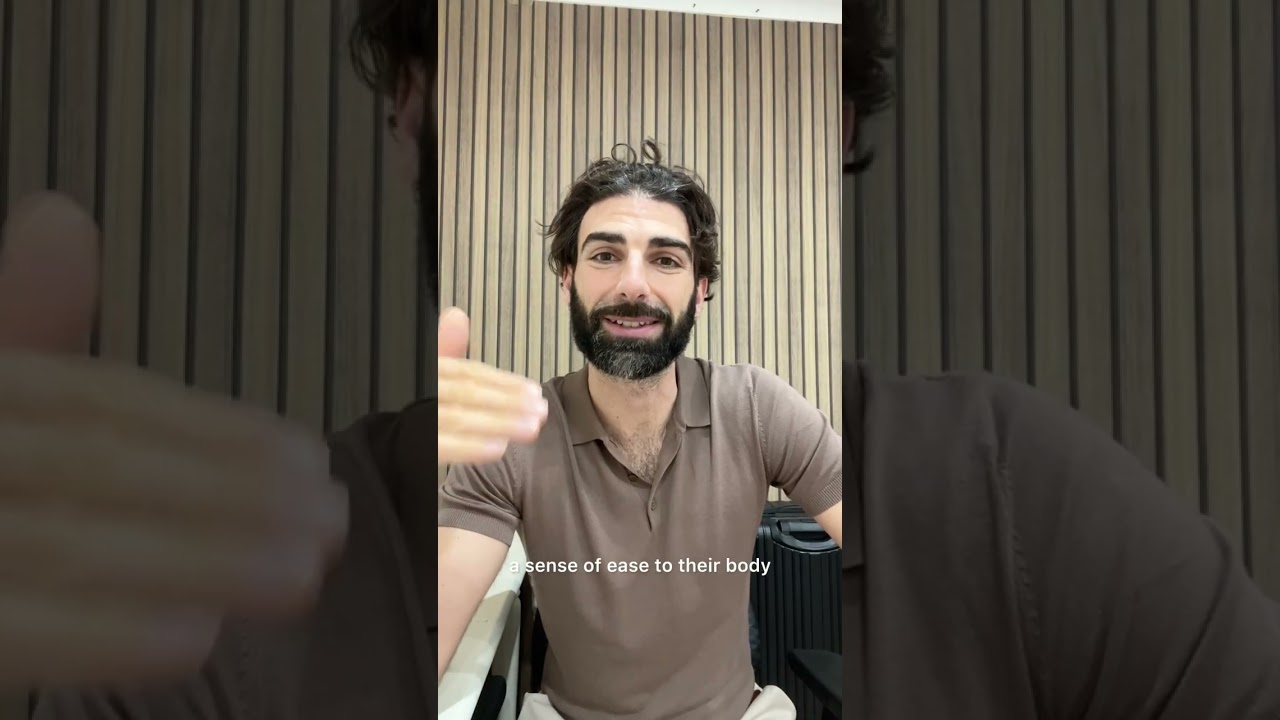
Why You’re Experiencing A Change in Form (And How To Reconcile It)

When athletes and entrepreneurs suddenly lose form despite unchanged circumstances, unconscious constraints are usually the culprit. Deep beliefs like "I'm not good enough" act as invisible filters that shape decisions and emotions. By surfacing and reconciling these hidden narratives, you can shift from acting out of fear to acting from freedom and restore your performance.
Chapters
When I'm talking with my athletes who have gone through a loss of form, or even entrepreneurs, a loss of money, or athletes, a loss of money— wherever there's this experience of loss where things were going a certain way and now they're not— what a lot of coaches in the sporting world and business world don't tap into is this deep layer of unconscious constraints that accumulate over time, and then they seek to be expressed into our performances, into our results, and then we feel blindsided by why things are going the way they are. So the point of today's message is to give us a little insight into what is actually going on there. So there's these unconscious, invisible constraints that accumulate over time, and this is called our conditioning. And this could have been accumulated from taking on beliefs about who we think we are long enough to the point where now we've tried to avoid these constraints from being true, because why would we want something about us that's not nice to be true, that's disempowering to be true? Like, Not being good enough, feeling trapped, feeling like we're just going around in circles. You know, these types of beliefs become unconscious narratives that accumulate over time and become our conditioned state, which we express from unconsciously because we don't really want to come from that place. But because we've bought into them being a truth for so long, we're actually expressing from them, actually performing from them. And it's giving us results as a mirror to reflect back to us this invitation, a catalyst for our growth. And because we're suppressing these constraints and it's insidious, meaning it's happening in the background and we're actually— it's not working for us. We are competing, but we're also trying to avoid these narratives coming true. And so it all comes crashing down when we start to have like a dip of form or something changes when we haven't really done anything different in our routine. Nothing's actually majorly changed in our life, but we start to see a decline or we start to see a loss of form. So, you know, what I talk about with my athletes is to reveal this constraint that's actually coming to the surface about not feeling good enough, not feeling like, you know, they're worthy of having a starter role on their team or being an all-star or whatever the case may be for them. Getting down to the genesis of where is that even coming from, this belief, this narrative, and Once we address where that's coming from, we reconcile it, we realize that the players that I talk with have actually stopped relating to things going on in front of them just as they are. They're actually relating to them from the story to which they experience from. And that's the key distinction I talk about with people, that there's a difference between awareness and self-awareness. Awareness is just seeing things for the way they truly are, the reality, the objective reality. So if the ball's not going in the hoop, That's the objective reality. There's no other story around that. Now, self-awareness is your story of the ball not going in the hoop, meaning, you know, I'm having a bad slump, I might get subbed out. What are people going to think of me? It's my contract year. That's the story. Now, that story is just a surface-level sign of an unconscious constraint, meaning they're just an effect. If you know about the law of cause and effect, the story is an effect. Of a deeper cause, which is I might not be safe, I might not be good enough, things might get taken away from me. And that's a world that people live in. And so they have an effect of that is the narratives, type of ideas they have where they make decisions and responses based from fear and avoidance rather than inspiration and possibility. Tiny distinction. It's going to catapult all of the skills that you're doing, your routines, your daily habits. It's going to define how impactful they are, because we could all have the same schedule in our training day. We could all meditate, we can all do ice baths, we can do all the recovery in the world, have mental skills, visualization, affirmations, whatever the case may be. But the person who's going to be doing them from fear, from their unconscious conditioning, versus the person that's going to do them from a place of freedom and exploration for winning, there's going to be a difference in results there. And that's what we help people with when they come to me. With, you know, a loss of form or, you know, they're trying to go for a breakthrough they've never had in their life. We actually get rid of the constraint first so that they can start to perform from freedom. Equally, a life coach is going to be able to reveal strengths about you that you didn't even know you had. These are also blind spots, but they're the— for the opposite, right? They're blind spots about what's so great about you that you haven't even realized, which is also part of the mental invisible constraint that's accumulated over time that causes us to not even see our own strengths. And puts us in a smaller box, which we perform from, and then we wonder why we get the results we're getting. And so, yeah, what often happens is when I reveal these blind spots to people, even if it's something that's a conditioned state or something that's great about them, what starts to happen is a realization comes. They start to realize their story, and they start to dissociate from this story, stop misidentifying with it, and actually start to identify with What's actually happening in reality, which when we find out is actually not much happening, is just what is. A ball goes in, you get subbed out. That's just facts. Now, the meaning we apply to that, when we actually gain, regain ownership of the meaning we apply to that, we gain consciousness, we gain authority, ownership to respond congruent to our long-term goals so that every time we respond, we're creating the next 3 to 12 months. So with my athletes, it's less about what's actually going on in front of them, and it's more about the story of how they're experiencing what's going on. Let's say you're not getting much playing time, or let's say you're on the court and things— the scoreline is not going the way you want it to go. It's your story of the scoreline, it's the story of being on the bench that's actually dictating your responses, which are going to shape the next 3 to 12 months. Now, if you can reclaim ownership of your responses, By changing your perspective, which requires— this is what a lot of people in sport aren't willing to do. Coaches aren't willing to go there, the depths of conversations to reveal the unconscious conditioning which is giving rise to you even responding in a negative way, not even negative, but a disempowering way that hasn't got your goals, intentions in mind, which causes us to become unconscious and have reactions. And then that plays out In our performances, in our life as results. And we get the feedback and we lose form. We don't get playing time. And it's a self-fulfilling prophecy. So you can see how important this work is. But because it's not a very common type of work, the reason being is because we are resurfacing things that we have secretly been trying to avoid. This notion about, you know, maybe our parents never believed in us, or maybe we bought into the fact that Who are we to achieve such things in our life? And we're not worthy. And these normally come from a memory in childhood, and we've been avoiding those memories. We've actually been trying to make sure that those memories never come to the surface. But because the emotions are still present from the memory and the, and the meaning we gave to that memory, we're suppressing a lot of emotion. And so when we're on the court, we're performing and suppressing. So it's a conflict. We can't be present to what's going on in front of us totally, the awareness of what's happening, because we're also busy in the story of our head trying to disprove that. Now, when we actually give an athlete rest and dissolve that story, they don't have to keep it up anymore, don't have to hide, don't have to, you know, manage these lies about themselves. You have way more capacity and resources to just attend to the present moment and to your long-term goals. Normally what happens is the things that they were trying to avoid Ends up not happening. Why? Because they are totally focused in the moment. Their congruent actions to their goals are coming to light. They have deeper capacity to be present and not react or respond from a place of fear. And instead, they're responding and playing from a place of opportunity. Everything is seen as an opportunity. So if you've ever felt guilt, shame, blame, or embarrassment, these are signs. They're effects. They're not causes. Effect. So they are signs that there is a deeper unconscious constraint, invisible constraint that's accumulated over time and is now a conditioned state where we walk onto the court and something happens and it makes us feel anxious, guilty, shameful, or embarrassed. But it wasn't the action that made us feel shame. Because remember, if we're looking at objective reality, there is no shame attached to anything. There's just things going on in our life. But the story of what we're experiencing, the things going on, is going to trigger shame. But that story was already inside of us in our heads, replaying over and over again before we stepped on the course. So of course now, because we're being loyal to avoiding that story, we show up in a way that causes that to come up, because things that we avoid self-perpetuates that happening again. Because if you really were free from these stories and you really truly believed there was That there's nothing wrong with you and you are good enough, then you wouldn't have to avoid anything. You'd just be present. You'd just attend to the scenarios at hand. There'd be no things to run away from. You'd be free to perform. So really, this is an investigation to the validity of those stories that we believe about ourselves that aren't true, that are causing the loss of our form or the results in our life that we don't really want. And once we challenge the validity of that, we end up finding that they're not true because they're not based in actual reality. They're based in personal reality, which ends up becoming our personality, how we keep showing up to avoid something. So-and-so is insecure, so-and-so, you know, you can't say that to them because they'll react this way. That becomes our personal reality. But through this work, once we actually reveal those blind spots, we start to realize that that's not really us. That's just something we bought into. When we can reconcile that, we move away from trying to prove it wrong. And we move into a space of freedom. There's nothing to prove wrong now. I can actually look at everything as an opportunity to win, possibilities to win. Now, that doesn't mean that you're not going to get emotional. It doesn't mean those old habits and old conditioning is not going to go away. Remember, it's a conditioning for athletes. They understand what physical conditioning is, that you're going to remain in that physical conditioning until, you know, a few weeks pass. So you know that that conditioning lasts to a certain point. Now, with The mental conditioning, it's been going on for maybe 20, 30 years, so that's still an ingrained habit within us. Of course we're going to get these times that we flip back into our story rather than actually what's going on. And if you looked at the previous video I shared about Novak Djokovic, he talks about how long he stays into that story is very minimal. He's trained himself to not relate to those stories for as long as possible so he can snap back out and go into actually attending to the reality, to the performance, which is why he's able to be one of the most historic players for playing his best and playing the most crucial points at a level of consistency that not many people— well, no one in history has matched yet. And this could also be happening for you. You could also achieve that when you start to talk about these topics. It could unlock your maybe 20, 30, 50 extra percent of the potential that you know is inside you, which you don't really know how to unlock right now.
More from Alessandro
How To Change How Your Environment Responds to You #podcast #inspiredleadership #goalsetting

If There Was An Absence of Fear, How Might You Move Forward? #AthleteMindset #YogaInspiration

The Tennis Player’s Mindset Trap 🎾 #SportsPsychology #AthleteMindset #TennisLife #MentalGame
Why Being "Good on Paper" Alone Isn't Enough #HighPerformance #RealityCheck #Potential

Dissolve the False Narratives Holding You Back. #relationship #selfhelp #productivity

Training Your Mind to Embrace Difficult Moments. #relationship #growth #clarity #mindsetshift


Rewriting the Internal Stories That Shape Your Performance and Legacy | Alessandro Sciaraffa