Finding Genius: Alex Atallah, CTO & Co-Founder of OpenSea, the first and largest NFT marketplace
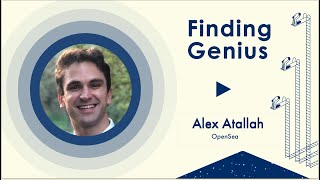
Alex Atallah, CTO of OpenSea, explains how the NFT marketplace grew from a CryptoKitties moment into a platform handling art, gaming, and virtual worlds. OpenSea removed gas fees for listings and bids, added lazy-minting so creators mint free, and integrated Layer-2 chains like Polygon. The $23 million funding round included Andreessen Horowitz, Coinbase, Mark Cuban, and Naval Ravikant.
Chapters
Good afternoon, welcome back to the Finding Genius video series. I'm here with Alex Atallah. Thanks for joining us today.
Thanks for having me.
Yeah, Alex is the co-founder and CTO of OpenSea, and that's the first and largest marketplace for non-fungible tokens, or more commonly known as NFTs. OpenSea graduated from Y Combinator W18 batch and raised a seed round from Founders Fund, Coinbase, And then based on its success, Andreessen Horowitz recently invested $23 million into the company alongside Mark Cuban, Naval Ravikant, and Alexis Ohanian. Alex, before we get into all that, could you share a bit more about yourself, your interest in the space, when that began? And I know you worked at Palantir as a securities engineer and Apple sometime. So where your interest in crypto began and how you slowly decided to start your own company?
Yeah, I was an intern at Apple and then a 2-year intern at Palantir. The interest in crypto started in 2017. I think everyone was kind of trying to figure out what was going on. It was a big ICO boom time and there was a lot of speculation. I was kind of looking for applications that didn't have to do with rote speculation. And Devin and I started experimenting. We applied to Y Combinator with a totally different idea, something called WiFi Coin, where you could get crypto in exchange for lending your bandwidth on your guest's hotspot at home. And then we, on the first day of YC, we pivoted to OpenSea because it was a huge turning point in crypto when CryptoKitties happened. It was very clear that there was something new going on. There were a lot of people playing CryptoKitties, trying to buy Ether for reasons other than the typical reasons people were getting into crypto at the time, which was speculation or drugs. So This was different. This was suddenly something that was new, focused on an original use case. And a lot of big industries start with things that look like toys, things that are just games. Facebook started with Hot or Not. Apple started as a kit for computer hobbyists. You just order and assemble yourself. This looked like the start of something new because it was developers giving or removing a lot of the mental overhead associated with a collector wanting to own part of the real estate of the game. And the things you could do with non-fungible assets are just so much more powerful when they're not controlled by just one company. You'd be surprised how much mental overhead is just gone when you see that a game or a website or a decentralized app does not depend solely on a server being run by the developer.
Could you, could you just talk a bit, a bit about the genesis of the technology that had shifted everything that led to CryptoKitties actually being founded and something that's a little bit more away from the speculation that was going on in the crypto space at the time?
The genesis of the CryptoKitties idea, it was a hackathon project at a hackathon called ETH Waterloo run by a team called Axiom Zen, which makes a bunch of different types of software. They were not crypto-focused at all. And they just figured like, well, you know, why not put game items on the blockchain? There's quite a few situations where games like, I mean, most gaming today involves items of some kind. And often we do microtransactions. Fortnite does billions of dollars per year for people buying and trading these in-game items. They made Zynga what it— Zynga built an entire company on top of Facebook using something similar. So why only currencies on the blockchain? Actually, most things in the world are non-fungible. Currencies are kind of the odd one out. So they just did it as an experiment to see what would happen. And those one-off, like 'What if we try this?' experiments often catch fire. Before that, we had— there were actually a couple of non-fungible token projects that had been experimented with before CryptoKitties. CryptoPunks is an example. This is art on the blockchain. This was founded a couple of months before CryptoKitties, where you get 10,000 pixelated images of heads that were sold initially for 0 ETH each. And now the minimum price is something like $60,000 or $70,000 for one of them. And the highest price around $7.5 million. So CryptoPunks sort of started this very early art boom. And it took a long time. It took 3 years for art to really take off. But now we see art as top 1 or 2 verticals in the entire NFT space.
So what else changed when you joined Y Combinator, decided to make that pivot and start building OpenSea in those early days? Were you seeing more creators that needed a space to actually sell product?
We were seeing— well, first we were seeing communities that cared about something other than speculation. They were actually interested in building applications that you could just provably— or you could prove the output of the game by looking at the smart contract and seeing how people interact with it. I mean, it's a really fun experience. You'd see a smart contract pop up on a Sunday at 2 PM sometimes. With just hundreds of transactions happening every 10 minutes and be like, whoa, what is going on here? Oh, it's a game where you can get this token, you can steal it from somebody. If you're the owner of the token, you can modify this website to change someone's bio. It's a game built on top of the internet, an internet-native game. And everyone's like playing games on the internet thinking they're really internet native, but they're not. They're sort of being hosted on a computer somewhere and you're getting a view to that computer. A blockchain game is a bit more, you know, it's a whole, it's a different beast and it's hard to describe until you really get into it. But we saw communities pop up that were enthusiastic about it. We saw developers experiment with non-gaming items. Some were doing software licenses, some were doing, um, some were doing art, some were doing like places where you could upload your art and sell them, um, some were doing domain names and wallet names. Ethereum Name Service and Unstoppable Domains are examples. And some were doing virtual reality projects like Decentraland. They were the first to formalize an ERC-721 standard, and CryptoKitties right about the same time.
Right.
And they did that for their land sale where you could buy land and experiment and experience like Minecraft and control what gets built on top of it.
Wow. And when you were seeing all these communities form, what were some of the limitations, the problems that they were facing that you were learning about in your conversations with them?
One big limitation was a lot of the experiences were really primitive, really primitive graphics, very, you know, intense crypto user bases, but they were a bit hard to access. The onboarding was rough. You had to, like, the wallet infrastructure back then was not as streamlined as it is now. The liquidity was not as good, so that's where we came in. We wanted to build a place where people could first discover these projects as they were popping up, and second, buy and sell and gift the items that they get in the game. And we wanted to do initially we made it so that these items would leave your wallet and go into an escrow when you're trying to sell them. And then we got rid of that process so that you could keep ownership of your items when you put them on sale. And we were the first major marketplace to do this. We were the first marketplace to remove the, the gas cost when selling after you've approved it once, the first to remove the gas cost when bidding on an item, the first to remove the gas cost when doing auctions to the highest bidder.
Yeah.
I didn't explain gas costs, but—
No, but maybe you can explain it for some of the others.
Sure. So gas costs are unique user challenge on the blockchain. In order to— if you want to read the blockchain and see what's on it, that's always free. But if you want to write to the blockchain and change its state, you have to incentivize all the computers that mine new blocks for that blockchain. So this can be pretty expensive if there are tons of people writing at the same time. You have to really incentivize these computers to accept your data. And, you know, today it's pricey. It's about $30 to just transfer an item to somebody. Back, you know, 3 years ago, it was $2 to $7. So we, you know, this obviously is a really big impediment to growth because basically taxing your users to use the app, right? And, you know, we've been gradually reducing the step, like all the cases where you have to spend gas. Recently in December, we launched a very big new feature which lets you make NFTs for free. You can go to OpenSea and click create. You can make these templates, basically NFTs that get lazily minted when someone buys them. So that means that the first time any gas gets spent after the seller sets up their account is when the buyer is buying it. And that's when the miner actually accepts the new data on the blockchain. Well, like in a few weeks, we're going to get rid of almost all the gas costs completely because we're letting sellers use a blockchain other than Ethereum. Where OpenSea— And is that Tezos? Yes. First one will be Matic. We've been working on it for like 6 months, Matic and Clayton. It's been a big infrastructure change and Matic and Clayton have been in read-only view for a few months now. With a developer-only marketplace that developers, a couple dozen developers, have been building on top of for the past few months. So those are coming first with a couple other blockchains coming afterwards.
And can you talk a bit about that? Like, what was the difference in the infrastructure and how can OpenSea as a marketplace will now be one of the first ones to do all this without gas costs and how that leads to a bigger boon in the NFT space overall?
Honestly, it's a miracle that so many people are using OpenSea given that you have to spend like $20, $30 in gas to buy something. I mean, the big downside there is that if you want to make a low-price collectible or a free collectible, then say it costs $10, people are going to be spending $30 to buy an item that costs $10. And if you accept a bid, say someone bids on your item with $10, then you're spending $30 to accept a bid that's only $10. So only high-price collectibles and high-price bids are really worth it right now on Ethereum. And OpenSea will cover bids above 1 ETH for English auctions, auctions to the highest bidder, so that sellers don't have to pay that. But we can't afford to cover the gas costs for everybody. So what layer 2 blockchains like Matic and Clayton and Tezos and other blockchains that have low, very low gas costs, including Tezos, Binance Smart Chain, xDai, and several others. What those unlock is the ability for OpenSea to cover the gas for everybody. And that means that it's free to buy a free item and free to accept, like really basic stuff that most buyers expect. Suddenly those expectations are going to become a reality. So it unlocks an enormous amount of things like low-price game items, airdrops, like complex multi-ownership things where many people can own something for a lower price, which is currently available. It's just not very economical for buyers. And also just, you know, it eases onboarding. It means that without owning any ETH at all, I can just earn my way into the ecosystem and never ever you don't have to go buy Ethereum or crypto to play around with it.
Can you talk a bit about— I know we only have a few more minutes, but I have a lot more questions— but you moved into this space for— because the communities were forming. How much speculation do you think is going on in the NFT space now, or do you think this is really because interesting creators and buyers and sellers are all coming together on the same marketplace?
Well, one, one type of speculation that you could argue is happening, that has been happening for a while, is people investing in creators. And that, that kind of speculation, I, I think, is a lot more interesting to me. It's when people buy art that is being made by a not mega famous artist because they think that this artist is going to be more famous in the future. They want to bet on them. They want to become a part of their career. That is happening a ton, and it's, it's, it's the only way to, to do that. They're, you know, same thing happens in NBA Top Shot. People are, you know, buying rookie moments Often with a lot more volume than some of the starting 5. So it's a way of investing in culture and you also get something out of it. You get something that's inherently enjoyable. So it's a win-win for both parties. I think that's going to be very dominant. The continuing use case.
And so you see art right now as one of the bigger areas. You just mentioned NBA Top Shot. Where else do you think the NFT space is going, or how is OpenSea helping to drive that? You mentioned some stuff around the gas costs, but what are the other areas it's expanding into?
Music is starting to pick up now. A lot of musicians have, you know, like, it's— this is a much more scalable way of hitting sustainability. If you, like Blau, for example, instead of getting a million people to pay him a dollar, you can get your 100 or 1,000 true fans to buy an NFT. And it's just a lot more, a lot quicker. And you can own, you don't have to rely on any platforms for that. You get a bunch of wallet addresses that you can send something to. So it's a, a anti— it's, it's a direct-to-fan platform. There's also gaming, which everyone's used to, and now people know about NFTs and want NFTs. So imagine when, you know, major games launch, which have been, you know, in progress for over a year, over 2 years now. Major NFT games will launch that will give users access to NFTs for their game items. And then virtual worlds are gradually improving in quality, are going to get really exciting and be cool venues for musicians and artists and games to access an audience.
Last question is, what's the NFTs that you're buying on OpenSea?
In addition to those that I just mentioned, I like the decentralized domain names where you can buy, like I have alexatalah.eth that controls both my wallet address and a website that you can view in browsers that support the Ethereum name service way of looking up the root of a website. I also, I love art from emerging artists. I like things that just look very unique. On-chain art is exciting. Art Blocks is a good project I'd recommend. They aggregate a lot of generative art projects together in one place. And see what else. And then for games, Neon District, Skyweaver, there are a bunch of others that are building on MATIC. And have exciting game experiences. I'm really looking forward to their launch.
Yeah, thank you. We'll check it out. Alex, thank you so much. This is very interesting.
No problem. And I can go like a minute over if you have another one.
Yeah, I do. I mean, I was wondering about the most recent fundraise. I mean, especially because it includes Coinbase involved in the company. So could you Can you talk a bit about the investors that you brought around the table and how they're helping this next phase of OpenSea?
Yeah, we brought in Andreessen Horowitz, Katie Han, and Chris Dixon as our lead, and they've been very helpful in setting up intros and helping us start the scaling process. We brought on Nival Ravikant, Mark Cuban, Tim Ferriss, and then the CEOs of Behance and Figma and a couple of musicians and creators like Rak and Blau who we're excited to work with to get very hard product advice. We're very big on getting product advice and and business advice from our investors. And, you know, especially the creators, we want to, we want to help them grow their audience as much as possible and help them engage their audience. Interesting.
That's great, Alex. Thank you so much. I appreciate this.
No problem. Great to meet you, Tom.
You too.
Talk later.
It's just, uh,
More from Alex
Are YOU getting enough out of your LLM experience? feat. Alex Atallah of OpenRouter
Fun stories from building OpenRouter and where all this is going - Alex Atallah, OpenRouter
Will Open Source AI Overtake Closed Models? Ft. Olama, Fireworks and Open Router
From OpenSea to OpenRouter: Alex Atallah’s Masterplan for LLMs | Data Driven NYC
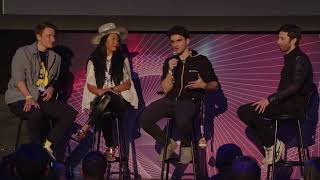
Beyond Hype Where Are NFT's Headed Matt Medved; gmoney; Swan Sit; Alex Atallah OpenSea, Alex Saln