Flow OWB - NFT Ecosystem Overview by Atallah Co-founder & CTO of OpenSea
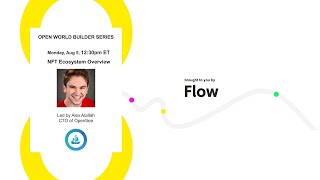
Alex Atallah, CTO and co-founder of OpenSea, explains how the NFT marketplace evolved from solving metadata chaos into a flexible platform supporting studios and indie developers. OpenSea charges 2.5% and is adding multi-chain support including Flow. The biggest gap: NFTs need compelling content like Zynga created for gaming.
Chapters
Might have to look at a different website or like a Dr. Seuss website.
No, it's Montserrat, which looks like—
I think that's like a Google Docs font.
Yeah, it's not special, but it does look kind of Dr. Seuss-y.
Yeah, good choice.
Yeah, I remember the Dr. Seuss font being inside of Word. Oh yeah, the program.
No way.
I think I definitely used it for something. Yeah, it was interesting.
Maybe writing like the next script. We'll give it like probably another minute and then we'll, um, Okay, I think we'll make a start. So hi everyone, I'm Piara Bamra, Community Lead at Flow. Thank you all for joining today's product workshop. We're very lucky to have Alex Atallah, who is the CTO and co-founder of OpenSea. We're going to kick off asking Alex about his his personal journey on how he started OpenSea, what he's working on currently, collect some tips on building a marketplace, and then we'll wrap up with Q&A from the audience towards the end. So I encourage everyone to submit your questions to us during this webinar, and we try our best to go through and ask them all towards the end. Also, we would love to hear your feedback as we go along, so feel free to tweet us @flow_blockchain and use the hashtag #OWB. So without further ado, and if you're happy, Alex, can you start off by telling us a brief introduction about yourself, your journey into crypto, and how you came across NFTs?
Sure. I'm Alex Atallah, the CTO and co-founder of OpenSea. I got into crypto originally right when I was wrapping up my last startup, and I my background, I worked at Palantir for a bit doing enterprise software, and I was mostly not in tune with the consumer space and that side, but I was looking, I was getting more and more into it kind of as my career developed. And when it, like at the very end of 2017, that was really when the whole ICO craze was happening. I saw this— it was like a new type of user emerged. Every app has power users and new users. And there's been this ongoing dichotomy between the two. It's like a perpetual battle where some apps are really good at appealing to power users and terrible at new users and vice versa. And in 2017, it kind of became apparent that there's like another, a third type of user. The speculator that doesn't necessarily want to use the app, but really wants to bet on it. They really want to own a portion of its success. And because of the IPOs, it's just impossible for people to do that for the companies that they really like, or a lot of the time, the companies that they use that haven't gone public yet. So I saw something there. And I also saw a lot of nonsense, a lot of people just being opportunistic and trying to take advantage of new users coming into the space. So my co-founder Devin Finzer and I— Devin was at Credit Karma, his startup had been acquired, and previously was at Pinterest. We were exploring the space, looking for what the real users were doing, not just the speculators. Speculators were still very interesting. They definitely knew. But there was some real users actually using crypto for things that weren't about buying drugs or weren't about just speculating. And these users were playing CryptoKitties and using and collecting CryptoPunks and rare Pepes on the Bitcoin using Bitcoin. So there was something there, and CryptoKitties made it really clear that there was something there. That was the reference app that had just emerged on Ethereum for non-currency valuable items. And we call these non-fungible tokens. So there became apparent a need for a marketplace around this new asset. Category. And we just went heads down and started working on it. We'd been working on— we'd been fiddling with hackathon projects before. And we decided to pivot into this when CryptoKitties became real. I mean, there were tons of distinct users. We were hearing our friends just get into the space because of it. And you could obviously see the impact on gas prices on Ethereum. And gas prices, when they go up, it sucks. But it also indicates that there is demand to use the blockchain, demand that exceeds the supply of miners. So we saw it as a really good signal, and so did Y Combinator. We were in YC for the beginning of 2018. And our investors, we have one confirmation Kevin Hart was at Founders Fund, Coinbase Ventures, and a whole— a couple others that joined in to get us started. So we've been really lucky to have a lot of support, and we've also been really lucky to see a community grow around these assets, people getting really creative, both with the content and with the functionality that you can do when you buy these things. Does that answer the question?
Yeah, absolutely. And again, thank you very much for sharing that story. I'd like to know more about your go-to-live strategy with the OpenSea marketplace. What were some of the challenges you experienced at the time, and I guess, how were you able to overcome them?
So let's see. One challenge was— I mean, one challenge was adapting to deviations from standards. And if everybody had followed the same metadata standard and the same smart contract template, if everyone had cloned CryptoKitties, if everyone had had sale clock auctions that worked the same, things would definitely have been a lot easier engineering-wise for us. But because that wasn't true, we had to change our architecture pretty significantly to look like a plugin model. So we basically have a very We try to build a very strong core product around exploration, discovery, when new smart contracts get created, when new assets get minted, and just generally listening to the blockchain for new events. But every developer— it became apparent that just requiring people to follow the standards is just too much of an impedance on creativity. And creativity is really important in a small market like this. So we re-architected things so that we would look more like building plugins on top of a strong core. And we just started crunching away, building plugins for every game that we found that looked like it had any amount of, of potential. And then we realized that it's really hard to predict what is going to work. It's not necessarily the things that look super valuable or have really like crazy, you know, things that come from a game studio like Supercell. Sometimes that stuff is going to really work, but sometimes it comes from nowhere. It comes from like a place you would never have expected. It comes from an indie developer, and we're kind of at a stage where the indie developers have a real shot at success, a real shot at creating the reference app, the next CryptoKitties that moves the space forward. So we started being more indie-friendly and that was a challenge for us to balance big projects and work with big companies to working with indie developers and making ourselves more indie-friendly. And we ended up kind of doubling down on the indie developers and the long tail, as some people call it. But we, we don't really like to think of it that way. I, I'd say the indie developers tend to enjoy, like, they ship really quickly, they break a lot of things, they usually don't care about standards that much, but that's not really a big difference with with larger companies. But supporting them and doing everything we can to help them build on top of OpenSea was a challenge that we are probably our first major challenge that we worked on. So we built an SDK, we built a really flexible API. We set up, like we did tons of support, we talked to hundreds and hundreds of hundreds of developers, and we just tried to be really good at replying to people as quickly as we could. So that's one challenge. I can go into another one if there's time.
Yeah, no, absolutely. Just on that point as well, was it quite challenging trying to explain blockchain to some of these developers as well that you mentioned?
Usually the indie developers already get it for the most part. They're going into the space because something about blockchain caught their eye because they found blog posts or they found reading material, they found sample code and they usually took the time to kind of get what the gist is. And of course, we spent innumerable hours explaining details, like explaining how transferFrom works versus safeTransferFrom, how to approve items for transfer, why some contracts don't work when you approve an item for transfer and others do, and why— the difference between the CryptoKitties contract and the NFT contracts that followed it. Why CryptoPunks is different, really, really different from most smart contracts. And all of that stuff does involve a lot of direct communication, and that's basically what our Discord server has become, is a gigantic Q&A for everything related to NFTs.
Yeah, and I guess like replying instantly probably helped quite a lot as well through that, through that process. If one of our listeners were to go to OpenSea right now, what can they expect? Like, what does the marketplace offer right now?
Right now, the marketplace offers a really easy way to explore, discover, and buy items from every collection on Ethereum. So we look at new smart contracts and we help developers edit metadata, both for the contracts and for the assets. That are on them. We also help artists create their own collections and mint their art directly into them. We, and as a result, buyers can have all of these cool ways of filtering and searching and discovering new types of collections. We have a rankings page, opensea.io/rankings, that lets you see what's trending this week, sort collections by volume. And we group smart contracts together by what collection or DApp or company they're a part of. We verify contracts and we verify sellers in the case where they have some influencer Twitter account or Instagram account. And we basically help buyers be safe. And we explain buyers how to buy things. We help developers create new types of ERC-20 tokens that they can use to sell their artwork or their game tokens. And we provide a way of discovering things by unique traits on the assets. So we have a pretty detailed metadata standard that we have in our docs and most developers follow it. And it allows your, when you configure your server to return metadata in a certain way, it shows up on OpenSea with cool little bubbles and sliders that indicate the power that your item has or the wisdom or the rank or the rarity. and you can get all of that to show up, which adds a lot of value to your items on the marketplace.
That's super interesting to hear. And are you able to share some of those stats around any specific trends that you're noticing on, um, within the NFT landscape right now?
Yeah, um, so there's about like $3 to $4 million USD being traded per month not including a couple contracts and marketplaces that have closed source contracts or that we, we can't track for whatever reason. So it'd be like a lower bound. We have noticed that art is, is one of the fastest growing subcategories, and part of the reason is just because it's now really easy and accessible to mint and create your own non-fungible tokens now. You don't have to have any coding background, you don't have to be a developer. There are a lot— there are a whole bunch of platforms that can help you, including Rarible, Mintbase, um, Cargo just launched. And these— the cool thing about these dApps is that the moment you mint something on them, they're instantly viewable in your OpenSea account. There's no crazy API integration that's going to break all the time. It just works. And that's the beauty of blockchains. It's an API that always just works, that everybody agrees on, and that no one can control and mess with. So when you, when you use other dApps, or when you need some special functionality, you can always rely on OpenSea to be able to sell it. So the But the point being that— oh yeah, your question was about trends, so let me just stick to that topic. We see trading card games growing in popularity, and we think they're probably going to be a lot more interesting when Skyweaver launches in the next month or two. Skyweaver is similar to Hearthstone for those of you who don't know, and I highly recommend checking it out. There's also Virtual Worlds, which have for many, many weeks over the past year, most weeks over the past year, Virtual Worlds have topped the rankings page on OpenSea for 7-day volume. Virtual Worlds are kind of like think Minecraft and Second Life, except you can actually own the property that you're walking on, and you can collect rent when other people want to build on top of it, and you can set up your own shops and put things that you own for everyone to see. And, uh, I mean, one thing that we've used them for is team meetings. Sometimes we'll all join will jump in a parcel into Decentraland and start chatting for a team meeting. And we're seeing that it's slowly becoming more and more usable for things like that. The speed and quality is going up over time. And the landscape for tinkering is metaphorically and literally very large. So it's a nice space for developers to try out new ideas.
Yeah, no, absolutely. I think it's really cool that you collect so much data and able to look at these trends. So with that in mind, what are some of the differences that you're seeing in the NFT space right now compared to when you first launched the OpenSea?
When we first launched OpenSea, it was all about making CryptoKitty clones. And there are, of course, lots of opportunists. But there were a couple of good CryptoKitty clones that made enough variations that they were unique in their own way. There weren't very creative smart contracts back then. It was mostly, here's your NFT, here's who owns it, and then here's maybe an auction contract where you can put on a declining price or something. And maybe there's breeding, maybe there's battling, and you could do one of the two with your item. Since then, we've seen a lot more creativity on the smart contract space. Avastars is a good example. They put all their metadata on-chain, including all this crazy metadata for generating an SVG. So the whole image is stored on the blockchain. Their contract is humongous and costs quite a bit to deploy. But they look beautiful on OpenSea. We launched an update yesterday that makes the trait filtering for Avastar a lot more powerful. You know, look for avatars that are— that have a certain kind of face, that have certain features that you want. And there's a really cool community collecting them and building with them. We've seen some interesting— we've seen smart— obviously virtual worlds didn't really have any momentum back when we started, and now they do. So we've been helping— we've been working with Cryptovoxels to make their wearables show up nicely in Decentraland too. And wearables are just things you can buy and put on your avatar to wear in VR. Let's see. We've also seen— I mean, a whole new standard emerged called ERC-1155. And I'll— assuming the audience doesn't really know that much about ERC-721, I can talk about that. What do you think?
Yeah, sure, we'd love to hear.
OK, so when CryptoKitties emerged, there was CryptoPunks, which is— actually, it looks a lot like a fungible currency. It was kind of a little extension on ERC-20. CryptoKitties was a fundamentally new type of smart contract, and there wasn't a whole landscape for these smart contracts back then like there are now. With CryptoKitties, one token ID could be owned by one Ethereum wallet, and only one Ethereum wallet. With fungible currencies, one Ethereum wallet can own some number quantity of a token. You can own like 1,000 DAI, and that means you own $1,000 for the DAI currency. So with CryptoKitties, this was an entirely new, groundbreaking way of using blockchains. And it meant that you could use them for the equivalent of Neopets, where it really matters which one you own, and importantly, what its history has been. Who's bought it, who sold it, What's its transfer history? What games is it being used in, et cetera? So that was really cool and exciting. And a lot of people built on top of it, but it had a limitation, which really became apparent for trading card games. If there's a card, like, like for Magic: The Gathering, the Black Lotus is a classic example. And there's very few of them but they're all kind of interchangeable with each other. Like, there's like, you know, very few— let's say there's 100 Black Lotuses. I don't know how many there actually are. And then there's millions of other cards. You want these 100 Black Lotuses to all be equivalently valued. In some games, at least, you do. So ERC-721 doesn't allow for that. It also doesn't allow you to own multiple copies of one token. You can only own one. So ERC-1155, but those were two problems that ERC-1155 solves. It's— and ERC-1155, if you build it in a certain way, it really encompasses all of the functionality that ERC-721 can do, where one user can own multiple copies of a token and multiple users can own one type of token. There's also other small features in 1155 that I'm not going to get into. But we saw it and we, I think a year ago, a year and a few months ago, we built some OpenSea contracts in collaboration with Horizon Games, which are, they're making Skyweaver. We added functionality so that they can be really easily tradable on OpenSea. So you can have loot boxes where if you buy one, out pops tons of tokens depending on some randomness that the developer can control. And we helped a couple of companies deploy that. CryptoVoxels was one that used it. So what we're looking forward to now is, We're seeing a lot of— like Skyweaver is going to use 1155. We're seeing a bit more adoption of it now. We predict that its percent adoption is going to go up. Still mostly ERC-721 contracts by a long shot being deployed, but 1155 just allows for a lot more user use cases. And as a result, we're working on rebuilding our asset page in a pretty significant way to make 1155 more of a primary focus.
That's really cool to hear, thank you for sharing that. So given where we are at the moment, what would you say that the NFT space needs the most, like right now?
Right now, I think the NFT space, one thing it really, really needs, I would say there's two, I'm not sure which one is needed more. One thing that the NFT space really needs is good content. CryptoKitties kind of showed that when the content is exciting and appealing to people, users will jump through the craziest hoops to get to it. That was like a core learning for everybody. And there's actually, there've been a lot of people experimenting with cool smart contract functionality, but if the content, if the stuff that you're doing is not fun, it just doesn't matter. Like, and, and Fun around a game is not something that programmers— it involves a different kind of creativity. It's sort of an art. There's tons of games that hit the App Store, games that have nothing to do with blockchain, and almost all of them fail. Zynga went through like 60 games, something around 60 games before they hit FarmVille. Like, it's really, really hard to nail a good and fun game. And it involves just like a lot of trial and error. So I think the biggest thing the NFT space needs is a company like Zynga that just hammers out trials and deprecates them when they don't work. And all of these trials should have good content, like nicely designed, interesting, fun gameplay. And a lot of them won't work. And then one of them will make you a billion-dollar company. And this is not unique to the blockchain. The blockchain doesn't mean that we can't have zingas anymore. Like, we still need to have zingas. So I think that's the biggest thing. But I think what's more likely to happen in the short term is a lot of different developers rather than one giant company making many, many attempts, a lot of different developers, the indie developers, can function in the same way, where they all try to make interesting attempts to get cool content out there. And these dApps will— they'll all try— as long as they're being creative and different and trying something that's never been tried before, I think it's a good— shot. And so we've been— that's why we've been really, really indie-focused for the last year and a half. We want to make— we want to basically take it— help developers that have no audience and no shot at getting cool content out there to just putting them on the OpenSea homepage, getting them thousands of views, and figuring out which collections we think are going to be really, you know, going to be hits. We want to find the next CryptoKitties. We want to help developers build that. And, you know, we also don't necessarily want them to stick to Ethereum. Like, this is a podcast on Flow. Ethereum is great, but if it constrains your design space, you know, that's not— the most important thing is having a big design space. We don't want Ethereum to be the reason that there isn't a next CryptoKitties. And there are currently many reasons for that, especially the current gas prices. So we're building support for other blockchains. We're excited to work with developers one-on-one when they have a blockchain that they want to do. And we've heard from quite a few people in Discord about demand for Flow on OpenSea. So we're actively working on it. And we're excited about that.
That was really insightful. Thank you so much for sharing that. I completely agree on all of those points. And it's nice to know that OpenSea are open to working with other blockchains as well. So thanks again. We do actually have a large percentage of our listeners today who are interested in building a marketplace on Flow. So with that in mind, we would love to hear your experiences and tips on this topic. And I'm curious to learn if you had built any type of marketplace before OpenSea.
I had not built any type of marketplace before OpenSea. Before OpenSea, I worked on a social polling app called What's Goodly. It was similar to Yik Yak, and that kind of grew in a college-focused way. Before that, a music app called Hostess.fm. That got acquired by Beatport, and before that I was at Palantir, so, and doing HR tech at Zugata. I, let's see, so, I mean, in terms of advice for building marketplaces, the challenge that everyone talks about, that everyone runs into, is setting up a tent using two tent poles where you can't reach both poles at the same time. Those tent poles are the buyers and the sellers. And the easiest way to set up a marketplace is to lift both poles at the same time, where like suddenly tons of buyers come and suddenly tons of sellers come and both are happy. But it's almost impossible to do that. So the trick is to lift You know, I mean, not to ignore either pole, like we, we build features for buyers and sellers at the same time, and we did at the very beginning too. But at the very beginning, we were all about just getting the content looking great. And if the content looks great, then sellers will see, oh, I want my content to look like that. How do I do that? And then you can help them. The other thing is just talking to users. And we did talk to a lot of buyers, but at the very beginning, we were mostly talking to sellers and game developers. We were asking them a ton of questions about what they wanted, what kind of auction mechanics they needed the most, what they wanted as developers in terms of building the metadata API and accessing buyers from OpenSea's perspective. And we've written about this a bit on our blog. You can check it out at opensea.io/blog. What we really, I guess, and that was the first tentpole we really set up was like the developers and the sellers. With non-fungible tokens, I guess you could say there's like 3 tentpoles. There's also the developers. There are people who don't know about you at all. They're building for some other marketplace. But because of blockchain being an open API that's accessible to everybody, you can list their stuff on your marketplace, often with the same prices if it's an open order book. So we've helped developers do that. We made an SDK where you as a marketplace developer can just pull orders from OpenSea and put them up on your marketplace so that when buyers come, tentpole number 1, they already see tons of things on sale, even though tentpole number 2 doesn't exist at all. And it's just now a lot, you know, it's different and a lot more, it's a whole new dimension to making marketplaces. And we've been spending a ton of time thinking about these 3 tentpoles and how we can help developers set up one or the other. And the OpenSea SDK, we sort of see as a little thing in the center between all 3 tentpoles. It lets you focus on any one of them and we'll set up the other 2 tentpoles for you. Like we'll help you find developers, we'll help you find sellers, you provide the buyers, you get a cut of every single sale. Often we'll give you the entire fee and OpenSea will take none of it. So, you know, you can check out our SDK to learn more, but what we really wanna do soon is extend the SDK to Flow. And we're working on that. We've got some backend work and what's likely to come on OpenSea first is just a way of exploring Flow. But eventually we're gonna get to the point where we can make that an integral part of setting up your tent as people trying to build a marketplace.
Sure, I think everyone will be looking forward to that. You mentioned talking to users as a key point. Early on when you started to build the marketplace, how did you get your first batch of beta testers and what did you learn from this experience?
We, let's see, well, the CryptoKitties community was probably our first batch of beta testers. We noticed that, I mean, pretty much everyone who was interested in building on the end— I mean, CryptoKitties basically owned the standard at that point. It wasn't really, it was like one company proposed a standard that got accepted as an EIP for Ethereum. So, and there was, there's no like community for a standard, especially not then. Everybody who was interested in that type of file was in the CryptoKitties Discord and Telegram, or CryptoKitties Discord and Twitter. That was the place to be to talk to people. We did some in-person talking too. I met with people who were making $30,000 a week breeding CryptoKitties. It was exciting times. And some of it, there were, I guess there were a few phone calls, good number of phone conversations and video chats that we did. People are all over the world, but almost all the stuff that we did was just chatting with people online. Most people were pretty open to talking. We still do it all the time and we will never give that up. Trying to think if there's any other place we found beta users. I mean, I definitely think like Discord is a very underrated app still. It's just now starting to see crypto companies that are not making games drop their Telegram channels and move to Discord, 'cause it's a lot more flexible and a lot easier to control for the company. And Discord is also letting people discover each other in a less, slightly less spammy way. There's still a lot of spam, but, and they're working on it, but we found that the signal-to-noise ratio there is really, really good.
Yeah, completely agreed. I think for the, this OWB program as well, we're also making use of Discord. So kind of like, I know that NFTs are evolving and we want to appeal to more non-native crypto individuals. So what considerations have you put in place for people to get involved with NFTs through OpenSea?
What considerations have we put in place for people who are not in crypto to get involved with NFTs?
Yeah, although I don't know much about information.
Yeah, so we have a couple— we have like a getting started page that helps you out if you don't have a wallet and don't know what's going on. If you don't have a wallet, we show you kind of like a main suggestion for how to get a wallet. Getting a wallet is the first way to get started, even if you have no money. You still need a wallet. So we partner with a couple companies to help you do this. You don't even need to install a Chrome extension. Uh, there's Fortmatic, Authereum, Portis, now part of Shapeshift, and you can— and, and others. And you can just sign up for these wallets with just a username and a password. We go through and we vet all these wallets and we we put the ones on OpenSea that we know are good. If you don't wanna go through username password stuff, which is my personal preference, you can install an extension. There's Dapper Wallet, there's MetaMask, and the extensions will just inject Web3 into OpenSea to help you get started. So if you get something like Dapper Wallet, your transactions can also be paid for up to a certain number per week. So even when gas prices are high, as far as I understand. So some people are using Dapper Wallet to get started with minting, deploy contracts, get their feet wet with NFTs and exploring the space in general. There are often NFTs that are listed for 0 ETH on OpenSea. You don't even need anything to buy those. So you can easily, you can kind of easily get started and easily start making money. And, uh, and if you want to buy Ether, we have a couple things that we do to help people with that. It's still pretty early and not great, to be fully honest. Um, but given the restrictions around credit cards for the most part, But if you live in the US, it's a bit easier. You can go through wire to get yourself set up with some ETH and you can buy directly through OpenSea. If you use Dapper Wallet, it's not that bad. You can buy directly through your wallet and you can buy with your credit card and the fee is nominal. But the way most people still do it is they use Coinbase or another exchange. And you have to KYC yourself, show your ID, and your ETH comes in a few days. Not a great experience yet, but it's something that the whole space is working on. And we're pretty excited about some things that are coming up in the near future. Etherium, for example, like works, it uses a couple of different payment providers in different countries, but I can, that's kind of a separate conversation.
Sure, no, thank you. And you mentioned that Etherium can be quite expensive with gas fees sometimes. How does the business model at OpenSea work? Like in terms of fees, generally, how do you make money, I guess is the question.
So we just charge 2.5% of successful sales. Uh, well, sometimes we'll send, um, 40 to 100% of that fee to affiliates, uh, to people using the SDK, to people who refer you to some sale. We try to be really affiliate friendly. Um, we do want to give affiliates even more. And we're working on a pretty big smart contract upgrade to do that down the road. But adding support for other blockchains is probably gonna come first. And yeah, we just, we have a really, we have a pretty simple model. We don't charge for ads on our homepage usually. We don't charge for random things. It's, for us, it's just pretty much if you're making money, That's the only thing we really, really want.
Sure, it sounds like OpenSea, like you've achieved so much in like quite a, in a very like short space of time. I'd like to learn more about your team dynamics, like how many people are currently working at OpenSea and how are you able to keep up with the user demands?
Yeah, so We have 5 people at OpenSea now. We're a pretty small team. We usually, everybody, all 5 are engineers. We also have a part-time designer. Everyone is an engineer because there's so much like engineer-heavy work to support user demands. But everybody, almost every engineer talks to users on a daily basis. And we actually are really fortunate to have a lot of good moderators in our Discord who help us out. It is a really small team. So we have a moderator program and we give these verified NFT badges to people who are a part of it. They show up special on OpenSea, they show up special in our Discord, and they, you know, Chris Bell is an example, Spidey Monkey is another example of users who've just been really good at supporting other users, including with developer-heavy tasks too. A lot of them know a lot about the SDK, sometimes more than some of our employees. So we try to work with them. We also send them things sometimes. And at this point we're really conservative about our team size, but that's just kind of a company decision.
Absolutely. And my last question before we jump into Q&A, what are the plans for OpenSea going forward? Any exciting updates that you can share?
Yeah, so, well, I shared one already— adding support for other blockchains, one of our biggest ones. One, it just launched yesterday. We just haven't publicly announced it anywhere yet because we're, you know, we're— it was a very big upgrade and we don't want to announce it until we're sure that it's done. But we rebuild our whole backend, our whole search experience, our whole marketplace frontend to support basically a lot more types of assets and to improve the way we— you can search and discover collections. So there's a lot more sorting options that you can find on OpenSea now than you used to be able to. There's— it's, it's easier for collections like Avastars to filter by traits, which is really important to people. We have a big upgrade coming up soon that makes 1155 items a lot more exciting to explore and, and will improve the way you see trading history on OpenSea. But we're really excited about the multi-blockchain support and I think what we're going to see first is, is what types of items are getting the most interest. We're going to be, you know, most likely sending people to other websites to buy the items that they're interested in for a little bit. Not fully sure about the details there yet, but we're, we're in talks about it now. And The items that are going to get the most interest, we just want to expose that information to people so they can see like what content is answering that big question of where's the good content in this space. So we're, we're really excited about Flow because Dr. Seuss and NBA Top Shot are obviously two of the coolest pieces of content in the space that already have tons of demand for them. And I guess those numbers are still kind of not public yet, but they're— I think they're really, really exciting. And we also have some other changes coming up to help with gas prices. The gas price problem is really tough on artists and tough on creators. And we don't like it. As much as other blockchains are exciting, Ethereum is still worth building on top of and supporting for us for the foreseeable future. And we have an upgrade plan that we think is pretty exciting for storefronts on OpenSea that will make it a lot easier to just be a creator. And it's a really easy way to just be an entrepreneur. Just put your art up and let people buy it from you. And maybe there's no easier way to be an entrepreneur, especially during COVID Thanks so much, Alex Atallah.
That's super exciting to see the upcoming kind of launches and updates. We just have 10 minutes to cover some of the Q&A that we have from the audience. So just from anonymous, we have, do you think blockchain marketplaces like OpenSea can create a sustainable environment for indie developers?
Absolutely. So we help indie developers make money, not just on their primary sales, the first time an item sells, but on the secondary sales, which is when users trade them back and forth. You can set and customize your fee on OpenSea for your marketplace. And suddenly all of your items, when they're sold from user to user, will send you that as like a royalty, as a percentage of the whole seller's fee. We've seen a lot of developers use that to make quite a bit. One VR platform has made over $1 million in, in just a few months using just that OpenSea fee alone. So what we think is, or just using the OpenSea payments alone. So what we think is pretty exciting, and we're gonna have some cool changes to that coming up soon where you'll be able to explore your fees, you'll be able to see graphs and how they're changing over time. We wanna be really, really friendly to your accounting and to just showing you like how you're doing. What success looks like for you, what kinds of payments you're getting, and how that's changing from week to week. So yeah, I hope that answers the question.
That's awesome. And the next question is, what is the most popular revenue and volume-wise NFT category right now in general or on OpenSea? What do you predict for the near future?
I mean, currently the most, the highest volume category is game items and trading, including trading cards. Trading cards are just really well suited for NFTs. You can see like Skyweaver is gonna launch soon and it doesn't even include Skyweaver right now, but trading cards are, they often have aesthetic upgrades. That power users are willing to pay more for without screwing the new users because they're just aesthetic upgrades that everyone can see. So they give you a lot of in-game cred without making the game experience not fun for new users. So these like aesthetic improvements on game items like make it really exciting for your secondary market. It allows developers to get a pretty good cut of secondary sales for these aesthetic improvement items. And you don't have your warring dichotomy between power users and new users, which has often plagued games in the past. So the— I forget the question, actually. Was that?
Yeah, so it was the— and what do you predict for the next, for the near future?
Oh, for like what category is gonna be great? So like I said earlier, there's like the art category is growing pretty quickly and I predict it's gonna get higher. If you go to opensea.io/rankings, you can actually group all collections by their vertical or their category. You can see domain names, virtual worlds, art, trading cards, collectibles, sports, and utility. If you look at art, you can see which collections have been doing really well over for like 7-day volume over the past 7 days. So there's SuperRare with 520 ETH in the past 7 days, Rarible with 368 ETH, Maker's Place with 157, known origin with 57. All of these dApps allow you to upload art and sell it. A lot of this volume happens off of OpenSea, but we still track it and we still make everything discoverable. If you're a buyer, you can always find what you're looking for. It doesn't matter where it's being listed. If you go to virtual worlds, I think there's still a lot of room for growth with virtual worlds. So I would say art and virtual worlds are probably most likely to grow after trading cards in the near future.
That's awesome, Alex. And so here's a fun one. When dark mode?
From Anonymous. Oh boy, dark mode has been a long journey for us. We built it as like an internal hack day project and it's very hard to maintain. So we got rid of it because it wasn't perfect. What it— well, we'll probably— we'll definitely bring it back. I can't say when yet, but here's a little trick for people who want to embed OpenSea or developers who want dark mode. You can kind of get dark mode to come back if you're trying to embed OpenSea somewhere or you want to have an embedded marketplace in something else, you can put?embed=night at the end of the URL and you can still see the in-progress dark mode. But we've hidden it from the ability for users to toggle into it for now, just so that we can stay focused on the content and adding new blockchains and our major milestones coming up.
Amazing. And so this is another one from Anonymous. So you've raised money from some of the biggest VCs, including Founders Fund, Coinbase Ventures, and One Confirmation, as you've mentioned already. How was that fundraise process for you? And what are you looking for in strategic investors? And do you work closely with them on a day-to-day basis?
From strategic investors, I mean, we're looking for people who can give us feedback and talk to us. A lot of investors don't. We're looking for— I mean, often we have asks that are pretty specific when we do our investor updates. And so we, you know, we just look for some kind of help when we ask for it. In terms of what the process was like, we mostly didn't— we didn't get that involved with the process. I've done— I did fundraising for another startup in the past where the process was a huge deal for this company in terms of how much effort we put into it, making decks, all the normal stuff. And that was just way less successful than focusing on users and product. Getting maybe like a startup accelerator or a close friend of yours who is an investor to help you with the process. I mean, we definitely got a lot of help from Y Combinator, and we're really grateful for that. And I think one of their most— their best pieces of advice was, you know, stay like, talk to users all the time, stay really, really focused on product, Don't worry too much about fundraising. If you're trying to sell something that doesn't exist, you're doing it in the wrong order. Having something real will garner enough attention to make investor meetings 100x easier, and it's just absolutely worth it to have your priorities straight.
Absolutely. So the next question we have is from Alex Alexander. With the digital NFTs, where do users showcase their collection and what are the different possibilities for doing so?
With what kind of NFTs?
Digital NFTs.
So yeah. Oh, so right now, every user on OpenSea, every wallet on OpenSea has its own account page where you can explore the different collections in that wallet. Search the wallet, filter by traits, etc. If you want to create custom collections, that's a pretty— that's a good question. There are some apps that we worked with in the past to do this. One was CryptoGoods, but I don't think it's around anymore. There's— let's see— Well, I mean, what we've seen most people do is if they want to like create a collection and put it on their website, they embed their OpenSea account. You can even include an affiliate wallet address that anyone who buys off your wallet, you get an affiliate payment for it. That, I mean, and like customizing which items you show, like if you want to make a special collection for them, that's something that's on our roadmap to work on. It's something that we were hoping another app would do, and I think CryptoGoods was doing it for a bit before long. They still have it. Yeah, if you go to cryptogoods.com and click on gallery, you can discover collections that people have made. You can make your own. So that's one thing, and I think there are a couple others like it.
For sure, there are definitely some other platforms emerging. The other one I know of is Fluent.me, is a popular one as well, which I've seen. So we have a few more minutes because we have to wrap up. So the next question from Matthew is, if a project is believed they are delivering an idea which would potentially enhance the OpenSea marketplace, how would you suggest they engage with the team to discover any potential collaboration?
Good question. So the best way is to go into our Discord. You can find it on our Twitter or on our website by going under help. And you can go into the developers channel in our Discord or the general one. And if you want to keep your idea a secret, that's fine. One of our community members will just DM you in the Discord direct message channel you can chat about it. If you're not comfortable with Discord, that's okay too. You can email us at support@opensea.io and we check that email and we respond and we do what we can to help you get your idea off the ground.
That sounds awesome. So we have one here from Matthew. As a plugin solution, what was the single biggest step change or initiative for OpenSea that led to greater integration scale?
Hmm. Let's see. We, one of the biggest steps we made was adopting an off-chain protocol called Wyvern. At the time, 0x only worked for fungible tokens. They didn't have a way of transacting non-fungible tokens. So Wyvern was a pretty general protocol and there wasn't really— nobody was building on top of it yet. It's a fairly complex protocol, but with a very simple architecture, if that makes any sense. So in Ethereum transactions, there's a little bit of code that gets executed for every transaction. And Wyvern is a protocol that lets you create a bounty on an Ethereum state change. And that state change is encoded in that code, which is called call data. So we looked into how to use Wyvern to re-architect our marketplace and to power our SDK. And, uh, it, because it's so generic, it allowed us to support 1155 right out of the gate. Without any protocol or smart contract changes, even though 1155 didn't even exist at the time that Wyvern was built. So that was one of our biggest, I think, forward-facing architecture changes that helped us a lot.
Amazing. The next one is from Julian. Do you have any thoughts and feelings around fractionizing or sharding NFTs?
Yeah, I have thoughts about it. But like legally, there's lots of questions about sharding NFTs. And without going too much into those, I think it's— I think it's exciting as long as the legal question is settled. I think that it's going to— I think it's a very worthwhile experiment. And the legal question is very gray. And with all of these gray legal issues, there's just no way of answering the question until someone does it. So doing it in a safe way is just the whole question now. And maybe just doing it for international users and then going to US users later. But one of the coolest things about sharding NFTs though, is that it aligns community incentives again. With NFTs in a way that ERC-20s have always had. You can shard an NFT, give the shards out as a governance token, and let people vote using that token. So, and they can vote on things that matter to the company. They can vote on types of content that should be shown And there's a few really good experiments out there, without throwing out any names, that I'm very excited about. So we're totally supportive of developers who are building on top of that. And we're chatting with a couple right now about what they're doing and what experiments they want to work on OpenSea. And we're, you know, very open to that product.
Thanks so much, Alex. So this is the last question for today. So it's from Peter. I plan to develop a trading game on Flow. I would like to outsource the marketplace and storefront to OpenSea. Could you please talk more about this? Thank you.
Yeah, the best thing to do is talk to us and we talk, we're very good about responding. Hop into our Discord, go into our developers channel, #developers, and if you don't want to like talk about your game publicly, we can chat in DMs too. I'm Alex Atallah, and you'll see me in the sidebar. What we do for blockchains that we haven't launched yet is we try to get as much information from you about what you want We try to give you as much information as we can about what we'll be able to give you. And we give you all this stuff for free. Like we're still only taking a small percent of successful sales as our only revenue. So what we just want to, we want to make sure that like you, your creative use case of another blockchain isn't going to break something for us or or do anything really, really unexpected. In most cases, it doesn't. And all we do is help you out. And then when the time comes, when you're ready to launch and even we have everything tested too, we'll help you market. We'll put you on our Twitter. We can put you on our homepage. We can like give you, make your collection whitelisted. So it shows up in search results and on the rankings page. And we found that developers really, really, really like that. And that OpenSea is often the number one referring website for them across all channels.
I think that's really cool. Thank you, Alex, for sharing that. That's all we have time for today. I want to thank everyone who asked questions and for joining. As a reminder, if you liked today's session, please remember to tweet us using the hashtag #OWB at Flow. Blockchain. Thank you so much, Alex, for speaking with us today. We really appreciate it. But before we finish, where can listeners stay in touch with you and keep up to date with the amazing work that you're doing?
Best way to say to keep up to date is by following us on Twitter. Our handle is @ampersandopensea, and you can— you'll see on that page a link to our Discord. And that's the best way to talk to us. I'm Alex, pipe OpenSea when you get in there, and I'm Xander Atallah on Twitter, and both of those ways are the best ways to stay in touch.
That's brilliant. Thanks all once again for your time today. Stay safe and see you next time.
Thanks for having me. This is really great, and we're really excited about Flow.
Thank you.
Bye guys.
More from Alex
Are YOU getting enough out of your LLM experience? feat. Alex Atallah of OpenRouter
Fun stories from building OpenRouter and where all this is going - Alex Atallah, OpenRouter
Will Open Source AI Overtake Closed Models? Ft. Olama, Fireworks and Open Router
From OpenSea to OpenRouter: Alex Atallah’s Masterplan for LLMs | Data Driven NYC
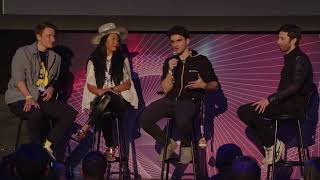
Beyond Hype Where Are NFT's Headed Matt Medved; gmoney; Swan Sit; Alex Atallah OpenSea, Alex Saln