OpenSea & Building For the Web3 Future
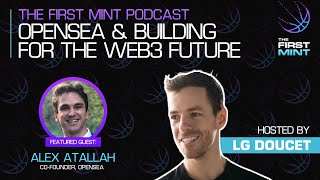
Alex Atallah, CTO of OpenSea, traces the NFT marketplace from CryptoKitties and CryptoPunks to a 1,000-fold volume increase in nine months. He explains lazy minting, cross-chain expansion, and why OpenSea chose an open ecosystem over a walled garden.
Chapters
What's up everybody? It's LG Doucette here. Today is Wednesday, November 10th, 2021. Welcome to the First Minute Podcast, where I talk about marketplace trends, big sales, and everything going on in the world of NFTs. We have a very special treat for you guys today, as we do every time we have an awesome guest. We have Alex Atallah, the CTO of OpenSea. The NFT marketplace is joining us on the show. I sat down with Alex a few weeks ago, actually at this point, to chat about really where he came from, where, why him and Devin, the co-founder of OpenSea started the company and where they see things going now that they have their new round of funding. And also as new competitors start to crop up around the marketplace ecosystem in NFTs. This honestly is a fantastic interview. I was really honored to have the chance to speak with Alex because obviously he is a very busy man. So I hope you enjoy my interview with Mr. Atallah from OpenSea. I wanna remind everybody here that nothing on the show constitutes trading advice in any way, that the show's not affiliated with NBA Top Shot, the NBA, or Dapper Labs, although we are doing Flow Fest. So that is a caveat that anything that you see from our accounts, our social accounts that are talking about Flow stuff and Flow projects, are in partnership with the people at Flow. But aside from that, I'm just a guy at his house who loves basketball and blockchain. This is the first mint. Ladies and gentlemen of The First Mint, we have a very special treat for you today. Someone that maybe you didn't expect to hear from, but whose product, whose platform you use likely many times per day. Alex Atallah from OpenSea, the CTO, the man who builds all that stuff with his team. Alex, how are you, man? Welcome to The First Mint.
Thanks for having me.
Listen, every time we have somebody on the show, we always start with the backstory. We want to know How did you first get into NFTs? What was your first impression? Did you think it was weird? Did you think it was the future? Be honest, tell us that story.
So in 2017, I started looking around for what the next frontier in tech might be. And I had just wrapped up a startup that did not do well, that was in the social polling space. A little bit similar to Yik Yak, and just in the anonymous app space. And crypto seemed like a pretty interesting candidate for what frontier might come next. I'd always been kind of bummed about missing out on the birth of computers and the birth of internet and more or less the birth of social mobile. So, and I really wanted to know what would be next, With crypto, there was something there. It was really noisy, a lot of kind of scammy ICOs at the time, a lot of uncertainty about what the true value was aside from just flipping a coin. All these shitcoins, yeah. Currencies didn't, yeah, the currencies didn't appeal a lot to me, but partnered up with my co-founder, Devin, and we started exploring some projects. We started working on one of our own. That was in— it involved like using routers to mine cryptocurrency. But we, we looked at— we, we noticed a new type of project emerge that where users were buying tokens because of reasons other than something to do with currencies. Like they were buying because they identified with the artwork that was attached to the coin, or they were trying to get access to some ability in a web experience, or they wanted to control what would be built on top of a virtual land parcel. We saw 3 projects pop up: CryptoPunks, Decentraland, and CryptoKitties. And they were all 3 in different verticals. So we figured there might be something here that was distinct from currencies and and the media was really important for these goods. Like with CryptoPunks, people were buying because they kind of identified with the artwork. It was a really humble project, very different from all the ICO projects that were going on at the time. The founders were giving away all the punks for free, and the community was growing up around the tokens, and this was a really unique type of community. But community is incredibly important to NFTs as we realized during the journey. NFTs kind of restrict the supply of who can really be a part of the community, and then the demand builds to become a part of it as the, like, utility builds on top of these, on top of the tokens, and, and as culture builds on top of the tokens and as stories emerge.
Did you guys, did you realize all of that right away when you were looking at those projects?
No, no, it definitely took a bit. We— the first thing that really piqued our interest, Devin started exploring CryptoKitties at the end of 2017, and it got really popular. It was the first time my friends jumped into the space for reasons other than flipping a coin or like doing something strange on the internet. So it was It was an exciting time because it felt like something new had just been discovered and it made a lot of sense for gamers to actually have some real ownership over the items that they spend a lot of time working for in games. So we thought gaming would emerge first and we didn't know what vertical was going to emerge first or work first. So we built OpenSea as a horizontal place to discover all of these goods. And because they were so community and media focused, we figured it would probably look more like eBay than Coinbase, where you can see cards. This is kind of where we set up the first card-looking shapes for NFTs, a filter bar in the sidebar, and those kind of basic concepts we, we started out with. But we gradually added more categories and, and noticed the space just really change over time. How long—
wait, hold on, wait. I feel like you skipped a few parts. Like, what happened? So you started looking at like CryptoKitties, and then you just turned around and started building OpenSea like the next day? Or was there— must have been like a period where you guys just dabbled and did something else at this, like, at the same time, you know what I mean? Like, what— I just want to know those first couple years.
Yeah, so, well, CryptoKitties started in November and got really popular, or very late November, early December of 2017, and crypto was getting super hot then too. We were working on a router that, at the first stage of the router, let you earn cryptocurrency for sharing your guest Wi-Fi network. So it kind of incentivized a mesh network. And we applied to Y Combinator, we got in with that idea. We started exploring maybe a lower friction way of helping people earn using their routers, which is kind of like this wasted computing device when you're not at home. And we worked on a Monero router. Monero miner that ran on your router. And, but we, yeah, we just got like, we realized that there was a real market for a brand new type of asset and the newness and novelty of NFTs we thought was a lot more interesting than just taking cryptocurrency and applying it directly to existing Web2 tech.
How did, how were people trading NFTs then? Like, how did that, what was, was there a marketplace at the time?
So CryptoKitties had its own marketplace, right? And it was an auction-based marketplace where you, or it was an escrow-based marketplace. So you would send your NFT to a smart contract to put it on sale, and you could do flat sales or Dutch auctions. Which is where the item starts at a certain price and then increases in price or decreases in price over time. And at the end of, you know, if no one buys it, you have to manually execute a transaction, pay a tax, gas, and then retrieve your NFT from the escrow smart contract. That was the way it worked at the time. We actually basically made a really similar escrow contract for the first version of OpenSea using a lot of the same ideas. And we made it work for any NFT. We built a lot of tooling around metadata, which is the word people use for name, description, image, and traits on NFTs. So that metadata for lots of projects could show up.
Why did you name it OpenSea? Was there— and I want to know what the other potential name was, which name lost.
Yeah, originally it was called EtherBay. We, again, we were thinking that this marketplace was going to look kind of like eBay. Yeah, peer-to-peer but decentralized. And it was, it was a very exciting time to work on a peer-to-peer decentralized marketplace because there was so much uncertainty that people had when interacting with each other in the space. Everyone was anonymous, everyone is anonymous or pseudo-anonymous. A lot of trades would start up from conversations in Discord, in the CryptoKitties Discord or the CryptoKitties Reddit. In the games that followed CryptoKitties, they, they all had Discords pretty much, and we would talk to users really heavily. Back to the question, we figured it would be kind of eBay-like, and then obviously realized that would be a bad name. So we made all these, like, sea-related assets because it was called EtherBay, and we kept all the sea thing, the sea theme, and wanted to change the name to something reflecting that this was going to be open and really easy to plug into. And as permissionless as we, we could make it safely.
Cool story, man. ETHBay, very cool. You mentioned the, you know, you were getting feedback from the community at the time and before we started recording, you were giving me some good tidbits there. Can you give us a sense of what that community looked like at the time?
At the very beginning of 2018?
Yeah. When you were starting up, like what that NFT community, you know, what it looks like in size and in I guess the types of people and, you know, you're even mentioning some of the conferences and the early conferences back in the day.
Yeah. So, we had a lot of— everyone was anonymous. It was a very, very organic and authentic. It's in many ways, it still is very organic and authentic community. Primarily, it was a bunch of Discord servers that organized around these projects. And usually the creator of an NFT project would start the Discord, but sometimes that wasn't the case. The Discord would get started by some fan or a moderator. There was actually one named Phil who was known for being really, you know, just being known for moderating a whole bunch of different NFT Discords for projects that he didn't directly create, but he was just seen as kind of a trusted entity. Actually, a lot of trades would go through these trusted moderators if they couldn't happen in OpenSea for some reason, where the moderator would just broker or hold the funds in escrow and then hold the NFT in escrow and then swap them. So the, these trusted moderators and creators would set up Discords and then people would We would try to put these Discords on OpenSea so that people could discover them in one place, but often people would get invited just by their friends, and the friend network was really strong because everyone felt like they were doing something new. It was everyone's hobby and everyone's side excitement. People were— everyone was doing another job. Most people were not even working in crypto. It was people working in as electricians and We had lots of different types of roles, a lot of people in America, but also Europe, some in Asia. We recruited our first moderators directly out of our Discord, people we'd never met. We didn't know their names. And it was a very kind of organic discussion process where people were— no one's retweeting anything in Discord. So it's a very— no one's like posting things just to get attention or just to get Yeah, there's no clout chasing in Discord. There's no clout. Yeah, no clout chasing. So it's a very authentic way of talking about what's new and what you like and what you don't like.
There's no, there's no influencers back then like there are now.
Well, there were like, there were a few that would run the Discords, um, and also would moderate a whole bunch of them. And it was always really exciting when they started chatting in Discord. There'd be a bunch of people who are all kind of new or early or they have unknown handles, and then someone with a well-known handle would jump in and be like, wow, just discovered this project, cool guys. And then people would go crazy.
People get excited. Yeah, okay. Yeah, so the start, the start of the, of the influencers, let's say, or of the, the big names, right?
And that still happens.
Oh yeah.
Definitely. That's, um, in Twitter usually.
But was, was the market like— I'm curious because, you know, you guys are running a marketplace. Was the market relatively liquid then? Because I, I just thinking like you're talking about moderators running, you know, being the middleman on trades and stuff like that. Um, you know, now we've got hundreds of thousands of users, not millions, but back then, you know, it sounds relatively insular? Like, were there— was it easy to buy it? Was it easy to sell if you wanted to sell an NFT?
It was. I mean, just in terms of the number of items that went on sale that actually got bought, that ratio, I'm not sure how that would compare to what it is now. I would say roughly it felt like people were excited about how easy it was to sell and often surprised. And part of the reason for this is that with physical goods, with the internet in general, it's so surprising how easy it is to find a buyer who you wouldn't be able to find just by posting in a local community. Or, and sometimes even just posting in a Discord. We built OpenSea to solve this problem, to like pool all the liquidity from every project together. I mean, at the beginning there were a few projects, so the pooling effect was low. It was basically just CryptoKitties and that community. And then we were introducing that community to the projects that were inspired by it, like Ledger Legends was an example. It's kind of similar to Magic: The Gathering. So Ledger Legends liquidity kind of came from anyone in CryptoKitties who discovered it on OpenSea.
I love that everything, every project then had some crypto-associated name like Ledger Legends.
Yeah, yeah. I love that. Everything started with the word crypto and it was like, oh God, here's another one and here's another one and here's another one. Crypto celebrities, crypto countries.
This is what I want to hear, man. I want to hear about these projects that we don't know, but we've never heard of now, but that at the time were maybe like a hot deal when they were coming out. That's, that's what we all love to hear for the, the people that are part of the new wave. On the OpenSea side, let's just kind of like fast forward to today, right? So you guys were kind of building back then and, and, you know, smaller communities and now, you know, looking at days where there's, there's tens of millions, hundreds of millions of, of dollars moving around. What would you say has changed the most in the last 12 months on OpenSea or at OpenSea?
It's hard to pick. Everything has changed. Hard to pick. Everything has changed. What has changed the most? Well, I mean, everything.
How about this? How about this, Alex Atallah? What did you think? What has happened if you rewind to the end of October a year ago. And I had just, I just got in the space at the time, you know, and I remember going to like a Decentraland Halloween party and being like, this is kind of interesting. And like, I don't know, I don't know what else, like I was buying Axies on OpenSea, I think. Like what has happened since that you could not have imagined would happen 12 months ago? And this, it could be on OpenSea or it could just be in the space in general.
I think the projects definitely changed in a way that it wasn't that surprising. We saw the first profile picture project at the very beginning with CryptoPunks, and occasionally we saw new profile picture projects emerge, but just never do as well. Entry of artists, which happened in a large part throughout 2020 and just got increasingly fast at the very, very end, we noticed that these profile picture projects started doing better. And they combined elements of art, digital online communities, and smart contracts. Many of them innovated on the smart contract layer too. Basically, technology became a part of the art, or they would make generative art based on your mint number, like something that Art Blocks does a lot. And it was very surprising how much people wanted that. We didn't expect the growth to explode the way it did. In February and then again in May and then again in August. September— August was basic, but September our volume was 1,000 times larger than it was in December. So, and a large part— another thing that was surprising was the artists that entered. I was I was really happy that it was the people that I wanted to make NFTs actually did at the very end of 2020. It was like December 2020 and January of 2021. Beeple, for example, I reached out to in October of 2020, asked what his thoughts were about NFTs and if he was thinking about it, and he said he was. And it was in the early days of his process. But there were a couple artists like him that caught on to the idea, and we saw them suddenly have this zero-to-one moment when they realized that all the community that they were building in the past, all the communities that they had been building in the past, they hadn't been getting fans, they hadn't been finding their true fans. They'd just been finding their passive fans, people who just were okay with following and maybe commenting on stuff. But followers don't really appreciate over time. Your, your 1 millionth follower is treated the same as your first follower. And, uh, and no, and followers are not getting credit for finding creators early and they're not, they're not able to be a part of the creator's career. And that discovery was, was very cool for— but we made it kind of in conjunction with a few other projects in the space in 2020.
I love that, man. Can you tell us on, on the OpenSea side, you're talking about the volume going 1,000 times bigger in 9 months, growing 1,000 times in 9 months. What's, um, I mean, what do you— you've built so much at OpenSea, and I'm sure you've got a lot more to come, and I do want to ask you about that. So far, what do you think is kind of like the coolest thing that you've got on the platform?
Coolest project or feature? Feature.
No, feature.
I think our NFT minter is pretty cool because you don't have to— it was the first feeless way of creating NFTs. The first, it was gas-free.
Gasless.
And we set up a system we call lazy minting. Where we generate a magic token ID that basically works as an NFT, even though no one has paid the gas to mint the NFT on-chain. It works. You can call transfer with it. You can check someone's balance of it. You check who the owner is. Any platform can check the owner. It doesn't even have to be OpenSea, and it just works. That was— we introduced that in December of 2020, and it made it a lot easier for people to create NFTs. Another cool feature, we just launched a mobile app, and the mobile app, it's very, I think, very fast and a really great way of just showing people what you have when you're mobile. And it's just a cool way of exploring the top projects, what's hot right now. I recommend checking it out if you haven't yet.
I've got it, man. I've got it.
Are you— excited to add a lot more to it?
That's— you knew my next question. Tell us about that. Like, can you give us a preview of what's coming for the app or what we got to expect on OpenSea in the next like 3 to 6 months?
We are adding more NFTs from other blockchains. That's going to be a big initiative for us. We're right now improving a lot of our infrastructure to make sure that everything's going to scale. We realized over the last 6 months we really need to be prepared for crazy traffic at any given moment. And a lot of it caught us off guard a couple months ago, so adding new chains really increases the surface area for load to spike. And we're working on our next change now, so that'll just show you— that'll just let you explore more NFTs and see them in your wallet and on mobile. And mobile will be a big part of that too. We also want to introduce notifications on mobile. Which I think will be really exciting. People being able to get notified about the NFTs that they care about and not just every time you get a bid, which happens just all the time.
It does.
We've been working on new ways to show and organize NFTs in your profile and We're excited to give buyers more ways of discovering NFTs and more ways of breaking down collections into the exact right one that they care about. And we're excited to actually grow the team. We've stayed really small for a long time. This was our wake-up call. We're at 60 people now. And we're very open to talking to new people who want to join.
What kind of stuff are you looking for? I mean, people are listening, people are looking to make the jump, I'm sure.
So, we're looking for primarily engineering, both backend and frontend. We're also looking for security-focused engineers. We're looking for people who can help with our community. A team of community managers that's fairly small but growing. We just hired a lead for our community team, Anne Fauver-Willis, who comes from Oasis and Apple and Eero. We have a couple partnership roles open for running partnerships in different verticals on OpenSea. Leading that is our head of BD, Ryan Foudy, who comes from Lime and Uber. We have just a lot of engineering roles open. We are really excited to bring on a VP of Engineering, Dan Rolker, who comes from SpaceX. He ran software there for a few years and then Subspace after that.
No big deal. Did you think like when you and Devin were like dabbling and being like, okay, let's just make this kind of, you know, marketplace where people can kind of, we can pull all the liquidity together. Do you Did you think you'd be hiring like the VP of SpaceX to come work there within a couple years?
We, we, we, we didn't know this entire year was gonna happen. So including all of the hires we made, we're, it's been very, very exciting to have really talented execs and a really talented team. All of our team has been just doing an incredible job scaling with the company. We've seen people work long hours, work on weekends. We get a lot of inbound about people trying to verify their collections or people having questions about how MetaMask works or any of the different wallets we have. We often get a lot— unfortunately, we often get a lot of support that has to do with other companies because Web3 is a multi-company space. It's really different from Web2, and it's a challenge. It's something that we could really reduce the surface area for by just trying to own everything and build everything and centralizing. But the path that we've chosen, which is harder on the support side, is to work with other companies really tightly companies that we think are doing a really good job building focused user experiences and make sure that users can take their NFTs to any other platform. There's no walled garden lock-in. Make sure that the creators can freeze the metadata on their NFTs to IPFS so that there's no direct dependency on OpenSea. And to work with developers to build really, really cool experiences that they can take anywhere so that they can own the relationship with their collectors directly. This is— NFTs are in a way a revolution against platforms.
They really are, man. Yeah, it's, that's a really good— I like the way you're saying it's like a multi-company ecosystem. And that's kind of the abstraction I think for people to wrap their heads around. And I've always tried to tell people, I was like, listen, there's no customer service for Ethereum. Like there's nobody you call when, if you send something to the wrong address, like it's, it's gone. And it's something hard for people to learn. Cause we've been kind of, we've been trained that every, everything you use has customer service somewhere that can help you. This is like true and true, like consumer independence in a way. It all belongs to you. And if you mess up with it, then nobody's there to help. Or it's harder for people to help. Yep.
We've seen people ask if they can get in contact with Ethereum to reverse some transaction. It's really a new world, but it's also, I think, doable to educate users on how to navigate it. It's not a hopeless situation. Like, we don't have to make everything like it was in Web2. It's helpful to have users learn one small thing at least. And that, I think that for us right now is how to truly own your stuff, not own it through OpenSea, but own it through you.
Through you. Yeah, exactly. Yeah. And that's the joy and the pain, right? Of that, like I said, like true consumer independence is that the items are yours and it's both great and challenging definitely for people to wrap their head around. Alex, I don't want to keep you too much longer, but I did want to ask you, we've seen obviously in the last couple months, a lot of big players throw their, their hat in the ring for an NFT marketplace. And, you know, right now, obviously OpenSea is, at least in my eyes, incredibly dominant on that side. You know, the main platform people have started to use and learn to use and look at every day. What, what I guess is the strategy on the OpenSea side, as, as you see a lot of other, you know, big names like, like Coinbase and everybody kind of start to come into the space?
Well, a surprising thing about competition that we've learned from past experience is that it often brings in users who we weren't fully serving. These users are, are being treated specially by the competitor. Maybe there's an onboarding experience that works really well for them. Maybe they're in a niche. A particular vertical and that vertical requires like a really custom onboarding experience or a custom type of content to get them excited. One example is NBA Top Shot, very focused on sports collectors. And it did not— the onboarding experience was great, at least to get into the marketplace, it was really great. And is. The users who got into the NFT space through NBA Top Shot and often, and platforms like it, often wonder what else is there. If they truly own their stuff, sometimes they don't, but if they truly own their stuff, then they go to OpenSea and they'll see it. And it becomes really easy to go explore everything else out there. We've often found that it's a bit of a cliché, but rising tide lifts all boats in the sense that competitors are great for the space. They bring in a lot of new users who otherwise wouldn't have cared. And then we try to work with them to make sure that people are really owning their stuff so that they can explore everything else out there when they are ready.
I think, you know, even for us as a media brand, we often get people asking us how you know, how are you going to deal with the, you know, this podcast popping up or whatever? And I'm like, listen, like, it is too early for us for competition. Like, so long as other people can, can give new perspectives and even help more people onboard to the space, like, that's good. You know, like, we just need more people building, right? And if they're doing something similar to us, then that's great. You know, whether you look at it as that, as imitation is flattery, or a rising tide lifts all boats, whatever it is. I think it's good, you know, it's good. We need, we need, we need more firepower in a sense is the way I put it, um, on all fronts. And like you said, competition breeds innovation as well.
Yeah, I guess a podcast is a good analogy for it. If I don't like podcasts but I get converted using one, I— it's so tempting to go see what else is out there.
Absolutely. That's it, right? So yeah, I think the part where people are like, we're early, and I'm like, yeah, we are, you know, but, and that's kind of the exciting part is like, we're early, but we want to keep building and keep bringing people in. Like, for me, I always tell people, when people are like, we're early, I was like, and the goal is to not be early anymore. Like, we want that volume in the space, right? And that's what you guys are prepping for, right? Building up for scale. And, you know, I think what a lot of other people in the space are getting ready for. Right, is that next big wave of adoption. That's pretty much all the questions I had for you, Alex. I guess the last one I'll leave you with, or I want to know from you, is like what, you know, I asked you, you know, flash backwards to 12 months ago, what, what's happened that you didn't expect? What do you think if we're, if we fast forward in a year and we sit down again, what do you think is going to happen between now and then that we currently don't expect? And this can be like a wild prediction from your end. It could be literally anything.
Something that I wouldn't expect? Well, I, I don't expect it to come this soon, but I've always thought that assets like fonts and font licenses would make really good NFTs because scarcity is important. If you see a font on 1,000 websites, then it just is less special and interesting. And these licenses are really opaque. There's no way of checking to see if a site has bought a license unless you really dive into all the possible databases. As far as I know, they're very bad at giving back to the calligraphers, to the actual creators of the font. It's totally unclear to me if I'm actually giving them anything when I buy a font license. So that kind of asset I think would work really well. And there are a whole bunch of license types like that out there that are purely digital and really internet native. Domain names is another one. Domain names might come within 12 months, but font licenses I think will probably take a little bit longer.
I never even thought of that, but you're right about font licenses. I just find it on a billion sites and also like, who made this? And like, do they get paid when I download this? Like when somebody sends it to me. So I like that. I like any other kind of like useful tools like that or anything that's like kind of intellectual property, right? But we don't necessarily see it that way right now.
There's like a way of buying whole fonts, like Font Community is on OpenSea, but font licenses that are broken up and the supply controlled by the calligrapher or something, I haven't seen that yet.
Right on. Well, that's a great take. And I mean, we'll circle back in a year, Alex, and see if the— see if we're trading fonts, font licenses by that point. I'll hold you to it. Definitely, definitely the most exciting thing that could happen.
There will be lots.
Right on, man. Well, thanks for all that and appreciate you coming on the show.
Thanks for inviting me, Luke.
And that is going to do it for us today, folks. I hope you enjoyed that chat with Alex Atallah. We will see you tomorrow night. That's right, we have a live show. It's back Thursday night with myself, Phil DeFeo, and many other guests. Next time on The First Mint.
More from Alex
Are YOU getting enough out of your LLM experience? feat. Alex Atallah of OpenRouter
Fun stories from building OpenRouter and where all this is going - Alex Atallah, OpenRouter
Will Open Source AI Overtake Closed Models? Ft. Olama, Fireworks and Open Router
From OpenSea to OpenRouter: Alex Atallah’s Masterplan for LLMs | Data Driven NYC
Beyond Hype Where Are NFT's Headed Matt Medved; gmoney; Swan Sit; Alex Atallah OpenSea, Alex Saln