OpenSea w/ Co-Founder & CTO Alex Atallah - BASED SPACE EP. 17
OpenSea co-founder Alex Atallah explains how the NFT marketplace works, comparing it to Amazon and eBay combined. The platform charges 2.5% plus creator royalties, and Atallah discusses use cases beyond art: font licensing, usernames, physical authentication. He also covers Polygon integration for gas-free transactions and upcoming credit-card payments.
Chapters
Hey, how's it going, Alex?
Hey guys, thanks for the invite.
Oh yeah, man, how's your day going?
It's been, uh, weird. Lots of phone problems and my alarm didn't work, but other, you know, just another day. Lots of new updates in the NFT space. Always exciting to see.
Hey, that's awesome, man. Hey, at least you didn't oversleep. You didn't miss our space. So we're, we're in good shape. We're really excited to have you on the, the Based Space. Um, to give you a little bit of background, we just, we just started this space. It just— we got into like basically the Twitter Spaces beta like super early, and, um, it just kind of started as like a group of friends, and we were just doing shenanigans, whatever it is, uh, basically like trying to plan out world domination on a whiteboard at one point in the space. And, um, yeah, we just kind of grew an audience around the space, and then we officially, uh, formed a show called Base Space where we just bring on really base projects and introduce, introduce them to crypto Twitter and, um, you know, get community questions answered and fill everyone in. So we're Really, really excited. I'm U2, I'm the founder, and I'm accompanied by Chase and Super High, my co-hosts. What up?
Welcome, Alex.
Hey guys, great to meet you all.
Hell yeah. And Chase is over here enjoying Chick-fil-A.
I'm here. I'm here.
Yeah, so I think, I think we'll get started. Alex, uh, you know, getting us started, um, how'd you get into crypto? Like, what was your, what was your first taste of, of crypto? How do you, how'd you get started in the space?
Got started in 2017. I mean, got started very loosely in 2013, uh, more seriously in 2017. And it was kind of an exploration. I went to a couple hackathons. I wanted to investigate the ICO booms to see if there was something else to crypto that could excite people. I wasn't super into the model of creating a coin and and trying to get a really big community around it and just, you know, all the, the pump and dumps that were happening. So it was, it was definitely an interesting growth hack, but I, I figured it'd be worth diving into it to see if there was something more here than just a growth hack. And, you know, I tried a lot of small projects and Near the end of December, I abandoned the projects I was working on with my co-founder, Devin, because the CryptoKitties boom happened and it was significantly different from all the other ICO booms that year. There were just real— there was a lot of real activity that involved a lot more than just flipping coins. And the users we talked to were innately interested in just interacting with this new type of digital asset, the NFT. And it was exciting because it wasn't just, you know, a stock ticker attached to a number anymore. It was real multimedia being attached to the crypto asset. And there's also, you know, the ability to have like profiles around them and collections and build a lot of interesting use cases that aren't just, you know, more than gaming, but also art and digital goods like domain names and software licenses. And there's, you know, so much potential for NFTs that hasn't even been tapped yet by today's market. 3 years later, 4 years later. So that's basically how I got into things.
That's really, yeah, that's really, really cool. Well, like, did you, uh, did you cop some crypto, uh, CryptoKitties yourself, or, um, what was your involvement around that, around that project?
Yeah, of course I did. I, I, uh Also did like some early collections from 2018 that were interesting. Digital Art Chain was the first one I know of where you could create whatever you want as an image and mint it into the contract. Um, there was— there, well, there were a lot of, uh, small attempts to make trading card games. Ledger Legends was was one. There were a couple fun projects that were just CryptoKitty spinoffs. Those went for a while. And then we saw Crypto Celebrities, which was the first hot potato game and a lot of spinoff hot potato games. And then there was FOMO 3D and some attempts to make an NFT version of that. And there are all these phases, each with new types of developers and new types of artists. Each building on top of each other and learning from the mistakes of previous phases. And so we just sort of watched it grow over the course of 2018, 2019, and 2020.
Alex, you, uh, you touched on like a really interesting point that like sometimes I even forget at like the pace of which this like market evolves. Um, you know, back in 2017, you literally there was no usage on tokens, you know. You just kind of like held them as like pure speculation, and it was like, it was like a, a top, like a ticker, you know. You just dump it, buy it, dump it. Um, so I'm actually curious, like you kind of alluded to it, but like what, like how did you come up with OpenSea? Like what was the segue of like you seeing this like broader usage of NFTs and media on the blockchain, have these like profiles? Um, I'd just be curious like to hear like the story of like how you, uh, came up with that idea?
I was directly in demand right after CryptoKitties. I, I, or you could trade CryptoKitties on their own marketplace, but, uh, right after CryptoKitties, we saw developers interested in making their own. And before those projects got started, it seemed pretty, you know, clear that there were going to be a lot of new projects using the same standard, just like how there are many coins that use the ERC-20 standard. Decentraland was one of the earliest too, and, you know, they were in 2017, very early. They created— like, they did their ICO and created land parcels and had one of the earliest NFT sales that same time. So Decentraland and CryptoKitties had a ton in common and eventually shared the same standard. So having a place to find all of these projects was kind of a clear need. And it's also, I think, just a— it's a good way of exploring a new internet. When there's just somewhere on, on the web where you can browse every project and see how these items are trading and how they're valuable or why they're not valuable. Um, so it's a kind of a combined Explorer Google Marketplace.
Yeah, that's, uh, that's super interesting. And like, kind of like building from that, like How would you describe OpenSea for somebody who may not be even familiar, like, with the NFT marketplace, like, all the possibilities of that side of blockchain?
If you're really not familiar, just think of, you know, it's a little bit like Amazon but for digital goods. So the types of items that users can buy and sell at Amazon, a little bit mixed with eBay. Users can buy and sell between each other. You can create your own items and make storefronts and then sell items directly to new users. And creators will get a royalty every time their items are resold on, on OpenSea. Items are not stuck inside of OpenSea servers. They can leave and be moved to other marketplaces and other dApps and other web experiences. And you own all of your stuff. It's directly in your wallet. When you put something on sale, it's still in your wallet. OpenSea just facilitates the swap of crypto for your NFT. The exciting thing about that is that you can, you can put something on sale and you can still use it within a game on a complete, in a completely separate experience. You can still program smart contracts that interact with it. You still fully own it. And OpenSea gives collectors also a way of discovering new projects, which include games, art, domain names, usernames, virtual world items, virtual world land, virtual world wearables, avatars, soft, uh, font, like complete fonts. The list keeps growing every month. And some of the coolest projects are just the ones that are trying to really think out of the box and look at new industries that haven't had great liquidity or have had really obscure trading activity and use NFTs to make all that activity really transparent and programmable.
That's really, really cool. You know, you touched on kind of new innovation happening in the NFT space. Is OpenSea seeing an influx or interest in real estate NFTs at all?
Right now there's a lot of— Can you still hear me?
Yeah, yeah, we can hear you now.
Oh yeah, real estate, we haven't seen a lot yet. Uh, and there's questions about how much real estate we can allow on the platform, but that— yeah, that's all I can talk about.
Yeah, very, very cool. We actually, uh, spoke with the guys at Realty. I don't know if you're familiar with the project, but they've actually minted like over 100 different real estate properties that they've sold and distributed through their network. So we know that's a really, really cool and exciting, um, part of NFTs that's kind of still, still developing. So totally cool, you can't, um, cover that. Um, you did touch on it, OpenSea is kind of the Amazon of, um, of the space. I'm curious, like, um, how many, how many employees now does, uh, does OpenSea actually, um, have?
We are 32, fully remote, with maybe the most in New York City.
That's awesome, man. Um, really, really honestly, that's an amazing accomplishment. So, uh, I'm sure you're really proud of yourself, but seriously, pat yourself on the back. It's really, really cool to see, um, these type of projects, um, building and growing and, and forming, uh, forming, uh, their own, their own type of communities and infrastructure so early. Within the space. I'm curious if you could touch on some valuable lessons that you learned along the way of founding OpenSea and maybe highlight those. We have a lot of people that listen to the space and they want to develop their own projects or they're interested in getting into the industry. Do you have any maybe suggestions or lessons that you could pass along? To the listeners.
Well, I have loads of ideas for NFTs that haven't been tried yet. If you're trying to found your own project and you're a developer, are you thinking about developers, or what kind of person am I talking to?
Yeah, absolutely. Uh, Super High, for example, is, uh, learning to code right now, and he's actually minted, uh, some of his own, uh, NFTs. Maybe you want to touch on that, Super?
Yeah, uh, just now starting out with JavaScript, so I don't know a ton, um, but I've minted one NFT on Rarible, and, uh, yeah, looking forward to minting more.
Gotcha. Yeah, so we have developer tutorials where you can copy the tutorial and deploy your own smart contract. Docs.opensea.io. And there's a lot of, a lot of applications that we haven't seen yet that I think would be really cool. One would be font licenses. I briefly mentioned this earlier. There hasn't been a, a lot of innovation in the space with the font world. You get all these like websites that let you buy a font license, and I have no idea if I'm actually giving the calligrapher any, anything when I buy a license to a font on some site, or I don't even know who the calligrapher is. Uh, when there's a scarce font that's not on a lot of websites, that's a good thing. That makes it more interesting when you find it somewhere. So scarcity matters, which also adds value to the, to the idea of moving it to NFTs. And, you know, being able to like have royalties that go back to the calligrapher, have the market decide the true value of each font, and have them be treated a little more like art, I think would be a really great fit for that whole industry. There's also, you know, at a less artistic plane, Waitlists. Loads of apps have waitlists. The app Mailbox that got acquired by Dropbox a while back was kind of famous for having a very cool UX around their waitlist. And people want to like trade spots, you know, and buy up or advance in line and move up in waitlists and get access to things earlier. And this applies to tons of things, not just apps on the App Store, but like getting access to communities earlier, getting access to projects earlier, crypto projects earlier. All of those things involve waitlists, and waitlist positions can be tokenized as NFTs. There's— there are a lot of apps that have usernames where the usernames are not NFTs. If it's a crypto app, I don't know why you wouldn't make that your username is an NFT. You have, you know, lots of types of real estate on sites that people want to control or trade or help govern. Could be like for buying ads. Could be for other things, for writing content. Lots of that stuff even in crypto apps is not being tokenized as NFTs. Hope that— hope those ideas could help.
Yeah, yeah, it's— oh my bad. It sounds like, um, there's still a lot to capitalize on with NFTs, and that sounds very exciting because there's a lot of people in the Twitter community, or really even in the Link community, that create art, but I don't see them selling it as NFTs, and I definitely think they should because there's a few people that I particularly, particularly see, um, they have really good art. And, but that's super exciting to hear that there's like even usernames, because I know old usernames on like PS4, PS3, like people used to pay a pretty dime for those if you had a good, uh, a good username, a good tag, right?
Um, exactly right.
Alex, uh, you, you touched on like fonts and being able to like kind of capitalize on like that artwork and then selling your font. I'd be curious, like, how do you see intellectual property, right? Because that's basically what you're selling, like your creation. Um, how do you see that kind of landscape shaping out like with NFTs and like protecting it, right? Because like I remember whenever the first NFT boom came around, like I don't remember if it was late last year, early this year, a lot of people were making, um, you know, oh, like, you know, I can just take a picture of your NFT and make it my picture. Um, but really it's like the claim to the, the IP rights, um, where I think the value is. So I'm curious, like, from your perspective, how are like IP rights in the future going to be protected, uh, when people actually create that art as an NFT?
Well, there's a two-part answer. One is that there's not a whole lot different here. There, there is the ability to sell new types of IP that just weren't sellable before, so it makes— I think it makes people talk about the problem a lot more and think about it more. But this is really similar to issues that every web platform faces. YouTube will take down videos that violate copyright. Instagram will remove posts that you flag and that violate copyright. We do the same thing. It's just following copyright law. The second part of the answer is that NFTs give a road forward for mitigating this problem by allowing people to sell to tokenized IP and not feel so threatened when, when people use that IP somewhere if they have a license to it, for example. So imagine like someone creating a really cool beat that could just be used as the background of a video and tokenizing that as an NFT and selling it. Not a song, a beat that you can actually use to compose something else. Like a YouTube video. Then you sell a fixed number of licenses and you make it really easy for platforms like YouTube to see if you have a license to something when you make a video. And then companies like YouTube can directly ping the smart contract to see if the creator owns the IP for that beat, and it's done. And every other platform would do the same thing. So that kind of world I think makes it really straightforward for developers, creators, and the remixers to actually talk to each other and communicate about IP.
Yeah, that's, uh, thank you for going into detail on that. Yeah, it's just like it— the NFT market, just from like the IP perspective, in my opinion, is so interesting because it creates such a large avenue for monetization for people who are just like creative, whether you're like, you know, you're creating floor plans on a home or something like that. Like, I just really— just any sort of creation, um, of like original thought, if there's like a way to monetize it, it's just, uh, it's a really cool avenue for people to make money anywhere in the world.
Yeah, Chase, kind of piggybacking off that, like, imagine a 3D printed home design and you NFT that, and then you sell that design, right, uh, to a printer, and then they're authorized to actually make that, that home design. And Alex, you— I'm really glad you, you kind of laid that out because I'm like you, like you said, like on Twitch, uh, streamers get flagged all the time for copyright music and they get strikes and, and bans and I've operated multiple YouTube channels and I get strikes for no reason, even on copyright-free stuff, because like it'll incorporate— maybe the beat incorporates part of a copyright song or it doesn't meet certain criteria and then it has to go into review and then my views kind of get taken away, right? The momentum of the video is lost after it's reviewed and and approved again. So I'm really glad that you touched on that because I think the IP and ownership and proof is, is massive and it's a, it's a huge game changer for how creators are going to be able to operate in the future. Do you, do you view there being like a standard across YouTube and Twitch and all of these other social media platforms around how content creators will submit their IP to these platforms? Or is it going to be part of like your login essentially? Like when you, for example, create an account on YouTube and Twitch and so forth, maybe there's an address that's linked to all of those with all the NFTs that you own so they can instantly verify everything that you essentially have in your own personal collection.
Well, a lot of the groundwork might be done for that. The groundwork is done for figuring out what you own, for linking a wallet address to a, an account like a YouTube account, and to figure out what you have owned in the past. So there's probably more work to be done around the exact use case of IP for using something in a video. But standards all build on top of each other. It's not just one standard that powers the web. It's a ton of protocols that pile up on top of each other. You know, HTTP is built on IP. So You need to make a new standard when a new use case becomes really popular. What I really encourage people to do is not obsess over standards so much because there's a lot of developers who, when they have an idea, the first thing they do is open up an EIP on GitHub. Really what the first thing they should do is test the idea with users and build the app. Like, it's opening up an EIP for comments before there's any usage is usually, I think, really premature. Getting usage first and then just, you know, changing your protocol a bit when you get comments on it, learning from the usage and then creating your EIP afterwards, I think is the best idea.
Yeah, no, that, that makes a lot of sense. Um, and from your perspective in the NFT space and, um, in regards to OpenSea, um, what I'm curious, like, what categories are you guys seeing the most growth and momentum in currently, um, on, on the marketplace?
Most growth right now is in artistic projects that innovate with smart contracts that have, that have, you know, uh, they build their own smart contracts and they give token holders the ability to do something with their art. Maybe it's the ability to get new art or the ability to access a custom web experience like Bored Ape Yacht Club does, or it's access to a community that's really built up, like Meebits playing off the CryptoPunks community, and— or it's a like DeFi-related project where owning a piece of art gives you the ability to do something involving decentralized finance. So I, I see a lot of growth projects that in general mix two areas together. Uh, could be gaming and virtual worlds, could be gaming and art, could be virtual worlds and DeFi.
I'm actually, I'm actually curious, like, I'm not, uh, extremely familiar with the NFT landscape. Like, what are some of the— I'm sure I've seen them on Twitter, but I just don't know the names. But like, what are some of the larger kind of NFT communities that, that you see growing today?
Some of the larger NFT communities— Bored Ape Yacht Club is pretty big and, and growing, and it's, it's sort of a fun speakeasy vibe, kind of like a New Orleans speakeasy vibe. That's just the way I care— I, I perceived it when I discovered it a month third-some time ago. And all the pieces have a lot of character. They all have different traits that influence the rarity or that have different rarities that influence the value of each piece. And owning a piece gives you access to the community, these things that you can do, new pieces that you can get. And there's a real sense of community built up over time. There's, there's also projects that, that have kind of built sub-projects inside of them, like all the virtual land projects— CryptoVoxels and Decentraland and Sandbox and Somnium Space. You can build experiences inside of those games on top of land that you own. Um, you can check if you're— if you want to just see what's happening right now, go to opensea.io/rankings. That'll just show you the top performing collections of the past 7 days.
Yeah, it's— this is like super fascinating, especially like I've never kind of like pondered on the thought of like a utility of the community of NFTs in of itself. Um, could you expand on that a little bit? Like, what are some examples— if you— I mean, even if— I don't know if you have like a specific example in mind, but, uh, just of a utility function of, say, being a part of, you know, like the CryptoPunks or, um, the Bored Ape Yacht Club, I think is what you had mentioned. Um, like, what are some of the utility functions of being a part of that NFT community?
For Bored Ape Yacht Club, I think the first utility function was being able to visit a website called The Bathroom and draw graffiti on the wall. So it can be really simple like that, like a little, a small game. There are also other small games that are, you know, way more common in other NFT collections. Like if you collect all elements within a set, you you get something special. Like the Golden State Warriors had a set completion game for when they created some NFTs on OpenSea. When there's also, you know, the ability to merge NFTs together. So if you collect a couple items and suit up in a specific way, you can get an item that's more valuable than all of the others combined. Matching NFTs together, like matching dogs and apes for Bored Ape Yacht Club. There's using— those are some mini games that you can make pretty easily for an NFT collection. Other types of utility are like ENS names, where the Ethereum Name Service, you can name your wallet. Using your NFT so that you can send money instead of to my wallet address. You can send something to alexatallah.eth, including NFTs, and not have to know my wallet address, just kind of like how we have websites instead of IP addresses, website domains. You can even host sites on ENS names, and they'll work in browsers that use MetaMask in Opera Mobile, um, and, and other browsers soon to come. So, uh, there's— and then if you own like a Decentraland parcel like I mentioned before, you can build things on top of it. The list goes on.
Yeah, that's, um, wow, that, that's fascinating. I'm just thinking from like a content curation perspective, or like a content creator, a music artist, or like really just anyone that creates content that can form a community around them, uh, it really seems like there's no shortage in functionality of like just creative things that you could, uh, build with your community in of itself. So that's, uh, wow, that's a really interesting dynamic that I never really knew was there. So I appreciate you kind of diving in further on that.
Yeah, Chase, like This kind of makes me think like, hey, I can take my NFTs, right, in my wallet from device to device to device to device, and I have all of my, all of my IP, everything that I own, access to everything. And I'm wondering if it can come to a point where I've never associated, you know, for example, with like an iPhone, but like when I show up to the iPhone and present it with like my wallet, or maybe even at the future point of like facial recognition, it automatically pairs it up with, with all the IP and all the NFTs that I own. So an example might be, hey, I just showed up to this laptop in a community space and maybe I have like an Adobe Creative Cloud license and it recognizes my face, knows my wallet, and I can automatically just log into Creative Cloud to, to do Photoshop and take everything with me without ever being associated with, with that device. But almost, you know, instantly, right?
Yeah, like kind of just like having those credentials. Wow. Yeah, that is a really interesting use case.
Yeah, and along with the utility, right? Like, we spoke to Axie Infinity and they have the land function that they're building out with their, with their game itself. And it seems, you know, Alex, like, that's where you're seeing the most momentum is in games that have NFTs with, with real utility and, um, they're providing some benefit to the users. Um, I am curious if, if you are seeing or see potential and like one-to-one NFTs with a relationship with a real-world item. So say, for example, I purchase an NFT that's a digital painting. I then, by purchasing that NFT, can burn it and receive the physical painting, and that physical painting gets shipped to my address. Is that something that you're seeing interest in at all?
Yep, there's a lot of exactly what you're saying, uh, in the art space. Uh, even major artists like Beeple, if you own one of his pieces from his initial Masterpiece drop, you can go and request an infinite object that just gets sent to your house displaying the NFT. You can put it on your wall. The— there are also projects where you kind of like Wiv, which makes wines, where you can buy an NFT and redeem it for the bottle of wine and trade it ahead of time. Um, you can do that for a lot of different drinks, not just wine, but people haven't really gone down some of those roads yet. There's loads of stuff you can do. I think the digital utility right now is a bit more popular, in part because the secondary market is a lot more straightforward. If I buy something, I don't have to worry about whether it's been redeemed or what quality the physical good is in. So some of the more successful physical integrations I see involve burning the NFT, sending it to the null address, in order to redeem the physical good. And at that point, the NFT is no longer tradable.
Yeah. Are you seeing, are you seeing interest at all in using NFTs to verify that an item is like real or legit to a certain extent, right? Like, for example, Pokémon cards. I'm a big Pokémon card collector and I run into fakes all the time, or fake boxes, things of that nature. Do you envision NFTs being involved in kind of authentication and verifying that it's the real physical item?
Depends on it. I, I, we've seen some attempts, but nobody has cracked that nut yet. I haven't seen anyone figure out a way to do it yet that makes a lot of sense to the end user.
Yeah, right, because like you could send the NFT somewhere, but it might like leave the physical, um, item itself, right?
So I mean, I think a lot of these physical experiences that we had as kids, like Pokémon, are just getting replaced by digital ones where there are no physical items, or the physical items are merely an afterthought. Um, one example is WallStreetBets. If you go to the sidebar on Reddit, you'll see a merch store where you can order physical mugs to your house. That really— like, I don't see why I would ever order a physical mug where there's no scarcity around it that says WallStreetBets. That's probably the— that's the type of thing that gets thrown out when I move to a new apartment. But an NFT, I would much rather use, and it's probably way more actionable inside of that community. And maybe physical items off the NFTs, which is happening now with really active communities like Bored Ape Yacht Club. Where physical items are being created modeled off NFTs that people own, um, that becomes the norm. Digital first, physical second, rather than the other way around.
Uh, switching, switching gears a little bit to like kind of dive a little bit further into OpenSea. Um, I, I could be wrong on this, but I feel like it was OpenSea. I remember seeing something about Lil John being, uh, a, uh, exclusive or like a verified— not— I don't recall the platform, but how do exclusives on like OpenSea, uh, work and like the verification process? If I believe you guys do have that, right?
Yeah, what do you mean by exclusives?
Well, so like, uh Hello?
Yep, we can hear you.
There's feedback.
Hey Alex, can you mute your mic?
Try now. Uh, like, you know, say, uh, like you mentioned Beeple, like I think he did it the exclusive. So like, say if it's like a well-known artist, like how would they they go about doing like an exclusive, uh, drop on the platform.
If it's a well-known artist, then people make clones of them, which is where blue check marks come in on all platforms, Twitter included, uh, to make, you know, people know that they're interacting with the real person. So that's one reason Lil Jon had as a blue checkmark.
That answer your question, Chase?
Uh, yeah, just, just for clarification, like, I was, um, yeah, no, that makes, that makes sense.
Um, and Alex, I'm curious, like, oops.
Sorry, sorry. The— we, we reserve blue check marks for public figures and for projects that have a lot of eyeballs on them, like unique people, uh, like searching for them and looking them up and talking about them off platform, and And it's tricky because there's a lot of ways of faking popularity, including on Twitter. So it's, it's a tough problem to solve that no one has solved. So there's always going to be loopholes and exceptions to verification schemes. The good thing is it's a blue tick. It's completely aesthetic. You can get the same functionality by just getting, uh, safe listed by OpenSea, which means we've, we've checked your collection and found that there aren't any copyright issues. And that just lets people go straight to the buy button instead of having to go through a confirmation in the checkout modal. So we give, you know, we do safe listing for collections that have original content and ones where we've checked out for copyright violations and any kind of weird smart contract things.
Yeah, that, uh, that, that answers more of my question. Yeah, because I'd seen, I'd seen some people, um, complaining about that. I, I personally, I did— I thought the, the blue check part is necessary, um, for literally all the reasons that you just discussed. Uh, but yeah, that was my main point on that question, just like what is the actual kind of process look like from like a backend. So thanks for diving into that.
Oh yeah, blue check mark is not necessary and not the same as safe listing a collection.
Chase, you can go.
Yeah, yeah, I was gonna say, so staying on topic with OpenSea and going into like the system on a deeper level, could you go over kind of the the fee system within OpenSea, um, and kind of like the percent of sales that OpenSea takes.
OpenSea takes 2.5% on all successful sales, primary and secondary.
And so secondaries, is that like the, uh, the royalty fees? On like future sales of the NFTs?
No, primary sales, the first time something sells. A secondary sale is the second or nth time that something sells. Royalties are additional on top of the 2.5%, and those are charged, and those are, that's funds that are sent directly to the creator of the item. So we like, we let creators set a royalty on their collection And that means that, um, you know, in both primary and secondary sales, when something sells, a percentage of that sale will be sent to the royalty recipient, which you can also configure yourself. Gotcha.
Okay. Yeah, apologies, that's a dumb question. I mean, this, this NFT stuff, it's, uh, it's really brand new to me, so this is like really fascinating, um, to see like the inner mechanics of how, how it breaks down and Yeah, no, not a, not a dumb question at all.
Uh, definitely a really important one.
Uh, I'm curious, are you, are you working with other marketplaces, um, like Rarible to standardize the, the royalty fees, um, across the industry, um, in that process? Because couldn't I take my NFT to a different marketplace and void or go around that?
Yeah, we are. We're making a new smart contract that'll allow us to automatically pick those up from other marketplaces. But in the meantime, it's not as bad as a problem as you might think. You just have to go to the other marketplace and click a button and set the same royalty that you set everywhere else. So it's just something that users have to set on a market-by-market basis. For us, you can do it programmatically too if you follow our guide, which explains how.
Got it. And then, um, what about the situation of like a private sale that's not through a marketplace itself?
That's a very good question. So private sales, it's very tough to distinguish when it's someone just moving an item to another wallet they own and someone selling an item. So if I wanted to like have the freedom to move my NFT freely between wallets that I own, or between a wallet and a smart contract that I want to play with or interact with in some way, then I need that operation to be untaxed. It needs to be free for whoever owns the NFT. Now let's say that you come along with some tricky contract that says, all right, you can do that, but every time that my, you know, every time that there's a transfer, there has to be some payment sent to the creator, then I can make a smart contract that evades that payment and just makes it look like I'm moving it between two wallets that I own. So you basically can't have a situation of freedom to move your NFT and a guarantee— a guaranteed royalty no matter where that item is traded. You can do something like charge an ERC-20 cryptocurrency fee every single time something is traded, a flat fee, so not a percentage of the trade, but then you inhibit the freedom of movement and you prevent people from just freely sending an item to another wallet that they own without having enough currency or the right funds to do so.
Yeah, I'm curious, like, in your opinion, uh, what's the best solution?
I think we, we haven't given a— like, I think right now the Best solution is to have platforms respect royalties and respect the creator by letting them take a royalty. And a platform that doesn't is, you know, it might get used, and that would be called the black market for NFTs. The creator, the social pressures to use marketplaces that support royalties are right now just just super dominant. Like, no one is even talking about black market NFT marketplaces like that. Also, usually the amount of money you'd save by evading fees is pretty negligible to the amount of money that people are making, uh, by trading NFTs. If that changes one day, um, I think it's worth revisiting how to do royalties and enforce it in the NFT itself. There's a lot of, I think there's a lot of stuff that hasn't been tried, but right now it's a platform feature and by giving platforms the ability to figure it out themselves, you also encourage innovation by helping, by getting platforms to compete with each other around new ways of issuing royalties and more complex royalties So it's something that we're, for example, we just enabled royalties yesterday actually on Polygon-made items. So NFTs made on the Polygon blockchain, previously known as Matic. And the royalties for Polygon are a lot more powerful. You'll be able to, you know, you'll see what you'll be able to do soon. Polygon items are especially exciting because we also don't have any fees. OpenSea will pay all the gas fees for giving items to other people, for buying them, for just getting your account started. And it's pretty exciting and pretty new because it means that there's way less user friction for using the whole marketplace for items that are, you know, point-and-click made using Polygon.
Wow, that's really, really cool. Do you see the no fees kind of becoming a standard across the industry once this rolls out?
The no fees being no gas— so I should have clarified, I meant no gas fees. There's a difference between royalties and gas fees. Gas fees are, you know, the amount of money you're paying the miners. And not to creators. Royalties are the fee that you pay to creators when an item trades, and only when an item is selling, not when you're just gifting an item to someone else. So, um, I do think that eventually gas fees are just going to disappear.
Yes.
And, um, you know, eventually ETH will move to proof of stake with ETH2. And mainnet Ethereum will also be a lot easier to transact on.
I'm curious, are there any plans in the future to mint OpenSea to have their own token? Because I know on the website you guys have custom coins. I was wondering if you could, well, as well kind of like touch on the benefit of allowing custom tokens within the marketplace being used as like payment?
Um, we aren't— we don't have any immediate plans to make our own coins, but we do support custom tokens. Um, if you create a storefront on OpenSea, um, or if you— even if you create it off OpenSea, you can click— you can go to OpenSea as the creator and click— you'll automatically see an edit button show up You can click edit, you can customize both your royalties and the ERC-20 payment tokens that you want to allow sellers to use when selling your items.
Gotcha. And so that, that I would imagine reduces like a lot of friction in the marketplace and like being able to transact a little bit more easily.
If your community is all about one ERC-20 token, yes. But it adds friction if you're forcing your buyers to go find some ERC-20 token on Uniswap, which will provide a little UI for. But if it's not on Uniswap, then it adds a lot of friction. I gotta go through multiple sites and hoops just to get an NFT that I want.
Yeah, Chase, I kind of see that as like, hey, like I'm playing a certain game, for example, and I already own that in-game currency and can use it within the game itself. And I think that that's definitely a pro because someone could take that currency and then go to OpenSea and transact with the same currency they're using in-game. You see what I'm saying?
Yeah, no, totally. That, that's kind of where I was going with that, was like it's more frictionless within like the other, like Decentraland, you know, being able to use that currency to buy plots on like Marketplace or whatever else it may be. Um, I'm actually curious, like where do you see, uh, NFTs going like from here? I know we kind of talked about that like in the beginning, but just like over the next like 1 to 2 years, like what do you think the NFT landscape is going to look like?
In 1 or 2 years, well, I think we'll, we'll probably see gaming blow up because everybody, you know, knows in-game transactions and in-game items in the top 10 most popular games in the world, uh, including Fortnite, Apex Legends, etc. But they're not NFTs. Now everybody knows about NFTs and knows what their value is and knows that like an NFT version of an item will just all— it will just go for more than just an item that's stored in Fortnite's database. So it's pretty clear that we're gonna get some cool games. There's even a bunch on, um, iOS and Android app stores, and, uh, you know, a couple that are in the works that are getting submitted to mainstream consoles that will incorporate NFTs. So we'll see, I think, a gaming boom. I think we'll see more powerful creator features, uh, NFT platforms dedicated to specific verticals that haven't quite taken off yet, like music. And I think we'll see developers get more serious about, you know, the, the full stack experience around them. I think we'll see other platforms or, you know, completely non-crypto apps use NFTs as growth hacks, like that waitlist idea, tokenizing your place in line.
Yeah, that's, uh, that's really interesting, you know, because Mito touched on this earlier, but having Axie Infinity on and seeing the growth of that community and seeing people actually monetize real life, monetize a video game, um, it kind of just seems like NFTs are kind of the road to monetization of essentially everything to where, you know, like people's passions, uh, whatever they may be, whether it's playing video games and progressing within that and selling your in-game items like on a marketplace that's connected to the actual digital economy with everything else and like further creating and collaborating that value. Um, it's really interesting to see how game theory is going to like play out whenever you can basically tokenize everything. Um, yeah, so, uh, dialing it back a little bit away from NFTs broadly and focusing or zooming in on OpenSea, um, what are some things coming down the pipeline within the next year or two within OpenSea, if you're able to share?
Yeah, so we, we soft launch— we haven't announced it yet, but we soft launch support for creating Polygon items, which means gas-free marketplace, um, the ability to create and buy fully for with with, with no gas payments. That'll enable things like airdrops that are actually free, and instead of having to pay gas to claim them or send them out, it'll also enable things like fungible drops where you can buy portions of an item where there are 100 copies of it. And we'll— I think, you know, we'll see improved credit card payment for NFTs. Um, you know, we're working on a lot of things in that— down that road. We're working on better creator features, better ways of organizing your NFTs, better ways of viewing them, other places that you can view them, better, uh, like integration with different kinds of developer media and, uh, and new types of media that hasn't taken off yet, and more integrations in the apps that you like.
Yeah, this is a— I mean, this is a game changer. As Chase highlighted, like, the game theory is gonna play out, and yeah, everything will be— everything will be able to be monetized for people people's passions. Alex was curious if you're okay, like we have 2 people requesting from the audience, was wondering if you're open to having a few audience members come on and ask any questions they have.
I only have about a minute left, unfortunately. Okay.
Yeah, yeah, no worries. Okay, we'll take one, guys.
No, no pressure.
What's going on, Pizza?
Hi, Crypto Mewtwo, how's it going? How's everyone doing? Um, hi, Alex. Yeah, I have a, I have a very specific question. It's a question which occasionally I get hit with, and you know, as a big fan of OpenSea, that's the question I'd have an answer to. So it revolves around, uh token design. So when people interact with tokens from, say, Rarible or Foundation, they're able to, you know, actively view these tokens in your wallets. For us with OpenSea, um, with, you know, OpenSea, that's not the case. Um, if even if, um, users try manually importing, um, said tokens, um, said NFTs into their MetaMask, essentially, um, they get the feedback of not being the owners of, um, their NFTs, even though, like, you know, they've been bought and everything. Um, what's the— what's the— what's, what's going on around that?
Um, I, I didn't hear the whole question. I got it as, uh, what's going on with items being sent to your wallet when you're not— and you're not the owner? No, no, no, no.
So essentially, you could buy an NFT, you could buy buy a piece of art on, say, OpenSea, and, you know, according to OpenSea, you own the piece. But then when you look at your MetaMask wallet, you don't exactly have the opportunity to view it, and you cannot manually add in the token from OpenSea as well. Whereas with other platforms like Rarible or Foundation, people are able to actually view their stuff, you know, on their wallets and, you know, actually manually import when they want to the The best chance you have with, say, OpenSea is if you're using third parties like, you know, TryShowtime or what have you. So it vividly shows that you do own the piece per the different alternatives you visit, but then the first stop points to actually view your assets, that's not the case with, say, MetaMask or Trust Wallet. You know, you can't really add in the token and the token is invisible. And it's been an issue for, like, I think since, like, since maybe October. October, November, um, of last year. So, um, we still don't know what's up with that. It'll be cool to get feedback on that, on that.
Yeah, we'll flag it to their team. Um, I remember they had an issue like this a while ago that they— I think they fixed, but maybe there's something going on. The tokens that you make on OpenSea, um, you can make them without paying any gas. And they work just like a normal ERC-1155 token. Um, so MetaMask, sometimes you need to— if these items have never been transferred before, or, you know, if they've never been fully minted on-chain, then it can help to just send it to yourself, uh, using opensea.io and see if that fixes it. But regardless, it's something that MetaMask that we can help MetaMask fix. Well, thanks guys. Sorry, I gotta run, but I appreciate being here and, and the good questions.
Yeah, thanks for coming on, Alex. We appreciate you taking the time out of your day. Thank you so much.
More from Alex
Are YOU getting enough out of your LLM experience? feat. Alex Atallah of OpenRouter
Fun stories from building OpenRouter and where all this is going - Alex Atallah, OpenRouter
Will Open Source AI Overtake Closed Models? Ft. Olama, Fireworks and Open Router
From OpenSea to OpenRouter: Alex Atallah’s Masterplan for LLMs | Data Driven NYC
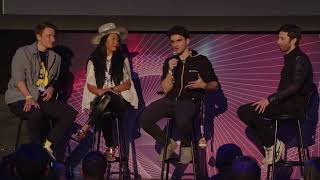
Beyond Hype Where Are NFT's Headed Matt Medved; gmoney; Swan Sit; Alex Atallah OpenSea, Alex Saln