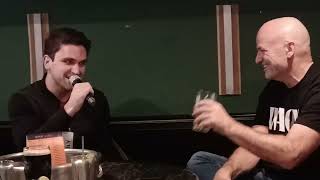
Understanding the NFT Market, its Standards & Technical Trade-offs, with Alex Atallah of OpenSea

In this March 5 2021 interview, Raoul Pal talks with Alex Atallah, co‑founder and CTO of OpenSea, about the evolution of the NFT ecosystem and OpenSea’s role within it. Atallah explains why OpenSea’s core smart‑contract SDK is open‑source while the backend and frontend remain proprietary, and how the company balances a horizontal marketplace with vertical tooling for creators. He recounts his personal journey from Palantir, Apple and Y Combinator to the crypto world, describing NFTs as the “toy” phase of a new technology cycle that enables a wave of experimentation. The conversation covers market dynamics – the rise of digital art, social tokens, and the growth of monthly volume from $1 M to $5 M – and discusses the challenges of on‑chain versus off‑chain metadata, royalties, and lazy‑minting. Atallah outlines OpenSea’s multi‑chain roadmap (Ethereum, Polygon, zk‑rollups, Flow) and its demand‑driven approach to adding new blockchains. They compare NFT marketplaces to decentralized exchanges, noting the lack of data moats and the likely emergence of an oligopoly of specialized platforms. Finally, they explore future trends such as multimedia NFTs, integration with the metaverse, and how creator tooling and consumer experience may evolve.
Chapters
If you're an early-stage Web3 founder, apply to our award-winning accelerator program, Basecamp, at outlierventures.io/basecamp. We write your first $50,000 check and give you access to 200 mentors including many of the leading Web3 founders and a network of 1,000 of the world's leading investors and exchanges. We've helped over 30 startups from 15 countries from all around the world raise $130 million in growth funding and can help you fast-track product market fit and where relevant, the launch of your token economy. Great. So today I'm happy to welcome on Alex Atallah, co-founder and CTO of OpenSea. Welcome, Alex.
Thanks for having me, Jamie.
Is Atallah Lebanese? I used to have a guy that worked with me with the same name that was French-Lebanese.
I think most of the Atallahs are in Lebanon. My Atallah part is from Palestine, that area in general.
OpenSea is described as the largest marketplace for rare items, buy, sell, discover, and trade limited edition goods, and really serves as this decentralized marketplace for crypto collectibles. I guess we're still playing around with the vernacular of whether we add crypto on the front or not. So the reasons why I want you on the show, I mean, should be obvious, right? NFTs are really hot right now. They're getting a lot of attention. And I think OpenSea has a unique both position and perspective, I think, on the wider NFT market in terms of being able to see where purchases are made, different types of NFT assets, where they're made, on what platforms, what happens in the secondary market. Of course, things can happen directly on the OpenSea platform as well. I know you are, as an organization, very committed to open source. So as I understand it, OpenSea is entirely open source. You could, if you wanted to, fork it, right?
That's not entirely true. So our software development kit, or SDK, is open sourced. We have a couple projects and smart contracts that are open sourced. Our core marketplace smart contract is open sourced, but our backend and frontend, like the actual app itself, is not. We're thinking about ways of doing that potentially in the future. But right now, we definitely see the value in having like Solidity and the, the real blockchain code open sourced. So people can see exactly how to make it interoperable with their apps. We're more just focused on getting that stuff right when we open source it.
Understood. OK. Thanks for the point of clarification. And then, I guess, within the NFT community, I'm not sure how aware people who aren't really deep into the space are around these considerations, but questions around what happens on-chain, what happens off-chain, especially around metadata, royalties, standards around interoperability, the kind of questions a lot of creators are asking. And I know you've got some interesting thinking there. And as I said, from a market perspective, you're certainly one of the most kind of comprehensive places to understand what's going on more generally. There's a lot of data there. You're able to kind of sort and filter by platform, by asset type, and see where all the action's happening. So maybe just contextualize you as a— as a founder, previously Y Combinator, Stanford, Apple, and Palantir. I guess the question is, now that you're working in a world of CryptoKittens, where did it all go wrong? And how do you explain that to your family? I mean, they were thinking, this guy's on a great career trajectory. And all of a sudden, he's now tinkering around with collectible cats.
Yeah, I think I really wanted to work in an area that's a completely new— technology. And brand new technologies often start off in the form of toys. You know, like Facebook started as Hot or Not, and Apple started as computer development kits being shipped to hobbyists around Santa Clara. So I started looking around for things that felt like toys but had the potential to be a lot more. There's kind of a computer revolution every 15 years. We had mobile, before that we had internet, before that we had personal computing. I'm always— or I really wanted to work on the next one. The crypto was— it just felt like this trading speculation hype cycle that was going on in 2017. I spent some time looking into it and figuring out, is there any real interesting technology here? Then CryptoKitties came into the scene. At the very end of the year, really looking different from everything else, really looking like a toy that was just exponentially more exciting than similar non-blockchain toys. I'd never been like a big Neopets person or anything like that. And I honestly, I wasn't like a big CryptoKitties breeder either. But I did have some friends who were making $30,000 a week breeding, just breeding CryptoKitties, let alone selling them. These people were people like me. They were actually trying to buy crypto for something other than buying drugs or speculating, all the conventional just things. That's what piqued my interest and maybe dive deep into it. In many ways, I think that's been rewarding because NFTs are a lot more than toys. And toys are just like they've been for many other breakout industries. They're a good starting case because it's— when, when something goes wrong, you know, users are there partly just for the fun of it. So they're, they're a bit more forgiving, um, when there are hiccups in the early days, and they're very excited about new changes and new brand new developments. They're early technologists in many ways.
Yeah. I think I said that half-joking at the beginning. You have got an incredible, almost perfect CV before you came into the space, and we'll talk about that a little bit later. But clearly, I'm also subscribed to the idea that NFTs offer this crossover breakout moment, really, whereby all of this stuff that we've been building in crypto and DeFi becomes relevant, understandable, usable, and in a way abstracted away. And I think, as you say, the behavior of play is more powerful, if not equally powerful, to speculation. And if you can combine play and speculation, I think that's when it gets really exciting. So maybe we could just kind of unpick some of the things I said at the beginning in terms of Y Combinator, Stanford, Apple, and Palantir. Could you just talk us through, I guess, that journey? And what elements of it were informative to, I guess, your role and vision of what you're doing at OpenSea?
When I was at Palantir, it was mostly enterprise software. And Palantir has a very cool core product that's all about searching disparate databases and getting them all under the umbrella of one easy-to-use UI. But when you apply it to particular industries, it usually doesn't fit. It's not a one-size-fits-all situation. We have to build plugins that work for banking, build separate plugins that work for hospitals, and separate plugins that work for the government, for like the typical government agencies that people have heard using Palantir, and police departments too. So I worked on those. I was a forward-deployed engineer. Figuring out how to best take this product, this not one-size-fits-all product, and making it solve actual problems that these disparate industries were facing. And I focused on government my first year and then finance my second year. So I got like a— I kind of got a big appreciation for making things that people actually want and not just building something that you think is technically cool and expecting people to just show up at your doorstep without prompting. Sometimes that happens. Apple is a company where that was the core philosophy, just from the ground up, make the hardware, make it really cool. Don't talk to users. Users don't know what they want, and then people will come. And on the other end of the spectrum is something like Amazon, where lots of buttons are not consistent. There's padding missing from random parts of the pages. A lot of stuff is kind of quickly thrown together, but it works. It delivers to your house. The form is always submittable. Your credit card stuff is not getting stolen. And that's kind of what people want. The most from it. So with OpenSea, we're— I guess we've got some elements of both, where we're trying to build a marketplace that like provides liquidity right when buyers and sellers need it. But we're also trying to build like a really solid core product for discovering new types of NFTs. And when we see a type of metadata that's really strange, just like a Palantir or something that doesn't really fit the one-size-fits-all umbrella, then we, we build a framework internally that we can use to adapt our metadata to fit the new game or to fit this new project, uh, so that we can get, like you said at the beginning of this, a really comprehensive, without any kind of holes, overview of what's going on in the NFT space.
Yeah, and you can certainly see that. Um, as I said, it's certainly my go-to place, and I know a lot of people almost use it as their NFT URL, right? If they want to show themselves off as a collector or creator, they'll kind of just share their OpenSea link and that kind of serves the purpose, even though it's not necessarily at this stage looking like it's designed to be a homepage as such. So what led you to found OpenSea? Obviously, you're a co-founder, so your journey involved somebody else. What was the genesis of the idea and the vision.
Yeah, so Devin and I knew each other. Devin Finzer is the CEO and my co-founder for OpenSea. He knew— we knew each other through a mutual friend. We'd like known, done some work together for I think 4-ish years before OpenSea. And right before, in the hype of 2017, we both decided like, let's, let's look at crypto, let's see if there's something real here. We started working on making software for routers that would let you get cryptocurrency if people shared your bandwidth. We toyed around with that idea. We applied and got into Y Combinator with it, but CryptoKitties was just way too distracting in December. It was a clear sign of immediate market need for something. There was no Coinbase for NFTs. There were no other NFTs besides CryptoPunks and CryptoKitties on the Ethereum blockchain, really anywhere. We definitely felt like there was going to be lots of clones of CryptoKitties, but also some interesting assets that are inspired from it that have valuable metadata on them, which is something that fungible currencies don't. You could reimagine whole new types of ways of getting usernames as NFTs, or domain names as NFTs, or software licenses as NFTs, including things that no one has tried that I really want to get tried, like selling font licenses to use a font as an NFT. There's a list of dozens of these use cases. In one of my note-taking things. Every year, a couple of them get checked off. Also, every year, a whole bunch of them that I didn't ever predict pop up. It's those ones that you never predicted that usually do the best. This was exactly the type of industry I wanted to be in. That's why we started OpenSea.
RAOUL PAL: Yeah, I definitely subscribe to the idea. I've been saying for the last 6 months that the Binance or the Coinbase picks and shovels that became the unicorns of the first cycle, depending on how you look at it. The equivalent will be an NFT platform. And potentially, that has the opportunity to surpass a pure-play cryptocurrency exchange because only so many people are ever going to speculate or touch cryptocurrencies, whilst, as you say, the range of use cases in NFTs is almost limitless. Let's talk about specifically where you're seeing the action, where you're seeing the volume, what's new from an asset perspective, and then also from a platform perspective.
Well, first, from an asset perspective, I'll say it's not only NFTs that that have limitless use cases. One type of fungible token that's been pretty interesting in the last few quarters from a use case perspective is social tokens, where a community or a social influencer or a game will roll its own token that's usable in a very community-centric way, like your Discord, your rank in a Discord server. Is influenced by how many of some coin that you own. Whether or not you can access some channels in some chat group is based on how much of the coin you own. Whether you can get a 10-minute one-on-one with a founder of a project is based on how much of a token you own. There's lots of communities that are experimenting with this. I think it's really exciting to join them. Most of them involve NFTs too, like the Coin community is an example. They have ways of farming for their coin and earning NFTs as a reward, which you then sell on OpenSea. There's RAC, the musician, R-A-C, who has his own token that he uses as a way of getting subscriber interest and then also tying into a Discord community that he set up. There's a whole bunch of stuff that's, I think, needs a bit more software polish, but eventually could be really interesting in addition to NFTs. That's sort of a big tangent on fungibles. But for NFTs themselves, We're seeing, well, I mean, the elephant in the room, whale in the sea in our terminology is art. I think it's a lot more than just taking digital art and selling it online. Art is a way for people with like a really interesting and internet era sense of truth and people with a lot of creativity that comes out in digital media now having a way of making a business and selling to anyone in the world without having to worry about any bank accounts, any international money transmission issues, and without having to worry about the pandemic and touching things and shipping things. So there's just a lot less friction, and still people can buy things that are just aesthetically interesting or expressions of an intense truth that you identify with. That's what art is. So it really— this is like a way of getting a business that never existed before. It's a whole new business. It's also the easiest way to become an entrepreneur. You can just build, you make things on your computer without needing any other resources besides the internet and electricity. And you can make an NFT and sell it, and then you build a following off of your aesthetic. And the, the— every time that a famous collector like buys one of your art pieces, then everyone will know because it's a very transparent market. and people will talk about it, and then demand for all of your art pieces that you've ever made goes up. How do people know that you made it and not somebody else? There is no debate anymore because your wallet address is the only one allowed to mint new items under your collection, and we can clearly see in the blockchain which wallet created each item. So there, there are— there's still fraud. You can still create items that, like, visually, in terms of the image, look like somebody else's image, and then you try to pass them off as your own and sell them. But every platform, including OpenSea, can just make a big database of all the verified artists that we know, and every time some piece comes out that looks like a piece by somebody else, it's really easy to just check it. You still gotta check it, and it's kind of a half-automated, half-human process right now. But that process we've been doing for the past 2.5 years, and we have like the longest list of verified collections and artists out there. And we, and we have a public open API so that you can pull that into your app. Buyers use this to just be safe when they're buying art on OpenSea. And sellers use this when they want like a stamp of approval and a bit more visibility on the OpenSea marketplace. So art, I think it like has been a huge boon. There's been— I think we started the year with about $1 million in monthly volume, rose to about $3 million monthly in the middle, and we're ending at about $5 million monthly at the end, which is about $1 million more than our goal for the year. There's a lot more users in the space. There are a lot that are just changing their Twitter bios to indicate that they're now NFT artists, and they're bringing in their friends because their incentives are aligned with the market. They want people to see and buy their art, and they're not worried about PayPal accounts or the pandemic or shipping things. You just need to see the piece, see that it's verified, and click buy.
Yeah. There's a lot of interesting things there. So this idea around the fungible piece and access tokens and stuff like that, actually, at Outlier, we were going to try and do it before Christmas. It's probably not going to happen now. It might be in the new year. But we will have a crypto beverages can. A crypto credit card for Outlier, which we'll give to our VIPs, and that will give access to Calendly to book in meetings, one-to-ones, access to Discord. So I kind of fully subscribe to both as a social currency and almost as martech, right, marketing tech, as a way of delivering loyalty around access. But like community mechanisms, I think so, a really powerful thing. Um, also this idea that, you know, NFTs enable economic experimentation and a degree of inclusion for creative industries. Um, I think it's going to be really interesting to see how disruptive that is to traditional creative industries and, and the intermediaries that dominate them, whether that's music or, as you say, um, Art.
So, as a—
I mean, firstly, do you think of yourself as a platform? And if so, is your approach kind of a horizontal one, or are you thinking to kind of vertically integrate into certain use cases? I know you've been looking at storefronts, right, and various things.
Yeah, so we're a platform and we're horizontal. The, uh, the vertical I think that we've just been giving some thought about is, is art recently. And a key need for that vertical is to be able to create easily. And it's— we've had— we partner up with a lot of different ways of issuing NFTs because We're not going to make a one-size-fits-all solution for every creator. But we do have a type of creator that hits OpenSea and they buy and sell things. They do our core things that we, that like we try to be the best at. And then they just, they, they, they just want to do something really simple when they create NFTs. They want to, they have something they want to experiment with. They just want like a simple way to get it up and into the marketplace. And to see all of their sales and get paid every time there's a secondary sale. Anytime someone sells to someone else, they want to earn. And all of that stuff has kind of pushed us into making a really nice way to mint NFTs. And the number one thing people want in this is to be able to do it for free because it costs a lot in gas, especially when DeFi is very hot, then gas prices on Ethereum go up and it becomes really hard to make stuff. And that sucks for everybody. So we rebuilt our Storefront Creator very recently to let you create collections on OpenSea for free and to let you make items for free. And these items are basically minted on purchase, lazily minted. So it's kind of a complex social contract setup, But it allows you to make things without having to pay any money. And only when buyers buy the item, when they're already sending money to the smart contract, the minting transaction replaces the transfer transaction. So they pay the same amount in gas, but the item gets minted on-chain for the first time on the first buy or the first time you gift it. So it's easy to make everything on-chain if you really want it to be. And it's easy to just get a bunch of content up and sell it if you don't. It helps get the best of both worlds for on-chain and just quick and easy off-chain creators.
Understood. Neat. That takes us into this debate around what happens on-chain, what happens off-chain in the context of royalties and metadata. What's your house view on that?
Let me explain a little bit about how metadata works right now. There's two types of metadata. One is— backing up a little bit more, metadata for NFTs is information about the token that shows up on OpenSea, aside from just the token number. So when you buy, let's say, an ENS domain name, your domain name is jamie.eth, then jamie.eth, that word is part of the metadata. OpenSea also makes images for all ENS names. So that image is part of the metadata. And there's lots of other things like whether it's a short name, how long the name is, when it expires, when you've got to renew it, all that stuff is metadata. That metadata usually is off-chain. It's something where when we ask the smart contract, hey, what's the metadata for token number 5? Smart contract will say, you can find that at http:// something that's a normal website. OpenSea goes to that website and scrapes and looks for all the different types of metadata formats that everybody's come up with. That's an off-chain process that has the benefit of being really flexible for the developer. So when the developer makes mistakes or changes, they can easily update their tokens. They just publish the change and OpenSea updates all the tokens and shows the— and reflects all the changes. Downside is that the developer is not trustworthy, they can mess with that data and make it something that the buyer didn't really buy. That doesn't happen a lot in practice, because I think in part buyers are buying— are incorporating trust of the developer in their purchase decisions. It's not a separate thing. There are very few cases where a buyer is buying something and they think the developer is totally untrustworthy, might be a scam artist, might run away with everybody's money. Like, that's part of the buying decision. So— and that's part of our decision too, when we want whitelist collections when we safelist them for buyer safety on OpenSea. Since that's the reality, most metadata is off-chain, and most people— that works for most collections. Some collections, though, have a much more idealistic and pure approach to their metadata. I think Avastars is the crowding example. They have massive smart contracts that they've invested a lot into uploading to Ethereum that allows you to compose these beautiful avatars from purely on-chain vector graphics. This means that there's no dependency on any server that might go down. For whether or not your visual item will be rendered. It's all on an actual blockchain. Now, it's very expensive for developers to set this up, but it's pretty interesting from a collector's perspective. In between those two extremes is sort of a compromise where you don't put the metadata on a chain, or like, you know, put it on Ethereum, You put it on either a file-specific chain like Arweave or a decentralized file storage network like IPFS. And that is growing in popularity. So we also built our Storefront Creator to eventually let people freeze their metadata and just host it in one of these decentralized file storage areas. And then as, you know, then it's a lot hard— it's easier for that data and those images to last forever. And that's something that loads of creators and artists actually want. They want to be able to freeze the image and make it impossible for companies to just take it down. Otherwise, how do you buy a piece of art for 6 figures? You kind of need to feel like a patron of art. You need to feel like you are part of the reason this art is going to exist. It's not going to go down for some other reason.
A lot of these sound fairly sensible workarounds for the limitations of Ethereum. I did a poll recently on Twitter, so take the numbers for what it's worth, as to what platforms people were using around NFTs if it wasn't Ethereum. I think Polkadot and Flow came out top, Flow of Dapper Labs, obviously. Are you guys committed to Ethereum? Philosophically or for a different reason? Or are you also exploring how, at the very least, what you're doing might interoperate with things like Flow or Polkadot?
Mm-hmm. We're on Ethereum right now, and we have a couple other blockchains running in our testnets, Matic and Clayton, to name two of them. We're rolling out support for their mainnets very soon, for a couple other EVM, which means similar looking to Ethereum, these blockchains after that. And we're doing so a bit after we notice traction on each blockchain. So when, like, games start building interesting content, then we start prioritizing, like, showing that stuff on OpenSea.
Um, so for example, NBA Hot Shots, um, on Flow, once a sizable demand for that asset, you, you would then integrate it into OpenSea?
Yeah, we're working on Flow. It takes a little bit longer because it's a very different looking blockchain than Ethereum with very different looking events and a different resource model. That work is like, definitely it's already underway. Lots of stuff is complete already with it, but it's probably gonna be a bit longer for Flow to come out. The last sirens today.
This is soundtrack of 2020, don't worry.
We think that there's going to be a lot more work done on other blockchains besides Ethereum. And the only reason we're on Ethereum right now is because all the volume before this year was on Ethereum. If you wanna make a blockchain yourself, and then you want OpenSea to add support for it, it's probably not gonna happen. But if you do your own game development, or you get other games to build on your blockchain, and there's something unique about your blockchain that really appeals to developers other than, basically, there's potential for lots of other developers to build on it in the future, then we look into adding support for it. We don't try to build before the market has any interest at all. We wait for a good number of indicators before we'll add support for a new chain.
Yeah, that makes sense. You can be quite demand-led. Again, because you've got this unique viewpoint on what's actually happening in the market, I guess that you can take a very data-led approach to that. You've got this unenviable position of both having to integrate into platforms where assets are, let's just call it minted, issued for now. And you're also then integrating into platforms that are building on top of different protocols. Do you believe that there will be one NFT platform to rule them all, or do you believe there'll be a long tail of highly specialized storefronts, marketplaces, and how far does that go down in the stack? Is it just that they're all on the same protocol, but they're just a different way of looking at the market?
Yeah, this is a really good question because most conventional startup wisdom points to a power law where one platform rules all the others. There's some crypto fundamentals that challenge the power law, which is that everyone is now sharing the same API, and no companies are actually owning these assets. In typical non-crypto land, the winner of the power law, whatever company has a monopoly, also has a big moat around all this user data that cannot just be one-click exported and sent to their competitors. But for NFTs, they can't. All the data can be one-click exported to any competitor. That really empowers users in a way that people want right now. It also forces crypto companies to be more collaborative and less greedy or monopolistic or eager to stockpile moat. Moat's such a buzzword that every investor will ask about, because that's all investment mentality up to this date. There might be some moat for platforms like the platform with the best brand, the platform that works in Indonesia, or that is fully localized, will do best in Indonesia. There's going to be, I think, a good number of other types of moats. User data will not be a moat, at least not like asset, financial asset data. To answer your question specifically, there will be, I think, like an oligopoly at least of platforms that are specialized for particular verticals. We're not trying to specialize on any one vertical. We look for these platforms that are really good at issuing tokens within a vertical, We make sure that their metadata shows up well on OpenSea, that all of their collections show up in rankings, and that they get visibility from users going and visiting their assets. That way, it's fully plug-and-play marketplace, and it's really an open sea.
Got you. Well, and I guess there is some precedent. I don't know how transferable it is, but if you look at what's happening with SEX and DEX, I guess the difference with SEX is there's a regulatory moat. So we're here with NFTs because they're clearly not securities, assuming you don't promise a crazy return on them, expectation of profit. There is no longer that regulatory moat. But do you think there's any learnings from how the whole CEX-DEX thing's played out that is transferable to NFTs?
What do you mean CEX-DEX?
Oh, so centralized exchanges versus decentralized exchanges. Yeah, sorry. It could sound like I was saying something else. What do you get up to at the weekend? Is it sex or DEX? Yeah.
Yeah, no, I've definitely seen it. I've definitely pronounced that in my head, but I've never seen anybody add DEX to the end, or heard that. So wait, so the question was— I got all derailed. How is the sex/DEX debate going to play out?
Yeah, do you think that any of what's happened in the context of crypto exchanges for fungible assets, is that transferable into the NFT world in this debate around platforms and notes and stuff like that?
Yeah. Well, so for fungible currencies, things started out all as centralized exchanges. Then decentralized exchanges have been getting more and more popular as people figured out how to do them legally. There was EtherDelta, which tried and then couldn't figure out how to do it legally. and then Uniswap, which has. That's a pretty big legal triumph for DEXs. Maybe it's too early to call it, but that's pretty good for the NFT space, which has— with OpenSea, we've always been a DEX, and we don't take custody of any assets. It wasn't much of a concern because these are not in risk of being securities and similar things that got EtherDelta in trouble, but it's still a DEX with some UI issues. Centralized exchanges, easy to get your credit card on, sign or your bank account connected, sign up, forget your password, there's a way to recover it, etc. That kind of thing doesn't exist with decentralized exchanges. It's still hard, but it's way easier now than it was in the beginning of 2018 for a new user to learn how to use a DEX. It seems to be getting significantly easier and easier each year. If a centralized exchange came along, they might be able to take lots of shortcuts where you buy an NFT, and they don't do anything, nothing happens on-chain, the NFT just sits in their wallet. Then when you want to withdraw it or do something with your NFT or put it in a wallet, then the company lets you do do that, and they basically are responsible for sending it to you. I don't think there's not a place for a company like that. I think there will probably be a battle between a user debate that arises in the next year or two between companies that do that and pure decentralized exchanges. I think it's a lot harder for developers to build on a platform that's centralized, just because it's harder to know when things happen and why. That's the advantage of DEXs if they are also platforms.
Yeah. I guess if you follow that logic or line of reasoning, the DEX equivalent for NFTs will have greater composability, you'll have greater rate of innovation in the context of developer tooling, and then presumably, that will translate to creator tooling versus one platform, no matter how many developers they can hire, there's always going to be a difficulty in how they prioritize what they roll out. And so I can imagine definitely being a place for both, but clearly the rate of innovation that will happen through the composability of DEXs like yourself and as you say, kind of like a co-opertition with competing protocols, makes sense. In terms of the market itself, the market that's going to exist or does exist on OpenSea and these other platforms, you mentioned your really impressive growth numbers in terms of revenue. Clearly, what just happened with Beeple is a bit of a watershed moment. I think his sale was $3.3 million, something like that. Just over one weekend, which was in large part bigger than most, most platforms and perhaps a precursor to what's about to come in 2021. What do you think about— there's a lot of chatter around this idea of oversupply. So the idea that now there's going to be a lot of really established artists coming online with a back catalog of work, almost like a ready-made market. They've already got supply and demand compared to a new artist. How do you see that playing out in 2021?
Well, I think the average price of NFTs will go down, just the average. The total market size, I think, will grow more. There are loads of creators on— there are loads of creators who don't monetize really cool visual creations, creators who have big followings on Instagram or DeviantArt or Pixiv. There's a lot of room for growth in just the immediate use cases for people similar to Beeple. Also, Pixiv, this is the biggest art social network in the world. It's not used a ton in America. It's mainly for Japan. They have more creators and collectors just around core digital art than any other website, including DeviantArt. The whole Japanese art market hasn't really stepped into this space yet. I think that could be a really big potential for growth. The market will grow, so will the number of suppliers, so will the number of buyers. The average price, I think, might— well, should go down because I think the number of suppliers will kind of grow a bit faster than the number of buyers. But that's a bit speculative on my part. Like, it's not based— I'm kind of basing that on current data, but the data tends to change really quickly when one side of the creator-buyer spectrum grows a lot. And It could be that the buyers and collectors grows really quickly next year, too. You got to remember that if that happens, then the average price of an NFT gets pushed up. It's really, really easy to overestimate the supply and the number of creators, because that's the most visible thing. It's really hard to see the other side of the spectrum, the number of collectors and the number of buyers. Because they're not visible until they make big purchases or something like that. Anyway, yeah, average price, I think, will go down a little bit in the short term, maybe up later.
Intuitively, that feels right. I've got a Discord called 100x with most of the big collectors on. At least privately, the general vibe is that most are now undercapitalized and overcollateralized. They're looking at things like how they can leverage DeFi to achieve a degree of recapitalize effectively without having to liquidate a position. They don't want to sell the underlying asset, but they want to try to borrow against it in order that they can continue to participate. I think one of the things that was exciting about Beeple was he represents perhaps what feels like a rare creator, which is like a ready-made market. Not only does he have all the supply of everydays, 13 years' worth of everydays, but he brought with him a demand. He had people that wanted to buy these things. I think to speak to one of the things that you were saying right at the top end is actually when you were talking about fungible, but I think it's equally relevant in the context of NFTs, which is, you know, these things I think are increasingly social assets. So I think we move away from something you buy and store in your MetaMask wallet to something that you experience in a virtual world, usually in a social context, perhaps can even be consumed in a virtual context. And also this connection to influencers, these artists on Instagram, millions of followers, never really been able to fully monetize that community. All of a sudden, they have the economic tooling to do that. And again, they can then bring a load of demand with them, I guess.
Yeah. Another part of the— argument that there might be too much supply in the future is whether or not all this is a fad, and just the novelty is really valuable right now. But if someone just comes in with another set of everydays that look vaguely similar to Beeple's, it's just not going to do nearly as well. I think there's an element of truth to that, just like there's an element of truth to physical art, when you make something that's similar to another artist's work, or that's not novel in a very clear way, then it just doesn't get valued as much aside from who you are as an artist. And for crypto art, the work gets really evaluated independently a lot. So my feeling on the novelty bit is that there's still a ton of use cases for NFTs that haven't been explored that can all be tied to art. There's influencers making art that gains entry to some chat group if you own it, or art that interoperates in some game if you've played it or if you can play it. And these utility bits that you can add to art, there's loads of ways of being totally novel there. In addition to all the different art mediums, like audio, video, splitting up a video into chunks, owning the license to use a beat in a YouTube video, because you buy the beat as an NFT, or the license to use the beat. Same thing for fonts, same thing for just all the different types of licenses. That stuff, I think, could definitely increase the novelty and make new opportunities to run a Beeple-style drop for, I think, many years.
Yeah, I saw an NFT recently, which was a play on the MTV logo. It was like NFT rather than MTV. It made me think, if you think about how MTV And then more recently, TikTok as a medium informed the art form, right? You know, artists, musicians are now making tracks specifically for TikTok. And I can imagine the same being true for all the different innovations that we're going to see within NFTs. As you say, because they're programmable, it's again almost limitless as to the level of innovation that you can have. I think it's going to be really interesting to see how that informs the medium itself because, as you say, these things are increasingly multimedia. You're seeing collaborations between visual artists and musicians. And so, you know, is that the new music video? I don't know. It's super interesting on a number of levels. So maybe if we kind of zoom out, where do you think all of this stuff goes? Do you subscribe? Do you see this in the context of the metaverse, the open metaverse, or something different?
There's potential for the metaverse to control or dominate the way people experience NFTs. But it's dependent on a whole separate industry that's developing at its own pace, a completely different trajectory than crypto and Web3 apps. The AR/VR industry. And there's definitely some browser clients for experiencing the metaverse that seem like they're moving on a path to get us somewhere that's fun and easy to experience in a browser. But it hasn't quite clicked yet. There's still lots of performance and quality improvements that need to be made. They're also missing a really fun social layer. Then there's the Oculus Quest, which I just think is really bulky, and it's not catching on as a result. There might be Apple AR glasses that really are not bulky that look like this, where I can put my NFT on my wall in my room and just have it stay there. All the time. When I wake up, it's just there. When I put my glasses on, it's just there. That might really change the way people experience the NFTs they buy, because they want to just virtually put them up as tokens of ownership that exist in your physical world. I think that'll make the NFTs that we own now more valuable, when we have better ways of viewing them. And I think it'll open up big industries for creating the software for that hardware. I think it will also help when CryptoVoxels and Decentraland, Somnium Space, and Sandbox improve their web clients, it could really change the way we experience NFTs and it could be the main way. But right now, I like— people are pretty happy with experiencing them on their phones and on their computers. And also, when you're making a really big purchase decision, that's a very hard thing to do on your phone. People like to feel power and have all the controls in front of them when they're making big purchase decisions. Like, sometimes it's— we see it as a phone purchase, but most of the big purchases we see are on desktop. So I think there's still quite a bit of experience that people still crave just on desktop clients.
Just on that, actually, I guess, certainly in a secondary market context, and if you look at something like OpenSea, presumably, people are making much more informed purchase decisions. They're looking at the market, the performance of this particular asset, what it's last resold at. And so they want more data available to make that purchase decision versus perhaps just participating in an auction, right? It's just like, well, you're going to bid up to a point and that's it. So I can kind of see that taking shape in a market context.
Right, right. And yeah, when you're bidding, you want to make sure that you're seeing all the right data and that you're not missing it because it's out of your field of vision or your screen size on your phone or something like that. Or you didn't get the push notification for some reason. With the second question you asked, like, what's the short term look like in 2021? I think we'll have a lot— I think a good amount of art experiments will be run that haven't been run yet. We might have some interesting audio NFTs that pop up. That have just gotten started in the past 2 months. We added support for like lots of different types of audio formats up to 100 megabytes. But there's, you know, there's a lot of like uses for buying art and art NFTs that like you can use in something else. The idea of remixing pieces, crediting the original creator, and and selling a remix version of it. That involves some on-chain payments, like looking at the contract to figure out who is due a fee from a sale, which requires some changes on our end that we're working on making. And that stuff, I think, could happen sometime middle of next year. And we'll also see some games launch that have been really hard at work since NFTs started picking up in early 2018, and games take years to make. And there are a couple games that have been in the works for years that users are now getting early access to, like Neon District, Skyweaver, Sandbox. Metaverses will start getting some interesting experiences in them. They might draw like, like actual mainstream traffic next year, including Decentraland and Sandbox and Somnium Space. And then there will be like some more indie, uh, experimental projects that just have completely crazy wildcard stuff. That tends to happen every year for projects that are really open and trying things that have never been tried before. So that's hard to predict, but, um, it seems to happen on a regular basis for NFTs. And every 12 months, the space looks really different from the previous 12 months.
Yeah, well, I mean, look, it's been fascinating talking to you. And this is one of those spaces where I imagine if we speak in even 3 months' time, right, there's just going to be a whole new raft of different topics. The rate of innovation is really exciting. So Alex Atallah, thanks for your time and all the good work you're doing at OpenSea. As I said, it is something that I use pretty much daily. I've probably even got some requests that I'm going to give you offline. Yeah, but other than that, thanks so much for coming on, and hopefully New York quietens down a bit. It sounds like you're definitely in the depths of the pandemic there with all the sirens going off.
Yeah, hopefully it does. The one city that has a really big mask-wearing culture too, so I'm a little confused.
Yeah. Awesome, Alex, thanks for your time.
Thank you, Jamie. Have a good one.
If you enjoyed today's podcast, please make sure you subscribe, rate, and share your feedback to help us reach as many people as possible with the important mission of Web3.
More from Alex
Are YOU getting enough out of your LLM experience? feat. Alex Atallah of OpenRouter
Fun stories from building OpenRouter and where all this is going - Alex Atallah, OpenRouter
Will Open Source AI Overtake Closed Models? Ft. Olama, Fireworks and Open Router
From OpenSea to OpenRouter: Alex Atallah’s Masterplan for LLMs | Data Driven NYC
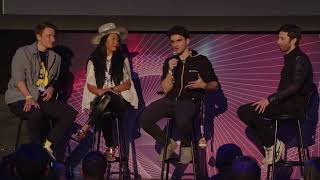
Beyond Hype Where Are NFT's Headed Matt Medved; gmoney; Swan Sit; Alex Atallah OpenSea, Alex Saln