Healing & Rebuilding Self Worth | Relationship Wisdom
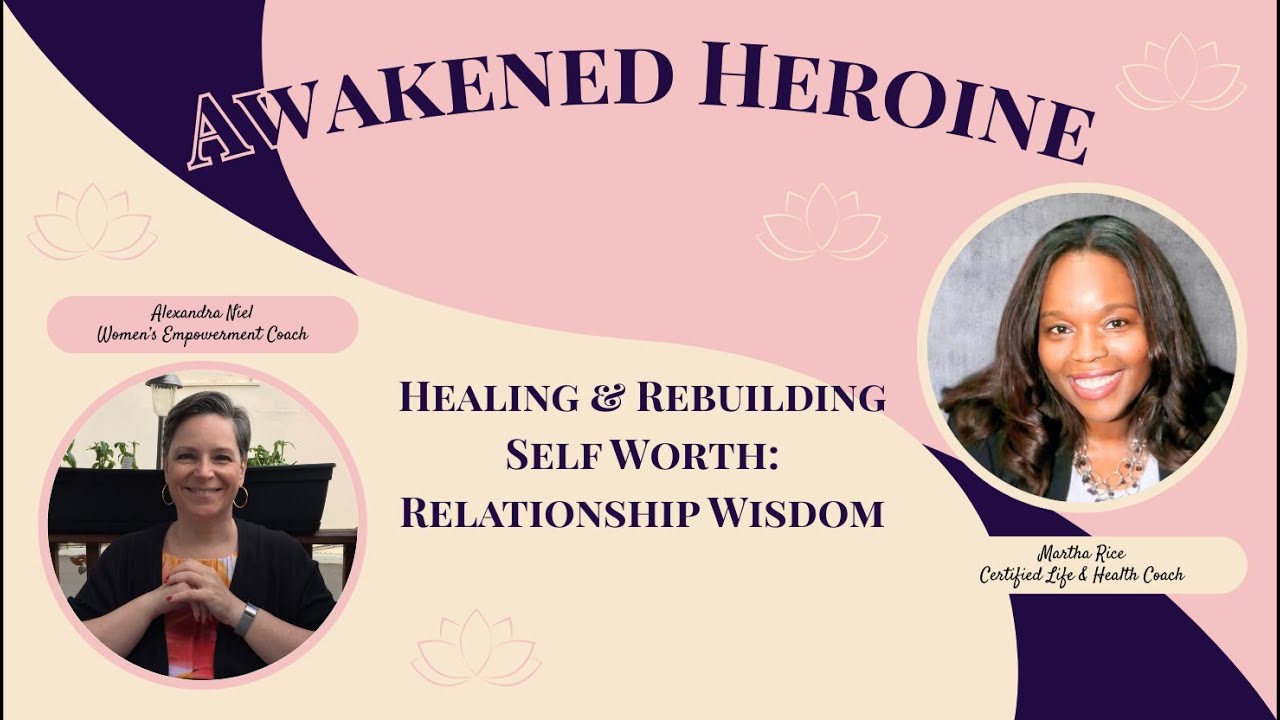
Martha Rice, a marriage and family therapist turned coach, discusses rebuilding self-worth after divorce. She emphasizes alignment in relationships, recognizing personal triggers, and shadow work to break repeat patterns. Her parents' divorce inspired her to help clients navigate relational dynamics with curiosity instead of judgment.
Chapters
Hello, heroines! Welcome to this afternoon's interview, and today I bring you Martha Rice. Martha is somebody whom I met recently, but I fell in love with her mission and wanted to bring her on board to share some of her wisdom with you. So Martha, welcome!
Thank you, thank you so much for having me on your platform. It's such an honor. And a privilege.
It's a pleasure. It's a pleasure to have you. So, uh, let's just start with the basics. Um, tell us where you're from and what do you do.
I live in San Antonio currently, and I'm moving back to Chicago soon. And I am a certified life and mental health coach, uh, specializing in relationships— relationship with yourself starts— it always starts off with yourself so you can have a foundation laid, and it's— it teaches you how to have relationship with others and God. And so that's what I help people do, and I also mentor new life coaches as well.
That's very cool. So you wear two hats.
Yes.
So how did you— how did you get started doing, doing what you're doing?
Well, you know what? It actually started like my parents' divorce, you know, kind of left me feeling like alone. And I didn't know how to process those emotions. And I didn't have anyone to process them with. And I didn't have anyone to process those emotions with. You know, I didn't feel like I had the permission. It was like a covert way of handling it. Even, you know, I was too young to understand and conceptualize that you know, this is something that was going to affect me long term, right? And so I saw how to affect my siblings. All of us dealt with it different, in a different way, but we all struggled. And, you know, with our mental health because of the effects of the divorce, and, and because I didn't have the avenue to talk about it or understand it. It was, it was so many people going through. I didn't know who to talk to about it. I didn't know if I had permission to talk about it, that, that, that type of thing. So it really affected me. And so it made me curious as I was growing up, what is it about relationships? What is the struggle? So that curiosity brought me into the area of like going to school for psychology, getting my degree in psychology, getting my degree in marriage and family therapy. I have a master's in marriage and family therapy. And so I always want to know what's going on with the families, what's going on in the relationships. And so I'm passionate about— drove me to that. That passion drove me. As at 10 years old, I was leaving my friends to go listen to my mother's friends talk about their relationship problems, but not realizing that this is my calling, right? And so love it to death. It really helped me to reach out when I need help. And a therapist helped me to learn how to process emo. I had to go through a lot of, you know, if doing work, doing a lot of work when I was even in my grad school to help me get through the hurdles or anything I had in my life. I learned to lean on others. I learned to reach out and get a coach or therapist or mentor in my own personal life, and it has brought major value. So yeah, I wanna pay it forward. And so the mentorship piece comes from a passion of like, how many coaches start go get their coaching certification, but they stuck right there. They don't know what to do next. And everybody hungry comes to them and want to sell them everything. And so I just want to help them with those pain points of like the imposter syndrome that you may be experiencing, that's normal. And encourage them along the journey to say, wait a minute, you you want to do this, why you want to do it, reach out to their heart. And so they can move with their heart and continue to move forward in it. Because that will leave you stuck and never starting. You got the certification, but you never start moving forward in it. I've been there, done that. So I want to help others not to go through what I went through.
It's tough when you kind of hang your shingle as a coach. It's, um, you know, you have all these ideas in your head and you're kind of like star-eyed and like you've got all these hopes and dreams, and, and then all of a sudden reality hits.
Yes, and the expectation of, uh, I'm supposed to have my calendar supposed to be full, and what if it's not full? What if I hurt somebody? What if I mess them up? No, let's get out of your head and get in your heart.
Yeah, so you talked about your degree, um, in psychology. So do you work with— in relationships both before a divorce and after divorce or transition, or how does that— or do you just focus on—
I don't want to put words in your mouth, so no, actually, um, so the The part I do when it comes to, like, most people come to— most, most of my clients come to me for, like, they may have had the divorce and don't know how to deal with themselves, so they'll come to me for that.
Okay.
They'll come to me for, for premarital coaching. They'll come to me for— and, and when I do that, most of the time I officiate the wedding. They'll come to me for, um, family issues in the family, um, or relationship issues, like we struggling in our marriage, but not the divorce piece, not so much, but more like that, uh, more like relational.
Okay, so it's really more the relationship piece that's— yes, that you focus on because that's where you—
okay.
Okay, so what was the— when you think back about what happened with your, your parents, what was your biggest lesson looking back?
Looking back, my biggest lesson was, you know, marriage is to be taken seriously, and it's not about— it's not a Hallmark Channel Like, that is not reality. There's a purpose for two people to come together, and there's a plan. And the plan is two people coming together have two different perspectives, two different places they come from. It's, it's really gathering and understanding, and it's also, are we aligned in, in our goals? That's number one. Are we aligned? Because if you're not aligned, two people— how could two people walk unless they agree? You have to be aligned. Can I communicate together in understanding versus who's right or who's wrong? And can— and are we, uh, are we going the same way financially? Because that's huge as well. And so when you look at those three, those are the root causes to relationship failure if they're not addressed, because it's Can I be transparent and not lose credibility? That's what we are. And all of those things encompasses one word, and that's safety. Am I safe with you? And that's what I saw. My mother wasn't— she didn't feel safe with my dad because of his infidelity. He was— they ended up being best friends because he was a great dad. He was, but he just— she understood he couldn't be a great husband. Because he had those type of issues, but she understood that. And that's what I learned about relationships, when they— the way they function is not perfect. You learn how to forgive, you learn how to love, you learn how to, uh, collaborate. You learn so many things in a relationship, but you learn them sometimes through conflict.
Yeah, I, I think you're completely right, because when everything is going okay, you're not really learning. Just like in the business world, right? When you succeed at something, have you really learned? Yeah, you probably learned some stuff along the way, but you don't learn as much when things go right as you do when things go wrong, right?
Because you— because now you saying, well, let's fix this issue that's right here. But if everything— if nobody— the big— the worst thing you can do in a relationship is, is suppress your emotions and, and think that I don't want to cause conflict. Eventually you're going to build resentment. That's what you're building. You're building a temple of resentment when you suppress your emotions.
Yeah, and we're not— that's one of the things we're not taught, right? We're not really taught how to communicate effectively. We're not taught how to make our needs be heard. And sometimes we don't even know what we want.
Exactly.
So it's learning all those pieces along the way when you have a partner who's willing to, for lack of a better word, play the game.
Yes.
Right? Who's willing to walk that journey with you. That's invaluable. Mm-hmm.
And so we have to be conscious of our emotions. What are they doing? What are the triggers? A lot of times, sometimes I, uh, the— in marriage, there's triggers that happen that's not intentional. And so I teach my clients how to deal with triggers so that they won't play the blame game and never get healed.
Because when you identify, when you know your triggers then you become— you're more aware and you understand that it all begins with us.
Yes. And you're less reactive.
Yeah.
And so you're able to say, wait a minute, let me take a step back. This is not— this is not my past. This is now. What am I feeling? Why am I— you get a chance to probe into what's inside of you for real.
And I want to say the best part of that is, or the best way to do that, is to become curious versus being judgmental, right? Because we have, have, I think we have a tendency to like beat ourselves up for so many things. And instead of judging, if we can get curious, that is a whole different thing.
Oh yes, curia posture. Curiosity is huge. It works, it works so well in our life coaching, right? That's how we get to the authenticity of the person, because we're, we're questioning them and not telling them what to do. We're pulling out what's already there.
We're digging for gold. Yes, that's what we're doing. So I, I believe that, um, for a relationship to work, like you said, the two people have to be aligned, have to have a common vision, have to make sure that they're really on the same page. But I also believe that each person also has to have their own life.
Yeah, their own individuality. Yeah, I agree. Yeah, 100%.
Okay.
Oh yeah, I definitely teach that because you, you, you don't want to lose yourself, right?
That's how things end up the way that they do. I know that was, that was for me. I, you know, I just went all in, in, in my marriage and I lost myself. So when I came out, that was like, well, what the heck do I do now?
Right?
Right. And it's funny because I'm with a gentleman I've been with now for 13 years, so longer than we were both with our ex-spouses. And there was a reason why I was telling you this. And the thought just—
because you're talking about individuality.
Oh, yeah. And he used to— thank you for that, for putting me back on track. He used to, like, when we first started dating, he would send me copies of his receipts and he would send me pictures of where he was because that was a part of his history. Wow. So it was, it was interesting to see his evolution into really being able to be his, to be himself within the relationship.
Right. That part. Yes. And you know what, what's so, what's so interesting about that is that when you are able to be who you are in your relationship, it just makes it so much better. Like, a lot of times people compare their relationship to other people when your relationship is different because you're dealing with a different person, right? My husband and I, we are both, we both got this, we got a free spirit. We both like to do things we want to do in our individuals, in our individual selves, right? So we give each other— we like, oh, yes, you want to do, go do it. And he the same way. That's what you want to do, go do it. We support each other in who we are. And we allow each other to grow. Yeah, and we're patient with each other when it comes to that. And so, but we— our relationship is nothing like nobody else's that I think of, but, but it's a very good relationship.
And, and, and the thing is, not only is it different, but at the same time, you, you know what your internal dynamics are. Right? Because what we see in other relationships is what the outside is. We don't know what's going on behind the scenes. So everything could look beautiful and perfect and everything else, and behind the scenes it's a hot mess.
Yes, because you're trying to fit into a— you're trying to fit your relationship into this, this, this template. Yeah, that may not fit. That may not be right for you. Be willing to change the template, because I did not want to be— I didn't want my relationship dynamic like my mom's and dad's. Not that it was bad, I just didn't want it. Or like my siblings, I just didn't want that type of relationship.
It's not, it's not, uh, it's not your path.
So, and my husband is my best friend, so and vice versa. So it works.
I know how that, I know how that feels. So if you were to— any last thoughts, any pearls of wisdom that you might share with our ladies in the group who are, um, either in the process of coming out of a divorce or who have come out of a divorce and they're rebuilding their lives?
If you coming out of divorce or in the process of— in, or in the process of a divorce, take some time to get to know, number one, what happened in the relationship so that you can figure out what role did you play in it, if you played any. Be accountable to it. And don't beat yourself up. Give yourself some grace if you played a role in a breakup, because sometimes we're not— we're not perfect. But understand that— get to know what you didn't like about the relationship, your own personal heart. Like, what was it I didn't like about that relationship? So that you won't go pick the same characteristics and now you're back in the same situation. Get to know what didn't work and why did— why it didn't work, so you can get a chance to know what's inside of you. Because what's inside of you is amazing and it's great. You're not perfect. Every relationship is not gonna work, but that don't make you a failure. But find out what failed in the relationship so that you won't take on those characteristics again.
Yeah, I love that because I know that was something that I did when I came out, because in the beginning it was all his fault, and I did everything I could to save the marriage, right? And then after a while, I was like, maybe, maybe I— I mean, there were two of us in this relationship, so maybe I had something to do with this as well. And, um, and that's how I started my, my journey. So I really appreciate what you're saying, because I feel like once we've been able to grieve the loss of the relationship, but also the loss of what would have been.
It's being able to then take that step back and say, okay, yeah, because when I, when I had a breakup, I looked back and I was like, what happened was I, I just was a people pleaser in a relationship, which wasn't helpful at all. So I took accountability for that and got the help on how not to do that in my relationships and why I was doing it. And getting to the root cause of that was— it wasn't fun, but it was needed.
So it's never fun, is it, when you get to do that shadow work? But it is needed. It is definitely needed. So, so, yeah. All right, Martha, thank you so much for sharing with our heroines. It's been a Pleasure to have you. Um, do me a favor, throw your links under the interview so that if they want to reach out and have a conversation, they can do that. Ladies, don't hesitate to reach out to Martha. I'm sure she'd love to hear from you. If any of what she said resonated with you, then I really do invite you to, to reach out. And in the meantime, I'm going to wish you a great rest of your day., and we'll connect again soon. Take care, ladies. Martha, thanks again.
Thank you, thank you, and thank you for having me, and thank you for listening.
My pleasure. Thank you.









