TLWL: The Feminine Side of Innovation
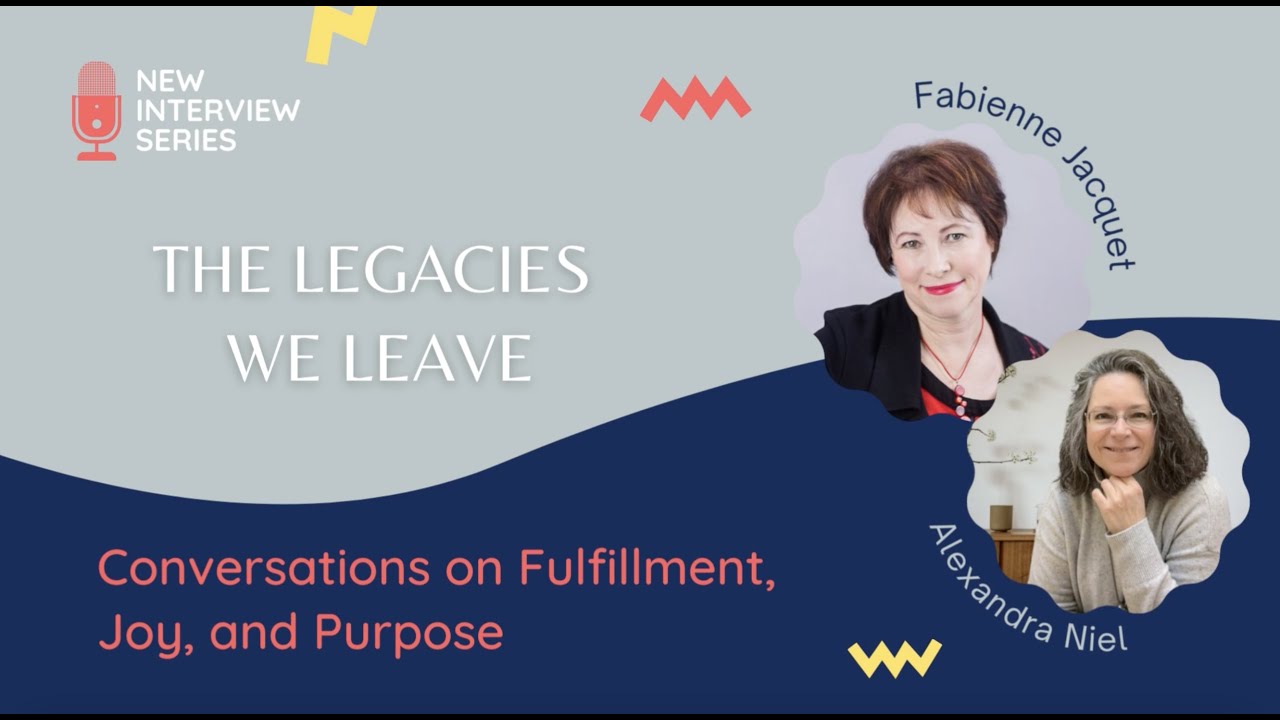
In this episode of The Legacies We Leave, host Alex interviews Fabienne Jacquet, founder and CEO of Innoviv and author of Venus Genius: The Female Prescription for Innovation. Fabienne recounts her 30‑plus‑year corporate career in science, technology, and marketing at Fortune‑500 firms such as Colgate‑Palmolive, and explains how she recognized the need for both masculine and feminine energies in innovation. She describes her transition to entrepreneurship as a natural, unplanned shift driven by a desire for empathy, collaboration, and purpose. Fabienne defines innovation as any new idea that creates value—whether a product, process, business model, or even a simple tagline—emphasising emotional impact and the importance of combining existing concepts. She shares practical tools for personal and professional innovation: inventory of skills and interests, extensive networking, brainstorming, prototyping, and iterative experimentation. The conversation moves to her current focus on empowering teenagers through a video course that teaches the same innovation mindset, arguing that youth are the future innovators. Throughout, Fabienne stresses the link between purpose, joy, and legacy, urging listeners to seek fulfillment beyond corporate success, to view mistakes as learning opportunities, and to stay curious about the world. She concludes with practical ways to connect with her work (website, LinkedIn, Calendly) and a final mantra: “Don’t behave, it’s boring.”
Chapters
Hello and welcome to The Legacies We Leave, conversations on fulfillment, joy, and purpose. Today I am delighted to bring you my friend and former corporate maven Fabienne Jacquet. Fabienne is the founder and CEO of Innoviv, and she is a scientist turned marketer turned founder and now book author. So an innovator through and through. While she was by no means predestined for the sciences, Fabienne, a natural-born rebel, and if you knew her, you know that's true, graduated as a PhD in organic chemistry from the Institut National Polytechnique in Toulouse, France. During her 30-plus years corporate career in Fortune 500 companies, including Colgate-Palmolive, Fabienne constantly analyzed innovation and came to the conclusion that it requires both masculine and feminine energy to be successful. She encourages everyone to complement data-driven approaches with their feminine traits such as empathy, collaboration, and nurturing. She narrated her findings in a book around the theme of innovation through the feminine lens called Venus Genius: The Female Prescription for Innovation that published in December 2020. Fabienne is now focusing on educating the youth, empowering them with the tools of creativity and innovation. Fabienne, So nice to have you here.
Oh, thank you so much, Alex. I'm so delighted to be here with you today.
Good, good. So let's just jump right in. Um, and I'm going to ask you to take us a little bit through your entrepreneurial journey because you and I followed similar paths where we spent a number of years in corporate and then made the switch into entrepreneurship. So tell us a little bit about that journey. And yeah, let's start there.
Yeah, you know, you know the journey because you've been through that. And I absolutely loved my corporate years for the time it has lasted in France, in the US. I traveled the world. I was lucky enough, you know, to work both in technology and marketing, actually, in an international project. So I had the opportunity to go to different countries, work with different cultures.
It's been a fantastic adventure.
And at the same time, as we know, you have some constraints in the corporate world. And as you mentioned in my bio, I really realized that I came— and we would talk about that later, I guess— from a very masculine environment with a very masculine energy. And that was perfect for the corporate world because let's be honest, it's a very masculine environment still. And At one point, personally, and I write it in the book, I felt something, you know, stirring in my belly here, calling for the feminine, for more empathy, for more compassion, for just admit that I needed help and all that. And it was linked also, of course, to my professional journey. So there is a parallel between my personal journey from the masculine to the feminine energy and my professional journey where I was in the corporate world. And suddenly I said, I want to have more collaboration, more empathy, more intuition. And you know very well that in companies, if you don't show the data, you don't go through. So the only way that I could do that somewhere was to be an entrepreneur. So this is how I think it came naturally. I didn't plan things. It's funny because when people ask me, what was your career plan? I say, I had none. I had not the plan to move from technology to marketing. I didn't have the plan to move to the US. I didn't have the plan to move back to Amsterdam. It just happened. So one of my mentors at Colgate, I love him, it was fantastic. He always told me, I say, oh, I have chance. He said, no, no, Fabian, chance is when preparation meets opportunity. And I love that because it's exactly that. So in my life, I think I got prepared for the next step. And when it happened, I just grabbed the opportunity. This is how my career and my personal life, to be honest, also was handled. So I didn't have a plan per se, but it happened as a natural call. When I was ready for it, if it makes sense.
It makes complete sense. And I love that quote because it goes to show, you know, if you do the work and if you're open when things come up and you're willing to not stay in that same frame of mind and that same— I want to say rut, right? Because sometimes we just follow a path because we think that's the path we have to follow. But at the same time, we also have to give ourselves a chance to be open to listening and to pulling in things that have the potential to help us grow and to help us expand.
Absolutely. And this is one of the key messages I give in this video course I'm currently creating for teenagers, telling them, you know what, be ready, work hard, because I'm sorry, nothing happens like that. I'm sorry to tell you, you have to work somewhere, but it's fun to work, to be prepared. So you explore, you give yourself opportunities. They won't happen in you staying in your room, even on the internet. You need to meet people and you need to make friends. You need to work to have a network. You need to expand your views to your point. And then things happen, but they happen because, okay, again, you're ready to take them on. And this is a key, key, key message that I'm talking about legacy I want to leave is that, you know, don't— you are not one thing. We are not one thing. You have a lot of many, a lot of facets. We have many facets we can play from and we can play accordingly as we evolve.
Yeah, it's always interesting to me to hear that because one of the things that I find when I meet women in corporate is that they identify so strongly with their career identity that it's often difficult for them to think about doing something else. Or they've heard ever since they were little, well, in our family we are lawyers, doctors, this, this, this, and they end up being thrown into this world that they don't necessarily question, which may not be home for them either. So what would you say to a woman who has— who, who identifies so strongly with her career to give herself the opportunity to open up a little bit to see what else is out there, especially if she's feeling unfulfilled?
Experiment. Be open. I remember when I was in the corporate world, I was going to conferences, I was listening to podcasts, I was doing a lot of things like that to maintain, you know, to be aware of what's happening. And I always, always made a point to go to a conference or somewhere that had nothing to do with my work. I remember one day I went to this The Economist conference on the future of architecture. Architecture, nothing to do with fragrances or dish liquid. But it was fantastic because not only I met a lot of people who enlarged my network, but also I came up with good ideas. Because what you apply something from a different industry to your industry and suddenly it's new, this is innovation, you know. So be open and network, network, network, network. I cannot say it enough. This is how things happen. This is how my entrepreneurship journey started, joining a women's association and be exposed to entrepreneurs and better understanding what it takes. So don't hesitate to network, to talk to people, especially people who don't know you and people who know you. This is what I did also say, what do you think I'm good at? And when I was thinking leaving the corporate world and having a new journey, I'm a scientist, so I'm the Excel queen. And I started to build a list of the different things. And I had like translator that I wanted to be when I was a kid. And then I had decorator because people told me, oh, you have such a good taste and with your French roots, you could be. Why not? So I really considered so many different things. So don't hesitate what you like, what you don't like, what you're good at. I have also this simple chart in the course for the kids that say you to focus on what you like to do and you're good at. This you can learn, but this is your core. This is your essence. So when you understand that, then you have different possibilities. Then you apply innovation, you brainstorm with friends. No, I had lunches with friends and we're brainstorming about what I could do. So, you know, it's that simple, but it's just opening considering other things and not being afraid of jumping in when the time is on because it's so easy to procrastinate and just push back and say, oh yeah, one day, one day. No, it's now. Life is happening now. If you feel that you are not happy in your job, you are not. It's already too late. And, and just pushing back doesn't solve the issue.
So I just want to hear, because Obviously, you're Madame Innovation. So what do you define as— what is your definition of innovation?
There are so many definitions. I'd say when you Google innovation definition, it's like, it's overwhelming and it's very complicated. Most of the time, very sophisticated, very intimidating. And this is what I discovered when I left the corporate world and joined the small businesses. World that people thought that innovation was this big thing that was reserved to the elite and you needed to have a lot of money and a lot of resources and so on. But no, no, no, no, no, it is not. And there is a definition. I don't know where I thought it was me, but maybe somebody else, I don't know, which is, is something new that brings value. And I always say something because we always think products, But it can be a process. It can be a business model like Uber or Airbnb or business models, new business models, new platforms. It has to be new, but it doesn't need to be new to the world like the new vaccine, for example. It can be new to your industry like the electric car. It can be new to your company. And it's not copying. It's not copying, but it's adapting. And for example, the iPhone, when you take the iPhone, the iPhone is like, mm, Nothing is new. What is new is the combination of existing technologies and concepts into something new. And the combination of a lot of different things into something new is also innovation. But the most important word, and I always say that when I give my speeches and my workshop, is value. And we focus on value, money, of course. We're all here to make money, let's be honest. But Value is far more than that, and it's emotional because 80% of the decision-making process is based on emotions, and this is proven scientifically. Okay, so emotions are really, really important. And I give this example of a young entrepreneur I met in New York, and she created rock climbing training. And you will tell me, well, there is nothing new, it's not innovation. Wait a minute, um, this rock climbing training is devoted only to abused women, women who have been beaten, women— and the exercises are made for them to acquire again their trust, their self-confidence, and to grow and, and to come back to their life somewhere. So, and it gives me chills only talking about that because imagine the value Yeah, of course, the value is the money that the entrepreneur gets with the training. But the biggest value is the value that these women get because they are basically— they get back their life, their personality, their confidence. It's huge. So value is very important. And another example, just to illustrate that it can be nothing. I was giving a speech in New Jersey with a women's association, and there was this woman who had a hair salon. A week later, because we went through the exercise, you know, to do innovation based on this definition, she told me, oh, Fabienne, I'm so excited. You know what I did? I created a new tagline for my salon that I put on the window. And she said, not only it reinforced the relationship with my clients, but I acquired new clients because I was not functional. I was talking about, you know, like, I don't remember what it was now, but it was like, hey, me too, I wanted to get another, you know, look when they— I don't remember what it was, but it was emotional. And she said, it was nothing, but it brought me business. I said, see, this is something, a tagline, new. It didn't exist for your business, that what you value, because it's not only the money, new clients, but also it strengthened the relationship with your current clients. So I hope it helps understand that everybody's an innovator. This is what I say. Yeah, it's just, it takes, you know, a lot of persistence, a lot of courage, because innovators are not really appreciated. We're outliers. And, um, corporations and the world doesn't like rebels and outliers, but we need them to change this world. To a rebel, I say in the course, a rebel is somebody who challenges the status quo. It's not— of course, we all say, yeah, the rebels, they're violent. It doesn't need to be. It doesn't need to be. And I always say that what I want to do with the teenagers— and I don't have kids, so it's a little bit pretentious, but I'm trying— is to change them. I mean, to make them move from Troublemakers to changemakers. And this is a rebel. You know, Einstein was a rebel. All the big guys, Edison, all these big guys, and Marie Curie, and they were rebels. They didn't accept the status quo. They challenged things. So if you have this attitude of wanting to change things, if you work hard and you learn, you know, some skills and tools, you're an innovator.
I love that, what you said about troublemaker to changemaker.
Yeah, people love that. I'm so excited about that when I found it. And she told me, I never thought about that. I said, see, your energy, which is beautiful, because when you're a teenager, you're channeling it in the right way. Thank you. It's exactly that. It's channel that. Okay. It's easier said than done. Okay. But still, and if I change the life of one teenager, I won.
So take us through that a little bit because 30 years in corporate and One could have assumed you're coming out, what you want to do then is work with men in corporate to help them make those changes, and yet you're now speaking and targeting the younger generation. So how did you make that switch and how did you end up zeroing in on teens?
Again, I didn't plan that. It happened. First of all, a lot of circumstances. First of all, when we all struggle as entrepreneurs, let's be honest, okay? It's not like, oh, this is a perfect life. No, everybody knows that. And yeah, and you are talking about identity. So when you are part of a big company, you're a VP or something and so on, and suddenly you are just Fabienne Jacquet from Innoveve. Well, it's not the same thing, and people don't look at you the same way, okay? And when you approach big corporations, and unfortunately innovation is still handled by men, and I had comments like, well, why do I— prove me that it works, you know? I say, I'm just starting, I cannot prove to you. Yeah, but then I don't want to work. So it was like, okay, so I had some pushback, it was a bit difficult, but then I started to get some traction. Then COVID Arrived, tried to launch a business when, you know, anyway, so it was a little bit difficult. And this is when again, circumstances, everybody was telling me, Fabienne, you should write a book. And I'm like, no way, I'm a talker, I'm not a writer, not to mention in English, forget it. And then this lady I met at, again, the importance of networking, at the Christmas party at my neighbor's, okay. I talked about Innoviv and she liked it and she was helping entrepreneurs and small businesses. And one day, January 2020, she calls me and— no, she sends me a LinkedIn message. She says, how are you doing? I say, well, I was a little bit down, you know, COVID arrived. It was like, it was difficult. It was honest. I said, okay, let's get on the phone. We get on the phone. I say, you have to write a book. I say, oh no, no, not please again. And she said, no, I have something for you. And She connected me to this professor in Georgetown who has a program that he developed for his students. It's a 90— um, 20 weeks, sorry, 20-week program where you are with a group of students and other people like me, older people who don't know how to write a book, and you have the tools and stuff. And it was a fantastic journey, and I wrote that book and I published that book in less than a year. Wow. And then to come back to your original question, and it's a quite good book, by the way. People were quite surprised, say, oh my God, I didn't expect that. I say, see, you never know what you are able to do if you don't try. And then what happened is that, and this is also observation, this is the scientist in me and also the innovator observing and what's happening. A lot of friends in Europe and in the US told me, you know what, I bought your book, but I cannot read it. I say, why? Because my teenage daughter took the book from me and I cannot get it back. So I say, hmm. So I interviewed the kids actually, and they told me, you know, Fabienne, nobody at school talks about innovation. Nobody talks about the feminine and how how well-equipped I am, especially for innovation. It was a discovery for me. It gave me hope and I was like, wow. And then as you age and you want to leave a legacy, and again, I don't have kids, I was like, you know what, it might be the toughest target ever, but if I have something to do is help the youth. And I, I wrote with a similar program, they had a pilot, so I, I started the video course And I worked with teenagers and they loved it. They say, yes, it makes sense. It's work. Okay. It's not for all the teenagers. It's not for the teenagers who are scrolling on TikTok endlessly. Okay, fine. But for those who are interested and really want to make a change, it can work. So I'm not there yet. It's a work in progress, but I'm very excited about it because Innovation is the future of the world, and the kids are the future of the world. So it does make sense. I'm very logical. It does make sense. If the kids don't know how to innovate, they will reproduce the same old schemes, and we will, you know, have clones coming to this world, and it will be boring.
And that's one thing we don't want, and we don't want boring. Ever.
Nope. Ever.
So how would you say your sense of purpose has changed from when you started working to your time in corporate to what you're, what you're doing now? What's— take us through that evolution a little bit.
I don't think I was thinking purpose when I was younger and I followed the path and to your point and I, you know, I was in a mad soup, mad space. And then scientific, and then, and I go to, somebody told me, oh, you're good at research. Okay, I did a thesis and then I did a PhD. And then, so I was like, you know, going my way. And then I said, okay, after PhD, oh, you can be in education and you can be a professor. But when I saw the salary, I cried. I said, nope, I think it is not for me. It's a lot of work. You have a lot of politics, like in the corporate world, and you have the money. So I went to the corporate world and then followed the path, you know, Colgate acquired the company I was in, and then I had the opportunity to go the US. And so you, you know, the entire, the entire story. So my purpose was, I was more, it's funny what you ask, because I always found, try to find projects and things that would help the world, make the world a better place. I will give you an example. When I started my career in the corporate world, just after my PhD, I arrived, it was a small research center And they were hiring people. I was the last hired. So they gave me the product that nobody wanted to work on because it was like so mundane. It was hypochlorite bleach, eau de Javel in French. Okay. Hypochlorite bleach. And everybody, yeah, nothing interesting. You know, me, I said, this product can save the world. It saves, you know, populations during cholera. Outbreaks and so on. It's a great product. It disinfects, it's natural, it's not toxic at all. It's dangerous when it is concentrated, but it's not dangerous. And I fell in love with the product. However, what is good is that— so the chemistry first is fantastic. So I started to better understand the chemistry, have a patent around a formulation based on bleach and so on.
I—
but more importantly, this product opened new horizons for me as I worked with the Pasteur Institute in, in Paris. I went through in Africa and through the world to talk about hypochlorite bleach. And so it opened really a lot of opportunities for me. And it's also why Colgate-Palmolive, when they acquired the company, hired me because they wanted my expertise in that product. So again, there is no No bad product, there is no small project, there is no nothing. This is what you put in there that makes it exciting or not. And I found my purpose there. I was helping the world because this product is magic. Somewhere it saves life. Same thing when I worked at Colgate in oral care. Oral care, people say, oh yeah, so you, you know, you brush your teeth and so on and they are, they're white and you smell. No, but You can eat when you are older without having dentures.
Mm-hmm.
You smile, it gives confidence. You are social. This, this, this is more than a little brush and a little paste. It's far more than that. So each time when I worked on anything, I did always try to find a purpose beyond what was obvious. Does it make sense to you?
It does, because it sounds like what you focused on was not the thing but the meaning behind the thing. And that opens up so many different avenues because then you don't get stuck in a particular product category.
Yeah.
Or function or whatever the case may be. It gives you an opportunity to see how deep you can go.
Yes. And I, again, something I teach in the course, go beyond the obvious. We all stop at the obvious, but you have to go beyond that. There is, there is in everything, there is a meaning, there is something more profound that you have to discover. And I think it was my purpose when I was working on fragrances, I was absolutely mesmerized by the functional fragrances, how fragrance can help the mood, how fragrance and the sense of smell, you can diagnose Alzheimer's, you can, I mean, like this is a wonderful, wonderful, wonderful sense. This is the most powerful and the one that, you know, is animal, so we don't really talk about it. And while just scratching the surface of what we can do with it. So this is why it was not the glamorous aspect of fragrances that was interesting to me, but really the power that smell smell and these fragrances have on people, on their morale, on their life, how it can make life better. Again, my life better.
Um, it's funny that you say that because how many times have we been walking down the street and something hits your nose and you're all of a sudden, you become that 5-year-old kid again, right?
Absolutely.
It's absolutely instant.
Yes, because It's good.
You're in a bubble. All of a sudden you're in a bubble.
Yeah. And, and then, and you know, yeah, I studied the, the brain and I interviewed brain scientists for the book. And one of the fascinating things about the smell is that it doesn't go through the, you know, cortex and so on, all the analytical thing. It goes directly to the very, very primitive part of the brain. This is why it's so emotional and brings you right away, not going through all the analytical things that block us. No, it's serious. It's amazing. It's absolutely amazing. So yeah, in each— and again, to come back to your question, the purpose is always looking beyond the obvious and see what— how can I use what I do today to make people's lives better? It was on French TV and I saw this thing and it brought tears to my eyes. It was this lady we call in France Madame Pipi. So she was cleaning the toilet in a building. Let's be honest.
Okay.
This lady was fantastic. She took her job at heart. She was not only cleaning, but she started to put little notes. She started to put little flowers and things and to have— she was so creative, so innovative, and she totally transformed the bathroom experience for all the employees and so on. And she was— I think they nominated her the employee of the— I don't know what she had to reward. She was so proud, but she was very touching because this job that can be considered like, oh my God, this is the worst job in the world. She made it worth it. She brought value to the people who were using the bathroom in her way, and she was happy to do that. She was proud. So this is how you consider something that makes it good or bad. It's not the thing itself. It's not the product. It's not the job. It's what you do with it.
And it's the same thing with life, right? Things happen to us and the meaning we assign we do to the thing that's happened to us defines whether we grow and reach for more, or whether we decide to be a victim.
Especially women, right?
So I'm, I'm listening to you talk about innovation. I'm listening to you talk about purpose. How closely linked are those two things for you? Because it sounds like where there is one, there is the other.
Well, they're linked because you can innovate your purpose. This is, this is what I'm trying to help people do, innovate their future and their purpose in their life by using the process of innovation, which is, you know, very simple. You analyze what is existing, the market or yourself when it comes to you, and then You start to brainstorm ideas and then you select some ideas and then you prototype, you try. I will say when a kid, say if you want to be an actor, okay, you can prototype. If you want to know if you're good at that, you can take acting classes. Or if you want to know if it's a lifestyle you like, you can shadow an actor for a day or two and see if it fits your lifestyle. So you can prototype things. And then when you put it, I say, yeah, this is what I want to do and you act. So this is innovation all along, and you innovate your purpose like you innovate a product or a service. So to me, they are linked that way. And yeah, and the purpose comes from research. It is like this aha moment, like intuition. It doesn't exist. People don't realize intuition is not like the crystal ball or the ho ho, I found that. No, no, no, no. You have accumulated enough experience and data and stuff. Somewhere you are an expert at the topic, whatever it is, and then you let your brain rest. You sleep. This is why we have ideas in the shower, by the way. So the shower, you don't think of that. You sleep, you take a nap, you walk. Walking is fantastic. And then suddenly your brain, it never stops. Okay, so when you let it not not overwhelmed with a lot of things. You let it rest, it does the work and connects the dots. And the beauty is that we all connect the dots in a different way. This is why we're all creative in different ways. Exactly. And so when you do that, you discover new things and you discover your purpose, and your purpose comes to you because of your experience. Again, remember exposure, network. It doesn't happen like that. Oh, 'Oh, I want to be this.' Yeah, no, unless you're forced. And to your point, you know, when people, uh, you're all doctors in family, you'll be a doctor. Nobody was, you know. My daddy was a soldier in the army. My mommy was a, you know, an administrative assistant in the administration, the French administration. Nothing, as I, you said, um, in my bio, I was not predestined to be a scientist or whatever, But it happened. It happened. I loved it. I was curious. I had the possibility in France. We can have education and it's not that expensive compared to here. So I was very lucky and it happened, but I worked hard.
So thinking about your, what you consider to be the process of innovation. Mm-hmm. If I come to you and I say, Fabienne, I have to make a change, something's not working. How would you encourage me to move forward as if I were innovating or brainstorming something new for my life?
Okay, so this is the, uh, 14-episode course that I'm writing. No, seriously.
Okay, so give me the Cliff Notes.
Yeah, so I will give you the Elevator pitch. No, but no, seriously, it's a process. So you have to take time, but you do little things as you go. So first you have to understand what you like, as I say, you don't like, what you're good at, not that, and you jot down. It's a brain dump. Brainstorming. Yeah, you do that and so on. And then you, in parallel, you create your network. You worked with your friends and with people who don't know you. When I I moved from the corporate world and I wanted to be an entrepreneur. I didn't know exactly what I should do. I interviewed with 50 people, some of my family, very good friends, and people on LinkedIn or people I didn't really know, but I had met me and asked them and we brainstorm ideas and what I'm good at, not good at. So I gathered again, I have an Excel sheet big like that and I gathered all the information there. So then I said, okay, Okay, this I eliminate because of that, this I eliminate, and I selected some ideas. And then I said, okay, this is— I woke up actually one night and said, oh, Innovif! And my husband said, what the— is that? And I say, this is innovation and feminine, but it's the result of all that work. So I knew I wanted to do innovation and feminine. Okay, I started with a consulting job because it seemed to be the most obvious and what I knew the best, but as you see, it evolved. It evolved through the book. It evolved now through more education and the course and, and speaking and, and workshops. And so it's, it's evolving.
Give me one second because there is somebody's mowing the lawn outside and I want to make sure I capture everything. Let me, let me go back because I don't remember where, where we left off. We left off after doing the inventory.
No. And so the inventory, and then you have the ideas and then you, you experiment. Okay. You, so you try some things, you try different avenues and then it evolves. It takes, you know, this is the nurturing, a business and a job. You have to let them evolve. It's like a kid. It's like a plant. You guide them and nurturing is that, is really feeding, guiding and let it grow. You protect it, but not overprotecting. But it's a guide. So a job, a career grows, and it takes a life on its own. And you have just to, you know, to be flexible again and say, oh, I want to be— yeah, but yes, I wanted to do that, but I'm open to other things now. And it can evolve, and I can still evolve my business tomorrow. I have no idea according to what the circumstances will be and what will be in front of me. I'm planning, um, in October an event here around the feminine with some paintings for my husband and some pages for another person and some jewelry. So this came to me because I met people, because— and it happens like that. So again, you can— yeah, if you want to change your life and purpose and your job and so on, you can do all the groundwork I mentioned, but then you have to Choose something and just do it. And again, consider first why you are miserable at your work. And it may, it might be because you focus only on the obvious, as we said, you know, the product or that, and you don't see what you are bringing beyond the service you are doing and how you can find perhaps a purpose in where you are. Sometimes it's that simple instead of having a dramatic change.
When I was in corporate, I had no idea what my purpose was. I just know that I got to the point where I woke up one day and I was like, please tell me that there's more to life than this. Because every day was— it was— it felt like Groundhog Day. Every day the same problems, every day the same issues with the clients, every day the same politics, every day the same. And it got so boring. And partly I think because of that, it got really stressful. And the only solution that I had was, it's time to do something different. Because I also didn't want my legacy. I'm like you, I don't have children. I didn't want my legacy to be what I was doing. If I was going to pass tomorrow, I don't want just this to be my legacy.
I hear you.
And finding something else became— it's through that idea of legacy, through that idea of there's got to be more to life than this, that I actually came to my purpose. So I also think there are different ways that you can get there, and purpose doesn't have to be this giant thing.
Absolutely.
It's sometimes just how you show up every day.
You know, it's very interesting how we found the propose. You made me think of an experience. It was like more than 20 years ago and my husband had cancer and it was 2 terrible years. And I started to do Tai Chi, which helped a lot. It's a fantastic, fantastic sport. So I did Tai Chi and so on. And I remember one day they said, oh, okay, so Sunday we'll have a special session, it's the entire day. You come. Yeah, I will experiment. Why not? And he said it will be the day we do 1,000 bows. And I was like, 1,000 bows? I thought it was like, no, no, no, no, no. Bows, it was like going to the ground and coming back without the hands and so on. It was like an entire salute. 1,000? It takes hours. I didn't think I would do it. But you know, at one point I was with other people. 25 years younger, but I was, I was, you know, um, doing it and I, and I did it and I finished it. And at the end, but at one point, you know, your brain takes the lead and you just, you don't even feel the pain, the, the, the body, you just do it and, you know, and it's like everybody's doing that anyway. So, and at the end we lie and we're just like, and then they said, oh, and now we'll take you through a meditation and you will understand your purpose, why you are on this earth. And I was like, as a scientist, it will never happen. But you know, I was so tired that I played the game and it did come to me. And suddenly I had this realization that I'm here to bring joy and lightness to people. I had the feedback each time, they say, oh, you have so beautiful energy, you are so— yeah, you bring me joy when I see you, I'm motivated. This is me, this is me, this is who I am. And this is why at one point, to come back to what you have said, in the corporate world, this is not some value that is really valued, bring joy and lightness, you're kidding me. But this is how I did things because I was inspiring people, they wanted to be with me because I was bringing that joy and this— yeah, lightness is a good word, you know, because life is too serious. Sometimes you just have to be crazy. And this is my gift, to inspire people like that. And this is why I try to do— and each time I felt that this was in danger, be it in my personal relationships or in the corporate world, in a professional life, I did something else. So the— there is a guidance. This is who we are at the core. This is who we are at the core that guides that. But you have to discover it, and it takes time. You don't know it when you are 20.
And you have to be willing to pay attention and to listen. Yes. Because I was having a discussion earlier today with with a friend and we were talking about— especially when you're in corporate, you have that drive to succeed, right? It's like, it's just one-track mind: succeed, succeed, succeed. And there is something to be said for that, but at the same time, when that's all you focus on, you become unidimensional.
Yes.
And you forget that there are so many other facets to life, so many other places where if you drive so much to succeed at work, maybe you're missing something in your personal life, or maybe your health is not good, or maybe you don't have any hobbies. So being able to look at our life really holistically, because we are not just one, one dimension, makes us more interesting people, and it gives us the opportunity to experiment in different ways.
I know you love the quote that my mentor gave about chains. He was wonderful because it's also asking the right questions. And when I wanted to move from technology to marketing, I consulted with headhunters, with people around me, and so on. Everybody was against. Everybody say, oh my God, no, you're, you're, you're, you're PhD in chemistry. You are very good at technology. You have a good, very good job. You have an entire team. And so what do you want to move to marketing? And this is stupid. But I knew that I needed to do that. And I went to my mentor. And he looked at me and he asked me the question. He said, Fabienne, in your career, what do you want? Do you want power or fun? Imagine what I answered, of course. And he told me, so then do it, then do it. Because if you move from technology to marketing, you will lose the power. You will never be at the same level as the others in technology, and you will never be at the same level as the marketers because, you know, you miss all that. So you will always be between two worlds. It will be fun, it will be uncomfortable, it will be a lot of fun. And this is what I did. So you have also to have people who help you with that. Question was fantastic. It was like the best question ever. And it helped me clarify right away. Yeah, of course, to your point, yes, I wanted to progress. I thought to be promoted because I deserved it and it was the rules of the game. But it was not my objective, was not to go at the top of the company. It was not that. I wanted to feel fulfilled. I wanted to discover. And I say, I wanted to understand what was happening in the consumer's mind when they were using the product for which I knew what happened between the molecules in the beaker. This was curiosity. It was just not fun for fun. This is exactly what he said. So you have to know again, you wanted to play. Yeah, yeah, exactly. And there is nothing wrong with being ambitious and wanting to go to the top of company. Nothing wrong. But you have to know if it's you or not. It's not something that, that is imposed to you. You need to do that. You have to go and you have to go higher. Why?
You have to decide for yourself what makes you happy because I know a lot of women who are on the fast track to senior management who are absolutely miserable, but they're there because financially they're supporting the household. Yep. Or because, well, that's what I'm supposed to do. I'm supposed to continue to move forward and to grow and to, you know, keep going higher and higher and higher. But it's almost to me like selling your soul.
Yes, absolutely. You know, each time again I left, so people or companies are in my life, each time it was when I felt it was hurting my values and who I was at the core. Each time. Of course, it's easy to analyze afterwards, but it was, it was. I didn't realize that at the time, but boyfriend because he was preventing me from laughing. He was thinking that, oh, life is too serious. You're always laughing. This is not fun, blah, blah, blah. And I say, hey, this is who I am. I'm a happy camper. Sorry, I will not let you, even if I'm in love with you and you're smart and you're beautiful and you have a lot of things, but I'm sorry, I'm miserable because I want to be who I am and I want to laugh and I want to joke and I want to be happy and light and stupid. Yeah.
And, and I just want to clarify something because I don't want women to think that I look down on if you're driven and you want to move up the ladder, that it's something that is bad. If that's what lights you up, if that's what makes you come alive, then by all means. But if you do that because you feel it's something that you have to do but it's not something that you feel in your core is yours to own. That's the difference.
It's a— you, you phrased it perfectly. It's exactly that. It's— you need— and this is what I tell the kids too in the course. Your parents and your teachers can be the worst advisors because they— and, and a lot of parents do that, unfortunately. They have their kids realize their own dreams that they couldn't realize when they were younger for this or that reason. And so, and it's terrible to put such a responsibility and a burden on the kids' shoulders. It's terrible.
Yeah.
So do it because you want to do it, because you feel that you're good at it, or, you know, what excites you.
This is—
this is what excites you in life. What, what brings a smile to your face? Which is simple.
When you get to a point in your career where you've always done what you were quote unquote supposed to do, it can be difficult to know what excites you.
You know, we're talking about, as you know, there are a lot of discussions in France about retirement and so on. And people think of retirement like this holy grail and life will be wonderful when I will be retired and so on. And I'm just thinking, are you that miserable work, that you are looking for that to be happy. And in my career, each time I managed to be balanced in my professional and personal life, I remember I traveled a lot for business, and each time I was traveling for business, I took time to stay and have an experience personally with my husband or with friends or alone each time, because I said, you know what? I may never go back to Japan, and I never did, by the way. So if I'm there, let's— so you mix, you can mix, perfectly mix the professional life, but also balancing with your life and be happy, not always be, you know, go, go, go, go, go. I said, after, you know, you postpone happiness. Oh, after I will be happy. No, it's now. It's now or never.
And honestly, from what I've seen, if you're miserable at work, you're going to be miserable whether or not you're working.
Thank you. Yeah, because it's a mindset.
Of course, it's not a— it doesn't have to be directly related to what you're doing now. It's how you choose to approach what you're doing, whether you approach it from a heart of service or from a heart of joy or from a heart of of, oh, I gotta do this again. That makes all the difference in the world.
But you know, when you are asking about innovation, the definition, and so on, and of course it's a process, and of course you have tools and so on, but it's more of a mindset. When people say, when did you realize you were an innovator? I was born an innovator. I was 2 and a half years old and I wanted to change the world already. I was challenging I was because I was not happy with the way it was. Yeah, no, but seriously. And I was like, and I was curious, always observing, always exploring and wanting to understand things. And it's a mindset. It's a mindset. And you can acquire it. You can acquire it. You have just to train and again, like stop some social media. Excuse me, but, and think and observe nature. And I'm lucky now that we moved to the south.. And it's so beautiful here. Nature is generous. Just to hear the birds that I didn't hear anymore in New Jersey because there were construction everywhere and, you know, birds and they, uh, the trees are gone. And, and so I'm out of here. No, no, no, but seriously. And, and, but I was happy there, but I needed a life, um, style change. And the environment now is more adapted to what I am today and to my energy today. But you have to, again, to know it, and you have to have— let's say, oh, you're so courageous to move after— okay, yeah, it's not easy, as you know, to move. It's very tough, and I'm still in boxes and all that. But it's so rewarding to be in a place where you feel more complete. It's more you, I'm more centered.
And it's not just— we spend so much time at work and so much time in our careers that we do tend to forget that there is a whole other world out there, or we take it for granted.
Yes, this is another point.
Worse than forgetting that it's out there is that we take it for— that we take it for granted. So how do we not take that for granted? How do we connect with the rest of our world so that we are a whole person and not just one part of a person?
This is very interesting. Um, I read an article and I, and I put it in, I think in my book as a reference, but for sure in the, in the course. And this guy explains that why do we travel? We travel to discover the world, to discover new things, new experiences, and so on. But sometimes, and I think with COVID we learned that, that we, when we couldn't really travel, just discover your backyard.
Yeah.
Just discover that we, uh, there are so many things we can discover in our neighborhood, only our neighbors. Some Americans don't even know their neighbors. I just met the— we just moved, you know, 3 weeks ago in our new, new home apartment, and above there is this older lady. She's fantastic. We had a conversation. I mean, like, I, I— these stuff are your neighbors. You would be surprised. Um, and this is also another aspect that if you have, again, a mindset, if you take the mindset Think of traveling. When you travel, you go somewhere, you have a program. Oh, we do this and that and that, and you want to discover. Do same thing at home. Do same thing at home. Instead of scrolling through social media, go out, go for a walk, meet your neighbors, go to, you know, to a— there are community gardens there. I love to garden, as you know. Do something a little bit different every day. You rediscover where you are. This is innovation. This is— and this will prevent you from being bored because you rediscover your life and your own skills.
So curiosity, yes, is paramount.
Oh yeah, this is the start of everything. This is the engine that will make you move and want to discover and, and yes, make mistakes.
But that's part of the learning, right? That's part— in a way, that's part of the fun. It just depends on what meaning we assign to mistakes, right? If one say a mistake is life-ending, we're going to react very differently than if we say, oh, what can I learn? Yeah.
And how can I repair what I screwed up? And that's where innovation comes in. No, no, absolutely. Because it happens, you know, and then we did renovation in the apartment and oh my God, I made, of course I made mistakes. So you know what?
Okay.
Okay, fine. So now what can we do? I was talking to the contractor. He was like, oh my God. I said, no, no, no. What can we do to repair that? There will be a solution somewhere. And you just brainstorm and you find solutions. So in any situation, again, it's a mindset. Challenge things. And yeah, things happen. They happen. Life happens. Okay. We know that.
Life will never stop happening. That's for sure.
Exactly. And sometimes not the way we wanted or we had scheduled or we hadn't planned it. Fine. So we have to adapt. And it's easy to say, okay, so I can kind of get very pissed off because things don't go well the way I want. And of course I do. But then when I stop, breathe, do my yoga, go for a walk or for bicycle ride— now that I can't do that— I'm just like, ah, this is not that important.
It helps put things back in perspective. Absolutely. So I don't want to hold you up much, much longer. Are you— is there anything that you're promoting right now? Any masterclasses, anything that's going on aside from the course that you're developing for teens?
Well, I, I do have a lot of speaking engagements. Yeah. And usually it's an hour engagement. Where I talk about all this innovation, the tools, the feminine, how important it is, and so on. And this usually is followed by workshops. So I have workshops for teams, can be individuals, but it's more for, for teams. Can do some coaching and consulting too, but really the core is this speaking and this workshop where I help people develop the intuition, understand what it is, and have exercises they can practice, they go back home with their, their homework and their list of things to do. So this is really the, the core— the book, of course, now this course, and, um, again, events I will plan around all that to bring it to life, because then it's boring. So always trying to find something new.
It's part of that innovation thing. Um, so how do people find you?
Oh, okay. My website, www.innovive.com, I-N-N-O-V-E, like in love and Eve, Adam and Eve. Um, and also on LinkedIn, Fabienne Jacquet. You should recognize me with the book Venus Genius. Also, I have a Calendly where you can schedule time to talk to me. So I don't know if you will put the information in the bottom. And so that way, yeah, people can definitely reach out to me. But LinkedIn is one of the social networks. I was quite active before the move. I will come back. I cannot do everything at the same time. I have to focus a little bit. No, no, I can't do it all. I learned that too in my life. But yeah, so, and through the website and yeah. Yeah, I would be happy to, uh, to make new contacts and see how I can help people grow.
Excellent, excellent. So one last question that I ask everyone is, what does living a purposeful life mean to you?
There is no other way. I cannot imagine living another way. If you don't live according to a propose, you don't live, you survive.
True. It's a big distinction. Outstanding. Fabienne, thank you so much for today.
I thoroughly enjoyed myself. I hope so. And I want to leave you with the tagline that I use most of the time now when I leave people, and teenagers love it. And remember, Alex, don't behave, it's boring.
There you go. That is so you. I love it. I love it. Well, Fabienne, thank you so much, and you're welcome. All right, take care. Bye.
Thank you. Bye-bye.









