When Love Feels Like Blame | Kyle Reveals the Hidden Signs of Narcissistic Control
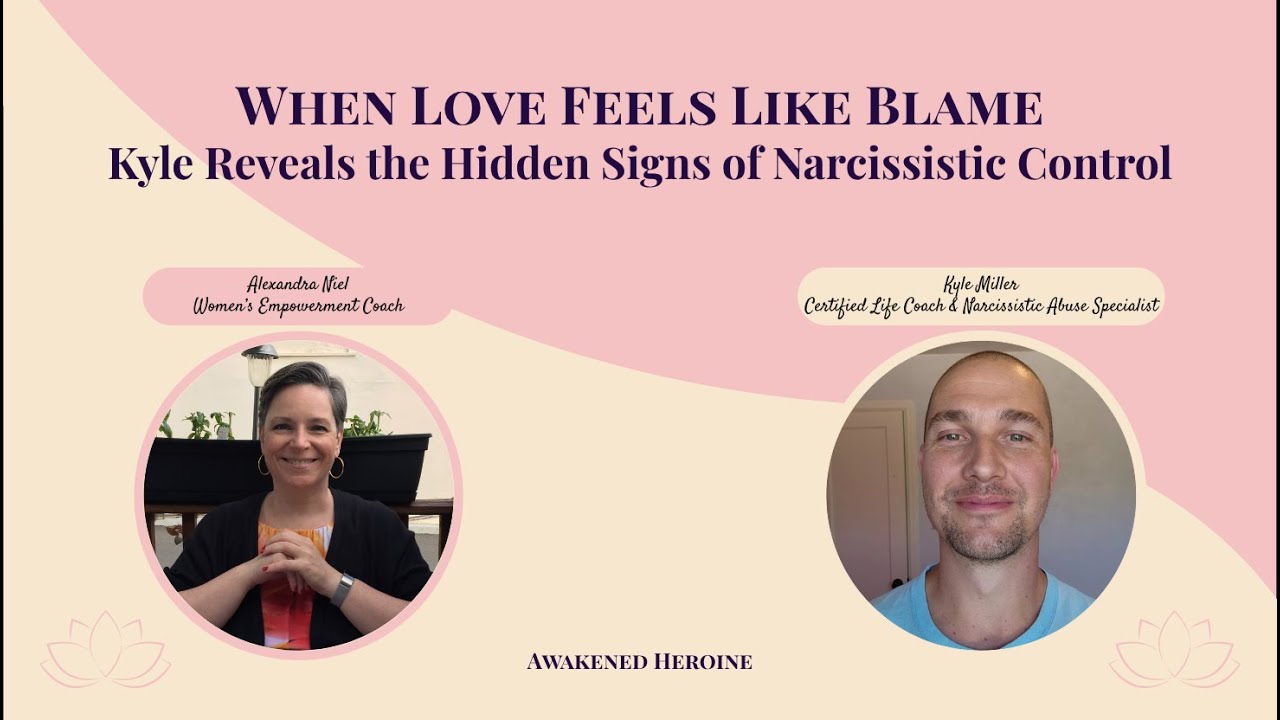
In this YouTube interview, host SPEAKER A talks with Kyle, a coach and survivor of a 14‑year abusive relationship, about his path from victim to certified narcissistic‑abuse specialist. Kyle shares how he discovered the dynamics of narcissistic abuse after failing to receive help from traditional professionals, prompting him to study personal development, obtain coaching certification, and eventually focus his practice on helping others heal from emotional and narcissistic abuse. He explains the spectrum of narcissistic personalities—from overt, flamboyant types to covert, vulnerable ones—and describes a scale (0‑10) that can approach psychosis at the extreme, noting that lack of empathy, accountability, and compassion are key differentiators. Kyle outlines practical warning signs for victims, such as feeling "crazy," being blamed, experiencing covert control (financial, social, emotional), and the pervasive use of blame as a tool to protect the narcissist’s image. He advises listeners to seek knowledgeable support, use tools like AI to analyze interactions, monitor their emotional wellbeing, and develop safety and exit plans, emphasizing the importance of self‑compassion, forgiveness, and avoiding self‑blame. The conversation also touches on gender dynamics in abuse perception, the difficulty of changing partners who are unwilling to do the work, and the broader lesson that awareness is the first step toward healing.
Chapters
Hello, heroines, and welcome back. This is our third interview today. This is so exciting. Like, I get to bring all you cool people into the group. Welcome, Kyle. How are you?
I'm excellent. Thank you for having me.
Good. Oh, my pleasure. My pleasure. So let's just keep it simple and basic. Tell us a little bit about where you're from and what you do.
Yeah, I live in Idaho and have lived here for decades now and love it. And, um, I specialize in helping people heal from narcissistic abuse.
So yeah, that's, that's the— quite the adventure, I bet.
It, it is, it is, definitely.
Yeah. So how did you get to do this?
So it's sort of a, sort of a long winding story, but, um, so the— I mean, the background really is I was in a 14-year abusive relationship. And, um, and so then fought my way out of that and, um, and have always been, you know, I guess it's almost 20 years that I've been studying personal development and just love it. Drove truck for a long time, and so I had all kinds of hours on the road when I could listen to everything that I could get my hands on. And, um, and so And at the end of the tail end of my relationship, I realized that something was wrong, and I wasn't sure quite what was wrong, but I knew that it wasn't just me that was the problem. And so that led me into researching narcissism and, and down that whole road. And, and that's, um, you know, then got out of that relationship, and, and about a year and a half later, I got into coaching and ended up selling my house and quitting my job and going through certification and everything. And little things happened along the way that were just little synchronicities, I suppose you could say. And so at a certain point, it was about a year after I started going through coach certification, that's when I first really was thinking, I think this is what I'm actually going to coach on. And it was, it was never in the realm of possibility or thought that I would coach on narcissistic abuse. But, but it's, it's the first thing that really touched my heart because I know, I understand very deeply what it feels like to be hopeless and alone, and I don't want that for anyone else. And, and I think one of the, one of the major benefits was it was so miserably hard for me to get help when I wanted help, when I asked for help from the professionals who were supposed to be able to give me help. And, and I ended up having to coach myself through a lot of things and figure out how to present it to the coach or to the counselor or whoever I was talking to in a way so that they could help me work through it. And so, so that experience, I think, helped so much with what I do now because my clients don't need to do anything other than show up and just unload whatever it is, and I'll sort through the parts.
It's amazing that you actually went through that. You would think that somebody who's supposed to be trained in the stuff would know how to support somebody who comes to them to say, hey, I need help.
Yeah, yeah. And, and a lot of it was, um, a lot of it was, I'm sure this is just a misunderstanding and you just need to go talk to your wife. And, um, and that was from coaches, it was from counselors. I mean, that was from a lot of different people that just didn't understand emotional abuse. And, um, and so I don't, you know, no, no judgment, no shame on them because I, I get it that they didn't get it. Um, but, but it made, it made a lot of things very difficult.
So do you— there's a, a reason why I'm asking because I look at, um, what my boyfriend has gone through with his divorce experience, um, and how because he was a man, how he experienced it and how he was perceived in the court system. Do you think there was something similar going on with you? Is that approaching it from you being a man versus a woman? Did that have an impact on how you were received?
I think that that had some impact, but I think that it had less impact for the upside and for the downside, I suppose. Than what I thought, because I have talked with many women who had very similar situations. And I think one of the gaps in understanding for most people with emotional abuse is with physical abuse, there's an event that happens that was the physical abuse. And with a lot of the emotional abuse, it's not this thing or this thing or these three things. It's all 7 or 35 of all of these different things that are strung together, which is the emotional abuse. And that's hard to conceptualize if you don't understand how all of that works.
Yeah, I can see that. It's kind of like the, the, the drop of water eroding at the rock, right? Versus Okay, so in you, and based on your experience, is there like, are there different levels of narcissism within, or how does that work? Because I have an image in my head about what narcissism is, um, but tell us more about that.
So I mean, first of all, I think there's, I mean, there's multiple different kinds, but what, what I really look at is kind of a differentiator is there are the overt narcissists, which are loud and flashy and all of that, and then there are the vulnerable or covert narcissists, and those are the victims, and they're sullen and all of that. And, um, and then as far as the scale goes, and, and I think Dr. Ramani talked about it where it's kind of, I mean, it's probably an infinite scale, but it's kind of a 0 to 10. And the ones at the very top are, those are nearing psychosis perhaps. And so, and I'm drawing a blank on the name, of course, but those are much more potential for violence and, um, and a lot of— so it's all of the emotional and, and every other kind of abuse, but it's also high potential or in fact physical abuse as well, all the way down to the ones who are annoying and self-centered and, and, you know, and they're, they're not, they're not really, they're not really a big deal to deal with on the daily basis and, and it's everywhere in between, and they all look different and they all act different, even though they kind of still run by the same playbook, which is, um, which are all the different narcissistic tendencies. And then I, I think the other part which is really important to understand is that, um, and, and a lot of people say this in different ways and they have their ways of judging, but What I look at as a line of delineation between possibly maybe narcissist and probably not is if they have whatever tendencies, whatever, you know, abusive or manipulative tendencies, and then they don't have empathy, accountability, or compassion. And so if they have narcissistic tendencies, you know, along with a lack of empathy, accountability, and, um, and compassion, then, then I'm leaning towards maybe that person could possibly be a narcissist. Maybe.
Um, and so if a woman is in a relationship and she's questioning whether or not she is with a narcissist. What are kind of some of the telltale signs, or what are some things to watch out for that can help them to start getting a better picture of what's going on?
Um, I think, I think some of the biggest things— I mean, first of all, if you feel like you're crazy, uh, you're probably not, and there's probably a problem. And, and it doesn't matter if you can put your finger on whatever it is that's happening. It doesn't matter if you can understand what it is that's happening. If If you feel like you're crazy and you feel like nothing is actually being resolved in your relationship and you're being pointed at as the problem, then there is probably a problem other than you in that relationship. And that's, that's probably one of the biggest things in the first place. I think, I think that if you, if you don't feel like, you know, that going again to if you don't feel like problems or issues are being resolved, if you're being blamed for those things, even if they can articulate very well how it is in fact your fault. If nothing gets, you know, actually discussed about, you know, what was my part in this? What was your part in this? You know, how can we work this out? You know, healthy conflict resolution in relationships. That's a lot of signs as well. And then control, you know, if there's financial control, you know, control with who you can see or what you can do, whether or not it is, because a lot of it is very covert. So they're not going to say anything about you not being able to go see someone. They're not going to really do anything that you could point at that they're punishing you for it. And yet you know that everything is not quite going to be okay if you go see that person, even if there's nothing that you can say. Well, they did this, or they didn't do that, or they withheld love, or what— whatever it is, because a lot of this is so under the surface that it's very, very hard to articulate or see what it is that is the control and manipulation.
How much is, or how big a part of the narcissist toolkit is blame?
Um, there's, I mean, it's a huge part, but it's, but it's a small part, I think, um, at the same time. So, so they're, so yes, they're going to blame you for everything, But, but that will all be subtle and it will only, you know, they— everything that they do is calculated in one way or another. And, and so, so they will only bring that blame card out when it's to benefit them and make them look good or make you look bad. But they're also— they're not going to do that in front of other people unless it will still make them look good. Or, um, or at least not make them look bad because, because it's all about their image. So, so they're, they're very— I mean, that's why all of the abuse happens in private and nothing ever happens in public, you know, in front of other people, because they have to protect their image and show how wonderful that they are.
So if someone is in a situation where they're questioning whether like you said, they are crazy and they might be in a situation where their partner is narcissistic. What are some things that they can do to either learn more or see whether or not they really are in this kind of, of situation?
Um, I think finding somebody that, that actually understands the abuse to talk to because most, most everyone else will not understand. Most people out there that you try and talk to, they're going to be deer in the headlights and they're not going to really know what to say or how to handle it. So finding someone that really, actually under— really, really actually understands it is important. If you cannot or have not found that person, one of the things that you can do is you can use ChatGPT or any other of the AI, and you can take, you know, entire scenarios that happened or conversations, text message threads, things like that, and put those into there. And there's a lot of good insight. I would not rely on that as the only sole thing, but I think a lot of that is helpful and And a lot of it is, is paying attention to how we feel. And, and that's really hard because, because if we feel miserable, which I think this is one of the signs which we don't want to pay attention to, but if we feel miserable continuously in our relationship, then there's something wrong. And And that's, um, you know, it leads to, you know, are they a narcissist or are they not? And it doesn't matter. It really ultimately doesn't matter because either it's a relationship that you're moving towards becoming more healthy and growing together and all of those things, or it's not. And either they are participating and encouraging and supporting and helping with all of that, or they're not. And, and so even if they're not a narcissist, if they're not moving forward in the relationship with you so that you can come together, then it is an unhealthy or potentially toxic relationship.
Yeah, it's, uh, I, you make me think about my previous relationship when I, for lack of a better word, compare what it was versus what I have now. And it's like, it's like night and day when you have somebody who's in a relationship where I always look at it as we go into a relationship to give.
Yeah.
And when we're in a relationship with someone who wants to give equally, then it is freaking awesome. Right. But when you're in a relationship where you give, give, give, and the more you give, the more they Hey. Yep. That's a huge red flag for me. Yep. Um, so if that's the kind of situation somebody's in, how do they start either course correcting that, if they're able to do that, or how can they start to kind of find their way out of that in a, in a way that keeps them safe.
Yeah, I think, um, I mean, you can try little things to, to get, you know, to get them to help and support and, and try to heal the relationship. But I think with most people, by the time they get to the point where they are looking to do that sort of thing, everything is bad enough that, that they already know, even though they probably don't want to know. And, and I think that, that planning and support is super helpful. And it's going to feel like you are betraying them when you go get help. And which is probably another good sign. Not that it's a good sign, but if you feel like you are betraying your partner because you reach out for help for yourself individually and you talk about them, then that's not a good sign of a healthy relationship. And so, but I think, you know, getting help, support, making a plan so that you can make sure that you're safe in all of the different ways, you know, putting money aside, getting any other, and it depends on where you are and what resources are available. I think one of the sad things, and I have to say it, is it's not necessarily going to be easy for you to get support. And what you have to do is you kind of have to be the squeaky wheel to continue asking for support from every single one that you can until you get some support. The upside is there's a lot of support online. There's a lot of people, you know, love it or hate it. TikTok is probably one of the best places to find supportive people. That are willing to, willing to talk to you. And, and of course, you know, anyone can reach out to me. Happy to, happy to talk with anyone. But, but yeah, I think finding the support and making the plan and not telling them about it, unfortunately. And it's going to feel awful and like betrayal. And it's not, because if you don't feel safe enough to talk to them about the things in your relationship then they have already betrayed you.
Yeah. Yeah, it's a good way to put it, actually. I have not thought about it that way. So you and I were chit-chatting just before, and I know you have your own story of divorce and heartbreak. So what were some of your biggest lessons as you went through your own personal experience that you think are important to share?
I think, um, and, and this is not about the, uh, the marriage that I was in, but, um, the relationship that I was just in, um, a year ago. And, um, I think one of the hardest things was, was I think this was a good person that had a lot of trauma and a lot of struggles, and she just was not able or capable or whatever of getting help and getting support. And it ultimately led to the end of our relationship, not by my choice, you know, but, um, but I think, I think that me being there and being available and supportive and all of those things in some ways pushed her away. And because it was, it was uncomfortable and not what she was used to.
It was scary for her, probably.
Yeah, yeah. And I think that one of the most important things— and this is another reason that I say it doesn't matter if they're a narcissist or not, because we say if they're a narcissist they can't change, and if they're not a narcissist they can change. And that's true, kind of-ish, because most people are really just not willing to change, to, to do anything to help themselves, to move forward with their lives., and in those situations, there's nothing that we can do other than continue to break our own hearts in staying in those relationships, no matter if they're, you know, if they're a narcissist or not. And that is— it's heartbreaking because you see good people that, that have— they have the potential, but if they won't actually do the work to have a healthy relationship, You can't, you can't have a healthy relationship with only one person on one side doing the work.
Yeah, that's, that's for sure. I've experienced that firsthand. So yes, I agree with you. I think it's also people have to be willing, right? If they're not willing, then they— I think everybody is capable to at least explore. But they have to be willing to.
Yep. Yep. And, and that's— and it's a hard thing. It's hard for all of us. It's hard for those of us that want to do the work, that are in the middle of it. You know, when, when I have to face any more of my demons, and I do on a regular basis, that's not easy work for me to do. And I talk about it all day. So, so for anyone else, that is— it's brutal. It's really hard work, and, um, and a lot of people simply aren't willing. And it doesn't mean they're bad people, it doesn't mean they're necessarily toxic, um, but they could be toxic for you in that relationship with them.
So, um, anything that we haven't talked about yet that you think is important to share with our heroines?
I think one of the, one of the biggest things that we do in, in all of these, all of these situations is we beat ourselves up and, you know, we should have seen it and, and we should have known and we should have done something and all of the should have. And we can't ever— I mean, the awareness is the number one key and we can't change anything that we're not aware of. And it takes time and it takes however much time it does. And as soon as we're aware of whatever it is that's going on, then we think that we should have known before we were aware. And that's not accurate. And then we, of course, beat ourselves up. And, and I think the biggest thing is we're all inevitably, for the most part, probably going to beat ourselves up. And so the most important part in that is becoming aware that you're beating yourself up and then not beating yourself up when you're beating yourself up. Because we're gonna, we're gonna, oh, I'm beating myself up again. And then we're gonna beat ourselves up for beating ourselves up. And with most of the work that, um, that I do, a lot of it is allowing. Allowing ourselves to forgive ourselves, allowing ourselves to love ourselves, allowing ourselves to, you know, to take care of, you know, to have compassion for ourselves. And I think about it in the way of giving someone else a hug. They have to allow you to hug them and you have to allow them to hug you. And that is what most of this work looks like. It looks like that allowing yourself to let go of that, to forgive yourself, allowing yourself to love yourself. And it's not— it's never anything that we can force, you know, allowing yourself to let go and let go of the stick and stop beating ourselves with it. And it's a process, it's a practice. Not an event that happens.
Yeah, I agree. I think, um, I think there might be circumstances where it is an event, but I think for the most part it's a lot of just little steps and, you know, consistent practice.
Yeah.
So, Kyle, thank you so much for being here and sharing your wisdom with our heroines.
You're very welcome. Thank you for having me on.
Oh, my, my pleasure.









