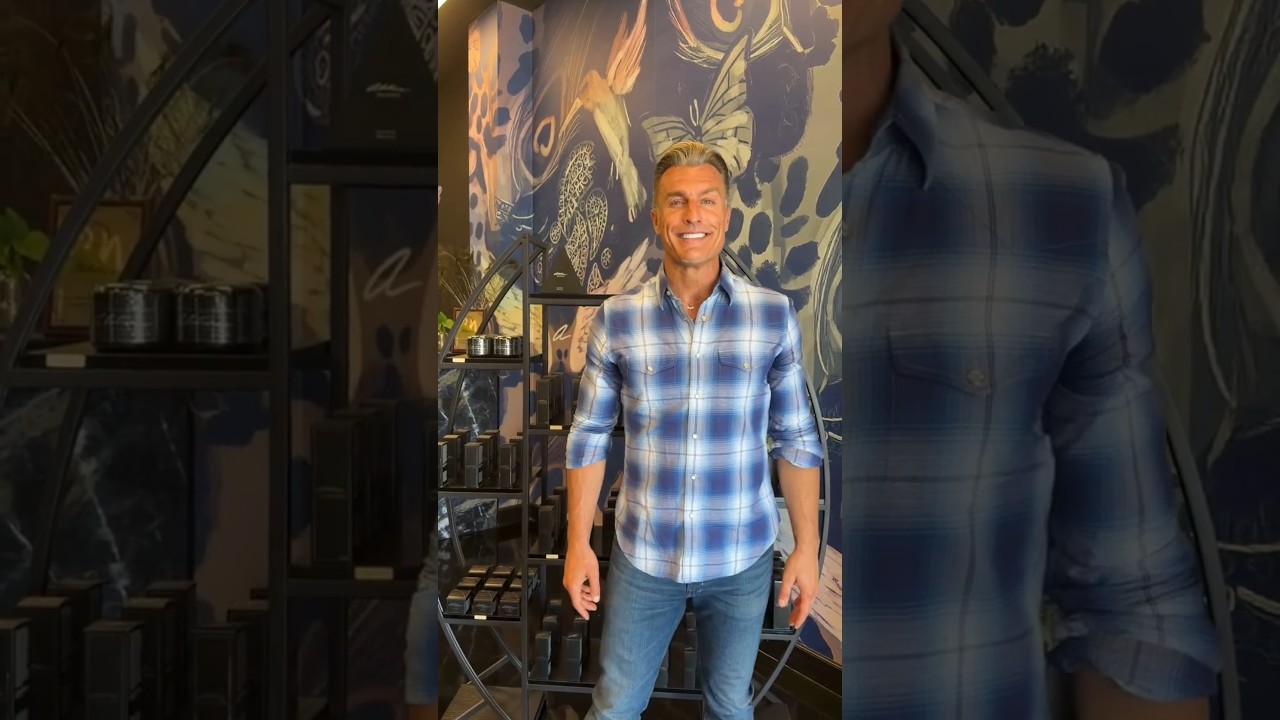
Alitura Founder & CEO Andy Hnilo with Founder of Papa Bear's Kinda Healthy Nut Butters, Mike Kelly

A conversational YouTube interview (July 2017) where Andy Hnilo speaks with Mike Kelly, founder of Papa Bear’s Kinda Healthy Nut Butters. Mike recounts how the product began in his kitchen, the product-development and small-batch production process (roasting + grinding, baking ingredients together), operational challenges (cottage food start, sourcing jars/caps, food processors breaking, packaging and shipping costs), sales channels (farmers markets, Shopify, plans for Amazon), product line and flavors (toasted coconut cashew, churro pecan, nana butter, minis), and marketing/customer-service lessons.
All right. I hope this works.
Yeah, yeah, I hear you. Can you hear me?
Hey, so live, I have this new software to everybody out there, this new belive split screen. It's actually really cool because you can like cross promote, say, your brand, my brand. We could just do like a podcast format, but it's live and it's perfect. Just post immediately. Mike, how are you, man? It's good to have you on here.
I'm good, brother. Appreciate it, man. How you doing, dude?
I'm good, I'm good. Thanks a lot. So, yeah, it was after we met at Air1 and kind of went over each of our stories and how we got into running a business. It was great because just having a physical product that was born out of your kitchen, it's, you know, that's. It's struck a chord with me because so many. I mean, there are so many different ways to run a business, start a business, but when you have a passion for something that in your case, well, I'll let you tell your own story. But it's something that's cool because a lot of my friends say in the tech industry or app and just whatever it is, trainers, something like that, it rarely starts just in the kitchen. And that's how one of my products, the Night Cream, started, Cast iron pan melting down butters and combining essential oils and extracts and stuff like that. So I want to have you on here just to share some more stories with maybe somebody else out there that has something they do very well. And we want to hear the stories of the good and the bad and what you've been through to get to where you are, which is without question to let the audience know out there. Mike, in my opinion, I'm a big. My little treat every now and then is to eat nut butter and say Justin's or I'll combine, make my own little just almond butter. I used to go through. Remember the Trader Joe's Raw, creamy, Trader Joe's almond butter?
Yeah, yeah. They're still doing it.
I couldn't have it around because I'd go through a jar or at least a half jar, and then it's sitting there and it's around 9pm you start thinking about half a jar left and it would be gone every night. Yeah, you go through three jars a week. You start doing the math on, you know, the fat that you're taking in. Thank God. I think they discontinued that, but they brought it back. But I just make a beeline right past that aisle whenever I go to Trader Joe's. But Long story short, I had three of your jars over the weekend, and I think you said, set a record or whatever. I mean, unbelievable. So, yeah, just tell a little bit about your product and what got you started in that business, if you can.
Yeah, I think probably the thing I get most often from people, they always say, you know, they say, why nut butter? I get that all the time. And my answer is pretty simple. I was eating so much of it that I said, you know, this can't be that difficult to make. And so, you know, you start to comb the aisles of the store, and you start to see, you know, peanut butter is a little cheaper than almond butter, and almond butter is about the same price as cashew butter and pecan butter you rarely even see, but that's even more expensive. And you start thinking, there's got to be a better way. And then when you start, at first, it's even more expensive than it is to buy it on the shelf, because you buy almonds by themselves, and you start grinding them up, and you're adding ingredients. You're adding, you know, salt or cinnamon or whatever you want to do to it. You're roasting. And the way I kind of started was, you know, I. I thought to myself, you know, there's got to be a way to make this on my own. I bought the cheapest food processor they had on Amazon. I went to the store and I bought nuts from. From Ralph's for, like, I think pecans were 13.99 a pound, which is insanely expensive. And I just started pulling things from my cabinet, and I started saying, you know, I'll try cinnamon, or I'll try vanilla, or I'll try. I was using protein powder. I was just kind of whatever I could find, making some different concoctions, giving them out to friends, you know, really just spitballing and seeing if it was something that I wanted to pursue. And then after some time, I was giving some things to friends, and like, we love this. You got to sell it. We love this. You got to sell it. And that kind of started it. I mean, we legally got into business, and I say legally because I was selling to friends and family and things like bootleg jars that I was making up, but legally launched last September. So September 2016. And it's been super successful kind of since the start. You know, we've had a lot of the same struggles that a lot of startups have. I don't have any business background. I'm not a chef. This is a. A field that I really initially Walking into, didn't know anything about, other than the fact that I liked it, which is, you know, I guess I, I guess that should start it. You know, you got to like the product that you're making.
Right.
But since we launched, you know, I've gone through, you know, I, I started as a cottage food operation where I was making.
You said cottage food operation. What was that?
Yeah, yeah. So we started as a cottage food operation, which is a cool law in California for those of you who don't know. Basically make a package good out of your home kitchen. And there's some rules and regulations that come along with it. But long story short, the health department comes, checks out your operation, make sure it's legit, and it's a really cool way to get your feet off the ground and get your product out in front of people and figure out if they like it and if you even have anything. And it turned out I did. So we were going to farmers markets and we were doing well there and we were going to a couple smaller grocers and retailers and doing pretty well there. We're doing a couple pop ups with some like a Lululemon and we're doing, you know, little things just to kind of, you know, get the brand out there. And more than anything, the first four to six months was more or less about testing it and, you know, seeing if people like this before I decided to dump a bunch of money into it and, you know, bring on investors or bring on, you know, other folks to help out. But yeah, I mean, you know, it's, it's, it's grown pretty steadily. You know, like I said, I face a lot of the same problems that a lot of entrepreneurs do, and that's with pricing and shipping is going to be the death of me. And you know, things like that because you don't realize what people see is the product on the shelf. They don't see everything that goes behind it. You know, it looks like a jar with a label on it. But, you know, I sourced hundreds of different companies to find the jar that I wanted and hundreds of different companies to find the cap that I wanted and different graphic designers and different labels. And you know, you're trying to have that balance between quality and, you know, something quality made, but something that isn't going to cost you an arm and a leg. Because at the end of the day, we're only as good as our costs for both ourselves and for our consumers.
So I'm curious, how many different food processors did you go through to get that Consistency, Because, I mean, that's the consistency that you. Currently there's. I mean, it's perfect. But actually, now you're in a commercial kitchen, right?
Yeah. Yeah. So we moved to a commercial kitchen and we're able to replicate our recipes pretty identically. You know, there's not much different. What happens with a lot of companies is they start really small and it's this whole small batch thing. And you hear it from, you know, the liquor business to nut butter to whatever you're making. You know, small batches is what people want to hear. But, you know, we started making small batches and the only real way to scale is to make larger batches.
Right.
But for perspective, I mean, we're still in a, in a typical run, you know, we're still grinding only about 30 pounds of nuts in one run. And that takes about, you know, 20 minutes or so. And that'll, that'll yield about 20 to 27 jars. But yeah, I mean, it's. So it still is very small batch. But I went through over the first, I guess, what are we in business now? About nine months. I've been through about eight, almost nine food processors, and that's full food processors went and bought the cheap ones. And then I started to realize, okay, stop buying the cheap ones. You need to, you know, invest a little bit more and buy a better one. And then I would buy the better ones and they'd melt or they'd crack or, you know, I got to the point where I was lining up four food processors in my kitchen. And God bless my roommate, he didn't give me a hard time about it, but it was constant grinding all night long. And that was because I had orders, you know, I had orders to fill. I had markets that I had to have enough product for. And, you know, the only way to really do it was to do it until the processors stopped working. And so, yeah, I flew through about eight or nine of those. Thankfully, it's been a while since I've had to buy a new one. I, I get the, the, the bowls replaced all the time because they still crack, they still, still melt, they still burn. And they're not perfect because they're not meant, you know, for commercial use. But yeah, I mean, those things are crucial to product development and being able to, you know, stay at home and, and, you know, grab some pecans or cashews or almonds or peanuts, whatever you got, and combine it with cool flavors and, you know, kind of be able to roast things together and, and try different things out in the food processor, I had to learn it all myself. It wasn't. There was definitely a learning curve because sometimes you grind the nuts too finely and it comes out almost like liquid, or you roast them a little too long, and the oils kind of really emerge faster than you anticipated. And there's a lot that goes into the roasting process and the grinding process that it needs to be kind of meticulously timed.
So that's something that really interested me about the process. And I don't want you to give anything away. It's just. There is a. There's also a roasting process that you gave the, you know, the analogy of, like, walking downstairs. Say, like, London. You hear that, like, hot. Or, like, you smell that, like, hot, you know, roasted nut. You know, that scent that just takes you back to, like, say, like, peanut brittle or something like that. That nice smell that reminds me of, say, the holidays. And that's such smells, sounds, sights. I mean, those are things that will give you. They'll bring back memories, kind of, like, evokes emotion, which is what you want, right?
Yeah. Yeah. I mean, a big part of our initial plan was to kind of play on nostalgia. You know, we did our. We did peanut butter and jellies, and we just did them, you know, with banana on them. It kind of remind you of your childhood a little bit. But anybody who grew up, you know, I grew up in New Jersey. Growing up in New Jersey, you walked the boardwalk, or, you know, you spend time in the summer walking around at carnivals, fairs or whatever, and you always got that smell of the sugary nuts and all that kind of floating in the air, but it brings back some kind of, you know, it brings back a bit of nostalgia. And so I wanted one thing that's unique about. And this isn't, you know, groundbreaking stuff, but it's. It's. What separates us from a large manufacturer is that we're able to actually combine all the ingredients and bake everything together. Because what that does is not only does it bring out the oils and the nuts, but it brings out. It almost caramelizes our organic maple syrup. It caramelizes our organic agave nectar. It kind of. It brings a whole new flavor to the product just by baking it all together. And it's. When you pull it out of the oven, it smells amazing. It smells like that. You know, those roasted nuts you smell on the boardwalk and, you know, that's what kind of one I wanted to. To emulate is, you know, again, that nostalgia. But do it in butter form and using Healthier organic sweeteners. You know, basically, we want to make a product that's. That's for people who like to be healthy but also appreciate a little indulgence.
Right. And that's. That's another thing. I'm glad you touched on the sweeteners that you use. You also use coconut sugar, which I really like. And it's just. But you have that, that, like the. The little granules of the salt and then also the nice little touch of sweetener. It's. It's perfectly balanced. And I, you know, I have to give credit where credit's due. I mean, really, that's why I want to do this. Because, I mean, 100%, 10 out of 10. I'm not just saying that like, that's all three of them. The nana butter, churro butter. And then what was. Shoot. What's the other one? Yeah, I mean, that. That was the first one. I'm telling you. I was scooping that out with my index and middle finger on the drive home. So, yeah, you nailed it. So from this point out, it's. There's no, There's. There's. I don't see that. You know, it's just building off that. And I really wanted just to do this because you never know. You know, we're a passion for food, clothing, music, whatever it is. It's just. And one idea can. Can lead to. I mean, you never know where it can take you. So. And it's just. But so. So for. For the people out there, that. What got you from that point to. All right, I have something, you know, cruising around town, selling to friends and, and, you know, that feels good, but taking it to where you are now, I think here, what website platform are you in and how are you shipping? What are you using right now for fulfillment and how are you doing that?
Well, we use Shopify, which is a great web service for any E Commerce. It's been really helpful in getting analytics where we're able to find out where our customers come from. It doesn't cost you an arm and a leg. One of the best things I learned from one of the partners in the business, actually, is that when I first started, I was packaging things up really nicely. Put them in a nice box with some, you know, Styrofoam in there or whatever. Wrap it. I'd wrap it up all nice. But the reality is no one really cares, like how wrist it. You know, it might be a little different for your product because at the end of the day, they just want to make sure that the jars are intact and that they look fine, but you don't really care how it shows up. And that was kind of, you know, it sounds. So those moments where I was like, damn, like that I was wasting so much extra money on packaging and, you know, I had. My shipping rates were through the roof because, you know, I wanted to make sure that the packaging looked nice when it showed up. Now, you know, the truth is, man, I could jam six jars into a flat rate padded envelope and get it from point A to point B without any problem. Which at the end of the day, I mean, again, you know, we're not Amazon, so you got to remember that there's just, you know, there's a few hiccups, but, you know, it's, it's, it's just nice to be able to be able to get those costs down a little bit for both myself and for the customer. Because now we live in a time where people expect shipping to be cheap, fast, and if not free.
Right.
You know, as a small business, we just don't have that option right now until we, until we do get on Amazon.
Is that a goal of yours? To get on, you know, fulfill my Amazon prime, all that? Is that a goal?
Yeah, yeah, yeah. We want to do it. We got to adjust the pricing a bit to make sure it makes sense. It definitely is. I mean, something like 70% of all online sales are done on Amazon. It's, it's a place where you kind of need to be now, especially in this, you know, in this field, because people are going on there and they'll buy based on the flavor name. You know, they don't, A lot of people don't even dig into the ingredients or those things. They'll say, oh, churro better. That sounds, it sounds sexy. That sounds cool. It sounds different. I gotta try this. And so, you know, there's kind of ways to push the product on Amazon. And I know you mentioned to me last time we talked, you know, it's great to hire an Amazon expert, somebody who's able to get in and kind of really show you the ins and outs, because it could be tricky, but we do want to get on there. It's definitely a goal. One thing we're doing soon is changing the packaging just slightly. It'll be the same size, the same amount of product in the jar, but we're changing the packaging slightly. And I just want to make sure before we roll out on a, on a national stage like that, that the packaging's shirred up and everything's Good to go. But we'll get there.
Yeah. You're not even. You're in. You have any. I'm just curious, do you have any other flavors that you're working on right now? Is process one? Is it best part of it? For me, I love just constantly, like because you have a full time job and so when you come home, work just starts for you on your other baby. So, like, tell us.
Yeah, yeah, yeah. I mean, I still have a 9 to 5. You know, I've got a great job that thankfully is flexible and allows me to be able to, you know, get out and if I need to make a stop for the, for the side business or for papa bears and get out and go do something, I can. But at the same time, you know, it's. I still have a job to do. You know, I have a job that pays me a salary. So. Yeah, I mean, you know, for me, it's kind of been the type of thing where, you know, the kind of further we get along with it, the more work it becomes. But as far as new products, I'm doing that almost daily. I get suggest, truthfully, I take suggestions from people at markets. I talk to people all the time and they're like, you should try this, you should try that. And since we've been, you know, we didn't initially roast everything together, and since we've started to do that and it's really changed the flavor in a positive way, I really started to experiment with different nuts and different sweeteners and how they react with one another in the oven. Because once it comes out, you know, you're going to get a completely different flavor. But, you know, one thing that I always keep in mind is that being small business, you know, we don't have a million dollars in sales. You know, we don't. We're still small enough that every penny counts. And so, you know, it's difficult to go buy 100 pounds of almonds just for, you know, for experiment purposes because, you know, almonds are going to go for $3.50 a pound and you know, you're talking 350 bucks and just, just, you know, testing things out. So I will tell you, we are working on a honey roasted pecan butter, which is pretty awesome. Going to have that shirt up pretty soon and some others. But right now we're going to. We definitely want to roll out a fourth. We definitely want to roll out an almond butter in the next two to three months. But yeah, I mean, you know, it's funny, again, it goes back to what I mentioned earlier, people only see the product on the shelf. But when you make a new, you know, when you launch a new product within your line, now, again, you're talking, you know, now you're talking new labels and you're talking new ingredients, and, you know, you're just adding another. Another wrench into this thing. And when you're running things as a solo business owner and, you know, you're doing kind of everything yourself, you have to, a lot of times question whether or not you have the capacity to, you know, to bring on a fourth product. But what I've done that I really like is my minis, my baby bears, I call them. They're kind of mini versions of all of all my large jars. And the reason I rolled those out was because, you know, we do a lot of markets and we're kind of out in front of people a lot, but we get a lot of travelers. You know, when you live in Santa Monica, you're always going to have travelers. And so we, you know, I started to think, well, how can I get these travelers? Because they can't take the product on a plane. A lot of those travelers who bought our baby bears were taking them home and they were giving them to friends and family, and they were trying them and they became, you know, our online orders. So from a business perspective, the best move I made is making those little stupid minis. I mean, we're 2 ounces. Yeah, they're 2 ounces. And I mean, I've sold. I have a company here, an ad agency here, who loves them so much. They give them out to clients all the time. They order them by the hundred. They'll order 100, 200 of them, and I'll get in the kitchen and crank them out. And they just love them in their gift baskets. And, you know, that's been one of the better, probably the best move I've made.
Yeah, that's really smart, getting it. I mean, you know, all of our products besides the body lotion, 100 mil. So 100 mil. 4 ounces. Under that.4 ounce, actually 3.4, I think, is right at the limit for carry on. Right, right, right. So, yeah, it's. That's very important. You know, conferences and things like that. When I see people around trade shows, it's just getting it so they're able to take it, throw it into their bag. It's important, you know, try it out and then you can take it online from there. But, yeah, I mean, you know, the thing is, another thing. You have four SKUs and it sounds like that's pretty, that could happen by September. Man, that's a lot to manage. I mean, I went through my first year just with one and I think, yeah, we expanded either that the second year into two, but yeah, I mean, managing four and just staying on top of that, quality control and perfection. I mean that's, it's difficult when it's just you running your baby. You have everything to be perfect. How often now your commercial kitchen, did you say that you go down there? It was it like every, every week or every couple weeks to handle it?
Yeah, it's, it's every other week right now. And we're Cranking out about 300 to 350 jars per six hour run. So you can estimate about 700 jars a month. And I mean we make, I mean we sell everything we make. So nothing carries over from month to month. Everything sold at farmers market sold online. So from that perspective, we do great. It's, you know, it's just, it's a lot of work. You know, it's. We drive up to the valley and we're in, it's 108 degrees out there as when it's like 72 degrees and sunny in Santa Monica. And it's hot and the kitchen's hot and you're on your feet all day and it's, you know, it's a, no pun intended, It's a literal grind. You know, you're out there on a Sunday at 6am and you're there till 2, 3 o' clock in the afternoon. And you know, not only are you, are you baking and you're mixing and you're milling, you know, you're, you're jarring. And you know, thankfully I have some good help with me, but a lot of work goes into every single jar that we put out. You know, it's not like we gave some huge manufacturer, you know, 50,000 bucks and said, hey, here's the recipes, go for it. You know, this is truly a handmade. Literally, I touch every single jar that gets made. And so if there's ever anything wrong with anything, you know, who's responsible for it. Because I've touched every single jar. You know, I put my card in every shipment we send out, you know, and my personal cell phone number is on there and my email's on there. And you know, for one reason or another, something's wrong with the order I'm quick to replace because, you know, I understand that. I'm sure mistakes, I'm sure maybe a jar that's supposed to be 12 ounces was 11 and a half. Or, you know, it happens, but, you know, it's our blessing and our curse that we're able to still produce in small batches. But, you know, hopefully there'll be a time where, like I said, I could hire somebody to go in there and crank them all out and give the recipes. But our plan for the next long while is to remain in that commercial kitchen, you know, because I don't. The manufacturer just simply can't replicate the process that we have going on in there.
Yeah.
And it's.
It's. It's passing on that quality control and, you know, passing on your baby to someone, you know, that may have so many different things going on. If they get one thing wrong, I mean, that's. That's your name on it. That perfection. And that. That's something that was so hard for me to pass on to someone else. And it. You know, we went through several manufacturers, and they just couldn't get it down to. We have a very similar story. That's what drew me to what you're doing. And we also wanted to also make the audience aware that Ryan Kalish is how we met. He's a baseball player and a really good friend of yours and also a partner in Papa Bears. And so that's how you and I met. But then I, on top of that, heard about the story, heard you were grinding it out, doing it yourself. Work that goes into this. The biggest message from me to people out there, it's just. There's nothing. Well, there's. The work is something that people don't understand. Like, the work that goes into this. You have to be ready to pull all nighters. You have to love what you're doing, and you have to, you know, I think you have to perfect, you know, your. What, your. Your art form, your creative, whatever you're making. And then also, just for me, it's customer service, too. So make a perfect product. Product has to be awesome. And then just. You only have a business because of your customer. You only have. Just take care, you know, perfect that process of it as well. I know we take pride in that. And that's. That's the only reason why we're here. Right. Is having that customer and just making sure their whole experience is teamless.
Yep. And I think you'd agree. I think you'd agree that a lot of my first nine months in business has been trial and error.
It's.
You figure out what works, what doesn't work. Like I said, I don't have a business degree. I don't have, you know, I'm not a chef. But my. My connections are limited when it comes to having people who are able to push sales digitally because now everything's done online. But we try things and if it works, great. If it doesn't work, then we don't do it again. It's Facebook ads or it's Instagram ads or we're living this content is king culture where you need to post something every day or twice a day. Truthfully, I have fun with that stuff. I love, I love the marketing side of it. I love that we're kind of cheeky and not so serious. And, you know, we call ourselves Free Range Cage Free Wild Caught nut butter, which is great because, you know, we do farmers markets and that sign, you know, that sign hangs outside the farmer's market, and people stop and stare at it. They take pictures with it, you know, and that, you know, it's. It's. That whole little catchphrase is awesome. Nine out of 10 people get it. And there's the 10th who just does not understand it. And I'm like, okay, maybe you're probably not gonna be my customer. I let that 10th go.
You have those on shirts too, right?
Yeah, I'm wearing one right now, actually. It's just the Free Range cage free while cutting up butter shirt logo.
Man, I love the logo. You nailed that. The whole packaging, product, everything. You know, I know you spent a lot of time on that, but that's. I just, you know, I just. Whatever. Yeah, whatever I could do. I know that. That's the thing, though. It's like just getting to that next step. It's difficult, but I really. I believe it's going to happen to you. So I just do my best to kind of spread the word that to the audience out there, this is not blowing smoke. This is an unbelievable product. My favorite, in this order, toasted coconut cashew churro butter and the nana butter. It's just the way you were able to get the vanilla in there with, like, the little crystals of the coconut sugar and then maple sugar. I mean, the sweeteners are. I mean, we're not talking cane sugar, granulated sugar, or anything like that. Took it upon yourself to really get the best, healthiest options in there. And it shows.
And the beauty of it is because we're baking everything together. It gives the flavor a lot of time. I mean, picture a mixing bowl. Picture like you'd mix anything. We mix everything together in a mixing bowl and we roast it and, you know, it's nice because we're able to spread out the flavor without having to add a ton more. And that's, that's. I mean, that little bit of sweetener, the organic sweeteners that we use go a really long way for the flavor and doesn't kill you nutritionally. You know, the second people taste it, they're like, oh, it's got to be loaded with sugar. Because sometimes it can be sweet and it just tastes. You assume that if it tastes good, it's got to be bad for you. But for example, you know, I've got our toasted coconut cashew right here. It's 180 calories per 2 tablespoons, which is pretty on par with typical peanut butter, almond butter, 4 grams of sugar, and it's the organic coconut sugar and a tiny bit of organic maple syrup. And then we use a little organic unsweetened coconut flakes rather than getting that really overbearing coconut flavor. It's a subtle coconut flavor along with a little organic coconut oil.
That helps as well, too, right? Those little flakes gives you that little tiny. Well, I mean, subtle.
Because, I mean, we get, we get people, it happens almost weekly. They come up and they say, I'm not as. I'm sure you know, you're the coconut person. You're not a coconut person. There's not very many people who are in between. And I'm a coconut guy. I love coconut. But there's plenty of people who come up and don't like it. And I'm like, well, we use an organic unsweetened coconut, so, you know, it doesn't kill you with coconut flavor. I think you really like. You should try it. And inevitably that, you know, that's our bestseller. You know, that's. It's difficult to not like that one. And so even coconut people who aren't coconut people crush that one down and love it. And, you know, I always say that that more often than not is that's our spoon, you know, on a spoon walking out the door. Peanut butter or I'm sorry, cashew butter. You know, some people use it for as a spread. Some people use that as a dip. You know, like I said, I'm more often than not on a spoon walking out the door, specifically, if so it doesn't make me go in and get another spoon. I can pop it on one spoon and get my hands full with all the stuff I need for the day and walk out and I'm good.
Then also tell them about the churro butter. Because that's pecan.
Yeah.
We'Ve seen that. I mean, you can't find pecan butter. Actually, that's not true. I've seen one. I'm not even going to say it, but it's, I mean, nowhere near. I mean, it's different. I mean, you could tell yours was produced within a week or two. I mean, that's been sitting on shelves in a little pack, and there's no oil content to it. I'm talking about the other brand. But, yeah, yours is amazing. Tell a little about the story of how churro butter came to be.
Yeah, yeah, I was going to get to that now. So the churro butter, you don't see a lot of pecan butters. And it's pretty simple. Why? Because pecans are just an expensive nut. And so a lot of people aren't willing to, you know, put that much cost into it. And if we do see a pecan butter on the shelf, it's typically in the 15, $16 range, but we're able to make a really solid pecan butter that we sell for 12 bucks. But basically, kind of the way that started is Ryan Kalish, one of the, you know, one of our partners, him and I went to Disneyland. A couple of adult males hanging out. Hanging out at Disneyland on a weekday. And we're kind of just cruising around, and he. He bought a churro, and he also bought ice cream. And so he dipped his churro into ice cream. And at this point, I was probably about a month into experimenting with nut butters and seeing if it was something I wanted to do. And he's like, you should make a churro butter. And then we kind of laughed at it. And I was like, yeah, I wonder how I would do that. And then I decided that pecans, you know, for whatever reason, churro. And the first thing that came to my mind was pecans. And at that point, I had never used pecans for butter. And so I went to the. I went back to Ralph's. You know, this kind of. This part of it goes back to how when you first start, in my opinion, any business, you got to be as bootlegged as you can, because, first of all, no one cares about you. So no one's going to come audit. You know, it's going to come bother you. I mean, you do the things that you need to do to stay compliant. But I was going to Ralph's, and they had pecans for 16.99. But when you. When you checked out, they were marked wrong. So I was getting my pecans for 7.99 a pound at Ralph's, which, I'm sorry, 3.99 a pound at Ralph's for about three months. And, and you know, the truth is I noticed, but I said, you know, this is first, this is going to get a small business off the ground. I'm sure Ralph's could eat a couple hundred bucks to take lose. So I was not stealing. I was just politely, I was paying what it required me to pay. And so thankfully, that gave me enough time to experiment with churro butter on a, on a larger level. And so that again, it's simple ingredients, it's roasted pecans, it's organic agave nectar, it's organic coconut sugar, it's a little bit of cinnamon, it's a little organic coconut oil for texture, and then it's a tiny bit of salt. You know, again, it's really simple, but it's like a cinnamon, pecan, cinnamon roll type flavor that is again, hard not to like. And not tooting my own horn type of thing, but it's unlike anything I've ever tasted. And it goes well, really well with sliced apples or any fresh fruit or veggie from a farmer's market. It's awesome in oatmeal. And I mean, if you drink shakes in the morning, if you blend up a protein shake or smoothie or anything like that, it's a game changer for that. But again, just the type of thing, like you mentioned, it's my go to sweet snack. It is difficult to keep that serving size where it's supposed to be. That one in particular is a little higher calorically. Pecans are just a higher caloric nut. They're a little higher in fat as well. So the fat. Fat's a little higher. But Even still, in 2 tablespoons of churro butter, you're talking 190 calories and about 3 grams of sugar per 2 tablespoons, which is, you got to remember, 2 tablespoons is if you keep it to. What if your tablespoon is actually a tablespoon? It's a nice hefty portion of nut butter.
Yeah, I forget the name of the fat, but I don't know if it's ever acid, but it's actually a healthy nut, more so than, I don't know, peanuts, definitely cashew. I don't know about Brazil, but yeah, I mean, there actually, there are some good nutrients in all of the nuts. You can use pecan and peanuts, so. Yeah, right.
Yeah. Yeah. And I mean People constantly are just like, you know, which is the healthiest? And I'm like, that's such a broad term. You know, really, none of them, none of them are going to kill you nutritionally. You're going to get some really quality fats from all three. You'll get a couple grams of protein per 2 tablespoons in all three. And I mean, I always say like, in my opinion, this is a, this is a sweet snack, you know, if you want to use it daily, you know, you want to eat half a jar or a whole jar a day like you do, that's fine. But you know, I kind of. And it does happen, it does happen, but I always recommend it. You know, I'm like, this is like your kind of twice a day little snack that hopefully keeps you full with, with the fats from the nut and keeps you satisfied with the sweetness from the organic sweeteners.
We have a couple questions here. Have either of you. Hi Kerry, how are you? She says, have either of you considered free shipping but upping the price of the products to absorb the cost? I'll let you answer first.
Yeah, I have and I'm still toying with it. But the harsh reality for me is once you start getting into $16, $17 nut butters, because that's, you know, that's what it, what it costs to get to, you know, to get that free shipping, it's tough to justify, it's tough to find people are going to pay that price point. A lot of people look at shipping like it's, you know, that little add on that they expect at the end. But you know, I think it was Carrie Kerry said correctly, like, you know, basically people now expect free shipping or cheap shipping. It should be, you know, Andy, I'm sure you do it all the time. You look at your abandoned checkouts and my abandoned checkouts are all at shipping because, you know, people don't want to pay an extra four or five, six bucks, whatever it is, to ship the product. But you know, our hands are tied on that unless you can really get your margins to the point where you could offer free shipping all the time.
Yeah, it's when I, oh man. When I first started off like you, I didn't have a degree in business. I just kind of, we started selling before we even had a fixed price, before I even, my raw goods cost any of that. And so I had to get orders out and I came up with a PayPal account and came up with the price. People were just paypaling me money before I Even had a website handshaking containers in my back room. But anyway, so $35 free shipping, it just sounded good. And then we're shipping to Sweden, which at that time I was using the 16 ounce containers from Whole Foods. So my product was about 15, 16 mines powder, not liquid. So it was very heavy. So you're shipping to Sweden, which is that by $21, my cost, I was losing money to ship. So you have to start figuring that out. And I found out my cost, we started properly packaging it. Like you. I don't. I just get the best of every ingredients that I can. I mean, my serum, when we do wholesale on that, we almost can't even do wholesale because of, because of the cost. I just would, you know, at this low base point right now, I just want to create an incredible product and just let the customers talk and let them tell their friends and then let word of mouth, let pretty much that be our marketing. So we're not spending dumping tons of dollars into marketing campaigns. We just put that right into the product and let the customers talk. That's what I respond to as a consumer. Just a product that I believe to be just above and beyond what other companies are doing because they have a full overhead, staffs to pay. We just me and my team right here and that's what we're doing right now. But to answer Kerry's question, we do provide free shipping after a certain amount, both internationally and domestic. So if they reach a certain amount, I forget, I think you said yours is two or three jars. Is it three jars and then it's free shipping or how do you do it?
Mine's at. I'm at six. You purchase six or more jars, it's free shipping. And I mean, I do that. I do that because we end up essentially eating the profit on one jar, which is fine. You know, I'm happy to ship five, make money on five jars and break even on one if it means someone's going to order five jars. But, you know, like I mentioned earlier, a lot of this process is trial and error. And so, you know, we're running a promotion right now, $4.99 flat shipping nationwide, which, you know, sometimes people respond, sometimes people don't. You know, it's just if it works, great. If not, you know, we've got a few orders from it. But, you know, if this promotion doesn't work, like Carrie mentioned, maybe there's a way we can, you know, finagle the pricing a little bit or just eat the cost for a little while. And make a little bit less, you know, on our bottom line, you know, to get people interested in it, to get people worked on it.
Right. And in that case you, you also have, you know, that's where samples come into play, you know, maybe an add on, you know, after you give them the sample. One time offer right here, you know, try the mask for say, you know, fixed price, you know, definitely discounted. But one time offer and make it definitely not option or not, not as an option on the site. But I mean there, there are ways to get around it where you already have the customer wanting to try the product and then hey, here are the review. Reviews are everything to me. So as we talked about getting that review, that follow up just from testimonials, videos, anything, pictures of customers enjoying your product. I mean that's everything these days. Okay, I'll let you answer this one. So Kerry again asks what's the difference between coconut sugar and others? So you want to answer that because.
That'S a. Yeah, sure, sure. So organic coconut sugar is lower glycemic index. It's not quite as sweet as typical table sugar. And you know it's derived from coconut. If you buy, you can go to any store at this point. Now it's becoming so popular that you can go to just about any store at this point and buy it and use it as a substitute in anything you bake, anything you cook that typically uses sugar. It reacts pretty much the same. And it's, you know, like, like I mentioned, it doesn't, you know, it won't kill you nutritionally. But basically the, the major difference and the major talking point for me when I talk about our healthier sweeteners is that sugar is lower glycemic index. I won't spike that. Blood sugar quite similar or quite as much as typical table sugar would.
Yeah, now you nailed that. It definitely has a much lower glycemic index. And I also like that you have maple syrup in there as well which actually has some very vital nutrients in it. And yeah, I mean it's just, I love vanilla cinnamon, also the salt in there too to kind of bring out the other flavors. You nailed it, man. So I definitely want to put a link so if you could tell people where they can find you on all social media channels and also your website, that'd be huge.
Sure, sure. The website's ilovepapa bear.com youm can find us on there. You can use the 10% discount code. It's Ilovepop and Bear at checkout. That'll get you 10% off. And like I mentioned, we're running that 4, $4.99 flat rate shipping for the entire month. So take advantage of that. Our social media handles, they're all TPAPA Bears. You'll find us on Instagram, Facebook, Twitter. It's a lot of food porn. It's a lot of kind of healthy memes. You know, our, our brand name is Papa Bears kind of healthy nut butters. And basically all that means is that, you know, we use sugar but we use healthier sweeteners, healthier organic sugars that like I said, you know, I keep saying this but won't kill you nutritionally. So a lot of our, a lot of our marketing strategy is designed around our kind of healthy memes which basically just means like, you know, smoke cigarettes, drives a Prius or joins run club. Joins run club. No shower, happy hour or you know, we just kind of, we're about balance and you know, we, we like to have fun with the social media stuff because that's what it should be. You know, it should be fun. And in my opinion, there's not to, not to call out any brands in particular, but there's just a lot of people doing the same thing. You know, there's a lot of like, and I'm kind of guilty of it sometimes too. Food porn is important because people, you know, people will buy something if it looks good in a photograph. But at the same time, you know, I don't know really anybody who makes recipes off of an Instagram post, like, it's cool to have, it's cool interaction but you know, not very many people are really going home and banging out that nut butter recipe that has 12 ingredients for, you know, nut butter cake or something, whatever you're gonna make. But yeah, I mean, more than anything I love doing, I do all the social media, I love doing it. I think it's a lot of fun. You know, sometimes I gotta reach for content. I ask friends, you know, I ask Ryan all the time. Take pictures out in Arizona. He's in Arizona now. Take pictures in Arizona with the jars or with the, with the hats or the shirts or whatever, something, some kind of cool content I can post because you have to do it now, you know, if you're not posting it daily or twice daily or you know, at least every other day, you know, you're, you're, you're falling off a bit. So, so yeah, find us@ilovepopa bear.com and eat papa Bears on all social channels.
Yeah, man. And you Know, it's just. It's. It's cool. I mean, you're right in the middle of the exciting time.
It's.
And, you know, I'm happy to help in any way that I can, but you got a killer product, man. So that's. That's number one. And number two, just, you know, just keep doing what you're doing. If I can help in any way, obviously, reach out. But, yeah, I'm definitely going to keep buying. You got a customer right here. Me. And then I'm sure you help some people out there, maybe some aspiring entrepreneur, just to let them know, to follow what excites them, because you never know when you find yourself in a situation like this customer of your own. So, yeah, thanks for.
Yeah, my pleasure. And like I was saying, I think more than anything, I've enjoyed this process because of the fact that it keeps me focused on something that's not, you know, drinking at a bar or, you know, doing what everybody in their, you know, mid to late twenties does. And. And. And that's what kind of keeps me, you know, pushing to the next. To the next level. I love doing it, don't get me wrong. But, you know, when it's. When it's. When my day job's over, I could sit on the couch and. And watch the office all night, which I would be happy to do. I love the office, but instead, you know, I'm working on the business, and it's kind of cool to have something that's yours, you know, that you can take pride in. It's pretty cool.
You said it, man. That's awesome. Keep doing what you're doing, man. And, yeah, thanks again for coming on. If anybody has any questions, I'll be here. I'm sure Mike's gonna come by and just stop in. We're happy to answer them. And thanks again for joining in.
Appreciate it, brother. I'll talk to you soon, man.
All right, man.
Be good.
More from Andy
☀️ A quick message from Andy: One of our biggest sales of the year is happening NOW!