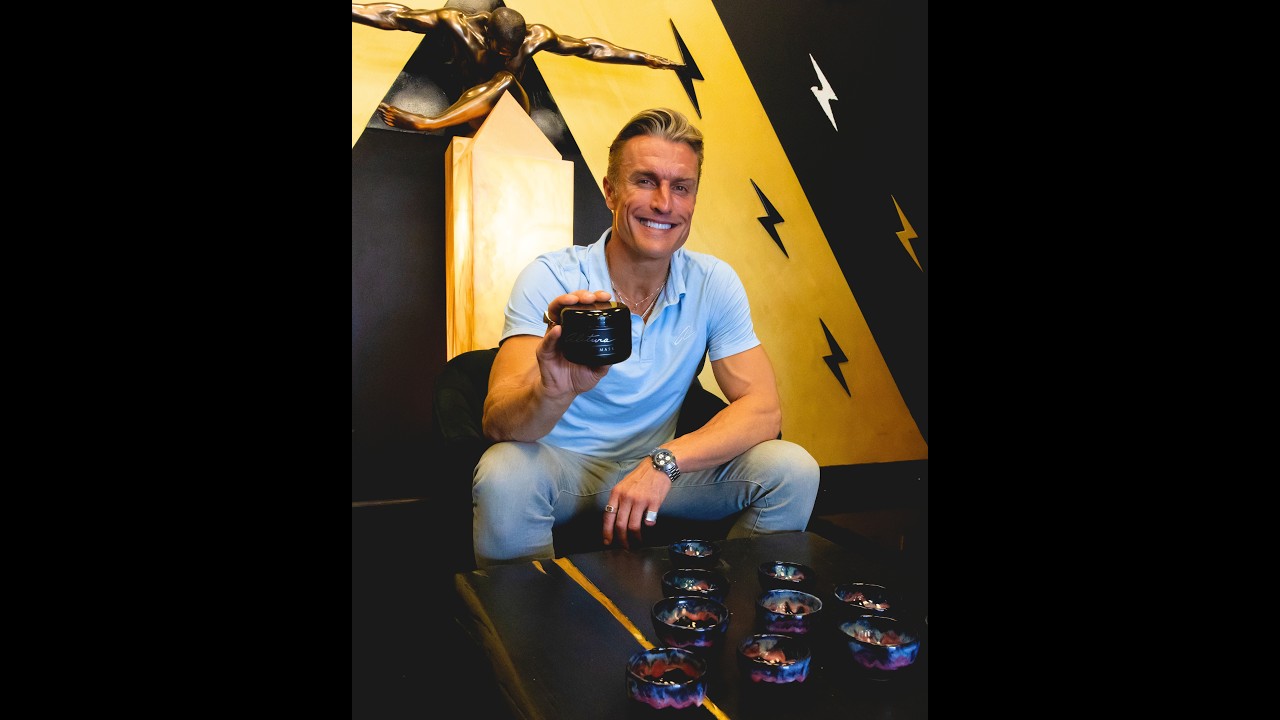
Andy Hnilo chats with Jason Prall of the Human Longevity Project

A recorded interview between Andy Hnilo and Jason Prall about the Human Longevity Project — a nine-part docuseries that explores longevity through lifestyle (diet, activity, connection, purpose, environment) and includes visits to blue zones (Okinawa, Ikaria, Sardinia, Costa Rica). They discuss examples of centenarians’ habits (gardening, activity, purpose), the science behind lifestyle factors (microbiome, plant compounds, mitochondrial health), and practical skincare/nutrition advice. Andy emphasizes avoiding toxic ingredients in cosmetics and describes making DIY natural formulations (sea buckthorn, cacao butter, beeswax, propolis). Product and promo details mentioned: AlTura Naturals (alaturanaturals.com), a daily moisturizer claimed to be 95.4% certified organic, and a 20% discount code “HLP”. The docuseries launch is stated as May 2018.
Questions this video answers
Nine-part docuseries.
May 2018.
alaturanaturals.com (AlTura Naturals).
Code: HLP for 20% off.
95.4% certified organic.
Chapters
Hey everyone, I'm here with Jason Prall from the Human Longevity Project. Jason, if you'd like to introduce just yourself and just what you're, what you're up to with Human Longevity Project. And again, I know I told you this before, but man, I'm so honored to be a part of that.
Of course, man, it's been a great, great journey, great project for us. We the Human Longevity product is a upcoming docuseries, nine part docuseries on looking at longevity from a perspective of lifestyle. So what are some of the things we do? We eat, how we behave, our environmental aspects that contribute to optimal health which results in longevity? I think that's a big thing that people, there's a misperception that longevity is something you shoot for that you, you go after. And really what we're looking at is it's more of a result, right? It's a result of doing the right things. You being in the sort of skincare industry. And it's about using the right products, right? Avoiding the toxins, avoiding all this crap that we see in our modern environment. And one of the cool things that we've done is we've gone to these blue zones, right? Okinawa in Japan, we've gone to Ikaria in Greece and Sardinia and Italy and Costa Rica. And we're looking at their lifestyles, the way that they live, their environments. And my gosh, it's so, it's so different than what we see here in the US Particularly in the big cities. Right.
So can you describe what a blue zone is to the audience?
Yeah, yeah. So the blue zones were, is a concept that was originated by Michel Poulain, who is a Belgian demographer. And he recognized this area in Sardinia that had an inordinate number of centenarians, right? There's huge concentrations of people making it to 100 years old. That was sort of an anomaly. And so he wanted to figure out, you know, a, is it an anomaly? Is it something that's unique and if so, what were the causes and how did this happen? And so he looked at this and verified all these ages and went to all the records and sure enough it was something of anomaly. And he, he sort of had a blue pen or blue pencil and sort of circled this area and shaded it in blue and called it a blue zone.
Okay.
So he was sort of the first one to determine this, a blue zone. And the National Geographic and Dan Buettner sort of took that and ran with it and said, okay, can we find in the other areas around the world where we have these blue zones. And so kind of a cool concept that came out. And the interesting part about that is there's different parts around the world that they identify that have different diets, they had different lifestyles and different cultures. So, you know, you can look at that and go, what are some of the commonalities that we can identify with some of that? And you know, interestingly enough, there was no real blue zone in the United States. We didn't have an area. So they kind of manufactured one in Loma Linda, California, that they call the Blue zone. But it wasn't really a blue zone. And so how can we do this? How can we create a blue zone? Can we create a blue zone in the U.S. but more importantly, I think, how can we take those lessons and apply those to our modern life and apply those to improve the health of ourselves individually, collectively, as a community, our loved ones?
I mean, just affecting everyone that we come across 100%.
No, that's the point, right? The point isn't this selfish act of longevity. Oh, yeah, I get to 100. But how can we improve the lives of all of us around. All of the. Around us? And you know, it's interesting, as we're interviewing Andy here, one of the things that you mentioned, I think, just in conversation, was the connection aspect that you adopted with your family and being outside and being amongst people around you. And how much of a. Of a dopamine rush that gives you feel alive.
Absolutely. I mean, connection, food, music. I mean, those are my biggest opiates right there. Going out, having a good time with friends and just, you know, that's. That's awesome. Me, traveling, food, I mean, just wakes me up. I mean, I had a dinner the other night I was dragging throughout a long day. I mean, it was like 8 or 9pm And I was. It woke up every cell of my body. I'm like, what am I supposed to do now? Now I'm fired up, I can go work out again. You know what I mean? So it's just the food that we put into our bodies, the connection, the laughs that we have, the music, the kind of anything that can give you goosebumps. I mean, it's just. It's just creating that experience and just kind of living off that. And it sounds like. I remember you said purpose. So give me or tell the audience the example of that sweet lady from. I think you said Okinawa.
Yeah, Okinawa.
Yeah.
So she was 97. And we went and interviewed her and it blew me away. I mean, I think a lot of Times in the US we don't know what 97 can look like. Right. We have this picture in our head because the elders that we've seen in our communities, you know, 97, if they get there, don't look so hot, right?
They just rounded back, kind of inching around.
Probably don't have that cognitive function. Well, this lady was a total inspiration. She was walking 2-3km a day to go see her friend. She was outside barefoot a lot of the time. She was taking care of her own Garden. At 95, she was climbing her orange tree to pick oranges.
What?
Before her daughter said, that's awesome. Before her daughter said, mom, you shouldn't do that. You can get hurt. And she's like, you know, I'm fine.
Yeah.
She was chopping down sugar cane by herself. She was gardening. She was hoeing the garden, tilling up the soil. She had this thing that not only was she outside growing your own food, which was insanely healthy, but she was. She had a purpose. She woke up every day. This was her plot of land. This is the thing that kept her going. So having that little thing, right. We think of purpose as this big, huge, monumental, Elon Musk type thing, but it can really be something as simple as having your garden and taking care of your land. So.
Right.
Totally mind blowing. She could read the newspaper without glasses.
She 97.
I mean, she was bright, she was very eloquent.
She sharp. Just right there.
I mean, beyond sharp. I mean, totally blowing me away. So this is what I think we can be, right? And I think we need to see those examples. I mean, we had 104 year old inside Sardinian that was riding a bicycle, you know, when we were there.
So that is so cool.
It's mind blowing.
Yeah. That's why I was really. I love being a part of this documentary because, I mean, last night I watched some wheat documentary. Obviously it wasn't that great because I can't think of it right now. That and some sugar documentary.
Yeah.
And then there are all these. It's like, all right, cool. But this right here, I've never seen one on longevity. Centenarians, to me specifically, have always been of interest to me. It's something that I actually picked up a skincare, just kind of hack from a centenarian, from a friend of mine who told me they learned it from a centenarian of putting on a good essential oil, say, see buckthorn, cacao, butter, something before you go into a sauna. So before you go into a sauna, opening up the pores and then introducing an essential oil to kind of hydrate that area, but condition the skin. I do that as much as I can. It's kind of hard to ca. Carry around a little bottle of my moisturizer when I work out, but it could because my sauna's at the gym. But there are these little things here and there. They'll give you clues and obviously they're successful in life and living such a long life and walking around, that's what I want for my loved ones. That's what I want. I want my mom to be firing around, climbing around, you know, orange trees. Mom. That's what I expect from you. All right, well, dad too. Dad, you're going to be, you know, prop and rock. Get ready.
This, this is the cool thing too, right, Is that that's where the wisdom lives, right? In the 94 year olds, in the 98 year olds. And so, you know, we have life experience that can teach us. You know, we're both 36, but that's a limited life experience, right? So as we get older, I think that's what we're missing here in the US in particular in the Western cultures. We're missing that wisdom that comes from being 95, but that comes from getting to 100. And we asked, you know, number 20 plus people in the blue zones, you know, what their biggest, the biggest advice that they could give us to live a long, healthy, happy life. And almost all of them, if not all of them, said to maintain good relationship with those around you and don't hold any grudges. And so when you hear that from so many people that have made it to 80, 90, 100, it kind of resonates, right? I mean, all of a sudden the things that you and I think compare to that wisdom that they carry with them. And so, you know, I think this is the value of getting, of increasing longevity is to hold on to that wisdom and to be able to share that with people like us, right? I mean, it's made such an impact, I think, on me. And hopefully we can share this sort of message from these people because they're the ones that figured it out, they're the ones who've experienced this stuff. And so, you know, again, I think I'm going to share this with my audience. So I know your audience does all the things that you do, but tell me specifically the products that you've experienced in the healthcare industry and the facial creams and all these masks and all these things, what are some of the toxic crap that you found in these products that you think people really need to be aware of and avoid as much as possible.
So when you look at an average moisturizer, shampoo, a soap, a body wash, whatever it may be, makeup, there's so many toxic products out there. And I'm going to tell you to look at the fragrance, the preservatives and the different, I mean three or four different types of alcohol in a product. Three or four benzoyl, cetearyl, I mean isopropyl. These are three different kinds of alcohol in there. I think there's another one that I'm missing out on. In one product that I recently looked at. It's a number one selling number night cream on the. Or anti aging cream on the planet. Anti aging, yeah. And it's accelerating the aging process because not only did they have those. The alcohol that just. It doesn't serve you. It does not serve you whatsoever. There are some people that say it helps with absorption of certain actives in the, in the ingredient decks. And there's something to be said for that. With an organic, maybe one, I think it's benzoyl with material, I'm not sure. But four different types of alcohol in a common skincare product that you use daily, it's just drying out your skin and then combining that with a filler. Glycerin. I mean if you see glycerin in the second or third ingredient deck, which is almost every product I don't want to.
Sodium benzoate.
Sodium benzoate, that's a preservative. Bht. Phenoxyethanol, potassium sorbate, citric acid.
So this is crap that they put in there that has no benefit to you, but it's benefiting the product and their shelf life and all the crap that they're doing from a product standpoint.
Right. So when you have huge brands and you have huge scale that you have to reach, you need to keep it in warehouses and on shelves for all over the world. I get that. I get it. In my own recovery, when I was trying to just be as healthy as possible, I didn't want. I would look up. Luckily there's an app out there. Think dirty. Think dirty. It's an app. You can get it on your phone and you can just scan ingredient decks and they're going to point out certain government recognized carcinogens that are in your ingredient decks of the products that you eat or products that you use and then the food that you eat. I believe they do food as well, but just there's so much information out there. And I just became very aware of just why is yellow 5, yellow 5, yellow 6, two different artificial colors. Parfum, which is fragrance.
I see titanium dioxide.
Titanium dioxide. That's in a lot of whitener type things, right? Yeah, it's in a lot of sunscreens. But I just encourage you to the audience out there to really do their research and focus on what is serving them. The active ingredients. Make your own. I mean, that's how I made my night cream. Just in a cast iron pan, just melting down. Cacao butter, beeswax, sea buckthorn oil, little chlorella. I mean, it just became my own little creative outlet. Do the same or work with a brand or buy from a brand that really just has that same mission and that ingredient integrity of just bringing clean products that serve you. I mean, you can get the better results from stuff from the earth.
Here's the cool thing. So I would actually recommend first, people make their own. And here's why. Because first of all, you know what's going to go into it, right? And then secondly, you're going to realize how hard it is eventually. And I don't mean to say that you can't do it, but it actually will help you understand, okay, it may be beneficial to buy a product like Altara. In other words, this is kind of a pain in the ass. And it's. And the ingredients that you use will be sort of expensive. And so you're gonna realize that when you pay $35 for this night cream or whatever the cost is, you're now gonna realize where that cost is coming from. Because the ingredients that you're buying, which are natural, which are organic, et cetera, when you make your own, they do add up. And so all of a sudden you start to see a benefit. In other words, you can justify the cost because you know that the ingredients that are so good for you are kind of expensive. They do cost to have that quality, right? So I've made my own and I'm like, yeah, it's just not as good, period. It's just not as good.
I'm gonna go get my night cream. That's my first one that I ever made.
So I will tell the audience that's still around. I've done this. I've used all natural ingredients, cacao butters, you know, olive oils. And there is a science to this shit. I mean, it is. It's a little tricky, but there's nothing like using those natural ingredients that your skin just feels so much better. Using.
So look at this. I'm so glad we didn't lose this on the move. Look at that.
Oh my gosh.
So this is my first chunky little night cream from that same cast iron pan. It's actually not bad.
That's great.
I mean, that smells good. Yeah, I mean it's sea buckthorn. There's a little manuka honey in there. I mean, I still put it on right now. This is five years into the making. Wait, maybe a little bit more. Five, six. I'll still put it on anyway. But this is, this is like, this was the base, my prototype of what's now the Night Crew. Look at that. Obviously it looks a little bit better and definitely not as chunky, but that's the whole idea is I didn't, I couldn't find anything on the shelf of the really good health and beauty aisles with. Without that. Every product that I saw had some type of hole in it. Whether it was a preservative, alcohol, things that didn't serve my body. I got to know my ingredients. It became an obsession of mine which led me into what I'm doing now. But I just encouraged the audience. It was a creative outlet for me. I love doing it. But even if you don't, the thing is the green beauty movement is becoming very, very popular now. And there's some kick ass brands out there. Not only. I mean, there are a lot of good people that are moving in that direction because what you put on your body is going to be absorbed into your bloodstream. So. So it has to have a purpose.
The largest organ, right?
Your skin's your largest organ. You want to treat it like another mouth.
And here's the thing too. I think there's a philosophy that underlies your product. Whether it's overta or it's sort of underneath the surface here. But the skin and the body have their own natural capacity to regenerate, to rebuild, to look beautiful, to look young, etc. Yeah, granted we lose some of that function over time, but you don't need other products to give you that. Right. The products, the things, things that you're using in your creams and in your products are benefiting the body's natural process. They enhance, they upregulate certain functions of the skin. So they're assisting in the natural ability of the skin. I think that is a key component. That it's not the ingredients that are doing something for us externally. If they're toxic, they're harming the ability of the skin to. Through inhibiting Function. If you have a natural product, it's going to assist the natural function of the skin. I think that is sort of the underlying philosophy of some of these things that you're using. Beeswax and these essential oils that you're using and these natural olive oil. I mean, these things are enhancing our ability from the skin layer to do the function that your body already knows how to do.
Right. And then when you load it up with toxins, you can. And then it gets absorbed into your bloodstream within seconds. And then now you're potentially damaging your vital, you know, internal organs. You know, your, the livers and the.
Kidneys just get absolutely obliterated by that stuff.
Endocrine, I mean, it's just, you know, you have to be very aware of just very harmful ingredients. I mean, it's just the bht. The good thing is, I mean, that there are not only the Think 30 app, but I mean, it's just a lot of information is coming out on these extremely harmful ingredients that you put on your skin that can damage the internal. I'm trying to think like with the deodorants that close to the breast, I mean, I think like the aluminum and a lot of deodorants and the fluoride and toothpaste, I mean, sodium lauryl sulfate in a lot of hair care products, that it's just a foaming agent, fluoride. I mean, geez. Finally the government recognized that as a carcinogenic and does extreme amount of damage. Get yourself a nice shower, filter, clean out that chlorine, remove a lot of those heavy metals and those toxins from. You know, we shower daily. These are things we have to take. Pay attention to the detergents that you, that you use and get a nice organic, clean one from whole foods. It's $14, but it's huge. And it's going to last you. I mean, these are clothes that we wear daily and these are, you know, your pores are going to be absorbing. So with the, the toxins from the Thai, the downy, these harsh, you know, products that are just, they smell great, sure. But that, that fragrance is irritating the skin. Parabens, stearates. I mean, it's just.
And the thing is with the Blue Zone stuff, I mean, if you think about what they were using in Sardinia in 1960. Right, right. Which if you're a centenarian at this point, you were, you know, you were an adult in 1960. So they were using this stuff. They didn't have this stuff. Right. So when we look at what's contributing to their long life and their vibrant health in their 90s. Well, a lot of it is due to the fact that they weren't exposed to a lot of these things. They weren't using these products.
So what do they, I mean, so say you go to Sardinia. Sardinia. And what do they do for. For their skin? What do they cook with? What do they.
And it's different region by region, but.
I will probably just use olive oil.
They use olive oil in an olive oil can actually withstand a good high temperature, believe it or not. Especially the olive oils that they're using, which are cold pressed, which are like.
Right there unfiltered, probably right there.
They're literally pressing them themselves so they can withstand the heat better than I think most people recognize. But olive oil, they use lard in Costa Rica. So a lot of times, you know, the pig fat and that type of thing that we use that to cook with.
Tallow.
Absolutely.
Oh yeah.
They're using more natural products from a food standpoint. And they just don't use the skin that we did. Their soaps were made with natural lye. And I mean everything is more pristine in these environments. And so we don't have quite that luxury, I don't think. So we have to be more intentional. We have to be more mindful of the things that are out there and the things that we're using. And I truly believe that the biggest toxic people talk about the harmful water and the harmful air and everything that's in our environment. You know, to some degree we have a hard time controlling the air. Right? We can't. There's nothing I can do day in and day out to really improve the air quality around me. But I can control what I put on my scalp, I can control what I put in my, in my laundry. I can control what I put on in my teeth. You know, when I brush my teeth, I can control these things.
Right.
And you mentioned a lot of these things. And I think this is the big concept that I, that I keep going back to is how many of these things are we using every day? 20, 30, 50 products. When you think, especially with women, women have a harder time because, you know, makeup and hair products, they're sort of this, you know, our culture has placed an importance on that for whatever reason. And so I think it's more important for women to look at this stuff and really be mindful because I mean, you can be using upwards of 50 products every single day. And I think especially our women are. Women are naturally more sensitive because they're the ones that bear children. Right. I mean they have to be environment so sort of designed that way. And they're taking the brunt of this, I think. And that's not a good trend. So it just 50 products a day over the course of 30 years. What's that going to do? I mean, it's going to result in issues. Right.
And then you combine that with environmental pollutants and then you combine that with baking that in the sun, hitting that area, hitting that toxic makeup and just. Ah, man.
So let me ask you something. A lot of people debate sunscreen and these type of things. You are an actor model. You do you have to sort of be concerned with this stuff on top of just you wanting to be healthy. So what's your approach when it comes to the sun? You're in Southern California, it's very sunny. So do you get sun? Do you get you. Do you be mind. Are you mindful of it? Do you get in the shade? Do you wear sunscreen? What's your approach?
So I throw on my serum and I'll go outside. I mean I'm pretty active, so I like to run outside. I like to, you know, I lay out. I get 15 to 20 minutes sun, sun every single day that it's out. And it's just for mood. I've seen mood benefits. I like the little, I like getting a little color as well. It's just, it accentuates the absorption of the sun. Sunrays. My little serum that I have. And it gives me a little, little tan, little color. But also it's just from the. There's something about the rays, obviously vitamin D content. I feel it. It just wakes me up. I mean, it's what sun, you know, it's what grows plants. It's the chlorophyll that accentuates the chlorophyll and the green content, pigment and the grass.
Do you wear sunscreen?
Oh, sorry. So to answer the question, yes. No, I don't. I just do a little bit of cacao butter and a little bit of my serum every now and then I wear a hat if it's. If I'm going to a game or I'm be out for hours. Just to cover it out or cover.
It up too much.
Yeah. Mindful not to get too much.
Don't wear sunscreen because why. What's the main. What do you fear about the sunscreen over. Especially over long term?
Well, so if there are a couple decent sunscreens out there, I like. Kiez is a brand K E Y S Solar RX they use a non nano zinc which blocks. So if you're going to be out in the sun, say surfing or whatever for an extended period of time, say hours, three or four or five hours, I would reapply that particular brand. That's the only one that I would, I would trust right now. I'm not going to make a sunscreen with aloe to her, I don't think. I mean it's just there's, it's titanium dioxide, the zinc. I mean it's just, they're minerals but.
It'S just, it's better than the chemicals but it's not, still not ideal for the skin.
Right. And I have to ask you, like when you go to these, they're not, I mean, are they wearing sunscreen? No. Right.
I mean we have to realize that sunscreen wasn't even invented until basically Post World War II, right before this sort of chemical revolution came about. So sunscreen didn't exist unless it came, came from a natural source. And so I mean take a look at some of these other areas they're using, you know, they're using clothing to protect their skin, right? I mean loose clothing. They use big hats. I mean, I think for me this is just a more natural way. I mean first of all it forces you to be mindful, right? People like you and I light skinned and we have a northern European background. Of course there wasn't lots of harsh UV in that environment for our heritage. And so we're now in Southern California which is sort of non native to our heritage. But so we have to be more mindful of this stuff. And I think to me that's where it all starts is mindfulness, just being mindful of the sun. I can't get too much sun, but at the same time I don't want to fear it and I know that it's good for me. So that's just been my approach. You know, I think the sunscreen movement I think is not proven to be beneficial overall. But I think even more than that, do we really need it? Do I need to buy it? You know, I mean I'm saving money by not buying it. I'm more mindful of the sun. So I'll get enough, particularly in the morning. That's what I see, right. So at the midday, but, but also just stepping into the shade, I mean is it really that difficult, you know, to just apply good sun habits? I think that's, to me that's what's been so beneficial over the long Term is you, you just, you learn how to be in the sun, I think, as opposed to, opposed to just going out there and baking and reapplying and reapplying and going to the water and then reapplying again. And you know, you're sticky, you're oily, it just feels like shit. And you know, what are you really doing long term?
Especially what if you're rubbing in. It just breaks my heart to see like these really dense. We all know, you know, Coppertone, Neutrogena, I mean, ingredient decks that have 50 ingredients in there that. Oh man, I mean, just when the.
Environmental impact of that. Right. So that's gotta go somewhere, somewhere down.
The drain into our water, you know, into our ocean. I mean, it's just, that's something to be, you know, you know, aware of as well. Just you're not only, not only damaging yourself, but it's going into our, you know, where, where does it go from there into our water system.
And I think, I don't know if it was an environmental working group, but some environmental health organization was looking at the impacts of sunscreen on the coral population in certain areas of like Australia, really, and the Caribbean and these things. And they contributed a fairly decent amount of the coral die off to things like sunscreen and these chemicals that are.
Ending up from people that are going into the ocean wearing.
I mean, these things are toxic at such small levels. Right. I mean, parts per billion. These things are extremely toxic. And so, you know, I don't know how, what that level is and what, what to do about that other than to not use those products. I mean, that just seems to be the obvious solution here, is to use natural products, use the shade, use smart habits to sort of not fear the sun, but also be respectful of how much sun we really need.
Right, right. And so just a little just personal opinion here from my formulation from Astaxanthin. Great topic. Raspberry seed oil, coconut, I wouldn't put on the face, but for the body decent. These are mild. And I'm not making claims. You got to be careful with the SPF levels. A lot of people say, oh, SPF 30 with astaxanthin. That's part of the reason why I'm not gonna be making a sunscreen anytime soon because I just, I don't want to make those claims. Obviously we can get the studies done for my chemist and get that, but if you want to make your own at home, Beeswax, cacao butter, raspberry seed.
Oil, sea buckthorn's, great, right?
Sea buckthorn's amazing. Let's see. Little cacao butter, beeswax, bupropolis. It's great stuff. I mean, there's so many great things from the earth that provide a nice little vibrant, subtle protection from the sun, but also assist in moisturizing your skin as well. And they provide benefits. And as opposed to the harsh toxic ingredients. I wish I had one here in front of me.
It's just about integrating with nature, isn't it?
I mean, absolutely.
Pretty straightforward.
And I like what you said too, about just hopping in the shade. It's not rocket science. I mean, yeah, just getting in the shade hat, you know, absorbing a little sun here and there, but just being very aware.
I mean, umbrellas, we got so many tools. It shouldn't be that difficult.
And also from a diet aspect, nutrition, just dealing with the mitochondria of the cell. Making the healthiest skin cell through nutrition, through the broccoli, through the sweet potatoes loaded in beta carotene, vitamin A, vitamin C, hyaluronic acid.
The greens being right, here's what's cool about chlorophyll. We actually, by digesting and assimilating chlorophyll through our microbiota, they actually produce and communicate to our mitochondria that actually allow us to absorb more light without harming our DNA. So greens can actually allow us to absorb more light without harmful effects.
What are your favorite greens?
That's awesome. I love spirulina chlorella. It's such a. You know, you can use these in powdered smoothies. That's generally how I consume those. But I'm just a. Any kind of salad right now. You can make a big salad with all kinds of different vegetables. Oh, yeah. Consuming greens that way. Cucumber, romaine, cucumbers for me, actually.
Cucumbers alkalizing.
Yeah, it's just, it's so mild and it's. I don't know, it's refreshing. It's mostly water. Right? And we have, we now understand the science of water. So there's structured water, believe it or not, in fruits and vegetables. This is part of the benefit. They can literally hold energy. So we get into that in our Gawki series. We about, talk, talk about the structuring aspects of water. We got one of the most recognizable water researchers on the planet named Gerald Pollock talking about the science of water chemistry and the structure and nature of water that's in plants and within us. So, you know, and then I think the most harmful thing that I'VE found when it comes to skin and diet, the relationship there in the sun is polyunsaturated fatty acids. So PUFAs. Right. So these things, you know, we have omega 3s and omega 6s, we. Which tend to be beneficial, but some of these other omegas and these seed oils, particularly cottonseed oil and rapeseed oil and canola oil, these things you find in processed foods, extremely bad for health of the skin, particularly when you get in the sun.
Right. Pumpkin seed, I've heard is legit internally, externally. That. But, you know, that, that, that is, you know, that's a contradictory. I mean, I think that's the only one that I would, that I would.
But I mean, sesame seed, I mean, these things are. Can be beneficial. There's, there's different levels of polyunsaturated fatty acids in a lot of this stuff, but I think more of it is the oils. Right. So in other words, if you're consuming, you know, the actual seed, as opposed to concentrated seed oils that are probably already branched. Right. That are so easily broken down in these sort of processed foods.
Super refined.
That's really the key here is the refined processed oils that I think are so damaged by heat, by pressure, by oxygenation.
Right, yeah.
By uv. Right. I know your bottles are heavily protected. You know, very dark, dark glass. So, you know, it's those type of things. When the oils become so rancid, they literally can oxidize at the cellular level, which, again, that's the key.
Once it's oxidized and then you rub it into. Now it's creating a toxic.
Absolutely. The cellular level. Right. So this is the key, I think so, for skin health. So, you know, for my audience, when we share this, tell us where they can find your products. Because I will say sure. And actually tell them what do you think that if they were to start somewhere and let's say they want to try out, what's the one product you think they can dip their toe, give it a shot and really see, just.
Find a, you know, a daily moisturizer is key. A daily moisturizer is key. With our moisturizer, it's 95.4% certified organic. We bottle it in maroon glass, propolis. A little sea buckthorn in there. Ylang ylang. Carrot seed, calendula primrose oil, the royal jelly, cacao butter, beeswax.
I mean, this is.
Oh, no, it's me. I mean, it's just, it's. Yeah, I love. I mean, it's, it's a, It's a total creative outlet for me. I love formulated products. But, yeah, if you were to start off, whether it's my brand or someone else, I would just really. I love bee products. They're so molecularly complex. I mean, scientists are finding out more and more about just the activity of the propolis beeswax. Good Manuka honey. In my night cream that has a K factor of 16, which really helped heal, I would make a little paste on my scar. You can kind of see it right there. I used to be like a railroad track on the side of my face, but I just stayed extremely consistent with it. Just hydrating the skin, you know, whether it's. If you're in a drier area, say Arizona or Colorado. Colorado. I was using my night cream during the day. It really does help with just kind of the elasticity of the skin and feeding that area, which is really good essential oils that we're deprived of. And as we age, we lose a lot of that elasticity in our skin. That hydration is key.
I think the main benefit that I think why this? Actually, if we were living in natural environments with very clean water and great soil and great air quality, I don't think we would need as much skin product help as we do in our environment. But with the chlorine and the fluoride and the shitty water, we just need it. Unfortunately, we need some assistance. So I think this is where and why some of these things can be beneficial, why we might necessarily benefit from them as opposed to some of these more natural cultures that they probably don't need these things. But in our environment, it's so toxic and so damaging to the surfaces of our body that this is where these things can come into play and. Right. And assist that process. So it was alatura.com, best place to go.
Yeah. So it's. So it's alaturanaturals.com that's a L I T u r a N a t u r a l s dot com. And we can do. I mean, if your audience wants to check it out, we can just do prol. Or do you want to do human? We do HLP at a 20% discount. If you guys want to check out any of the. The products. If not, just this is a wealth of info.
HLP.
HLP.
Okay. That's gonna be the code to get 20% off HLP.
And I'll set that up as soon as we.
And if you don't take advantage, I think you're silly because, I mean, it's 21st of all 20% just try, right? I mean, I don't know, you buy it once, you don't like it, it's too expensive, whatever, like, but just give it a shot. I think to me it's always a matter of experimenting with something and seeing what's what.
Oh yeah, I still do. I mean you hear certain things, take what you want, leave the rest. But there's so many good things out there. There are a lot of. And we're at a very good time right now. We're not only green beauty, but nutrition, health, wellness. We're in a great area in Southern California where people are becoming more and more aware of what they put onto their body, what they put into their body. So overall wellness is what we're looking for here. I really love what you're doing, man. I'm really honored to be a part, part of them.
Seriously. Of course, it's great to have you. I think it's, there's so many aspects that we want to hit and you, you have such a passion in this area. So I mean it was a, it was a no brainer when it came to trying to find somebody that can talk about this, this stuff because you're actually doing this and you have been doing, you had a reason for doing it. And so by the way, it's Christmas coming up, so 20 off. Alex, I actually am going to jump on that. I'm actually going to use my own code for this.
Thanks man.
So that's great but we gotta run.
Oh yeah. So hey, well today. Thank you so much though. Seriously man, like I'm a documentary like fiend. That's what I love watching documentaries and just kind of just learning. But I've never seen anything from the longevity centenarian aspect. I think it's beautiful. He's traveling around the world going to these areas and interviewing these cute, you know, 100, 417, 94 of these people that are living. I mean I want my family to live forever, you know, and I just think it's just so important. I'm sure you guys can relate to that. You want our friends and family to, to be around for as long as possible. So check this documentary out. It's gonna be amazing. Serious.
May 2018 is gonna be the launch date. We've got a number of other interviews to do. We've got literally some of the microbiome and the gut health is such a critical point and there's a lot that has just been elucidated in the science over the last year year and we've got literally the top people around the world. We've got Russian scientists and Swiss scientists and German scientists. We've got people that you've never heard of, that I'd never heard of. And when they get on there, start talking about this stuff, it goes crazy deep. And we've got some of the philosophers of health, you know, people that really understand this stuff. And just some of the fun names, you know, JP Sears and Preston Smiles and.
Oh, Preston, yeah, he's a good dude.
Laird Hamilton and Dave Asprey and, and Sarah G. And Kelly Brogan. We've got some of the coolest people in this film and it's, it's been a super fun process. So, you know, I think we can't wait to wrap it up because we're kind of driving ourselves crazy.
I'm just so.
It's gonna be fun. And so May 2018.
May 2018. Look for that, the website. You can follow it, it's in the, in the, the post right there. But also I think it's really important just to reiterate the key values that a lot of that everyone said for the most part is purpose. And then. Hold on, wait, what was the first one you say? Connection. Yeah, Dang it. And then what was another? So purpose, connection, activity. You know, just moving around.
Plant based diet. I think this is not necessarily going vegan, vegetarian, caring, if that's your thing, great. But it's not about being so polarized. I think in this world it's realizing the value of organic, natural plants that aren't processed, that aren't modified in any way and really understanding the benefits from those. And it's so deep. It goes so deep. And we're going to elucidate how and why the components of plants are so beneficial to us over the long term. But this is the commonality in all these blue zones. They all have a heavy plant based diet, they all eat meat. So it's not a matter of going one way or the other, but it's understanding that first and foremost, organic from the earth, natural, unadulterated. Unadulterated components. And that's really it. It's simplifying everything, right? And it's slowing everything down. So I think you've been on that journey, I've been on that journey of really reducing things and keeping things simple. It doesn't have to be so tricky. Right.
Right now that. And we can all take that, you know, just nice pure diet, you know, keep it simple from a nice natural perspective on whether it's Skincare products, whether it's our nutrition. And then, you know, find something that excites you, you know, get you, you know, nice little connection, getting some sunlight moving around. Purpose. And then. Yeah, man, I mean, it's, it's just, it's really cool to hear. Those are the key components for longevity. And, you know, I'm just going to continue to be a sponge. I mean, yeah, I learned a lot today that's badass. And I really.
Yeah, and we explained some of that. So how does purpose actually facilitate health and longevity? Well, we will. We have scientists and health researchers and integrative doctors and these people are explaining how exactly that happens. So that's sort of the goal is to elucidate some of this stuff, why it's working, as opposed to just telling you to go do these things. We want to show how and why they work so that it becomes more powerful and you have the tools. Right. So it's not something that a doctor has to give you help. This is something you already have within you. So that's the main message, that's the main goal. And it should be fun. I mean, this, this is a, it's a, it's a film. So it's, it's a fun way to tell the story as opposed to sort of reading a research paper, which is quite. I've done enough of that. So, you know, it's, it's a more entertaining way to sort of decide this material. And we want to show what these blue zones look like. We want to show what these 98 year olds look like. And hopefully that's inspiring. I mean, it was for me to see these people.
Definitely inspiring for me. I can't wait to watch it.
Cool.
It's really cool. Something I think about all the time, seriously, setting errands and all that. And it's really interested me, but I just, I haven't seen anything. It's awesome that you're doing it. All right, guys, well, we're gonna wrap this and I'll go through and answer some of this. I'm sure Jason will fire it up when he has time, but. Yeah, thanks for joining and I can't wait for you to see this documentary. We just had an awesome interview, so it's a lot of fun. Thanks, guys. See you later. Jason Proul.
Take care.
More from Andy
☀️ A quick message from Andy: One of our biggest sales of the year is happening NOW!