
Andy Hnilo talks with John Baker, the Cubs' mental skills coordinator, about building routines with young players using mindfulness, meditation, and the Wim Hof breathing method. Baker walks through his "know it, do it, own it" framework and shares how Jake Arrieta used these practices during his Cy Young season.
Questions this video answers
Sloan Park, Mesa, Arizona (Chicago Cubs spring training facility).
15 seasons (including time in the Dominican Republic).
The WIM HOF method (breathwork and cold exposure).
The War of Art by Steven Pressfield.
11 (mentioned in passing as '11 steps').
Chapters
Is it going. You see us now?
You're good.
All right, so everyone out there, this is a really good friend of mine, John Baker. Yeah, 14 years at the professional level.
Yeah, 15 seasons.
15 seasons.
So we're over here, if you count the Dominican Republic. I got that one.
Yeah. Heck, yeah. So we're over here at the Chicago coach spring training facility, Sloan park in Mesa, Arizona, and just going over, you know, it's not just the physical skills of a major league baseball player. You know, the weight room, the nutrition, it's. Baker, John is a mental skills coordinator. That. That position is. Was never held at any team that you played for in the past with the Padres, Marlins, Mariners or Cubs, even before you were there.
Yeah, not from. Not from the perspective of. You have former players that do it. We had, you know, every team now, I think, has kind of like a sports psychology person. When I was in the. When I was at the Marlins, we had one person that came in, but he would come in and do one presentation in spring training. You know, he'd hand people a handout, and then you never saw him the rest of the year. You know, like, this is how you're supposed to think. This is how you act. Yeah. Here, read my book. And then if you want more information, you can pay me $10,000, you know, whatever. And so I think that what this organization realized, because we're very progressive, we realized that, okay, there's people in baseball, we have lots of coaches, we have people that can teach all the physical skills. We have people that can teach you how to throw, how to cat, how to run, how to lift weights, how to do all that stuff. But what about the space between, you know, like, what about the seconds on the field in between, when you're focused? Like when your mind has the opportunity to. When you have the opportunity to go into monkey mind and start thinking about all these things. Yeah. All these things that aren't going to help you achieve or execute under pressure. Right. It's a very common thing. We like to. We like to give ourselves ways out, you know, so that you look back at the game and you can say, well, man, I'm gonna hold on to my confidence because I know that I didn't do this or I didn't do that. And I think that we think it should be the opposite way. It should be that you've taken everything. You know, it's not. We're not outcome based at all here. We are process based. So you know your routine, you learn what your routine is. That's gonna Help you prepare. And that's one of the things we teach, Right? One of the things I like to say is, and I got it from Dr. Ken Reviza's book, who works with our major league team as well. So Dr. Ken Revizza, his book heads up baseball 2.0. One of the things that he talks about is know it, do it, own it, right? So know it means I need to learn what routines, what drills, what practice strategies are going to help me either compete or perform under pressure or perform at work. Okay? I need to know what those things are. That's step number one, Construct a plan. Step number two, I do it. Actually have to do it. That's another part that I think people don't realize. It's one thing to buy men's health and to download, to get the app, the app program and to put it up on your wall and say, this is my. This is my way. This diet program, this. This setup program, whatever the heck it is I'm doing. This is going to give me a six pack, okay? But you have to do it. You have to do it. If you don't do it, it's not going to happen. So you construct the routine. You do the routine, and then once you've done it for long enough, that routine becomes your routine. Now you own it. Now, you don't need to have success in the game to believe that you're going to be successful. Because what you do is you look at all of your work, and your work is your evidence for why you're going to be successful. And you can take that with confidence in any situation. So when you step and you start to get nervous and you go, oh, wait a minute, I prepared for this. This is the. This was the whole point. I prepared for this. Whether. Whether you're an actor doing an audition, right? And you start to get nervous, what can you fall back on to help yourself compete or perform in the moment, you fall back on knowing that you.
You're what you put into it. Yeah.
And then. And then when you leave field, audition work, I don't know, dance stage, when you leave that, even if you did mess up, you go, well, was there anything I could have done differently beforehand to prepare? No, that's the best I got. That's me. That's. And that's why. When we say that's why, I say own it. Because when you own it, that's just you. That's who you are. There's nothing else. There's nothing else that you can offer other than in baseball there's nothing else that you can offer me. If I'm your coach or I'm your teammate, there's nothing else that you can offer me than 100% attention, focus and commitment to whatever is happening right now to that pitch. If you're there, if you're present, if your feet are on the ground, you are where you say you are and you are prepared, then you're the best that you can be. And I think that in our organization we have a lot of people, we have a lot of players that they don't need my help because they're already like that. Like the culture here is. That's what it is. We are, we're here, we're present. And that's what I think.
Even 18, 19. So even on the minor league side.
Well, we started indoctrinating him really young, like, you know, 17 year old kids. We had. One of my favorite stories about this process is we had a 17 year old player. He'll remain nameless, but he was playing the outfield in our first instructional league game last year. And we look out to the field and he's sitting down Indian style with his hands on his knees and his glove on and his hat off. He's sitting there and he said for like kind of a long period of time. And we're like, is he gonna get up and play catch? Then he pops up and kind of, you know, does one of these and. Okay. And so anyway, after the inning, he comes in and I asked him, I said what was going on. And he said, yeah, I was, he goes, I was just trying to focus myself. But mainly what I was doing is I was, I was sitting here, it was his first time in the United States. And he's like, I was sitting here for the first time on a field in the United States and I wanted to take a moment to be grateful. I'm like 17 years old. 17, 17 years old from Venezuela, right? And he's already, he's. He's seen what's happens around here, he's seen how people act, he's seen how. He's seen guys come into the batting cage or walk out here and see a piece of garbage on the ground and pick it up and throw it away. Because like I said earlier, we're not just trying here with the Cubs, we're not only trying to produce the best baseball players, we're trying to produce the best people because not everybody gets to the big leagues. So by the end of your time here, if you sign as a free agent or you sign as a. We draft you out of college, and you're here for six and a half years. We want, when you leave, if you don't make it to the big leagues, we want you to have some of the necessary skills required to go into the workforce, to exist in regular society, and to be a good, contributing individual. And. And that's where my role or the director of our program, Josh Lifrack or Ray Fuentes, who's our Latin skills coordinator, that's our roles. And then we have Darnell McDonald as well, who is basically our mindfulness coach. So he teaches and leads guided meditations for our parents. It's something that we believe in, something that I believe in, something that I do myself. I don't necessarily need a guide anymore. I take the time every day to sit down for 15 or 20 minutes, completely still, follow my breath back and forth, reorient my attention every time I get distracted. And when I do that, like Kobe Bryant says or like Phil Jackson talks about, or like, you can see, in fact, one of my favorite people to watch is watch LeBron James during a basketball game. As great as LeBron is as an athlete, he will take the times. And I don't know exactly what his routine is, but I've seen it. I've spotted it while I've been watching basketball. He'll sit down like this in between, you know, when he's out of the game, before he's going to go back in, he'll put his hands on his knees, he'll straighten his head up like he's going to meditate sitting down. He'll. He'll let his arms get heavy, and you'll watch him go like he's just centering himself to get back ready to play. So this is stuff that's happening at the highest level in the world in all the sports. And it's just one. It's a minor component of what we do, but Darnell does a wonderful job of it.
Yeah, so do you.
Hence the shirt.
Yeah, yeah, get that there, sir.
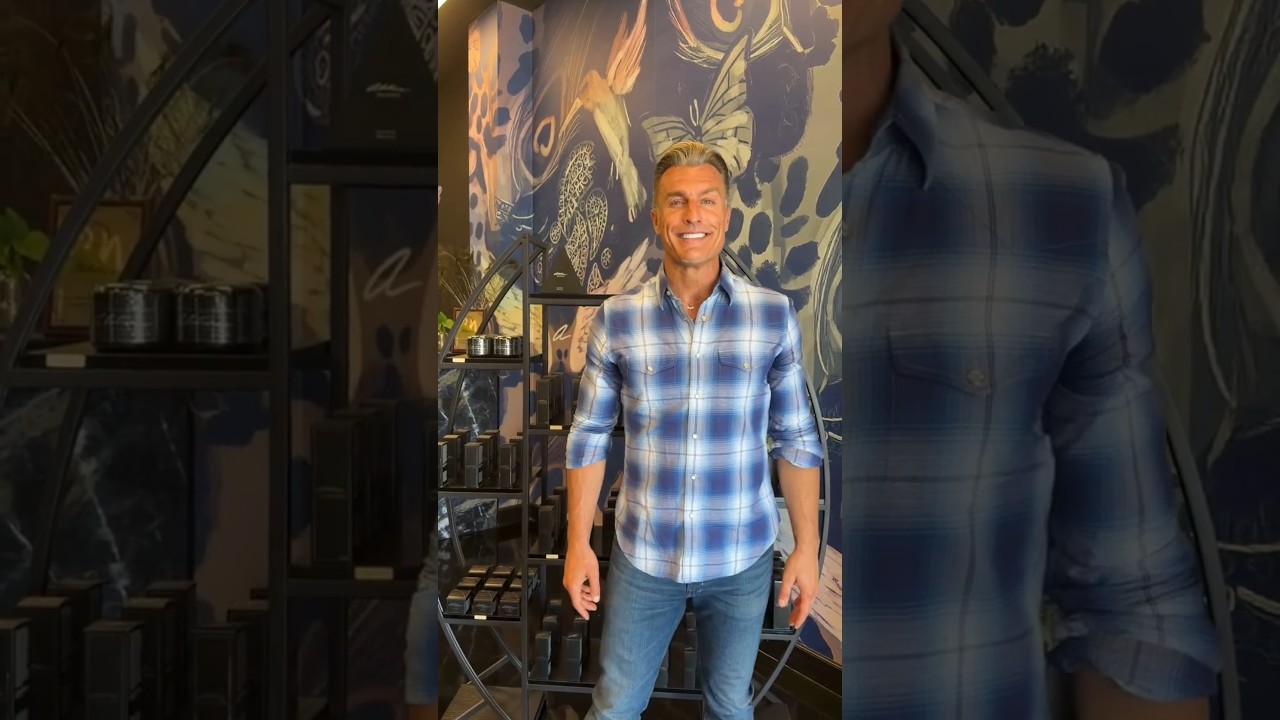
This is our limited edition impossible to get shirts. If you're seeing this on Facebook Live, there's. There's a. There's pretty much about a 0.01% chance that you yourself can actually get one. But, yeah, he knows people.
Yeah. So, man, where do I start? I just, you know, to touch on what you said as far as, like.
Just, you know.
I mean, Hannah and I, she's behind the camera right now, and we just noticed that just the overall vibe from the clubhouse to when People walk by acknowledging us. Just, you know, Hannah would go to the, to the. She was walking to the lobby earlier. Literally, you said. Every person that you passed by said, hey, how are you? Hey, good morning. It's unbelievable. And it's real. Like, it's not forced. I mean, it's. Yeah, I've never. You would think, you know, pro athletes get these. It's really. There's this preconceived notion, there's like some type of arrogance or whatever, and there's just none of it here. It's unbelievable. People are genuine. But the most accomplished pitcher, Jake Area, comes over.
He's.
He remembered stuff that I told him two years ago. Yes. How you doing?
It's all about, there's a place for arrogance. Absolutely. There's a place for arrogance. And that's. When you're competing, you should believe that you're better. And I think our guys have learned that the field or competition, that is the outlet for that kind of alpha arrogance that all competitive athletes have. When you have the competitive outlet that we have, I mean, there are no higher stakes in the world at Game 7 of the World Series, and our guys just went through that last year. So when you have that competitive outlet, and this is something that I recommend to just the average person, right? If you're. If you're waking up every day and working a 9 to 5, you're going to work and you feel like perhaps there's a little bit of frustration in you. I think that one of the good things to do is find a physical, competitive outlet. Find somewhere where you can go and push really hard and leave it all in the line. I know some people do the gym, some people do yoga. And I think that there's a good. You know, obviously the goal is to compete with yourself and have that yourself be the ultimate standard. But it is fun to go out and try to beat somebody else. And I think that a lot of times now, the way that we raise kids, we don't want people to be. To be the loser in, you know, like, youth sports per se. There's a lot of youth sports get a lot of flack, right? Everybody gets a trophy. That's not necessarily true, but I think that that diminishes the importance of losing. Losing is a really important thing to have to deal with. And it's what makes you. It's what makes you a grown up. And I think that's one of the biggest, most valuable things about competitive sports. So if you go out every day and you're going to Work, and you have no outlet for this. There's something that's missing, and it could be really easy. I mean, that's one of the great things about the weight room, too, especially if you're going to compete against yourself, is that. And Henry Rollins says it, no matter where you go in life, £200 is always going to be £200. So if I'm in the weight room and I can use that as my kind of modality for competition, I can compete against what I did the last time. And there's a lot of value in that. Like this constant idea of. We talk about the growth mindset. It's the idea of Dr. Carol Dweck out of Stanford. But that means that I believe that through focused intent practice, I can accomplish anything. I can improve any mental or physical skill, whether it be analytical intelligence or proprioception. Through focused practice, I can get better. Anybody can get better. And so to have an opportunity to do that or give yourself an opportunity every day to improve at something or to compete with somebody else for something in a healthy way, I'm not talking about competing with your buddies so you can drive home faster or something stupid or how many shots can we take? I'm not talking about that. I'm talking about real, healthy, productive competition. And then you go to bed at night a lot happier, or perhaps you lose, and then you lose. What happens when you lose? You start to develop a little bit of a hunger, come back and compete again. And that's a great thing to have any source that we can find for motivation to do all those things that we resist, to get into better shape to eat healthier, to live a life. Live a life in a way where I'm happy more often than I'm unhappy. Those things all. There's always blocks for those things that we have to push through. And, you know, having this kind of training regimen or having this competitive mindset in those areas is a great thing. It'll make you a healthier person.
Yeah. So. And then one thing that I thought was really cool is once you left playing baseball, you found maybe you filled that void with. I. I think it's Jiu Jitsu, right?
Yeah. Yeah.
And it's someone very close to me, my little brother.
It's just.
I've never seen him so relaxed and just. It was. It was his form of, you know, maybe competitive outlet, whatever it is. So he just. He just. His spirit changed when he came back from training Jiu Jitsu. And that's just. That was his. His way of Releasing. And it was just. It's got it like, so that. That's so. Right. Like, you know, anybody out there, if they're looking for some way to release, just fighting. I don't know if it's jiu jitsu, if it's playing pickleball.
Golf. Golf's a little expensive. Tennis, anything. Anything you can do to get outside and have it. Have a. Have it. Have a. Like a physically healthy side effect to it, too. I think that's an ultimate Frisbee. Whatever. It could be. Whatever. There's. There's co ed, softball. There's so many different areas for this to happen that I think that a lot of times we don't take advantage of because people are tired after the 9 to 5 grind. They don't want to make the trip to the gym. They don't want to make the trip to the park to go run around a little bit. But then the days that they do, those end up being the most satisfying days that people have. Like, look at all this stuff I just did. And it goes back to what we were talking about with our preparation. Right. Like, why am I happy? Well, I'm happy because of the work I put in to make myself happy. I realized that there was a void in my life where I could have been out there doing something to get better at something, and I didn't do it. And it's to. Decided to submit to our, you know, the human nature of immediate gratification. I didn't resist. I didn't fight against resistance. I just let it happen. And I didn't earn anything. I think that's another part of it, too, is that anything that you can do that forces you to earn something is so damn valuable.
Yeah.
In your life. I mean, we don't. Why. Why is winning the World Series such a big deal? Because it's really hard to do. So that's my challenge. I think to everybody, we say find your grind here, but go find. Find a way to challenge yourself.
And. Yeah, and then even all those things that you said, pushing yourself, fighting the resistance or whatever, all those. What was it, nine steps that you said.
What was it? There's 11 steps. 11.
11. So 11 different.
Stephen Pressfield's book. Yeah, that's. That's another one, too. I recommend anybody that's having any issues that need some motivation, buy the book the War of Art by Stephen Pressfield.
I'll put a link to that.
The War of Art by Stephen Press Pressfield is perhaps the best. I don't know, mental toughness. Book I've ever seen. And I've read a lot of them in this line of work. You know, from Read, Jocko Willing's books, Ken Rubiz's books, all the people that read books about baseball, Keel, Carl Keel, read all those things. I've read lots of different books written by Navy SEALs or high ranking people in the military. But reading Steven Pressfield book was the, was the first time and I've seen it affect other people. My brother, for example, will read the book and then ever since he read that book, he's woken up at 5am every day and he's got a routine, he's got a stronger routine than he did before because he read that book and he realized this is my way. Like, this is the way. Like I said, we were sitting in the cage earlier, I was talking about the obstacle, whatever the obstacle is in your life, Whatever it is, whatever. The thing is, when you wake up in the morning, when you wake up and say Tim Ferriss does this, he makes a to do list. But it's not a to do list. It's. It's the I don't want to do it list. Right. It makes it to do list, but it's the opposite. It's like a negative to do list. And whatever is the thing that he doesn't want to do the most, he goes in that order. Goes in that order. Try that as just a general exercise. What do you not want to do? You know, like for me it's, I don't want to fill out an expense report or today it was I don't want to get in the cold tub. I don't want to get in the cold tub because it sucks. It's cold. It's freezing. Yeah, I did my breathing exercises and yeah, I've got seven or eight of the kids on our team that want to do it with me. And I'm sitting there going, I don't want to do it. So I know immediately, thank you. That's my signal. I don't want to do this. I'm doing it right now and then I get out of that and man, I feel really proud of myself. And it's a good place to be when you're constantly winning these little battles over and over again throughout the day. You feel like you're winning all the time. And we all know that winning makes us happy.
Right? Wow. Yeah, I'm going to. I already know what mine is. I've been putting it off since the.
Start of the year. There you go.
Yeah, I'll tell you about it later.
It's not stuff anyway appropriate for you? Well, no, it's nothing. It's nothing. It's just, it's.
It's. Anyway, it's like a business savings account and it's so annoying to set up. I mean there's so many different. I got to do anyway. Yeah, you're going to member agreements, all this.
He's going to do it tomorrow or tonight.
I'll do my best. I'll do my best. Dude, there's so much. It will be. Yeah, well I'll tell you about it later. But anyway, so. So let's get back on to. You're the cold. I think it's really cool that you're incorporating the WIM hof. WIM HOF breathing and the cold tub therapy to. You know, I just, I think that although there were ice tubs back, people would do that for information. But the breathing component to it and transferring the adrenaline to different areas of your body through your mentality, through controlling your mind and being able to physically do that which you say you're able to do, that's amazing.
Well, I think I'm able to do it. I haven't been lab tested although I went and saw, you know, I went, I went in October, took a seminar with WIM Hof and I've been doing the WIM HOF method ever since. And it provides you, it provides you an obstacle.
Treasure Island.
Treasure Island. Yeah, Treasure Island. I got like a kiddie pool full of ice with a bunch of people I didn't know. Yeah. And we sang Somewhere over the Rainbow. That was the. That was his Buddhist mantra. He said sing somewhere over the road rainbow. If you're really cold, it'll make you not cold. And it worked. We were only in there for like 30 seconds though. But yeah, so just like a basic scientific background is best I can describe it. The WIM HOF method. You breathe and then you expose yourself to stressors. When you get stressed out, your body releases cortisol and adrenaline. But the breathing, the next rounds of the breathing start to reduce that cortisol a little bit. So then you can hold on to that adrenaline. And then you hold your breath again and you focus on and you try to direct all of that adrenaline energy towards whatever it is that's bothering you. If there's nothing bothering you, then you just go straight up to your brain in your head and then you go and do that in the cold water. When you're in the cold water. And one of the things that we really notice Or I notice is that when I'm sitting in a cold tub, ice tub, and the water's up to my neck and everything is underwater, right? And I start to feel really cold. When I start to do the rounds of breathing again, and I'm focusing on counting my breath very like. It's like a magical thing happens. All of a sudden I realize that I'm not cold because I'm not thinking about it at all. And so it's a good way to practice getting away from these distractions. You know, like the mindfulness, for example, you meditate. The whole point is to set an intention, get a distraction, and then reorient your attention back to what you're really trying to do. Every time you do that, it's a repetition. Your ability to focus is to going stronger. The cold tub forces you to do it. Force you do. It's not you directing your attention back. It's the distraction is like omnipresent. It is always there. It is 100% of the time it is cold. Until you get out, you follow the breath or well, back and forth, you start breathing back and forth, breathing, breathing, breathing. And then I realize when I'm not cold, when I'm in that cold tub, and then I hold my breath again and let myself get as cold as possible. Hold my breath as long as I can until I feel like my chest is gonna start shaking. Then I exhale. And then I do more rounds of breathing again. So it's like I give myself more than one opportunity to overcome that while I'm in there. And then before you know it, I've done that five or six times. I look over and I've been in there for 9 minutes and 40 seconds. And then 10 minutes comes, I hold my breath, I go underwater, count to about 20, get up, and then I walk over to the hot tub. And I'll tell you what, that stuff into the hot tub.
Ah, just the best feeling in the world.
I can't. I can't even. There's no. There's no words to describe. So good.
Hey.
So happy at that point. So happy. One, I got. I got out of the damn fold tub, which is freezing. Two, I did something that I absolutely did not want to do. And three, who does not like to sit in the hot tub? I haven't found people that don't like to sit in hot tub.
It's just, I. I could just. Just feel that warmth coming out or see that in your face. Just. It's just like such a relaxing.
And you should see the guys that I introduce this to, some of our players have been doing it. I introduce it to them and I watch them. I watch them like, they're like. They're like little caterpillar that climb out as butterflies. Once they get out of it, they like realize, oh, this was something I didn't think that I could do, and I just did it. And that's a. That's a great thing to. It's a great thing to have happen. If you can set your day up like that, where you challenge yourself in a way like we're talking about challenge and the opportunities to be challenged. You can set your day up like that every day, where you give yourself little mini battles you can win. It's a great way to go about the day, man. That's. You can bat flip everything like Brett Boone on the mirrors. You can just Frisbee bats. You can break the leaves up and Frisbee the rake. You know, remember that commercial business phone call? You can set up your. You can set up your business account and then just pimp the keyboard.
Yeah, man. You know, it's something I really. That's, yeah, that's something I've been putting off. So, you know, I. We can get, you know, if we could get freaking wireless Internet, I wasn't able to get WI fi on the laptop at all. I don't know if you. I don't know. You don't have your laptop here soon enough, but, you know, I got it.
So.
Hey, at the very least, when I get back to la, for sure. Yeah, I mean, it's, it's, it's.
It.
It's been a thing. Thorn in my side. My. You know, Steve, our cfo.
Hold you power, hold you accountable.
Hold you accountable.
You're on video now. Yeah, that's. That's a good thing. You've got a world of accountability behind you. Hey.
Yeah.
I mean, if you want to set a date that you have to get, It's. It's Monday. Have it done by the end of the week or when you get back.
To la, whatever that is. I'm trying to think what, what day that is.
Right? It's. Oh, that was another thing, though. This, this brings up another good point of something I've learned recently. I was reading a book on the psychology of persuasion, and one of the things that they talked about is that you're more likely to achieve and to achieve a goal, like if you set a goal, if you tell other people about it, to hold you accountable. So, like, they use the example, one of the examples that I use about this is Conor McGregor, the MMA fighter. Conor McGregor and Muhammad Ali did the same thing, but they, they frequently call their shots before fights, which is a ridiculous thing to do. It's a ridiculous. I'm gonna knock him out of the left hand in the first round, right?
Yeah.
But the more people that you say that to, the more accountable you are to it, the more pressure that you put on yourself, the more likely you are to be motivated to train extra hours and extra time so that you achieve that goal. And they say the same thing with people trying to quit smoking. The same thing with people trying to give up any advice. You know, write a letter to a family member or a bunch of them saying what you're intending to do and then go do it. And that's what I tell the players too. A really good indicator, like, I'm big on that. I'm big on, like, signals, right? You can tell by listening to me talk. But a good signal that your goal is high enough is if when you tell people, they laugh at you, they laugh at your idea, you're in the right place.
I got laughed at when I first started skincare a lot, Seriously.
I'm sure I did. You're in the right place. That's that. There's no better indicator. Because anybody that wants to achieve something at the highest level, especially in baseball, right? Like, and I use Jake as an example. In 2014, Jake had made three starts. We're on the airplane. He'd made three pretty good starts back. We're on the airplane. And he out loud says, I will win the Siam. And we laughed, all of us. Hahaha. You have three good starts, you're gonna win the Siam. The next year he won the Siam. Next season he won the Cy young. He made three starts in 14, said, I'm gonna win the Cy Young next year. He went out, threw an zero hitter, and won the Cy Young. The second half of the season was perhaps the best pitcher in baseball history. Right. But why, you know, yeah, he obviously worked really hard and he's obviously very talented, but nobody else was saying that. Nobody else was saying that. Yeah, he was the only one that was willing to go out and make himself almost look foolish to people. And sure enough, he went out and he achieved exactly what he wanted to do.
Talking to him now did. Was that part of his intention? Like, was that part of, like, did he know about that? Like, did he know about the words? No, he just did that was.
He just believed in himself. Yeah, he was gonna say it out loud. And I think a lot of guys that, A lot of guys that are really high performers and women that are really high performers, that's just part of their personality. So if that's not in your personality, then it's probably a good idea to see if you could, you could, you know, add that to it. I mean, that was something that I really struggled with as a player because as somebody has an analytical mind and you understand the odds, you know, you realize that there's not a great chance of you being that successful. You don't have the track record to back it up. So it takes a lot of self confidence and belief to be able to go out and still believe that when everything tells you that it's not going to happen. And that is, I think is where Jake really shines, you know, is that, you know, he had rough time in Baltimore. They tried to change him, tried to make him a different player, tried to teach him how to pitch differently. And he came over here, they let him be himself and he had the confidence to do what he wanted to do. And look at him now. World Series champion, a couple no hitters, Cy young under the belt. And I think it all started from that moment when he said, this is who I am. I took ownership of a ridiculous lofty goal and he saw it and he made it happen. I mean, it's. There's no better success story than that.
Right? I remember that coming over from the Orioles, traded for Feldman in that Scott Feldman deal. Buddy of mine who I played with in college, and I remember looking at areas stats and going, what?
What?
Are you kidding me? It was like a 70 RA01. I'm like, this is. I couldn't believe they let go of Feldman for him. I remember talking to you, you're like, dude, he is filled. Yeah. John Cox, spring training that year.
I told you.
Yeah, we could.
I couldn't.
It was like something about his two seam fastball.
He was like, dude or sinkers cutter. I'm like, what is this?
Yeah.
How's this guy not the best pitcher in the big leagues? Yeah, look at him. Not very far away from being the best pitcher in the big leagues. Yeah, good stuff.
So guys, I, this is, this is John. Is, is. I, I like a look up to him, like a brother. To me, he's a business partner of mine. But more importantly, I, I just, I'm very fortunate to call you a really good friend of mine. Seriously, for so long. I mean, when I, when I, we.
Lived together when we were like 19. Yeah, that's great.
He was. We were roommates at UC Berkeley, and it was just. I. I took so much pride in, like, just watching his career take off. I mean, it's good to have people like that that are genuinely, like, so freaking stove for you.
Well, it's good to have friends, too. Like, one thing he doesn't bring up, though, is that my first. My first couple years were really good, but I had a couple years that were really. Right. I had one year in particular that was not great. And Andy was one of the few people that, like, nothing changed. No, nothing changed. The positivity didn't change. The I'm gonna come see you. Let's hang out. Like, none of that changed. And when you. In sports, you know, it's fickle. A lot of times people are friends based on the success that you have. But one of the things I can say about Andy Nilo is that he doesn't care about your success. He's just. He's just your friend. And I don't think there's a better compliment I could offer you.
That's. That's really cool, man. That means a lot. You said that to me on the night before your wedding.
Yeah, I don't really remember that night.
I. I do. Seriously, it was.
No, it's true. I do remember that. Actually. I do remember that because that's. That's. Whenever I think about you, that's one of the things that I always. I immediately think, like, at a ground level, like, when I was as bad as I could possibly be and I was as negative as I could possibly be, you were still exactly the same. You were like this, and I was here, but you were still there. And that kind of started to pull me back up. And then, sure enough, a couple years later, I was in the big leagues. So I thank you for that, and.
You'Re absolutely welcome, man. Thanks for saying that. I just know, you know, one way to be, and then I just. You have that respect for people, as I do with you. I mean, it's just like you said, that's the friendship that we all. We all look for in others, so it's cool. Thanks for saying that. And to everybody out there, John is on my Facebook friends list as well. But also, you can follow him on Twitter. Is it ManBear Wolf?
Is it Man Bear Wolf? One word.
ManBearWolf on Twitter. And it's just. I've always said when he was playing, I think. I think your biggest impact is going to be off the field. I mean, you know, I've always said that. And that's, that's saying a lot coming from a Major League baseball player, you know, playing in the. The highest. The highest.0005. So we'll see what happens, man. I'm excited for you. And, you know, we'll see what happens this year with the Cubs.
We're going to win again. I know. It's.
We're going to do it again.
We're going to win again. Yeah. This is, this is where it all happens. And we're planning on it happening again because it's really awesome to celebrate winning the World Series. Yeah.
All right, guys. Thanks for tuning in.
More from Andy
☀️ A quick message from Andy: One of our biggest sales of the year is happening NOW!