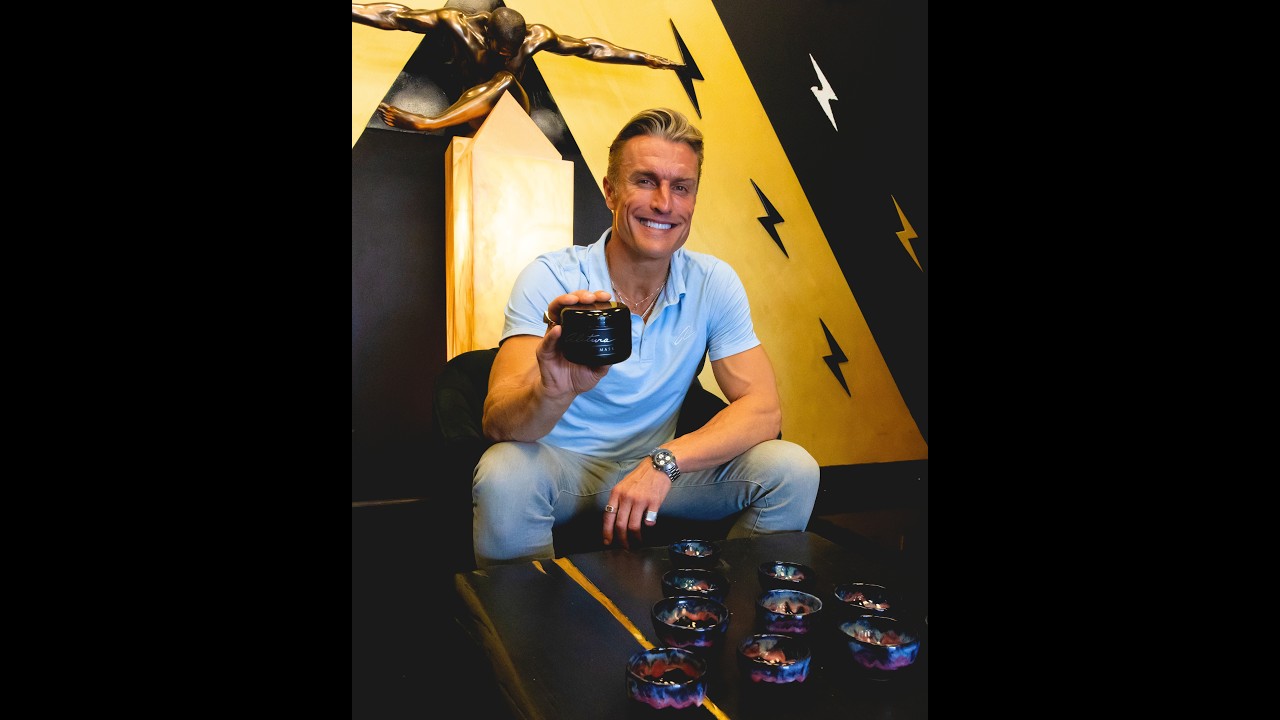
SKINCARE Expert EXPOSES The Truth of The Beauty Industry with Andy Hnilo!

A recorded YouTube interview (uploaded Jan 6, 2026) in which Andy Hnilo describes a severe 2011 accident (March 20, 2011) that triggered an intensive recovery and self-experimentation with topical and ingestible remedies. That work evolved into founding Alatura (Latin: "feeding and nourishing"), a skincare line now claiming over 20 products. The conversation contrasts natural, plant-derived ingredients and higher-cost manufacturing choices (dark glass packaging, organic inputs) with mass-market formulas that use cheap exfoliants, fragrances, preservatives and other ingredients Andy labels harmful (he names many, e.g., yellow 5, methyl paraben, propylene/butylene glycol, sodium benzoate, BHT, PEGs). They critique misleading front-label claims ("100% natural", "no harsh chemicals") and point listeners to the Think Dirty app for ingredient auditing; Andy notes Alatura's gold/"shaving" serum won Think Dirty's best serum in 2018. Practical tips (customizing a powder clay mask, weekly mask/exfoliation routine, packaging/refill considerations) are provided alongside regulatory commentary (EU vs US ingredient allowances) and consumer advice to audit products gradually.
Questions this video answers
March 20, 2011.
January 6, 2026.
Alatura is Latin for "feeding and nourishing."
Over 20 products.
The gold/shaving serum won Think Dirty's best serum in 2018.
Chapters
On average, women leave the house with over 200 government recognized carcinogens daily. I mean, between hairspray, makeup, lips, whatever it is, I mean, that is disturbing. It's ridiculous and completely dishonest and misleading. I mean, how about adding yellow 5, definite government recognized carcinogen. Blue 1, red 33, titanium dioxide, you know, lanolin, alcohol, sorbic acid. What do we got here? Stearate. They have stearate after stearate. Get this, peg 100, stearate, glycerol, stearate, cetyl acetate. This, this is one of the worst I've ever seen. It's toxic. And if you're doing it daily or scrub a few times a week, and if you're using ingredients like I just listed, it's going to disrupt your endocrine system, your hormones at a cellular level over time. You're doing that daily.
So, Andy, I feel like when you have good skin for most of your life, you can often take it for granted and forget that it's kind of like the largest organ in the body as such. But someone who had a lot of skin issues. I really suffered from acne and really getting the balance right with my skin. I kind of went down this path of doing a lot of research, and that's how I became really interested in, okay, what am I putting on my body and how does that actually affect all these things that I might have not even known, like my hormones or like my gut and all these pieces. But I'm curious, like, what was your. What sparked your interest in what one understanding how your skin work, but then going on to found a skin company.
Well, first off, I had no intention ever getting into skincare, let alone owning a company that now has over 20 products. I was, I mean, March 20, 2011, I was leaving dinner, just crossing the street on Melrose in Sierra Bonita, and I got hit by a westbound heading vehicle lost consciousness, hit into the eastbound lane and run over by a Land Rover.
Oh, my God.
Yeah. Both cars pulled over. Emergency first responders were just closing, cutting my clothes off me in the middle of Melrose. I got shuttled off to Cedars Sinai icu, where I woke up with my chin protruding through the bottom of my mouth. I mean, it was the worst compound fracture Dr. Rosenberg had ever seen. The resident maxillofacial surgeon at Cedar Sinai. I had seven broken ribs, a collapsed lung, and I was, I mean, just unrecognizable. Yeah.
Oh, my God.
I was on a morphine drip. So I was a little loopy just trying to figure everything out. I had two friends with me in the ICU room with me, and I quickly figured out the severity of the situation.
Yeah, there's like, not many people who have had that life and death situation, but I imagine that was pretty close to it. So you were here and you broke ribs and like you say, you fractured your jaw, which is the mandible for those who don't know. And what happened over that next period? Weird, like, because surgeries. Like, what was. What was like, once you realized, like, oh, this is a pretty bad situation, what were the days and weeks that followed?
Oh, it was brutal. I mean, I had my jaw wired shut, my teeth were gone. I went to whole new grocery stores. I was very insecure and self conscious about my looks because, I mean, I was unrecognizable. My chin was out to here. Every time I would start talking, I would become self conscious with my teeth being gone, my front teeth being gone, and my quality of life. I mean, I was down and out. But the cool, cool part about it was I had my family with me after I left the hospital. And my nurse was an ex marine, and he was like, hey, any day you can walk out of the hospital, keep in mind that's a pretty good day, right? Good luck on your recovery. I mean, that set the tone for it. And so I had my family with me in my little 660 square foot apartment in North Hollywood.
Sounds about why.
Yeah, yeah. My sisters were on a futon, like a twin futon. They get up just to give me my medicine, and I go back to bed. But once they left, that's when it really started.
That was when reality.
Yeah, reality set in. Road to recovery began. I mean, I had nothing but time on my hands. Now, the big thing is that I didn't really mention I had a preexisting clay mask. I was in the entertainment industry before I was an actor.
Yeah, I want to come to this because I also think this is a big significance of you having an injury. So not only did you get hit by not one, but two cars, break all these ribs, have the worst mandible fracture that someone had seen seen, and your livelihood depended on your face in many ways.
I mean, that was my job. I. You know, it's kind of. It's interesting every time I mentioned that, it's like, oh, well, you're. But it was my job, you know, and I. I loved what I did and. But now it was just about recovering, you know, just removing my. Removing the impurities that I was getting from the antibiotics that I was on, I was getting monthly X rays just to see if the, if the bone was growing back. I had a titanium plate inserted up top and one on the bottom, which I got removed by the way. And I went through the whole recovery again. That's a whole another story. But slowly, you know, day by day, I just took it upon myself to reduce inflammation that I was, you know, just in a fog from. And also the antibiotics was just leaving me like a mental zombie. And so I met with different Chinese herbalists in the Los Angeles area. George Lamoure, Ron Teagarden from Dragon Herbs, Crosby Ware, Sage Dammers and Truth Calkins. And so I'd go into, you know, Air one and I would go to the tonic bar with my jaw wired shut and just start, you know, asking questions and seeing, like, how to reduce inflammation and build myself from head to toe, build myself back from head to toe. And also in doing that, I was, I. I knew I had a pre existing clay mass that would bring a lot of blood flow and circulation to the surface of the skin. They informed me that that would help breaking up, break up and loosen up some of the scar tissue and particles that I had just in, in an effort to reduce the swelling because it was hard to look at, you know, but in doing that and creating, you know, getting the stagnant capillaries moving. I noticed, and I noticed like this, it was very, it was almost like a beauty treatment too. I loved how I looked afterwards because of the blood flow and circulation created to the surface and. But it just became a creative outlet for me because I was seeing myself, I was seeing the improvement in the swelling and my abrasions were gone within a few weeks, but obviously my scarring wasn't. But it just, I mean, that makes you feel good, you know. And all that research from, you know, building myself back with this little morning tonic. I'd add, you know, schisandra, chaga, reishi, a lot of amino acids to get the blood flow circulating from head to toe. And I'd, you know, I'd just make a little morning tonic in my blender. I mean, obviously tasted brutal, but. And I'd put it through a little straw in the back of my mouth just to get my nutrition. And it was a daily, every, you know, hour had just a, you know, a purpose for it in my recovery. I mean, I became obsessed with getting back. I wanted to get back, get back better than I was before. I mean, it was just, I, I'm, you know, I just took it as A challenge.
I love this, and I love that we're having this conversation. Two things that you're saying are standing out to me right now. First of all, like, I am so grateful for Western medicine in so many ways. And goodness knows what would happen if you had been hit by those cars and weren't near a hospital at time or, you know, you were at a place that couldn't really provide you good health care at that time within, the outcome would be really, really different. And it's really important to recognize that. And in the same breath, I feel like Western medicine you are as a chiropractor, and I feel like Western medicine can get you so. But sometimes, like, being your best self and getting that performance back. I feel like Western medicine doesn't always take you to that next level. And I'm just hearing what you're saying by, you know, okay, to get inflammation down, to help with scar tissue. We're actually turning to a lot of, like, natural herbs and resources that are often neglected and not mentioned in the traditional path to getting well or getting better or recovering from something. So, you know, how did you know? Like, you were saying, you were just hearing these conversations in Erwan, which is like, if people haven't been to la, it's like the bougiest. Bougiest grocery store, but really a grocery store. It's got, like all the. All, like, the potions that you could ever want in your life to be amazing. But, like, I'm just. What was that journey looking like where you're like, okay, well, I've got this far, but, like, I want to get to that next level. And how do I know and how do I learn and all these things.
Well, I did have a clay mask before, so when I was 20 years old. Remember that Aztec healing clay? It was one ingredient. Calcium bentonite. Clear.
No, but I'm from the uk. Did that make it over there? I don't know.
It may have. It's a pretty popular, but one ingredient, Clay Max. Oh, wow. All right, so I cut. I definitely hit it. I mean, like, you know, I was a former athlete, like a guy in skincare. I didn't want, you know.
Oh, so it was like a women's product. You were like, oh, I don't want anyone to know I'm using this.
Well, I mean, it's just the truth. I was kind of. Because from the early. From my, you know, ever since I 1920, I've been really into skincare because I had very bad back acne in, like, little forms of cystic acne as I was growing into my body, you know, hormones are racing and all of that. But so I just, you know, but it bugged me and I wanted to, you know, actually ingredients from that standpoint started. I mean, I would look at the back of, you know, big brand names and just find things that I didn't even know what they were. And it was also like, that led to kind of putting it together in my head and going from like, let's just say clear cell to Dove, going from like 30 ingredients down to five. And a lot of the ingredients in the surfactants and Dove soap were like naturally derived. Some of them were from coconut. And that, that made sense to me. I was 18, 19 years old. Just kind of trying to put it together in my head. And so that I just want to tell you that that was kind of a catalyst, you know, putting together and putting, you know, finding a solution for my, my problem. My back acne was very bad. And it came down to ingredients and diet and nutrition and the products I was using. So I just wanted to tell you that. But. And that's where the Aztec healing clay came. And so I was using that once a week until, I mean, that. Yeah, 19, 20, 20 years old. And then when I moved down to LA, I was 25 and so I had that. And then over time I started becoming really, really interested in that one product. And so I isolated that ingredient. It was only one calcium bentonite clay. And I started just, you know, looking around for different clays, butters and you know, different superfoods that I would put together and make this like pre existing clay mask before this act, the accident.
So were you like entrepreneurial then? Because I actually, it's really interesting because one, I think like, for a long time it wasn't really cool for men to be involved or actively doing skin care. You know, it wasn't like really a conversation. Whereas now, like, you know, guys can often have bigger array of products than women, you know, and I think that's amazing and everyone should take care of themselves. But I'm really curious. Like it's, that's a big jump to go from like, oh, you know, I'm utilizing this clay mask. I'm looking at ingredients too. Okay. I'm going to kind of like start my business. Like was it a business or was it just like, oh no, I just had this.
I hit it. I did it every Sunday night before my week of auditions. Like, I had roommates at the time. I'd scurry into the bathroom, mix it up, let it dry and then hop back in and hop in the shower.
And so you weren't monetizing it, were you just utilizing yourself?
No. Just for.
Got it.
Yeah.
It was your secret. It was your beauty secret. You're like I need to get the ladies. These guys do not need to know about this.
Hey. Well it was, yeah, I mean it was just one of those things. It was, you know, a guy in skincare. I was shy about it. I was, but definitely not anymore. But I had that pre existing clay mask and so where I would source the bentonite from. There's Jason Eton, he's with green desert clay in Nevada. I mean I just, I loved how it made me feel. You know it has a very like as a detoxing capability. Also just reduce all the blood vessel constriction around the eye T zone and nasal area. Just really wakes me up every morning. I mean woke me up every morning also. Just like just you get a nice bright fresh complexion and just. I just love how it makes me feel as well. But I, I found Russell clay, kaolin clay. I like pyrophylite bentonite on this website, Jason. And so I. He was almost like a little consultant with me and as far as like with particle size and melding formulas and so I. That's where I got my clay base. It increased after the accident but I had a pre existing clay mass of just Kelpowder Russell clay bentonite. And I think I had vitamin C back then. I've just really been into skincare chemist over here. Well you know I just became my own science experiment.
Well let's talk about that because you were in science experiment, you had this accident you were suffering from. You know for Those watching on YouTube we've put some photos up for them to see like befores and after. So you are really like inflamed like a lot of scarring in there. So you were like hang on, how do I get this better? And you were like well I'm utilizing this, The Clay Massey OG1, the original one. But was that. Were you finding that wasn't quite cutting it for you. So you're like I need to add more to this because now I'm in a worse position. I've got further to go. So what was that journey like?
So it made sense to me that I mean your skin being your largest organ, you want to treat it like another mouth. And so that morning tonic that I was making, I mean I'm talking deer placenta, egg, yol know I boil beets Put them, put them in there. Nitric oxide, circulation, bison liver.
Wow.
Schisandra. Like I said.
You're putting all this in face masks?
Yeah. No, no, no, not in the mask. In my morning tongue. Oh.
I was like, hey, wait, I'm putting bison up on my face?
No, no. But yeah, dear Placenta pearl powder.
Being very conscious about what you're putting in your body.
Yeah, but. And then just one day, I mean I was experimenting with pearl powder colostrum and I just, I broke open the capsule and I put it into my mask that I was making just because it made sense the nutrient density of both of those ingredients.
Yeah. So why, why were you eating that? What is that good for when you ingest it? Just so that everyone's being educated on this too.
Well, freshwater pearl powder is very calming for calming to the just anxiety and things like that. But it's also a very good kidney and liver cleanser. And then. But I'd never seen it used in a topically as a skincare product. And Colostrum especially ours is first four hour milking grass fed colostrum from a small farm in Wyoming, very rich in nutrients. So like they just want to let you know they, they feed all the calves first and then the surplus is dried out, concentrated and made into a very like silk like powder. And so I did that to build myself back internally because of the IGF1 growth factor components to that.
So you've been having like all the antibiotics. So you knew that was like you wanted to build up your gut again. Yes, the good bacteria within the gut, we all need it. But antibiotics often kills the bad bacteria as well as the good bacteria. Right. And we've actually done. I know a little bit about this actually because we've had Tina Anderson and the founder of Just Thrive talking about. And actually if anyone's listened to this and you have skin issues or gut issues, go and listen to that podcast. Because she was educating us on how important gut health is for your brain and your skin health. And she was actually saying it's kind of linked with performance and productivity and like being able to like focus and function. And so it's been a really interesting journey. But my understanding is antibiotics and can really damage a lot of the good bacteria within your gut, which then leaves you depleted and then open to more of the bad bacteria.
Correct, Right. And it's so hard to get that. To get that back. Yeah, to get that good live gut bacteria back into the system. And yet I love Tina, by the way. She's.
She's amazing. Yeah.
Did you meet Bill, her husband?
No, just met Tina. She's been on twice actually, because she literally every time me and Ali like, what? And actually she was also one. When I was, I interviewed her. I was having a lot of problems. My skin still. She was like, you need to go on these probiotics, like you need to be doing then probiotics, then going on to the prebiotics and then like really building back up from there. So she did a lot of education with me, which was super helpful.
Nice. Yeah, no, they're great people. It's. Yeah, it's one of those things where I just wanted to feed my large. My largest organ from the inside out. Right. And so when I got the wires out, it. My complexion had. I mean it was, I mean that was what, eight weeks down the road? I think I got it done just a week before a job I had in San Jose. I made it an outside goal to make a Runway job for. I was. I got booked for some Macy's gig like the first week of June. And this was March 20, 2011. So that, yeah, just a couple months afterwards. Got the wires out, got my teeth bonded in and still made the show. But I just, I did that through just religious work, discipline and staying focused on my routine of recovery daily, like every hour had a point to it. I. I mixed up. Well, it's now my night cream. I had beeswax, cacao butter, aloe, sea buckthorn oil. Plant derived stem cells were getting sent to me. I was the oil sol ones I was mixing up, putting in a cast iron pan, which is now my night cream. I would make. That was my little paste that I'd add to like heal my skin and hydrate it and condition it. After I, After I'd use a mask.
Okay, so just. I'm following this, but. And I'm also like, oh, okay. I'm curious and have some questions. So you wanted like, you had like the skin needed healing at that point. Like, it was scarred, it was dry, it wasn't like nourished. But like, I'm trying. So you were like looking and putting, starting to put some of these things in. She like, I want to feel, feed my skin. Do you know? Like, were you looking at the science between like layers of skin and how they like replenish themselves? Or were you just like, hang on a minute, this seems logical. If I want to eat this stuff, then it's probably like my skin. I'm like curious as to like how we're connect how you Connected the dots yet?
Well, it was all. I was trying everything. A lot of things didn't work. I mean, this is like a year and a half to two years of just an exploration of how I could, how quickly I could heal myself. I never thought I was going to get into skincare I want. And I wasn't even trying to push it as a product product. I was just going because I wanted to see if people thought my friends, friends of them that I didn't even know get this. So I would go around town just with a little backpack before my nighttime work with a little bamboo bowl, apple cider vinegar, some lavender oil and like, I don't know, sweet orange oil. I'd mix up masks, just trying to get feedback right. I thought I had something. I really did. I mean, it was, there were undeniable results from that very quickly. And it was different from any other thing that I've seen. You know, when I go to Air1, when I go to Whole Foods and I'd study on the shelves, there was always some type of hole in products, you know, and it was just boring to me if it was just, you know, you only see one clay mask, right? Redmond, maybe bentonite, something like that. Like I said Aztec, which, they're all great, they're incredible. But I wanted to spice it up a little bit. I mean, like I said green tea powder. I mean, there were a lot of things that did not work. I mean, I experimented with everything that I was putting into my smoothie. Like I said, I had nothing but time. But it came down to particle size and like the, the emulsion of the formula, it had to be perfect. And I, I mean, I just remember looking at like my mask when I was, when I was, you know, mixing it up and I, I was looking at my, what ended up being my purpose. But I didn't know that. I was just trying to get back. I, I mean, I, I didn't like what I saw in the mirror and I didn't like how I felt.
And you didn't like what you saw on the shelves either.
Oh, and I definitely didn't like what I saw on the shelves. I mean, every product had some type of hole. I mean, whether it's, I don't know, glycerin, harsh preservative. I mean, fragrance is one of the biggest culprits, government recognized carcinogens and also the unbelievably, just dishonest ways that you're allowed to label your products. You know what I mean?
For sure, I want to talk about this more because this is like a real bugbear for me. Yeah, I am, like, so sad that in this day and age we have to be reading labels to decipher as to reading ingredients to decide and understand whether what they have on the labels is actually true. And I know there's, like, regulations around this. However, things are still really falling through the cracks. And, you know, I actually just grabbed some products. I didn't have any of these at home because I've been watching this stuff a long time and I actually knew you way before because I was. I've used Altura and the. Your clay mask is insane. And I want to be like, telling people about that because I know that it really, really helps. But before I want to just highlight some really key things because for me and a lot of other people, like, this will be kind of shocking to really discover. So back when I was having some skin issues, I downloaded an app called Think Dirty, which I'd highly recommend to anyone if you are looking to really understand what's in your products. Because when you look at ingredients, labels, it's kind of overwhelming. Like, there's all these words and I think we just take for granted, oh, I don't understand these ingredients, but surely they're not that bad for me. Surely they won't be allowed to, like, put, like, put certain labels in. Like, we won't be able to put certain ingredients in here. Like, they're not going to get away with that, but they really do. And I actually, like reached out to have you on the podcast again because I was in the UK recently. I went to. I flew to the UK and I ran out of the foundation that I was using. So I had always previously been utilizing it cosmetics, which is Jamie Can Lima's. And then I'd move to. I bought like, I was in New York or something and I got caught and I bought some Dior. This Dior one, which was like a spray one. I did. I'd forgotten that it had this app, etc. And I just bought it on the. On the run. Anyway, I ran out and when I was in the uk, I went to buy some more and I was like, oh, hi. Like, I can't find this in the shelf. She's like, oh, we've discontinued that. It's actually got harmful. Like, we've. It's been called back because it's got harmful ingredients that are not allowed in the uk. So I was like, oh, my goodness, like, what? But then I came up to the us I can still buy it here. And I was like, why are the, why are we not like, if we've got, just, if we've got harmful chemicals in our products, why is that not unanimous across all countries? And this is one of my biggest challenges with the US that I find the regulations are nowhere near as strict as they are in the EU and the uk and they seem to let a lot more things get added in to particularly foods and stuff too. Like, but, so anyway, I was going on to say, like, I actually went to a CVS day to like buy some products and I wanted to, like, I was really triggered by some of these. So I wanted to get your thoughts and I, I want people to listen to this and I. With an open mind because sometimes these things are really, really surprising. And I would just want to educate people that labels can be misleading.
So I just want to also say something, I mean, there. And I'll find the study on average women leave the house with over 200 government recognized carcinogens daily. I mean, just, I mean, between hairspray, makeup, lips, whatever it is, I mean, that is disturbing. There are thousands of ingredients that they don't allow in Europe that are just fine. I mean, because we get, you know, EU registration, all that with our wholesalers. I just want to say I completely agree with you. It's ridiculous and completely dishonest and misleading. I mean, it could go on and on and it's.
No, it's great. And this is a great conversation to have because the boss babe community is they're empowered, they're smart women and for so long I didn't know about this thing. And it also, it bothers me that like, like, damn, just because I didn't grab that app and check it now I've been like putting this skin, like on my skin for like over a month and I'm like, why didn't I check it? But why should I have to check it? That's what bothers me. Like, if they know that these products are linked or there's research showing that they are possible carcinogenics, why are we so lazy that we put that stuff in versus being like, oh, actually there's all these amazing products that exist that we can use that are way better than natural and they don't have necessarily the, you know, nasties in them. You know, like, we don't need to be having all of this. And they last. I mean, I've used your products and I've had them for a long time. It's not like they go off in A week or I have to keep them in the fridge or anything like that. So it's just really interesting to me that we're really allowing this. And I think it takes education of consumers to really start changing it. So it's.
It's all cost and it's ridiculous. It all comes down to cost. When I was formulating these products, I remember meeting with manufacturers and they, they're like, well, what do you want the price point to be? I'm like, I no, let's just make the product and then we'll figure it out. Like, I didn't. That's. That's not how it goes. You have. It's all built down from a boardroom and get perfect profit numbers already. I didn't know. Luckily, I'm so glad I came into it as ignorant as I did or not knowing as much as I did, because, I mean, I'm still working with a lot of the same manufacturers, but they respect the heck out of how I went into that. I'm not trying to, like, pump myself up, but it's completely different than how any other formulator or any other company that they've worked with in the situation has been. It's. I mean, it just makes complete sense to me. If you're trying to heal yourself, I mean, this is way before you're gonna get. You're gonna get the best. If I had a thousand dollars, and I probably did have about a thousand dollars in my account, you know, every penny of that went towards my recovery. I just figured the quicker I get back and the better I get, obviously I'll get a job and the quicker I'll get back on my feet and start working again. You know what I mean? But that's how important it was to me just to get the best. Every source. I mean, colostrum, Manuka, honey, pearl powder, very dear. Placenta, very expensive. But I mean, it's just, it's us, it's our life. You know, quality of life is everything.
Let's start with that, right? Because there is definitely a barrier to entry sometimes with cost. Right. And I'm fully accepting of that. So I'm not here to be like, oh, you guys have to go and buy the most expensive products on the market. You don't, right? But what was really interesting to me is I picked up these. And if you're watching us on YouTube, you'll see this. I picked up these simple wipes, right? Which are facial wipes. Now, I used to use facial wipes all the time when I was in the uk Back in the day, like, I would take my makeup off with facial wipes right now. Okay. So actually I'm staying on this. So I would use these all the time. So I grabbed these and a really easy. Now I know a really easy replacement for this is I literally have face towels. You know, like, we call them flannels in the uk. What do you guys call them here? Like, like, like this? Face cloths. Yeah, washcloths. Right. And I would just have like, I have like 20 of those and I just use one each evening to like, I get my makeup off that way, like a brand new one and I throw it in the wash. All I use is water on it at that point. So it doesn't even like, to me, this is not, this isn't a proper cleanser. Like, this is just to get your makeup off. So I don't think taking these out of your daily routine is going to cost you anything. In fact, it's gonna be cheaper because now you can just use water and a washcloth. But the point that really got me so irritated on this is they literally saying here, right, right on the front it says no harsh chemicals or skin types. Right? And it says under here, no artificial colors, no artificial fragrance, no harsh chemicals, no drying alcohol, no mineral oil, no soap, no parabens, no added phthalates.
Phthalates. Yeah.
Okay. You said that better than me. Vegan and certified cruelty free. Okay. So I'm like, oh, okay, these are going to be good. Then I get my Think Dirty app out. I'm gonna hand this to you at this point because I want you to tell me about some of these ingredients that are in here and like what it, like what that, like why are they putting this stuff in here? Because you were like, we were chatting before coming on the AV and you were saying about like where even alcohol is positioned on that or like the preservatives, like talk us through that.
So I mean, to get makeup off. Witch hate. Organic witch hazel in a little cotton, you know, it's. And then maybe alcohol. Right? That's. That's what should be, you know, headlining this. I mean, they have water, glycerin, of course they didn't go organic on that. Cetera, isonomonate, propane dial. Government recognized carcinogen.
Okay, so let's. So they have in this a government recognized carcinogen that is in the market, but this is telling me there's no chemicals in it. It's no harsh chemicals. So I'm like, how do they get to put that Label on. And yet it has. And I was like reading before, it has like. Is it profanolol? Yeah, like known carcinogenic.
It's. It's loaded with. I mean, it. I don't even think. Okay, so they don't scent it. That's amazing that they don't have fragrance in here. I was going to say that's. That's usually a big cult.
Oh, that's in one of these others. We'll talk about that one.
I'm sure they say fragrance free, which, I mean anyway. But yeah, panthenols in here, citric acid. They have two different preservatives. Un. Completely unnecessary. Alcohol. I mean, and then also alcohol is the eighth ingredient in here.
Okay, so let's. So basically the ingredients. I don't know if a lot of you might not know this, but ingredients, depending on what is the most in there, has to come in the first. So this is. I learned this when I was looking at food. If you've got sugar in the top three of like any ingredient you're buying, it's really high sugar quantities versus if it comes down the line, it's got less. And so what is it saying, like the first few bits of ingredients?
Well, how about right here? No drying alcohol, cetera alcohol. Right there.
So it says no alcohol, but then there is like. Yeah, no drying. It says no drying alcohol and then there is alcohol in it.
Unbelievable. No harsh chemicals. That's great.
So how.
Don't quote me on the propane dial. Government recognized carcinogen. But I, I'm almost positive it is panthenol. I'm almost positive as well. Sodium benzoate. They have three different preservatives in here. Steer 20. I mean, I mean, why, why, why? This is. Man, you have to take pride in what you do.
Me and you are both lost for words at this point. Right? Let's do this one too, because this is also interesting. And then let's discuss, like how they can put labels on and how people can like buy more conscientiously. Because I want to do this podcast, like to educate people because I needed that education and I want people to understand, like, okay, unfortunately, we can't trust labels. We have to do our homework. And when you find brands that you know are good, try and stick with them because if they have those values and they have those morals, it can take some of that legwork out from you. But this one was really interesting. So this is a St. Ives body scrub. And literally on the front, I think it says it's for sensitive skin types specifically, which I thought was really interesting. It says 100% natural exfoliants. Right. So you're thinking I'm buying something that's really great. 100% natural. Going to be great for my skin. What's in there, Andy?
Well, it's corn kernels. I mean, so what's so misleading? And it comes down to integrity. The people see 100% natural, right. They don't look at exfoliants. Sure. They put corn kernels in your shocker that it's the cheapest exfoliant that you can buy. But I mean, it's. You know what I mean? The consumer sees 100% natural. But exfoliants, that's a speck of an ingredient that they have in here. You know what I mean? And then also. But I just. When you meet with formulators, I'll never forget, I wanted to make a follow up moisturizer for my clay mask to that. That, to my clay mask. And I remember I'm meeting with a manufacturer in Los Angeles and he's like, oh, it's like baking a cake. Water, glycerin, alcohol. What do you want it to smell like? I'm like, well, no, no, no, no, no. Like I, I want to be product based. Do you have. He's like, oh, we have honey. He's like. And you could tell, right? Then he's like, yeah, but no, I mean, tell a story about your ingredients. You know what I mean? It's. But that's how common it is. And this is a perfect example.
Yeah. Because glycerol steroid, this is interesting to me. They've got parfum in there which is then aggravating to a lot of sensitive skin types. And yet this is marketed for sensitive skin. I'm like, surely if I have sensitive skin, I just don't want any of that in there. Like just. I don't need it to smell. I just need the body scrub. Like the logic here doesn't even make sense for me.
Well, I mean, how about adding yellow five, definite government recognized carcinogen.
I mean, what that's in there?
Yeah, yellow 5, blue 1, red 33, titanium dioxide. I mean, this is, this is, you know, lanolin, alcohol, sorbic acid. What do we got? Let's look at stearate after stearate. Get this peg 100 steric glycerol stearate settles acetate fragrance. Boom. You have benzoyl, benzoyl alcohol. This is one of the worst I've ever seen in the, the. I don't want to get it, you know, But I actually used to use this. I'm talking. Remember the apricot scrub? I mean, yeah, it was great.
St Ives, that's in Cornwall, the uk. It's not from that one, but that's. I was like, oh, I always use this. That's why I picked it, because I was like, damn. Like, I was using this for years. My mum was giving me this. And, you know, I had this conversation with Natalie. She's pregnant right now. And I'm like, it's so interesting. Like, you know, like, even, like some of the. I didn't choose any of the baby ones because I didn't want to go there. But even some of those are really poorly marketed. But, like, yeah, as a teenager, this was my go to scrub. And I'm like, what also does part possible carcinogenic mean? Because I think that's really interesting. I don't want everyone, like, listening to this, going, panicking, like, oh, my God, I'm gonna get cancer. It doesn't mean that at all. But it does mean. How would you describe it when things are labeled possible carcinogenic? When you're looking at these ingredients, I mean, it's toxic.
And if you're doing it daily, or scrub a few times a week, and if you're using, you know, ingredients like I just listed, it's going to disrupt your endocrine system, your hormones at a cellular level over time. You're doing that daily. I mean, it's. It's going. I don't even want to put words out there.
Words have power, but because your skin absorbs everything, and I think a lot of people forget that, like, you. Things go beneath the layers. Like, if you were to look us into a microscope, there's always tiny little holes on our surfaces, you know, And I think that's really important to recognize that a lot of these, like, products, they can penetrate that and they can get into our systems. And so having that awareness, I think, is really, really important. But for me, it's just so astounding that, you know, and if you go, like, if anyone is curious, basically get the Think app. I'll put a link to it as well. So you basically just grab the product, scan the barcode, and then it will tell you about which products are clean in there and which aren't. And it kind of actually grades them to the. They call the really bad products, like, dirty, and then it's like, less harmful and then green. But I thought that was just like, just. It was just really sad to Me then I was like, wow, you can't even like read labels on the front. Like, you actually have to look at ingredients these days to really understand like what you are putting in your skin. And I do think like that stat, that when women leave the house often wearing 200 plus carcinogenic, it's like, I can see how true that is. I mean, just in this product alone, like, we've probably called out three, you know, and that's just something you shower in. And that's not even your main like soap or anything like that. And then like you're saying lipstick, makeup, hairspray, deodorant.
I mean, it enters your, your blood within 24 to 36 seconds. These ingredients, you know, and if you're doing it, compounding it daily, makeup, lipstick, I mean, especially that pathway right there to your lips. Just please be very, very careful with what you're putting on top of your body and into your body.
I don't know if you know this answer, but how are they able to put those labels on there that they do?
It's, it's how you mentioned it earlier. There are thousands of ingredients that they don't allow in Europe, that United States, thousands. And it's, it's just, it comes down.
To money as well.
Like, money.
You think it's like. Oh, yeah, well, manipulation. Yeah, no, no, exactly. Like people, I don't know, we don't need to get on the conspiracies. But the point is, you guys look at your freaking ingredients because you can't trust them and you get a better benefit.
I. I strongly believe you get a much stronger benefit and effects from ingredients as close to nature as possible. And you can get really good active ingredients too that are echo ecosurt approved, naturally derived, like third, like our plant derived vitamin A we get from France. It's organic alfalfa derived. And I mean, there are ways to go about it and it does cost more. But I mean, what do you, how do you want to be known? Like, how do you want to like, you know, live your legacy?
Yeah. And also like, you know, for people who are utilizing it, like, just think, do I need this product? Or like sometimes, yeah, the cleaner ones might be a bit more expensive, but there are also some really reasonable ones too, too that, you know, don't have to cost the earth. But I think it's that due diligence also. So obviously, like we know you Altura was born and tell us what it means.
Alatura is Latin for feeding and nourishing.
Feeding and nourishing.
Your largest organ, you have to treat it like another mouth. I mean, it's very delicate. Obviously, we're extremely porous. And, you know, you don't want to disrupt your endocrine system at a hormone level, hormonal level, and things like deodorant and body lotions, harsh, toxic shampoos and different leave in conditioners. I mean, it.
How can they disrupt endocrine systems.
Over time at a. At a hormonal level? It does. I mean, when you. As far as. I mean, just an example of say it can lead to cancer at a hormone. I mean, just as far as these, like, let's say titanium or titanium or aluminum and deodorant. Right, right. That underneath your arms daily that has been proven to lead to breast cancer. That close to that area.
Yeah. Because of the lymph nodes of the breast are there.
Right, right. And so it's, you know, I don't know the complete science behind how endocrine system, you know, leads to, you know, hormonal failure. But I know that carcinogenic ingredients do disrupt. No, I've.
I've heard it. And actually one of the ingredients on there that I was looking at. Which one was it? Oh, it was the methyl paraben.
Methyl paraben.
Methylparaben. Wow, these are a mouthful. But we're getting there. Yeah, that was, that was linked to endocrine issues too. And also like the buildup of lumps within the, like breast cancer lumps were found to have buildups of that in, which was also really interesting to me. So you started with this clay mask to help your skin. Talk to me, like, about. I'm like obsessed with this clay mask, you guys. Like, it's really, really great. I'm going to be honest, because when I have shared it on my Instagram before, I've had people buy it and be like, kind of smells a little bit odd. It kind of smells. I think it smells like seaweed. I feel like I'm putting like the sea on my face. But you were giving me some tips today about I can put essential oils in it. Right.
Yeah, it's. And we didn't want to add any fragrance to it. It's a powder. Powdered cream mask. So we want to, you know, give the customer a chance to customize it to their liking. So I understand it's a little earthy, especially when you add apple cider vinegar and the kelp. I mean, they kind of create a, you know, an aroma, but you can counteract that and with the, you know, take out the. The bite from the acidity and the apple cider vinegar with like, sweet orange oil. Lemongrass is great. Ylang ylang. Australian sandalwood, frankincense, patchouli is okay, let's see what else? But yeah, I mean, you can.
And it's not. It's not unpleasant anyway. But I think it's also great that, like, you know, you could have gone down that route when you were formulating it. Like, they were saying, well, what fragrance you want to put in. But then if you put the fragrance in, then you're literally defeating the object of why you're creating this company in the first one. So I really believe. And that's just such a good lesson. Like, yeah, it might be like, not. And I guess that's the same thing. Why consumers now? Like, my cousin just did this the other day. She bought a vegetable box from all the rejected vegetables. Because we throw away so much food every single day because it doesn't look right and it doesn't. Like, it might be like a carrot with like two pointy bits versus one it gets thrown away. And I think that's the same thing. To start thinking about skincare, like, there might be sometimes slight compromises. Like, okay, maybe this doesn't smell as amazing as this avocado scrub, but this avocado scrub's got like three carcinogenic products in it. So I know what I'm going to choose. And I also know ways I can get around it by just putting a couple of drops of essential oil in when I'm like, putting on my face if it really bothered me. But it doesn't even bother me. To be honest. I thought it was hilarious that she messaged me about that.
Yeah. I mean, you have to put products and ingredients that serve the skin, period. I mean, I don't see one in there that does. There are. There's a little speck of avocado oil and that's. I mean, depending on the individual, that's not that bad. And then the corn kernel. That's it. And maybe water. Depends if they filtered it. But I mean, that's. Seriously, it's. It's that bad.
So what about. I want to also. Because I wanted to share because I have a lot of people reaching out to me about skin because I had issues. Mine. I also want to share about the gold serum.
Oh, man.
Because I felt like this was a.
Slide out game changer. So I originally made that as a shaving serum for men. Right. Because I mean, a lot of foaming agents. So Lauryl sulfate fragrance. It's just, you know, something they're doing daily. So I wanted to kind of get something healthier for them. But a shaving serum, now you have to explain it was incorrectly titled. But also it was so much more than a shaving serum. Serum. I remember going to Florida. I met with a couple families that were customers and just sitting down, she's like, you know what your shaving serum, I steal my husband's. And I was, I went back and I was like, wait a minute. I went to my car and I'm like, well, what if I turned that up and started adding active ingredients? And I just went to the drawing board. My partner Dave Asprey, I'll give him credit for the copper peptide. He explained how beneficial it is for skin. And then I added, you know, retinol is a very effective, you know, it's, yeah. Anti aging ingredient. But it's very, you know, very sensitive to the sun, a lot of irritation, downtime, resurfacing, you know, that you have to experience through that as well as a lot of carcinogenic toxic ingredients. Like we just read. And so what I do is we, I just, I mean it took a while, probably another two years just to formulate and find, you know, the active ingredients. So what I did, it's, you very rarely see it. It's like the best with cutting edge organic botanicals and like the anti aging skin science ingredients. Ingredients that were just, I mean this was years ago. Copper peptide now is starting to become a little hot ingredient. But so what I did is I, I tried to find a natural form for things like retinol and I did, I found a plant derived vitamin A that we sourced from France. Like I was mentioning earlier, marine collagen, CoQ10 astaxanthin.
Yeah.
As well as a couple of peptide. So I added, I didn't reformulate. I had that as my base and it's 95% organic. And so just, you know, sandalwood, beeswax, frankincense and then adding the, the active ingredients on the oil side of things that that's easily our most popular product that actually won Think Dirty's best serum in 2018. Yeah.
And also I will also say this like I didn't even know. I've never, I actually ever put your products through Think Dirty, which I'm just thinking. So I didn't even realize that because I was like, oh, do people know about this app? So I love that like you're really familiar with it as well. But like the reason I didn't Is because like when I go on the back of a lot of these products, I don't even know half the ingredients, right? But guys, this is such a science. So the first few ingredients are like jojoba oil. Do I say that? Because I used to call it jojoba oil. I want to call it jojoba oil, but that's not. I was trying to be. It's like that quinoa and quinoa. Like people get confused. Okay, so the next one, olive oil, know that. The next one after that witch hazel. Know what that the next one, rose water, then rosehip oil, then hemp seed oil, then marine collagen. Like I think and then it's the beeswax. And I think this is just like, like such an important factor to really recognize that when you know the things that are on the label and the ingredients, that's kind of a good sign. And I've really taken that with my food too. Like you know, back in the day when I just used to purchase like mindlessly whatever like products I was buying and I'm like looking at the ingredients and they've got all of these like weird things and I'm like, oh, it's just normal that they have these weird things in. But it's not like you don't need to have all these like crazy ingredients in your products. Even just down to like I would like buy tin tomatoes and it was like the second thing on the label after tomato was like sugar. Like that's a bad sign. You guys like don't buy tin. Like why would you even think that tin tomatoes are going to have sugar in? That was what was mind blowing to me. Like when I started looking at labels, I was so surprised at some of the ingredients that were in there. And that is exactly what happened with my health care. So my, my skin care and why I'm like really passionate about sharing this, these stories because we want to be our best selves. And ultimately when you're wearing products that are not serving you, they have these knock on effects. Like we know it is like, like a carcinogenic or we know it's having can cause endocrine issues. Then let's also think like how is that helping us our daily performance? Is that going to be like what allows us to feel great, you know?
Yeah. I mean it over time. I strongly believe that inflammation leads to disease, you know. And so I mean maybe that's, it's all theoretic on me right now. But I'm saying if it, that maybe the endocrine disrupting leads to inflammation, then over time can lead to worse those things. So that. I'm just trying to explain that.
No, I think there's like, research showing that that's like the first one of the first caveats to like. Because it's like when you like turning particularly hereditary ones where you're turning hormones on and off, like they get turned on because of stresses. So I've read that same research where inflammation is linked to a lot of chronic conditions.
The cortisol response too. Okay. Yep. And you see how misleading it is. I mean, gosh, it's so. It's. I mean, to put. Just to find little angles to maybe just to confuse and mislead the consumer. That's 100% what this is right here. Because people aren't exfoliants. They probably because the eye sees. And maybe they're 100% natural ingredients. I literally thought that too.
Oh, because people don't read the full words. Because when we read. Have you ever done that test where they give you a piece of paper and they take the middle parts of the words out and you can still read them because if they have the beginning and the end, you can make your mind automatically does the filler. That's why we can read so quickly in many ways, because we recognize patterns. So that is how I can mislead you with marketing.
Yes, I have heard about that. I have not tried it yet, but it is.
Oh, it is really interesting. Yes. You get a paragraph with the middle of all the words missing and you can still read it.
Nice. Yeah. I mean, it's the. The thing is, I mean, you just really have to make sure that. I mean, whether it's an like, glycerin. Right. We do have organic glycerin in our cleanser, but it's. I mean, it's. It's just. It's to make. Make sure the formulation and like the emulsion, because we have. It's creamy, but I mean that it's organic glycerin, you know, and so, But I mean, just making, you know, making sure you take pride in your ingredients.
What do you think are the top three products that people should avoid? Like, this could be an overwhelming podcast. A lot of people being like, oh, my God, I have all these things. I had to go away and like, look up. But what is, like, the top three that you like? No, these are the ones, like, always avoid these.
I would say butylene glycol. Propylene glycol, Sodium benzoate. Bht, bht. For sure.
And these are like. Are these ones that tend to be in face creams, like cleansers or they can let you go. Any of them. Like what do they actually. Why do they put those in the first pair and first place?
They're mostly in personal care products. BHC is actually in, in food as well. But yeah, those are, those are the first to come to mind. The preservatives, they don't serve the skin at all. And I'm pretty sure all of those are government recognized carcinogens and pretty sure they're. I saw them in. Yeah. Those two products and I'm not sure about this one, but yeah.
Oh, it's in that too.
A methyl paraben.
Okay.
Six. LP niacinamide. That's actually not bad. PEG 150.
So that's the CeraVe.
Is that how we said CeraVe foaming facial cleanser. Oh man. Yeah, I.
Everyone's going to be like, going straight to like their products when they get home and having a little luck. But it's, it's a really good, good practice. Like do the audit on your skin care stuff.
Propylene glycol. Boom. Here we go. Oh man, I'm gonna get. I could keep going and going, but it's just, you know, teach their own. I would not go. I mean it's just. What do you. How do you want to be known? Like I said, it's like I care. I want to make sure people, you know, heal naturally, you know, and feel better about what they see in the mirror. I know what it has done for me and just how I feel, my overall quality of life. And you can do that naturally? Sure. It costs more. What are you about money to make? I mean, do you want to like have something that really helps? And I know I want to help people.
So I like.
I mean, money's good too. I don't want to make it. But I'm saying I. Seriously, when I was formulating this, I'll tell you, our body lotion 23 to make $79. We sell it for so 39. 5 is my wholesale cost. That's a statement product. I mean, I just. That's ridiculous. I mean these bottles, maroon glass, it's from the Netherlands. It doesn't allow artificial light to taint the bioactive ingredients.
I mean, that's why they will. I didn't know that.
That's why we got it because it was, it was a black glass bot bottle. And then I found. Seriously. And then I found out how. I mean, because I asked. I mean how expensive it was. I mean, I needed black packaging. I know I wanted to go glass. And so it. It's just. I mean, that right there, Meron glass. Any company that uses that, I mean, aside from my depth, it's. I would trust them, because this right here, that. This bottle, I would say, I think it's 243. To make, bottle and pump. No, no, 272. That's just the bottle, not the formula.
Wow.
Just the bottle. Like, keep that. But if you. If you buy, like, you know, clean it out, use it for olive oil, something, but don't recycle it. It's. It's a very, very potent, effective glass. Their. Their whole motto is it's preserved by the bottle, not by toxins.
Oh.
So.
But damn it, I think I recycle mine if I need known.
Oh, yeah. I'm trying to figure out a way to.
You, like, need to tell us, like.
We need to market that.
Yeah, we really need to market and then keep me.
See, I should. You're right. I'll do it. A blog on that. And then I want to do potentially some type of, like, apothecary sustainable thing where. Where customers can send it back to me and.
But yeah, like, one way you, like, get, like, you can take your glass jars back and get them refilled.
I know nobody does, so I have to. Have to.
I have a cupboard waiting to go back one day. They'll make it.
Yeah. Seriously. I actually just saw that this morning when I went there. I got some bone broth or something. It's like $2 fee to bring back.
Yeah, no, for sure. For sure. So I want to do something a little bit different today. Haven't done this before. Team sent me this TikTok. So we're, like, looking at our TikTok strategy right now and trying to figure it out. But I was scrolling through, and they saw this one. They thought it was really interesting, and they sent it to us. So I want to watch it with you. And it's apparently to do with beauty products, so let's see what they sent and have a discussion. Okay.
All right.
Really crazy. I have this avocado mask on that I make myself in my kitchen, and it's super fun to make and super easy. I put an avocado in a bowl and then mash it up with some oatmeal. This superfood honey, I got it from Courtney, so I'm assuming it's really good and natural. And then this organic lavender oil, I just drop a drop or two. Into it. And that's pretty much it. It's really easy, feels really nice, and it moisturizes you, makes you glowy. That's what you're just about to say. Hey.
Yeah.
Okay, so I'm like, I have. Okay. I have never tried any of things. So you have in the past, just put avocado oil, egg whites, oatmeal. Like, all the things I think I even did.
I've done oatmeal. I think I've even done oatmeal because.
It'S a good exfoliant.
Well, I've done lemon. Lemon in the hair. I'm a really, really look back.
I have done that. I have done that when I was a kid.
Well, I'll tell you what. But cinnamon too. Little hydrogen peroxide if you want it highlights. Yeah, I don't do it anymore, but I used to.
Okay.
Yeah. The, the cinnamon, though, like, seriously, it unbelievably effective if you make a little paste of. I think it's lavender, cinnamon, lemon, a little olive oil and. Oh, shoot, I don't want. It does give you little.
Yeah. Now there's like, we don't want anyone having, like, green hair after the concoction gone wrong.
No, but I mean, that's, That's. I respect that. Yeah. I mean, just going all natural with your masks. That's. It doesn't really dry to get that full, like, blood vessel capillary constriction. So, like, that won't. But it'll be somewhat. I mean, I did notice if you're. Have you done that? Have you done like egg whites or egg yolks?
No, I'm not like that experimental stuff like that.
I definitely have and I, I did it early on, like, way before. I mean.
Yeah, before Tick Tock.
No, before Tick Tock. I'm just.
You could have blown up on Tick Tock if you've been doing this.
Really? That's. I mean, I guess. Yeah.
Yeah. It's Kendall Jenner. She's got a good following. But I think. Okay, this is. I think it's just really interesting. I'm glad that you've said that you've done those things. But also I think it's like, really interesting. Like, it's. I think online is so confusing. There's like, so many beauty influences, like, so many people, like, who are paid to promote products etc, and like, how do you navigate, like, what is true, what is false? Like, even then, like, they were just saying, like, oh, you were like, saying, oh, these things were good. And then they were Saying at the end, like, don't put the essential oils. Like, it has to be diluted with, like, the hoho. See, I can't say it. Jojoba oil.
Yeah, it's okay.
It needs to be diluted. That needs to be a carrier to it. But, like, how do you know all of these things?
I mean, I. I had nothing but time. There is a ton of information out there on all of us when it comes to recovering. When it comes to yourself, I mean, it's just. I. And also, I don't know, I just didn't like what I saw in the mirror. And I want to say it was vanity. Maybe it was. I mean, I. Or ego or something, but I dep. I became obsessed with skincare. In recovering, building myself, you know, reading myself of impurities. I'm talking, like. And I got. I got back very quickly because of that, and I was like, I just want to continue to do this for the rest of my life. It. I did.
I mean, but, like, you have the time to, like, read around it and you've experimented. Like, what if someone's not. Like, what are other brands like? Like, Cool is so used to saying Alura, and now it's like, Alatura. Alatura. There's that. It's, like, amazing brand that I know I can trust and really recommend. But what are some other brands that you're like, okay, I know these brands. I've done the research on these. These are ones that you can't really go wrong with if you want to, like, change up your skincare routine and the products that you're utilizing.
Oh, man. Odacity.
Okay.
Found amazing founder story, too. I've not heard that Dot com. She's out in Topanga. She's amaz. Oca O S E a Malibu.
Oh, yeah. That's in a lot of the shops in la, actually.
Yeah. Anne Marie Gianni. Primally pure. I use their deodorant, but I'm also.
Oh, yeah, no, I got sent some of that. That's really good.
Yeah.
I wanted to utilize it before I recommended it because I was like, I want to recommend one of those ones that, like, actually you stink, and therefore, you might as well have no deodorant on, because that's also an issue. Is, like, getting the balance right between, like, the ones that work and the ones that don't, I think.
Yeah. And I just. I have very sensitive skin, and I just. I. I do believe that I. My skin reacts better to natural ingredients. That. That's a big part for me, too. It's just, I keep it simple somewhat with, with like a, with just, you know, a good way to just maybe a weekly mask and then, you know, stay in between every few days when you do a scrub to exfoliate and just get a nice brightened complexion. You know, clean off, wipe off some of the dead skin cells, hydrate and then repair at night. Keep it simple. Cleanse throughout the day as needed, maybe once or twice. Some, some people don't, you know, Tina may be a fan. You don't want to disrupt the microbiome. So don't wash your face before you go to bed. I do, but yeah, just exfoliate, hydrate and then repair and condition when you're in one position for hours when you're in bed, before you go to bed.
I love that. Well, thank you so much for giving us so much knowledge. I felt like there's probably some people like, oh yeah, like I'm glad I've heard this and I'm gonna go and be intentional about what products that I have and then other people are going to be like completely panicking right now. So my advice is just don't panic and also like, don't feel like you have to all of a sudden go spend all this money on all brand new products. But I would say as you're replacing them, be way more intentional about what you are buying and purchasing and like leaning into, okay, I'm gonna use this app or I'm gonna look at the back of these ingredients because these little things do matter and like, you know, you can. We said 200 products a day quite often. Like, let's get that down. Let's. All of us deserve that. All of us deserve to like have good products that are going to support us being our best selves versus, like take away from that.
Absolutely, I completely agree.
Well, thank you so much. I want you to share your handles, Andy. We're going to put links as well in any of the descriptions in the show notes where people can find you. So where can people share their favorite takeaways and you know, pictures of them using the Alice culture?
I love that. We love, love pictures. So it's Alatura a l I t u r a.com and our Instagram handle is Alatura Naturals. A L I T U R A N A T U R A L S and then I'm Andy Nilo. My last name is H N I L O And if you have any questions, I, I'm. I love this, I love this stuff. It's what I'm obsessed It's all day, every day. Internet doesn't sleep. And this is my. It's my flat out baby. And I. I just love it. I love it. I found through that.
Thank you. Thanks so much. Andy, this is AM and if you're watching on YouTube, we're going to give you another amazing podcast that we did recently, really talking about health, so check that one out.
More from Andy
☀️ A quick message from Andy: One of our biggest sales of the year is happening NOW!